
News
Cabinet Reshuffle: ActionAid Nigeria Says Tinubu Should Have Increase Female Ministers

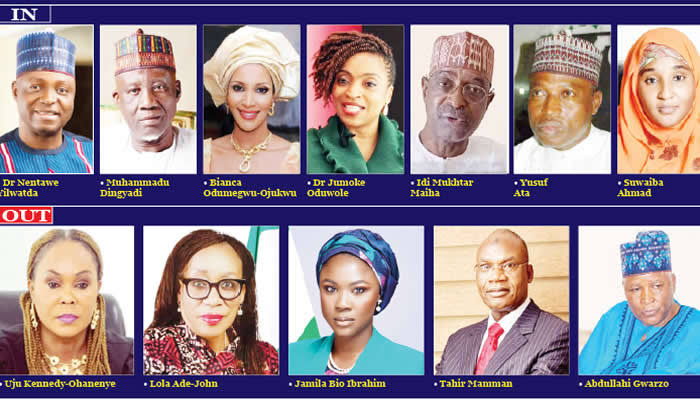
Cabinet Reshuffle: ActionAid Nigeria Says Tinubu Should Have Increase Female Ministers
By: Michael Mike
ActionAid Nigeria has decried the non increment in ministerial slot to women after the newly announced cabinet reshuffling by President Bola Tinubu.
The Country Director, ActionAid Nigeria, Andrew Mamedu, in a statement on Thursday said the organisation “acknowledges the recent cabinet reshuffling, along with the disbandment and merging of some Ministries, as an effort towards recalibrating governance. While restructuring is within the President’s prerogative, this moment demands that government agendas are decisively aligned with the needs of citizens, with a focus on inclusivity, cost-efficiency, and competent service delivery.
“The ousting of three female portfolio Ministers and appointment of seven new portfolio Ministers, three of which are women, raises serious questions about the government’s commitment to advancing gender equality, youth engagement, social development and the fulfillment of the 35% Affirmative Action benchmark. In a country with an already low representation of women in both elective and appointed positions, this was a crucial opportunity for the government to advance gender parity.
“Appointing more women would have signaled a decisive step toward closing this persistent gap. Instead, this move reinforces systemic exclusion and undermines years of advocacy for gender inclusion.”
He added that: “The decision to replace underperforming Ministers highlights the President’s intention to ensure accountability, improve delivery and address the current situation in the country. However, it also raises critical questions about the original appointments: Why did these officials fail to deliver? What lessons have been learned about the pitfalls of appointing political cronies at the expense of governance? We urge the administration to ensure thorough capacity-building for the new ministers and to take decisive action to prevent a repeat of previous shortcomings. Investigating the root causes of the failures is essential to avoid the same governance lapses.”
He further said: “As this cabinet grows to become the largest since Nigeria’s return to democracy in 1999, concerns about the rising cost of governance become even more pressing. Although some Ministries were merged or disbanded, the net effect has been an increase in the number of Ministers.
“We call on all newly appointed Ministers to resist the temptation to introduce new personal agendas that deviate from the mandates of their Ministries. Governance should be focused and aligned with public needs, particularly in critical areas such as poverty reduction, social protection, and humanitarian support. The Minister of Humanitarian Affairs and Poverty Reduction must act swiftly to revive key initiatives, such as the school feeding program and the national social register, to address the urgent needs of vulnerable populations.
ActionAid Nigeria urges the President to ensure that ministers follow the existing frameworks and strategic objectives of their Ministries. Policies and programmes must be people-centered, reflecting the current socio-economic realities of the nation.”
He said: “Citizens expect a government that prioritizes their well-being and delivers results efficiently and transparently.
In these challenging times, it is essential that governance reflects the principles of equity, accountability, and fiscal responsibility. We remain committed to holding leaders accountable to these standards and advocating for a government that works for the benefit of all Nigerians.”
Cabinet Reshuffle: ActionAid Nigeria Says Tinubu Should Have Increase Female Ministers


News
ECOWAS Leaders Warn Democracy Must Deliver and Peace Must Be Built as West Africa Faces Rising Instability
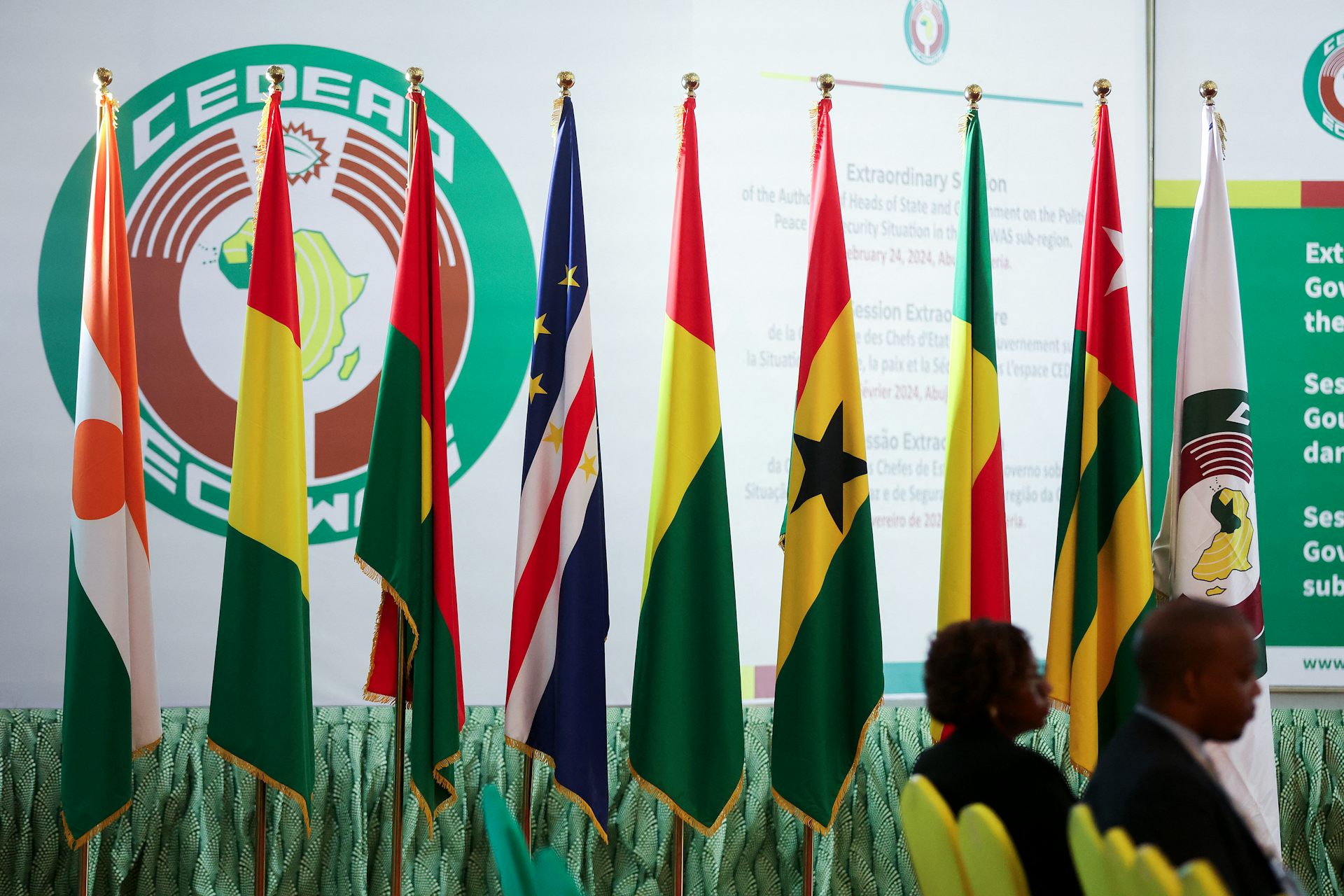
ECOWAS Leaders Warn Democracy Must Deliver and Peace Must Be Built as West Africa Faces Rising Instability
By: Michael Mike
West African leaders have issued a joint warning that democracy in the region is under growing strain and must begin to produce visible results for citizens, while also stressing that peace cannot be imposed but must be deliberately built through dialogue and cooperation.
The concerns were raised at the opening of the 2026 First Ordinary Session of the ECOWAS Parliament held on Monday in Abuja, where regional lawmakers gathered amid rising insecurity, democratic reversals, and increasing public dissatisfaction across parts of West Africa.
Speaker of Nigeria’s House of Representatives, Tajudeen Abbas, warned that the survival of democratic governance in the sub-region now depends on its ability to deliver tangible outcomes in security, economic stability, and public welfare.
He said while citizens across West Africa continue to reject military rule, their patience with democratic systems is weakening due to poor governance outcomes and rising socio-economic hardship.
Abbas noted that declining voter trust, weak institutions, and recurring unconstitutional changes of government reflect deeper structural problems that democratic systems must urgently address.
“The issue is not whether democracy remains the preferred system, but whether it is delivering sufficiently to sustain that preference,” he said, warning that governance failures could further expand the space for instability.
The Nigerian Speaker also pushed for a stronger and more empowered ECOWAS Parliament, arguing that its current advisory status limits its ability to respond effectively to regional crises.
He renewed calls for reforms including enhanced legislative authority, stronger oversight powers, and improved enforcement mechanisms for regional agreements.
According to him, previous proposals to strengthen the Parliament have yet to be fully implemented, but the present instability across the region makes such reforms more urgent.
“A Parliament with limited influence cannot adequately respond to democratic reversals, security pressures, and economic uncertainty,” Abbas said.
Abbas also defended Nigeria’s recent economic reforms, including fuel subsidy removal and exchange rate unification, describing them as difficult but necessary decisions taken within a democratic framework.
He said early results show increased fiscal inflows to subnational governments and improved capacity for infrastructure and social investment, while acknowledging that challenges persist.
He argued that Nigeria’s experience demonstrates that even tough reforms can be implemented without resorting to military intervention, warning against a growing tendency toward unconstitutional power shifts in parts of the region.
In a separate address, the Speaker of the ECOWAS Parliament, Hadja Mémounatou Ibrahima, stressed that peace in West Africa cannot be declared or imposed by authority, but must be carefully built over time.
She said the region is facing a period of heightened geopolitical uncertainty, adding that “no region is immune” to the global spread of instability and conflict.
“The message must be clear: peace cannot be decreed — it must be patiently built through dialogue, cooperation, and mutual respect,” she said, urging member states to deepen collaboration in addressing shared challenges.
Ibrahima also highlighted ongoing reforms within the regional bloc, noting that ECOWAS is undergoing a strategic reassessment of its future direction.
She announced that the upcoming ECOWAS Future Summit scheduled for 21 May in Lomé, Togo, will focus on accelerating the implementation of ECOWAS Vision 2050.
The summit is expected to explore how regional integration can be strengthened and adapted to emerging political, economic, and security realities across West Africa.
Both leaders, though speaking separately, converged on a central message: that West Africa is at a critical turning point where democratic legitimacy must be reinforced by effective governance, and peace must be actively constructed through cooperation rather than assumed.
They warned that without stronger institutions, improved governance delivery, and deeper regional collaboration, the region risks further democratic setbacks and prolonged instability.
The session continues as ECOWAS lawmakers deliberate on strategies to strengthen democratic resilience and regional integration amid mounting challenges across West Africa.
ECOWAS Leaders Warn Democracy Must Deliver and Peace Must Be Built as West Africa Faces Rising Instability
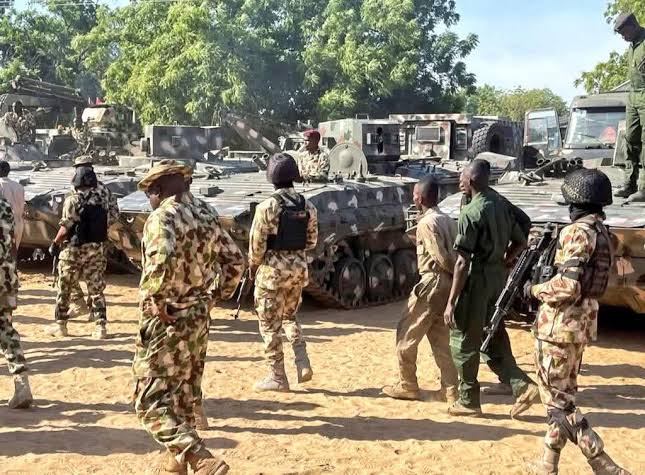
Troops Arrest Suspected Terrorist Informant in Borno
By Zagazola Makama
Troops of the Nigerian Army have arrested a suspected informant linked to ISWAP/JAS terrorist groups in Ngamdu, Kaga Local Government Area of Borno State.
Security sources said the suspect was apprehended at about 6:00 p.m. on May 3 by troops of 154 Battalion at Ngamdu market following sustained surveillance.
The sources disclosed that the suspect had been on a security watchlist prior to his arrest.
According to the sources, items recovered from him include a mobile phone, the sum of ₦1,150, and other sundry materials.
They added that the suspect is currently in military custody and undergoing interrogation.
The sources noted that further investigations are ongoing to establish his role and possible links within terrorist networks operating in the area.
Troops Arrest Suspected Terrorist Informant in Borno
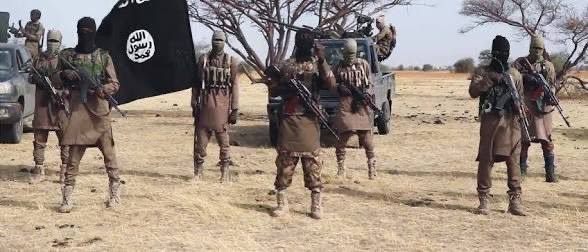
Troops Conduct Offensive Operation in Gwoza, Destroy Suspected Terrorist Structures
By Zagazola Makama
Troops of the Nigerian Army have conducted an offensive operation in Gwoza Local Government Area of Borno State, targeting suspected terrorist hideouts and support structures.
Security sources said the operation was carried out at about 9:20 a.m. on May 1 by troops of 153 Task Force Battalion, operating alongside volunteer forces and hybrid troops deployed at Kirawa.
The sources disclosed that the joint team advanced to Gakara high ground and Ndova village during the operation.
According to the sources, no direct contact was made with terrorist elements during the mission.
They added, however, that troops destroyed several suspected terrorist logistics and life-support structures identified within the general area.
The sources noted that the operation is part of ongoing clearance efforts aimed at denying insurgents freedom of movement and operational bases within the Gwoza axis.
Troops Conduct Offensive Operation in Gwoza, Destroy Suspected Terrorist Structures

Nigeria Moves to Transform Career Guidance System as Ministries, UNESCO, GIZ Push New National Policy Framework

ECOWAS Leaders Warn Democracy Must Deliver and Peace Must Be Built as West Africa Faces Rising Instability

Troops Arrest Suspected Terrorist Informant in Borno

Roger Federer’s Shock as DNA Results Reveal Myla and Charlene Are Not His Biological Children

THE PLIGHT OF FARIDA

FAILED COUP IN BURKINA FASO: HOW TRAORÉ NARROWLY ESCAPED ASSASSINATION PLOT AMID FOREIGN INTERFERENCE CLAIMS
-
 News2 years ago
Roger Federer’s Shock as DNA Results Reveal Myla and Charlene Are Not His Biological Children
-
Opinions4 years ago
THE PLIGHT OF FARIDA
-
 News1 year ago
FAILED COUP IN BURKINA FASO: HOW TRAORÉ NARROWLY ESCAPED ASSASSINATION PLOT AMID FOREIGN INTERFERENCE CLAIMS
-

 News2 years ago
EYN: Rev. Billi, Distortion of History, and The Living Tamarind Tree
-
 Opinions4 years ago
POLICE CHARGE ROOMS, A MINTING PRESS
-

 ACADEMICS2 years ago
A History of Biu” (2015) and The Lingering Bura-Pabir Question (1)
-

 Columns2 years ago
Army University Biu: There is certain interest, but certainly not from Borno.
-

 Opinions2 years ago
Tinubu,Shettima: The epidemic of economic, insecurity in Nigeria
