
News
Centre Calls for Massive Campaign to Arrest Threats of Climate Change

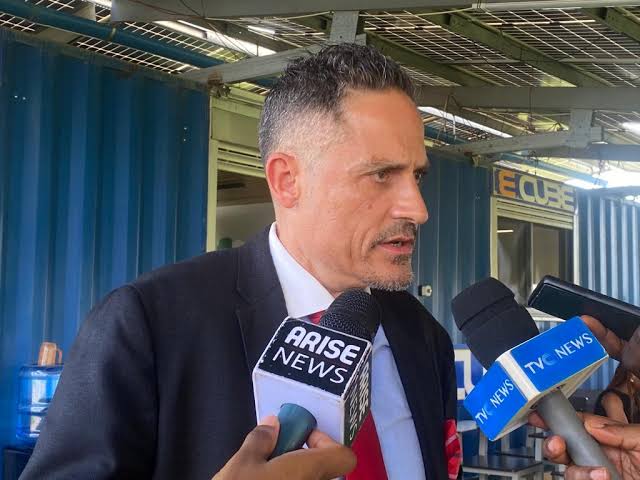
Centre Calls for Massive Campaign to Arrest Threats of Climate Change
By: Michael Mike
The Centre for Media and Peace Initiatives (CMPI) has called for massive awareness campaigns across the country to sensitize Nigerians on sustainable practices to arrest growing threats of climate change.
CMPI is a nonprofit organisation that seeks to promote conflict-resolving media practices and ensure better policy around the world.
The President of CMPI, Dr. Uchenna Ekwo, made the call at the African Youth Leaders Dialogue on Climate Change, organised by ECube, a non-governmental organisation, in collaboration with the CMPI and the United Nations on Monday in Abuja.
Ekwo said the call has become imperative for community stakeholders to constantly engage dialogue as tool to sensitize people about the dangers of climate change, to tackle issues relating to it.
He said it is very important that we have conversation and begin to think how to deal with challenges that climate change poses on us.
He said: “For us at CMPI, we try to see connection between peace and conflict as well, because they are all interrelated.
“These problems do not have particular area that shows their correlation, however when we have a climate change induced challenge, such affects us in one way or another, therefore the need for awareness creation, to encourage people to hold their leaders accountable.
“Sometimes you see conspiracy theories about climate change as issues related to politics or religion, but the truth is that scientifically climate change is real.
“So, there is the need for awareness creation to encourage people to always imbibe best practices and sustainable approach to mitigate climate change.”
Speaking virtually at the event, Bitsat Yohamnes-Kassahun, Lead, Energy and Climate, UN Office of the Special Adviser on Africa, emphasized the need for holistic approach to tackle climate change.
She said people must constantly dialogue to find solution to challenges associated with climate change, stressing that “if we do not care, this is going to be untenable”.
Yohamnes-Kassahun added: “Here in New York government has set up cooling devices against harsh weather condition, but we do not have most of that in many cities globally.
“We have started to experience extreme torrential rainfall and flood in places like New York that infrastructures and homes are not equipped for.
“So, what you have is flooding, people are getting very nervous during flooding, but the local authorities here are overhauling structures to mitigate that.
“When we come to Africa in this context how prepared are we? When we talk about heatwave, we consider the impacts on water shortage and lots more.
“There is the need for awareness creation through different reporting method about the dangers of climate change, to bring about lasting solution to the problem such poses.”
In separate interview, Ilan Lugassy, Country Manager and Managing-Director of ECube, said his organisation had designed measures aimed at encouraging public private partnership to tackle climate change.
He said: “We have been working closely with relevant agencies to promote the awareness,” noting that: “Many government institutions have been here like the Federal Ministry of Power, Rural Electrification Agency, Ministry of Agriculture and other community-based organisations, and every stakeholder has been enthusiastic about the ECube idea.
“The solution to climate change is not just about electrification, our ECube system has been built to provide electricity and connectivity to provide basic amenities for communities.
“By this we are capable of providing services to various communities, which is a game changer in the fights against climate change.“
He revealed that the dialogue was put together to promote best practices in providing support for rural-urban areas with no acces to electricity to mitigate climate change actions.
Centre Calls for Massive Campaign to Arrest Threats of Climate Change



Troops Raid Illegal Shanties, Clear Criminal Hideouts in Abuja
By Zagazola Makama
Troops of Army Headquarters Garrison, in conjunction with Operation SWEEP, have conducted a clearance operation across several areas of the Federal Capital Territory, dismantling illegal shanties and structures suspected of providing cover for criminal activities.
The operation was conducted at about 4:00 p.m. on August 23, 2026, across Karshi, Jeje, Kurape and Nyanya areas of the Abuja Municipal Area Council (AMAC).
Security personnel raided and dismantled several illegal shanties and structures during the operation as part of efforts to deny criminal elements safe havens within the capital.
The operation is part of ongoing security efforts to improve surveillance and maintain control over vulnerable areas that could be exploited by criminals.
The Mai-Anguwa of Nyanya commended the troops for the operation and pledged to sustain effective communication with Army Headquarters Garrison and other security agencies by providing credible information on suspicious activities.
Security personnel are expected to sustain the operation and continue intelligence-led patrols in the affected areas to prevent criminal elements from re-establishing their presence.
The development highlights the importance of sustained community-security collaboration in identifying emerging threats and preventing criminal networks from exploiting informal settlements and unregulated structures.
Troops Raid Illegal Shanties, Clear Criminal Hideouts in Abuja

Troops Arrest Suspected Terrorist, Courier in Kogi
By Zagazola Makama
Troops of 12 Brigade have arrested two suspected terrorists, including an alleged terrorist courier linked to kidnapping activities along the Okene–Auchi road in Kogi State.
The suspects were apprehended at about 1:15 p.m. on August 23, 2026, around the Okene axis of Okene Local Government Area, following an intelligence report on the movement of suspected terrorist elements.
According to security sources, one of the suspects was allegedly involved in kidnapping operations along the Okene–Auchi road and adjoining areas.
Troops recovered two mobile phones with charging cords, a power bank, four litres of palm oil, portions of cow meat, clothing and ₦901,080 in cash from the suspects.
The suspects and recovered items are currently in military custody for further investigation and necessary action.
Security sources said the arrests provide an opportunity to investigate the logistics and support networks sustaining criminal activities along the Okene–Auchi corridor.
The military is expected to intensify intelligence-led operations in the area to identify other members of the suspected network and disrupt their movement and supply channels.
Troops Arrest Suspected Terrorist, Courier in Kogi

Troops Repel Terrorist Attack, Recover AK-47 and Communication Devices in Niger
By Zagazola Makama
Troops of Operation SAVANNAH SHIELD have repelled an attack by suspected terrorists on their position at Dekara in Borgu Local Government Area of Niger State.
The attack occurred at about 8:24 a.m. on August 23, 2026, when suspected terrorists engaged troops deployed in the area.
The troops responded and successfully repelled the attackers, forcing them to withdraw towards the surrounding forest.
During subsequent exploitation of the area, troops recovered one AK-47 rifle loaded with four rounds of 7.62mm special ammunition.
Security personnel also recovered six motorcycles, 49 mobile phones, nine batteries and 10 memory cards reportedly abandoned by the fleeing terrorists.
Drone surveillance subsequently captured two suspected injured terrorists being evacuated on motorcycles towards the Kainji Lake National Park.
Troops have continued to dominate the area and maintain pressure on the fleeing terrorists to deny them freedom of action and prevent them from regrouping.
The recovery of the weapons and communication devices is expected to provide valuable intelligence for ongoing operations, particularly in identifying terrorist networks, their communication channels and movement corridors around the Kainji Lake National Park.
The operation comes amid intensified security efforts to prevent terrorist elements from exploiting the forested areas along the Nigeria–Benin border as safe havens and mobility corridors.
Troops Repel Terrorist Attack, Recover AK-47 and Communication Devices in Niger

Troops Raid Illegal Shanties, Clear Criminal Hideouts in Abuja

Troops Arrest Suspected Terrorist, Courier in Kogi

Troops Repel Terrorist Attack, Recover AK-47 and Communication Devices in Niger

Roger Federer’s Shock as DNA Results Reveal Myla and Charlene Are Not His Biological Children

THE PLIGHT OF FARIDA

FAILED COUP IN BURKINA FASO: HOW TRAORÉ NARROWLY ESCAPED ASSASSINATION PLOT AMID FOREIGN INTERFERENCE CLAIMS
-
 News2 years ago
Roger Federer’s Shock as DNA Results Reveal Myla and Charlene Are Not His Biological Children
-
Opinions5 years ago
THE PLIGHT OF FARIDA
-
 News1 year ago
FAILED COUP IN BURKINA FASO: HOW TRAORÉ NARROWLY ESCAPED ASSASSINATION PLOT AMID FOREIGN INTERFERENCE CLAIMS
-

 News2 years ago
EYN: Rev. Billi, Distortion of History, and The Living Tamarind Tree
-
 Opinions5 years ago
POLICE CHARGE ROOMS, A MINTING PRESS
-

 ACADEMICS2 years ago
A History of Biu” (2015) and The Lingering Bura-Pabir Question (1)
-

 Columns2 years ago
Army University Biu: There is certain interest, but certainly not from Borno.
-

 Politics1 year ago
2027: Why Hon. Midala Balami Must Go, as Youths in Hawul and Asikira/Uba Federal Constituency Reject ₦500,000 as Sallah Gift
