
Uncategorized
China: Africa’s Most Reliable Companionon Africa’s Path to Development

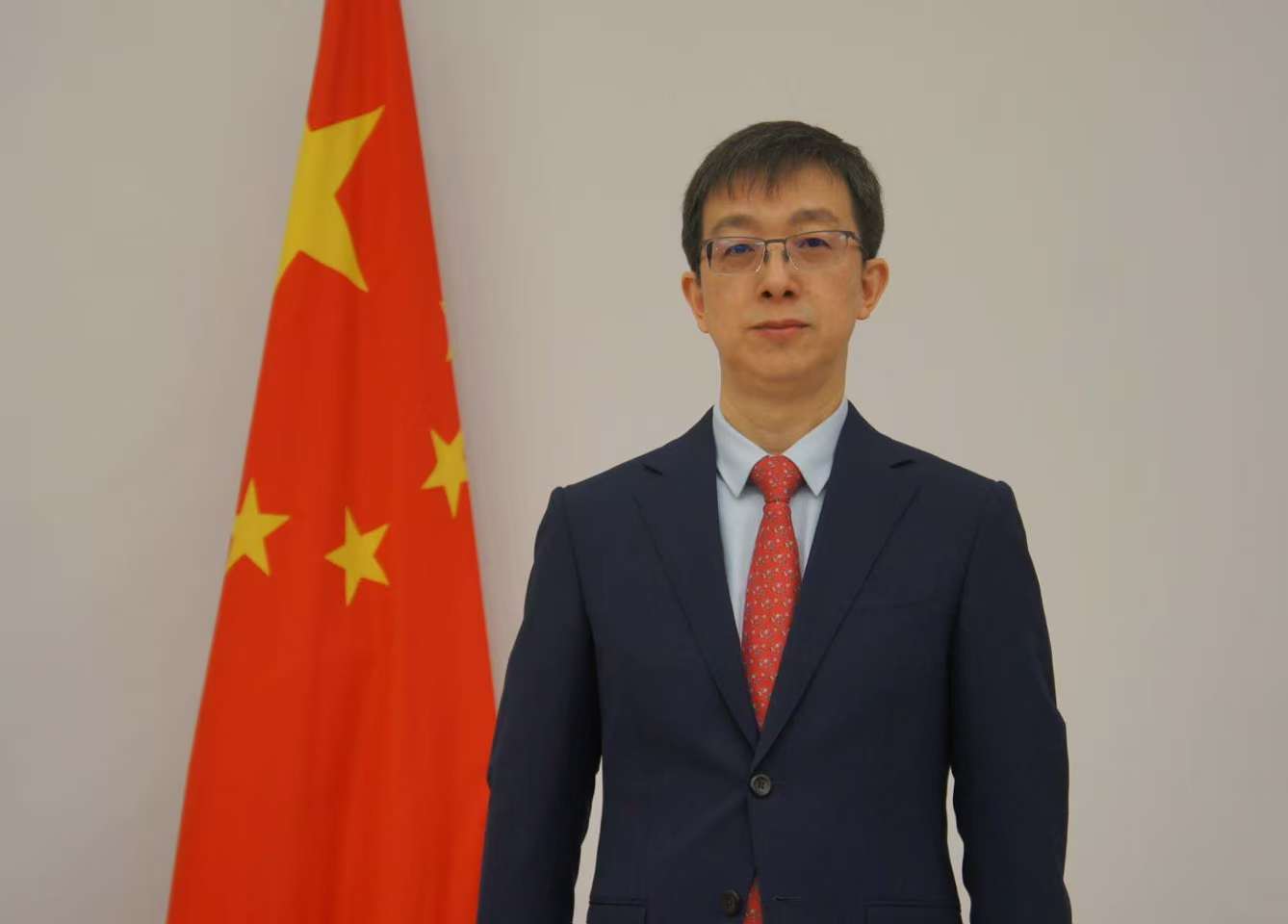
China: Africa’s Most Reliable Companion
on Africa’s Path to Development
By: Our Reporter
Development is an inalienable right of all countries, not a privilege of a few. Recently, Chinese Premier Li Qiang solemnly declared at the High-level Meeting on the Global Development Initiative hosted by China at the United Nations Headquarters that China as a responsible major developing country, will not seek new special and differential treatment in current and future negotiations at the WTO. This is a proactive step that China takes in support of the multilateral trading system, and a significant move to implement the Global Development Initiative and Global Governance Initiative.
The tariff wars initiated by the United States have seriously undermined global trade and economic order, posing serious challenges to the development of all countries, especially in the Global South. As the world’s second-largest economy, China actively defends the legitimate rights and interests of developing countries, firmly upholds the multilateral trading system, so that it can better focus on development issues and help bridge the development gap between the Global North and South. As the largest developing country and the continent with the highest concentration of developing countries in the world respectively, China and Africa are both vital members of the Global South. China is willing to work with Africa to effectively implement the Global Development Initiative and to be the most reliable companion on Africa’s path to development.
China practices the principle of inclusive and universal benefits through an open market, expanding vast space for Africa’s development. A universally beneficial and inclusive economic globalization is vital for developing countries. Some developed countries are unwilling to fulfill their commitments on development financing and have even withdrawn funding from international development institutions.
At the Forum on China–Africa Cooperation Beijing Summit held last September, President Xi Jinping announced zero tariff treatment on products with 100% tariff lines for all least developed countries having diplomatic relations with China, including 33 African countries. In June this year, China extended the zero-tariff treatment to cover 100% of tariff lines for all 53 African countries that have diplomatic ties with China. From January to July 2025, China’s imports from Africa’s least developed countries reached 39.66 billion USD, with a year-on-year increase of 10.2%.
The facts prove that China’s proactive unilateral market opening measures will strongly drive the industrial development, promote employment growth and accelerate poverty reduction in Africa.
China shares advanced and practical technology to strengthen the core support for Africa’s innovative development. In a context where global technological barriers are increasingly prominent and key resources are concentrated in a few developed countries and multinational tech giants, “Intelligent Manufacturing in China” has enriched global supply, making previously inaccessible technology available.
At the AI Action Summit held in Paris in February, China signed the Statement on Inclusive and Sustainable Artificial Intelligence for People and the Planet together with other 60 countries and international organizations. Represented by Deepseek, Chinese AI models have broken the monopoly of Western tech giants through open-source modes, initiating an “AI democratizatio” process.
The supply of China’s advanced and practical technology promotes bridging the digital and artificial intelligence gaps, further empowering African industries and people, providing transformative power to Africa’s leapfrog development.
China provides green transition solutions to support a long-term future for Africa’s sustainable development. Possessing the world’s richest green resources such as solar and wind power, Africa remains one of the most vulnerable regions to climate change. China actively shares green transition solutions with Africa. The Blue Line built by a Chinese company provides green and convenient public transportation to Lagos residents. Major projects built by Chinese enterprises, such as Morocco’s Noor III and II Concentrated Solar Power Project and South Africa’s De Aar Wind Power Project, have illuminated millions of homes across Africa and lit the path to sustainable development. China’s new energy vehicles are rapidly entering the African market, offering new options to improve urban air quality.
China’s green development solutions have helped Africa avoid the old path of “polluting first, cleanup later” at the early stage of its industrialization, paving the way toward a more resilient and sustainable future.
China supplies quality and affordable products to firmly support African livelihoods. From home appliances and clothing that improve the quality of life, to smartphones and base station equipment ensuring communication, as well as machinery and transport equipment supporting infrastructure development, “Made in China” is becoming deeply and comprehensively integrated into the daily lives of the African people.
These Chinese products meet Africans’ pursuit of better life while effectively reducing the cost of improving livelihoods and industrial development, providing a foundation for meeting basic needs and improving life quality, thus injecting sustained momentum into Africa’s economic and social development.
In his speech on the African Union Day, H.E. Mahmoud Ali Youssouf, Chairperson of the African Union Commission, called for building an Africa where every African can thrive in dignity and hope. China firmly believes that global prosperity and stability cannot be achieved when the rich get richer and the poor poorer. Regardless of international uncertainties, China will uphold the UN-centered international system, stick to multilateralism and free trade, strive to build an open world economy, and provide robust support for Africa’s development as a true friend walking hand in hand on Africa’s path to development .
China: Africa’s Most Reliable Companion
on Africa’s Path to Development


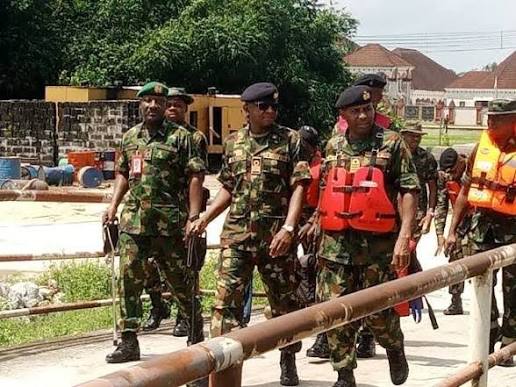
Troops arrest suspect with 75 live cartridges in Awka, Anambra
By: Zagazola Makama
Troops of Sector 5 Operation UDO KA have arrested a suspected criminal in Awka, Anambra State, and recovered 75 live cartridges in his possession.
Security sources said the arrest was made at about 7:00 a.m. on April 5, 2026, during a routine operation in the state capital.
The suspect was allegedly found with the ammunition concealed in his bag at the time of arrest.
During preliminary questioning, the suspect claimed he received the cartridges from a friend, while efforts are ongoing to identify and track the source of the consignment.
Authorities said the suspect is currently in custody as investigations continue.
Troops arrest suspect with 75 live cartridges in Awka, Anambra
Troops uncover illegal crude oil storage facility in Ahoada West forest in Rivers
By: Zagazola Makama
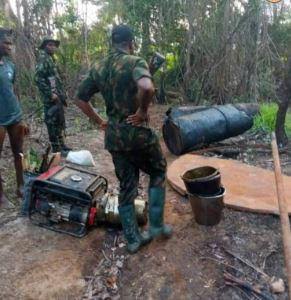
Troops of Joint Task Force, South-South, Operation DELTA SAFE, have uncovered an illegal crude oil storage site in the Orashi National Forest in Ahoada West Local Government Area of Rivers State.
Security sources said the discovery was made at about 9:00 a.m. on April 4, 2026, during an anti-illegal bunkering operation conducted by troops deployed at Aminigboko, alongside personnel of 103 Battalion and 16 Brigade Garrison.
During the operation, troops reportedly found two long galvanized pipes estimated at about 500 metres each, two hoses approximately 50 metres long, and a large reservoir containing stolen crude oil estimated at about 15,000 litres.
The recovered items were handled in line with the directives of Operation DELTA SAFE. Authorities said efforts are ongoing to identify and dismantle other illegal bunkering networks in the area.
Troops uncover illegal crude oil storage facility in Ahoada West forest in Rivers
Troops and Tantita operatives arrest 2 suspected oil bunkerers, recover AGO in Delta
By: Zagazola Makama
Troops of 181 Amphibious Battalion, in collaboration with Tantita Security Services operatives, have arrested two suspected illegal oil bunkerers in Ndokwa West Local Government Area of Delta State.
Security sources said the suspects were apprehended at about 9:25 a.m. on April 4, 2026, around the Transpalodec Hotel junction in Kwale, following intelligence on their alleged activities.
Preliminary investigations indicated that the suspects had been on the watchlist of suspected bunkerers operating within the Kwale axis and were under surveillance prior to their arrest.
Items recovered from them included about 60 litres of Automotive Gas Oil (AGO), 32 sacks, and four mobile phones.
The suspects and recovered items were handed over to the Nigerian Police, Kwale Division, for further investigation and possible prosecution.
Troops and Tantita operatives arrest 2 suspected oil bunkerers, recover AGO in Delta

Berom militia kill Fulani herder in Riyom as tit-for-tat violence escalates in Plateau

Political Landscape Shifts as Yobe South Mobilizes for 2027 Elections Amid Marginalization Concerns

FG Directs MDAs to Halt New Policies Pending Full RIA Compliance

Roger Federer’s Shock as DNA Results Reveal Myla and Charlene Are Not His Biological Children

THE PLIGHT OF FARIDA

FAILED COUP IN BURKINA FASO: HOW TRAORÉ NARROWLY ESCAPED ASSASSINATION PLOT AMID FOREIGN INTERFERENCE CLAIMS
-
 News2 years ago
Roger Federer’s Shock as DNA Results Reveal Myla and Charlene Are Not His Biological Children
-
Opinions4 years ago
THE PLIGHT OF FARIDA
-
 News12 months ago
FAILED COUP IN BURKINA FASO: HOW TRAORÉ NARROWLY ESCAPED ASSASSINATION PLOT AMID FOREIGN INTERFERENCE CLAIMS
-

 News2 years ago
EYN: Rev. Billi, Distortion of History, and The Living Tamarind Tree
-
 Opinions4 years ago
POLICE CHARGE ROOMS, A MINTING PRESS
-

 ACADEMICS2 years ago
A History of Biu” (2015) and The Lingering Bura-Pabir Question (1)
-

 Columns2 years ago
Army University Biu: There is certain interest, but certainly not from Borno.
-

 Opinions2 years ago
Tinubu,Shettima: The epidemic of economic, insecurity in Nigeria
