
News
China Calls for Stronger Global Governance, Reaffirms Cooperation with Nigeria

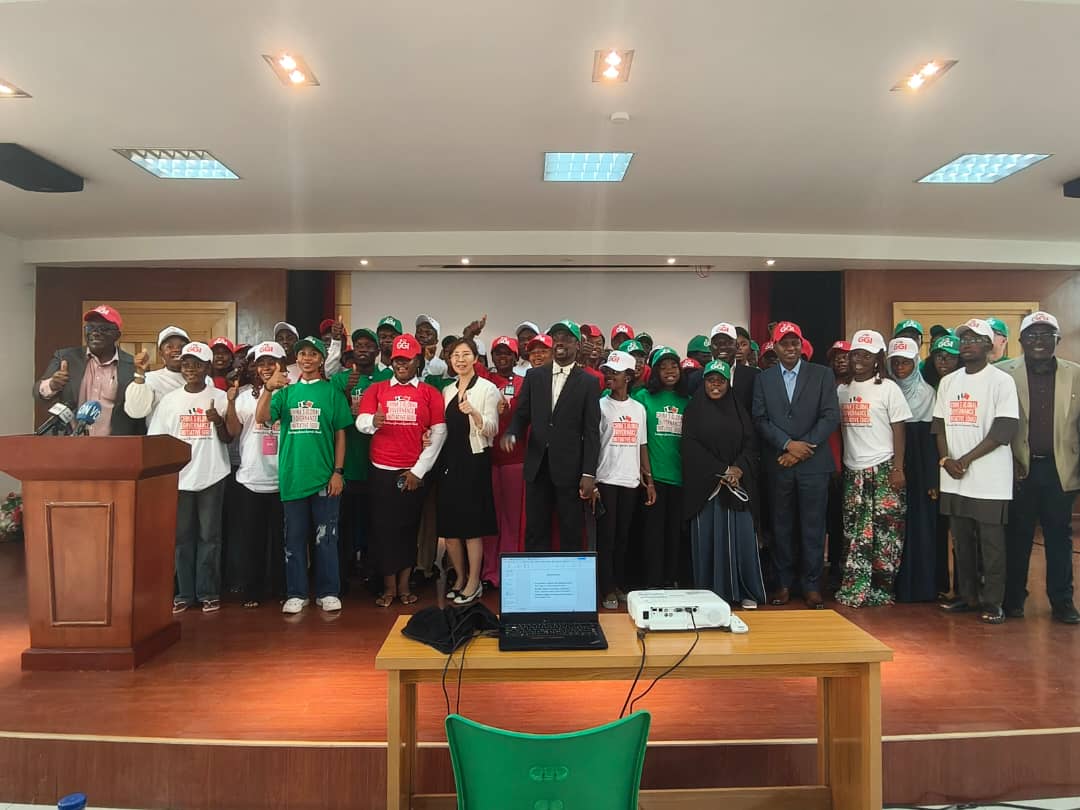
China Calls for Stronger Global Governance, Reaffirms Cooperation with Nigeria
By: Michael Mike
China has reiterated its commitment to building a fairer and more inclusive global governance system, pledging closer cooperation with Nigeria and Africa under the newly launched Global Governance Initiative (GGI).
Speaking at a seminar in Abuja organised by the Centre for Contemporary China-Africa Research and the Centre for China Studies, China reaffirmed its commitment to working with Nigeria and other African nations under the Global Development Initiative (GDI), describing it as a new platform to reform global governance, address historical injustices, and give greater voice to the Global South in institutions like the UN Security Council and international financial systems.
Counselor at the Embassy of the People’s Republic of China in Nigeria, Mr. Dong Hairong who spoke at the seminar themed “Opportunities for China-Nigeria Cooperation under GGI”, said the initiative, introduced by President Xi Jinping on September 1, represents “another public good that China has provided to the world.”
According to him, the GGI joins the Global Development Initiative (GDI), Global Security Initiative (GSI) and Global Civilization Initiative (GCI) as the four pillars of China’s vision to build “a community with a shared future for mankind.”
“The current international landscape is undergoing changes and turbulences. As we can see every day, the world is far from peaceful and stable,” Mr. Dong noted, citing geopolitical tensions, economic uncertainties, regional conflicts, and public health crises affecting several continents, including Africa.
He stressed that the GGI seeks to address gaps in the global governance system by encouraging joint efforts among countries and multilateral institutions.
Highlighting its values, Dong explained
“The GDI embodies five core concepts: adhere to sovereign equality, abide by rule of law, practice multilateralism, advocate a people-centered approach, and focus on taking action. These principles have gained world recognition, and the Nigerian government particularly welcomes them.”
He emphasized that the initiative is aligned with Africa’s development aspirations and Nigeria’s priorities, describing it as a new platform to push for reforms in global institutions.
“China has been and is always willing to cooperate, work with African friends, including Nigeria, under the framework of GDI to build a more just and equitable global governance system,” he said.
He further stressed China’s support for reforms in the UN Security Council and international financial architecture to correct the “under-representation of the Global South” and “historical injustices”.
Dong added that collaboration would extend to critical areas such as climate change, cyberspace, artificial intelligence, trade, and outer space.
He added that: “We would like to hear the thoughts and insights of scholars, experts, and media friends on how to harness cooperation under the framework of GDI. I hope today’s seminar will create more thought resonance and bring new ideas for our two countries to pursue a community with a shared future for mankind.”
On his part, the Director General of the Nigeria-China Strategic Partnership (NCSP), Mr. Joseph Tegbe, reaffirmed the organisation’s commitment to supporting the Global Governance Initiative (GGI) by deepening cooperation between Nigeria and China.
He emphasized that the NCSP is focused on fostering mutual growth and strategic collaboration that aligns with the shared goals of both nations.
He said: “At the Nigeria-China Strategic Partnership office, we stand ready to work hand-in-hand with our Chinese counterparts to ensure this vision delivers concrete benefits for our people, for Africa, and for the rest of the world.”
He highlighted the practical value of the Global Governance Initiative (GGI) for Nigeria, describing it as a platform for tangible progress.
He said: “For our great country, Nigeria, the Global Governance Initiative is more than just a set of ideas it represents real opportunities.
“It allows us to enhance our global relevance, drive economic growth, and deepen our long-standing partnership with China. From industrialisation and technology to infrastructure, trade, and cultural exchange, we are optimistic about the future this Initiative is paving for us.”
Director of the Centre for China Studies, Dr. Charles Onunaiju called for a more strategic and action-oriented collaboration between Nigeria and China under the Global Governance Initiative (GGI), stressing that its success will depend on practical implementation, not rhetoric.
Onunaiju emphasized the importance of turning diplomatic frameworks into concrete outcomes.
“The Global Governance Initiative (GGI) will be tested in action, not just in words,”
“Nigeria and China must go beyond dialogue to initiate strategic collaborations that deliver actionable plans advancing the Initiative.” He stated
He noted that Nigeria and China, strategic partners since 2005, already have an established inter-governmental committee a platform designed to facilitate dialogue on all areas of cooperation.
Onunaiju emphasized that the mechanism is well-positioned to integrate GGI discussions and proposed a targeted expansion of its mandate.
Director of the Abuja School of Social and Political Thought, Dr Sam Amadi emphasized that while international initiatives like the Global Governance Initiative (GGI) are important, local leadership and internal reforms are even more critical for Nigeria’s economic transformation.
He pointed to China’s success not because of a favorable global order, but due to visionary internal leadership and a focus on techno-industrialization.
He further urged African countries, especially Nigeria, should learn from China’s internal strategies rather than relying solely on changes in global governance.
He said: “China became rich and powerful under an international order that was not the best It thrived because its leaders aligned its policies and economic programs towards high and sustained economic growth.”
“When we become rich and stable like China, we will make better leverage of the transformative Global Governance Initiative that China wisely promotes.”
China Calls for Stronger Global Governance, Reaffirms Cooperation with Nigeria


Troops Arrest Suspected Military Impostor in Katsina
By Zagazola Makama
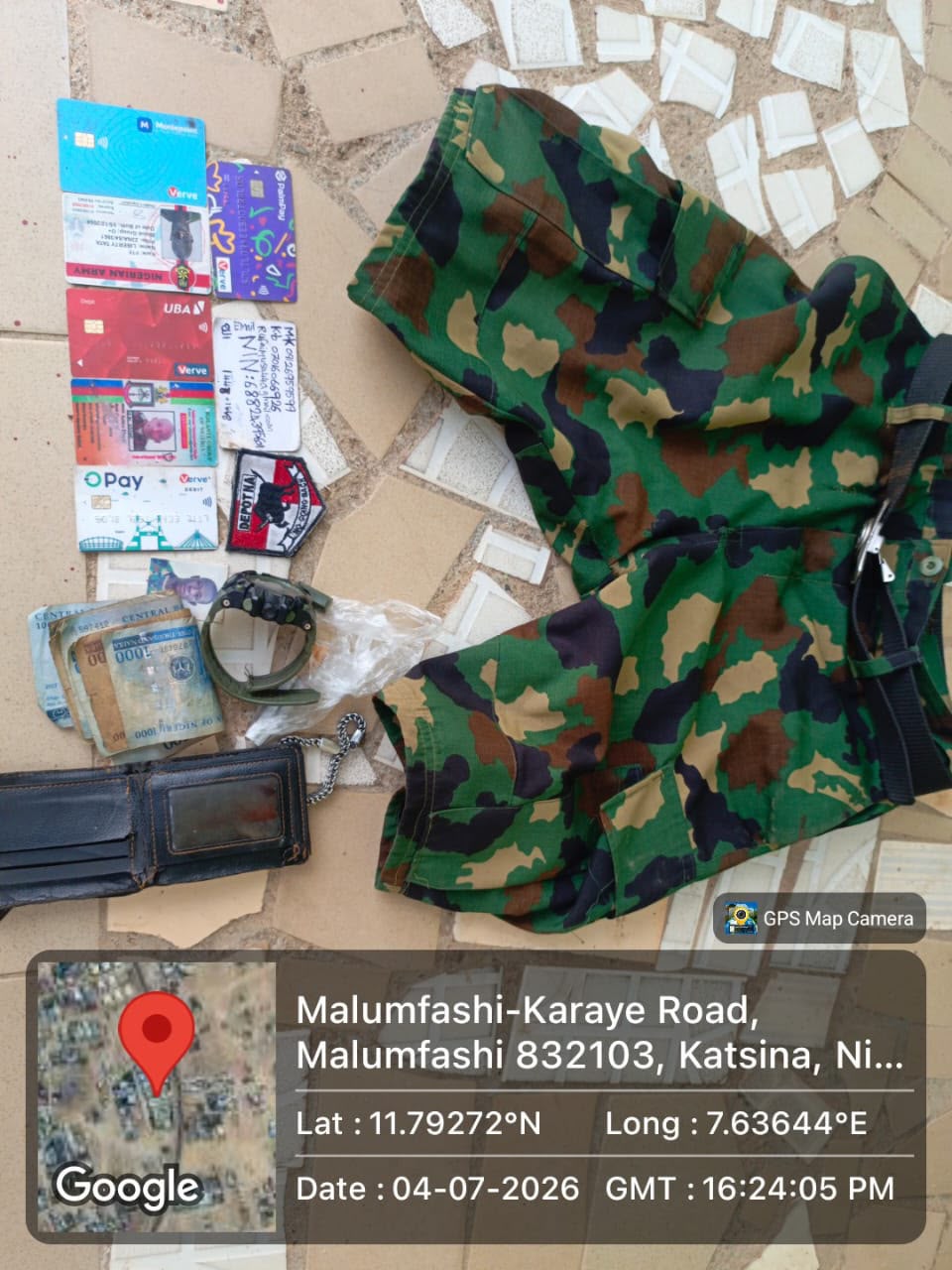
Troops of 17 Brigade have arrested a suspected military impostor during a fighting patrol in Malumfashi Local Government Area.
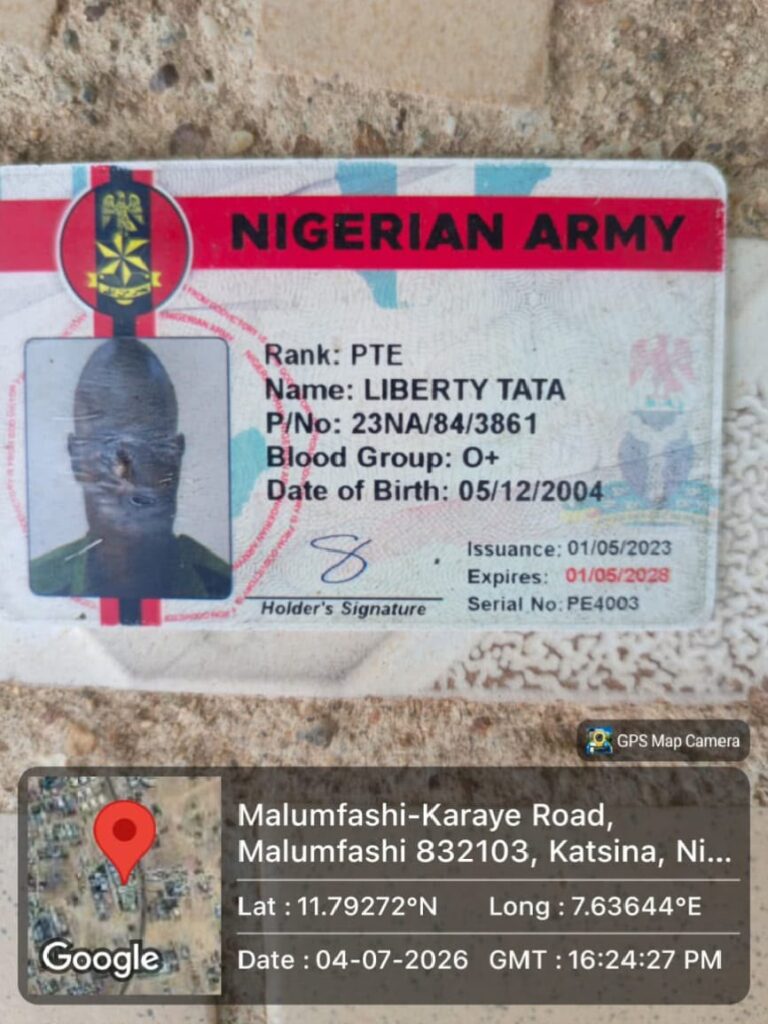
Security sources told Zagazola Makama that the suspect was apprehended at about 1:30 p.m. on July 4 by troops deployed at the Forward Operating Base (FOB) Malumfashi while conducting routine patrols within Malumfashi town.

According to the sources, the suspect was intercepted while wearing a woodland camouflage three-quarter short, raising suspicion among the troops.
A search conducted on the suspect led to the recovery of a fake Nigerian Army identity card, four Automated Teller Machine (ATM) cards, one woodland camouflage three-quarter short, a wristwatch and the sum of ₦17,000.
The suspect and the recovered exhibits are currently in military custody pending further investigation.
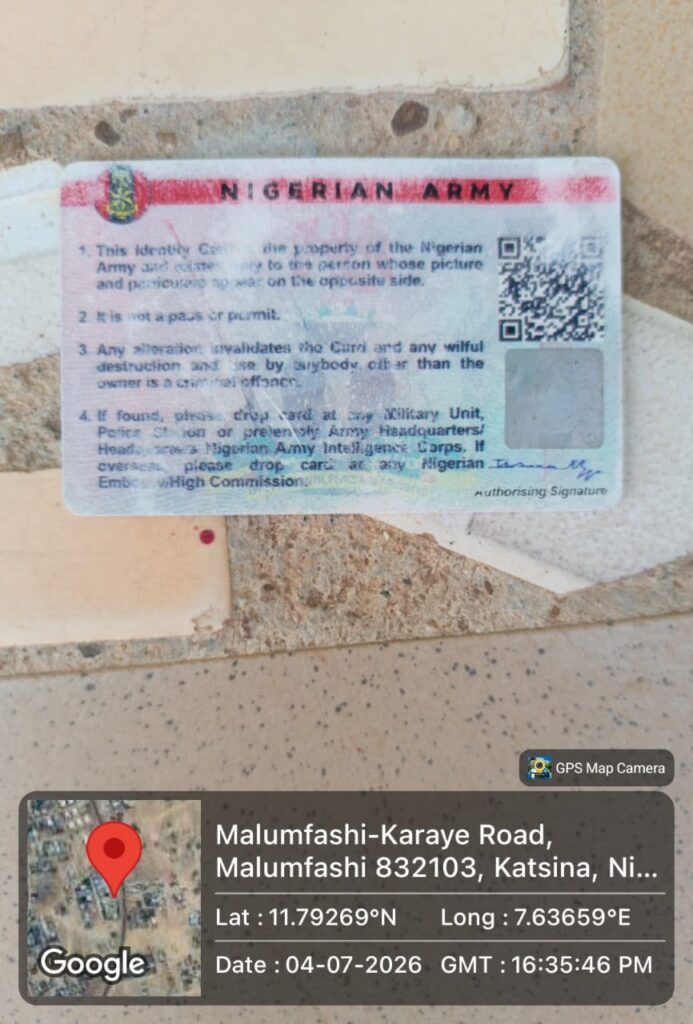
Military sources said the arrest forms part of ongoing efforts to curb impersonation of security personnel and other criminal activities within the area.
Troops Arrest Suspected Military Impostor in Katsina
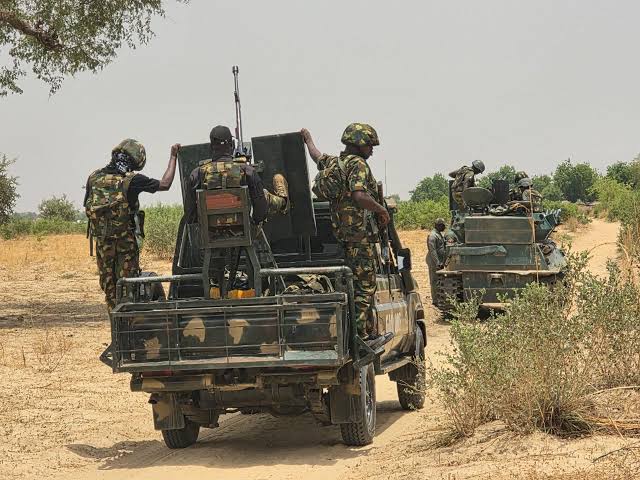
Troops Recover 50 Rustled Cattle, Repel Suspected Rustlers in Kaduna
By Zagazola Makama
Troops deployed at the Forward Operating Base (FOB) Kankomi have recovered 50 rustled cattle after repelling suspected cattle rustlers during an ambush operation in Chikun Local Government Area.
Security sources told Zagazola Makama that the troops responded to a distress call at about 9:55 a.m. on July 4 over the activities of suspected rustlers at Ungwan Gontu community.
According to the sources, the troops swiftly laid an ambush and made contact with the fleeing suspects, forcing them to abandon the stolen livestock and escape into the surrounding area.
During the operation, the troops recovered 50 rustled cattle, which were subsequently identified and handed over to their rightful owner.
Military sources said efforts are ongoing to track down the fleeing suspects as security operations continue to combat cattle rustling and other criminal activities across Kaduna State.
Troops Recover 50 Rustled Cattle, Repel Suspected Rustlers in Kaduna
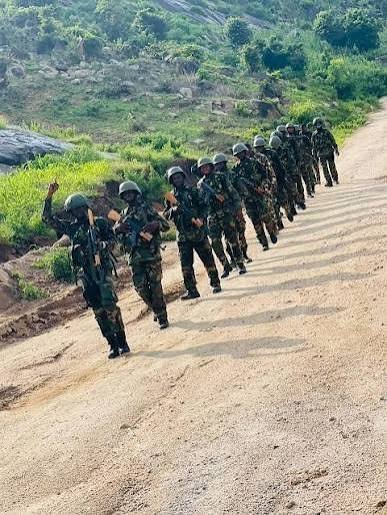
Troops Arrest Suspected Terrorist in Kogi, Suspect Confesses to Group Membership
By Zagazola Makama
Troops of 12 Brigade, in collaboration with Office of the National Security Adviser (ONSA) Hybrid Forces, have arrested a suspected terrorist during an operation in Lokoja Local Government Area.
Security sources told Zagazola Makama that the troops responded at about 1:00 p.m. on July 4 to reports of a confrontation between local residents and a suspected terrorist at a Ruga settlement behind Obajana community.
According to the sources, the troops swiftly intervened and arrested one suspect at the scene.
During preliminary interrogation, the suspect reportedly confessed to being a member of a terrorist group led by an individual identified as Haruna, which allegedly operates within the Okene general area.
The suspect is currently in military custody and is undergoing further investigation to establish the extent of his involvement and identify other members of the group.
Military sources said the arrest forms part of ongoing security operations aimed at dismantling terrorist and criminal networks across Kogi State.
Troops Arrest Suspected Terrorist in Kogi, Suspect Confesses to Group Membership

Troops Arrest Suspected Military Impostor in Katsina

Troops Recover 50 Rustled Cattle, Repel Suspected Rustlers in Kaduna

Troops Arrest Suspected Terrorist in Kogi, Suspect Confesses to Group Membership

Roger Federer’s Shock as DNA Results Reveal Myla and Charlene Are Not His Biological Children

THE PLIGHT OF FARIDA

FAILED COUP IN BURKINA FASO: HOW TRAORÉ NARROWLY ESCAPED ASSASSINATION PLOT AMID FOREIGN INTERFERENCE CLAIMS
-
 News2 years ago
Roger Federer’s Shock as DNA Results Reveal Myla and Charlene Are Not His Biological Children
-
Opinions4 years ago
THE PLIGHT OF FARIDA
-
 News1 year ago
FAILED COUP IN BURKINA FASO: HOW TRAORÉ NARROWLY ESCAPED ASSASSINATION PLOT AMID FOREIGN INTERFERENCE CLAIMS
-

 News2 years ago
EYN: Rev. Billi, Distortion of History, and The Living Tamarind Tree
-
 Opinions5 years ago
POLICE CHARGE ROOMS, A MINTING PRESS
-

 ACADEMICS2 years ago
A History of Biu” (2015) and The Lingering Bura-Pabir Question (1)
-

 Columns2 years ago
Army University Biu: There is certain interest, but certainly not from Borno.
-

 Politics1 year ago
2027: Why Hon. Midala Balami Must Go, as Youths in Hawul and Asikira/Uba Federal Constituency Reject ₦500,000 as Sallah Gift
