
News
China-Nigeria Trade Volume Hits $20 billion mark

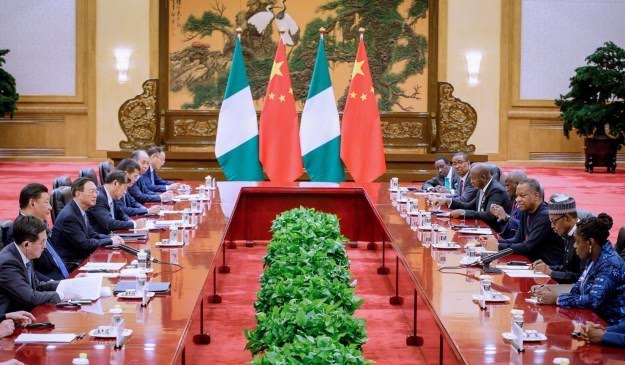
China-Nigeria Trade Volume Hits $20 billion mark
By: Michael Mike
The Chinese Ambassador to Nigeria, Mr. Yu Dunhai has disclosed that the current trade volume between Nigeria and China stands at over $20 billion.
The envoy also disclosed that efforts are on from both countries to ensure that the current volume of trade between both countries improves.
Yu spoke on Saturday during the Chinese New Year Celebration, with the theme “Year of the Golden Snake”
The Lunar New Year will be celebrated on Wednesday, Jan. 29. The occasion is based on the lunar calendar and takes place all around the world but it’s primarily celebrated by Asian countries. This year, it will mark the beginning of the year of the snake.
Speaking on China-Nigeria bilateral relations, the envoy said: “The trade volume exceeds $20 billion last year. And I think Nigeria is the largest engineering contract and the second largest exporting market and the third largest trade partner for China in Africa.
“And of course, we would like to work with Nigeria to bring our trade volume to even higher because we see there is a big potential.
“Nigeria is a major African country that has world influence and particularly Nigeria is now also a partner country of BRICS.
“So last year we held the forum for China-Africa cooperation and we look forward to working together with Nigeria to implement the ten action partnerships and to benefit people in Nigeria and China.”
Speaking on the significance of this year Chinese New Year Celebration, Yu said “we believe that it represents hard work, intelligence, happiness. So we hope that the year of the snake will bring peace and prosperity for Chinese and Nigerian people.
He also added, “Well, you know, the year 2025 is going to be a big year for China and Nigeria.
“It’s because last year, President Bola Tinubu paid a state visit to China and the two presidents agreed to elevate our bilateral relations to a comprehensive strategic partnership. And one of the pillars for this relationship is the very close people to people and the cultural exchange. So for the Chinese embassy, each year we organize this spring festival temple fair.
“And this year we invited over 2,000, both Nigerians and the Chinese to enjoy, to celebrate together with us. Because the start of the Chinese New Year is usually is a time for celebration, a time for reflection and also a time for reunification.
“And we look forward to working with people from all walks of life in Nigeria to materialize the very important consensus we reached between our two heads of states and bring our two countries’ cooperation to a new level.”
On his part, the Permanent Secretary, Federal Minister of Arts, Culture, Tourism and Creative Economy, Mr. Raphael Obi, urged the Chinese to invest in the country’s Creative industry, noting that there is so much to be tapped from Nigeria’s rich culture.
He said: @There is a lot Nigeria and China can do together we have a lot of cultural exchanges and we’re inviting every Chinese that wants to stay and work in Nigeria to feel free, come in and do so because we have a lot of space. In the creative economy alone, we have millions of spaces because that is where we showcase our talents.
“Then the arts, culture and tourism is a very vast sector in Nigeria but we’re inviting the people of China to come and share those things that make them special in the world to share with us and we also wish our own with them.
“China is a very rich cultural country just as Nigeria and we have a lot of things in common at the cultural and tourism level.
He prayed for a stronger China “and the opportunity to continue to share their talents, their resilience and their prosperity with the rest of the world so that the world will be a better place for everybody to live.”
China-Nigeria Trade Volume Hits $20 billion mark


Troops Arrest Suspected Military Impostor in Katsina
By Zagazola Makama
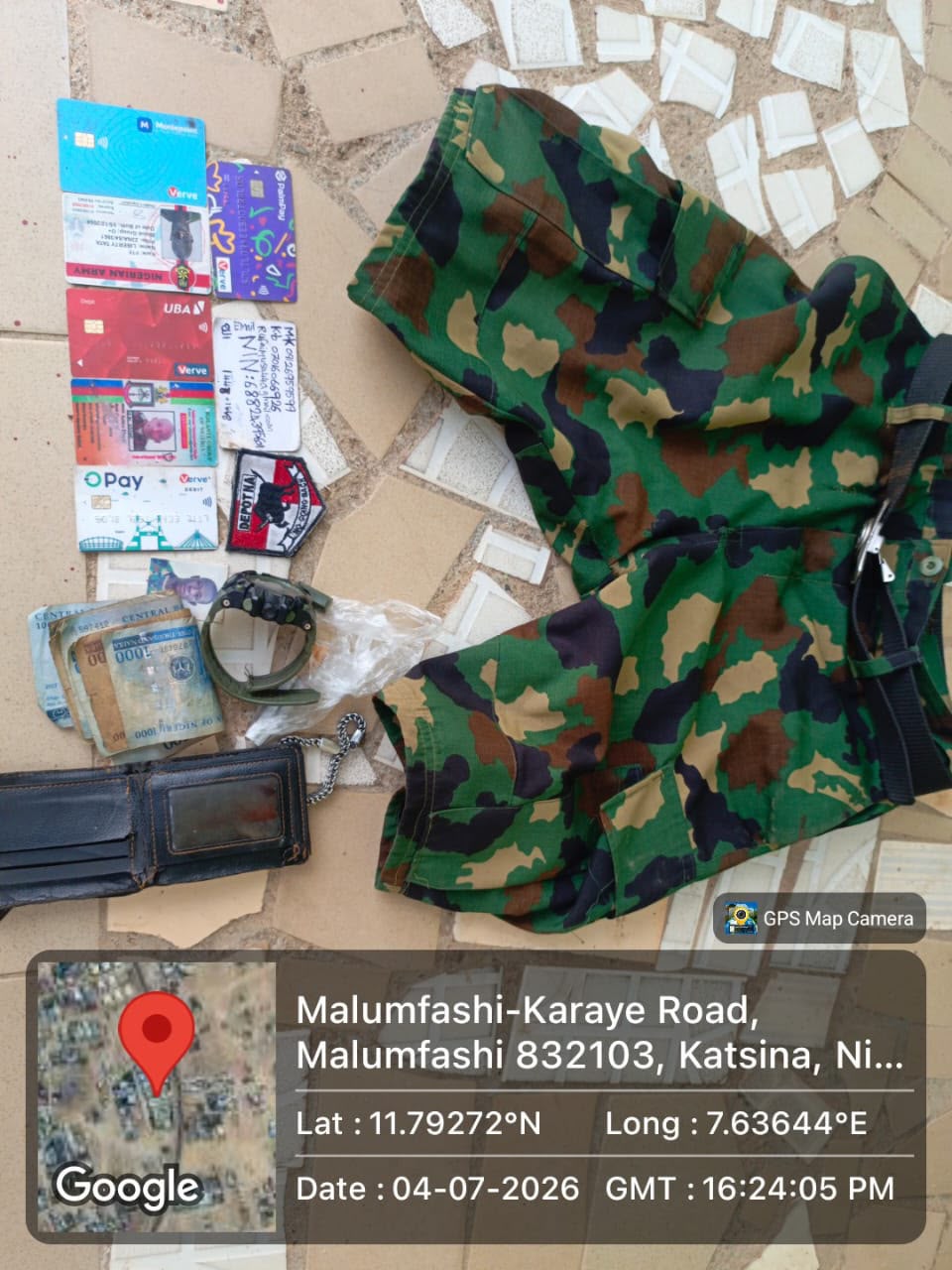
Troops of 17 Brigade have arrested a suspected military impostor during a fighting patrol in Malumfashi Local Government Area.
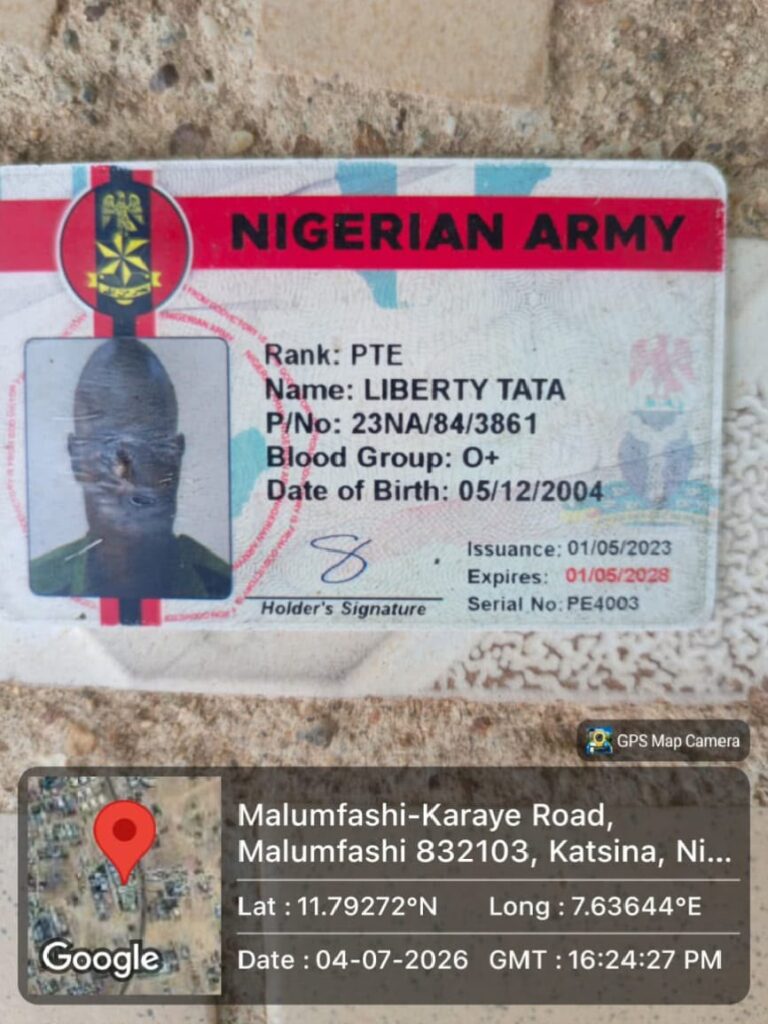
Security sources told Zagazola Makama that the suspect was apprehended at about 1:30 p.m. on July 4 by troops deployed at the Forward Operating Base (FOB) Malumfashi while conducting routine patrols within Malumfashi town.
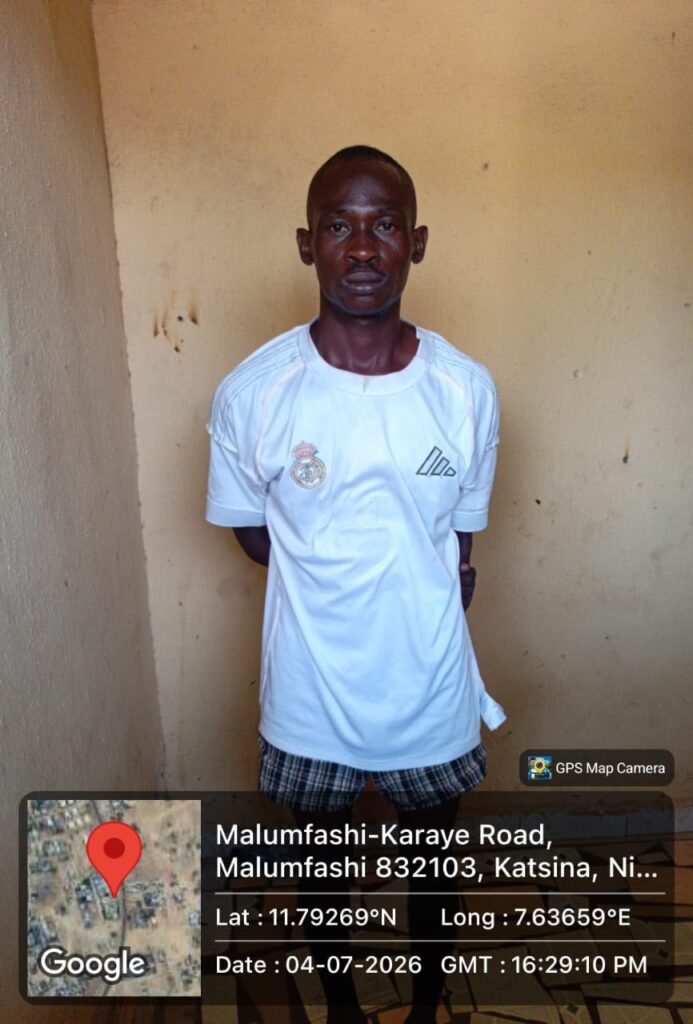
According to the sources, the suspect was intercepted while wearing a woodland camouflage three-quarter short, raising suspicion among the troops.
A search conducted on the suspect led to the recovery of a fake Nigerian Army identity card, four Automated Teller Machine (ATM) cards, one woodland camouflage three-quarter short, a wristwatch and the sum of ₦17,000.
The suspect and the recovered exhibits are currently in military custody pending further investigation.
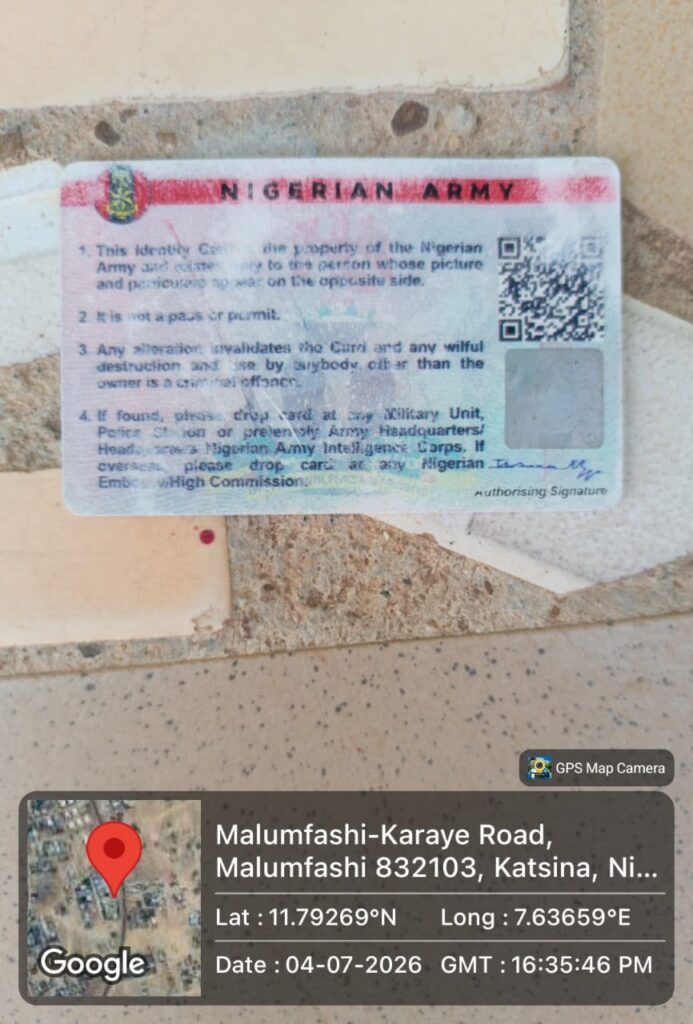
Military sources said the arrest forms part of ongoing efforts to curb impersonation of security personnel and other criminal activities within the area.
Troops Arrest Suspected Military Impostor in Katsina
Troops Recover 50 Rustled Cattle, Repel Suspected Rustlers in Kaduna
By Zagazola Makama
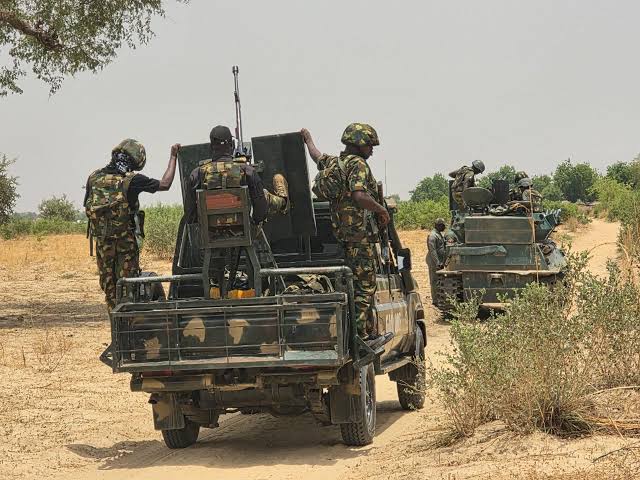
Troops deployed at the Forward Operating Base (FOB) Kankomi have recovered 50 rustled cattle after repelling suspected cattle rustlers during an ambush operation in Chikun Local Government Area.
Security sources told Zagazola Makama that the troops responded to a distress call at about 9:55 a.m. on July 4 over the activities of suspected rustlers at Ungwan Gontu community.
According to the sources, the troops swiftly laid an ambush and made contact with the fleeing suspects, forcing them to abandon the stolen livestock and escape into the surrounding area.
During the operation, the troops recovered 50 rustled cattle, which were subsequently identified and handed over to their rightful owner.
Military sources said efforts are ongoing to track down the fleeing suspects as security operations continue to combat cattle rustling and other criminal activities across Kaduna State.
Troops Recover 50 Rustled Cattle, Repel Suspected Rustlers in Kaduna
Troops Arrest Suspected Terrorist in Kogi, Suspect Confesses to Group Membership
By Zagazola Makama
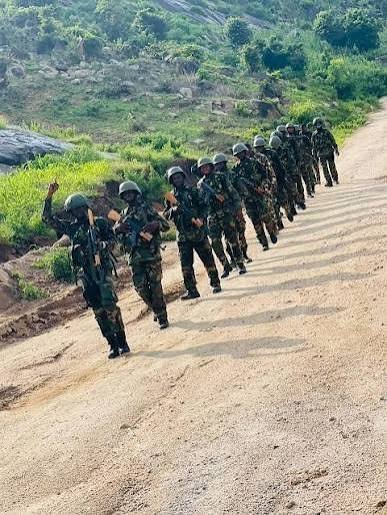
Troops of 12 Brigade, in collaboration with Office of the National Security Adviser (ONSA) Hybrid Forces, have arrested a suspected terrorist during an operation in Lokoja Local Government Area.
Security sources told Zagazola Makama that the troops responded at about 1:00 p.m. on July 4 to reports of a confrontation between local residents and a suspected terrorist at a Ruga settlement behind Obajana community.
According to the sources, the troops swiftly intervened and arrested one suspect at the scene.
During preliminary interrogation, the suspect reportedly confessed to being a member of a terrorist group led by an individual identified as Haruna, which allegedly operates within the Okene general area.
The suspect is currently in military custody and is undergoing further investigation to establish the extent of his involvement and identify other members of the group.
Military sources said the arrest forms part of ongoing security operations aimed at dismantling terrorist and criminal networks across Kogi State.
Troops Arrest Suspected Terrorist in Kogi, Suspect Confesses to Group Membership

Troops Arrest Suspected Military Impostor in Katsina

Troops Recover 50 Rustled Cattle, Repel Suspected Rustlers in Kaduna

Troops Arrest Suspected Terrorist in Kogi, Suspect Confesses to Group Membership

Roger Federer’s Shock as DNA Results Reveal Myla and Charlene Are Not His Biological Children

THE PLIGHT OF FARIDA

FAILED COUP IN BURKINA FASO: HOW TRAORÉ NARROWLY ESCAPED ASSASSINATION PLOT AMID FOREIGN INTERFERENCE CLAIMS
-
 News2 years ago
Roger Federer’s Shock as DNA Results Reveal Myla and Charlene Are Not His Biological Children
-
Opinions4 years ago
THE PLIGHT OF FARIDA
-
 News1 year ago
FAILED COUP IN BURKINA FASO: HOW TRAORÉ NARROWLY ESCAPED ASSASSINATION PLOT AMID FOREIGN INTERFERENCE CLAIMS
-

 News2 years ago
EYN: Rev. Billi, Distortion of History, and The Living Tamarind Tree
-
 Opinions5 years ago
POLICE CHARGE ROOMS, A MINTING PRESS
-

 ACADEMICS2 years ago
A History of Biu” (2015) and The Lingering Bura-Pabir Question (1)
-

 Columns2 years ago
Army University Biu: There is certain interest, but certainly not from Borno.
-

 Politics1 year ago
2027: Why Hon. Midala Balami Must Go, as Youths in Hawul and Asikira/Uba Federal Constituency Reject ₦500,000 as Sallah Gift
