
News
China, Nigeria Unite to Support Women’s Empowerment Through Film

China, Nigeria Unite to Support Women’s Empowerment Through Film
By: Michael Mike
China is partnering with Nigeria and other nations to drive the comprehensive advancement of women worldwide, with a plan at opening a new chapter in global gender equality and empowerment.
Speaking during the celebration of the China Women’s Film Festival, the Deputy Ambassador, Embassy of the People’s Republic of China in Nigeria, Zhou Hongyou,
highlighted China’s deep-rooted policy of promoting gender equality, noting that the Chinese government has consistently supported women’s advancement in education, employment, and social status.
He explained that the upcoming Global Women’s Summit will focus on strengthening gender equality and empowering women as key drivers of sustainable progress. The summit aims to align international efforts with the UN 2030 Agenda for Sustainable Development, ensuring that women’s rights and opportunities remain central to global development goals.
“This year’s summit will focus on promoting gender equality and women’s development, and on advancing the implementation of the UN 2030 Agenda for Sustainable Development,” he said.
The envoy further revealed that China credits women as a central force in its rapid economic and social transformation, emphasizing their indispensable contributions to national progress.
“Chinese women have fully utilised their intelligence, talents and creativity, playing an indispensable role in China’s transformation from a poor and backward country to a world economic powerhouse in just over the past 50 years,” he stated.
He added that China also incorporates women’s development indicators into its national planning system, making gender equality a key measure of broader economic and social progress.
“China has integrated women’s development goals and tasks into its five-year plan for national economic and social development, using the status of women’s development as a key metric for assessing broader economic and social progress,” he added.
Hongyou further stressed China’s global outlook, particularly its cooperation with Nigeria and other countries, to promote women’s empowerment and sustainable progress worldwide.
“China is working with the Nigerian side and other countries around the world to accelerate the comprehensive development of women and open a new chapter in the advancement of the women’s cause globally,” he said.
On his part, the Chairman of the House Committee on Culture and Creative Economy, Hon. Gabriel Saleh Zock, commended China’s ongoing partnership with Nigeria in promoting cultural diplomacy through initiatives such as the China Women’s Film Festival. He emphasized that such collaborations not only celebrate women in film but also deepen creative and cultural ties between both nations.
He said: “I commend the Embassy of China and the China Cultural Center in Nigeria for their consistent commitment to building cultural diplomacy and fostering creative exchange between our two nations, Nigeria and China. This festival is another bridge linking our creative communities, inspiring new possibilities for cooperation, artistic collaboration, and knowledge exchange,” he stated.
Zock also stressed Nigeria’s dedication to gender inclusion and empowerment, revealing that the National Assembly is actively working to ensure greater female representation in governance, aligning with broader global goals for gender equality.
“Just like how we are doing in the National Assembly now, we are trying to amend the Constitution and make a reserve seat for 30% women inclusion in governance. By God’s grace, in the coming years, more women will take their rightful place in leadership and decision-making across our nation,” he said.
He highlighted the unifying power of art and culture, stressing that collaboration between Nigeria and China can lead to a future where creativity, peace, and prosperity thrive.
“Together, Nigeria and China can champion a creative future where talent knows no bounds and where art continues to unite humanity. When women tell their stories, society evolves; and when nations exchange their art, peace and prosperity follow. Let us reaffirm our shared responsibility to make cultural diplomacy a cornerstone of development and mutual understanding,” he added.
Delivering a goodwill message on behalf of the Honourable Minister of Women Affairs, H.E. Iman Suleman-Ibrahim, Ms. Rukkayah described the China Women’s Film Festival as a distinguished platform that celebrates creativity, resilience, and the power of storytelling to connect nations and inspire change.
“It is a great honor to join you at this year’s China Women’s Film Festival a distinguished platform that celebrates creativity, resilience, and the power of storytelling to connect nations and inspire change. Through the art of film, we are reminded that stories have the power to bridge cultures, ignite compassion, and build mutual understanding across borders,” she said.
She noted that the festival coincides with renewed international reflection on the Beijing Declaration and Platform for Action, underscoring its lasting influence on global gender equality and women’s empowerment.
“This festival holds a special significance as it coincides with the renewed global reflection on the Beijing Declaration and Platform for Action a landmark framework that has guided three decades of advocacy for women’s rights, gender equality, and empowerment. As the world revisits the spirit of Beijing, we reaffirm our shared duty to ensure that every woman and girl, everywhere, lives freely, fulfilled, and empowered to reach her full potential,” she added.
Rukkayah also highlighted Nigeria’s ongoing efforts under President Bola Ahmed Tinubu’s Renewed Hope Agenda, emphasizing programs designed to uplift women, strengthen families, and support vulnerable groups.
“For Nigeria, this moment aligns closely with the Renewed Hope Agenda of His Excellency, President Bola Ahmed Tinubu, which places people at the heart of national development. Through the Renewed Hope Social Impact Intervention Programme, the Federal Ministry of Women’s Affairs is driving transformative initiatives that promote women’s economic empowerment, strengthen the family system, enhance child protection, and improve welfare for vulnerable groups building a more inclusive, just, and compassionate society,” she said.
She further emphasized the growing partnership between Nigeria and China in promoting women-led innovation, cultural diplomacy, and creative exchange.
“Deepening collaboration with the Chinese Embassy in Nigeria holds immense promise for advancing women’s development. China’s success in leveraging culture, technology, and social innovation provides valuable lessons for Nigeria. Together, our partnership can expand opportunities for capacity-building, creative industry exchange, and women-led entrepreneurship particularly in film, digital storytelling, and cultural diplomacy ensuring that women’s voices continue to shape communities and inspire global progress,” she stated.
China, Nigeria Unite to Support Women’s Empowerment Through Film


Troops Arrest Suspected Military Impostor in Katsina
By Zagazola Makama
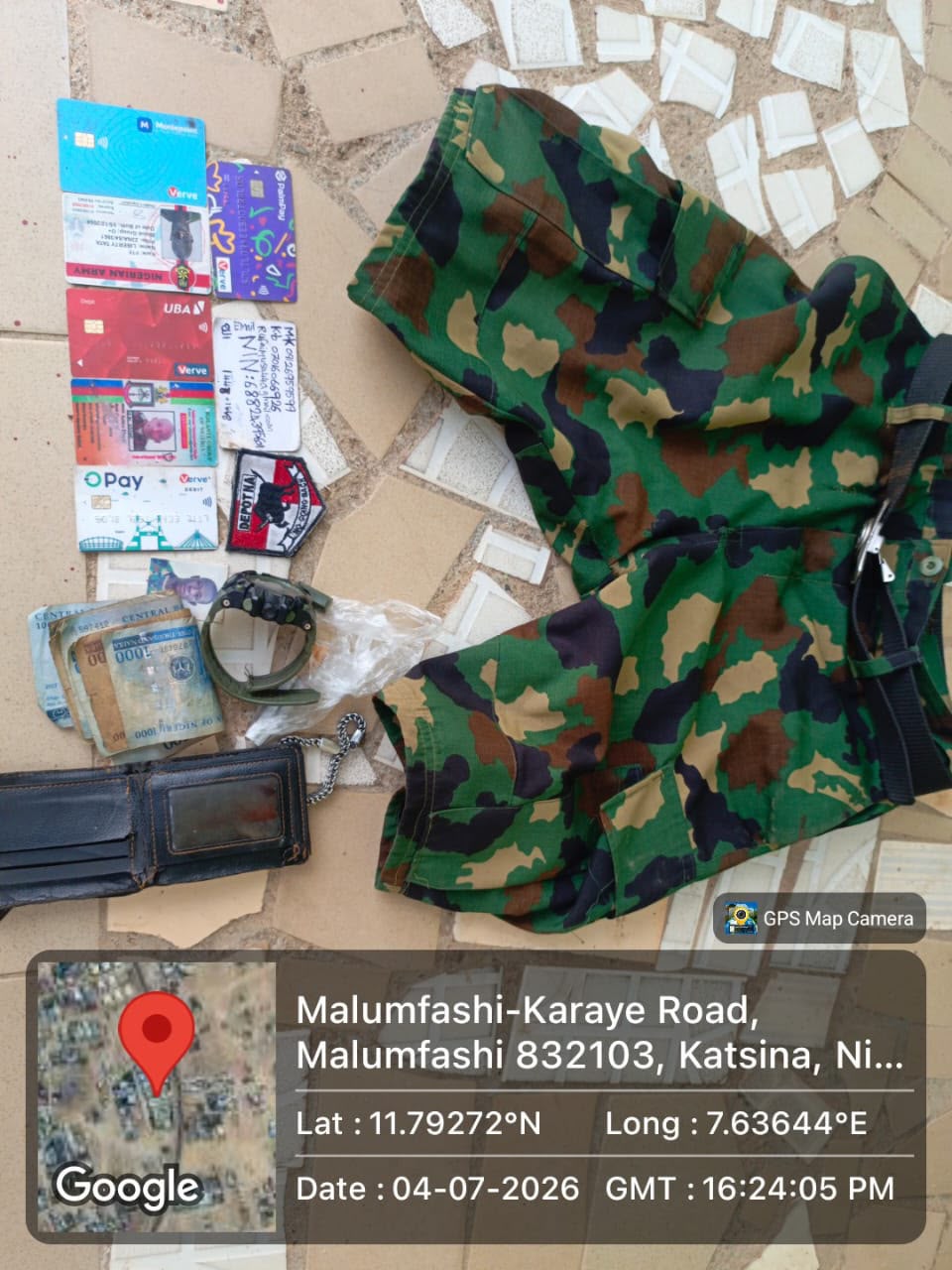
Troops of 17 Brigade have arrested a suspected military impostor during a fighting patrol in Malumfashi Local Government Area.
Security sources told Zagazola Makama that the suspect was apprehended at about 1:30 p.m. on July 4 by troops deployed at the Forward Operating Base (FOB) Malumfashi while conducting routine patrols within Malumfashi town.

According to the sources, the suspect was intercepted while wearing a woodland camouflage three-quarter short, raising suspicion among the troops.
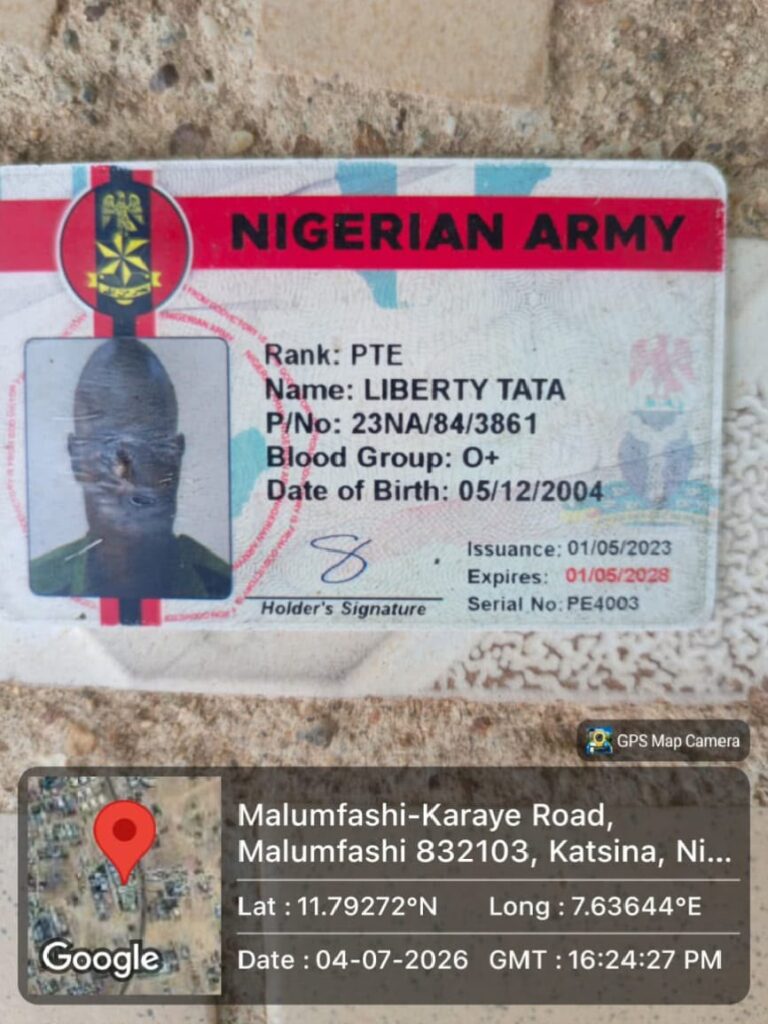
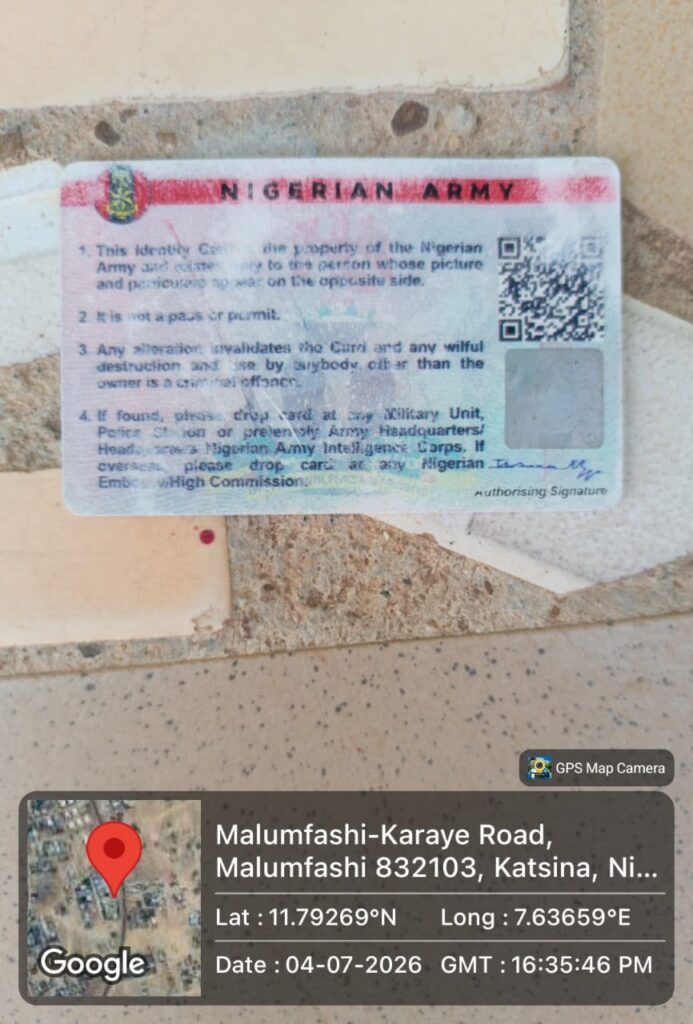
A search conducted on the suspect led to the recovery of a fake Nigerian Army identity card, four Automated Teller Machine (ATM) cards, one woodland camouflage three-quarter short, a wristwatch and the sum of ₦17,000.
The suspect and the recovered exhibits are currently in military custody pending further investigation.
Military sources said the arrest forms part of ongoing efforts to curb impersonation of security personnel and other criminal activities within the area.
Troops Arrest Suspected Military Impostor in Katsina
Troops Recover 50 Rustled Cattle, Repel Suspected Rustlers in Kaduna
By Zagazola Makama
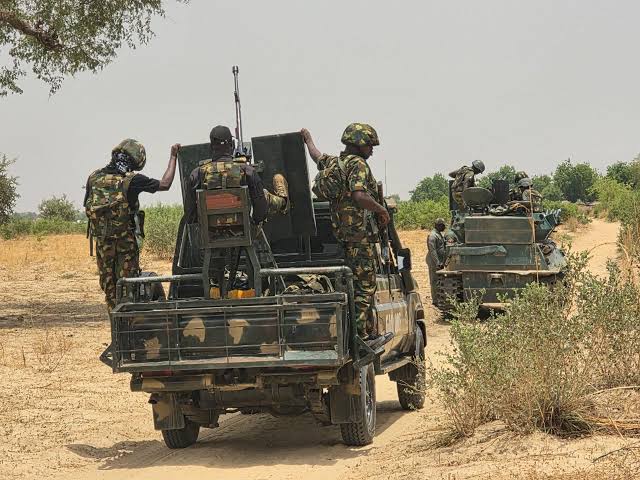
Troops deployed at the Forward Operating Base (FOB) Kankomi have recovered 50 rustled cattle after repelling suspected cattle rustlers during an ambush operation in Chikun Local Government Area.
Security sources told Zagazola Makama that the troops responded to a distress call at about 9:55 a.m. on July 4 over the activities of suspected rustlers at Ungwan Gontu community.
According to the sources, the troops swiftly laid an ambush and made contact with the fleeing suspects, forcing them to abandon the stolen livestock and escape into the surrounding area.
During the operation, the troops recovered 50 rustled cattle, which were subsequently identified and handed over to their rightful owner.
Military sources said efforts are ongoing to track down the fleeing suspects as security operations continue to combat cattle rustling and other criminal activities across Kaduna State.
Troops Recover 50 Rustled Cattle, Repel Suspected Rustlers in Kaduna
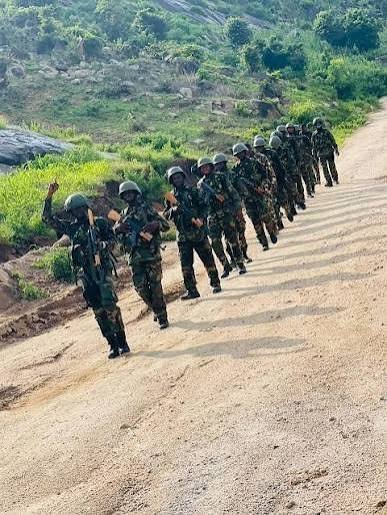
Troops Arrest Suspected Terrorist in Kogi, Suspect Confesses to Group Membership
By Zagazola Makama
Troops of 12 Brigade, in collaboration with Office of the National Security Adviser (ONSA) Hybrid Forces, have arrested a suspected terrorist during an operation in Lokoja Local Government Area.
Security sources told Zagazola Makama that the troops responded at about 1:00 p.m. on July 4 to reports of a confrontation between local residents and a suspected terrorist at a Ruga settlement behind Obajana community.
According to the sources, the troops swiftly intervened and arrested one suspect at the scene.
During preliminary interrogation, the suspect reportedly confessed to being a member of a terrorist group led by an individual identified as Haruna, which allegedly operates within the Okene general area.
The suspect is currently in military custody and is undergoing further investigation to establish the extent of his involvement and identify other members of the group.
Military sources said the arrest forms part of ongoing security operations aimed at dismantling terrorist and criminal networks across Kogi State.
Troops Arrest Suspected Terrorist in Kogi, Suspect Confesses to Group Membership

Troops Arrest Suspected Military Impostor in Katsina

Troops Recover 50 Rustled Cattle, Repel Suspected Rustlers in Kaduna

Troops Arrest Suspected Terrorist in Kogi, Suspect Confesses to Group Membership

Roger Federer’s Shock as DNA Results Reveal Myla and Charlene Are Not His Biological Children

THE PLIGHT OF FARIDA

FAILED COUP IN BURKINA FASO: HOW TRAORÉ NARROWLY ESCAPED ASSASSINATION PLOT AMID FOREIGN INTERFERENCE CLAIMS
-
 News2 years ago
Roger Federer’s Shock as DNA Results Reveal Myla and Charlene Are Not His Biological Children
-
Opinions4 years ago
THE PLIGHT OF FARIDA
-
 News1 year ago
FAILED COUP IN BURKINA FASO: HOW TRAORÉ NARROWLY ESCAPED ASSASSINATION PLOT AMID FOREIGN INTERFERENCE CLAIMS
-

 News2 years ago
EYN: Rev. Billi, Distortion of History, and The Living Tamarind Tree
-
 Opinions5 years ago
POLICE CHARGE ROOMS, A MINTING PRESS
-

 ACADEMICS2 years ago
A History of Biu” (2015) and The Lingering Bura-Pabir Question (1)
-

 Columns2 years ago
Army University Biu: There is certain interest, but certainly not from Borno.
-

 Politics1 year ago
2027: Why Hon. Midala Balami Must Go, as Youths in Hawul and Asikira/Uba Federal Constituency Reject ₦500,000 as Sallah Gift
