
International
China Points Path to Modernization… As Chinese President Insists Route to Modernization Requires General Patterns

China Points Path to Modernization
… As Chinese President Insists Route to Modernization Requires General Patterns
By: Michael Mike
Chinese President Xi Jinping has sent congratulatory message to Lanting Forum on Chinese Modernization and the World
At the Forum held on 21 April at the Meet-the-World Lounge in Shanghai, the Chinese President pointed out that realizing modernization is a relentless pursuit of the Chinese people since modern times began and also the common aspiration of people of all countries.
He added that in pursuing modernization, a country needs to follow certain general patterns, which include that more importantly, it should proceed from its own realities and develop its own features.
He said: @After a long and arduous quest, the Communist Party of China has led the entire Chinese nation in finding a development path that suits China’s conditions. We are now building a strong country and advancing national rejuvenation on all fronts through a Chinese path to modernization.
“China will provide new opportunities for global development with new accomplishments in Chinese modernization, lend new impetus to humanity’s search for paths toward modernization and better social systems, and work with all countries to advance the building of a community with a shared future for mankind.”
The Lanting Forum on Chinese Modernization and the World was organized by the China Public Diplomacy Association and the Chinese People’s Institute of Foreign Affairs, and was supported by the Shanghai Municipal People’s Government. Representatives of governments, think tanks and the media from nearly 80 countries participated in the Forum.
Also speaking at the Forum, China’s State Councilor and Foreign Minister Qin Gang, said: “Chinese modernization is the natural choice of China’s 100-year-long quest for development. Modernization for China has been a journey of hardship and perseverance, anguish and glory, honour and dreams. During modern times, countless patriots looked to the West for a formula of modernization to save the nation, but they all failed. It was not until the birth of the CPC in 1921 that China found the pillar and guidance for its modernization. It is under the CPC’s strong leadership that we have embarked on the great journey of independently building a modern country.
“We have turned China from an impoverished and backward land into the world’s second largest economy, top trader in goods, biggest holder of foreign exchange reserves, and biggest manufacturer. We have put in place the world’s largest compulsory education system, social security system, and medical and health system. China has realized, in a short span of several decades, industrialization that had taken developed countries several centuries. We have caught up with the times in great strides.”
He added that: “Chinese modernization is the natural requirement for promoting national rejuvenation on all fronts. As of the 18th CPC National Congress, under the strong leadership of the CPC Central Committee with Comrade Xi Jinping at its core, the “acceleration button” was pressed in China’s modernization drive. The two major miracles — fast economic development and long-term social stability — continued. Absolute poverty was eradicated. A moderately prosperous society in all respects became a reality.
“With this, the First Centenary Goal was realized. The Chinese nation has achieved a great transformation from standing up and growing prosperous to becoming strong. National rejuvenation is now on an irreversible course. At the National People’s Congress (NPC) and the Chinese People’s Political Consultative Conference (CPPCC) sessions last month, General Secretary Xi Jinping was again unanimously elected President of the People’s Republic of China. It was a choice by history and by the people. With the conviction and responsibility of “serving the people selflessly”, President Xi Jinping is steering Chinese modernization forward and leading us in marching on the right path toward a better future.”
He noted that: “Chinese modernization is a natural outcome of the laws governing human development. Modernization is a common cause of all humanity. Although the West enjoyed the fruits of modernization ahead of others, history will not end there. As early as 140 years ago, Karl Marx envisioned crossing the Caudine Forks of capitalism, providing a solid theoretical basis for a path of modernization different from that of the West. Through the past 100 years and more, China has found by itself a path to modernization, and created a new form of human advancement. Ample facts have proved that there is no fixed model of, or single solution to, modernization. Any country can achieve modernization, as long as the path suits its conditions and answers the need of its people for development. On the contrary, mechanically copying ill-fitted foreign models is counter-productive, and may even lead to catastrophic consequences.”
China Points Path to Modernization
… As Chinese President Insists Route to Modernization Requires General Patterns


International
Ecological Distress in the Horn of Africa: Ethio‑Egyptian Hydropower Relations and the Strategic Significance of Hydropower Investments

Ecological Distress in the Horn of Africa: Ethio‑Egyptian Hydropower Relations and the Strategic Significance of Hydropower Investments
By: Yechale Degu
Over the past two decades, Ethiopia has invested heavily on hydropower as a means to accelerate energy access, economic growth, and development and ensure control of its water resources. Though not without political costs affecting its diplomatic ties, hydropower was planned as a central pillar of the country’s energy security. Despite persistent domestic shortfalls in extending electricity to rural communities, the initiative has achieved notable success. Ethiopia has emerged as a regional hydroelectric hub, supplying power to nearly all neighboring states, with prospects for expansion beyond the region, generating significant hydro-dollar in return.
The hydropower strength more acquired following the completion of the Grand Ethiopian Renaissance Dam (GERD) represents a landmark achievement, overcoming colonial-era restrictions that limited upstream countries such as Ethiopia in managing their water resources. The dam’s completion, financed largely through domestic means, marked a breakthrough against financial constraints imposed by global financial architectures over financing of controversial projects like GERD.

Withstanding sustained diplomatic challenges from Egypt, a country with deeper international entrenchment than Ethiopia, and its allies and organizations Egypt associated with such as Arab League/AR and Organization of Islamic Cooperation/OIC, Ethiopia emerge as a regional or continental hydropower. The dam becomes a new magna carta governing water relations for the future to come between Ethiopia and Egypt in particular and all Nile riparian states in general signaling the possible dominance of states in the head of the water systems.
Although Ethiopia constructed and filled the dam without any formal framework of agreement with downstream states such as Egypt, the hydropower rivalry between the two countries was largely settled following Ethiopia’s near completion and filling of the GERD in August 2024 and its inauguration on 9 September 2025. In this process, Ethiopia’s argument that the dam would not diminish the volume of water flowing to downstream countries gained political acceptance among diplomatic communities. Ultimately, Egypt, albeit reluctantly and painfully, acknowledged Ethiopia’s effective control over the Nile. However, the recent weather and environmental developments in the Horn of Africa/HoA will shape the Ethio-Egyptian water relations and put a question over the sustainability of hydropower investments as weather would affect the water volume and energy generations significantly.
The weather and environment intelligence report recently released by a USA based organization called Famine Early Warning Systems Network/FEWS-Net indicated that El Niño, a periodic warming of the ocean surface, related dryness is already emerging in the HoA. According to the report the HoA countries including Ethiopia has experienced a delayed and below-average rainfall season in the months between March to September. Prolonged dry spell is also expected in the months to come. The same report indicated that the Above-Average Temperatures Most Likely into Early 2027 increasing likelihood of extreme warm temperatures, affecting streams and water volumes. The region is expected to register a likely 0.5-3°C temperature rise and it will be hotter than typical level of temperature in the region. This significant rainfall deficits, rising temperature and dry spell is an indicative of drought conditions in the HoA and significantly shaping the Ethio-Egyptian relations and putting a strategic question over the sustainability of hydropower.
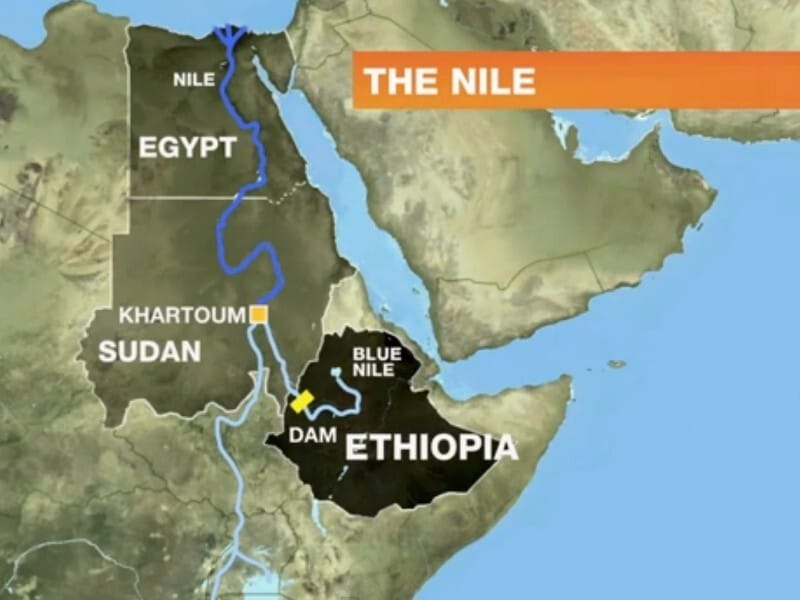
The FEWS‑Net report, though primarily directed at humanitarian actors such as World Food Program/WFP to prompt immediate interventions in response to rising temperatures and declining rainfall, the issue extends far beyond humanitarian concerns. It constitutes a fundamental driver of instability and a critical factor shaping future investments and reliance on hydropower. In addition to exacerbating humanitarian crises and inflating food prices, the projections underscore that climate‑induced reductions in water availability could reignite hydropower rivalries between lower and upper Nile riparian states. These climatic conditions are likely to intensify Ethiopia‑Sudan‑Egypt tensions over the Nile, as reflected in recent complaints by Sudan and Egypt regarding water releases from GERD. While the GERD can generate near‑optimal hydropower without causing significant downstream deficits under wet, average, or short‑term drought scenarios, this balance can be disrupted during prolonged dry seasons in Ethiopia and the wider HoA. Egypt, in particular, may seize upon such environmental developments not as temporary misfortunes but as strategic opportunities to reintroduce drought‑contingent operating principles into diplomatic negotiations.
Compounding the ecological pressures in the HoA are the high‑intensity conflicts in Ethiopia’s three northern regions, where the government has alleged that Egypt is playing a critical role and declared persona non grata over one Egyptian diplomat who ordered to leave in 48 hours on October 1, 2026. Therefore, these environmental stresses are likely to reignite regional controversies at a time of heightened tension and looming conflict in Northern Ethiopia, particularly between the Cooperation of Ethiopian People’s Forces for Survival and the federal government. The convergence of ecological strain, political instability and tit-for-tat actions between Ethiopia and Egypt one expelling the diplomat of the other carries significant security implications for Ethiopia and the wider HoA. Egypt, in this context, may exploit the situation to exert diplomatic and coercive pressure on the Ethiopian government, seeking operating agreements over Nile and GERD that include concessions favorable to its interests.
The prevailing environmental trends and ecological pressures in the HoA underscore the urgency of a strategic shift away from over‑reliance on hydropower investments toward a diversified energy portfolio that is less vulnerable to climatic variability. It signal the need to reconsider development pathways that depend heavily on electricity generated from water sources. While hydropower will remain a cornerstone of the global renewable energy transition, its reliability is increasingly undermined by climate change‑induced shifts in hydrological cycles, imparting new dimensions to its strategic significance.
For Ethiopia, this ecological distress raises critical questions about the sustainability of its heavy reliance on hydropower and highlights the necessity of diversifying national energy sources. Pursuing a balanced energy mix strategy, supported by adaptive planning and management, will be essential to ensure hydropower continues to play a pivotal role in the country’s power infrastructure while meeting the rising national demand.
Climate change has triggered significant shifts in hydrological patterns, profoundly affecting the hydropower rivalry between Ethiopia and Egypt and raising broader questions about the reliability of hydropower investments across Africa, particularly in Ethiopia. Diplomatic tensions between the two states over water access and control are increasingly shaped by environmental and climatic dynamics. Concerns are mounting that the previously near‑settled hydropower rivalry will re-surface due to escalating ecological pressures. These developments have the potential to fundamentally alter relations between upper and lower riparian states and heighten the strategic importance of the Nile River. Egypt, framing the Nile as a matter of national security, has repeatedly issued televised warnings that any disruption of water flows would be regarded as an ‘act of war.’ This extension of the Nile discourse from civilian politics to military commitments underscores the gravity of the regional security threat as a result of environmental distress. In light of recent environmental and climatic shifts, Egypt is likely to intensify efforts to re‑internationalize the Nile issue, presenting itself as a vulnerable downstream state while pursuing a diplomatic campaign against Ethiopia. The objective would not necessarily be to compel Ethiopia to relinquish its upstream dominance or release additional water, but rather to impose greater political and reputational constraints on Ethiopia’s exercise of its headwater rights.
In conclusion, extreme weather events are expected to disrupt streamflow and create significant variability in water volumes, leading to substantial reductions in availability. In this context, any future water allocation treaties between Ethiopia and the major downstream states should avoid rigid prescriptions of fixed allocations. Given the region’s environmental vulnerabilities, such agreements must be guided by adaptive strategies that prioritize flexibility and responsiveness to hydrological variability in the headwaters. This approach stands in contrast to colonial‑era frameworks that imposed predictable spheres of utilization while disregarding the impacts of environmental fluctuations. A modern treaty framework should therefore embed adaptive principles, ensuring that water governance reflects ecological realities rather than static allocations.
He is an independent Horn of Africa security analyst and researcher and can be contacted at Ziyinyechale@gmail.com
Ecological Distress in the Horn of Africa: Ethio‑Egyptian Hydropower Relations and the Strategic Significance of Hydropower Investments
International
Akande Presents Credentials to Swedish King, Sets Stage for Stronger Nigeria-Sweden Ties

Akande Presents Credentials to Swedish King, Sets Stage for Stronger Nigeria-Sweden Ties
By: Michael Mike
Nigeria’s Ambassador to Sweden, Lola Akande, has formally assumed her diplomatic responsibilities in the Scandinavian country, presenting her Letters of Credence to King Carl XVI Gustaf at the Royal Palace in Stockholm.
The ceremony, held on Wednesday, marked the formal accreditation of Akande as Nigeria’s representative to the Kingdom of Sweden and opened a new phase in bilateral engagement between the two countries.
Akande was accorded ceremonial honours, including a corps marshal and formal procession, in keeping with Sweden’s diplomatic traditions, before presenting her credentials to the Swedish monarch.

The presentation of Letters of Credence is a key diplomatic procedure through which a receiving state formally recognises an ambassador as the accredited representative of the sending country.
Following the ceremony, a reception was held in Akande’s honour at the Nigerian House in Stockholm, bringing together members of the diplomatic community, government officials, business leaders and Nigerians resident in Sweden.
Those in attendance included ambassadors and members of the African diplomatic corps, officials of the Swedish Ministry for Foreign Affairs, members of the Corps of African Women Ambassadors, Swedish nationals, representatives of the Swedish business community and other invited guests.
The reception provided an opportunity to celebrate the ambassador’s accreditation and highlight the longstanding relationship between Nigeria and Sweden, as well as opportunities to deepen cooperation.
Areas identified for enhanced engagement include trade and investment, innovation, cultural exchange and people-to-people relations.
Akande’s formal accreditation comes as both countries continue to explore avenues for strengthening bilateral ties, with expectations that her tenure will promote closer engagement between Nigerian and Swedish institutions, businesses and communities.
The development also signals renewed diplomatic attention to the Nigerian community in Sweden and the broader prospects for expanding cooperation between Africa’s most populous country and the Nordic nation.
Akande Presents Credentials to Swedish King, Sets Stage for Stronger Nigeria-Sweden Ties

NIS enrols 2,296 Nigerians in first week of UK passport intervention
By: Michael Mike
The Nigeria Immigration Service (NIS) has enrolled 2,296 applicants in the first six operational days of its Special Passport Intervention Exercise in the United Kingdom, with the Manchester Centre recording the higher number of enrolments.
The exercise, which commenced on September 7, 2026, recorded 1,709 applicants at the Manchester Centre and 587 at the London Centre, as Nigerians with confirmed appointments continued to turn out for passport services.
Daily enrolment figures across the two centres stood at 245 on September 7, 401 on September 8, 396 on September 9, 429 on September 10, 406 on September 11 and 419 on September 12.
The Service said the sustained turnout reflected steady progress in the processing of applicants with confirmed appointments, adding that passport production and dispatch for those already enrolled had commenced and were progressing steadily.
As part of efforts to ensure effective oversight and quality service delivery, the Comptroller-General of the NIS, Kemi Nanna Nandap, undertook working visits to the intervention centres in Manchester and London.
The visits, according to the Service, were aimed at assessing the exercise firsthand, engaging with members of the Nigerian community and ensuring that the intervention provided efficient, responsive and seamless passport services to applicants.
The NIS said the exercise would continue at both centres, assuring applicants with confirmed intervention appointments of service.
The Service said it appreciates members of the Nigerian community in the UK for their patience, understanding and cooperation, urging all applicants to continue working with officials on the ground to ensure the smooth and efficient delivery of the intervention.
NIS enrols 2,296 Nigerians in first week of UK passport intervention

In Ethiopia, VP Shettima moves to strengthen Nigeria’s nutrition future through agricultural value-chain transformation.

EU Releases €225,000 Humanitarian Aid for Conflict-Displaced Persons in Kebbi

UNESCO, FG Seek Ethical Framework for Neurotechnology in Nigeria

Roger Federer’s Shock as DNA Results Reveal Myla and Charlene Are Not His Biological Children

THE PLIGHT OF FARIDA

FAILED COUP IN BURKINA FASO: HOW TRAORÉ NARROWLY ESCAPED ASSASSINATION PLOT AMID FOREIGN INTERFERENCE CLAIMS
-
 News3 years ago
Roger Federer’s Shock as DNA Results Reveal Myla and Charlene Are Not His Biological Children
-
Opinions5 years ago
THE PLIGHT OF FARIDA
-
 News1 year ago
FAILED COUP IN BURKINA FASO: HOW TRAORÉ NARROWLY ESCAPED ASSASSINATION PLOT AMID FOREIGN INTERFERENCE CLAIMS
-

 News3 years ago
EYN: Rev. Billi, Distortion of History, and The Living Tamarind Tree
-
 Opinions5 years ago
POLICE CHARGE ROOMS, A MINTING PRESS
-

 ACADEMICS3 years ago
A History of Biu” (2015) and The Lingering Bura-Pabir Question (1)
-

 Columns3 years ago
Army University Biu: There is certain interest, but certainly not from Borno.
-

 Politics1 year ago
2027: Why Hon. Midala Balami Must Go, as Youths in Hawul and Asikira/Uba Federal Constituency Reject ₦500,000 as Sallah Gift
