
News
China Says Taiwan Independence is a Threat to It’s Sovereignty, Territorial Integrity

China Says Taiwan Independence is a Threat to It’s Sovereignty, Territorial Integrity
… Asks Journalists Against Report Suggesting Independence of Taiwan
By: Michael Mike
The People’s Republic of China on Thursday said Taiwan independence is a serious threat to its sovereignty and territorial integrity.
It said the Taiwan question concerns China’s sovereignty, territorial integrity, and China’s national sentiment without any ambiguity and cannot be argued or challenged.
The Chief, Political Section of the Chinese Embassy in Nigeria, Zhu Songbo, in his remarks at the Media Salon on the One-China Principle as the Bedrock of China- Nigeria Relations in Abuja, explained that the one-China principle, which asserts that there is only one China in the world, Taiwan is an inalienable part of China’s territory, and the government of the People’s Republic of China is the only legitimate government representing all of China.
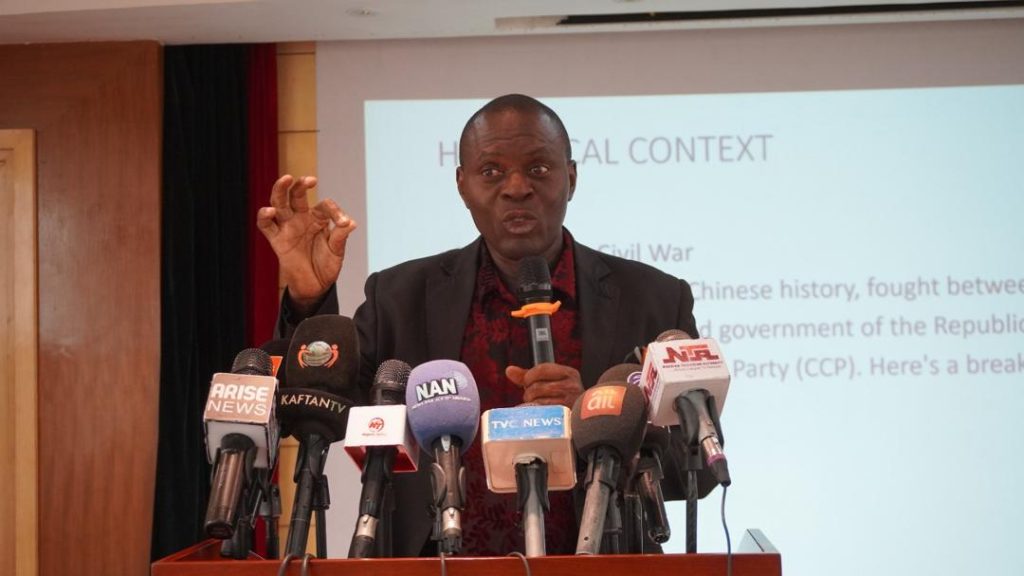
Songbo added that the application of the one-China principle is universal, unconditional, and unquestionable stressing that all countries that have diplomatic relations with China and all member states of the United Nations must unconditionally adhere to the one-China principle.
Zhu on how Nigeria is handling the Taiwan, said China appreciates the country’s commitment to the one-China principle, citing Nigeria’s actions, including the relocation of the Taiwan Trade Office out of Abuja.
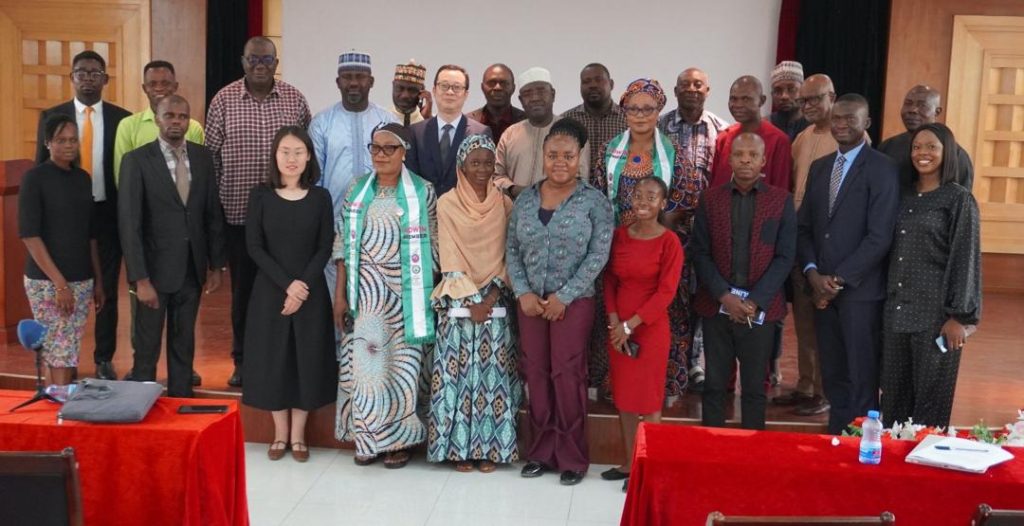
He said: “Nigeria has been adhering to the one-China principle, which has been appreciated by China.
“We hope that Nigeria will continue to uphold this principle and support China’s efforts to achieve national reunification.”
Zhu however cautioned media practitioners against using language that implies Taiwan’s independence or sovereignty, urging them to adhere to the principles of objectivity, fairness, and truthfulness when reporting on China and the Taiwan question.
He said: “We hope that all of you will have a better understanding of China’s position on the Taiwan question and will continue adhering to the principles of objectivity, fairness, and truthfulness when writing reports about China,” Songbo added.
Songbo further expressed concern over attempts by some forces to promote Taiwan independence, describing such efforts as a serious threat to peace and stability in the Taiwan Strait.
“The Taiwan independence separatist activities and external forces are a threat to peace and stability across the Taiwan Strait. We firmly oppose any attempts to create a ‘two Chinas’ or ‘one China, one Taiwan’ scenario.”
Songbo reaffirmed China’s commitment to peaceful reunification, while also emphasizing the importance of maintaining stability and security in the region.
“We are committed to peaceful reunification, but we will not tolerate any attempts to undermine China’s sovereignty and territorial integrity. We hope that all parties will work together to promote peace and stability in the region.”
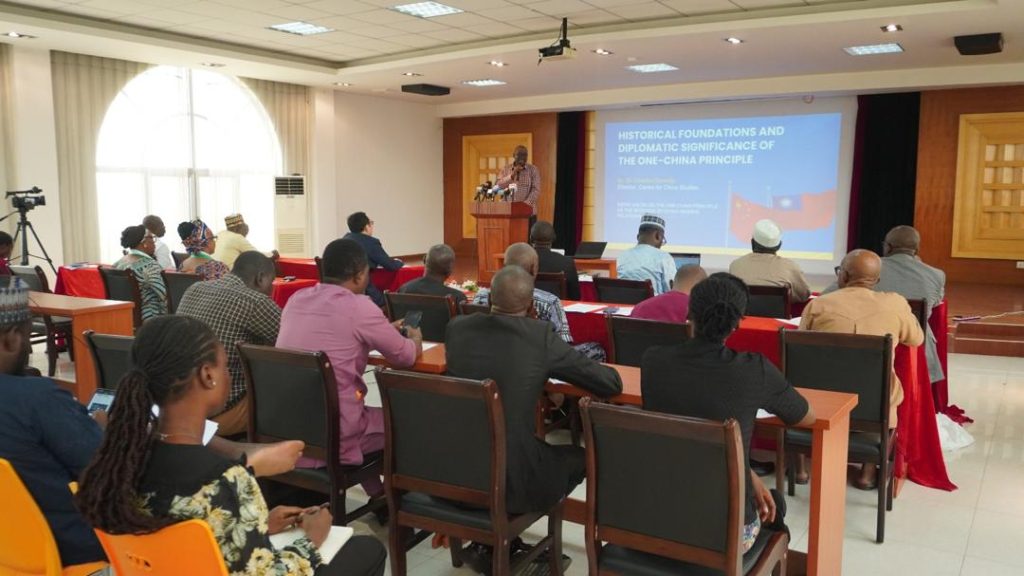
Earlier in his presentation, the Director of Centre for China Studies, Charles Onunaiju, said the Chinese and Taiwanese are, in fact, one people, sharing a common history and cultural heritage.
He noted that Nigeria’s position on the One-China principle is sacrosanct, as evidenced by its commitment to recognizing the People’s Republic of China as the sole legitimate government representing all of China.
According to him, “The Taiwan Trade Office in Lagos operates merely as a trade facilitation entity, and not as an embassy, with its primary purpose being to promote economic and commercial ties between Taiwan and Nigeria.
He, However, said the activities of the Taipei Trade Office have been known to undermine Nigeria’s adherence to the One-China principle, which could potentially strain bilateral relations between Nigeria and China.
“Ultimately, Taiwan’s eventual return to China is an inseparable part of history, as the island has been an integral part of Chinese territory since ancient times, and reunification is seen as a necessary step towards realizing the country’s sovereignty and territorial integrity.”
Also, the Head of the Department of Political Science and International Relations at the University of Abuja, Professor Sheriff Ghali Ibrahim, in his presentation said no country will allow secessionist groups to undermine its sovereignty and territorial integrity, and China is no exception in its stance against Taiwan independence.
Prof. Ghali Ibrahim who is also the Director of Centre for Contemporary China-Africa Research, said the United Nations Resolution 2758 of 1971 recognizes the People’s Republic of China (PRC) as the only legal representative of China, with Taiwan considered an integral part of it, a position reinforced by several other laws and frameworks that support the One-China policy, including anti-secession laws.
“The concept of “One Country, Two Systems” was propounded by Deng Xiaoping, aimed at achieving peaceful reunification while allowing for different systems to coexist within a unified China.”
“Nigeria adheres to the principle of non-interference in the internal affairs of other countries, and as such, will not meddle in China’s internal affairs, including the Taiwan question.”
“China and Nigeria share similar ideas and identity, and as a result, efforts by the Taiwan Trade Office to undermine the One-China principle are likely to fail, given the strong bilateral relations between Nigeria and China.”
“The One-China principle has been pivotal to the significant increase in trade volume between Nigeria and China, with trade exceeding over $20 billion, making China Nigeria’s third-largest trade partner.”
“Furthermore, there have been tangible outcomes in terms of infrastructural interventions from the Chinese government, including the construction of rails and roads, which have contributed to Nigeria’s economic development.”
Dr Austin Maho who is a lecturer at the International Institute of Journalism in his presentation on the role of the Nigerian media in Reporting the Taiwan Question, stated that the media plays a critical role in shaping society and public perception, and as such, journalists should exercise caution and responsibility in their reporting, particularly on sensitive issues such as the Taiwan question.
Maho who is also a Daybreak Newspapers’ publisher also said the People’s Republic of China considers Taiwan independence as a red line that should not be crossed, and journalists should be mindful of this in their reportage.
“To provide accurate and balanced coverage, journalists should thoroughly understand the issues between Nigeria and China, avoiding references to Taiwan as a “country” or calling for enhanced collaboration between Nigeria and Taiwan.”
“Media professionals should also be wary of Andy Ping Liu, representative of the Taiwan trade mission in Nigeria, who may attempt to promote Taiwan independence.”
“Vigilance is key among media professionals to ensure that their reporting does not inadvertently undermine the One-China principle or promote secessionist agendas.” He added.
China Says Taiwan Independence is a Threat to It’s Sovereignty, Territorial Integrity


Correctional Service, Army Intelligence deepen collaboration on custodial security
By Zagazola Makama
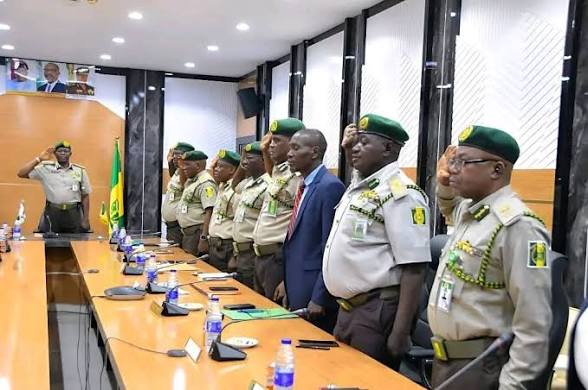
The Nigerian Correctional Service (NCoS) and the Nigerian Army Intelligence Corps have agreed to strengthen intelligence sharing and inter-agency cooperation to enhance custodial security and contribute to national security.
The commitment was made when the Chief of Military Intelligence, Maj. Gen. Hedima, led a delegation on a courtesy visit to the Controller-General of Corrections, Sylvester Nwakuche, in Abuja.
The Service Public Relations Officer, Jane Osuji, disclosed this in a statement on the outcome of the meeting.
Nwakuche said the Correctional Service currently manages about 81,000 inmates across its custodial facilities, with approximately 65 per cent awaiting trial, while more than 4,000 inmates are on death row.
He stressed the need for stronger collaboration among security agencies, noting that the increasing complexity of security threats required improved intelligence coordination and timely information sharing.
The Controller-General said enhanced cooperation with the Army Intelligence Corps would strengthen the Service’s ability to identify and respond to emerging security threats within custodial facilities.
In his remarks, Maj. Gen. Hedima called for closer operational collaboration between the two institutions, particularly through joint training, designation of intelligence focal officers and prompt exchange of actionable intelligence.
He said effective intelligence sharing was essential to preventing security breaches and addressing threats that could originate from or affect custodial facilities.
The proposed joint training is also expected to enhance the capacity of personnel from both institutions to detect, assess and respond to emerging security challenges.
Beyond custodial security, the two institutions are expected to strengthen cooperation in areas relating to inmate rehabilitation and reintegration.
The Correctional Service said the partnership would support existing rehabilitation programmes, including education, vocational training and deradicalisation, as part of broader efforts to reduce recidivism and address security threats.
The Service emphasised that rehabilitation remained an important component of national security, particularly in preventing vulnerable inmates from being influenced by extremist or criminal networks.
The engagement between the NCoS and Army Intelligence Corps comes amid growing emphasis on stronger inter-agency intelligence cooperation as a critical tool for tackling Nigeria’s evolving security challenges.
The two institutions are expected to sustain the partnership through structured intelligence-sharing mechanisms and capacity-building initiatives aimed at strengthening custodial security and supporting the broader national security architecture.
Correctional Service, Army Intelligence deepen collaboration on custodial security
News
Sudan war spills into Chad, Nigeria emerges as critical buffer against widening Sahel insecurity
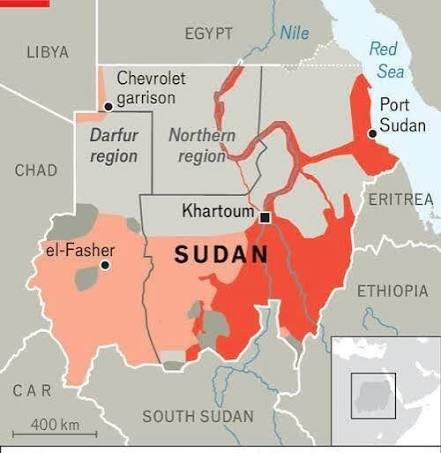
Sudan war spills into Chad, Nigeria emerges as critical buffer against widening Sahel insecurity
By Zagazola Makama
The war in Sudan is increasingly taking on a regional character, with its consequences extending beyond the immediate battlefield into neighbouring Chad and creating a widening security arc stretching from the Sahara and Central Africa toward Nigeria and the Gulf of Guinea.
The convergence of Sudan’s protracted conflict, the deepening instability across the Sahel and competition over strategic resources such as gold, uranium and oil is creating a volatile security environment in which Nigeria could increasingly find itself serving as the critical buffer between the conflict-ridden Sahel and the relatively more stable coastal West African states.
What is emerging is no longer a collection of isolated crises, but an interconnected security ecosystem involving armed groups, illicit trafficking networks, displaced populations, foreign interests, mercenary formations and competing external powers.
Sudan lies at the heart of this emerging crisis where fighting between the Sudanese Armed Forces and the Rapid Support Forces since April 2023 has increasingly affected neighbouring states.
Chad has borne one of the heaviest humanitarian consequences of the Sudan conflict, receiving a large population of Sudanese refugees, particularly in the eastern provinces of Ouaddaï, Wadi Fira and Ennedi-Est.
But the security dynamics are changing.
The eastern Chad is no longer merely a humanitarian rear area for the Sudan conflict. It is progressively becoming a frontline, transit and commercial zone where weapons, fighters, minerals and other illicit commodities can move across poorly controlled desert corridors. The Tiné axis, in particular, has become increasingly vulnerable to cross-border violence.
Recent assessment cites a series of reported incursions and attacks along the Chad-Sudan frontier, including clashes involving Chadian forces and civilians, as well as drone attacks around Tiné and Mourdi.
The situation has forced Chad to take increasingly stringent measures along its eastern frontier, including the closure of its border with Sudan following deadly incidents.
The danger, according to the assessment, is that continued fighting in Darfur could progressively transform eastern Chad from a buffer zone into an extension of Sudan’s battlefield. That development would have consequences far beyond Chad.
One of the most troubling dimensions of the emerging crisis is the alleged expansion of an illicit corridor linking Libya, Sudan and Chad, through which weapons, ammunition, fighters and valuable commodities can move across vast areas where state control remains limited.
Security sources identifies routes running from southern Libya through areas such as Kufra and Faya before extending toward Darfur and eastern Chad. Border towns and commercial centres, including Adré, Iriba and Tiné, are identified as important nodes in this expanding regional network.
From there, the illicit flows can connect with routes leading toward Niger, Cameroon and ultimately Nigeria. This is where the crisis becomes particularly important for Nigeria.
Nigeria does not share a border with Sudan, yet developments thousands of kilometres away could eventually affect its security environment through a chain of interconnected corridors.
The most serious concern is the southward movement of small arms and light weapons (SALW).
Sources warns that weapons originating from conflict zones and illicit markets in the Sahara could increasingly move through Niger and Cameroon before entering Nigeria. For Nigeria, the concern is not simply the quantity of weapons entering the country, but who eventually gains access to them.
The country is already confronting multiple armed threats, including Boko Haram and ISWAP terrorism in the North-East, large-scale banditry in parts of the North-West and other forms of organised criminal and separatist violence. An influx of additional weapons, explosives, drones and trained foreign fighters could therefore provide criminal and extremist organisations with new capabilities.
The danger is particularly acute because Nigeria’s northern and eastern borders are connected to a wider regional environment in which armed groups can exploit difficult terrain, informal crossings and established smuggling networks.
Cameroon represents another potential pathway for regional spillover. Sources identifies Kousséri, close to the Chadian border, as well as Garoua-Boulaï and Kentzou along the Central African Republic frontier, as important transit areas in the wider regional security architecture.
For Nigeria, the concern is especially significant in the Far North and along the Lake Chad Basin.
The porous nature of borders across the region means that the movement of weapons, criminals, extremist ideology and displaced populations cannot be treated as separate phenomena. What begins as a conflict in Sudan can therefore generate secondary effects in Chad, Niger and Cameroon before eventually reaching Nigerian territory. Beyond the movement of weapons and fighters lies another increasingly important factor: competition for natural resources. Gold in Darfur and eastern Chad, together with uranium and other strategic minerals in the wider Sahel, has acquired growing geopolitical significance.
It was argued that control of resource-rich areas is becoming intertwined with the financing of armed groups and the deployment of foreign security actors. Where valuable minerals are controlled by armed groups or criminal networks, proceeds from illicit extraction can potentially be converted into weapons, vehicles, communications equipment and other military capabilities.
This creates a dangerous cycle: conflict produces displacement; insecurity enables illicit mining; illicit mining generates revenue; revenue purchases weapons; and weapons prolong conflict. The result is a conflict economy that becomes increasingly difficult for governments to dismantle.
The emerging regional configuration presents both a security challenge and a strategic responsibility for Nigeria, Nigeria is geographically positioned between the troubled Sahel and the Atlantic-facing states of the Gulf of Guinea. Its territory therefore sits downstream of several potential routes for the movement of weapons, fighters, drugs, illicit minerals and extremist networks.
Nigeria is therefore a potential security buffer whose stability could have a decisive influence on whether the current crisis remains concentrated in the Sahel and Central Africa or gradually penetrates deeper into coastal West Africa. But Nigeria is itself under considerable internal security pressure.
In the North-East, troops continue to confront Boko Haram and ISWAP under Operation HADIN KAI. In the North-West, security forces are battling armed bandit networks, while other parts of the country face separate security challenges. This means Nigeria has limited room for complacency.
A major deterioration in Chad, Niger or Cameroon would not necessarily produce an immediate military threat to Nigeria. The more likely danger would be gradual: more illicit crossings, more weapons, more criminal networks, more displaced people and greater opportunities for extremist groups to establish relationships with existing local actors.
The humanitarian consequences could prove as significant as the military implications. Chad is already under substantial pressure from the large number of Sudanese refugees it hosts. Any major deterioration in Darfur or eastern Sudan could trigger another wave of displacement.
Should Chad’s capacity to absorb additional refugees become overwhelmed, displaced populations could seek alternative routes through Niger, Cameroon and potentially toward Nigeria. For the North-East, which continues to deal with the humanitarian consequences of years of Boko Haram and ISWAP violence, another major displacement crisis would place additional pressure on communities, local authorities and humanitarian organisations.
The risk is therefore not simply about where refugees settle. Large, sudden population movements can also create competition over land, water, food, employment and other scarce resources, potentially producing tensions that armed groups can exploit.
Perhaps the most consequential conclusion of the assessment is its characterisation of the emerging situation as the architecture of a possible “Second Africa War” not necessarily a conventional war involving clearly defined opposing armies, but a fragmented conflict system involving states, insurgent groups, criminal networks, mercenaries, foreign interests and resource competition. Such a conflict would be difficult to contain precisely because it would have no single battlefield.
Its frontlines would include desert routes, border communities, mining sites, refugee settlements, trafficking corridors and increasingly the digital and financial spaces used to facilitate illicit networks. The Sudan conflict would remain one of its principal drivers, while instability in the Sahel would provide an existing network through which the effects could travel southwards.
What Nigeria must watch
The immediate priority for Nigeria should therefore be early warning rather than waiting for spillover to become a domestic crisis.
Greater intelligence cooperation with Chad, Niger and Cameroon would be crucial, particularly concerning movements of weapons, foreign fighters, organised criminal groups and illicit commodities. Nigeria would also need stronger surveillance of vulnerable border areas, improved information sharing between security and intelligence agencies, and closer cooperation with regional institutions.
The objective should not be to militarise every border community, but to ensure that authorities can detect emerging trafficking and extremist networks before they acquire sufficient capacity to threaten Nigerian communities. The Lake Chad Basin remains particularly important because it already connects Nigeria, Niger, Chad and Cameroon through a security environment shaped by terrorism, displacement, trafficking and environmental pressures.
The warning for Abuja
Nigeria cannot afford to view the Sudan war as a distant conflict. The geographical distance between Sudan and Nigeria may create an illusion of strategic separation, but the region’s informal economies, porous borders and transnational armed networks have repeatedly demonstrated that distance is not necessarily protection. The greater danger may not be a dramatic invasion or a sudden mass movement of fighters.
It could instead be the gradual accumulation of seemingly disconnected developments a new weapons route here, an illicit mining network there, a foreign fighter entering through an informal crossing, a criminal group acquiring military-grade equipment, or displaced communities moving further south.
Individually, each development may appear manageable. Collectively, they could reshape Nigeria’s security environment. Therefore, the strategic objective should be to interdict the crisis upstream rather than fight its consequences downstream. That requires Nigeria to look beyond its immediate borders and treat developments in Sudan, Chad, Niger, Libya and Cameroon as interconnected components of one evolving regional security problem.
The ultimate test will be whether Nigeria can prevent the instability spreading southward while simultaneously strengthening the resilience of its own vulnerable communities.
If it succeeds, Nigeria could remain the buffer that prevents the Sahelian and Central African security crises from reaching the Gulf of Guinea.
If it fails, the country risks becoming not merely the downstream recipient of regional instability, but one of its principal theatres.
Zagazola is a Counter Insurgency Expert and Security Analyst in the Lake Chad Region
Sudan war spills into Chad, Nigeria emerges as critical buffer against widening Sahel insecurity
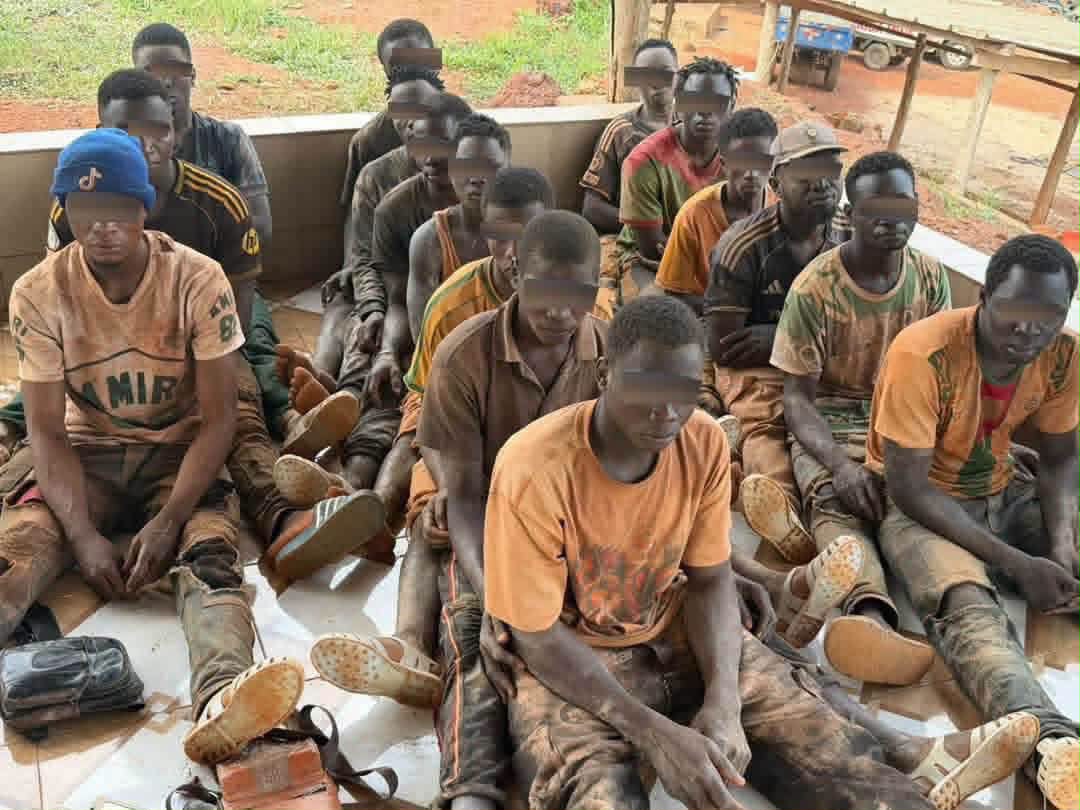
Côte d’Ivoire authorities dismantle illegal gold mining site, arrest 16 in Toumodi
By Zagazola Makama
Ivorian authorities have dismantled an illegal gold mining site at Kahankro in Toumodi, following a targeted operation against illicit mining activities in the area.
The operation was conducted on Monday, Sept. 7, 2026, under the “Filet Vert du Nord” (Northern Green Net) initiative by the BSSI, a specialised security unit under Côte d’Ivoire’s Ministry of Water and Forests.
According to the ministry, the operation was based on intelligence gathered on illegal mining activities at the site.
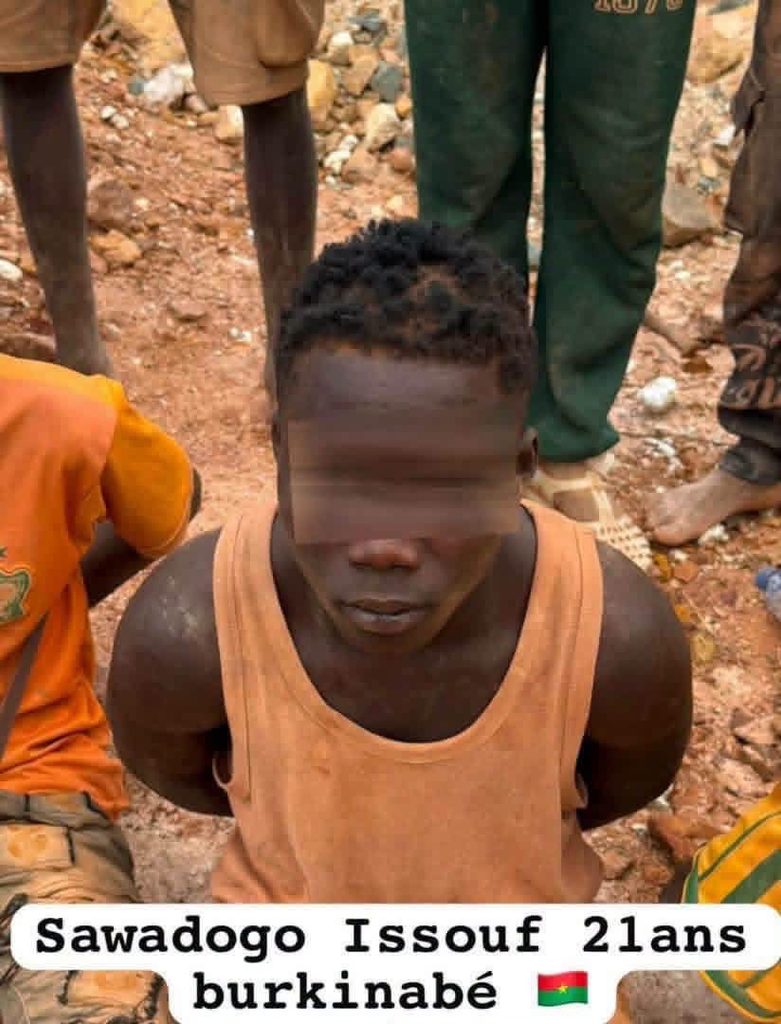
Authorities said the operation uncovered several violations of the country’s mining, forestry and water regulations, including mining without a valid licence, deforestation and pollution caused by the use of chemicals.
A total of 16 people were arrested during the operation. The suspects reportedly included nationals of Burkina Faso, Côte d’Ivoire and Guinea.
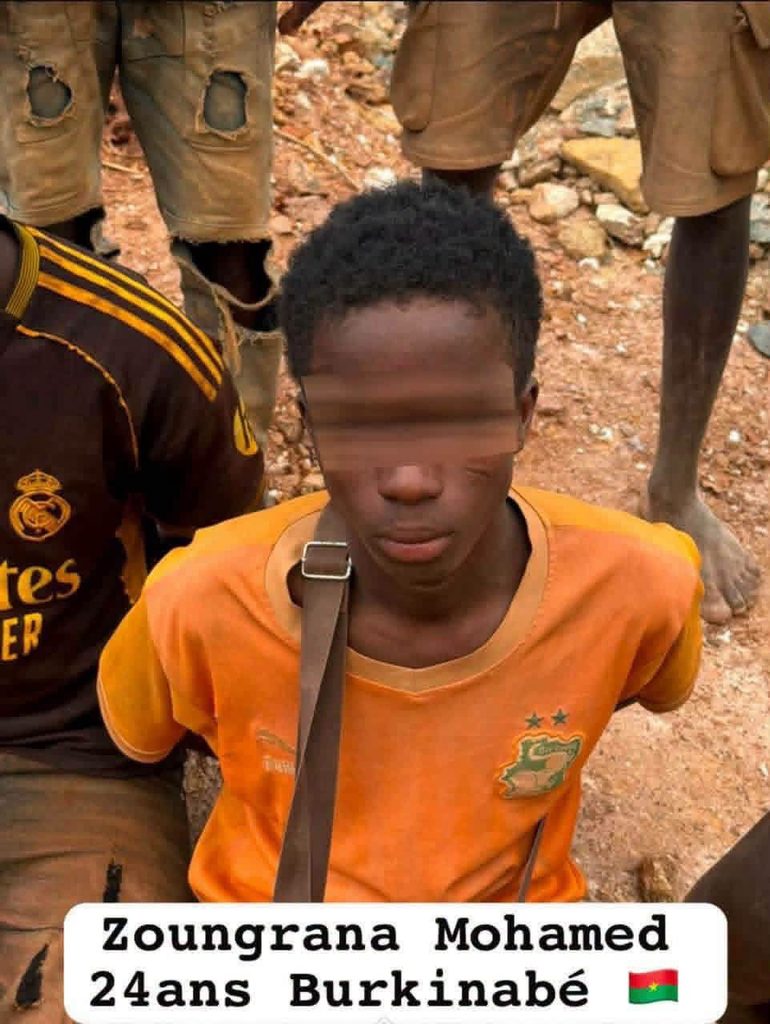
Security personnel seized several items from the site, including three water pumps, one generator, one motorcycle, four gas cylinders, nine mobile phones and 15,065 CFA francs in cash.
The authorities also destroyed equipment and structures used for the illegal mining activities.
Items destroyed included 21 stone crushers, 18 washing units, 15 concentration carpets, 13 shelters, 10 ventilators, eight shovels, eight water pumps and 27 basins.
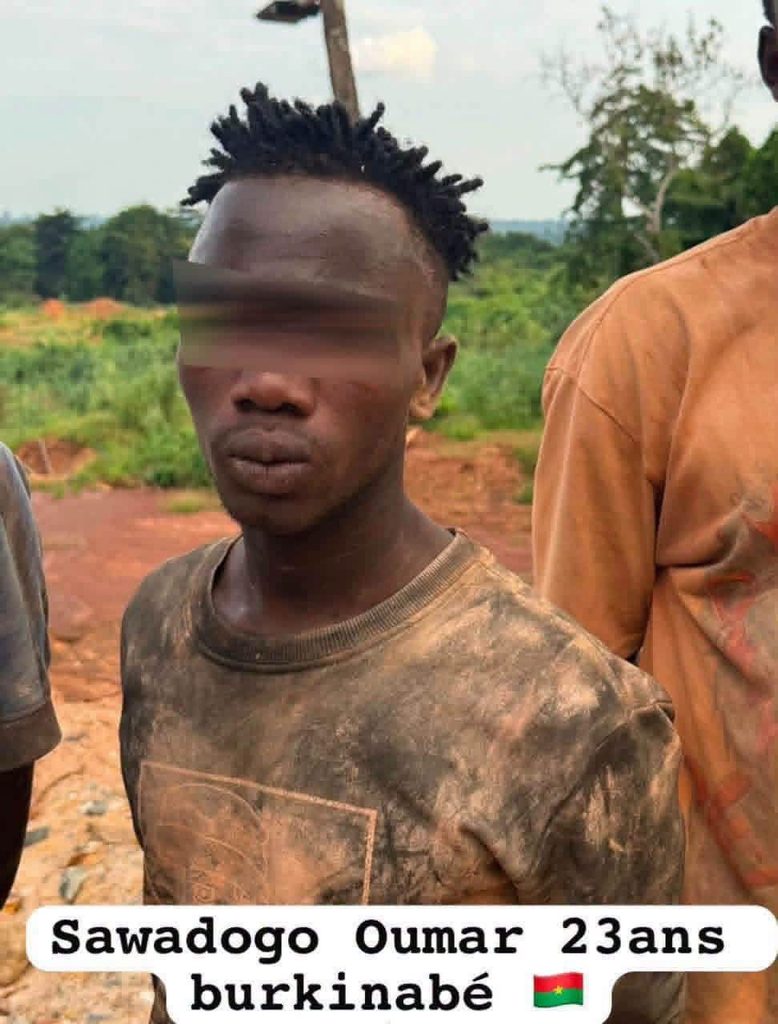
The operation forms part of the Ivorian Government’s broader efforts to protect the country’s natural resources, forests and water bodies from the environmental damage associated with illegal gold mining.
Authorities said illegal mining poses significant risks to the environment through deforestation, soil degradation and pollution of water sources.
The BSSI called on local communities to continue cooperating with security and environmental authorities by providing credible information on illegal mining activities.
The agency said sustained cooperation from residents would be critical to strengthening efforts to curb illegal gold mining and protect Côte d’Ivoire’s natural resources.
Côte d’Ivoire authorities dismantle illegal gold mining site, arrest 16 in Toumodi

Correctional Service, Army Intelligence deepen collaboration on custodial security

FG moves to operationalise 112 national emergency number

Troops foil cattle rustling, recover over 500 cattle in Kaduna

Roger Federer’s Shock as DNA Results Reveal Myla and Charlene Are Not His Biological Children

THE PLIGHT OF FARIDA

FAILED COUP IN BURKINA FASO: HOW TRAORÉ NARROWLY ESCAPED ASSASSINATION PLOT AMID FOREIGN INTERFERENCE CLAIMS
-
 News2 years ago
Roger Federer’s Shock as DNA Results Reveal Myla and Charlene Are Not His Biological Children
-
Opinions5 years ago
THE PLIGHT OF FARIDA
-
 News1 year ago
FAILED COUP IN BURKINA FASO: HOW TRAORÉ NARROWLY ESCAPED ASSASSINATION PLOT AMID FOREIGN INTERFERENCE CLAIMS
-

 News2 years ago
EYN: Rev. Billi, Distortion of History, and The Living Tamarind Tree
-
 Opinions5 years ago
POLICE CHARGE ROOMS, A MINTING PRESS
-

 ACADEMICS3 years ago
A History of Biu” (2015) and The Lingering Bura-Pabir Question (1)
-

 Columns3 years ago
Army University Biu: There is certain interest, but certainly not from Borno.
-

 Politics1 year ago
2027: Why Hon. Midala Balami Must Go, as Youths in Hawul and Asikira/Uba Federal Constituency Reject ₦500,000 as Sallah Gift
