
News
CHRICED Raises Alarm Over Nigeria’s Poor Capital Budget Implementation, Demands Accountability

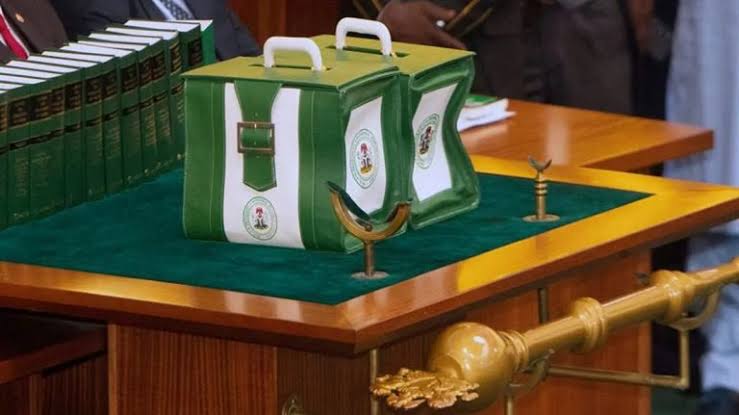
CHRICED Raises Alarm Over Nigeria’s Poor Capital Budget Implementation, Demands Accountability
By: Michael Mike
The Resource Centre for Human Rights and Civic Education (CHRICED) has raised serious concerns over what it described as the Federal Government’s persistent failure to implement the capital components of the national budget, warning that the trend is undermining development and worsening economic hardship for millions of Nigerians.
In a strongly worded statement issued by its Programme Manager, Victor Emejuiwe, the civic organisation said an examination of budget implementation data released by the Budget Office of the Federation reveals a consistent pattern of weak performance in the execution of capital projects.
CHRICED noted that although the Federal Government approved a capital budget of ₦9.9 trillion for the 2024 fiscal year, only ₦5.81 trillion was eventually released for implementation. Out of this amount, ₦3.27 trillion was utilized.
While the figure represents 81.91 percent of the funds released, the organisation argued that the performance is significantly weaker when compared with the total capital allocation approved in the budget, leaving numerous development projects either delayed or abandoned.
According to the group, the situation deteriorated further in 2025, describing the year’s implementation record as “deeply troubling.”
It pointed out that the Budget Office of the Federation has yet to publish the third and fourth quarter budget implementation reports for 2025, despite legal provisions that require regular disclosure of such information.
CHRICED said the limited data currently available shows that out of a projected ₦23.44 trillion capital budget for 2025, only ₦34.32 billion was released during the first quarter, while ₦393.86 billion was released in the second quarter.
The organisation stressed that the combined releases represent less than one percent of the total capital allocation, describing the situation as clear evidence that the country’s capital budgets for both 2024 and 2025 have largely remained unimplemented.
The group warned that the persistent failure to execute capital projects raises serious questions about governance priorities, particularly at a time when citizens are being asked to endure severe economic difficulties in the name of ongoing reforms.
“While Nigerians are facing rising fuel costs, inflation and declining purchasing power following the removal of fuel subsidy, there is little visible progress in the implementation of projects that should stimulate economic growth and improve living standards,” the statement said.
CHRICED argued that the imbalance between capital and recurrent spending has become increasingly pronounced, noting that funds required for government operations and administrative expenses continue to be released promptly, while development projects remain underfunded.
According to the organisation, the consequences of this imbalance are already evident in deteriorating infrastructure, struggling public services, and declining confidence in government institutions.
The group further warned that the country’s key sectors—including education, healthcare and electricity—are suffering from prolonged underinvestment, even as poverty levels remain high and unemployment continues to rise.
It also expressed concern that the approach of the 2027 Nigerian general elections could worsen the situation, cautioning that political calculations may begin to overshadow governance priorities.
CHRICED said there is a real risk that resources intended for development projects could be redirected toward political activities, a development it said would deepen corruption, accelerate inflationary pressures and further erode public trust in government.
The organisation also criticised the perceived silence of the National Assembly of Nigeria, saying the legislature must demonstrate stronger oversight to ensure that budget approvals translate into tangible development outcomes.
“The failure of the legislature to aggressively interrogate these recurring lapses raises serious concerns about its commitment to protecting the public interest and ensuring accountability in the management of national resources,” the group stated.
Against this backdrop, CHRICED called for a comprehensive audit of all capital allocations and releases from 2023 to 2026 to determine how public funds have been managed and whether approved projects have been executed.
The organisation also demanded the immediate publication of the outstanding 2025 budget implementation reports in accordance with the provisions of the Fiscal Responsibility Act (Nigeria).
In addition, it urged public officials planning to contest political positions ahead of 2027 to demonstrate transparency and accountability in the management of public resources.
CHRICED further called on citizens and civil society groups to remain vigilant and actively demand responsible governance, stressing that sustainable development cannot be achieved without transparency, fiscal discipline and effective implementation of national budgets.
CHRICED Raises Alarm Over Nigeria’s Poor Capital Budget Implementation, Demands Accountability


Fubara: Nigeria Needs God-Fearing Leaders to Tackle Corruption, Drive National Progress
By: Michael Mike
Rivers State Governor, Sir Siminalayi Fubara, has said Nigeria’s quest for sustainable development and good governance depends largely on the emergence of leaders guided by the fear of God, arguing that the country’s socio-economic challenges stem from a deficit of integrity and moral leadership.
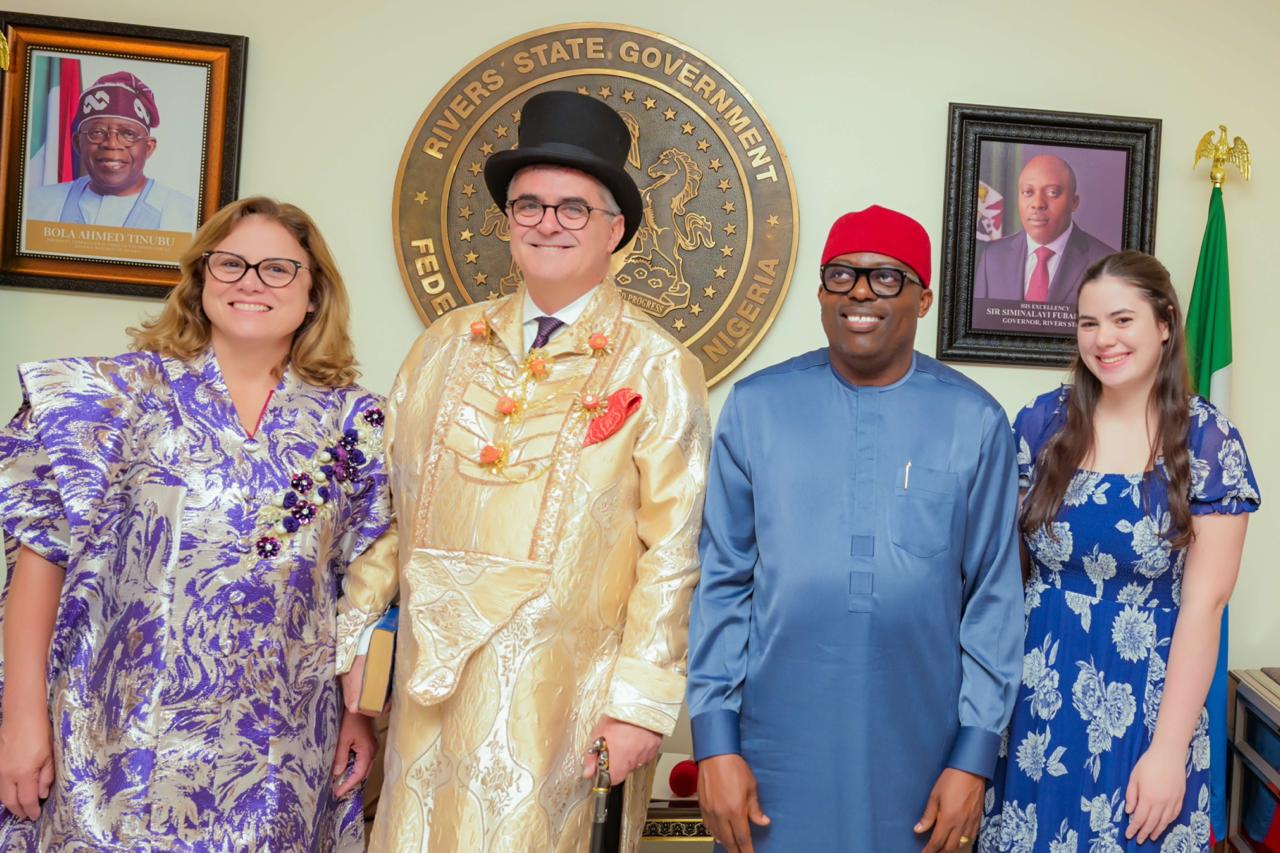
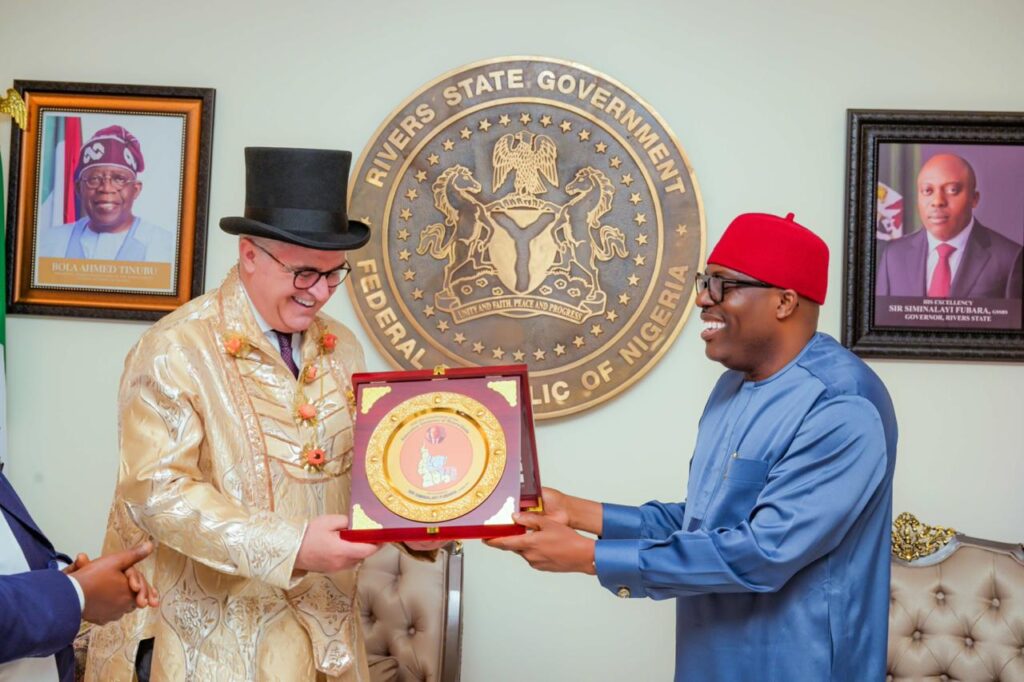
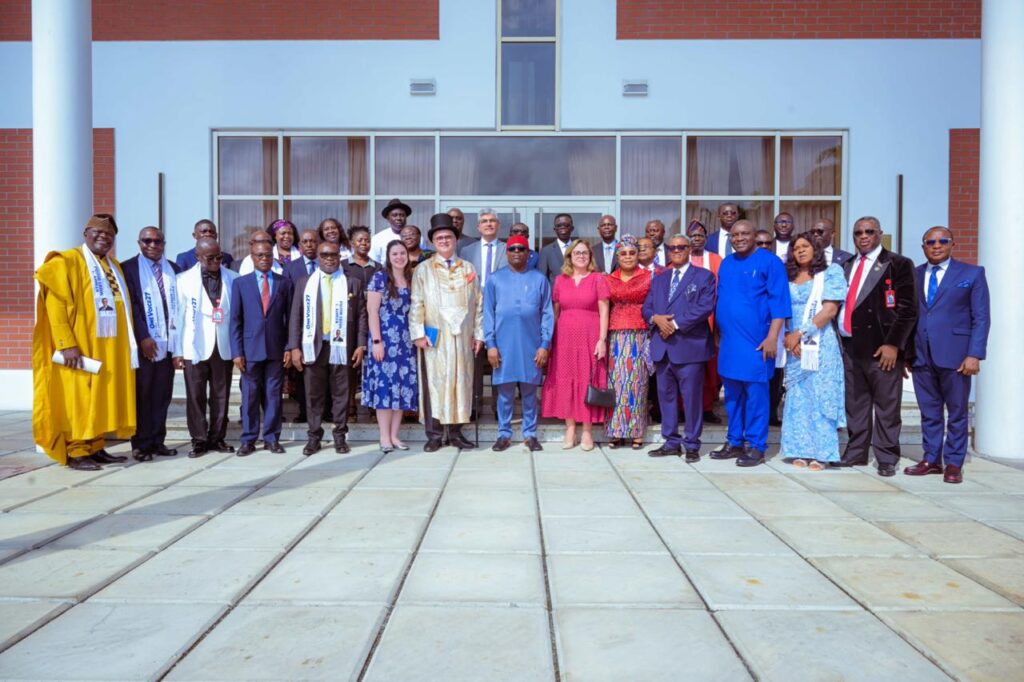
The governor made the remarks on Thursday at the Government House in Port Harcourt while receiving the World President of the Seventh-day Adventist Church, Erton Köhler, alongside his wife, Andriene Marques Köhler, their daughter, Mariana Marques Köhler, and other senior church officials.
Fubara said leaders who are conscious of their accountability before God would be less inclined to abuse public trust, noting that the absence of such values has fuelled corruption, inequality, poverty and rising criminality across the country.
“Our country is where it is today because we lack the fear of God,” the governor said. “If you have the fear of God, there should be a limit to what you can do because you understand the supremacy of God. But when God is not in your equation, you’ll go beyond the line, and that is what has brought us to where we are today.”
He praised the Seventh-day Adventist Church for its long-standing investment in education, describing its schools and universities as critical platforms for nurturing competent and morally upright future leaders.
According to the governor, the church’s commitment to education demonstrates that religion should extend beyond preaching and denominational identity to making tangible contributions to national development through human capital development.
Fubara noted that by establishing and sustaining educational institutions, the church has continued to support Nigeria’s efforts to produce graduates equipped with knowledge, character and leadership values.
“We need the right people being in the right place, prepared properly with good minds. That is what we need, not just in Nigeria but around the whole world,” he said.
The governor also linked many of the country’s security and economic challenges to weak social welfare systems, stressing that citizens are less likely to resort to crime when they have access to quality education, affordable healthcare, decent wages and opportunities for a secure future.
He advocated a system where average-income earners can educate their children, access quality healthcare and own homes after years of productive service, insisting that such conditions would significantly reduce insecurity and other social vices.
Fubara thanked the church delegation for visiting Rivers State and for praying for the state, assuring them of his administration’s continued support for their activities.
Speaking earlier, Köhler said he was in Nigeria for a major church conference that would bring together thousands of Seventh-day Adventist ministers for leadership and empowerment training aimed at strengthening their pastoral work and service to society.
He expressed appreciation for the warm reception accorded his delegation by the Rivers State Government, describing the visit as one that would remain memorable.
The church leader also highlighted the global reach of the Seventh-day Adventist Church, revealing that it has more than 24 million members and over 182,000 places of worship spread across 212 countries and territories worldwide.
Fubara: Nigeria Needs God-Fearing Leaders to Tackle Corruption, Drive National Progress
News
Troops Prevent Fulani Reprisal attack after Rustling of Livestock by Suspected Local Militia in Mangu in Plateau
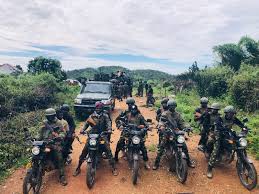
Troops Prevent Fulani Reprisal attack after Rustling of Livestock by Suspected Local Militia in Mangu in Plateau
By: Zagazola Makama
Troops of Operation Enduring Peace (OPEP) have repelled suspected Fulani Bandits during a rapid response operation following reports of sporadic gunfire around Banasu High Ground in Mangu Local Government Area of Plateau State.
Intelligence sources told Zagazola Makama that the incident occurred at about 1:52 p.m. on July 2, when troops of Sector 8, Sub-Sector 81, deployed at Gyambwas, received reports of intermittent shootings around the Banasu High Ground.
Security sources said that the planned attack was in response to previous attack on hardees and rustling of their livestock by Militia men in Mangu.
Acting swiftly on the distress report, the troops moved to the area and engaged the armed criminals in a firefight.
According to the sources, the superior firepower of the troops forced the assailants to abandon their mission and retreat towards the surrounding high ground.
No casualties were reported among the troops during the encounter.
Security sources said the troops have sustained surveillance and monitoring of the area, while efforts are ongoing to track down the fleeing suspects and prevent any further attacks.
The operation forms part of ongoing security efforts by Operation Enduring Peace to prevent any armed militia activities and enhance security across Plateau State.
Troops Prevent Fulani Reprisal attack after Rustling of Livestock by Suspected Local Militia in Mangu in Plateau
Troops Clear Zamfara Highway of Explosive Threats, Recover Police Vehicle Damaged by IED
By: Zagazola Makama
Troops of the 1 Brigade have successfully cleared the Bagega–Anka major supply route in Zamfara State of explosive threats, restoring safe movement along the road after a comprehensive route scanning operation.
Intelligence sources told Zagazola Makama that the operation was carried out at about 9:30 a.m. on July 2 by troops of the brigade in conjunction with a Quick Response Force (QRF) and an Explosive Ordnance Disposal (EOD) team.
According to the sources, the troops conducted a thorough route scanning exercise along the Bagega–Anka Main Supply Route (MSR) in Anka Local Government Area to detect and neutralise any improvised explosive devices (IEDs) or other explosive hazards.
At the conclusion of the operation, the route was confirmed free of explosive threats and was subsequently reopened to vehicular traffic.
During the exercise, the troops also recovered a Nigeria Police Counter-Terrorism/Counter-Strike (NP CSK) vehicle that had recently struck an improvised explosive device along the same route.
The operation was completed without incident, and no casualties were recorded among the troops.
Security sources said the route clearance forms part of sustained counter-insurgency and counter-banditry efforts aimed at ensuring the safety of motorists, security personnel and residents travelling along strategic roads in Zamfara State.
They added that troops will continue aggressive route clearance patrols and surveillance operations to deny criminal elements the opportunity to emplace explosive devices on major highways within the theatre of operations.
Troops Clear Zamfara Highway of Explosive Threats, Recover Police Vehicle Damaged by IED

The Blood We Have Normalised

ECOWAS Commissions Landmark Abuja Headquarters, Nigeria and China Renew Commitment to Regional Integration

FG Evacuates 593 Nigerians from South Africa, Denies Extortion Claims

Roger Federer’s Shock as DNA Results Reveal Myla and Charlene Are Not His Biological Children

THE PLIGHT OF FARIDA

FAILED COUP IN BURKINA FASO: HOW TRAORÉ NARROWLY ESCAPED ASSASSINATION PLOT AMID FOREIGN INTERFERENCE CLAIMS
-
 News2 years ago
Roger Federer’s Shock as DNA Results Reveal Myla and Charlene Are Not His Biological Children
-
Opinions4 years ago
THE PLIGHT OF FARIDA
-
 News1 year ago
FAILED COUP IN BURKINA FASO: HOW TRAORÉ NARROWLY ESCAPED ASSASSINATION PLOT AMID FOREIGN INTERFERENCE CLAIMS
-

 News2 years ago
EYN: Rev. Billi, Distortion of History, and The Living Tamarind Tree
-
 Opinions5 years ago
POLICE CHARGE ROOMS, A MINTING PRESS
-

 ACADEMICS2 years ago
A History of Biu” (2015) and The Lingering Bura-Pabir Question (1)
-

 Columns2 years ago
Army University Biu: There is certain interest, but certainly not from Borno.
-

 Politics1 year ago
2027: Why Hon. Midala Balami Must Go, as Youths in Hawul and Asikira/Uba Federal Constituency Reject ₦500,000 as Sallah Gift
