
News
Christian Genocide: Information Minister Asks CSOs to Correct Misinformation About Nigeria

Christian Genocide: Information Minister Asks CSOs to Correct Misinformation About Nigeria
By: Michael Mike
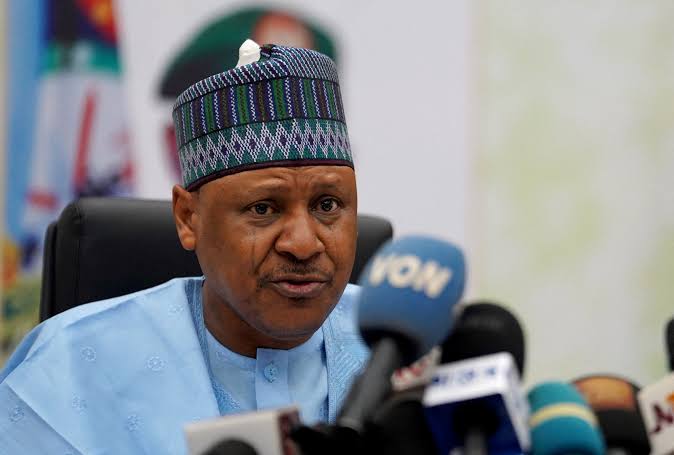
The Minister of Information and National Orientation, Mohammed Idris, has appealed to Civil Society Organisations to help correct the misrepresentations of Nigeria as a violator of religious freedom.
The Minister made the appeal at the 25th Anniversary of ActionAid in Abuja.
He said there is an urgent need for CSOs in the country to counter the narratives by applying evidence-based insights into the Nigerian situation.
Idris while addressing the misconceptions about Nigeria abroad, insisted that the country is not a violator of religious freedom and reaffirmed that such freedoms are clearly guaranteed in the constitution.
The minister who acknowledged security challenges even as he emphasized that government efforts are yielding progress, cautioned against narratives that mischaracterise Nigeria and strain its relations with its partners, particularly the United States.
He admitted lthe government’s responsibility to protect citizens, especially children, stating that “our children must be safe in their schools, safe in their communities, and safe in their homes” and highlighted President Tinubu’s recent declaration of a national emergency on security.
He revealed that the emergency measures include new recruitment into security agencies, support for state-level security outfits, and a push for legislative action towards establishing state police.
He described the declaration as a turning point in the fight against terrorism and banditry.
He called on CSOs to deepen their support for open governance, media freedom, digital literacy, and community development, and affirmed that ActionAid’s contributions in these areas remain “complementary and invaluable” to national progress.
The Minister who was the Chairman of ActionAid Nigeria 25 years anniversary celebration commended AAN for its action, service, and transformative work across the country.
He said, “For a quarter of a century, ActionAid has taken development to the frontlines, empowering women and girls, strengthening education, improving healthcare, advocating for governance reforms, supporting communities during crises, and amplifying the voices of the most vulnerable.”
He noted that ActionAid must be praised for its innumerable responses to challenging humanitarian situations and grassroots empowerment work that have shaped policy and community development in profound and measurable ways in Nigeria. “Today, we gather to honour this legacy and to look toward the next chapter.”
The Minister said: “I am equally pleased to unveil the ActionAid building prototype, a strong signal of organisational growth and long-term presence in Nigeria. This forward-looking investment reflects ActionAid’s commitment to deepening its contribution to our nation over the next 25 years and beyond. These milestones deserve our collective applause.”
In his remarks, Country Director, ActionAid Nigeria, Andrew Mamedu, said the struggle of AAN in the last 25 years is to help contain poverty, a struggle he said has not been of convenience but of conviction.
He said: “25 years ago, ActionAid Nigeria began with a simple but radical proposition that poverty is not natural.
And that exclusion is not a condition to be managed by the system. But we have to dismantle it. The true development does not happen when charity is displaced.
“Charity may be rights, give things, that’s charity. But when power is shifted from privilege to the marginalised, from silence to participation, from oppression to agency, our journey has never been one of convenience, it has been one of conviction.
“We have chosen to take sides with women denied their rights, with youth denied their voices, and with communities denied access to opportunities they deserve.
“Because we know that to end poverty, we must confront the structural injustice that creates it. “So for the past 25 years, we have stood shoulder to shoulder with people living in poverty and exclusion. Not as saviours, we don’t see ourselves as saviours, but as allies who are working together.”
Christian Genocide: Information Minister Asks CSOs to Correct Misinformation About Nigeria


Zulum Targets End to Medical Tourism as Shettima Commissions 400-Bed Teaching Hospital
By: Michael Mike
Borno State Governor, Babagana Zulum, has intensified efforts to curb medical tourism with the establishment of a 400-bed teaching hospital equipped with advanced diagnostic technology and specialist healthcare facilities in Maiduguri.
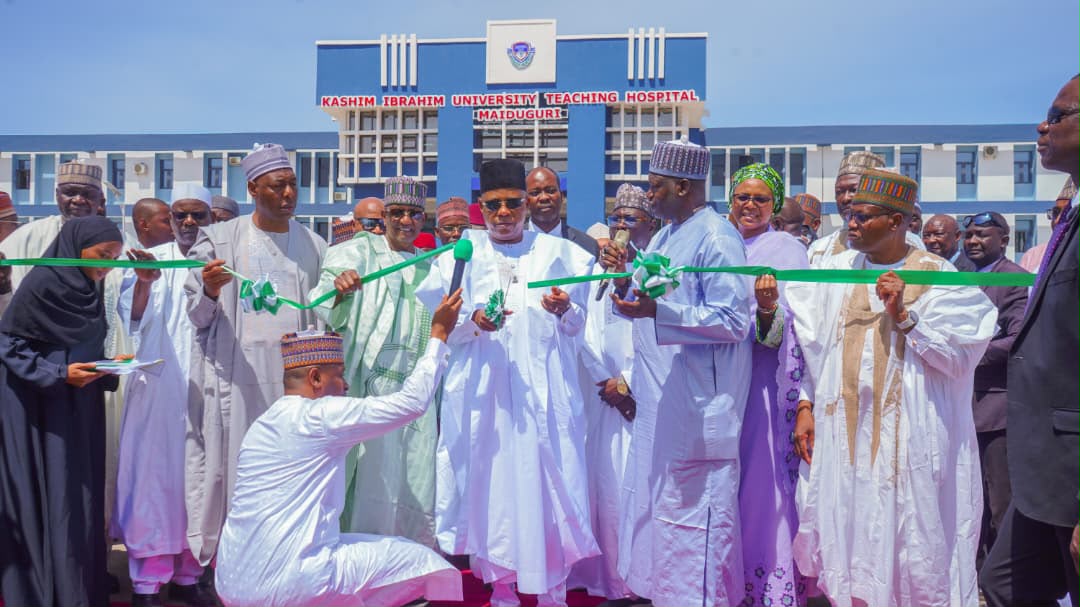
Vice-President Kashim Shettima on Friday commissioned the Kashim Ibrahim University Teaching Hospital alongside other key projects delivered by the Zulum administration, in a move aimed at expanding access to quality healthcare and strengthening medical training in the North-east.
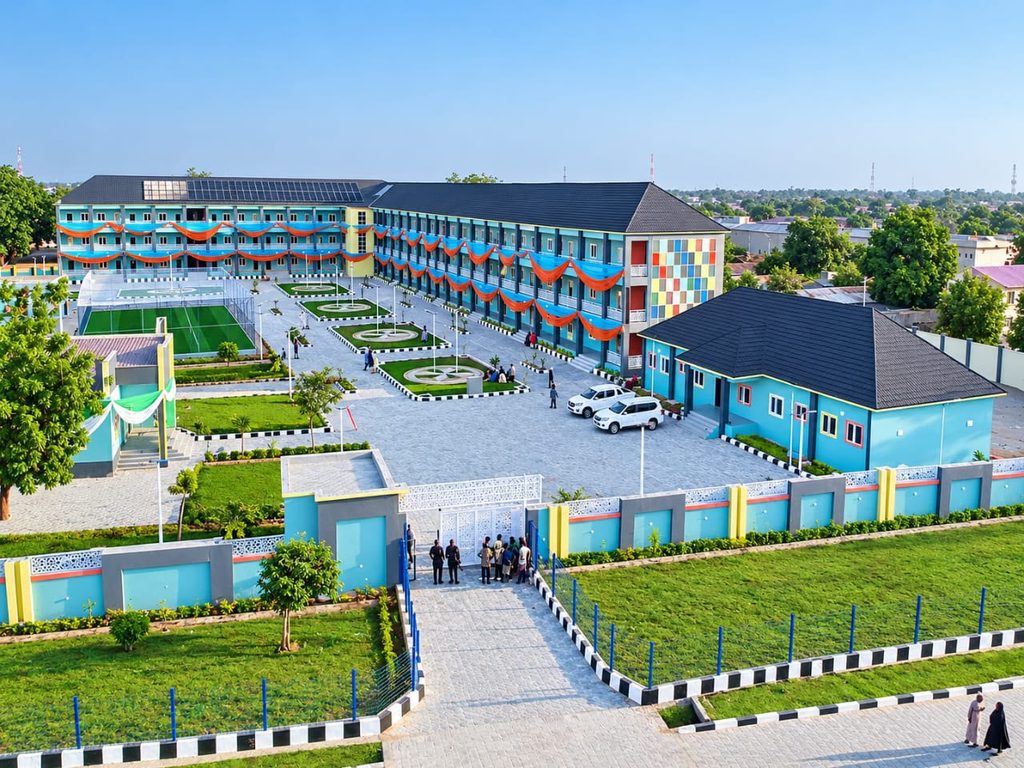
The hospital, which combines specialist medical services with the training of healthcare professionals, is expected to reduce the need for patients in Borno and neighbouring communities to travel elsewhere for advanced diagnosis and treatment.
Equipped with a 1.5-tesla magnetic resonance imaging (MRI) scanner, a 160-slice computed tomography (CT) scanner, three conventional and two mobile X-ray machines, three 4D ultrasound machines, a fluoroscopy system and digital mammography equipment, the facility is designed to expand access to specialised medical services.
Its infrastructure also includes 13 specialist departments covering diagnostic, medical, surgical, emergency, paediatric, internal medicine and physiotherapy services, among others.
The project comprises a medical college complex, a students’ hostel, a 200-unit staff estate and an oxygen plant complex, providing supporting infrastructure for patient care, medical education and healthcare delivery.
Beyond reducing the burden of seeking treatment outside the state, the hospital is expected to serve residents of neighbouring communities and people across the Lake Chad region, while improving access to specialist care for underserved populations.
It is also expected to strengthen healthcare manpower development by providing training opportunities for doctors, nurses and allied health professionals, helping to address shortages that have constrained healthcare delivery in Borno and the wider North-east.
Speaking at the commissioning, Shettima commended Zulum for investing in institutions capable of delivering lasting benefits to the state, particularly in healthcare and education.
He said the value of public office should ultimately be measured by the institutions established, infrastructure delivered and lives improved, rather than the privileges associated with political positions.
“We shall be judged by what survives our time in office, the offices we held, the aides who surrounded us, and the length of our convoys will have surrendered their importance. What will endure are the institutions we built, the roads we built and the lives we improved through service. That is the meaning of our gathering here in Maiduguri. That is why this occasion brings me such joy,” the Vice-President said.
Shettima said the hospital and the schools established by the state government reflected Zulum’s commitment to rebuilding Borno through investments that directly affect people’s lives.
“According to Carl Sagan’s law of insignificance, 100 years from now, everyone you know or who knows you will be out of this world. This is why I do not doubt the vision of His Excellency Professor Babagana Umara Zulum; his passion for healthcare and education is expressed in the institution before us,” he said.
He added that the teaching hospital and schools being established across Maiduguri and other parts of the state demonstrated the governor’s conviction that recovery must translate into tangible improvements in healthcare and access to education.
“The ultra-modern Kashim Ibrahim University Teaching Hospital and the school that dotted our landscape in Maiduguri and across the state give substance to his belief that Borno recovery must reach the patient awaiting treatment and the child sitting in a place in the classroom,” Shettima said.
In the education sector, the Vice-President also commissioned Yerwa Practice Mega Primary School, built by the Zulum administration, and another mega primary school delivered under the Kashim Shettima Free Education Programme.
The programme, regarded as one of the Vice-President’s key education initiatives, provides free education for orphans and vulnerable children.
The projects underscore the Borno government’s strategy of linking post-conflict recovery with investments in essential public services, particularly healthcare and education.
For a state grappling with the long-term effects of insurgency, expanding access to specialist medical services and strengthening the institutions responsible for training health workers remain critical to improving living conditions and rebuilding public infrastructure.
The new teaching hospital is expected to provide a major boost to those efforts by bringing advanced diagnostic services, specialist treatment and medical training together in one institution.
Zulum Targets End to Medical Tourism as Shettima Commissions 400-Bed Teaching Hospital
Two Worlds, Two Leaders, One Lesson
By Abiodun Adigun
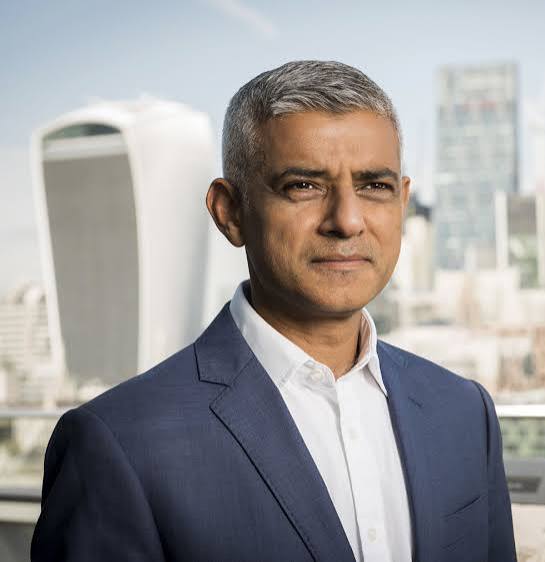
In London, the Mayor Sadiq Khan just announced: “Due to high cost of living, Londoners will receive £15.45 per hour to reflect the current economic realities.”
15 pounds 45 pence per hour. That is the new London Living Wage.
Not because election is coming. Not because people protested. But because the price of fuel went up, rent went up, food went up, and government said, we must adjust wages to reflect reality. That is what responsible countries do when fuel becomes expensive, they increase what workers earn so workers can survive.
In other countries, when fuel price shocks hit, they give energy support, they cap electricity bills, they give transport palliatives, they reduce taxes for the poor. They understand that high fuel cost without higher income is equal to death for the masses.
Now come to Nigeria.
In Nigeria, the President Bola Tinubu says: “I understand the pains Nigerians are going through, but there is no other way out of the sufferings.”
No other way? There is always another way.
London found another way. America found another way. Even Ghana found another way.
But in Nigeria, there is no other way except for the people to suffer.
How can you say there is no other way when you and other politicians are spending billions every day to campaign for re-election in 2027?
Billboards everywhere, jingles everywhere, defection ceremonies everywhere, billions that could have been used to pay workers or subsidise food.
How can you say there is no other way when you travel abroad for holidays with a large entourage, when you buy a new presidential jet worth over N150 billion, when National Assembly members buy N160 million SUVs each?
You understand the pains, but you don’t feel the pains.
If you felt the pains, you would not increase your own comfort while telling people to be patient in suffering.
In London, when cost of living goes up, wages go up.
In Nigeria, when cost of living goes up, taxes go up. Fuel up, electricity tariff up, VAT up, gas price up.
Everything up except salary and compassion.
London’s Mayor is not more intelligent than Nigerian leaders. He is just more humane.
He knows that leadership is not about telling people to endure hardship you created.
Leadership is about cushioning hardship.
The painful part is this: Nigerians are working harder than Londoners.
A Lagos bus driver wakes by 4am and closes by 11pm.
A market woman sits in sun from morning till night.
But their work can no longer feed them because government removed subsidy without any living wage adjustment.
Minimum wage is N70,000, that is less than 30 pounds a month. London’s hourly wage is almost half of Nigeria’s monthly minimum.
May Nigerians not remain foolish indeed.
Stupid to clap for politicians who tell us to be patient while they live in luxury.
Stupid to vote again for people who said “If we reduce the purchasing power of the people, we can further slow down the economy, let’s widen the tax net” and they actually did it.
Stupid to think there is no other way when other countries have shown us the other way.
There is always another way: cut cost of governance, stop profligacy, increase wages to reflect realities, and stop punishing the people for your reforms.
Two Worlds, Two Leaders, One Lesson
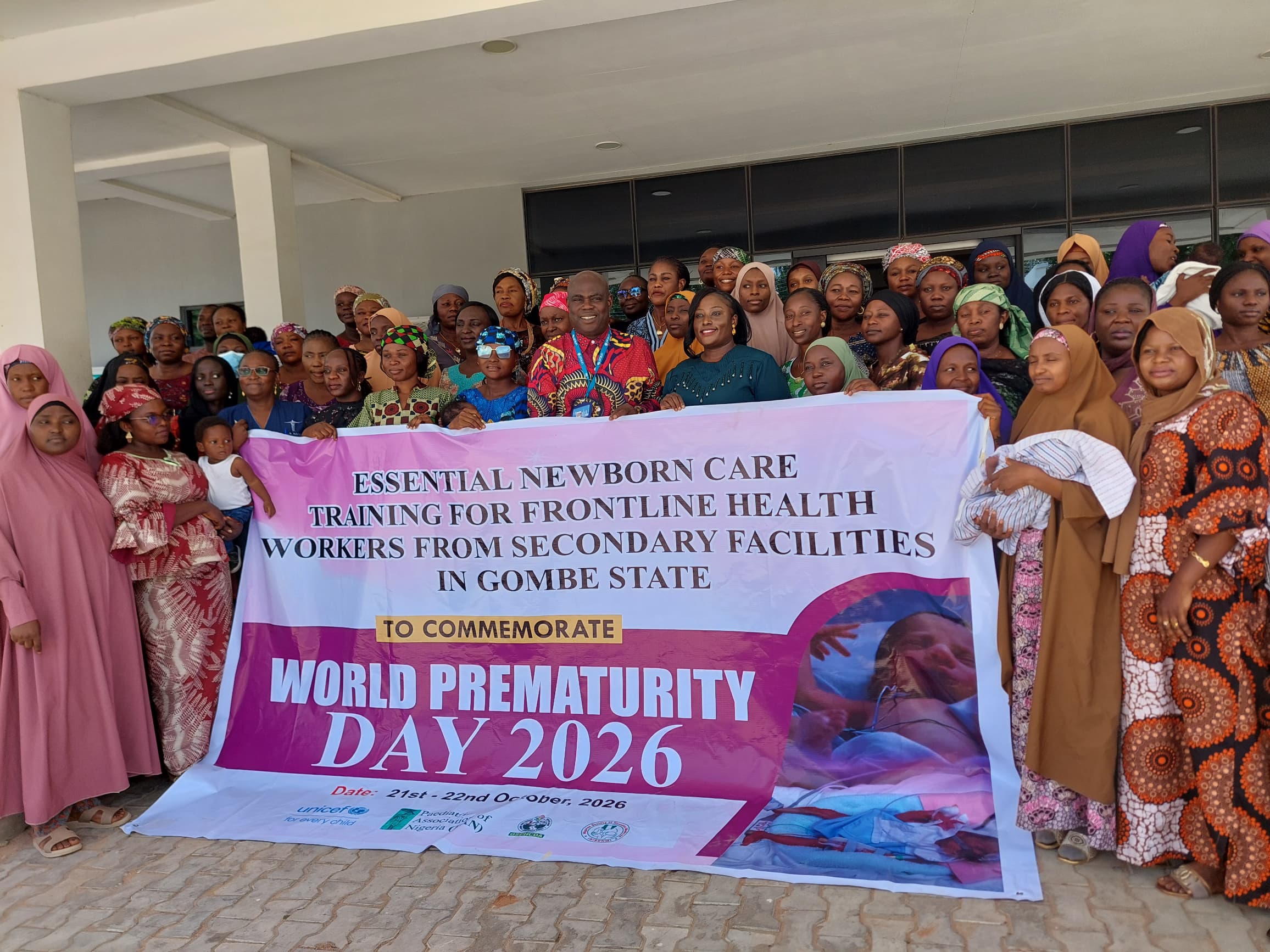
Gombe, UNICEF train 104 health workers to curb newborn deaths
By Elizabeth Ogunjobi
The Gombe government and UNICEF have trained 104 frontline health workers to improve newborn survival amid persistently high neonatal mortality across northern Nigeria.
The two-day training covered 48 workers from secondary healthcare facilities, following a separate programme for 56 primary healthcare workers.
Dr Abdulrahman Shuaibu, Executive Secretary of the Gombe State Primary Health Care Development Agency, said strengthening newborn care was critical to reducing preventable deaths.
Speaking in Gombe on Thursday, Shuaibu said many babies were born in communities before being referred to secondary facilities for specialised care.
“Therefore, it is important to strengthen the capacity of healthcare workers at these facilities to provide appropriate care for newborns,” he said.
He said neonatal and infant mortality remained high in the state, requiring coordinated efforts by government, healthcare providers and development partners.
“It is our hope and prayer that this training will contribute to a significant decline in neonatal mortality across our communities,” he said.
Shuaibu urged participants to share their knowledge with colleagues who did not attend, ensuring that more facilities could deliver effective newborn care.
He said the programme complemented government efforts to upgrade primary and secondary healthcare facilities, while commending UNICEF and other development partners for their support.
Mr Oluseyi Olosunde, a UNICEF health officer at its Bauchi Field Office, said the training was organised to commemorate the 2026 World Prematurity Day.
Olosunde said the initiative focused on improving the quality of care provided to newborns, particularly premature babies and those requiring specialised attention.
“Every child deserves to live, and to make every child enjoy this right to life, the quality of care is important,” he said.
He said the training targeted nurses, midwives and doctors involved in caring for women during pregnancy, childbirth and the postnatal period.
“We are training them to ensure that the mother survives, every woman survives, and every child survives,” he said.
Olosunde described newborn deaths as unacceptably high in many northern states, stressing the importance of strengthening healthcare workers’ skills.
He urged participants to apply their knowledge to improve services and protect the lives of mothers and babies under their care.
Dr Raymond Mercy, a consultant paediatrician at the Federal Teaching Hospital, Gombe, also urged healthcare workers to prioritise proper newborn care.
Mercy, a member of the Paediatric Association of Nigeria and the Nigerian Society of Neonatal Medicine, said Nigeria’s neonatal mortality rate stood between 34 and 41 deaths per 1,000 live births.
She said Nigeria had the world’s second-highest burden of neonatal mortality, underscoring the urgency of improving newborn healthcare nationwide.
Gombe, UNICEF train 104 health workers to curb newborn deaths

Zulum Targets End to Medical Tourism as Shettima Commissions 400-Bed Teaching Hospital

OPEP Troops Rescue Kidnap Victim Unhurt in Plateau, Hunt for Suspects

Suspected ISWAP Member, Wife and Sons Surrender to Troops in Borno

Roger Federer’s Shock as DNA Results Reveal Myla and Charlene Are Not His Biological Children

THE PLIGHT OF FARIDA

FAILED COUP IN BURKINA FASO: HOW TRAORÉ NARROWLY ESCAPED ASSASSINATION PLOT AMID FOREIGN INTERFERENCE CLAIMS
-
 News3 years ago
Roger Federer’s Shock as DNA Results Reveal Myla and Charlene Are Not His Biological Children
-
Opinions5 years ago
THE PLIGHT OF FARIDA
-
 News2 years ago
FAILED COUP IN BURKINA FASO: HOW TRAORÉ NARROWLY ESCAPED ASSASSINATION PLOT AMID FOREIGN INTERFERENCE CLAIMS
-
 Opinions5 years ago
POLICE CHARGE ROOMS, A MINTING PRESS
-

 News3 years ago
EYN: Rev. Billi, Distortion of History, and The Living Tamarind Tree
-

 ACADEMICS3 years ago
A History of Biu” (2015) and The Lingering Bura-Pabir Question (1)
-

 Columns3 years ago
Army University Biu: There is certain interest, but certainly not from Borno.
-

 Politics1 year ago
2027: Why Hon. Midala Balami Must Go, as Youths in Hawul and Asikira/Uba Federal Constituency Reject ₦500,000 as Sallah Gift
