
News
Cleric recounts past involvement in 1980 bank robbery, claims spiritual transformation

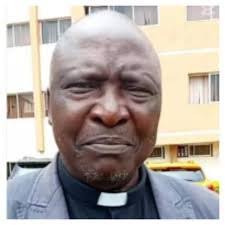
Cleric recounts past involvement in 1980 bank robbery, claims spiritual transformation
By: Zagazola Makama
A cleric with the Church of Christ in Nations, Rev. Ezekiel Dachomo, has publicly recounted his past involvement in a bank robbery carried out in 1980 in Jos.
Dachomo, who has been described as a controversial figure, disclosed this in a recent interview with a foreign media
He said he was part of a gang that successfully carried out the operation and made away with a substantial amount of money in Plateau state. According to him, the robbery was led by a close associate at the time.
“He came to my room while I was sleeping. I didn’t know that I was operating with 14 demons until Jesus encountered me.
That night there was war. He came with seven angels. I was just an observer, seeing the drama that is being done on my life. Jesus ordered the seven angels to strike the enemy.
In fact, they were killed instantly. I took the covers of those images that were killed and I covered myself as if I’m dead. But the master Jesus said there was somebody that we have not killed.
Go, fish him out. When they were coming, booting other corpses, then I had to stand up and begin to beg. I was asking for forgiveness. Forgive me, forgive me. I will never do that again.”
He further admitted his past criminal involvement, stating: “Because I went in 1980, it was our gang that robbed a bank in Jos, Plateau State, Nigeria. 1980, they made away with a lot of money. It was my best friend that led the operation.”
The cleric added that the encounter marked a turning point in his life:
“I didn’t know that I would come and encounter God and God really helped me. That day that I encountered Jesus, I went outside. I tried my best to smoke cigarette or cool it. The power of smoking was broken in my life.”
The cleric stated that his life later took a different turn following what he described as a personal spiritual encounter, which led him to abandon criminal activities and embrace a religious path. H
e added that the experience marked a decisive break from his past, including the cessation of habits such as smoking.
The public confessions by reverend Dachomo has generate mixed reactions, with some viewing them as testimonies of transformation, while others call for scrutiny and historical verification of the claims.
Sheikh Yusuf Haruna Baban Chinedu, popularly known as Baban Chinedu, accused the pastor of fabricated the stories about meeting Jesus after a 1980 bank robbery in Jos.
He is lying! I want you to listen and know that first of all, this man is a complete hypocrite and a total liar. I swear, it was a gun that shot them! Angels? He claims Jesus came down with seven angels who struck them and killed fourteen people while he hid in the blood? You see, even the angels God sent down… only managed to kill fourteen people and lost track of where that one man was?”
The sheikh alleged Dachomo hid among corpses and was rescued by a gang member named Emmanuel, not Jesus: “He was begging Jesus for God’s sake to forgive him and spare his life. He claims that was where he met Jesus… By Allah, he is lying! … It was a gun that shot them! No Jesus descended there; he is lying to you.” He added.
A lady told me; she heard him when he was shot, and he still has the scar from that wound on his left side. … He is lying! At that time, it was the police, Nigerian security agents, Nigeria Police MOPOL who she said shot them.”
Baban Chinedu accused Dachomo of transitioning from “practical, street-level bandit” to “spiritual bandit” and inciting religious conflict
Cleric recounts past involvement in 1980 bank robbery, claims spiritual transformation


Troops Arrest Suspected Military Impostor in Katsina
By Zagazola Makama
Troops of 17 Brigade have arrested a suspected military impostor during a fighting patrol in Malumfashi Local Government Area.
Security sources told Zagazola Makama that the suspect was apprehended at about 1:30 p.m. on July 4 by troops deployed at the Forward Operating Base (FOB) Malumfashi while conducting routine patrols within Malumfashi town.
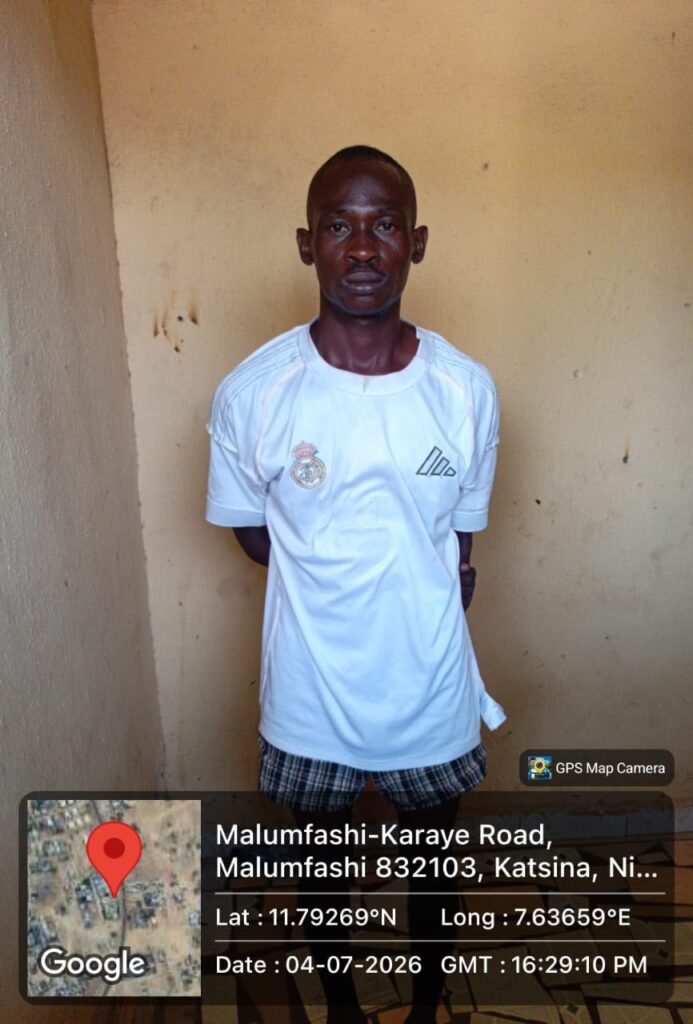
According to the sources, the suspect was intercepted while wearing a woodland camouflage three-quarter short, raising suspicion among the troops.
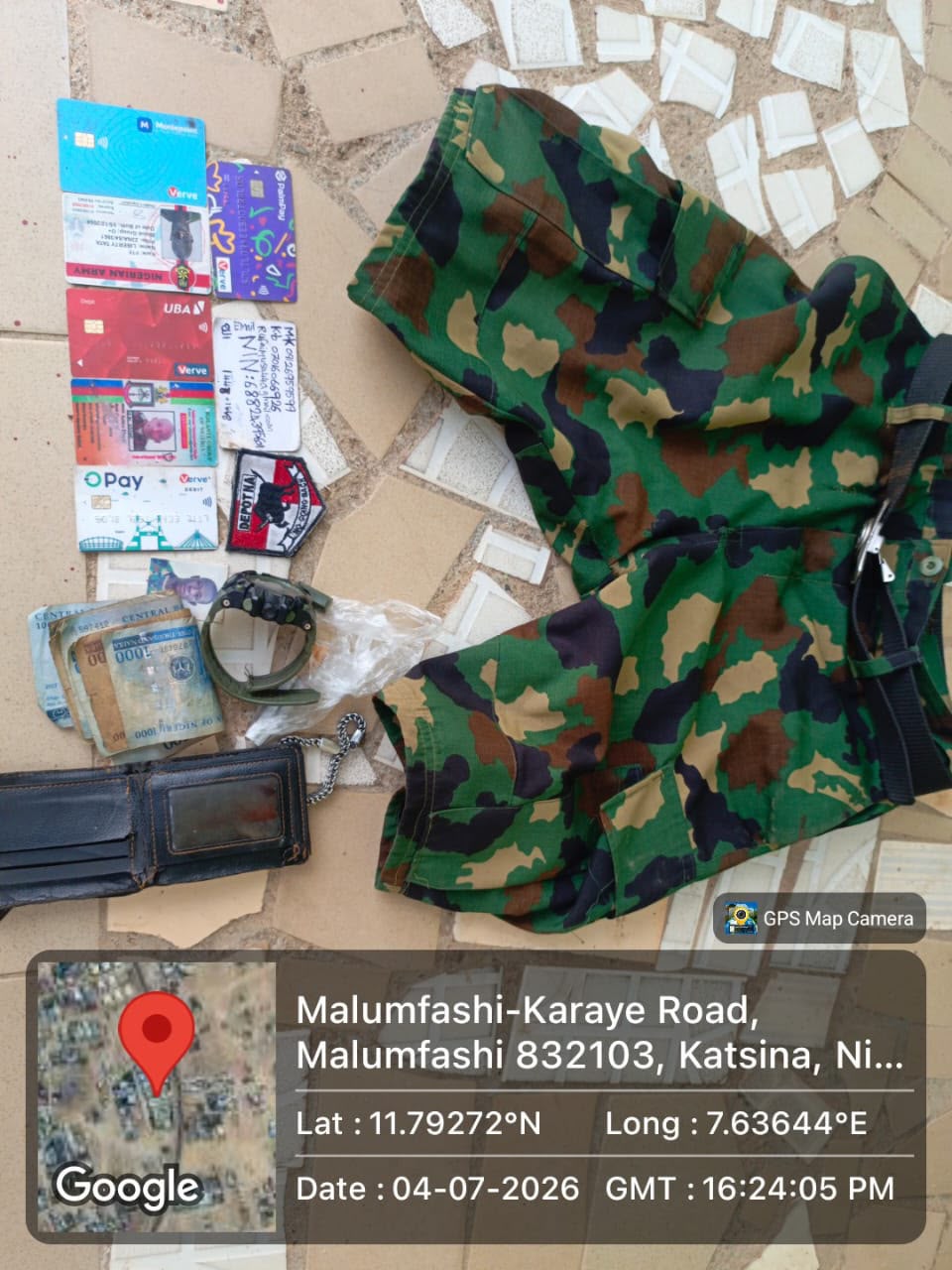
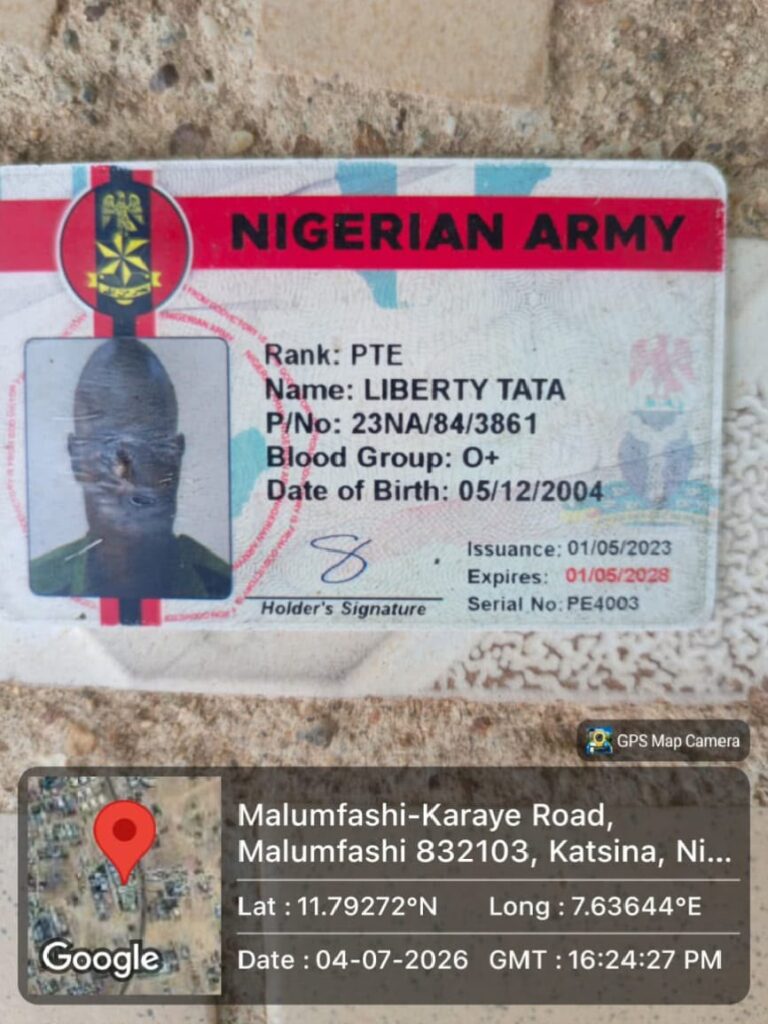
A search conducted on the suspect led to the recovery of a fake Nigerian Army identity card, four Automated Teller Machine (ATM) cards, one woodland camouflage three-quarter short, a wristwatch and the sum of ₦17,000.
The suspect and the recovered exhibits are currently in military custody pending further investigation.
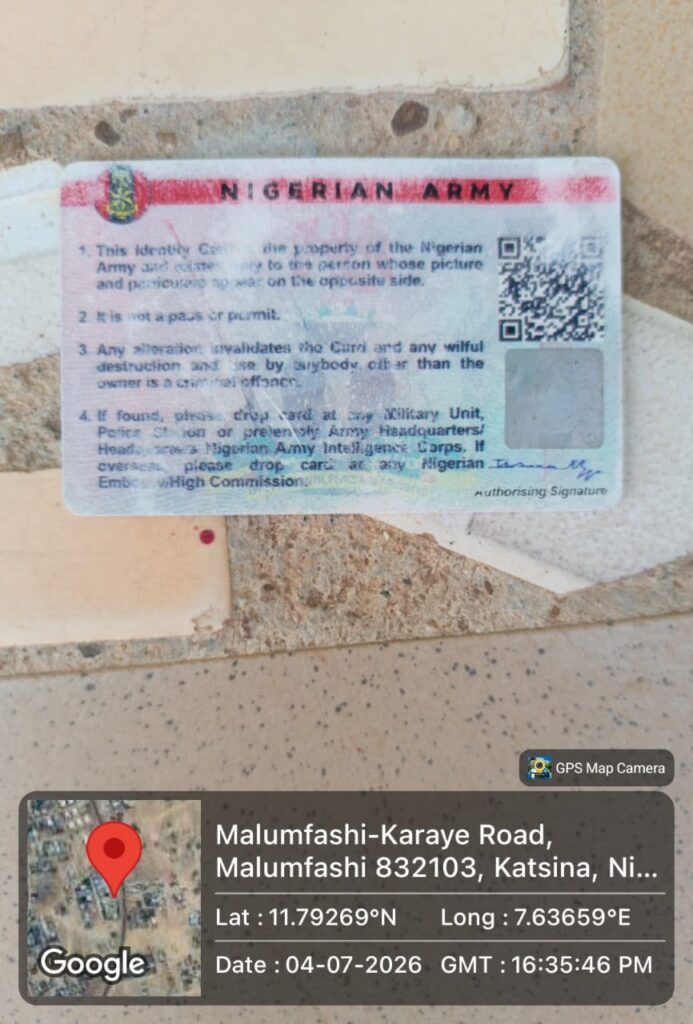
Military sources said the arrest forms part of ongoing efforts to curb impersonation of security personnel and other criminal activities within the area.
Troops Arrest Suspected Military Impostor in Katsina
Troops Recover 50 Rustled Cattle, Repel Suspected Rustlers in Kaduna
By Zagazola Makama
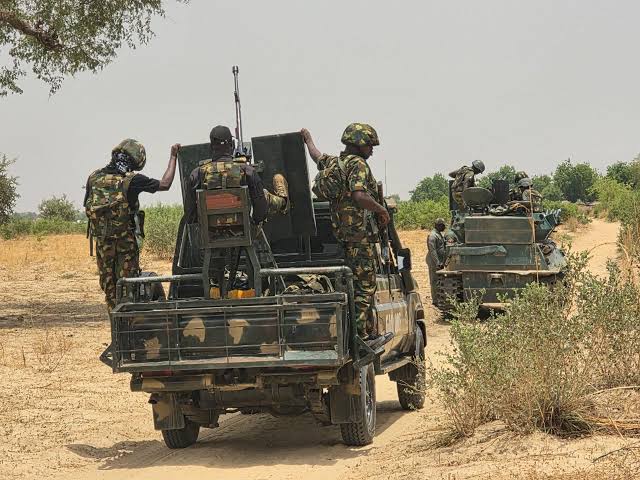
Troops deployed at the Forward Operating Base (FOB) Kankomi have recovered 50 rustled cattle after repelling suspected cattle rustlers during an ambush operation in Chikun Local Government Area.
Security sources told Zagazola Makama that the troops responded to a distress call at about 9:55 a.m. on July 4 over the activities of suspected rustlers at Ungwan Gontu community.
According to the sources, the troops swiftly laid an ambush and made contact with the fleeing suspects, forcing them to abandon the stolen livestock and escape into the surrounding area.
During the operation, the troops recovered 50 rustled cattle, which were subsequently identified and handed over to their rightful owner.
Military sources said efforts are ongoing to track down the fleeing suspects as security operations continue to combat cattle rustling and other criminal activities across Kaduna State.
Troops Recover 50 Rustled Cattle, Repel Suspected Rustlers in Kaduna
Troops Arrest Suspected Terrorist in Kogi, Suspect Confesses to Group Membership
By Zagazola Makama
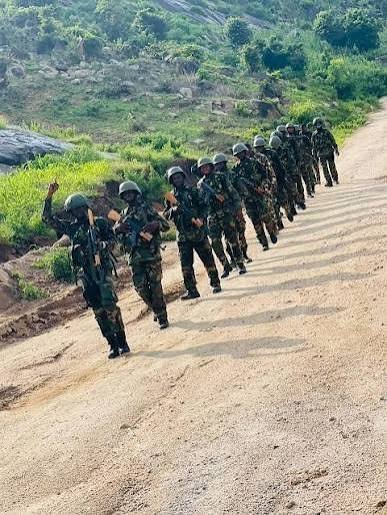
Troops of 12 Brigade, in collaboration with Office of the National Security Adviser (ONSA) Hybrid Forces, have arrested a suspected terrorist during an operation in Lokoja Local Government Area.
Security sources told Zagazola Makama that the troops responded at about 1:00 p.m. on July 4 to reports of a confrontation between local residents and a suspected terrorist at a Ruga settlement behind Obajana community.
According to the sources, the troops swiftly intervened and arrested one suspect at the scene.
During preliminary interrogation, the suspect reportedly confessed to being a member of a terrorist group led by an individual identified as Haruna, which allegedly operates within the Okene general area.
The suspect is currently in military custody and is undergoing further investigation to establish the extent of his involvement and identify other members of the group.
Military sources said the arrest forms part of ongoing security operations aimed at dismantling terrorist and criminal networks across Kogi State.
Troops Arrest Suspected Terrorist in Kogi, Suspect Confesses to Group Membership

Troops Arrest Suspected Military Impostor in Katsina

Troops Recover 50 Rustled Cattle, Repel Suspected Rustlers in Kaduna

Troops Arrest Suspected Terrorist in Kogi, Suspect Confesses to Group Membership

Roger Federer’s Shock as DNA Results Reveal Myla and Charlene Are Not His Biological Children

THE PLIGHT OF FARIDA

FAILED COUP IN BURKINA FASO: HOW TRAORÉ NARROWLY ESCAPED ASSASSINATION PLOT AMID FOREIGN INTERFERENCE CLAIMS
-
 News2 years ago
Roger Federer’s Shock as DNA Results Reveal Myla and Charlene Are Not His Biological Children
-
Opinions4 years ago
THE PLIGHT OF FARIDA
-
 News1 year ago
FAILED COUP IN BURKINA FASO: HOW TRAORÉ NARROWLY ESCAPED ASSASSINATION PLOT AMID FOREIGN INTERFERENCE CLAIMS
-

 News2 years ago
EYN: Rev. Billi, Distortion of History, and The Living Tamarind Tree
-
 Opinions5 years ago
POLICE CHARGE ROOMS, A MINTING PRESS
-

 ACADEMICS2 years ago
A History of Biu” (2015) and The Lingering Bura-Pabir Question (1)
-

 Columns2 years ago
Army University Biu: There is certain interest, but certainly not from Borno.
-

 Politics1 year ago
2027: Why Hon. Midala Balami Must Go, as Youths in Hawul and Asikira/Uba Federal Constituency Reject ₦500,000 as Sallah Gift
