
News
Climate Crisis: ECOWAS Parliamentarians Warn of ‘Security Time Bomb’ as Land, Water Shrink

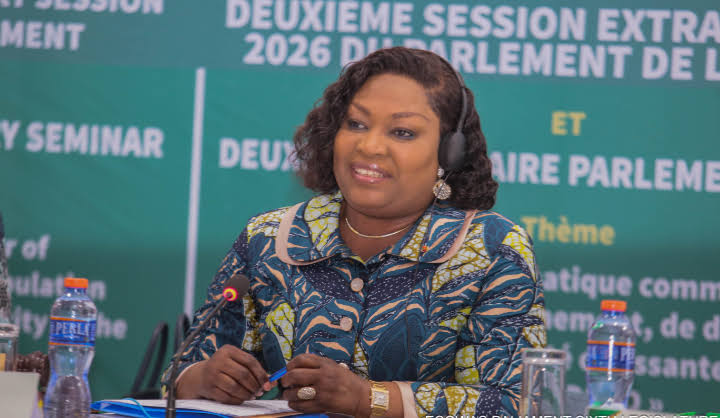
Climate Crisis: ECOWAS Parliamentarians Warn of ‘Security Time Bomb’ as Land, Water Shrink
By: Michael Mike
West Africa is facing a widening climate-driven crisis in which shrinking water resources, degraded farmland and changing weather patterns are increasingly fuelling competition for land, aggravating farmer-herder conflicts, displacing communities and deepening poverty, parliamentarians from the region have warned.
The warning came as lawmakers at the Second 2026 Parliamentary Seminar of the Economic Community of West African States (ECOWAS) in Accra, Ghana, examined the increasingly dangerous intersection between climate change, environmental degradation, livelihoods, migration and regional security.
The discussions marked a significant shift from treating climate change principally as an environmental problem to recognising it as an emerging governance, humanitarian and security challenge requiring coordinated legislative and regional intervention.
For Nigeria, the implications are particularly severe.
The country’s presentation to the seminar revealed how environmental pressures are intersecting with population growth, agricultural expansion, climate variability, land degradation and changing migration patterns to intensify competition between farming and pastoral communities.
The report warned that disputes over crop destruction, land and water, encroachment on livestock routes, cattle theft and changing patterns of seasonal migration have contributed to persistent farmer-herder tensions across the country.
But it cautioned that the conflicts cannot be reduced to a simple confrontation between farmers and herders.
Communal tensions, banditry, organised crime, climate pressures and weaknesses in conflict-resolution mechanisms are also contributing to the crisis.
The consequences are already being reflected in Nigeria’s displacement figures.
“In Nigeria, internal displacement has been linked to armed conflict, communal violence, farmer-herder conflict, banditry, terrorism, flooding and other disasters,” Nigeria’s presentation stated.
Citing 2025 assessments by the International Organization for Migration, the presentation said more than 2.2 million people were internally displaced in the North-East, while over 1.3 million were displaced across the North-Central and North-West regions.
The figures underline the scale of a crisis that has moved beyond humanitarian relief into the areas of governance, development, food security, environmental management and national security.
Land and water becoming security issues
At the centre of the crisis is a resource equation that is becoming increasingly difficult to manage: less predictable rainfall, declining water availability, pressure on productive land and growing populations competing for the same resources.
For farming and pastoral communities, the presentation noted, land and water are not merely economic assets.
They are essential to survival.
As traditional grazing routes become blocked, agricultural land expands and water sources diminish, pastoralists are forced to alter movement patterns while farmers face increasing pressure to protect cultivated land.
Without effective mechanisms for dialogue, mediation and resource management, such environmental pressures can escalate into violent disputes.
This was reflected in Togo’s presentation, which detailed the country’s attempt to regulate transhumance and reduce conflicts linked to livestock movement.
Togo established its National Transhumance Committee in 1995 to monitor livestock movement, routes, animal health and disputes.
However, changing environmental and security conditions have prompted the country to introduce a new 2026–2030 plan addressing farmer-herder conflict, pressure on land, climate change, security challenges, inadequate monitoring and weak enforcement.
The experience demonstrates that traditional systems for managing pastoral movement are increasingly being tested by environmental and demographic changes.
From climate shock to displacement
The seminar also highlighted how environmental stress can create a chain reaction extending from food production to displacement.
Cabo Verde’s presentation focused on water scarcity, warning in effect that the consequences of climate change are interconnected: reduced water availability affects agriculture, pressure on agriculture affects livelihoods, while deteriorating livelihoods can influence migration.
When displaced or migrating populations encounter communities already competing over scarce land and water, tensions can intensify.
For Nigeria, therefore, the challenge is not simply preventing people from being displaced but creating conditions that allow those already displaced to rebuild their lives.
The country’s presentation identified safe and voluntary return, local integration or relocation, access to land and housing, restoration of property rights, livelihoods, education, healthcare, documentation and participation in community life as essential elements of durable solutions.
This means that displacement policy cannot stop at providing food, temporary shelter and emergency assistance.
Why parliament matters
The discussions placed a new responsibility on lawmakers, who were urged to address the crisis before environmental pressures become humanitarian emergencies and security crises.
Nigeria advocated evidence-based parliamentary oversight, stronger legislative frameworks and platforms for dialogue involving displaced persons, farmers, pastoralists, women, young people and host communities.
The Gambia similarly called for climate resilience and food security to receive greater attention in legislative agendas, budgets and oversight.
The lawmakers were effectively challenged to move from reactive legislation—responding after communities have been displaced or conflicts have erupted—to preventive governance capable of reducing the conditions that produce conflict.
That includes legislation and budgets supporting early-warning systems, conflict prevention, mediation, climate adaptation, land and resource governance, livestock infrastructure and sustainable rural livelihoods.
Nigeria’s presentation further stressed that military and other security operations alone cannot resolve the underlying causes of the crisis.
Communities, it argued, also need effective institutions, dialogue mechanisms and economic opportunities.
A regional crisis requiring a regional response
The seminar’s presentations converged on another reality: climate-induced instability does not respect national borders.
Pastoralists cross borders in search of grazing and water, while displaced populations can move from one country or community to another. Environmental changes and extreme weather events likewise affect several countries simultaneously.
The Gambia’s Participatory Integrated Platform for Resilience and Food Security Phase II offers one example of a response centred on strengthening communities before crises occur.
The programme targets small-scale producers, herders and agro-pastoralists across 19 districts, with interventions covering climate-smart agriculture, irrigation, livestock support, agricultural inputs, post-harvest equipment and assistance for women and young people.
It has also incorporated sensitisation around farmer-herder conflicts, cattle tracks and grazing areas.
The approach reflects the broader lesson from the ECOWAS seminar: climate resilience must encompass food production, livelihoods, poverty reduction, natural-resource management and social stability.
Women and young people were also identified as important actors in building resilience.
Beyond emergency response
The Accra deliberations ultimately exposed a widening policy gap: West Africa can no longer afford to treat climate-induced displacement and resource conflicts solely as emergencies after they occur.
The region faces the more difficult task of preventing environmental pressures from becoming security crises in the first place.
That will require stronger early-warning systems, functional dispute-resolution mechanisms, responsible management of land and water, protection of livestock routes, climate-adapted agriculture and investment in communities most vulnerable to environmental shocks.
It will also require parliamentarians to align laws, budgets and oversight with the realities emerging on the ground.
The message from the seminar was clear: where water disappears, livelihoods come under pressure; where livelihoods collapse, migration increases; where migrants and host communities compete for scarce resources, conflict risks rise.
For ECOWAS, the challenge is to break that chain before climate change turns more communities into victims of displacement, poverty and insecurity
Climate Crisis: ECOWAS Parliamentarians Warn of ‘Security Time Bomb’ as Land, Water Shrink


News
Nigeria Mourns 140 Migrants Killed in Djibouti Boat Tragedy, Calls for Action Against Irregular Migration
Nigeria Mourns 140 Migrants Killed in Djibouti Boat Tragedy, Calls for Action Against Irregular Migration
By: Michael Mike
The Federal Government has expressed condolences to Djibouti following the death of nearly 140 migrants, including 15 children, in a boat disaster off the country’s coast, calling for urgent collective action to address the root causes of irregular migration.
Nigeria, in a statement issued by the Ministry of Foreign Affairs in Abuja, said the boat capsized between October 8 and 9, 2026, leaving scores of people missing, according to the International Organisation for Migration (IOM).

The government expressed sympathy to the bereaved families and solidarity with the government and people of Djibouti over the tragedy, describing the incident as a grim reminder of the dangers confronting migrants who undertake perilous journeys in search of economic opportunities.
The statement, signed by the ministry’s spokesperson, Oluwafemi Adeniyi, said the disaster underscored the urgent need to tackle the underlying factors driving irregular migration, strengthen the fight against migrant smuggling and human trafficking, and promote safe, orderly and regular migration.

It stressed that efforts to prevent such tragedies must align with relevant African Union frameworks and applicable international instruments.
Nigeria further emphasised that protecting migrants, particularly children and other vulnerable persons, was a shared responsibility requiring sustained cooperation among countries of origin, transit and destination, as well as regional and international organisations.
According to the government, stronger collaboration is essential to prevent further loss of life, protect migrants’ fundamental rights and dignity, and ensure that migration is managed safely and humanely.
The Federal Government reaffirmed its commitment to working with the United Nations, the African Union and other relevant stakeholders to strengthen migration management, raise awareness about the dangers of irregular migration and develop practical measures to address its root causes.

It also called for renewed international cooperation to safeguard human life along migration routes across Africa and beyond.
The tragedy adds to concerns over the risks faced by migrants travelling along dangerous routes in pursuit of better economic prospects, reinforcing calls for stronger action against criminal networks that facilitate irregular journeys and for more sustainable solutions to the factors compelling people to leave their homes.
Nigeria reiterated its deepest sympathies to all those affected by the disaster and urged collective efforts to prevent similar tragedies.
Nigeria Mourns 140 Migrants Killed in Djibouti Boat Tragedy, Calls for Action Against Irregular Migration

Nigeria Demands Justice over Nigerian’s Death in South African Police Custody
By: Michael Mike
The Nigerian Consulate General in Johannesburg has demanded a thorough investigation into the death of another Nigerian national, Odueze Chimezie Odueze, who allegedly died following torture by South African police officers in Cape Town.
The consulate, in a press statement dated October 13, 2026, said Odueze died on October 9 in the Parklands area of Cape Town, describing the incident as a source of shock and distress to his family and the Nigerian community in South Africa.
According to the statement issued by the Consul General, Ninikanwa Okey-Uche, the deceased was reportedly arrested at a shopping centre on suspicion of drug possession and subsequently taken to his residence for a search.
The consulate said no drugs were found during the search but alleged that Odueze was nevertheless subjected to torture.
The mission expressed grave concern over what it described as a recurring pattern of alleged extrajudicial killings involving Nigerians in South Africa, warning that the incidents raised serious questions about the safety and protection of Nigerian citizens and other foreign nationals in the country.
It also linked its concerns to reports of xenophobic and Afrophobic attacks and threats against foreign nationals, urging the South African authorities to ensure that allegations of abuse by law enforcement officers were investigated impartially and transparently.
“No matter what the allegations may be, there are processes and steps to justice,” the consulate said, stressing that criminal allegations should be addressed through established legal procedures and that suspects were entitled to a fair hearing before a court of law.
The mission called on the relevant South African authorities to conduct a comprehensive investigation into Odueze’s death and ensure that anyone found culpable was prosecuted in accordance with the law.
It further appealed to Nigerians living in South Africa to remain calm, law-abiding and security-conscious amid reported attacks and threats against foreign nationals.
The consulate extended its condolences to Odueze’s family and assured Nigerians that it would continue to pursue the protection, welfare and fair treatment of Nigerian citizens in South Africa.
Reaffirming its commitment to seeking justice for the deceased, the mission declared that it would not relent in insisting that “Nigerian and all lives matter.”
Nigeria Demands Justice over Nigerian’s Death in South African Police Custody

2027: NHRC tasks political stakeholders on respect for human rights
The National Human Rights Commission(NHRC) on Monday urged political parties and their candidates to respect human rights during the campaign as well as the 2027 general elections.
Dr Joseph Wanshe, the Gombe State Coordinator, NHRC made this call in an interview with the News Agency of Nigeria (NAN) in Gombe.
Wanshe said the call was imperative to tackle the violation of human rights which is prevalent during campaigns and elections season.
According to Wanshe, “everyone has the right to vote and be voted for in a peaceful election which is a fundamental human rights that should not be trampled upon”.
The state coordinator said political stakeholders needed to understand that rights were mutual and should be respected as human rights remained a critical part of the democratic advancement of any nation.
He said the commission has been organising training sessions, outreaches, sensitisation on the need to ensure human rights protection during the campaigns and elections.
He said this was to ensure that the voting populace, political stakeholders and contestants were aware of their rights and limits.
Wanshe warned against any attempts at forcing residents to vote against their wish as a way of influencing votes for a particular candidate.
He described the act as unlawful and a restriction on peaceful political activities, calling on politicians and political parties to desist from such violation of human rights.
“No one should vote in fear or be compelled to vote for a particular candidate. No one should vote under duress.
“Respect people’s right on their choice of leaders instead of advertising a candidate to them at the polls by force” he said.
Wanshe said such menace should be eradicated because it “does not defend the good of the people.”
He said that as a commission, campaigns and elections would be strictly monitored in collaboration with relevant security agencies to ensure that no resident’s right was violated.
“If anyone is caught violating people’s right to vote by inducement or whatever means, such will be apprehended and handed over to relevant authorities for the law to take its cause”.
2027: NHRC tasks political stakeholders on respect for human rights

Borno Politics: Power, Continuity, and the Fight for Democratic Space Ahead of 2027 Elections

Tinubu’s 2027 Gamble: Why Shettima Remains His Running Mate

NDC North Central Women Leader Dumps Party for APC, Declares Support for Asiwaju

Roger Federer’s Shock as DNA Results Reveal Myla and Charlene Are Not His Biological Children

THE PLIGHT OF FARIDA

FAILED COUP IN BURKINA FASO: HOW TRAORÉ NARROWLY ESCAPED ASSASSINATION PLOT AMID FOREIGN INTERFERENCE CLAIMS
-
 News3 years ago
Roger Federer’s Shock as DNA Results Reveal Myla and Charlene Are Not His Biological Children
-
Opinions5 years ago
THE PLIGHT OF FARIDA
-
 News1 year ago
FAILED COUP IN BURKINA FASO: HOW TRAORÉ NARROWLY ESCAPED ASSASSINATION PLOT AMID FOREIGN INTERFERENCE CLAIMS
-

 News3 years ago
EYN: Rev. Billi, Distortion of History, and The Living Tamarind Tree
-
 Opinions5 years ago
POLICE CHARGE ROOMS, A MINTING PRESS
-

 ACADEMICS3 years ago
A History of Biu” (2015) and The Lingering Bura-Pabir Question (1)
-

 Columns3 years ago
Army University Biu: There is certain interest, but certainly not from Borno.
-

 Politics1 year ago
2027: Why Hon. Midala Balami Must Go, as Youths in Hawul and Asikira/Uba Federal Constituency Reject ₦500,000 as Sallah Gift
