
News
COAS vows overhaul of Nigerian Army training, operations after 2025 conference

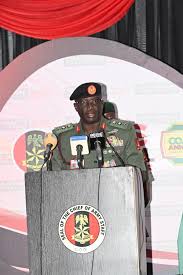
COAS vows overhaul of Nigerian Army training, operations after 2025 conference
By: Zagazola Makama
The Chief of Army Staff (COAS), Lt.-Gen. Waidi Shaibu, has pledged a comprehensive overhaul of the Nigerian Army’s training, operations and administrative systems to align with evolving security threats and his command philosophy.
Shaibu made this known on Thursday at the closing ceremony of the Chief of Army Staff Annual Conference 2025, attended by senior military leadership, including Principal Staff Officers from Defence and Army Headquarters, Corps and Theatre Commanders, General Officers Commanding, Brigade Commanders and heads of Army establishments.
The COAS said the conference provided a platform to critically assess the Army’s operational and administrative performance in 2025, with a view to consolidating plans for the coming year.
“It is gratifying that the past few days have been filled with robust and engaging interactions on administration, training and operations of the Nigerian Army,” he said.
According to him, deliberations at the conference revealed the need for immediate reforms to further transform the Army into a more professional, adaptable, combat-ready and resilient force capable of operating effectively in joint and multi-agency environments.
Shaibu announced that Army Headquarters, through the Department of Training, would soon commence a holistic review of curricula across all Nigerian Army schools, with emphasis on mission-specific and realistic training.
“My grand plan for the total overhaul of our schools’ training curriculum will be codified, as realistic training directly influences operational outcomes,” he said.
The COAS added that greater emphasis would be placed on the training and employment of Special Forces and Army Aviation to achieve desired operational outcomes.
He noted that intelligence briefings and operational updates presented at the conference underscored the increasing complexity of Nigeria’s security environment.
“This evolving threat spectrum necessitates enhanced capabilities in intelligence, surveillance, target acquisition and reconnaissance, as well as cyber operations,” Shaibu said.
He stressed the need for continuous learning, adaptation and innovation, particularly in the face of regional instability and global shifts in the character of warfare.
The COAS expressed appreciation to President Bola Ahmed Tinubu, the Commander in Chief of the Armed Forces for sustained political support, especially in military hardware and software procurement, and commended conference participants for what he described as unprecedented contributions.
COAS orders completion of barracks housing, unveils post-service accommodation drive
Abuja, Dec. 18, 2025 (NAN) — The Chief of Army Staff (COAS), Lt.-Gen. Waidi Shaibu, has ordered the speedy completion of all ongoing residential accommodation projects in Nigerian Army barracks nationwide to address housing shortfalls among personnel.
Shaibu gave the directive on Thursday while addressing participants at the closing ceremony of the Chief of Army Staff Annual Conference 2025 in Abuja.
He said improving troop welfare, particularly accommodation, remained a core component of his command priorities and a continuation of efforts initiated by past Chiefs of Army Staff.
“In line with our welfare commitments to all Nigerian Army personnel, I shall continue to build on the efforts of past Chiefs of Army Staff in addressing the crisis of accommodation shortages,” he said.
The COAS disclosed that all ongoing housing projects would be completed and allocated promptly, while new residential projects would be initiated across divisions and barracks nationwide.
“As a stopgap measure, the Nigerian Army will be investing in a more comprehensive spread of renovation works in all our barracks,” Shaibu added.
He acknowledged that despite progress made so far, significant gaps remained, which required deliberate and sustained intervention.
Beyond in-service accommodation, the COAS said the Army would continue to prioritise post-service housing for soldiers and officers to ensure dignity and stability after retirement.
“With all these efforts aimed at addressing existing accommodation shortfalls, we will continue to strike a balance by also securing post-service housing for all our soldiers and officers,” he said.
Shaibu announced that he would be in Ibadan, Oyo State, on Friday for the commissioning of the Affordable Home Ownership Option (AHOO) project for soldiers, as well as the Post-Service Housing Development Limited shopping complex.
“Under my watch, the post-service housing needs of all our soldiers will remain a top priority, with due attention to the completion of ongoing projects,” he assured.
The COAS expressed confidence that the housing schemes would significantly alleviate accommodation challenges faced by serving and retired personnel, describing them as a critical component of the Army’s broader welfare architecture.
He commended the Chief of Logistics (Army) and other stakeholders for their contributions, and reiterated his resolve to confront accommodation challenges “head on with all the seriousness it deserves.”
COAS vows overhaul of Nigerian Army training, operations after 2025 conference


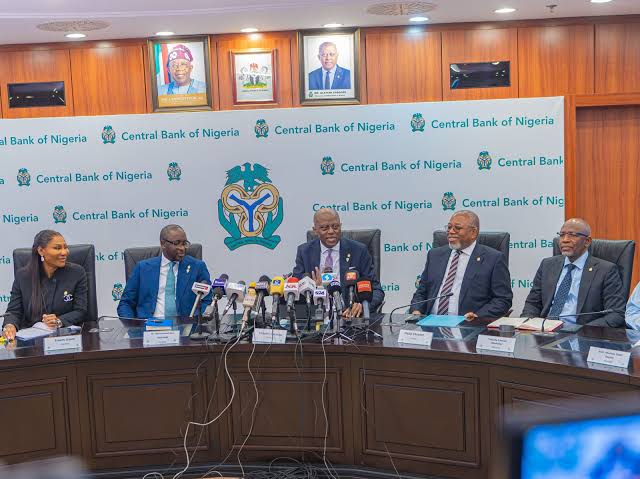
CBN RATE CUT: NIGERIA ENTERS A NEW PHASE OF MONETARY EASING AND ECONOMIC DEVELOPMENT
By Dr Bolade Agbola DBA
The Central Bank of Nigeria’s Monetary Policy Committee’s decision to cut the Monetary Policy Rate (MPR) by 350 basis points to 23% is more than a reduction in the policy rate; it represents an important signal about the changing direction of Nigeria’s monetary-policy cycle and economic development.
After a prolonged period of monetary tightening aimed at containing inflation and stabilising the macroeconomic environment, Nigeria now appears to be entering a new phase of monetary easing. The decision suggests that CBN is increasingly confident that inflationary pressures are moderating and that the economy may now require greater support for credit, investment and productive activity. The critical question, however, is not simply whether the MPR has been reduced, but how effectively the reduction will be transmitted through the financial system to businesses and households.
The inflation trajectory in the months ahead will ultimately determine how much further monetary easing can proceed. The gradual moderation in inflation is encouraging, while the expected improvement in domestic food supply during the harvesting season could provide additional relief to food inflation.
Inflation figures in recent months suggest that some of the inflationary pressures from earlier economic adjustments may be gradually dissipating. If this trend is sustained, Nigeria could move progressively towards single-digit inflation over time. That, however, remains an expectation rather than a certainty. Inflation remains vulnerable to exchange-rate movements, food-supply shocks, energy costs and fiscal pressures.
The most immediate implication is that the era of exceptionally high yields on Naira fixed-income instruments may gradually begin to recede. As monetary conditions ease, investors should expect downward pressure on yields of Treasury bills, government bonds, bank deposits, commercial paper, and money-market funds. This will create a significant portfolio-allocation challenge for investors who have benefited from elevated short-term interest rates. The investment environment could therefore shift from “high yield with relatively low duration” towards a greater emphasis on capital appreciation, duration management and asset.
For the banking industry, the implications are more complex. Banks will be expected to transmit the reduction in the policy rate through lower lending rates, particularly for productive sectors of the economy. But this could create pressure on their net interest margins (NIM) if loan yields decline faster than banks’ funding costs. The repricing of loan assets will therefore become an important issue for bank profitability.
At the same time, lower borrowing costs could strengthen the cash flows of viable businesses, improve debt-service capacity and support the restructuring of some stressed loan assets.
For manufacturers, agriculture, SMEs and other productive-sector businesses, the most important test is whether the MPR reduction translates into meaningfully lower commercial lending rates. A lower cost of funds could free up working capital, support new investment, and improve corporate cash flows. Businesses that have been constrained by high borrowing costs may have greater capacity to expand production, replace equipment and create employment.
But the transmission mechanism must work.
A 350-basis-point reduction in MPR does not automatically translate into a 350-basis-point reduction in every bank’s lending rate. Banks will continue to price credit according to their cost of funds, credit risk, liquidity requirements, capital costs and operating expenses. The real economic benefit will therefore depend on how much of the monetary easing reaches the productive sector.
The equity market could also enter an interesting phase. As yields on fixed-income instruments decline, investors may begin to reassess the relative attractiveness of equities. Lower interest rates can support equity valuations by reducing the opportunity cost of holding shares and potentially lowering companies’ financing costs. For listed companies, cheaper credit can support investment and earnings, while stronger economic activity could improve revenues and profitability. Companies with sustainable cash flows and the capacity to maintain or increase dividend payments may become increasingly attractive in a declining-yield environment.
However, lower interest rates alone do not guarantee higher equity returns. Corporate earnings, exchange rate stability, economic growth, governance and investor confidence will remain critical determinants of share prices and dividends.
The significance of the CBN’s decision therefore extends beyond the MPR itself. If disinflation continues, food supply improves and macroeconomic stability is maintained, Nigeria could gradually move towards a more accommodative monetary environment. The objective should not simply be lower interest rates, but a sustainable reduction in inflation that allows interest rates to fall without reigniting price pressures or undermining financial stability.Nigeria needs an environment in which inflation falls, real economic activity expands, credit becomes more affordable, businesses invest, employment improves and financial-sector stability is preserved.
The rate cut is an important signal of a possible change in the monetary cycle, but it is only one part of the equation. The coming months will reveal whether the current disinflationary trend is sufficiently durable to support further easing. For investors, banks, manufacturers and policymakers alike, the message is clear: the investment landscape is changing.
The period of exceptionally high naira yields may be nearing its end, while the premium on productive investment, quality equities, efficient businesses, and prudent portfolio diversification is likely to rise. We wait and see.
Dr Bolade Agbola DBA, MD, Lam Agro Consult Limited, is an agricultural economist, banker, stockbroker and business consultant, writes from Lagos
CBN RATE CUT: NIGERIA ENTERS A NEW PHASE OF MONETARY EASING AND ECONOMIC DEVELOPMENT
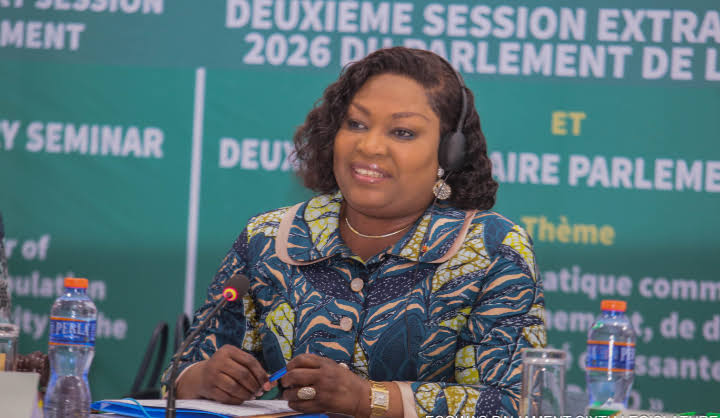
Climate Crisis: ECOWAS Parliamentarians Warn of ‘Security Time Bomb’ as Land, Water Shrink
By: Michael Mike
West Africa is facing a widening climate-driven crisis in which shrinking water resources, degraded farmland and changing weather patterns are increasingly fuelling competition for land, aggravating farmer-herder conflicts, displacing communities and deepening poverty, parliamentarians from the region have warned.
The warning came as lawmakers at the Second 2026 Parliamentary Seminar of the Economic Community of West African States (ECOWAS) in Accra, Ghana, examined the increasingly dangerous intersection between climate change, environmental degradation, livelihoods, migration and regional security.
The discussions marked a significant shift from treating climate change principally as an environmental problem to recognising it as an emerging governance, humanitarian and security challenge requiring coordinated legislative and regional intervention.
For Nigeria, the implications are particularly severe.
The country’s presentation to the seminar revealed how environmental pressures are intersecting with population growth, agricultural expansion, climate variability, land degradation and changing migration patterns to intensify competition between farming and pastoral communities.
The report warned that disputes over crop destruction, land and water, encroachment on livestock routes, cattle theft and changing patterns of seasonal migration have contributed to persistent farmer-herder tensions across the country.
But it cautioned that the conflicts cannot be reduced to a simple confrontation between farmers and herders.
Communal tensions, banditry, organised crime, climate pressures and weaknesses in conflict-resolution mechanisms are also contributing to the crisis.
The consequences are already being reflected in Nigeria’s displacement figures.
“In Nigeria, internal displacement has been linked to armed conflict, communal violence, farmer-herder conflict, banditry, terrorism, flooding and other disasters,” Nigeria’s presentation stated.
Citing 2025 assessments by the International Organization for Migration, the presentation said more than 2.2 million people were internally displaced in the North-East, while over 1.3 million were displaced across the North-Central and North-West regions.
The figures underline the scale of a crisis that has moved beyond humanitarian relief into the areas of governance, development, food security, environmental management and national security.
Land and water becoming security issues
At the centre of the crisis is a resource equation that is becoming increasingly difficult to manage: less predictable rainfall, declining water availability, pressure on productive land and growing populations competing for the same resources.
For farming and pastoral communities, the presentation noted, land and water are not merely economic assets.
They are essential to survival.
As traditional grazing routes become blocked, agricultural land expands and water sources diminish, pastoralists are forced to alter movement patterns while farmers face increasing pressure to protect cultivated land.
Without effective mechanisms for dialogue, mediation and resource management, such environmental pressures can escalate into violent disputes.
This was reflected in Togo’s presentation, which detailed the country’s attempt to regulate transhumance and reduce conflicts linked to livestock movement.
Togo established its National Transhumance Committee in 1995 to monitor livestock movement, routes, animal health and disputes.
However, changing environmental and security conditions have prompted the country to introduce a new 2026–2030 plan addressing farmer-herder conflict, pressure on land, climate change, security challenges, inadequate monitoring and weak enforcement.
The experience demonstrates that traditional systems for managing pastoral movement are increasingly being tested by environmental and demographic changes.
From climate shock to displacement
The seminar also highlighted how environmental stress can create a chain reaction extending from food production to displacement.
Cabo Verde’s presentation focused on water scarcity, warning in effect that the consequences of climate change are interconnected: reduced water availability affects agriculture, pressure on agriculture affects livelihoods, while deteriorating livelihoods can influence migration.
When displaced or migrating populations encounter communities already competing over scarce land and water, tensions can intensify.
For Nigeria, therefore, the challenge is not simply preventing people from being displaced but creating conditions that allow those already displaced to rebuild their lives.
The country’s presentation identified safe and voluntary return, local integration or relocation, access to land and housing, restoration of property rights, livelihoods, education, healthcare, documentation and participation in community life as essential elements of durable solutions.
This means that displacement policy cannot stop at providing food, temporary shelter and emergency assistance.
Why parliament matters
The discussions placed a new responsibility on lawmakers, who were urged to address the crisis before environmental pressures become humanitarian emergencies and security crises.
Nigeria advocated evidence-based parliamentary oversight, stronger legislative frameworks and platforms for dialogue involving displaced persons, farmers, pastoralists, women, young people and host communities.
The Gambia similarly called for climate resilience and food security to receive greater attention in legislative agendas, budgets and oversight.
The lawmakers were effectively challenged to move from reactive legislation—responding after communities have been displaced or conflicts have erupted—to preventive governance capable of reducing the conditions that produce conflict.
That includes legislation and budgets supporting early-warning systems, conflict prevention, mediation, climate adaptation, land and resource governance, livestock infrastructure and sustainable rural livelihoods.
Nigeria’s presentation further stressed that military and other security operations alone cannot resolve the underlying causes of the crisis.
Communities, it argued, also need effective institutions, dialogue mechanisms and economic opportunities.
A regional crisis requiring a regional response
The seminar’s presentations converged on another reality: climate-induced instability does not respect national borders.
Pastoralists cross borders in search of grazing and water, while displaced populations can move from one country or community to another. Environmental changes and extreme weather events likewise affect several countries simultaneously.
The Gambia’s Participatory Integrated Platform for Resilience and Food Security Phase II offers one example of a response centred on strengthening communities before crises occur.
The programme targets small-scale producers, herders and agro-pastoralists across 19 districts, with interventions covering climate-smart agriculture, irrigation, livestock support, agricultural inputs, post-harvest equipment and assistance for women and young people.
It has also incorporated sensitisation around farmer-herder conflicts, cattle tracks and grazing areas.
The approach reflects the broader lesson from the ECOWAS seminar: climate resilience must encompass food production, livelihoods, poverty reduction, natural-resource management and social stability.
Women and young people were also identified as important actors in building resilience.
Beyond emergency response
The Accra deliberations ultimately exposed a widening policy gap: West Africa can no longer afford to treat climate-induced displacement and resource conflicts solely as emergencies after they occur.
The region faces the more difficult task of preventing environmental pressures from becoming security crises in the first place.
That will require stronger early-warning systems, functional dispute-resolution mechanisms, responsible management of land and water, protection of livestock routes, climate-adapted agriculture and investment in communities most vulnerable to environmental shocks.
It will also require parliamentarians to align laws, budgets and oversight with the realities emerging on the ground.
The message from the seminar was clear: where water disappears, livelihoods come under pressure; where livelihoods collapse, migration increases; where migrants and host communities compete for scarce resources, conflict risks rise.
For ECOWAS, the challenge is to break that chain before climate change turns more communities into victims of displacement, poverty and insecurity
Climate Crisis: ECOWAS Parliamentarians Warn of ‘Security Time Bomb’ as Land, Water Shrink
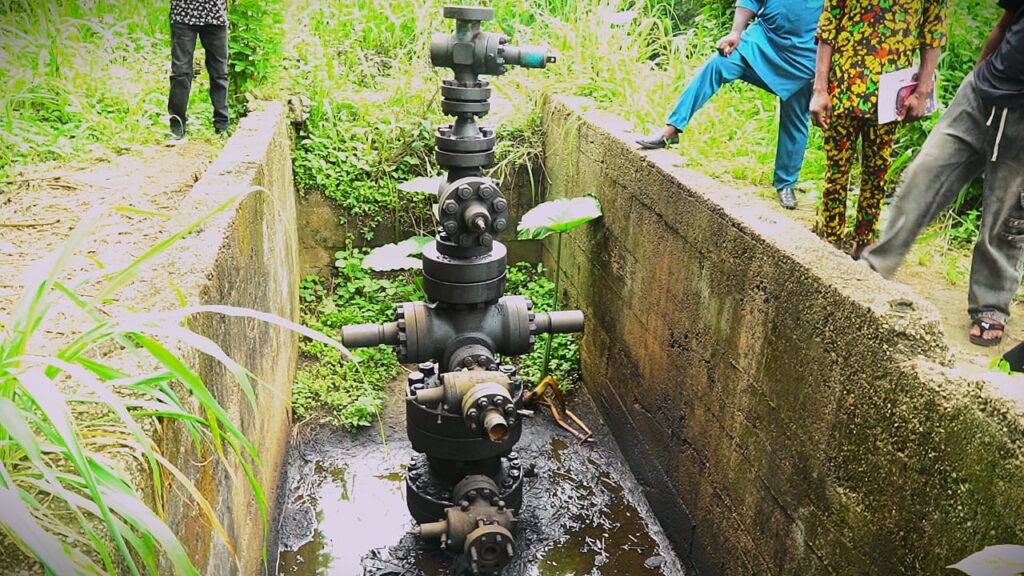
70 Years After Shell Abandoned Oil Wells, Akwa Ibom Communities Demand Justice, Cleanup
By: Michael Mike
Farmers, fishers report poisoned streams, dying crops, lost livelihoods as HOMEF demands decommissioning, compensation
Nearly seven decades after Shell drilled and abandoned oil wells in parts of Akwa Ibom State, communities in Ikono and Ibiono Ibom Local Government Areas are demanding that the company and government authorities account for the environmental damage and livelihoods they say have been left behind.
The communities say the wells may have ceased to have commercial value for the oil company after being declared unviable, but their environmental consequences have remained a daily reality for residents.
They reported declining agricultural yields, dying economic trees, disappearing fish and snails, polluted streams, deteriorating property, insecurity and loss of livelihoods linked to the abandoned oil infrastructure.
The demands came at a capacity-sharing dialogue organised by the Health of Mother Earth Foundation (HOMEF) under its Fossil Politics project at Ikot Enua on September 9, where traditional rulers, women, youths and other residents presented accounts of the impact of decades-old petroleum activities on their communities.
At the centre of the dispute is a question with implications beyond Akwa Ibom: when an oil company abandons a commercially unviable well, who bears responsibility for the environmental consequences left behind?
For HOMEF, abandoning the wells cannot mean abandoning responsibility.
The organisation said the affected territories should not remain burdened with hazardous infrastructure and degraded ecosystems simply because petroleum extraction is no longer commercially attractive.
HOMEF Executive Director, Dr Nnimmo Bassey, said affected communities must be central to decisions concerning abandoned wells and the future of their territories.
“Communities must speak for themselves. They live here and understand the issues better than outsiders.”
Bassey drew attention to continuing petroleum-related hazards elsewhere in the Niger Delta, including gas bubbling and fire incidents reported in Bille, Rivers State, as evidence of the risks communities can continue to face around oil infrastructure.
The Executive Director of Peace Point Development Foundation, Mr Umo Isua Ikoh, also criticised what he described as an unequal distribution of the benefits and burdens of oil extraction.
“Oil can be a blessing to Abuja but never to the host communities,”
he said, citing Ikot Ebidang in Onna Local Government Area, where he said an ongoing flare had displaced members of the host community.
‘We can’t plant in our farms anymore’
The strongest evidence presented at the dialogue came from residents who described changes in their environment and livelihoods over the years.
Chief Felix Vincent Udoh of Ikot Enua reported declining agricultural productivity and the death of oil palm seedlings, while cocoyam, snails and fish species that were once part of the community’s ecological and economic life were said to have disappeared.
He also raised concerns about insecurity around abandoned oil infrastructure and declining soil fertility.
According to Udoh, corrugated roofing sheets in the community now rust and deteriorate unusually quickly, with some reportedly lasting less than five years.
He further alleged that Ikot Enua won its case against Shell at the High Court and Court of Appeal in 2013 but said the company had yet to comply with the judgment.
In Adara Abom, Mr Moses Udo said oil pollution had severely affected fishing, depriving residents of an important source of food and income.
Barrister Trust Udoh of Uyo Afaha Nkan gave another account of the impact, saying oil spills had contaminated water sources and affected farming.
“We can’t plant in our farms anymore,”
he said, while calling for the removal of the oil installation.
Residents of Ikot Idaha, Edem Udua and Ediene Atai similarly reported destruction of economic trees and declining agricultural yields.
In Ntan Mbat, residents said crops such as okra and cocoyam no longer yielded properly and sometimes died prematurely. They also complained about an abandoned road project reportedly initiated by the Niger Delta Development Commission.
Nkara Obio residents reported polluted streams and declining crop yields.
The individual testimonies, HOMEF said, pointed to a broader pattern across the affected communities: declining production of yam, cassava, cocoyam, okra and other crops; destruction of economic trees; disappearance of fish, snails and other species; polluted water sources; insecurity and inadequate infrastructure.
Seven decades of an unfinished oil story
The grievances revive a long-running problem in the Niger Delta, where oil extraction has generated substantial national revenue while producing persistent disputes over pollution, compensation, land degradation and community rights.
The region became the centre of Nigeria’s petroleum economy following the discovery and commercial exploitation of crude oil in the Niger Delta. Over subsequent decades, extensive networks of oil wells, pipelines, flow stations and other infrastructure were established across communities.
But when wells become commercially unattractive, the physical infrastructure and environmental liabilities do not necessarily disappear with the end of production.
For communities such as those in Ikono and Ibiono Ibom, the issue is therefore no longer simply whether oil remains beneath their land. It is whether decades-old installations can be safely decommissioned and whether land and water affected by petroleum activities can be restored.
HOMEF said the answer should not be another cycle of extraction.
The organisation rejected the argument that renewed exploitation of abandoned wells should automatically be treated as the solution to the communities’ economic difficulties, insisting that restoration and sustainable livelihoods must take priority.
Focus turns to Ikono 1
HOMEF specifically called on the Federal Government, Shell, regulatory agencies and the Akwa Ibom State Government to address outstanding claims relating to the abandoned Ikono 1 oil well.
It cited the 2013 Court of Appeal decision in Eteidung Raymond F. Obot & Ors. v. Shell Petroleum Development Company Nigeria Limited (CA/C/70/2011), which allowed environmental claims from 2006 onward to proceed.
The organisation called for proper assessment of abandoned wells and hazardous infrastructure, permanent decommissioning where extraction has ceased, removal of dangerous installations and comprehensive environmental cleanup.
It also demanded investigation of reported health concerns, long-term environmental monitoring and compensation for losses involving farmland, crops, economic trees, fishing grounds, property and livelihoods.
The communities want improved security, employment opportunities and skills development, alongside support for sustainable agriculture, fishing and other non-extractive livelihoods.
Beyond the abandoned wells
The controversy raises a larger issue about the legacy of extraction in Nigeria’s oil-producing communities.
For decades, oil has been presented as a major engine of national development. Yet residents living closest to extraction sites often measure its legacy differently — through the condition of their farms, streams, fishing grounds, homes and sources of income.
In Ikono and Ibiono Ibom, residents are now demanding that the end of commercial interest in an oil well should not mark the end of corporate and governmental responsibility.
HOMEF said restoration must go beyond simply closing a well or removing equipment.
It wants polluted land and water restored, damaged ecosystems rehabilitated, affected livelihoods addressed and communities involved in decisions about their territories.
The organisation also warned against turning environmental restoration into a pretext for renewed extraction, arguing that communities should be supported to build sustainable livelihoods that do not depend on continued degradation of their ecological resources.
The message from the communities is therefore not simply about abandoned oil wells.
It is about what happens after the oil is gone — who pays for the damage, who restores the land and whether communities that have carried the environmental costs of extraction for generations can finally reclaim their farms, waters and livelihoods.
The wells may have been abandoned decades ago. The communities insist that responsibility must not be abandoned with them.
70 Years After Shell Abandoned Oil Wells, Akwa Ibom Communities Demand Justice, Cleanup

CBN RATE CUT: NIGERIA ENTERS A NEW PHASE OF MONETARY EASING AND ECONOMIC DEVELOPMENT

Climate Crisis: ECOWAS Parliamentarians Warn of ‘Security Time Bomb’ as Land, Water Shrink

70 Years After Shell Abandoned Oil Wells, Akwa Ibom Communities Demand Justice, Cleanup

Roger Federer’s Shock as DNA Results Reveal Myla and Charlene Are Not His Biological Children

THE PLIGHT OF FARIDA

FAILED COUP IN BURKINA FASO: HOW TRAORÉ NARROWLY ESCAPED ASSASSINATION PLOT AMID FOREIGN INTERFERENCE CLAIMS
-
 News3 years ago
Roger Federer’s Shock as DNA Results Reveal Myla and Charlene Are Not His Biological Children
-
Opinions5 years ago
THE PLIGHT OF FARIDA
-
 News1 year ago
FAILED COUP IN BURKINA FASO: HOW TRAORÉ NARROWLY ESCAPED ASSASSINATION PLOT AMID FOREIGN INTERFERENCE CLAIMS
-

 News3 years ago
EYN: Rev. Billi, Distortion of History, and The Living Tamarind Tree
-
 Opinions5 years ago
POLICE CHARGE ROOMS, A MINTING PRESS
-

 ACADEMICS3 years ago
A History of Biu” (2015) and The Lingering Bura-Pabir Question (1)
-

 Columns3 years ago
Army University Biu: There is certain interest, but certainly not from Borno.
-

 Politics1 year ago
2027: Why Hon. Midala Balami Must Go, as Youths in Hawul and Asikira/Uba Federal Constituency Reject ₦500,000 as Sallah Gift
