
News
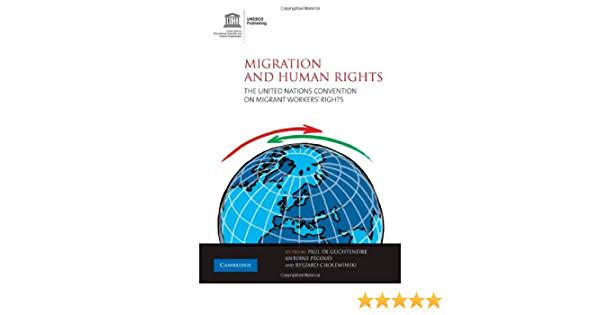
Collaboration Needed to Tackle Human Rights Violation Around Irregular Migration- UN

Collaboration Needed to Tackle Human Rights Violation Around Irregular Migration- UN
By: Michael Mike
The United Nations (UN) in Nigeria has emphasized the need for collaborative efforts in effective combat of human rights violations around irregular migration in West Africa.
The call was made in Abuja on Monday at the opening ceremony of the two-day training of Civil Society Organisations (CSOs) on human rights-based response to smuggling of migrants and related crimes.
Speaking at the training which was organised by the UN in Nigeria for CSOs. Senior Human Rights Adviser, Office of the UN High Commissioner for Human Rights (OHCHR), Adwoa Kufuor-Owusu, said the training is meant to strengthen capacities of civil societies on human rights-based approach to migration.
She lamented that violations of migrants rights and related abuses has become global concern.
Kufuor-Owusu described migration as a complex and multifaceted issue that has impacted the lives of countless individuals and communities negatively all over the globe.
She said: “Not only in Nigeria, it has power to transform societies, economies and most importantly, individual lives.
“Migration is often accompanied by challenges, which can lead to violation of human rights of migrants, if not managed properly and safe guarded.
“So, in order to do this very safeguarding, management and vulnerability that might arise in the context of migration, there are various legal frameworks.
“Which have been established at the International, regional and national levels.”
On his part, the Executive-Secretary of the National Human Rights Commission (NHRC), Chief Tony Ojukwu emphasised the need for government and civil society to partner, to tackle migration issues.
Ojukwu, represented by Mr Hilary Ogbonna, Senior Human Rights Adviser of NHRC, said that migration, whether regular or irregular does not just happen.
He said: “It is because people want to exercise their fundamental human rights to freedom of movement or right to association.
“As a Conmission, we believe migratory activities or human rights is significant for all the actors that involved in it.
“For government and CSOs, we all need to work closely together to be able to protect human rights.
“To ensure every person that has course to migrate or return is protected under national and international principles of human rights.”
Also speaking, Aishat Braimah of the United Nations Office on Drugs and Crime (UNODC) Officer, identified some causes of irregular migration.
She noted that a lot of people who found themselves in vulnerable migration situations were often the targets of smuggling.
She said: “People who are trying to flee persecution, conflicts or natural disaster in their home state, they find themselves wanting to migrate through irregular means.
“In terms of mitigating risks of migration, it is important we work in a holistic way, reason this training workshop was put together.
“To bring stakeholders together to solidify approach to the issues,” Braimah said.
End


Troops Arrest Suspected Military Impostor in Katsina
By Zagazola Makama
Troops of 17 Brigade have arrested a suspected military impostor during a fighting patrol in Malumfashi Local Government Area.
Security sources told Zagazola Makama that the suspect was apprehended at about 1:30 p.m. on July 4 by troops deployed at the Forward Operating Base (FOB) Malumfashi while conducting routine patrols within Malumfashi town.
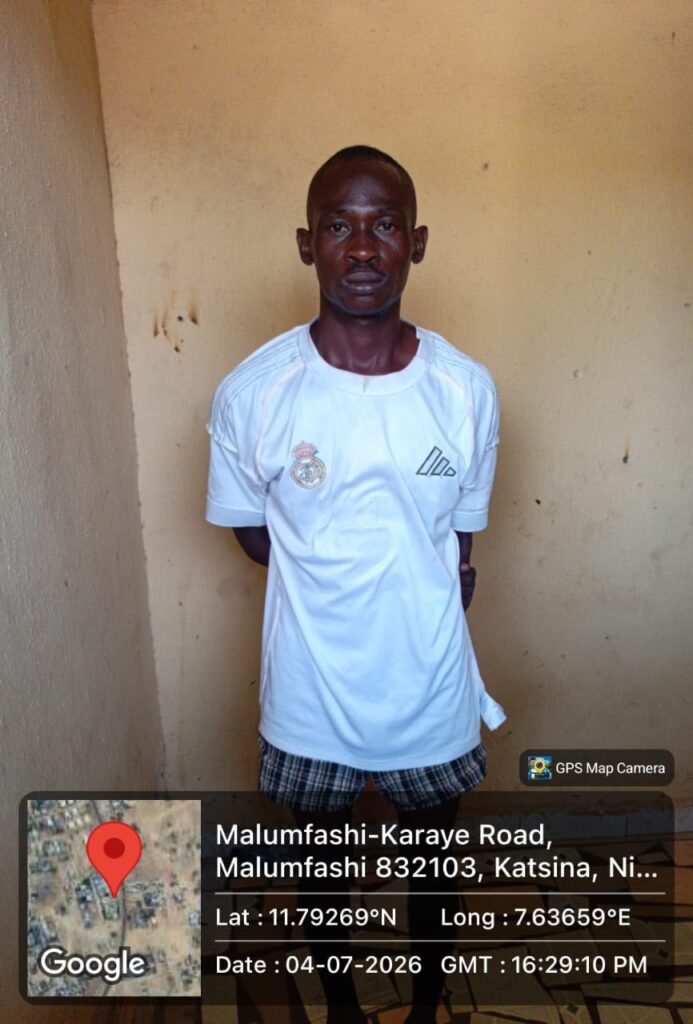
According to the sources, the suspect was intercepted while wearing a woodland camouflage three-quarter short, raising suspicion among the troops.
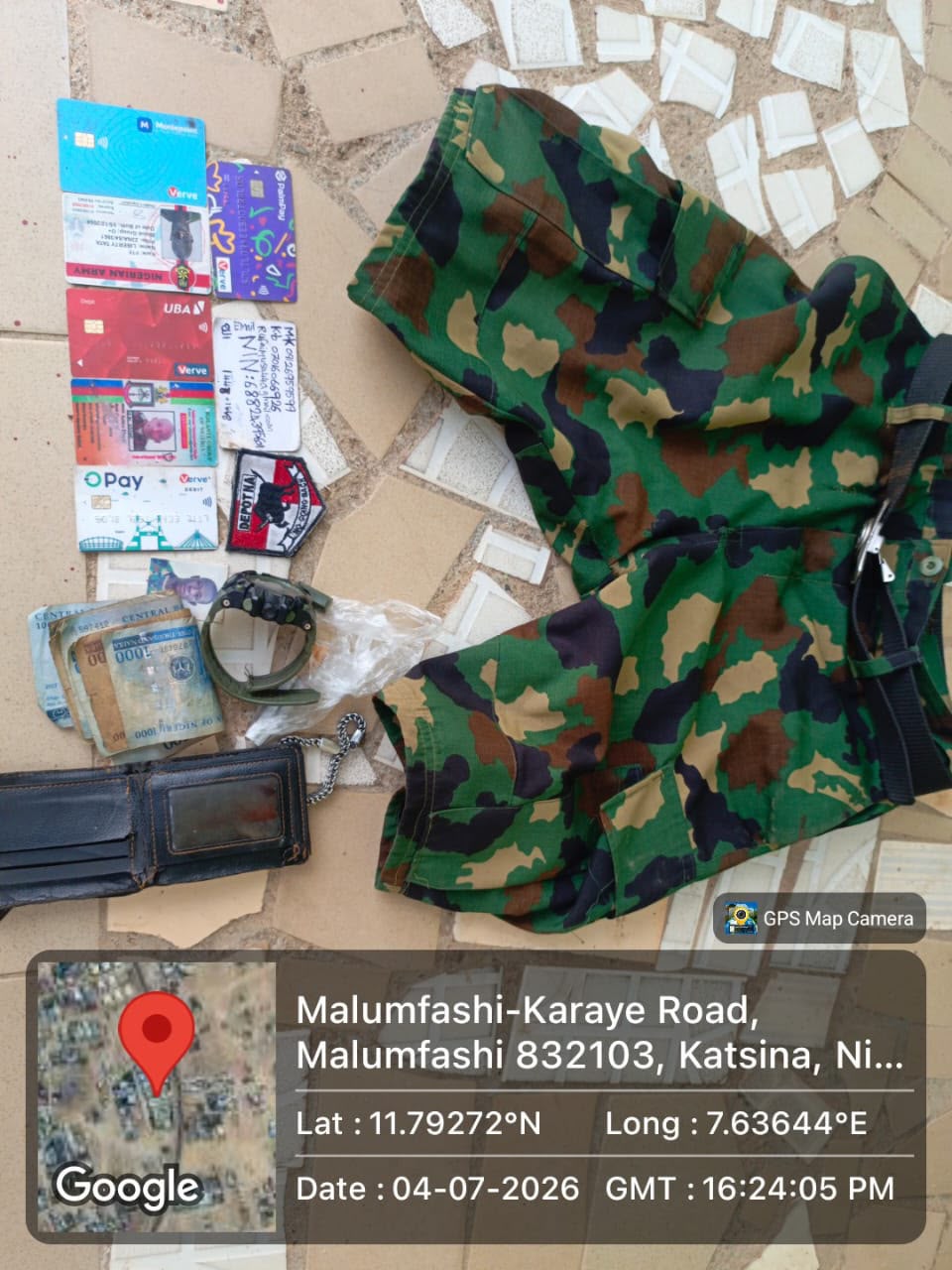
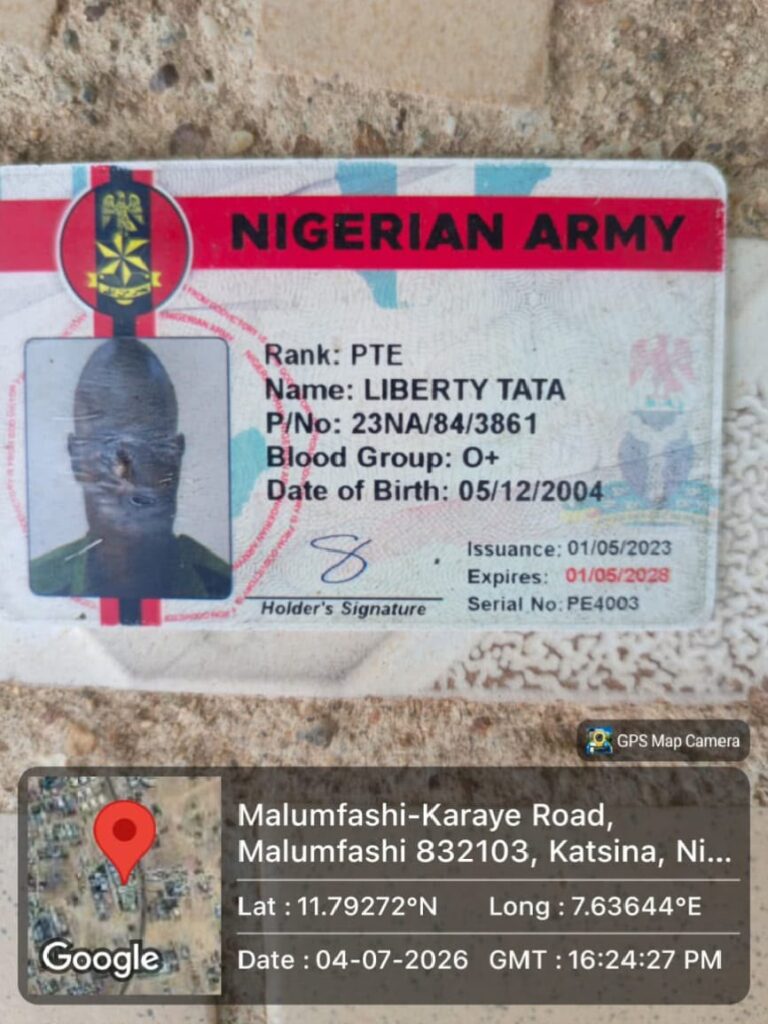
A search conducted on the suspect led to the recovery of a fake Nigerian Army identity card, four Automated Teller Machine (ATM) cards, one woodland camouflage three-quarter short, a wristwatch and the sum of ₦17,000.
The suspect and the recovered exhibits are currently in military custody pending further investigation.
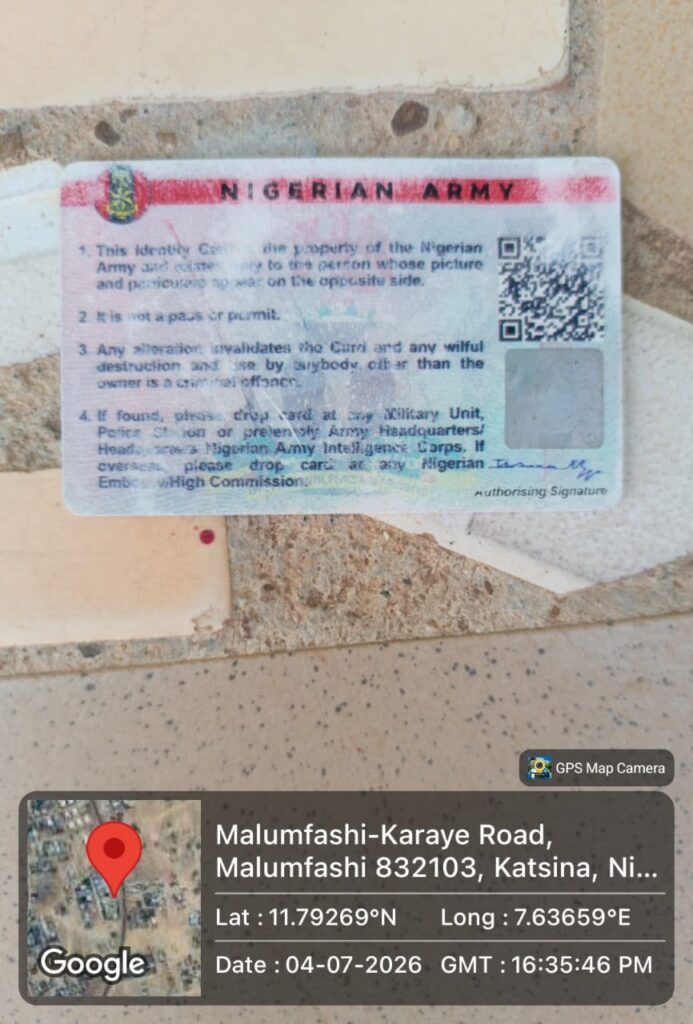
Military sources said the arrest forms part of ongoing efforts to curb impersonation of security personnel and other criminal activities within the area.
Troops Arrest Suspected Military Impostor in Katsina
Troops Recover 50 Rustled Cattle, Repel Suspected Rustlers in Kaduna
By Zagazola Makama
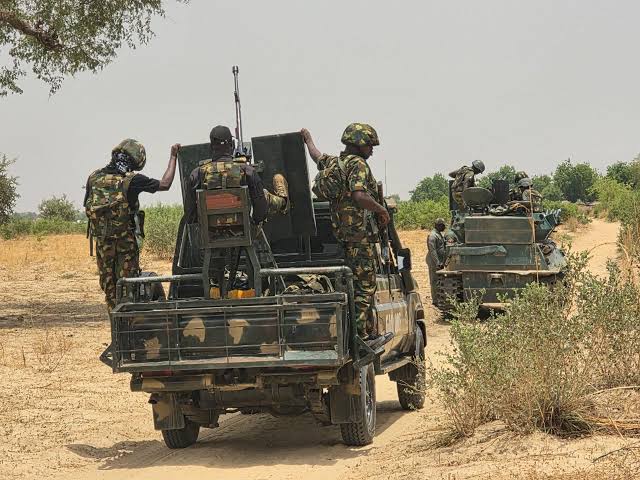
Troops deployed at the Forward Operating Base (FOB) Kankomi have recovered 50 rustled cattle after repelling suspected cattle rustlers during an ambush operation in Chikun Local Government Area.
Security sources told Zagazola Makama that the troops responded to a distress call at about 9:55 a.m. on July 4 over the activities of suspected rustlers at Ungwan Gontu community.
According to the sources, the troops swiftly laid an ambush and made contact with the fleeing suspects, forcing them to abandon the stolen livestock and escape into the surrounding area.
During the operation, the troops recovered 50 rustled cattle, which were subsequently identified and handed over to their rightful owner.
Military sources said efforts are ongoing to track down the fleeing suspects as security operations continue to combat cattle rustling and other criminal activities across Kaduna State.
Troops Recover 50 Rustled Cattle, Repel Suspected Rustlers in Kaduna
Troops Arrest Suspected Terrorist in Kogi, Suspect Confesses to Group Membership
By Zagazola Makama
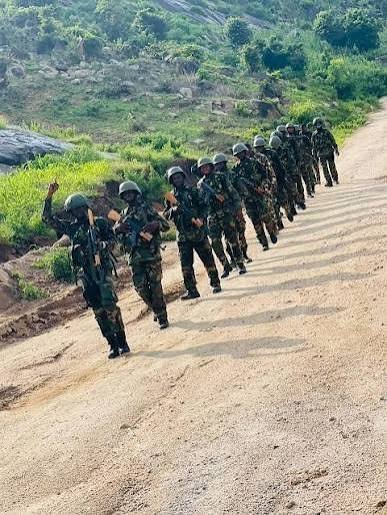
Troops of 12 Brigade, in collaboration with Office of the National Security Adviser (ONSA) Hybrid Forces, have arrested a suspected terrorist during an operation in Lokoja Local Government Area.
Security sources told Zagazola Makama that the troops responded at about 1:00 p.m. on July 4 to reports of a confrontation between local residents and a suspected terrorist at a Ruga settlement behind Obajana community.
According to the sources, the troops swiftly intervened and arrested one suspect at the scene.
During preliminary interrogation, the suspect reportedly confessed to being a member of a terrorist group led by an individual identified as Haruna, which allegedly operates within the Okene general area.
The suspect is currently in military custody and is undergoing further investigation to establish the extent of his involvement and identify other members of the group.
Military sources said the arrest forms part of ongoing security operations aimed at dismantling terrorist and criminal networks across Kogi State.
Troops Arrest Suspected Terrorist in Kogi, Suspect Confesses to Group Membership

Troops Arrest Suspected Military Impostor in Katsina

Troops Recover 50 Rustled Cattle, Repel Suspected Rustlers in Kaduna

Troops Arrest Suspected Terrorist in Kogi, Suspect Confesses to Group Membership

Roger Federer’s Shock as DNA Results Reveal Myla and Charlene Are Not His Biological Children

THE PLIGHT OF FARIDA

FAILED COUP IN BURKINA FASO: HOW TRAORÉ NARROWLY ESCAPED ASSASSINATION PLOT AMID FOREIGN INTERFERENCE CLAIMS
-
 News2 years ago
Roger Federer’s Shock as DNA Results Reveal Myla and Charlene Are Not His Biological Children
-
Opinions4 years ago
THE PLIGHT OF FARIDA
-
 News1 year ago
FAILED COUP IN BURKINA FASO: HOW TRAORÉ NARROWLY ESCAPED ASSASSINATION PLOT AMID FOREIGN INTERFERENCE CLAIMS
-

 News2 years ago
EYN: Rev. Billi, Distortion of History, and The Living Tamarind Tree
-
 Opinions5 years ago
POLICE CHARGE ROOMS, A MINTING PRESS
-

 ACADEMICS2 years ago
A History of Biu” (2015) and The Lingering Bura-Pabir Question (1)
-

 Columns2 years ago
Army University Biu: There is certain interest, but certainly not from Borno.
-

 Politics1 year ago
2027: Why Hon. Midala Balami Must Go, as Youths in Hawul and Asikira/Uba Federal Constituency Reject ₦500,000 as Sallah Gift
