
Uncategorized
Commissioner counsels Ndigbo to participate in Census 2022


Commissioner counsels Ndigbo to participate in Census 2022
The National Population Commission (NPC) has urged the people of the South-East to present themselves for counting in the 2022 National Census scheduled for November.
The Federal Commissioner, NPC, representing Enugu State, Mr Ejike Ezeh, made the call on Friday in an interview with the News Agency of Nigeria (NAN), in Enugu.
Ezeh said Ndigbo were part of Nigeria and the Census data were for national planning, stressing that if they declined, they would be short-changing themselves.
According to him, they would benefit more if they actively participated in the forthcoming census in the country.
“The Indigenous People of Biafra (IPOB), in the cause they are fighting for, need data and if you ask them how many we are, they don’t even know.
“If they need to canvass for anything, they need certain information but when you back out from a thing like this, you have yourselves to blame.
READ ALSO: Over 100 Bandits Neutralised In Niger
“It is an opportunity for them to say that the South-East is made up of so many numbers and by boycotting the national census, Ndigbo is not helping themselves.
“They will add more value to the zone when they submit to national programmes like the Census,” Eze said.
He further said that the Federal Commissioners in the zone would engage the people of the zone with a vigorous campaign to sensitize them on the need to participate in the Census.
Ezeh stressed that they would engage all the relevant stakeholders such as the media, political, religious and traditional leaders in the campaign.
The commissioner disclosed that the commission would deploy digital applications for the 2022 national census in the country.
He stated that the digital apps that would be used would cover would all the nooks and crannies of the country.
“This is why the commission shifted the census from October to November to enable us to put everything in order as well as accommodate international observers.
“It will no longer going to be paperwork but the use of digital applications in all the processes.
“We are working hard to ensure that the modalities put in place are effective and by God’s grace, we are going to have a credible Census,” he said.
He added that both staff and ad hoc staff that would be used would be trained adequately on how to use the Apps.
He stated that the commission had begun pre-test on their methodology across the 36 states in the country in preparation for the census.
Ezeh said that NPC staff were in the field to test their methodologies, questionnaires and to show how prepared they were.
He said the exercise was currently ongoing in Enugu South and Aninri Local Government Areas of the state.
NAN reports that the last census in Nigeria was held in 2006.


Uncategorized
NIGCOMSAT to Host Nigerian Satellite Week 2026 as Nigeria Marks 20 Years in Space Economy
NIGCOMSAT to Host Nigerian Satellite Week 2026 as Nigeria Marks 20 Years in Space Economy
By: Michael Mike
Nigeria’s national satellite operator, Nigerian Communications Satellite Limited, will host the second edition of Nigerian Satellite Week (NSATWK 2026) in Abuja on March 30 and 31, bringing together top policymakers, defence leaders, investors, and technology entrepreneurs to discuss the future of the country’s space and satellite industry.
The event, organised by Nigerian Communications Satellite Limited, will also coincide with the organisation’s 20th anniversary, highlighting two decades of Nigeria’s entry into the global space economy and the growing role of satellite infrastructure in national development.
According to the organisers, NSATWK 2026 is expected to attract one of the largest gatherings of stakeholders in Nigeria’s satellite and digital infrastructure ecosystem, including cabinet ministers, development finance institutions, satellite operators, and African deep-technology startups.
Speaking ahead of the event, the Managing Director and Chief Executive Officer of Nigerian Communications Satellite Limited, Jane Egerton-Idehen, said the gathering represents a defining moment for Nigeria’s space sector.
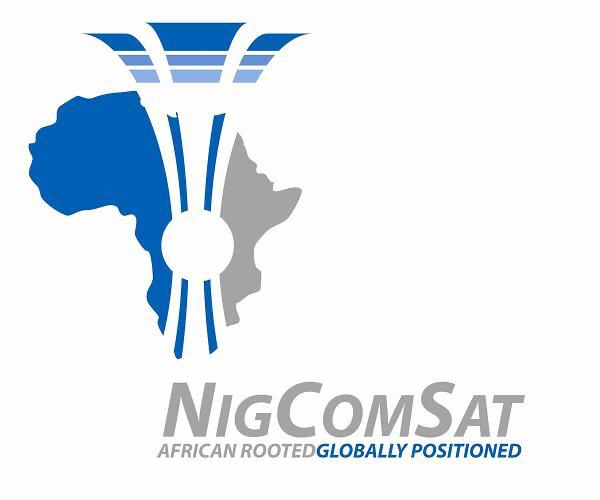
“Twenty years ago, Nigeria made a sovereign decision to own its place in space. What we are marking this week is not simply longevity; it is the compounding return on that decision. This is where we bring that work into full view and define what the next twenty years will demand of us,” she said.
She noted that the global satellite industry is entering what many analysts describe as its most consequential decade, stressing that countries seeking economic competitiveness must increasingly rely on sovereign space capabilities.
Over the past two years, Nigerian Communications Satellite Limited has expanded its footprint from operating a single satellite platform to becoming a multi-service provider delivering connectivity, broadcasting and broadband services across Nigeria and other parts of Africa.
The company’s recent milestones include a major Low Earth Orbit connectivity partnership with Eutelsat, strategic cooperation with the Kenya Space Agency, and the appointment of Egerton-Idehen as Vice Chair of the Global Satellite Operators Association, a position that places Nigeria among key players shaping global satellite policy and spectrum governance.
The two-day event will feature several key components designed to strengthen Nigeria’s satellite ecosystem. A Startup Demo Day will showcase African deep-technology ventures working on satellite applications across sectors such as agriculture, logistics, healthcare and connectivity, while a Stakeholders Forum will bring together government officials and industry leaders to discuss regulatory reforms, infrastructure development and investment opportunities.
The event will also feature the launch of Accelerator Cohort 3.0, a programme aimed at nurturing early-stage companies developing satellite-based solutions. Through the initiative, Nigerian Communications Satellite Limited hopes to strengthen Nigeria’s space-technology innovation pipeline and position the country competitively within the evolving global space economy.

Organisers said the programme will conclude with a gala night to recognise institutions, policymakers and individuals who have contributed to Nigeria’s journey in the satellite and space sector over the past two decades.
High-level Technology’s expected at the event include Nigeria’s Minister of Communications, Innovation and Digital Economy, the Chief of Defence Staff, the Director-General of the National Information Technology Development Agency, and the Managing Director of the Small and Medium Enterprises Development Agency of Nigeria.
Incorporated in 2006 and wholly owned by the Federal Government, Nigerian Communications Satellite Limited provides satellite-based telecommunications, broadcasting, broadband and navigational services to government institutions, enterprises and telecom operators across Nigeria, Africa and other regions.
NSATWK 2026, organisers say, will highlight how Nigeria’s space economy has evolved from a strategic aspiration into an active driver of digital connectivity, innovation and economic transformation.
NIGCOMSAT to Host Nigerian Satellite Week 2026 as Nigeria Marks 20 Years in Space Economy
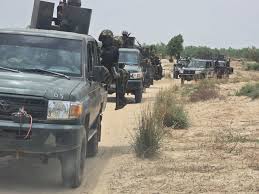
Troops repel terrorist attack in Zamfara, recover bodies of two villagers
By: Zagazola Makama
Troops of Operation FANSAN YAMMA have repelled a terrorist attack on Maiwa village in Maru Local Government Area of Zamfara State, following a swift response to a distress call.
Security sources said the troops moved to the scene at about 5:30 p.m. on March 25 after reports of an ongoing attack.
LOn arrival, the troops reportedly met local vigilantes already engaged in a firefight with the assailants.
The sources said the troops reinforced the vigilantes, a move that forced the attackers to withdraw into the surrounding bush.
During subsequent exploitation of the area, the troops discovered that two villagers had been killed during the exchange of fire.
The sources added that troops maintained a sustained presence in the area and continued aggressive patrols aimed at denying the terrorists freedom of movement and preventing further attacks.
Troops repel terrorist attack in Zamfara, recover bodies of two villagers
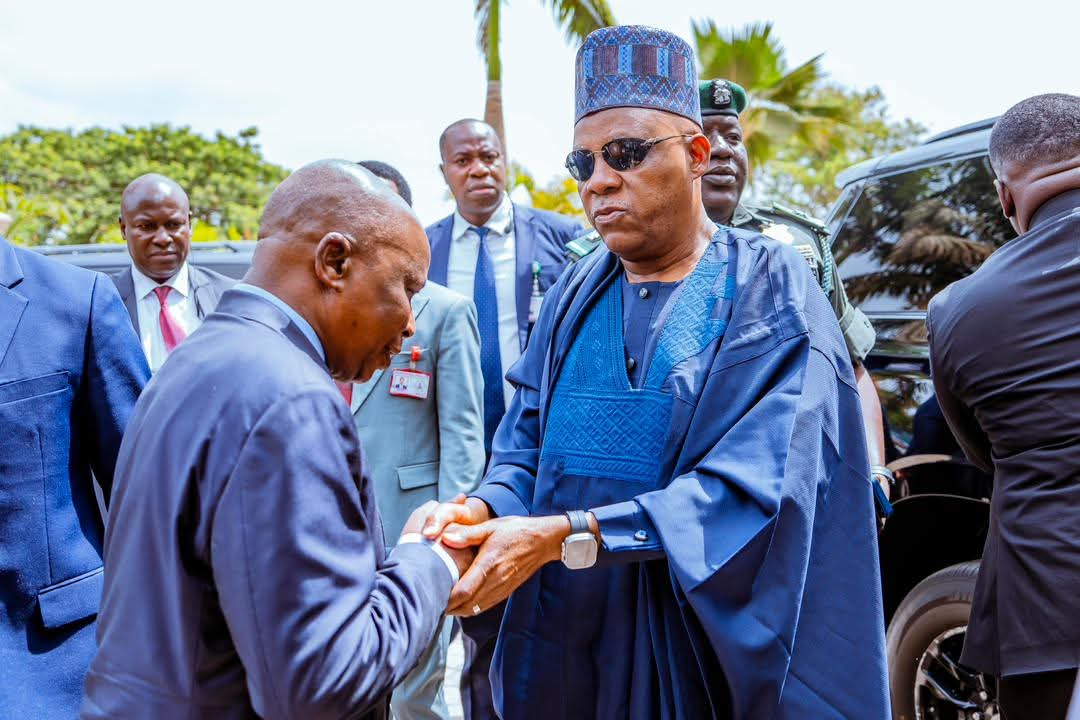
VP Shettima: Nigeria, Determined To Promote, Protect Human Rights
Says FG had adopted proactive approach to implementation of International Humanitarian Law
By: Our Reporter
The Vice President, Senator Kashim Shettima, has reaffirmed Nigeria’s resolve to promote and protect human rights through constitutional guarantees and embedding the rights into security operations.
According to him, the nation is fully committed to international cooperation and to the universal application of International Humanitarian Law in every theatre of conflict.
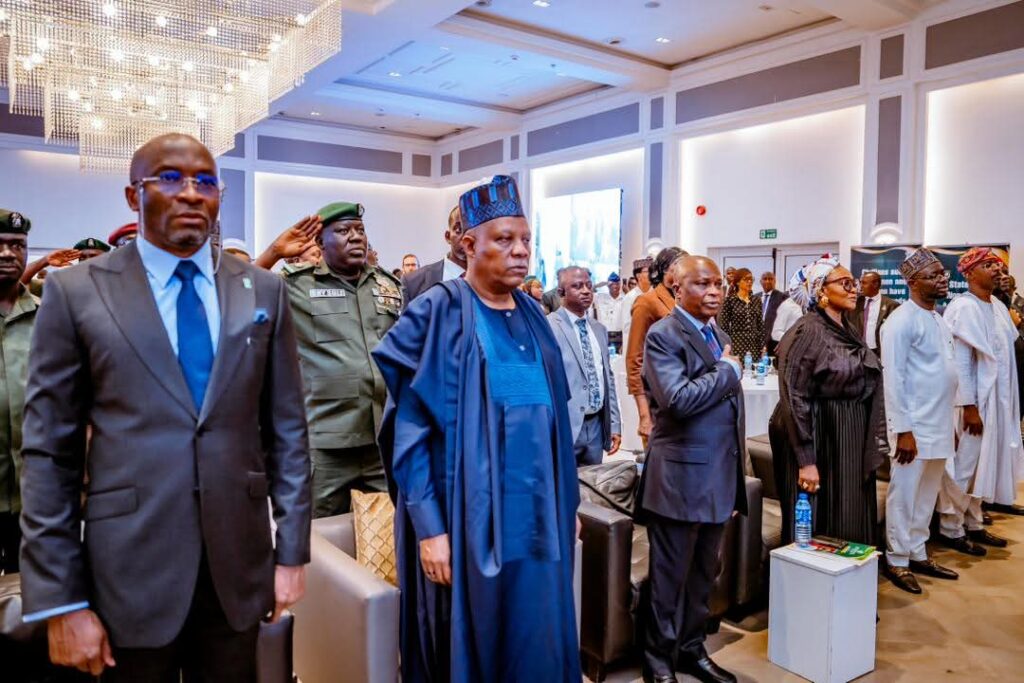
Senator Shettima, who stated this on Thursday in Abuja when he declared open the 2026 High-Level International Humanitarian Law Dialogue, said the administration of President Bola Ahmed Tinubu has adopted a comprehensive response to tackle insecurity and address conflicts, including the combination of kinetic and non-kinetic measures.
“I wish to emphasize Nigeria’s unwavering determination to promote and protect human rights, while ensuring the effective implementation of International Humanitarian Law treaties. His Excellency, President Bola Ahmed Tinubu, GCFR, recognizes that insecurity remains the greatest threat to peace and development.
“Accordingly, our government accords the highest priority to a comprehensive response that combines both kinetic and non-kinetic measures in addressing conflict,” he declared, pointing out that in achieving, the administration has continued to evolve the nation’s legal frameworks in response to emerging realities.
As part of the evolution, VP Shettima recalled that President Tinubu recently appended his assent to the domestication of the African Union Kampala Convention in a bid to establish “a robust and context-specific legal framework for the protection and assistance of Internally Displaced Persons in Nigeria.”
The Vice President observed that the dialogue came at a more defining moment when Nigeria’s “shared humanity is under immense strain, and when the very laws meant to uphold order are too often treated as expendable inconveniences.”
Senator Shettima noted that the realities have not spared Nigeria either, as the nation has continued to “confront persistent insurgency, terrorism, and other forms of violent conflict.
“Beyond the immediate toll of these hostilities, we are also managing the deeper, long-term strain they impose on our communities and institutions. It is precisely because of these experiences that Nigeria stands resolute in championing this global movement,” he added.
The VP further observed that while the dialogue was “convened as part of deliberate efforts to reinforce the enduring principles that govern the conduct of armed conflict, particularly the imperative of limiting harm in contemporary warfare,” it is also a moment to reflection and return “to the moral centre of International Humanitarian Law.”
The IHL, he said, exists to provide critical safeguards for human life when it is most vulnerable, just as he identified the approach, which he said is anchored in three non-negotiable pillars, including “the protection of civilian populations, the humane treatment of all persons affected by conflict, and the preservation of human dignity even in the most difficult circumstances.”
The Vice President noted that Nigeria has adopted a proactive approach to the implementation of International Humanitarian Law “through sustained military training, strengthened child protection protocols, the integration of IHL into academic curricula, accountability mechanisms for sexual violence, improved arms control systems, and comprehensive displacement frameworks.
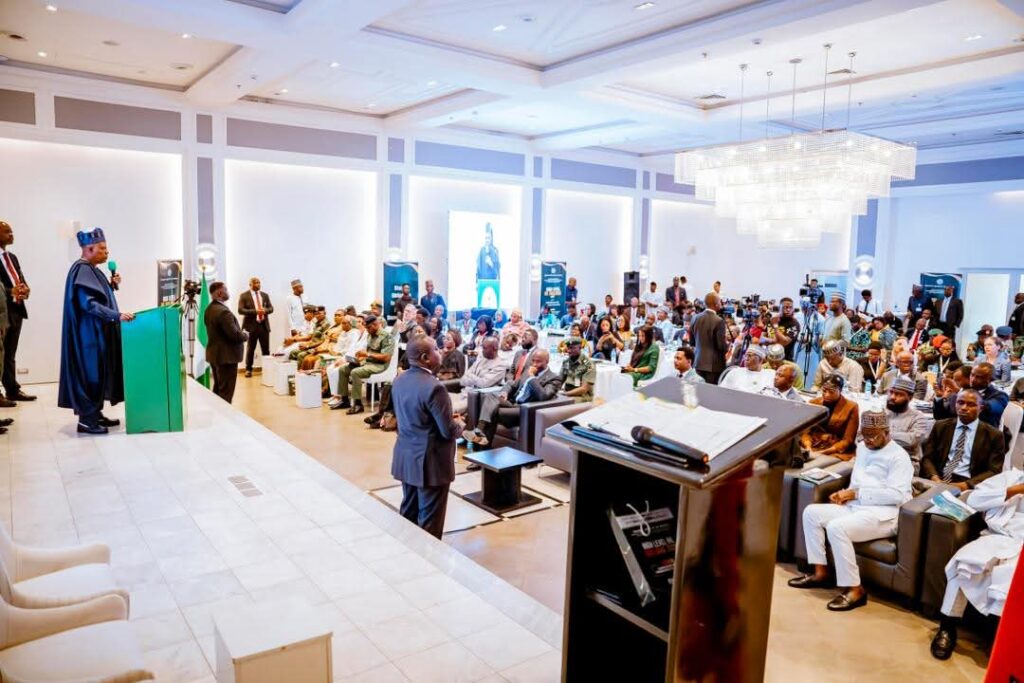
“These efforts reflect a simple but powerful truth: humanitarian law must be lived, not merely legislated. At the heart of this national agenda lies our recognition that meaningful progress depends on strong partnerships across government, civil society, and international stakeholders, ensuring that IHL is translated from principle into practice,” he added.
He commended the United Nations, the International Committee of the Red Cross, the Office of the Prosecutor of the ICC, and other Nigeria’s development partners for their “continued collaboration and technical support in advancing the implementation of International Humanitarian Law.”
Specifically, the VP lauded their efforts, saying they have contributed to a greater extent in building systems that respond to local realities while remaining aligned with global standards.
He also commended the organisers of this dialogue and the participants for their commitment to strengthening Nigeria’s compliance with the International Humanitarian Law.
Earlier, the Attorney General of the Federation (AGF) and Minister of Justice, Chief Lateef Fagbemi (SAN), underscored government efforts towards domesticating humanitarian law treaties as well as transform the nation’s justice system.
He said new laws and investments in correctional facilities are aimed at ensuring humane treatment, rehabilitation, and adherence to global human rights standards.
Fagbemi added that Nigeria is strengthening the capacity of its military and law enforcement agencies by embedding International Humanitarian Law principles into training and operations.
He noted that the country is also translating these laws into local languages to ensure accessibility in conflict-affected areas.
In her welcome address, the Solicitor General of the Federation and Permanent Secretary in Ministry of Justice, Mrs Beatrice Jeddy-Agba, said the dialogue was an opportunity for the judiciary to further maintain its stand on the promotion of the rule of law within the nation’s security architecture.
The Permanent Secretary said Nigeria will continue to identify with the Geneva Convention on warfare.
“We are today reminded that our work is a vital checkpoint in embedding the rule of law within our national security architecture. The importance of the International Humanitarian Law has never been more critical, as we witness heightened disregard for civilian protection in contemporary global warfare.
“Nigeria recognizes that as conflict dynamics evolve, particularly in asymmetric environment, our political will must be the engine that drives compliance from the negotiating tables in Geneva to our own frontlines,” she said.
The event drew participation from key international bodies, including the United Nations and the International Committee of the Red Cross, among others.
VP Shettima: Nigeria, Determined To Promote, Protect Human Rights

Troops arrest suspected kidnapper in Damboa LGA of Borno

Troops arrest 58 illegal miners in Edo state

Army troops arrest two suspected Boko Haram logistics suppliers in borno

Roger Federer’s Shock as DNA Results Reveal Myla and Charlene Are Not His Biological Children

THE PLIGHT OF FARIDA

FAILED COUP IN BURKINA FASO: HOW TRAORÉ NARROWLY ESCAPED ASSASSINATION PLOT AMID FOREIGN INTERFERENCE CLAIMS
-
 News2 years ago
Roger Federer’s Shock as DNA Results Reveal Myla and Charlene Are Not His Biological Children
-
Opinions4 years ago
THE PLIGHT OF FARIDA
-
 News11 months ago
FAILED COUP IN BURKINA FASO: HOW TRAORÉ NARROWLY ESCAPED ASSASSINATION PLOT AMID FOREIGN INTERFERENCE CLAIMS
-

 News2 years ago
EYN: Rev. Billi, Distortion of History, and The Living Tamarind Tree
-
 Opinions4 years ago
POLICE CHARGE ROOMS, A MINTING PRESS
-

 ACADEMICS2 years ago
A History of Biu” (2015) and The Lingering Bura-Pabir Question (1)
-

 Columns2 years ago
Army University Biu: There is certain interest, but certainly not from Borno.
-

 Opinions2 years ago
Tinubu,Shettima: The epidemic of economic, insecurity in Nigeria
