
News
Yobe police command gets new commissioner

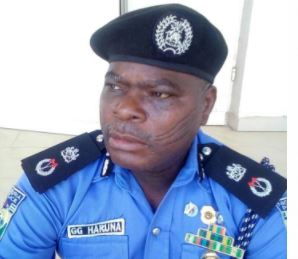
Yobe police command gets new commissioner
The Yobe state police command has received its new Commissioner of Police, CP Haruna G. Garba, who stands as the 31st Commissioner of Police since the creation of Yobe State.
In a statement issued by the command police public relations officer ASP Dungus Abdulkarim said the new Commissioner took over from CP Yahaya Sahabo Abubakar who has been elevated to the rank of AIG.
According to the statement, “The new Commissioner of Police hails from Kogi state and holds a Bachelor of Science degree in Political Science and Administration from the University of Maiduguri, MSc. International Relations from the University of Uyo, Akwa-Ibom state.
“He was appointed into the Nigeria Police Force as a cadet Assistant Superintendent of Police on 3rd March 1990. He has held Tactical and Strategic leadership positions in various departments of the Force across the country.
READ ALSO: NLC Urges Nigerian Govt. To Withdraw Plans Of Increase In Fuel Price
“Until his deployment as the Commissioner of Police Yobe State Police Command, he was the Deputy Commissioner of Police in charge of State CID in Yobe state.
“He possesses vast experience in law enforcement, public order management and public safety, Intellectual property crime, Fundamental human rights, Crime Control and Community Policing.”
Yobe police command gets new commissioner








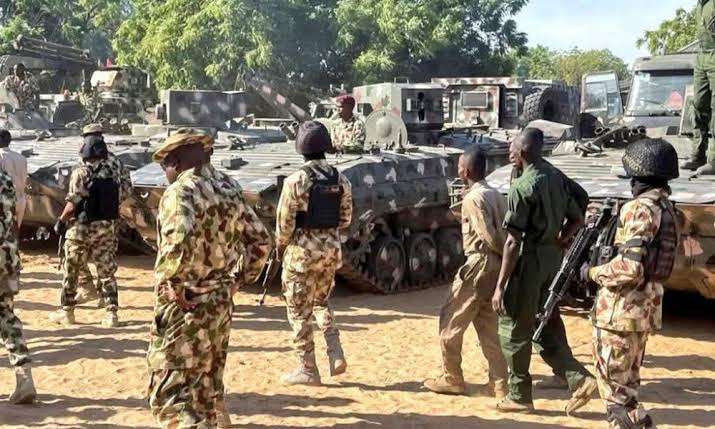
Troops arrest suspected foreign national along Azir–Damboa road in Borno
By Zagazola Makama
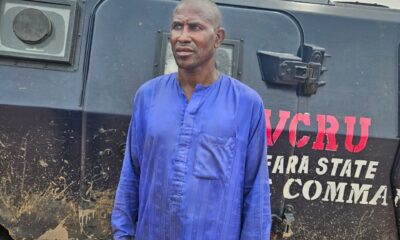
Troops of 25 Brigade, in collaboration with the Civilian Joint Task Force (CJTF), have arrested a suspected foreign national along the Azir–Damboa road in Borno State.
Military sources told Zagazola Makama that the suspect was apprehended at about 5:55 p.m. on Sept. 5 following a tip-off from local residents about the movement of a suspected foreigner along the route.
During preliminary questioning, the suspect reportedly identified himself as a national of the Republic of Cameroon.
He told the troops that he entered Nigeria through Taraba State and was travelling towards Niger State in search of artisanal work but lost his way.
The suspect remains in military custody for further investigation and necessary action, while authorities work to establish his identity, travel history and circumstances surrounding his presence in the area.
Troops arrest suspected foreign national along Azir–Damboa road in Borno
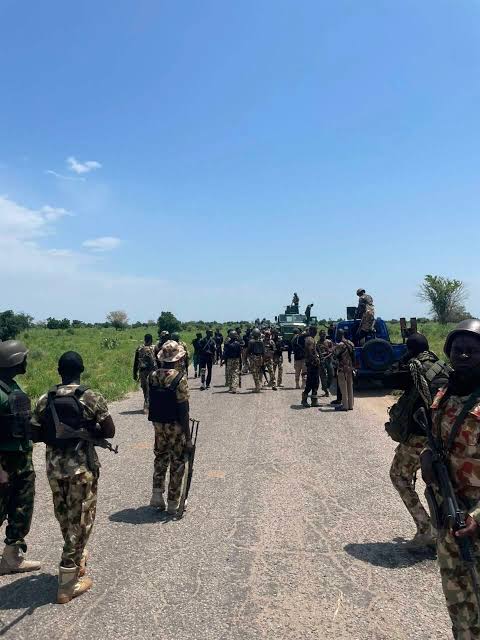
Troops arrest suspected ISWAP member with gunshot wound in Borno
By Zagazola Makama
Troops of 82 Division Task Force Battalion have arrested a suspected ISWAP member who was found loitering around Papa 7 location in Borno State.
Military sources told Zagazola Makama that the suspect was apprehended at about 9:35 a.m. on Sept. 6 while troops were conducting picketing duties in the area.
The suspect was found with a gunshot wound and was taken into custody for questioning.
Preliminary interrogation reportedly indicated that the suspect had descended from Gava in the Mandara Mountains in search of medical attention.
Sources attributed his movement to the effects of sustained military pressure and psychological operations targeting terrorist enclaves in the area.
The suspect remains in military custody for further investigation, while security forces continue operations aimed at degrading terrorist groups and disrupting their activities in the Mandara Mountains.
Troops arrest suspected ISWAP member with gunshot wound in Borno
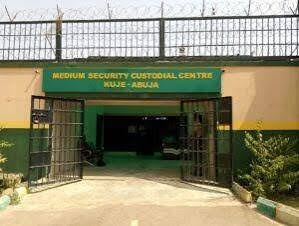
Investigation begins as SNCO dies after shooting incident at Kuje custodial centre
By Zagazola Makama
Authorities have commenced an investigation into a shooting incident involving a senior non-commissioned officer at the Kuje Medium Security Custodial Centre in the Federal Capital Territory.
Sources told Zagazola Makama that the incident occurred at about 9:37 a.m. on Sept. 7 while the personnel was on duty at the facility.
According to the sources, the SNCO fired at his commanding officer, but the shot missed after the officer moved away.
The SNCO subsequently died from a self-inflicted gunshot wound.
The circumstances surrounding the incident remain unclear, and an investigation has been launched to establish what led to the shooting.
The remains of the deceased personnel were evacuated to the University of Abuja Teaching Hospital (UATH) for further action.
Authorities are expected to provide additional details as the investigation progresses.
Investigation begins as SNCO dies after shooting incident at Kuje custodial centre

Troops arrest suspected foreign national along Azir–Damboa road in Borno

Troops arrest suspected ISWAP member with gunshot wound in Borno

Investigation begins as SNCO dies after shooting incident at Kuje custodial centre

Roger Federer’s Shock as DNA Results Reveal Myla and Charlene Are Not His Biological Children

THE PLIGHT OF FARIDA

FAILED COUP IN BURKINA FASO: HOW TRAORÉ NARROWLY ESCAPED ASSASSINATION PLOT AMID FOREIGN INTERFERENCE CLAIMS
-
 News2 years ago
Roger Federer’s Shock as DNA Results Reveal Myla and Charlene Are Not His Biological Children
-
Opinions5 years ago
THE PLIGHT OF FARIDA
-
 News1 year ago
FAILED COUP IN BURKINA FASO: HOW TRAORÉ NARROWLY ESCAPED ASSASSINATION PLOT AMID FOREIGN INTERFERENCE CLAIMS
-

 News2 years ago
EYN: Rev. Billi, Distortion of History, and The Living Tamarind Tree
-
 Opinions5 years ago
POLICE CHARGE ROOMS, A MINTING PRESS
-

 ACADEMICS3 years ago
A History of Biu” (2015) and The Lingering Bura-Pabir Question (1)
-

 Columns3 years ago
Army University Biu: There is certain interest, but certainly not from Borno.
-

 Politics1 year ago
2027: Why Hon. Midala Balami Must Go, as Youths in Hawul and Asikira/Uba Federal Constituency Reject ₦500,000 as Sallah Gift
