
Politics
Community Food Banks: A Necessary Step Toward Food Security in Nigeria


Community Food Banks: A Necessary Step Toward Food Security in Nigeria
By: Dr. James Bwala
Food insecurity and malnutrition remain among the most urgent challenges facing Nigeria. Although the country possesses considerable agricultural potential, millions of Nigerians still struggle to obtain adequate and nutritious food. Vulnerable groups—including children, pregnant women, lactating mothers, persons with disabilities, widows, and low-income households—are particularly affected. Rising living costs, insecurity, unemployment, displacement, and disruptions in agricultural production have further intensified the crisis.
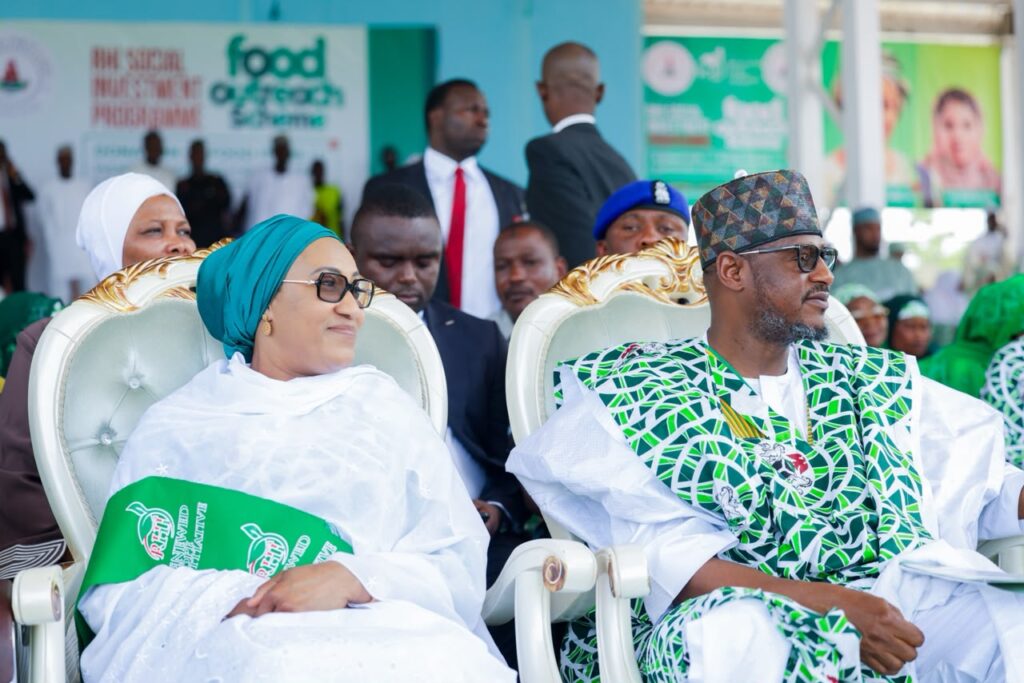
It is against this background that the First Lady of Nigeria, Senator Oluremi Tinubu, CON, called on state governors to establish functional community food banks in each of their three senatorial districts. The call, made during the presentation of food items to the wife of the Katsina State Governor, Hajiya Zulaihat Dikko Radda, is timely and important. Community food banks can serve as practical, locally accessible mechanisms for supporting vulnerable Nigerians, reducing malnutrition, and strengthening the country’s food security system. However, for the program to succeed, state governments must demonstrate genuine commitment, transparency, effective coordination, and sustainable funding.
The food distribution in Katsina State was conducted under the Food Outreach Scheme of the Renewed Hope Initiative (RHI). Representing the First Lady, the wife of the Vice President, Hajiya Nana Shettima, announced that Katsina had become the 30th beneficiary of the scheme, following successful distributions to 29 states and the Federal Capital Territory. The achievement demonstrates the expanding reach of the initiative and its commitment to ensuring that federal interventions are not limited to a few regions or communities.
Launched in March 2024 under the Social Investment Programme of the Renewed Hope Initiative, the Food Outreach Scheme provides nutritional support to persons with disabilities, widows, and other vulnerable groups. Its purpose is not merely to distribute food items but also to ease household hardship and improve family well-being. In an economy where many families are forced to reduce the quantity and quality of food they consume, such interventions can prevent hunger from developing into severe malnutrition and other social problems.

The First Lady explained that the intervention is sustained through the generosity of two partners who provide two truckloads of food items every month. This support allows the initiative to assist two states monthly. The partnership reflects the value of cooperation between government and private stakeholders in responding to humanitarian challenges. Nevertheless, charitable contributions alone cannot meet Nigeria’s long-term food needs. They should complement, rather than replace, strong public policies that promote agricultural productivity, social protection, employment, and affordable access to nutritious food.
The announcement of the completion of the nationwide rollout of the National Community Food Bank Program is also significant. The program is designed to combat child malnutrition and support pregnant women and lactating mothers, who require adequate nutrition for healthy pregnancies, safe childbirth, and proper child development. Children who suffer from malnutrition may experience stunted growth, weak immunity, poor learning outcomes, and reduced productivity later in life. Addressing malnutrition early is therefore not only a humanitarian responsibility but also an investment in Nigeria’s future human capital.
Community food banks can make nutritional support more accessible and responsive to local needs. National and zonal programs may provide essential assistance, but their reach can be limited by distance, administrative bottlenecks, insecurity, and inadequate knowledge of local conditions. A food bank located within a community can identify vulnerable households more effectively and respond to emergencies more quickly. It can also coordinate with traditional rulers, religious institutions, women’s groups, health workers, civil society organizations, and local authorities to ensure that assistance reaches those who genuinely need it.

The First Lady was right to stress that federal and zonal interventions alone would not be sufficient to address the scale of the challenge. Nigeria’s population is large, and vulnerability is distributed across urban, rural, and displaced communities. State governments are closer to their people and are therefore better positioned to understand local patterns of hunger and malnutrition. They can identify communities affected by flooding, insecurity, drought, displacement, or economic hardship and design food-bank operations accordingly.
For this reason, every state should establish functional food banks in its three senatorial districts, rather than creating facilities that exist only on paper. A functional food bank must have adequate storage, reliable transportation, trained personnel, transparent management, and a clear system for identifying beneficiaries. It should maintain proper records of food inflows and outflows, monitor the quality and expiry dates of supplies, and establish mechanisms for receiving complaints. Without these safeguards, food banks could become vulnerable to diversion, politicization, or unequal distribution.
Transparency must be at the heart of the program. Food assistance should be distributed according to need, not political affiliation, ethnic identity, religious background, or personal connections. State governments should publish basic information about the quantities of food received, the communities covered, and the number of beneficiaries reached. Independent monitors, civil society organizations, community leaders, and the media should be allowed to observe and report on the process. Such openness would build public trust and discourage corruption.
Beneficiary selection also requires careful attention. While widows and persons with disabilities are important target groups, the program should include households facing extreme poverty, internally displaced persons, elderly people living alone, orphaned children, and families affected by conflict or natural disasters. Pregnant women and lactating mothers should be linked not only to food support but also to antenatal care, nutrition education, immunization, and other health services. Similarly, children receiving food assistance should be connected to schools, primary healthcare centers, and child-protection programs where appropriate.
Food banks should also support local agriculture. State governments can purchase a significant portion of their supplies from local farmers, cooperatives, and small-scale food processors. This approach would create a reliable market for farmers while ensuring that food assistance contributes to local economic development. Staple foods such as grains, legumes, tubers, vegetable oil, and fortified products can be sourced locally when quality and supply requirements are met. Such a model would help connect emergency food assistance with agricultural production and rural livelihoods.
The intervention in Katsina State illustrates how federal and state-level efforts can work together. Governor Dikko Umaru Radda described the event as a day of hope and renewed commitment to the welfare of the people. He noted that the intervention demonstrated the federal government’s resolve to reach vulnerable Nigerians at all levels and complemented the state government’s efforts to improve citizens’ well-being. This cooperation is essential because food insecurity cannot be solved by one level of government acting alone.
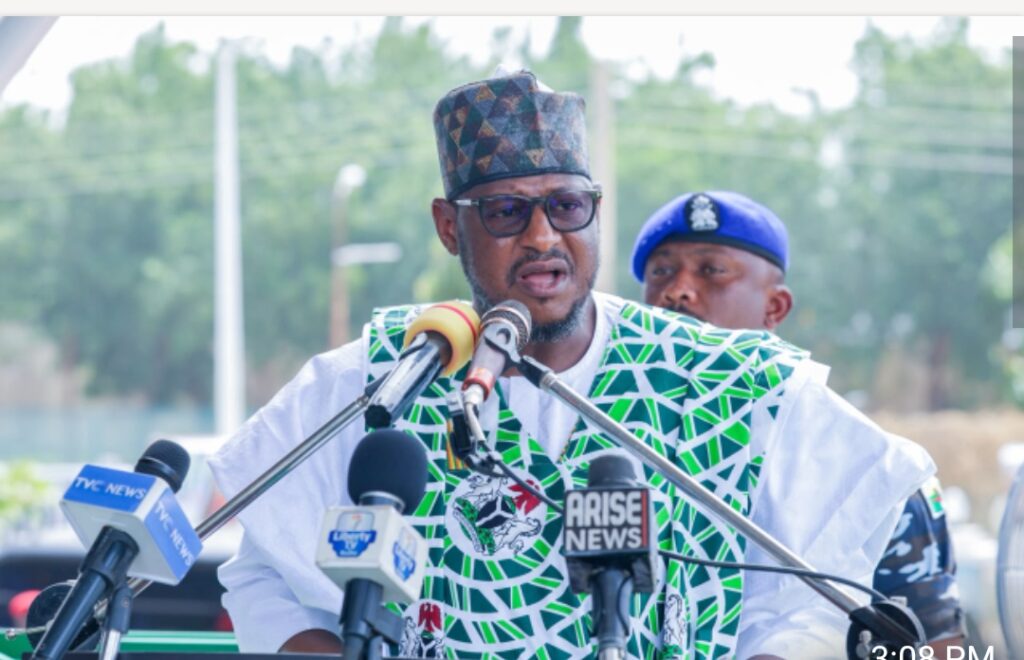
The governor also stated that his administration, in line with President Bola Ahmed Tinubu’s Renewed Hope Agenda, is investing in education, healthcare, and agriculture. These sectors are closely connected to food security. Education improves household earning capacity and increases awareness of healthy nutrition. Healthcare helps prevent and treat illnesses associated with malnutrition. Agriculture increases food availability and creates employment. When these areas are strengthened together, emergency support can gradually give way to greater household self-reliance.
Security is equally important. Food cannot be produced, transported, or distributed effectively in communities where farmers fear attacks, roads are unsafe, or markets are disrupted. Governor Radda’s statement that his administration is supporting security agencies with necessary equipment highlights the link between security and food security. Insecurity has forced many farmers away from their fields, destroyed livelihoods, displaced families, and increased dependence on humanitarian aid. Governments must therefore protect farming communities, secure transportation routes, and create conditions that allow agricultural activity to resume safely.
At the same time, political leaders should ensure that food interventions remain focused on public welfare. Food distribution programs must not be used merely as instruments of political mobilization. Although Governor Radda urged Katsina residents to support the ruling party for continuity in governance and development, the success of the food-bank program should be measured by its impact on hunger, nutrition, accountability, and household resilience—not by political loyalty. Public resources and humanitarian assistance belong to the people and must serve all eligible citizens.
The appreciation expressed by Hajiya Zulaihat Dikko Radda to Senator Oluremi Tinubu is understandable. The Renewed Hope Initiative has continued to support women, persons with disabilities, widows, and other vulnerable groups through various social programs. Such interventions offer relief to families facing difficult circumstances. However, they should be implemented as part of a broader national strategy rather than as isolated acts of generosity. Nigeria requires a coordinated system that combines food banks, social safety nets, school feeding, agricultural support, maternal healthcare, nutrition education, and employment opportunities.
The anticipated distribution to Osun, Ogun, and Akwa Ibom States indicates that the Food Outreach Scheme will continue to expand. As more states become beneficiaries, lessons from Katsina and previous distributions should be carefully documented. Program managers should evaluate whether food reached the intended beneficiaries, whether the quantities were sufficient, whether rural communities were adequately covered, and whether the intervention produced measurable improvements in household nutrition. Evidence-based evaluation will help the government improve the scheme and use resources more efficiently.
Ultimately, the success of the National Community Food Bank Program will depend on sustained political will. Governors must move beyond verbal support and allocate funds for the establishment and maintenance of food banks in their senatorial districts. They should develop clear operating guidelines, establish independent oversight, and work with communities to create reliable distribution networks. The federal government, for its part, should provide technical assistance, promote national standards, coordinate partners, and ensure that states are supported without encouraging duplication or waste.
Nigeria has the human and agricultural resources to overcome food insecurity, but these resources must be organized through effective institutions and responsible leadership. Community food banks will not solve every problem, but they can provide an important safety net for people facing hunger and malnutrition. More importantly, they can serve as platforms for connecting vulnerable families to healthcare, agricultural opportunities, education, and social protection.
* James Bwala, PhD, writes from Abuja.
Community Food Banks: A Necessary Step Toward Food Security in Nigeria


Politics
2027: Unmasking the Double Standard Behind Seyi Tinubu and Amir Kashim Shettima’s Participation


2027: Unmasking the Double Standard Behind Seyi Tinubu and Amir Kashim Shettima’s Participation
By Abubakar M. Kareto
In Nigeria’s ever-heated political discourse, few things attract sharper criticism than the visible involvement of a leader’s child in campaign activities. Suddenly, words like dynasty, entitlement, and nepotism fill the air. Yet a calm, objective look at reality reveals a much simpler truth. Seyi Tinubu and Amir Kashim Shettima are actively participating in political campaigns to support their parents in retaining office, doing precisely what any supportive and loyal child would do. Public participation remains a fundamental right for every citizen, and the fierce, knee-jerk outrage directed at their engagement exposes a profound level of misplaced cynicism and partisan hypocrisy.
Seyi Tinubu’s energetic mobilisation through the City Boy Movement and Amir Kashim Shettima’s active presence in rallying youth ahead of upcoming electoral cycles represent a natural expression of family loyalty and civic duty. Critics often resort to cynical distractions, questioning whether these young men are the ones actually contesting an elective post. Such queries are not only unnecessary; they are intellectually lazy. Neither Seyi Tinubu nor Amir Kashim Shettima has ever declared a run for public office. They are simply mobilising for their parents, performing the natural support and solidarity anyone would extend to their own family. Their active engagement is an exercise of support, not a self-serving ballot entry, making the resulting public outrage entirely hollow.
This principle of family support and legacy stewardship extends far beyond politics into virtually every professional sphere of human endeavor. In global corporate business empires, multi-generational legal chambers, and specialized medical practices, children routinely step in to support, manage, or expand enterprises built by their parents. When the child of a renowned surgeon assists in running a family hospital, or when the offspring of an accomplished industrialist joins a corporate board to protect shared institutional values, society does not scream nepotism; it recognizes stewardship, dedication, and continuity. Proximity to a craft naturally breeds expertise and a desire to preserve hard-won milestones, making professional or political support a universally accepted standard of loyalty.
Consider the United States for a broader historical perspective on political continuity and institutional resilience. George H.W. Bush served as President, and his son, George W. Bush, later occupied the same office following a rigorous democratic contest. No serious American commentator argued that the younger Bush had no right to enter politics or to support his father’s vision. The same country produced the political legacies of the Kennedys, the Roosevelts, and the Clintons. Democracy did not collapse under these famous names. Instead, voters decided based on performance and preference, proving that electorate scrutiny remains the ultimate safeguard.
Closer to home, look at the music world and cultural preservation. Fela Anikulapo-Kuti remains one of Africa’s greatest cultural and political voices. His sons, Femi and Seun Kuti, did not abandon the family craft because critics might shout dynasty. They continued the tradition, refined it, and built their own distinct musical legacies. No one of goodwill has ever suggested that Femi or Seun should have chosen a different profession simply because their father was a giant. Continuity of passion, mentorship, and skill was celebrated rather than condemned by society.
When examining public critique objectively, a profound hypocrisy underpins the anti-participation narrative. If leaders’ children chose to step back, remain entirely detached, and avoid public service or grassroots mobilisation, the very same critics would launch a barrage of cynical counter-attacks. They would loudly demand to know where the leaders’ children are hiding, accusing them of elitism or aloofness. Public commentators would ask why politicians are shielding their own families while allowing or using underprivileged citizens and poor children as political foot soldiers on the streets. Stripped of emotion, fairness dictates a simple conclusion: citizens cannot hypocritically condemn leaders’ children for participating in politics to support their parents, while simultaneously attacking them if they chose not to. The outrage is entirely manufactured; active participation is an expression of civic duty, not a crime.
A famous name can certainly open doors, secure platforms, and attract initial attention, but it cannot manufacture sustained public goodwill or electoral victory. In a democracy, the electorate retains the ultimate veto power. Ultimately, it is left for Nigerians to decide whether they are convinced or not when making their choice on election day. Voters evaluate candidates based on tangible outcomes, governance track records, and responsiveness rather than mere lineage, meaning that children of public figures must ultimately work twice as hard to prove their individual competence in the public arena.
Intelligent political analysis requires separating genuine governance malfeasance from predictable partisan anxieties and emotional bias. Familial association is never a disqualifier for civic participation. Whether in corporate enterprises, legal practices, musical dynasties, or unfolding Nigerian political alignments, children leveraging networks to support their parents represent loyalty and active citizenship. They do not bypass democracy because they simply exercise their fundamental right to participate in it while enriching the broader national conversation.
Abubakar M. Kareto is a Public Affairs Analyst and Strategic Communications Specialist focusing on governance, political economy, and public policy across Nigeria and Africa. He can be reached via X (@amkareto) or email (amkareto@gmail.com).
2027: Unmasking the Double Standard Behind Seyi Tinubu and Amir Kashim Shettima’s Participation
APC gubernatorial candidate Wali promises to sustain youth development if elected in Yobe
By: Yahaya Wakili
Yobe state APC governorship candidate Alhaji Baba Malam Wali mni has assured that, if elected, his administration would sustain the development initiatives of Governor Buni, particularly those focused on youth development, economic empowerment, and improved living standards.
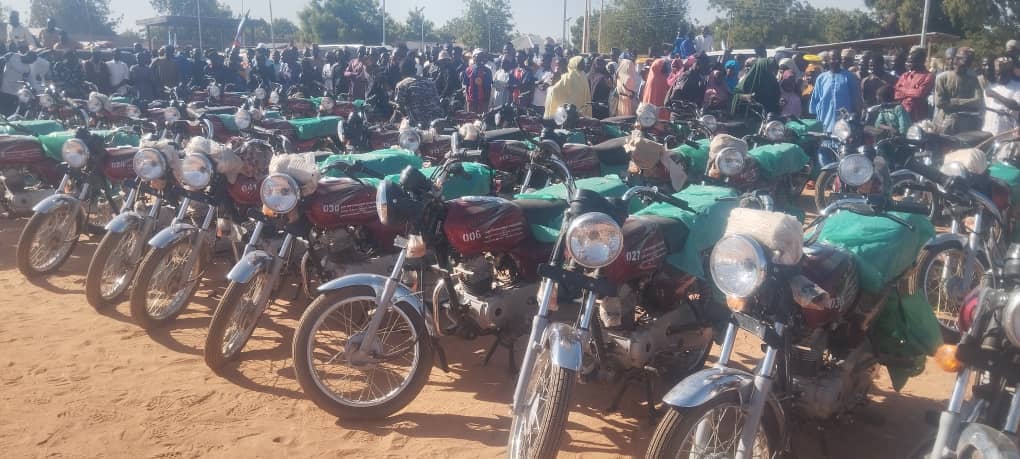
Baba Wali stated this today in Gadaka while flagging off the distribution of 500 empowerment items for youths and women in zone B on behalf of Governor Mai Mala Buni CON, COMN.
Wali said the initiatives reflected the government’s commitment to creating economic opportunities for the people, especially youths, by equipping them with the means to become self-reliant and productive members of society.
He maintained that the distribution of the empowerment items was designed to support beneficiaries in establishing sustainable means of livelihood.
The governorship candidate seeks reelection of President Bola Ahmed Tinubu GCFR and other APC candidates, citing examples of the developmental projects and programs initiated in the state and the country as a whole.
Baba Malam Wali further called on the people to come out and massively vote for Asiwaju and all other party candidates and emphasized that continuity would remain a guiding principle of Buni’s administration with renewed attention to programs that create opportunities for young people and enable them to contribute meaningfully to the state’s economic growth.
The distribution of the 500 items, which include 200 motorcycles, 100 tricycles (Jega), and 100 sewing machines, with beneficiaries cutting across youths and women, among others, is geared towards promoting inclusive economic participation and addressing unemployment through practical empowerment interventions.
APC gubernatorial candidate Wali promises to sustain youth development if elected in Yobe

ADC Massive Crowds Welcome Atiku, Intimidates APC in Yobe
By: Yahaya Wakili
A massive crowd of supporters today welcomed the former Vice President and ADC Presidential candidate, Alhaji Atiku Abubakar, in Potiskum, the largest and most commercial city in Africa, and Yobe State in continuation of his political campaign across the country.
A large number of supporters, including youths, women and elderly residents, gathered to welcome Atiku and his entourage. The rally attracted a large turnout of supporters and marked what the campaign described as a historic event in the north-east.
Addressing a massive crowd of ADC supporters in Dabo Aliyu Stadium, Potiskum, the former Vice President and presidential candidate, Atiku Abubakar, said, ‘As I mentioned in other places, I swear if elected, I would return the oil and electricity subsidies, and nobody will increase your tax.’
“I would restore peace in Yobe and Nigeria, and for those youths who oppose peace in Nigeria, we will address them, assuring the people of Yobe that the ADC party is committed to empowering our youths to become self-reliant,” Atiku Abubakar said.
“Vote for competent persons; don’t vote for those who would steal your money.” Please note that all the promises I made will not become a reality unless you come out, cast your votes, protect them, count them, and ensure they are counted. Don’t allow somebody to snark at your votes.
He revealed that “I want you to promise in the presence of your leaders, in the presence of Almighty Allah, that you will vote for ADC from top to bottom.”
ADC Massive Crowds Welcome Atiku, Intimidates APC in Yobe

Fiscal Responsibility Commission Seeks Stronger Enforcement Powers, More Funding, Act Amendment

NHRC Seeks Stronger Dutch Partnership to Protect Civic, Political Spaces Ahead of 2027 Elections

Berom Militia Kill Three Fulani in Riyom injured One Other

Roger Federer’s Shock as DNA Results Reveal Myla and Charlene Are Not His Biological Children

THE PLIGHT OF FARIDA

FAILED COUP IN BURKINA FASO: HOW TRAORÉ NARROWLY ESCAPED ASSASSINATION PLOT AMID FOREIGN INTERFERENCE CLAIMS
-
 News3 years ago
Roger Federer’s Shock as DNA Results Reveal Myla and Charlene Are Not His Biological Children
-
Opinions5 years ago
THE PLIGHT OF FARIDA
-
 News2 years ago
FAILED COUP IN BURKINA FASO: HOW TRAORÉ NARROWLY ESCAPED ASSASSINATION PLOT AMID FOREIGN INTERFERENCE CLAIMS
-
 Opinions5 years ago
POLICE CHARGE ROOMS, A MINTING PRESS
-

 News3 years ago
EYN: Rev. Billi, Distortion of History, and The Living Tamarind Tree
-

 ACADEMICS3 years ago
A History of Biu” (2015) and The Lingering Bura-Pabir Question (1)
-

 Columns3 years ago
Army University Biu: There is certain interest, but certainly not from Borno.
-

 Politics1 year ago
2027: Why Hon. Midala Balami Must Go, as Youths in Hawul and Asikira/Uba Federal Constituency Reject ₦500,000 as Sallah Gift
