
Uncategorized
Conflict, Funding Cuts Push Northern Nigeria Hunger Crisis to Worst Level in Nearly a Decade, WFP Warns

Conflict, Funding Cuts Push Northern Nigeria Hunger Crisis to Worst Level in Nearly a Decade, WFP Warns
By: Michael Mike
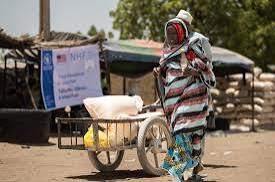
Escalating conflict, shrinking humanitarian funding and worsening access constraints have pushed northern Nigeria into its most severe hunger crisis in almost a decade, with more than 17 million people now facing acute food insecurity, the United Nations World Food Programme (WFP) has warned.
The UN agency said the deteriorating security situation, particularly in the North-East, is forcing families from their homes and farms, disrupting humanitarian operations and leaving millions without life-saving food assistance.
According to the latest Cadre Harmonisé food security analysis, more than 17 million people across nine conflict-affected northern states are experiencing crisis, emergency or catastrophic levels of hunger—an increase of nearly two million people compared to the previous assessment.
The report painted an especially grim picture in Borno State, where renewed insurgent attacks coupled with the suspension of food assistance in some areas have left more than three million people acutely food insecure.
Of that figure, over 750,000 are experiencing severe hunger, while more than 10,000 people have slipped into catastrophic hunger—the highest level of food insecurity and one often associated with famine-like conditions.
Although those facing catastrophic hunger represent a relatively small proportion of Borno’s population, WFP warned that the figures signal a rapidly deteriorating humanitarian situation.
“What concerns us most is how this crisis is expanding,” said Kinday Samba.
“For years, insurgent attacks and violence were largely concentrated in parts of northeast Nigeria. Today, they are spreading across a much wider area and forcing people from farmland, driving displacement and restricting humanitarian access, meaning hunger is quick to follow.”
The agency said insecurity has significantly reduced access to vulnerable communities, with the number of locations partially inaccessible to humanitarian workers doubling in recent months.
An additional 15 areas are now considered difficult for WFP personnel to reach because of insecurity.
Humanitarian supply chains have also come under increasing pressure as attacks and illegal checkpoints disrupt the movement of relief materials along major transport corridors, leaving air transport as the only viable option in several locations.
Beyond insecurity, WFP identified severe funding shortages as a major factor worsening the crisis.
While an estimated 6.2 million people are now food insecure across the three insurgency-ravaged North-East states, the agency said it currently has sufficient resources to assist only about 740,000 people.
That leaves approximately 5.5 million people—many of them women and children—without essential food and nutrition support.
The figure represents a sharp decline from the 1.3 million people WFP assisted during the peak of the 2025 lean season.
The agency warned that the suspension of food assistance in several displacement camps is pushing desperate families toward dangerous coping mechanisms.
Communities have reported cases of people joining armed groups in exchange for food or income, highlighting the growing link between hunger, insecurity and recruitment by violent extremists.
WFP also raised alarm over increasing reports of exploitation and gender-based violence, particularly affecting women and children, following reductions in humanitarian assistance.
“When people lose access to food, the risks of displacement, exploitation and instability increase. Yet resources are at their lowest at the time they are needed most,” Samba said.
The new assessment also indicates that Nigeria’s food crisis extends well beyond conflict-hit northern communities.
Nationwide, an estimated 36.2 million people are now experiencing food insecurity, reflecting the combined impact of persistent insecurity, inflation, climate shocks and economic pressures that continue to erode household purchasing power and agricultural production.
The worsening humanitarian outlook comes as aid agencies struggle with declining donor support amid multiple global crises competing for limited humanitarian resources.
WFP warned that without urgent intervention, hunger, displacement and instability could intensify further across northern Nigeria and spill over into neighbouring countries.
To sustain emergency food assistance, nutrition programmes and humanitarian logistics over the next six months, the agency said it urgently requires 89 million US dollars in additional funding.
It appealed to international donors and development partners to step up support, warning that failure to act could reverse years of humanitarian gains and deepen one of West Africa’s most protracted crises.
Conflict, Funding Cuts Push Northern Nigeria Hunger Crisis to Worst Level in Nearly a Decade, WFP Warns


FG Evacuates 593 Nigerians from South Africa, Denies Extortion Claims
By: Michael Mike
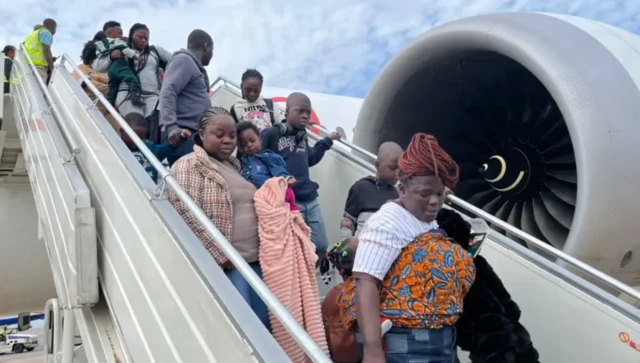
The Federal Government has evacuated 593 Nigerians from South Africa following recent xenophobic protests, with plans to bring home about 700 more citizens in the coming days.
In a statement issued on Thursday, the spokesperson for the Ministry of Foreign Affairs, Kimiebi Ebienfa, said the evacuation exercise underscores the government’s commitment to protecting Nigerians abroad and providing assistance to citizens affected by crises.
According to the ministry, the first batch of 258 evacuees arrived at the Murtala Muhammed International Airport on June 11 aboard a special flight operated by Air Peace.
The returnees were received by the Minister of State for Foreign Affairs, Sola Enikanolaiye, on behalf of the Federal Government before being handed over to relevant government agencies for documentation and profiling.
The ministry explained that logistical challenges delayed the second evacuation flight, resulting in some Nigerians being temporarily accommodated at the Nigerian High Commission in Pretoria, where they were cared for by officials.
It added that a Nigerian philanthropist voluntarily paid the airfare for 66 stranded citizens, enabling them to return to Lagos aboard a South African Airways flight on June 24.
A second government-arranged evacuation flight arrived on June 30 with 269 returnees, bringing the total number of evacuated Nigerians to 593.
The ministry said the evacuation exercise is continuing, with three additional flights scheduled over the next few days to return all Nigerians who voluntarily registered for evacuation and have completed the necessary screening and clearance processes.
It disclosed that about 700 more Nigerians are expected to be repatriated, with the next batch of 271 returnees scheduled to arrive at the Murtala Muhammed International Airport at about 5:30 a.m. on Friday, July 3.
The ministry also dismissed allegations circulating on social media that officials at the Nigerian mission in South Africa demanded money from citizens seeking evacuation.
It stressed that all special evacuation flights are fully funded by the Federal Government and that no returnee is required to pay for transportation.
“The insinuations and false allegations that some staff of the Nigerian Mission were requesting money before enlisting our nationals for the evacuation flights are totally false, fake news, and should be discarded,” the statement said.
The ministry commended the collaboration among relevant government agencies in executing the evacuation exercise, describing the operation as evidence of Nigeria’s commitment to safeguarding its citizens overseas.
It reiterated that the protection of Nigerians abroad remains a central pillar of the country’s foreign policy, adding that the government is determined to ensure that citizens affected by crises receive the necessary support, dignity and care.
“The lives of Nigerians living abroad matter, and we are trying our best as a Ministry to give them a sense of belonging,” the statement added.
FG Evacuates 593 Nigerians from South Africa, Denies Extortion Claims
Troops Repel Terrorists’ Attempted Attack on Forward Operating Base in Zamfara
By: Zagazola Makama
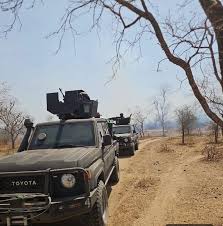
Troops of the 1 Brigade have successfully repelled an attempted terrorist infiltration and attack on a Forward Operating Base (FOB) in Bukuyyum Local Government Area of Zamfara State.
Intelligence sources told Zagazola Makama that the incident occurred at about 2:45 p.m. on July 2, when suspected terrorists attempted to infiltrate and attack troops stationed at FOB Gwashi.
According to the sources, the troops responded with superior firepower, engaging the attackers in a fierce exchange of gunfire and forcing them to abandon the assault and retreat from the area.
Following the failed attack, reinforcement troops from the Forward Operating Bases at Gummi and Bukuyyum were immediately deployed to strengthen the position and support ongoing clearance operations.
The sources said troops have since intensified surveillance and domination of the general area while reinforcing defensive positions to prevent the terrorists from regrouping or launching further attacks.
No casualty was reported among the troops during the encounter.
Military sources described the swift response as a demonstration of the troops’ operational readiness and determination to deny terrorist groups freedom of action across the operational area.
They added that aggressive patrols and intelligence-driven operations are continuing to track the fleeing terrorists and sustain pressure on criminal elements operating in the state.
Troops Repel Terrorists’ Attempted Attack on Forward Operating Base in Zamfara
Uncategorized
Three Killed, Two Injured in Attack by Fulani Bandits Near Illegal Mining Site in Plateau
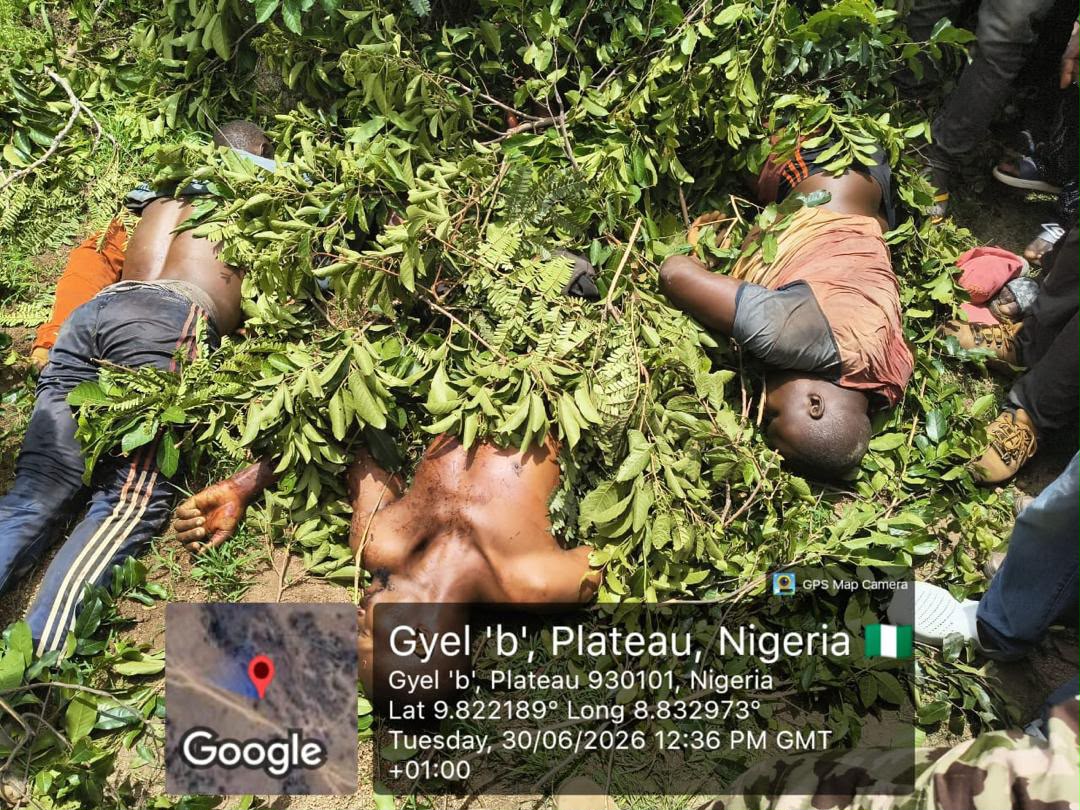
Three Killed, Two Injured in Attack by Fulani Bandits Near Illegal Mining Site in Plateau
By: Zagazola Makama
Three persons have been killed and two others injured following an attack by suspected armed Fulani bandits near an illegal mining site in Jos South Local Government Area of Plateau State.
Security sources said the incident occurred at about 10:00 a.m. on June 30 around the border communities of Tsoho Gero and Nyango, where armed assailants ambushed local residents before fleeing the scene.
The sources said troops of Sector 6, Operation Enduring Peace (OPEP), under Operation Safe Haven (OPSH), responded to a distress call and, in conjunction with members of the Vigilante Group of Nigeria (VGN), moved to the area.
On arrival, the troops made contact with the fleeing attackers, who escaped towards the Dutse Kura axis in neighbouring Bassa Local Government Area.
However, security personnel confirmed that the attackers had already killed three local residents and injured two others before the troops arrived.
The deceased were identified as Mr. Chung Davou, Gyang Gwaha and Pam Chung.
Following the incident, troops carried out exploitation and clearance operations from Tsoho Gero to the Gero High Grounds in search of the fleeing assailants.
During the operation, Fulani community leaders alleged that four Fulani men had also been killed in the violence. However, security personnel said no bodies were found to substantiate the claim.
Tension later escalated at Gyel, where a group of aggrieved women blocked the troops’ route and threw stones at security personnel, accusing them of failing to prevent the attack.
The troops fired warning shots into the air to disperse the crowd and restore access before continuing the operation.
Security sources said clearance operations were ongoing in the area to track down the perpetrators and prevent further attacks.
Three Killed, Two Injured in Attack by Fulani Bandits Near Illegal Mining Site in Plateau

COAS commissions 6 Division RSM House, reaffirms frontline leadership role of regimental sergeant majors

Troops intercept cattle grazing in restricted area in Plateau, herders flee

Troops Arrest Two Suspected Vandals, Recover Stolen Construction Materials in Jos

Roger Federer’s Shock as DNA Results Reveal Myla and Charlene Are Not His Biological Children

THE PLIGHT OF FARIDA

FAILED COUP IN BURKINA FASO: HOW TRAORÉ NARROWLY ESCAPED ASSASSINATION PLOT AMID FOREIGN INTERFERENCE CLAIMS
-
 News2 years ago
Roger Federer’s Shock as DNA Results Reveal Myla and Charlene Are Not His Biological Children
-
Opinions4 years ago
THE PLIGHT OF FARIDA
-
 News1 year ago
FAILED COUP IN BURKINA FASO: HOW TRAORÉ NARROWLY ESCAPED ASSASSINATION PLOT AMID FOREIGN INTERFERENCE CLAIMS
-

 News2 years ago
EYN: Rev. Billi, Distortion of History, and The Living Tamarind Tree
-
 Opinions5 years ago
POLICE CHARGE ROOMS, A MINTING PRESS
-

 ACADEMICS2 years ago
A History of Biu” (2015) and The Lingering Bura-Pabir Question (1)
-

 Columns2 years ago
Army University Biu: There is certain interest, but certainly not from Borno.
-

 Politics1 year ago
2027: Why Hon. Midala Balami Must Go, as Youths in Hawul and Asikira/Uba Federal Constituency Reject ₦500,000 as Sallah Gift
