
News
Congo Seeks Nigeria’s Backing For Diplomat To Lead UNESCO

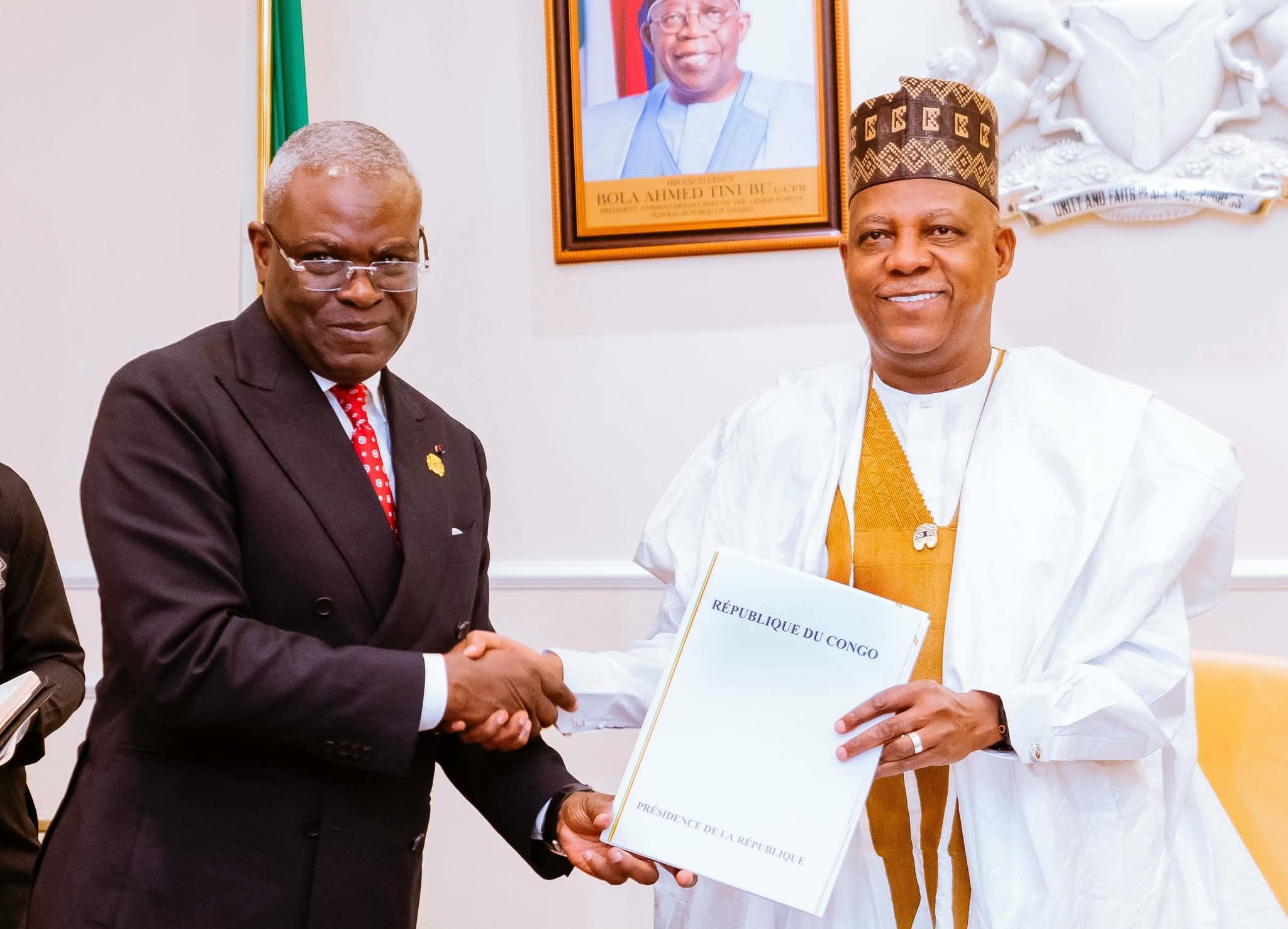
Congo Seeks Nigeria’s Backing For Diplomat To Lead UNESCO
** As VP Shettima receives PM Makosso, hails country’s leadership in Great Lakes region
By: Our Reporter
Vice President Kashim Shettima has affirmed Nigeria’s commitment to strengthening diplomatic ties with the Republic of Congo, acknowledging the leadership of President Denis Sassou-Nguesso in promoting regional peace and stability, especially across Africa’s Great Lakes region.
He also said that Nigeria will consider Congo’s request for support in its bid to lead the United Nations Educational, Scientific and Cultural Organisation (UNESCO).
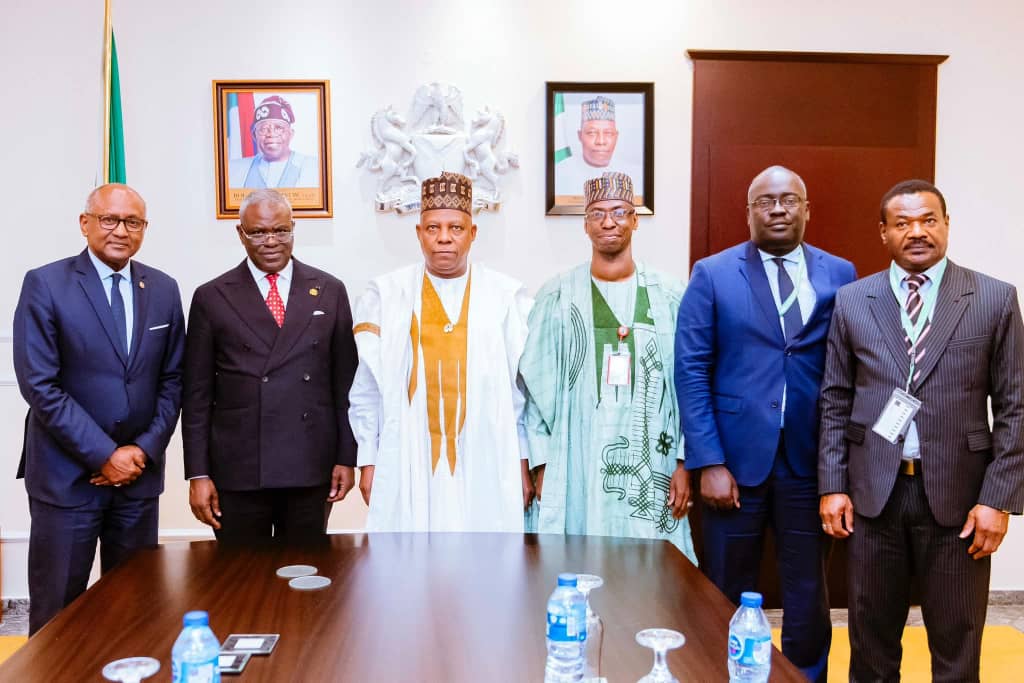
Speaking on Friday while receiving the Prime Minister of the Republic of Congo, Anatole Collinet Makosso, at the Presidential Villa, Abuja, VP Shettima lauded the leadership of the Congolese President and reaffirmed Nigeria’s commitment to strengthening bilateral ties.
“President Denis Sassou-Nguesso is one of the greatest stabilisers on the African continent. He is well-respected and has the experience and exposure to provide leadership to a turbulent region. Your country is a beacon of hope and stability in the region,” he said.
Senator Shettima, who received the Congolese delegation on behalf of President Bola Ahmed Tinubu, said the issues raised by the visiting Prime Minister, particularly the request for Nigeria’s endorsement of Firmin Edouard Matoko for the post of UNESCO Director-General, would be conveyed to the President.
“Be rest assured that all the issues raised, especially over your candidature for the Director-Generalship of UNESCO, will be conveyed to the President. And I am hopeful that he is going to endorse your candidacy, fundamentally because what binds us together supersedes whatever divides us. Wherever we go, we are essentially one people,” he said.
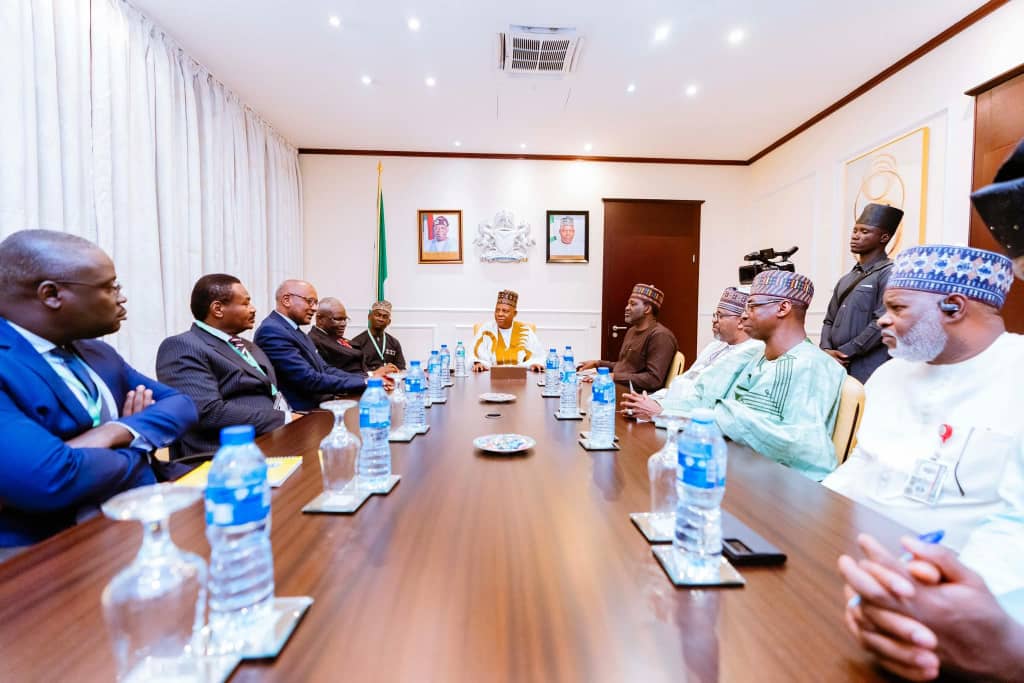
Earlier, the Congolese Prime Minister, who delivered a special message from President Sassou-Nguesso to President Tinubu, called for deepened relations between both countries and sought Nigeria’s support for Matoko, a long-serving UNESCO official with over three decades of experience.
“We have a candidate for the post of Director-General of UNESCO, Firmin Edouard Matoko, a seasoned diplomat and former senior official of the organisation with over three decades of experience,” Makosso said.
He explained that Matoko joined UNESCO in 1990 and served in several strategic roles, including Director of multiple regional offices, Director of the Africa Department, and ultimately as Assistant Director-General for Priority Africa and External Relations.
Makosso noted that Congo’s interest in Matoko’s candidacy was not merely national but based on competence.
“We are seeking Nigeria’s support for his candidature not because he is a Congolese, but because he is well qualified for the position, especially at this time that UNESCO needs a very experienced person,” he said.
The Prime Minister also thanked the Nigerian government and people for their humanitarian support to Congolese children who benefited from the Rochas Foundation, noting that some of the children, many of whom were orphans, have graduated, while others remain in school.
“We also want to thank the good people of Nigeria for taking care of some young children from Congo, some of them orphans who were offered free education by the Rochas Foundation. Some of them just graduated, while some are still in school. We are very grateful for that,” Makosso said.
He commended President Tinubu’s leadership at ECOWAS, the African Union, and the United Nations, just as he expressed sympathy with Nigerians over the death of former President Muhammadu Buhari.
Congo Seeks Nigeria’s Backing For Diplomat To Lead UNESCO



Kidnapped Plateau resident regains freedom after security pressure
By: Zagazola Makama
A resident of Rafiki Village in Bassa Local Government Area of Plateau State, Mr Patrick Gazu, has regained his freedom after being abducted by suspected kidnappers.
Gazu was released by his abductors following sustained pressure from troops of Sector 3, Operation Enduring Peace and other security agencies involved in the rescue operation.
He was reportedly kidnapped at about 11:57 p.m. on Sept. 30, 2025, at his residence in Rafiki Village.
Security sources said the victim has since been reunited with his family and is currently safe.
The sources added that security agencies have commenced a manhunt for the perpetrators, with efforts ongoing to track down and apprehend the criminals.
The successful release underscores the continued efforts by security forces and other agencies to rescue victims of kidnapping and disrupt criminal activities across Plateau State.
Kidnapped Plateau resident regains freedom after security pressure

Troops repel terrorist activity along Kwanar Isa–Shinkafi road in Sokoto
By: Zagazola Makama
Troops of the Nigerian Army have repelled terrorist activity along the Kwanar Isa–Shinkafi road in Isa Local Government Area of Sokoto State.
The incident occurred at about 10:35 a.m. on Sept. 29, when troops of 26 Battalion, Forward Operating Base Isa, responded to reports of terrorist activity along the road.
The troops engaged the terrorists, forcing them to withdraw from the area.
Following the encounter, the troops maintained patrols and dominated the area to prevent the terrorists from regrouping and threatening motorists and communities along the route.
Security operations remain ongoing in the area as troops continue efforts to deny criminal elements freedom of movement and strengthen security across the axis.
Troops repel terrorist activity along Kwanar Isa–Shinkafi road in Sokoto

OPWS troops repel terrorist attack, recover rustled cows in Taraba
By: Zagazola Makama
Troops of Operation WHIRL STROKE (OPWS) have repelled a suspected terrorist attack on Gwamagira settlement in Karim Lamido Local Government Area of Taraba State, recovering rustled cattle abandoned by the attackers.
The incident occurred at about 7:30 a.m. on Sept. 30, when troops of 114 Battalion (Rangers) at Andami responded to reports of suspected terrorists riding motorcycles attacking the community.
The troops engaged the attackers, forcing them to retreat and abandon the rustled cattle.
However, the troops discovered that the terrorists had killed one civilian and abducted three others during the attack.
The recovered cattle were subsequently returned to their owners, while troops launched efforts to rescue the abducted victims and apprehend the perpetrators.
Security operations are ongoing in the area as troops continue to search for the victims and pursue the fleeing attackers.
OPWS troops repel terrorist attack, recover rustled cows in Taraba

Troops storm suspected IPOB-linked camp across treacherous waters in Anambra, recover arms, explosives materials

Kidnapped Plateau resident regains freedom after security pressure

Troops arrest suspected ISWAP member, recover ₦396,200 in Yobe

Roger Federer’s Shock as DNA Results Reveal Myla and Charlene Are Not His Biological Children

THE PLIGHT OF FARIDA

FAILED COUP IN BURKINA FASO: HOW TRAORÉ NARROWLY ESCAPED ASSASSINATION PLOT AMID FOREIGN INTERFERENCE CLAIMS
-
 News3 years ago
Roger Federer’s Shock as DNA Results Reveal Myla and Charlene Are Not His Biological Children
-
Opinions5 years ago
THE PLIGHT OF FARIDA
-
 News1 year ago
FAILED COUP IN BURKINA FASO: HOW TRAORÉ NARROWLY ESCAPED ASSASSINATION PLOT AMID FOREIGN INTERFERENCE CLAIMS
-

 News3 years ago
EYN: Rev. Billi, Distortion of History, and The Living Tamarind Tree
-
 Opinions5 years ago
POLICE CHARGE ROOMS, A MINTING PRESS
-

 ACADEMICS3 years ago
A History of Biu” (2015) and The Lingering Bura-Pabir Question (1)
-

 Columns3 years ago
Army University Biu: There is certain interest, but certainly not from Borno.
-

 Politics1 year ago
2027: Why Hon. Midala Balami Must Go, as Youths in Hawul and Asikira/Uba Federal Constituency Reject ₦500,000 as Sallah Gift
