
News
Court of appeal frees jailed orphanage owner Solomon Tarfa in Kano


Court of appeal frees jailed orphanage owner Solomon Tarfa in Kano
By Bodunrin Kayode
On Friday, the Court of appeal discharged and acquitted Prof Solomon Tarfa, who had been imprisoned on charges of forgery by a Kano High Court.
Tarfa’s incarceration and vindication on appeal was the second time in 22 years of persecution by Kano state government for running a Christian orphanage in the state.
Tarfa had similarly been charged with running a fake orphanage in year 2000 by a mobile magistrate court which conviction was overturned on appeal to the high court.
Almost 20 years later on Christmas Day, 2019 Kano state again arrested him and charged him for the same offense contrary to the law against double jeopardy.
According to the Presiding Justice of the court of appeal Kano, Justice Mbaba the evidence of a grown former orphan at DuMerci was helpful to the appeal.
“I believe that was the evidence that formed the basis on which the charges of abduction and kidnaping against Appellant were dismissed, as the evidence of the Prosecution, rather presented Appellant as a man on the role of honour and fame, instead of infamy, in my opinion.”
His Lordship concluded that,
“I set aside the conviction of the Appellant, and hold that this case was very unfortunate, going by the evidence of PW1, I cannot understand why it was taken out, in the first place, against the Appellant. Appellant is hereby discharged and acquitted of the said charge.”
According to International human rights lawyer Emmanuel Ogebe who was part of a global advocacy effort for Prof Tarfa, “this was an outstanding verdict from the court of appeal. The court rightly noted that this was an honorable man conducting humanitarian deeds and this case should never have been brought against him as I stated previously.
“At a time when paid professors were on strike for better conditions, Prof Tarfa had committed his life to catering for unwanted babies. Rather than receive a national honor, he was imprisoned on fake charges.
“What a country! Kano state is an embarrassment to religious freedom in Nigeria.
“I commend my learned colleague Sunny Akanni and his team for a successful outing and urge Kano state to release the Christian orphans they took and islamized since 2019.”
Ogebe added, “I want to alert my Lords Justices in Nigeria that they too and not just politicians are subject to scrutiny and visa bans by the United States government for anti-democratic and unjust rulings.
“That notwithstanding I want to be clear that the US failed by not designating Nigeria a country of particular concern (CPC) for religious persecution when Kano state’s actions against prof Tarfa amongst others prove that terrorists are not Nigeria’s only problem.
“It’s unfortunate that Prof Tarfa missed the wedding of one of the orphans he raised during his time in prison. I hope Kano state will stop the persecution.”
Court of appeal frees jailed orphanage owner Solomon Tarfa in Kano


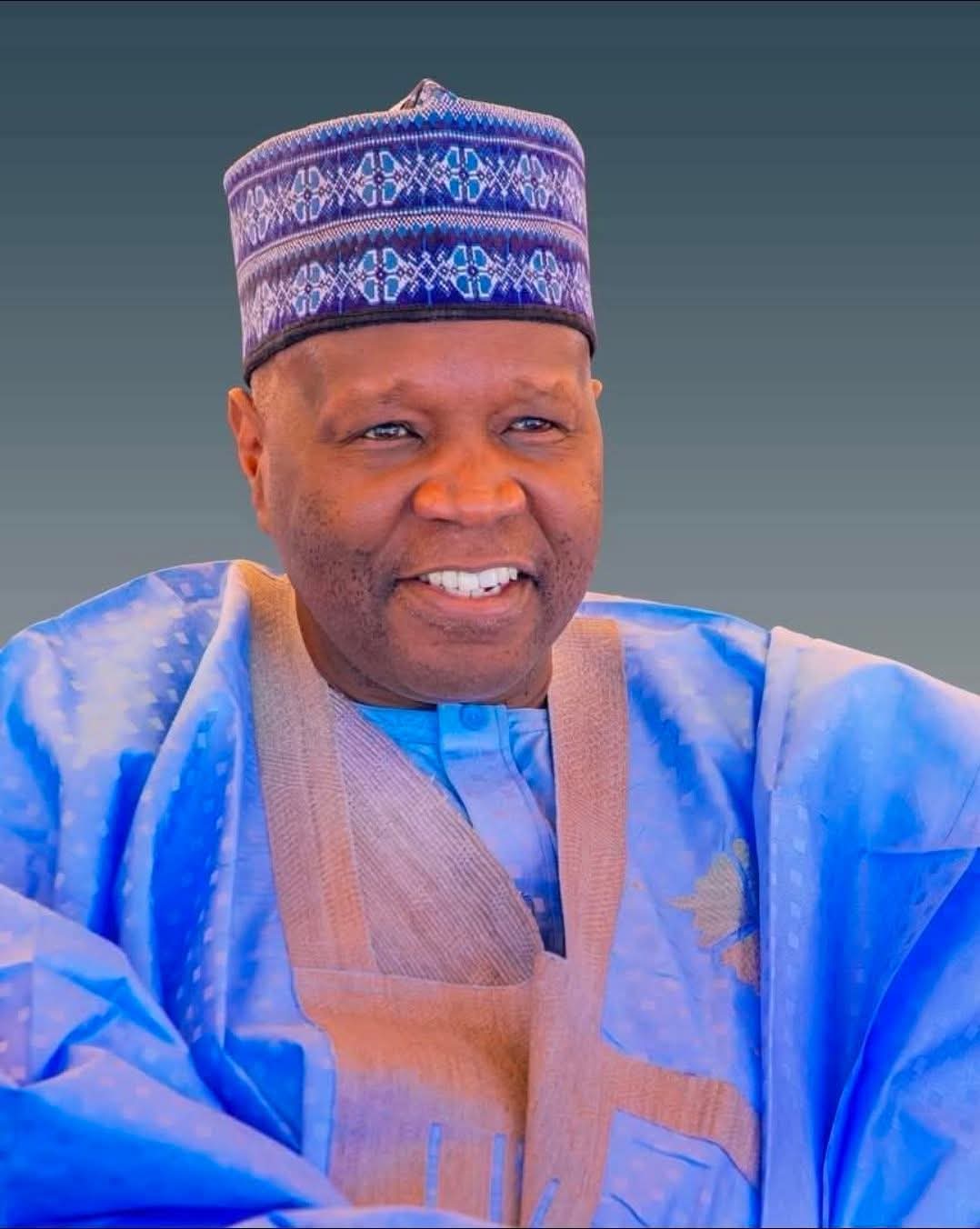
Agriculture partnership: Gov Yahaya to get Sasakawa’s Special Award
Governor Muhammadu Inuwa Yahaya of Gombe State will be honoured with a Special Recognition Award by the Sasakawa Africa Association (SAA) Nigeria, in acknowledgement of the state’s sustained partnership and strategic commitment to agricultural development.
The award will be presented at the 2026 SAA Nigeria Annual Stakeholders Workshop on Thursday, April 9, 2026, in Abuja, where top federal officials, development partners, diplomats, and state governments are expected to gather to discuss pathways for strengthening Nigeria’s food systems.
The workshop, holding at Rockview Royale Hotel, Wuse II, is themed “SAA @ 40: Deepening Impact and Expanding Reach at Scale.”
The recognition of Governor Inuwa Yahaya reflects the depth of Gombe State’s collaboration with SAA over the years, which has supported agricultural extension, smallholder productivity, and rural livelihoods.
Since its creation in 1996, Gombe State has maintained a working relationship with SAA, funded by The Nippon Foundation, to implement initiatives that improve food security, nutrition, climate resilience, and inclusive agricultural services, with particular attention to women, youth, and resource-poor farmers.
Speaking ahead of the workshop, Dr. Godwin Atser, Country Director of SAA Nigeria, said:
“This recognition celebrates a partnership backed by action. Governor Inuwa Yahaya’s leadership reflects the kind of subnational commitment essential for transforming agriculture in Nigeria.
Gombe State’s sustained support for farmer-focused interventions demonstrates what can be achieved when political will, institutional alignment, and practical investment converge.”
SAA Nigeria’s collaboration with Gombe State encompasses a wide range of interventions, including Farmer Learning Platforms (FLP), Community Savings and Investment in Agriculture (CSIA), Private Extension Service Provision (PESP), and Community-Based Seed Multiplication (CBSM), among others. Together, these initiatives strengthen the agricultural ecosystem from production to post harvest, improve access to technology, knowledge, and markets, and enhance the capacities of farmers and rural actors.
The partnership also encourages pluralistic extension systems, involving the private sector, farmer organizations, research institutions, and civil society in scaling agricultural services across the state. This multi-dimensional cooperation underscores why Gombe State’s collaboration is deserving of recognition.
As SAA marks 40 years of operations in Africa and 33 years in Nigeria, the organization notes that sustainable agricultural transformation requires long-term commitment, collaboration, and strategic investment, qualities exemplified by Gombe State and Governor Inuwa Yahaya.
The recognition will be part of a broader conversation at the 2026 Annual Stakeholders Workshop, which will review SAA’s 2021–2025 achievements, share lessons, and explore future partnerships to strengthen agriculture in Nigeria and across Africa.
About Sasakawa Africa Association (SAA)
Sasakawa Africa Association (SAA) was established in 1986 by Japanese philanthropist Ryoichi Sasakawa, Nobel Laureate Dr. Norman Borlaug, and former U.S. President Jimmy Carter.
Dedicated to improving the productivity, profitability, and resilience of smallholder farmers in sub-Saharan Africa, SAA operates through agricultural extension, capacity building, and systems strengthening. Active in Nigeria since 1993, SAA collaborates with governments, research institutions, universities, private sector actors, and development partners to advance farmer-centered agricultural transformation.
Agriculture partnership: Gov Yahaya to get Sasakawa’s Special Award
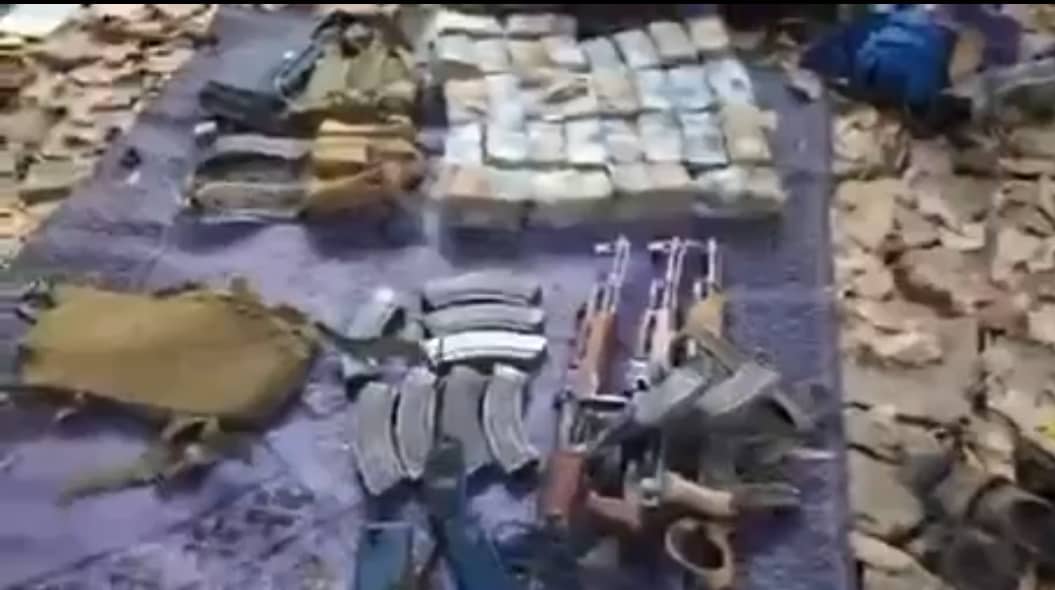
JNIM terrorists clashes with rival factions in rare encounter in Nigeria’s Kebbi state
By: Zagazola Makama
A suspected clash between rival terrorists factions has been reported in Kebbi State, raising fresh security concerns in the North-West region.
Sources said the incident occurred on April 4, when a group identified as Jama’at Nusrat al-Islam wal-Muslimin (JNIM) claimed it engaged a rival faction described as “Khawarij”.
The group alleged that one fighter was killed and another captured during the encounter, while three motorcycles and about N10 million were recovered.
However, the identity of the opposing group has yet to be independently verified.
Preliminary indications suggest the rival faction may be linked to Boko Haram or one of its splinter groups, though this remains subject to confirmation.
Security sources said the development could represent one of the first reported inter-jihadist clashes in the region.
JNIM terrorists clashes with rival factions in rare encounter in Nigeria’s Kebbi state
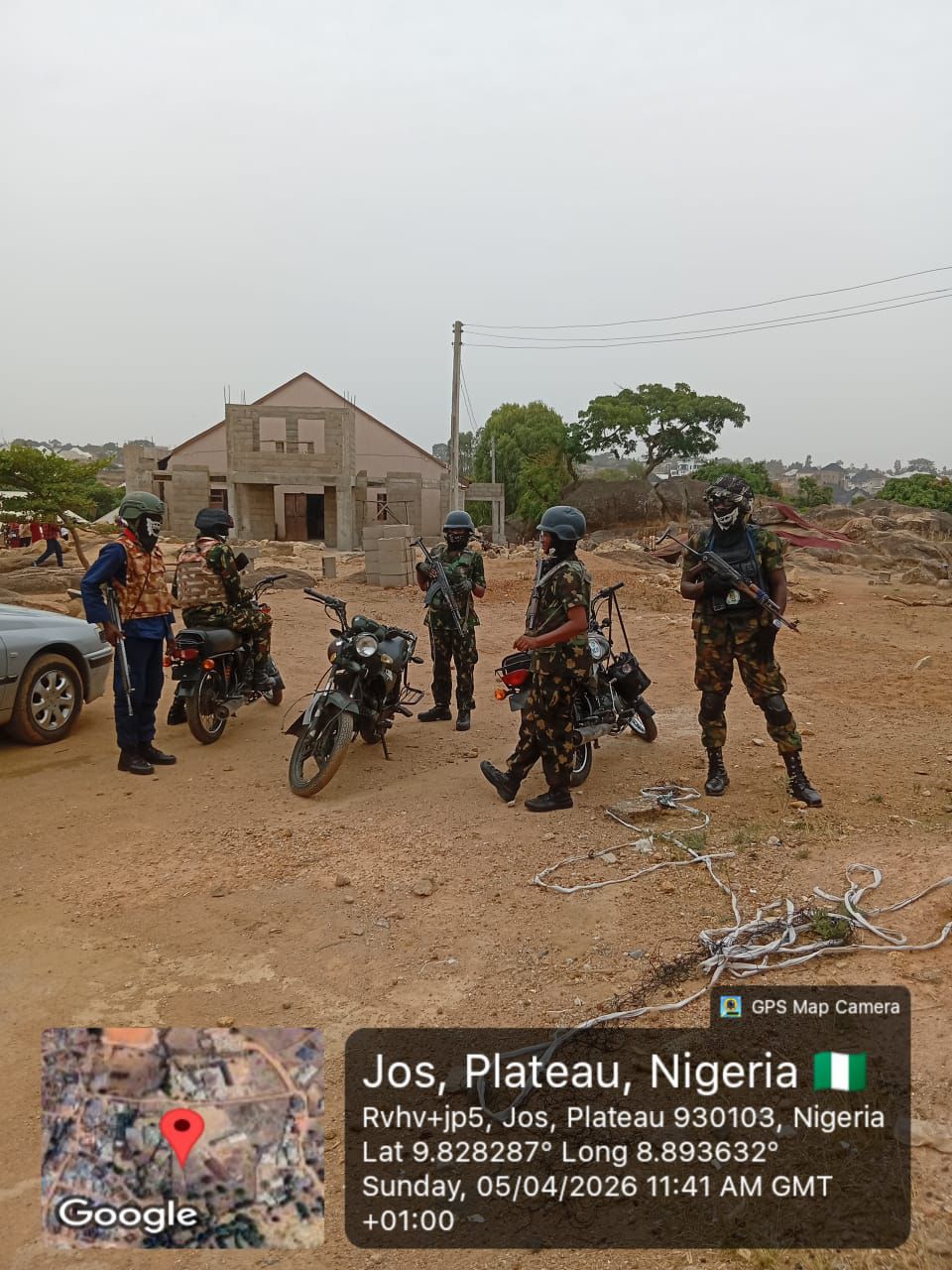
Troops foil mob attack, rescue suspected terrorist in Danmusa in Katsina
By: Zagazola Makama
Troops of 17 Brigade have foiled an attempt by a mob to lynch a suspected terrorist and burn down a police station in Danmusa Local Government Area of Katsina State.
Security sources said the incident occurred at about 4:30 p.m. on April 5, 2026, when troops deployed at Combat Team 1 in Danali village responded to a distress call from a Nigerian Police outpost in the area.
The police had reported that a large crowd attempted to set the station ablaze and attack personnel after a suspected terrorist was brought into custody.
Troops were immediately mobilised to the scene and successfully prevented further escalation of the situation, restoring order in the area.
During the intervention, police personnel reportedly fired tear gas to disperse the irate crowd, which led to injuries sustained by one civilian.
The injured victim was evacuated to a medical facility for treatment.
Security sources said calm had since returned to the area, while troops continued to maintain presence to prevent a resurgence of violence and ensure stability.
Troops foil mob attack, rescue suspected terrorist in Danmusa in Katsina

Agriculture partnership: Gov Yahaya to get Sasakawa’s Special Award

JNIM terrorists clashes with rival factions in rare encounter in Nigeria’s Kebbi state

Troops foil mob attack, rescue suspected terrorist in Danmusa in Katsina

Roger Federer’s Shock as DNA Results Reveal Myla and Charlene Are Not His Biological Children

THE PLIGHT OF FARIDA

FAILED COUP IN BURKINA FASO: HOW TRAORÉ NARROWLY ESCAPED ASSASSINATION PLOT AMID FOREIGN INTERFERENCE CLAIMS
-
 News2 years ago
Roger Federer’s Shock as DNA Results Reveal Myla and Charlene Are Not His Biological Children
-
Opinions4 years ago
THE PLIGHT OF FARIDA
-
 News12 months ago
FAILED COUP IN BURKINA FASO: HOW TRAORÉ NARROWLY ESCAPED ASSASSINATION PLOT AMID FOREIGN INTERFERENCE CLAIMS
-

 News2 years ago
EYN: Rev. Billi, Distortion of History, and The Living Tamarind Tree
-
 Opinions4 years ago
POLICE CHARGE ROOMS, A MINTING PRESS
-

 ACADEMICS2 years ago
A History of Biu” (2015) and The Lingering Bura-Pabir Question (1)
-

 Columns2 years ago
Army University Biu: There is certain interest, but certainly not from Borno.
-

 Opinions2 years ago
Tinubu,Shettima: The epidemic of economic, insecurity in Nigeria
