
National News
Covid- 19: NPHCDA vaccinated Over 5 million Nigerians


Covid- 19: NPHCDA vaccinated Over 5 million Nigerians
By: Our Reporter
The National Primary Healthcare Development Agency (NPHCDA), has vaccinated 5,770,899 eligible persons with the first dose of the COVID-19 vaccination while 3,146,885 have taken the second dose (fully vaccinated).
The Director, Planning Research and Statistics, NPHCDA, Dr. Abdullahi Bulama Garba, disclosed this on Monday in Abuja, at the Ministerial Press Briefing update on COVID-19 Response and Development in the Health Sector.
Garba added that these figures were achieved as at November 7th, 2021, in the 36 States and the FCT.
He said that there were over eight million doses of vaccines in the country at the moment, but the country was still expecting more doses.
Garba also noted that to achieve herd immunity against the infection, Nigeria had set an ambitious goal of vaccinating 40 per cent of its over 200 million population before the end of 2021, and 70 per cent by the end of 2022.
“To achieve this, the vaccine roll-out was scheduled to be in four phases, starting with health workers, frontline workers, COVID-19 rapid response team, amongst others.
“The second phase has commenced and it’s capturing older adults, aged 50 years and above, and those aged between 18 and 49 years of age,” he explained.
Mrs Elsie Ilori, Director of Disease Surveillance Department, Nigeria Centre for Disease Control (NCDC), while giving an update on the Nigeria’s COVID-19 situation, said that while progress had been made in response to the ongoing pandemic with the fact-paced development of diagnostic, therapeutic, and vaccines globally, variants of concern with increased transmissibility pose a threat.
Ilori said that the pandemic continues to play out differently across countries worldwide. Notably, Africa had seen fewer severe cases and deaths but despite limitations of testing has experienced similar transmission of the SARS-CoV-2 virus in its population.
According to her, “Regardless of the differing patterns of disease and deaths seen, the risk of the emergence of SARS-CoV-2 variants capable of evading human immune responses is a global concern.
She added that the Delta variant remains the dominant variant globally. Adding that, alongside existing safety measures, widespread vaccination was providing a means for the world to exit this pandemic.
“While some countries are achieving set goals for population vaccination (South Korea), including using vaccine mandates, others are easing back on restrictions (Melbourne) and some are contemplating preserving existing restrictions for only the unvaccinated (Austria).
“Many countries in the global north have introduced vaccine booster doses, and have approved the use of COVID-19 vaccines for children aged 5 to 11 years,” she added.
The director noted as much as it seems like Nigerians have moved on from COVID-19, it was still in existence, and people are still becoming infected and sadly, dying.
She added that despite the differences in the disease pattern across countries, Nigerians have the same patterns of risk for the elderly, those with other diseases e.g., hypertension and diabetes, the immunosuppressed, etc as seen elsewhere.
“It remains essential to ensure hand and respiratory hygiene, physical distancing, facemask wearing and receiving the full dose of COVID-19 vaccine available.
Also Read: Money Laundering: Abdurasheed Maina sentenced to 8 Years…
“We have continued to respond to the pandemic and navigate these terrains by planning strategies on how to continue to live with COVID-19. A return to normalcy will be ensured by, ‘High levels of testing to ensure complete surveillance including tracking of variants of interest and concern and high levels of vaccination,” she explained.
Ilori said that testing remains core to the response, with the roll out of rapid diagnostic testing continuing across the country.
“Community health workers are being trained on active contact tracing in states and focus is being placed on contacting silent states which do not submit reports on cases, deaths and more.
“With regards to infection, prevention, and control (IPC), health facilities are on the receiving end of training sessions on IPC,” she explained.
According to her, The Emergency Operations Centre remains active, weekly coordinating the response in the Incident Coordination Centre with all pillars represented and partners contributing also travel restrictions.
“On Oct. 25, revised travel restrictions were released and took effect. Key changes to the protocols include the removal of travelers from Brazil, Turkey, and South Africa from the list of restricted countries.
“In addition, key highlights are that: a negative COVID-19 PCR test results should not be conducted more than 72 hours before boarding flights for travel.
“There is no longer self-isolation as a requirement for fully vaccinated inbound passengers, however, there must be a COVID-19 PCR test done on Day 2 of arrival.
“Seven-day self-isolation is mandatory for unvaccinated and partially-vaccinated individuals in addition to COVID-19 PCR tests on days 2 and 7 after arrival.
“Additionally, people arriving on official/business trips seven days must be fully vaccinated, test negative 72 hours before boarding and conduct a PCR test within day 2 of arrival,” she explained.
She added that the travel portal was undergoing revisions to improve it and it was hoped that the challenges of the past would become history on completion of the process.
Meanwhile, the Minister of Health, Dr Osagie Ehanire, called on Nigerians to take action to protect the vulnerable by practising the safety measures and ensuring they are vaccinated if they are eligible.
“It is strongly recommended you get vaccinated against COVID-19 to stop the spread of the virus. When you get vaccinated, you protect yourself, your family, friends, and community against the disease,” Ehanire urged.
Covid- 19: NPHCDA vaccinated Over 5 million Nigerians


National News
PEBEC Targets Seamless Digital Government as 98% of MDAs Meet Business Reform Standards

PEBEC Targets Seamless Digital Government as 98% of MDAs Meet Business Reform Standards
By: Michael Mike
The Director-General of the Presidential Enabling Business Environment Council, Zahrah Mustapha Audu, has unveiled plans to integrate digital platforms across federal Ministries, Departments and Agencies (MDAs) to eliminate duplication, reduce regulatory bottlenecks and create a seamless experience for businesses, following significant gains in public sector service delivery reforms.
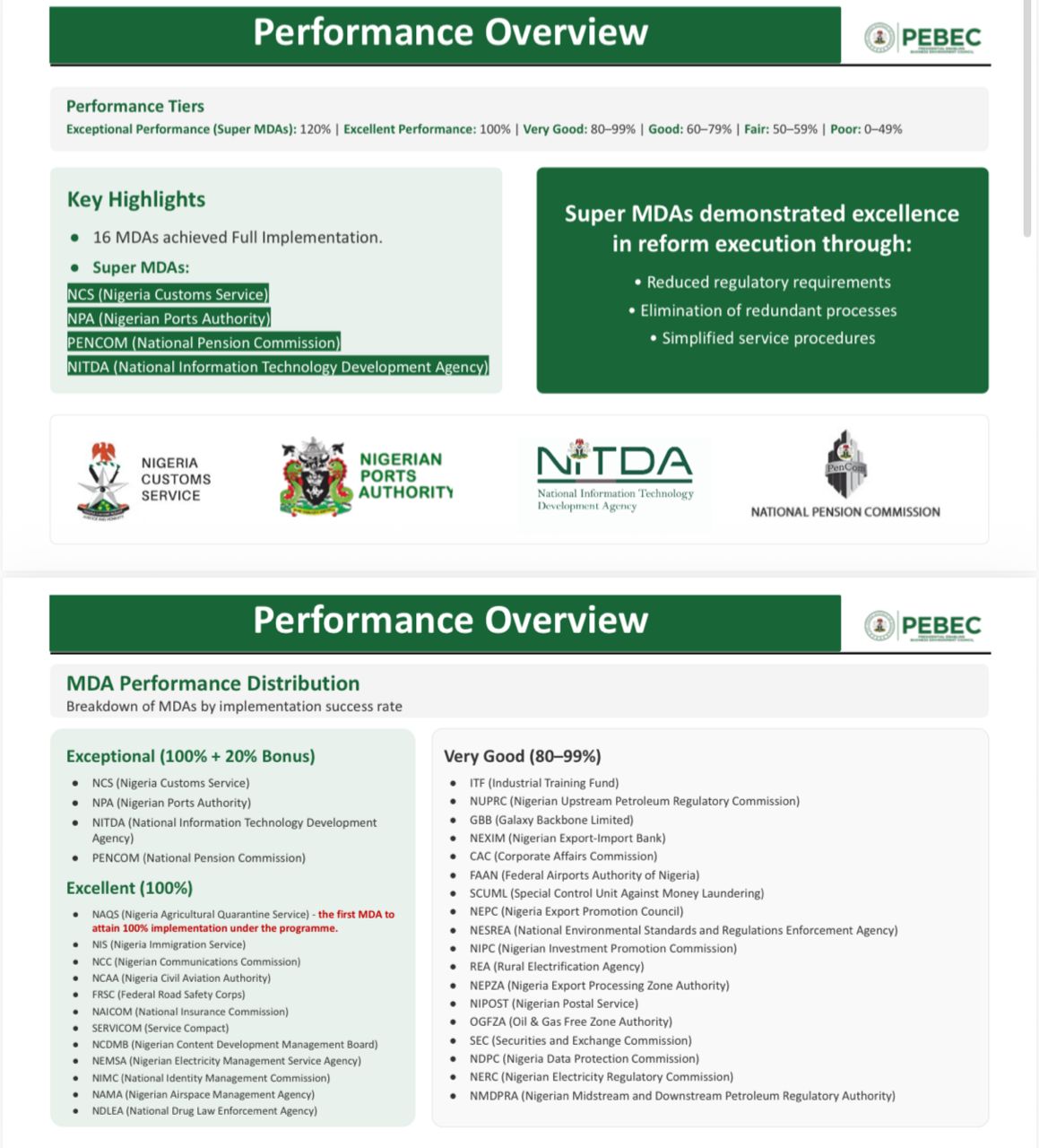
Audu disclosed that 98 per cent of the 69 MDAs monitored by the council now meet prescribed responsiveness standards after a targeted reform programme designed to improve compliance with the Business Facilitation Act.
Speaking during an interaction with journalists in Abuja, she said PEBEC’s next phase of reforms would focus on ensuring government agencies no longer operate in isolation but are digitally connected to enable secure information sharing and faster service delivery.
According to her, while many agencies have digitised their operations, businesses still face unnecessary delays because they are repeatedly required to submit the same information to different regulators.
She cited the National Identification Number (NIN) as an example, noting that agencies should no longer demand documents containing information already available on government databases.
“Our objective is to create an environment where businesses provide information once, and relevant government agencies can securely access it instead of making investors repeat the same process multiple times,” she said.
Audu explained that the reforms are part of PEBEC’s broader mandate to eliminate bureaucratic obstacles, simplify regulatory processes and position Nigeria as a preferred investment destination.
Rather than adopting a confrontational approach, she said the council works collaboratively with government institutions to resolve operational challenges.
“PEBEC is not a name-and-shame organisation. We identify gaps and provide technical support to help agencies improve their services,” she said.
She revealed that the council recently concluded a 90-day Business Environment Enhancement Accelerator Programme, during which reform champions embedded across 69 MDAs worked with PEBEC to strengthen compliance with the Business Facilitation Act.
The initiative, she said, resulted in 98 per cent of the agencies meeting service delivery timelines and responding promptly to enquiries from businesses and members of the public.
Audu noted that the council is now shifting attention from basic compliance to competitiveness, with the goal of making Nigeria a more business-friendly destination than neighbouring economies such as Ghana, Benin Republic and Kenya before benchmarking against leading global performers.
As part of efforts to simplify business regulation, she said PEBEC reviewed licensing procedures and documentation requirements across several agencies to eliminate obsolete and repetitive processes that increase the cost and time of doing business.
She also identified top-performing agencies during the council’s assessment, commending the Nigeria Customs Service for fully complying with reform requirements while reducing cargo clearance timelines and simplifying import and export procedures.
Other agencies recognised for exceeding compliance expectations include the Nigerian Ports Authority, the National Information Technology Development Agency and the National Pension Commission, all of which introduced additional customer-focused reforms beyond the minimum standards.
Audu stressed that the assessment was not intended to rank agencies but to institutionalise reforms capable of improving the experience of businesses dealing with government institutions.
She warned that inefficiency in a single government office can undermine investor confidence in the entire country.
“If someone has a bad experience with one government agency, they do not separate that agency from the government. They simply conclude that Nigeria is not working,” she said.
To sustain the reforms, Audu disclosed that PEBEC will continue its quarterly mystery-shopping exercise, under which officials anonymously access government services to independently assess service quality from the perspective of ordinary users.
She added that the council also operates live performance trackers that allow agencies and the public to monitor compliance levels and identify areas requiring improvement.
According to her, the 2026 Business Facilitation Act Compliance Report is expected to be released in November after the completion of the annual assessment.
She said PEBEC’s long-term goal is to entrench a public service culture built on transparency, efficiency and accountability while creating a fully integrated digital government that makes regulatory compliance faster, easier and more predictable for businesses and investors.
PEBEC Targets Seamless Digital Government as 98% of MDAs Meet Business Reform Standards
National News
ECOWAS Hands Nigeria Assistive Devices, Unveils Regional Push for Disability Inclusion
ECOWAS Hands Nigeria Assistive Devices, Unveils Regional Push for Disability Inclusion
By: Michael Mike
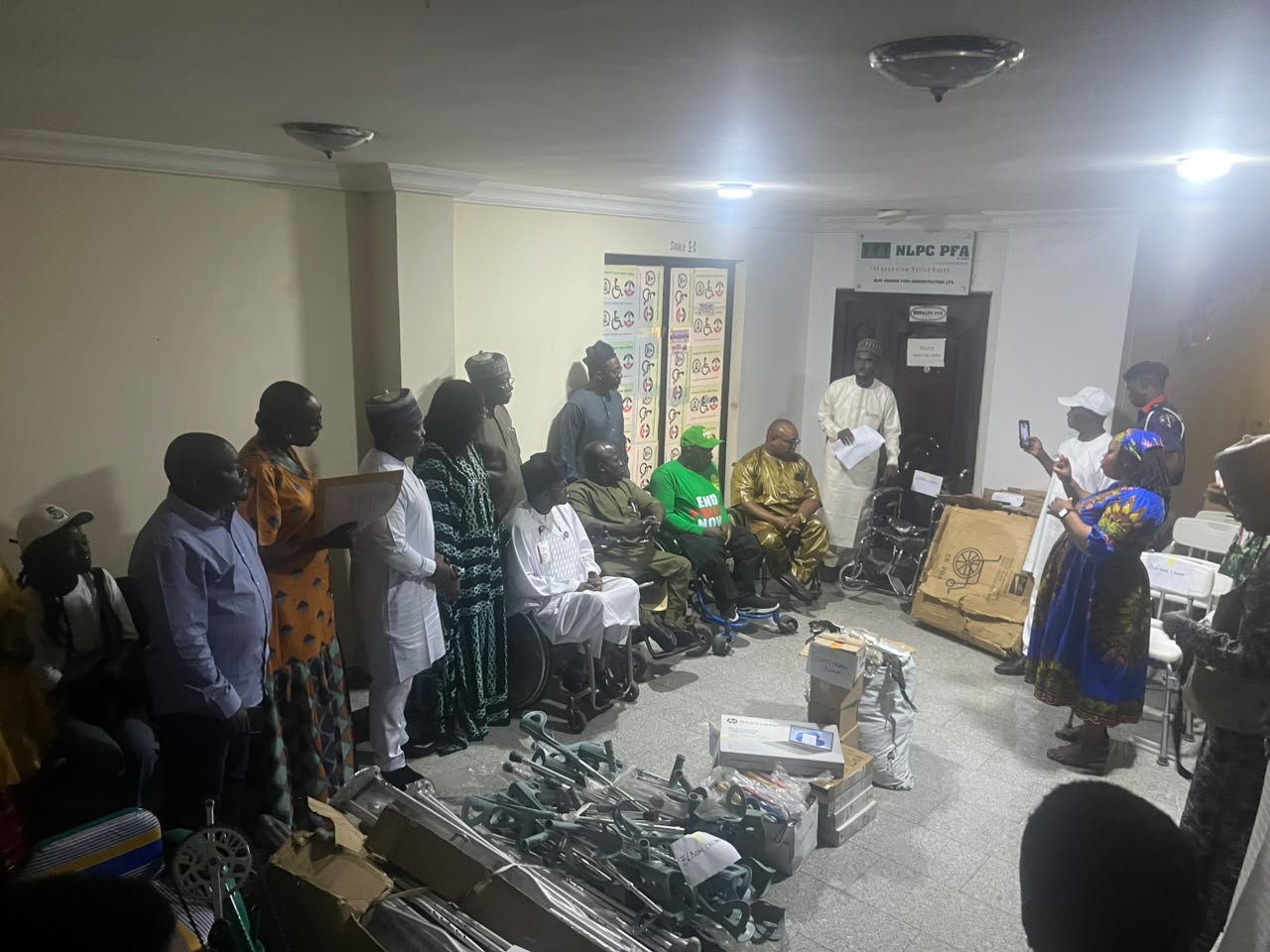
The Economic Community of West African States (ECOWAS) has intensified efforts to advance disability inclusion across the region with the formal handover of assistive devices to children with disabilities in Nigeria, unveiling a broader strategy aimed at expanding access to assistive technology, promoting local production and strengthening national systems for disability support.
The intervention, implemented under the ECOWAS Regional Programme for the Provision of Assistive Devices to Children with Disabilities in West Africa, marks Nigeria’s participation in the first phase of the initiative alongside Togo after nearly two years of planning and implementation.
Speaking at the handover ceremony in Abuja, the Executive Secretary of the National Commission for Persons with Disabilities (NCPWD), Chief Ayuba Gufwan, described the occasion as one of the happiest moments of his life, saying it represented far more than the distribution of equipment.
According to him, assistive devices restore dignity, independence and opportunity to persons with disabilities by enabling them to participate fully in education, employment and community life.
“There is ability in disability,” he said. “No matter the severity of a person’s disability, with the right environment and appropriate assistive devices, everyone can contribute meaningfully to humanity.”
Gufwan noted that while an estimated nine out of every 10 persons with disabilities require one form of assistive technology or another, the overwhelming majority still lack access, leaving millions excluded from education, healthcare, employment and independent living.
He said Nigeria alone has more than 26 million persons with disabilities requiring assistive technology, with demand for quality, affordable and appropriate devices far exceeding available supply.
“Behind these statistics are children who cannot attend school because they lack mobility devices, adults excluded from employment because they do not have access to appropriate technology, and families struggling to access rehabilitation services,” he said.
The Executive Secretary announced that the Commission has established a dedicated Assistive Devices and Technology Unit to coordinate national efforts, improve service delivery and deepen collaboration with development partners.
He also disclosed that the Commission, working with the Federal Ministry of Health and Social Welfare and international partners, has developed key policy instruments including the Nigerian Priority Assistive Products List, an investment case for assistive technology and a National Assistive Technology Scale-up Plan designed to expand access across the country.
Gufwan stressed that an assistive device achieves its purpose only when it matches the functional needs of the individual, adding that the new framework would ensure coordinated assessment, procurement and delivery of appropriate devices.
While commending ECOWAS for selecting Nigeria as one of the first beneficiaries of the regional programme, he urged governments, development partners, healthcare professionals, civil society organisations and the private sector to deepen collaboration towards sustainable access to assistive technology.
He also advocated the establishment of local manufacturing and assembly plants for assistive devices, arguing that domestic production would reduce dependence on imports, lower costs, improve availability, stimulate innovation and create jobs.
Representing the Minister of Humanitarian Affairs and Poverty Reduction, Dr. Barnard Doro, the Senior Technical Adviser to the Minister on Humanitarian Affairs reaffirmed the Federal Government’s commitment to protecting the rights and welfare of persons with disabilities.
The representative described the donation as more than a humanitarian intervention, saying it aligns with the ministry’s integrated approach that combines humanitarian response with poverty reduction and social protection.
He said persons with disabilities often face barriers not because of their conditions but because society fails to provide the support and opportunities they require.
“This ceremony is more than a formal exchange of items. These assistive devices represent dignity restored, independence regained and doors reopened,” he said.
He commended ECOWAS for demonstrating regional solidarity through the initiative and urged the National Commission for Persons with Disabilities to ensure transparent and equitable distribution of the devices to those most in need.
Development partners were also encouraged to increase investments in disability inclusion while expanding support for assistive technology programmes across Nigeria.
Earlier, ECOWAS Commissioner for Human Development and Social Affairs, Professor Fatou Sow Sarr, represented by officials of the Commission, said the programme was initiated following a regional disability inclusion study conducted in 2024 which revealed severe shortages in access to assistive technology across West Africa.
The findings, she said, showed that children with disabilities remain among the most vulnerable populations in the region, prompting ECOWAS to prioritise interventions targeted at improving mobility, communication, learning and participation.
According to the Commission, about 240 million children worldwide live with disabilities, while approximately 15 per cent of children aged between zero and 17 years in West and Central Africa have one form of disability.
Officials explained that despite the global need for assistive technology, access remains extremely limited, particularly in low-income countries where affordability, inadequate services and weak policy implementation continue to exclude millions.
ECOWAS said its regional programme aligns with Vision 2050, which seeks to build “a fully integrated community of peoples living in a peaceful and prosperous region, supported by strong institutions, respect for fundamental rights and inclusive, sustainable development.”
The Commission also said the initiative is anchored on the United Nations Convention on the Rights of Persons with Disabilities, which recognises accessibility as a fundamental human right.
Providing an overview of the programme, ECOWAS officials said Nigeria and Togo were selected as the first beneficiaries after extensive consultations with governments and organisations of persons with disabilities.
The programme has since expanded to additional member states, although implementation remains at different stages because of procurement and logistics processes.
ECOWAS disclosed that future priorities include strengthening disability data collection to support evidence-based policymaking, promoting local production of assistive technology through strategic partnerships, and expanding the regional programme to more member states.
Officials said disability inclusion has become a central pillar of ECOWAS’ development agenda, reflecting a shift from a traditional focus on trade and free movement towards a more people-centred model of regional integration.
The Commission emphasised that improving access to assistive technology contributes directly to the Sustainable Development Goals by reducing inequalities and ensuring that no child is left behind.
Beneficiaries and their families were encouraged to use the devices responsibly while healthcare professionals, teachers and caregivers were urged to provide continuous support, maintenance and follow-up to maximise their impact.
For both ECOWAS and Nigeria, the ceremony signalled more than the distribution of mobility aids and other equipment. It reflected a growing regional commitment to ensuring that disability is no longer a barrier to education, employment, participation or opportunity, while laying the foundation for a more inclusive West Africa where assistive technology is available, affordable and accessible to everyone who needs it.
ECOWAS Hands Nigeria Assistive Devices, Unveils Regional Push for Disability Inclusion
National News
ECOWAS Commissions Landmark Abuja Headquarters, Nigeria and China Renew Commitment to Regional Integration

ECOWAS Commissions Landmark Abuja Headquarters, Nigeria and China Renew Commitment to Regional Integration
By: Michael Mike
The Economic Community of West African States (ECOWAS) on Thursday inaugurated its new permanent headquarters in Abuja, with leaders describing the imposing complex as a powerful symbol of regional unity, institutional renewal and the deepening strategic partnership between West Africa and China.
The commissioning ceremony brought together senior government officials, diplomats and regional leaders, with Nigeria’s Vice President, Kashim Shettima, representing President Bola Ahmed Tinubu, while the President of the ECOWAS Commission, Dr. Omar Alieu Touray, and China’s Ambassador to Nigeria and ECOWAS, Yu Dunhai, outlined a shared vision for stronger regional integration, economic transformation and closer Africa-China cooperation.
The modern headquarters, financed by the People’s Republic of China, was described by speakers as more than an office complex. It was presented as a lasting symbol of cooperation, resilience and a renewed determination to build a peaceful, prosperous and integrated West Africa.
Touray described the inauguration as “a truly historic milestone” in the life of ECOWAS, noting that the headquarters represents the fulfilment of a vision conceived during the groundbreaking ceremony in December 2022.
He thanked Xi Jinping for China’s support, saying Beijing had once again demonstrated its commitment to West Africa by providing the regional body with a world-class headquarters.
According to him, China’s contributions to ECOWAS have gone beyond infrastructure, recalling the country’s earlier support for regional peacekeeping through the provision of strategic military equipment and vehicles for ECOWAS security operations, alongside numerous development interventions across member states.
Touray said the completion of the headquarters within about two years reflected the strength of the partnership between China and ECOWAS.
He also praised Nigeria for its unwavering support as host nation, citing the country’s role in providing land, policy support and institutional backing that made the project possible.
For decades, the ECOWAS Commission operated from offices spread across different locations in Abuja, creating operational and logistical challenges.
Touray said the new integrated complex would significantly improve coordination, efficiency and productivity by bringing Commission staff together under one roof.
He disclosed that the facility consists of a central nine-storey tower flanked by two seven-storey wings and is equipped with modern conference rooms featuring interpretation facilities, archives, kitchenettes, banking halls, restaurants, a clinic, gymnasium, shops and even a daycare centre for nursing mothers.
Despite celebrating the physical accomplishment, the ECOWAS Commission President stressed that infrastructure alone could not guarantee progress.
“Buildings do not deliver transformation; people and institutions do,” he said, urging member states to ensure that the headquarters becomes a centre of excellence that drives innovation, strengthens collaboration and delivers tangible benefits to citizens across the sub-region.
Representing President Xi Jinping, Ambassador Yu described the building as the “Eye of West Africa” and a flagship achievement under the Forum on China-Africa Cooperation.
He said the headquarters reflects China’s enduring support for African integration and demonstrates the strength of China-Africa relations.
The ambassador noted that China continues to pursue cooperation with Africa based on sincerity, mutual respect, friendship and shared development.
He recalled that during the Beijing Summit of FOCAC, China and African leaders adopted an ambitious framework for building an all-weather China-Africa community with a shared future through six major pillars and ten partnership actions.
According to Yu, China will continue to support ECOWAS in promoting regional peace, economic development and improved living standards.
He pledged that Beijing would deepen cooperation in infrastructure development, digital economy, agriculture, food security, trade and investment, while fully implementing China’s zero-tariff policy for eligible African exports to strengthen Africa’s productive capacity.
The ambassador also called for stronger cultural, educational, youth and sporting exchanges, noting that this year marks the 70th anniversary of diplomatic relations between China and Africa and has been designated the Year of China-Africa People-to-People and Cultural Exchanges.
“China remains forever a trustworthy, sincere friend and a reliable partner to ECOWAS and all West African nations,” Yu declared.
Delivering President Bola Tinubu’s message, Vice President Shettima described the commissioning as both the inauguration of a landmark building and the renewal of ECOWAS’ founding covenant of solidarity, integration and shared prosperity.
He said nations and regional communities endure because their people refuse to abandon the ties that bind them together, insisting that the new headquarters stands as a reminder of the vision of ECOWAS’ founding fathers more than five decades ago.
The Vice President commended the ECOWAS Commission for delivering the ambitious project and expressed appreciation to China for financing the complex, describing Beijing as a dependable development partner whose own economic transformation offers valuable lessons for Africa.
While acknowledging ECOWAS’ achievements in peacebuilding, democratic governance, economic cooperation and the free movement of people and goods, Shettima warned that the region still faces daunting challenges, including terrorism, violent extremism, food insecurity, climate change, economic vulnerability, public health threats and rising unemployment among young people.
He argued that regional integration must now move beyond facilitating trade to building productive economies capable of creating jobs and sustaining growth.
“The hour has come to transform our regional market into a regional production base,” he said.
“We must deepen industrialisation, strengthen regional value chains, expand intra-regional trade and unlock innovation, manufacturing and investment opportunities for our young people.”
According to him, West Africa cannot continue to depend on imported goods if it hopes to achieve genuine economic independence.
“Our integration must increasingly be driven by what we produce rather than by what we consume because a community that consumes what it does not make will forever remain at the mercy of the goodwill of others,” he said.
Shettima also urged member states to strengthen political cooperation and collective security while keeping the door open to countries that have withdrawn from ECOWAS, stressing that regional integration has become indispensable to peace, stability and sustainable development.
He expressed confidence that the headquarters would become a centre for visionary leadership, innovation and collective decision-making capable of advancing the welfare of West Africans.
Together, the three speeches reflected a common theme: that while the new headquarters is an important physical achievement, its true significance will depend on the decisions taken within its walls.
For ECOWAS, the building represents not only a new administrative home but also a renewed commitment to regional integration at a time when West Africa is confronting complex political, economic and security challenges.
For China, it reinforces an expanding strategic partnership with West Africa built around infrastructure, trade and development cooperation.
And for Nigeria, as host nation, the commissioning underscores its continued central role in the affairs of ECOWAS and its determination to support the bloc’s pursuit of peace, stability and economic prosperity across the region.
ECOWAS Commissions Landmark Abuja Headquarters, Nigeria and China Renew Commitment to Regional Integration

Fire razes about 50 shops at Ibadan market

Amotekun operative arrested after accidental fatal shooting in Oyo

Late Community Leader Daniel Pulle Laid to Rest Amid Tears as Killing Continues to Stir Questions in Plateau

Roger Federer’s Shock as DNA Results Reveal Myla and Charlene Are Not His Biological Children

THE PLIGHT OF FARIDA

FAILED COUP IN BURKINA FASO: HOW TRAORÉ NARROWLY ESCAPED ASSASSINATION PLOT AMID FOREIGN INTERFERENCE CLAIMS
-
 News2 years ago
Roger Federer’s Shock as DNA Results Reveal Myla and Charlene Are Not His Biological Children
-
Opinions4 years ago
THE PLIGHT OF FARIDA
-
 News1 year ago
FAILED COUP IN BURKINA FASO: HOW TRAORÉ NARROWLY ESCAPED ASSASSINATION PLOT AMID FOREIGN INTERFERENCE CLAIMS
-

 News2 years ago
EYN: Rev. Billi, Distortion of History, and The Living Tamarind Tree
-
 Opinions5 years ago
POLICE CHARGE ROOMS, A MINTING PRESS
-

 ACADEMICS2 years ago
A History of Biu” (2015) and The Lingering Bura-Pabir Question (1)
-

 Columns2 years ago
Army University Biu: There is certain interest, but certainly not from Borno.
-

 Politics1 year ago
2027: Why Hon. Midala Balami Must Go, as Youths in Hawul and Asikira/Uba Federal Constituency Reject ₦500,000 as Sallah Gift
