
News
CSJ Says There Is Nothing to Show for Fuel Subsidy Removal


CSJ Says There Is Nothing to Show for Fuel Subsidy Removal
…Asks Tinubu to Copy Abacha, Jonathan’s PTF, SURE-P
By: Michael Mike
Centre for Social Justice (CSJ) has called on all tiers of government in Nigeria to take concrete and targeted steps to mainstream social justice into all processes, mechanisms and instruments of governance.
The organisation while alleging that President Bola Tinubu’s subsidy removal has had nothing to show, asked the present administration to copy the Gen. Sani Abacha’s Petroleum Trust Fund and President Goodluck Jonathan’s SURE-P created to soften the hardship of removal of fuel subsidy.
The call was made in commemoration of the World Day of Social Justice 2024 with theme: “”Bridging Gaps, Building Alliances.”
The CSJ, in a statement on Tuesday by its Lead Director, Eze Onyekpere said the theme indicates that there is no better time than now for the government to bridge the gap of increasing poverty, hunger and degraded living conditions occasioned by the rising cost of living.
Onyekpere also said: “This is also the time to bridge the inequality gap against the background of the ostentatious and opulent lifestyles of top level public servants and elected officials. While the average Nigerian has been subjected to misery, the ruling class revel in a competition to mismanage and abuse public resources.
“With increased resources available to the three tiers of government arising from the removal of fuel subsidy and floatation of the Naira, there was a public expectation under the Renewed Hope Agenda that these new resources would be invested for the public good in education, health, housing, roads and other infrastructure. Rather than investing the resources to bridge the gap between the rich and the poor and build a national alliance and consensus for development, the leaders have cornered all the resources for their personal gain as there is nothing to show for the increased resources available to the government.
“Promises of the Bola Ahmed Tinubu era had remained pipe dreams and none has been fulfilled.”
He noted that the Abacha presidency era had the Petroleum Trust Fund while the Goodluck Jonathan era had SURE-P for the investment of fuel subsidy removal gains, but lamented that: “The Bola Ahmed Tinubu presidency has nothing to show. Rather, we have witnessed a bloating of the cost of governance and frivolous expenditure.
“The three arms of government have not demonstrated any sense of patriotism to bridge the gap of injustice, inequality and poverty in Nigeria. On the part of the Judiciary, we have witnessed the brazen attempt of senior judges to install/appoint their relations by all means as judges of the various courts. The executive and legislature have refused to cut down the cost of governance and re-channel the bulk of the public resources to cushion the effects of poverty. It is alarming, that in the face of the current hardship plaguing the nation, the President still maintains a bloated retinue of staff with increased personnel cost, while the legislators went on a spending spree in the procurement of SUVs worth 160 million each for its members. The legislature also scandalously increased its budget. The government refuses to pay the promised wage award of N35,000 to civil servants whereas the minimum wage still remains a paltry N30,000.”
He said: “We call on the government to use this occasion to reflect on implementing life-saving measures that would bridge the gap of inequality experienced by 133 million multi dimensionally poor Nigerians. It is not too late for the Federal Government to review and course correct on its stringent policies such as the removal of fuel subsidy and the floating of the naira which has resulted in run-away inflation and high cost of living.”
Onyekpere added that: “Against the background of the foregoing, CSJ proffers the following recommendations: Bridge the gap of poverty by drastically reducing the cost of governance and redirect more public resources to meet the needs and welfare of the poor; The President should review the economic team and build alliances with competent citizens in all political affiliations who have proven capacity to proffer solutions that will reposition the economy; Social welfare programs should be created to benefit poor and vulnerable Nigerians who are currently grappling with the economic hardship plaguing the nation.
“Principal officers of the three arms of government should be rededicated to service delivery and effective implementation of mandates as well the tenets of social justice – the national interest above the self-interest.”
CSJ Says There Is Nothing to Show for Fuel Subsidy Removal


Military
Mutiny: Presidential Guard Tightens Security Around Niger Presidency Amid Reports of Military Protest
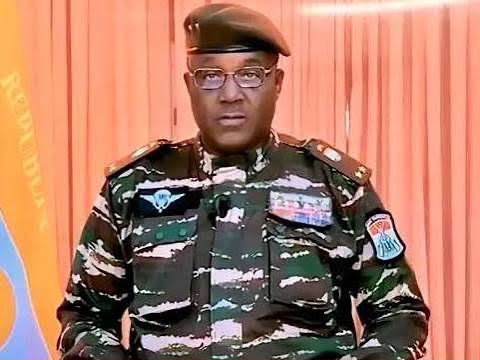
Mutiny: Presidential Guard Tightens Security Around Niger Presidency Amid Reports of Military Protest
By Zagazola Makama
Security was significantly reinforced around Niger’s Presidential Palace in Niamey following reports of unrest involving elements of the country’s armed forces, security sources told Zagazola Makama.
According to multiple security sources, the heightened deployment of the Presidential Guard, supported by armoured vehicles around the Presidential Palace on the night of July 3 and into July 4, followed what was described as a limited protest by personnel of an armoured unit within the Niger Armed Forces (FAN).
The sources said some soldiers reportedly declined deployment to frontline positions in northern Tillabéri Region, particularly around Inatès and Chinagodrar, citing inadequate heavy equipment and insufficient operational resources to confront the growing security threats in the area.
The protest was described by one source as a “small mutiny,” although there has been no official confirmation from the Nigerien authorities.
Security sources said the development triggered concern within the country’s leadership, prompting the reinforcement of security around the Presidential Palace and temporary restrictions on movement in the surrounding area as a precautionary measure.
The Tillabéri Region remains one of Niger’s most volatile security zones, with recurrent attacks by armed extremist groups, including factions linked to the so-called Islamic State in the Greater Sahara (ISGS).
As of the time of filing this report, the Nigerien government and military authorities had not issued any official statement regarding the reported protest or the increased security presence around the Presidency.
The situation remains under close observation.
Mutiny: Presidential Guard Tightens Security Around Niger Presidency Amid Reports of Military Protest
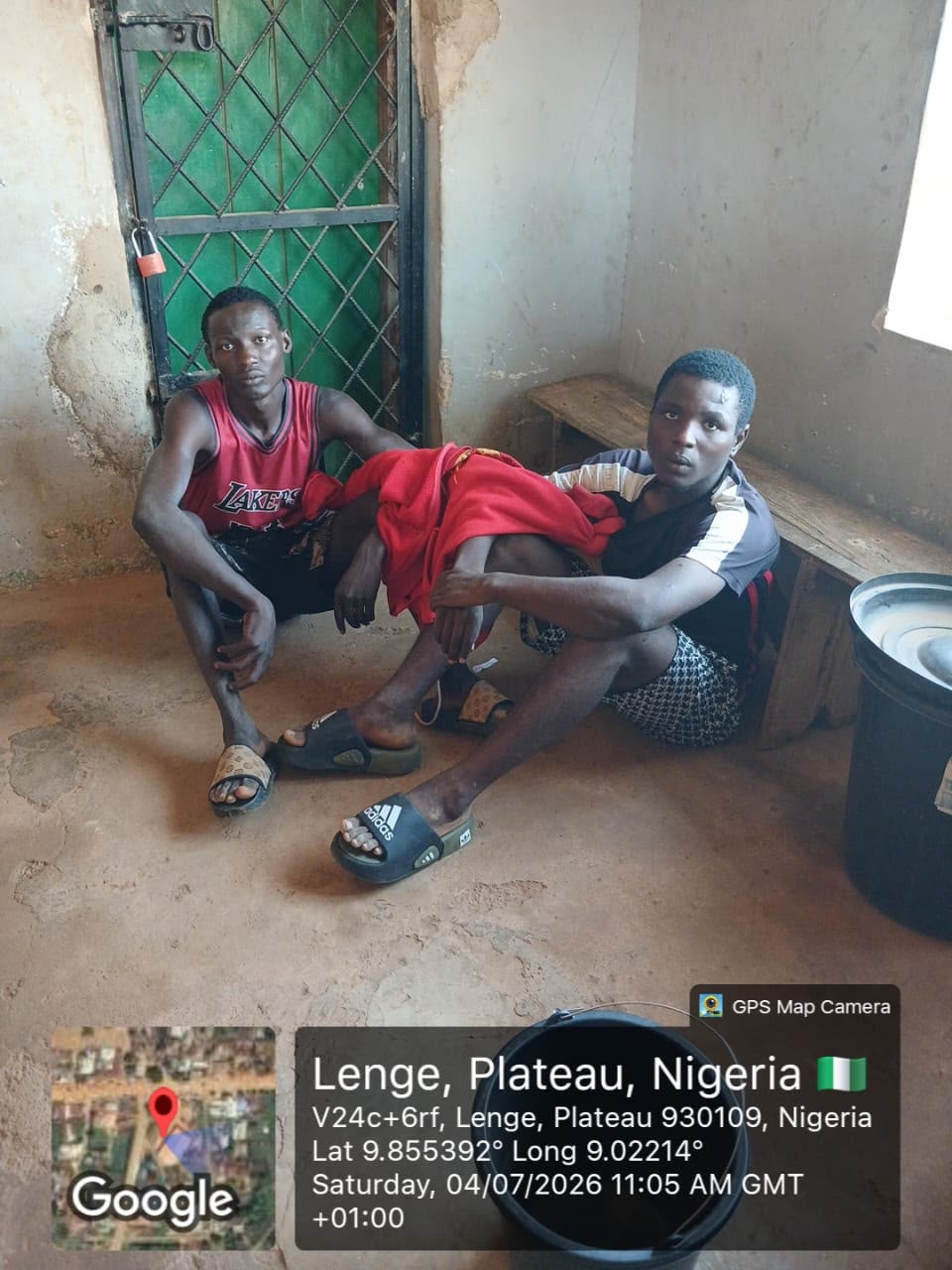
Two suspected criminals arrested during patrol in Plateau
By: Zagazola Makama
Troops of Sector 1 under Operation Enduring Peace have arrested two suspected criminals during a routine patrol in Jos East Local Government Area of Plateau.
Security sources disclosed that the suspects, identified as Azi Ezekiel, 21, and Ajiji Emmanuel, 19, were apprehended at about 10:30 a.m. on Saturday along the road leading to Forbur Village.
The sources said the suspects were intercepted by troops of Sector 1, Sub-Sector 12, while conducting a routine patrol in the area.
According to the sources, the two suspects have been handed over to the Keystone Police Station in Forbur for further investigation and possible prosecution.
The arrest forms part of ongoing security operations aimed at combating criminal activities and enhancing safety across Plateau State.
Two suspected criminals arrested during patrol in Plateau
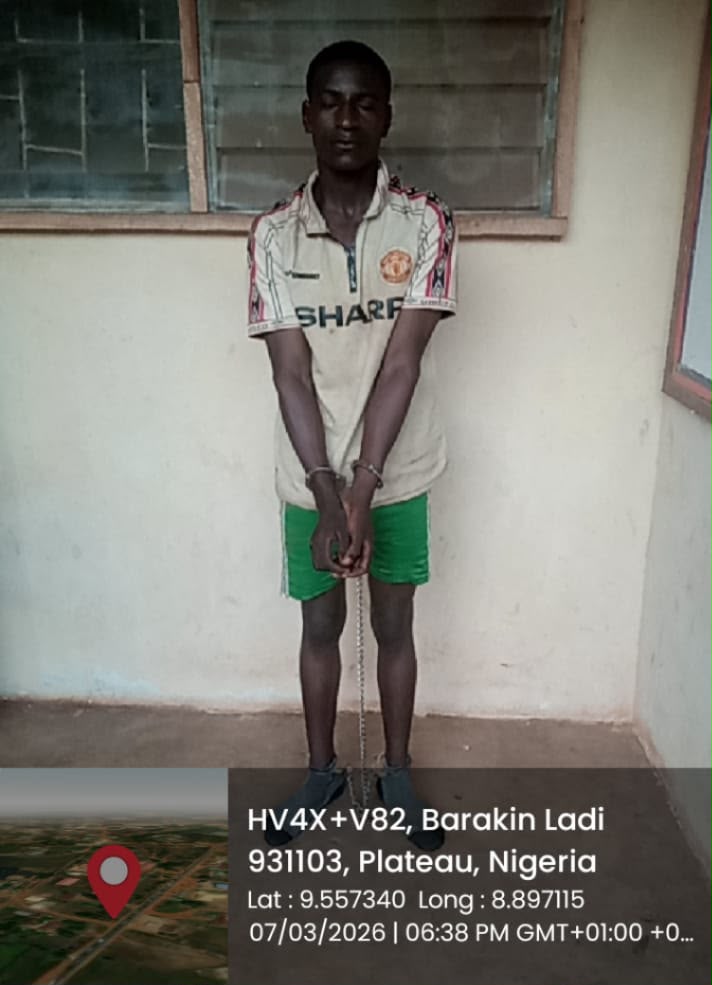
Troops arrest suspected kidnapper in Plateau community
By: Zagazola Makama
Troops of Sector 4 of Operation Enduring Peace have arrested a suspected kidnapper during a security operation in Barkin Ladi Local Government Area of Plateau.
Security sources said the suspect, identified as Mohamdu Surajo, 29, was arrested at about 6:45 p.m. on Friday at Sabon Layi Village following sustained security operations in the area.
The sources disclosed that the suspect is currently in military custody and is undergoing preliminary interrogation to aid ongoing investigations.
They added that the arrest is part of continued efforts by security forces to dismantle criminal networks and enhance security across Plateau State.
Troops arrest suspected kidnapper in Plateau community

President Tinubu Flags Off the Construction of Dikwa–Gamboru Ngala, Bama–Banki International Road Projects

Mutiny: Presidential Guard Tightens Security Around Niger Presidency Amid Reports of Military Protest

Troops Arrest Two Suspected Berom Militia Linked to NIPSS Attack as Security Sources Say Investigation Supports Earlier Leads

Roger Federer’s Shock as DNA Results Reveal Myla and Charlene Are Not His Biological Children

THE PLIGHT OF FARIDA

FAILED COUP IN BURKINA FASO: HOW TRAORÉ NARROWLY ESCAPED ASSASSINATION PLOT AMID FOREIGN INTERFERENCE CLAIMS
-
 News2 years ago
Roger Federer’s Shock as DNA Results Reveal Myla and Charlene Are Not His Biological Children
-
Opinions4 years ago
THE PLIGHT OF FARIDA
-
 News1 year ago
FAILED COUP IN BURKINA FASO: HOW TRAORÉ NARROWLY ESCAPED ASSASSINATION PLOT AMID FOREIGN INTERFERENCE CLAIMS
-

 News2 years ago
EYN: Rev. Billi, Distortion of History, and The Living Tamarind Tree
-
 Opinions5 years ago
POLICE CHARGE ROOMS, A MINTING PRESS
-

 ACADEMICS2 years ago
A History of Biu” (2015) and The Lingering Bura-Pabir Question (1)
-

 Columns2 years ago
Army University Biu: There is certain interest, but certainly not from Borno.
-

 Politics1 year ago
2027: Why Hon. Midala Balami Must Go, as Youths in Hawul and Asikira/Uba Federal Constituency Reject ₦500,000 as Sallah Gift
