
News
Cuba Blames U.S. Sanctions for Deepening Energy Crisis, Responds Cautiously to Reported $100m Aid Offer

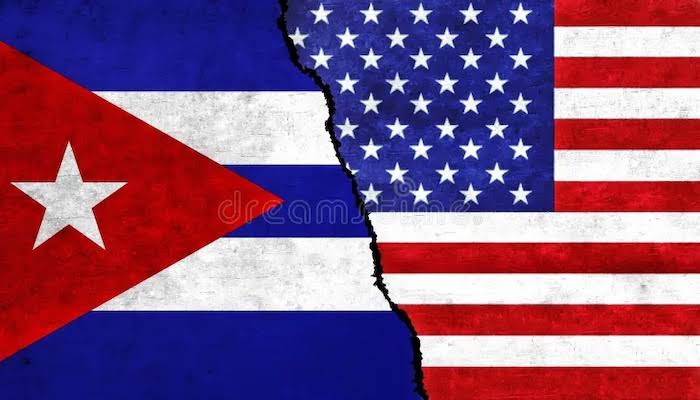
Cuba Blames U.S. Sanctions for Deepening Energy Crisis, Responds Cautiously to Reported $100m Aid Offer
By: Michael Mike
The government of Cuba has intensified accusations against the United States over the island’s worsening electricity and economic crisis, while cautiously welcoming reports of a proposed $100 million American aid package amid growing humanitarian concerns.
In separate statements issued this week, Cuban President Miguel Díaz-Canel and government officials argued that the country’s severe power shortages, fuel scarcity, and economic hardship are direct consequences of decades-long U.S. sanctions and what Havana described as an increasingly aggressive “energy blockade.”
The latest developments come as Cuba experiences one of its most difficult periods in recent years, marked by prolonged blackouts, shortages of food and medicine, rising inflation, and mounting public frustration.
Díaz-Canel said the situation affecting Cuba’s National Power System had become “especially tense,” with authorities forecasting a deficit of more than 2,000 megawatts during peak evening demand.
According to the Cuban leader, fuel shortages alone were responsible for preventing the generation of at least 1,100 megawatts of electricity, significantly worsening blackouts across the country.
He accused Washington of deliberately obstructing fuel supplies to Cuba by threatening sanctions and punitive measures against countries and companies willing to trade with Havana.
“This dramatic worsening has a single cause: the genocidal energy blockade that the U.S. has imposed on our country,” Díaz-Canel declared.
The Cuban president argued that recent improvements in electricity supply during April demonstrated the direct relationship between fuel imports and power generation capacity.
He noted that the arrival of a single fuel tanker — out of the eight Cuba reportedly requires monthly — temporarily reduced electricity deficits and mitigated blackouts, though outages did not disappear entirely.
Díaz-Canel further accused sections of the U.S. media and political establishment of attempting to portray Cuba’s economic crisis as solely the result of government mismanagement while ignoring the impact of sanctions and economic restrictions.
According to him, neither the decades-old U.S. embargo nor the additional sanctions imposed during the administration of former President Donald Trump had succeeded in overthrowing the Cuban Revolution.
He alleged that more recent executive measures targeting fuel supplies, foreign trade, and investment in Cuba were specifically designed to increase suffering among ordinary citizens and provoke unrest against the government.
Despite the criticism, Havana has also reacted cautiously to reports that the United States Department of State had formally proposed an aid package valued at $100 million for Cuba.
In a separate government statement, Cuban authorities said it remained unclear whether the proposed assistance would come in the form of direct financial support or material aid such as fuel, food, or medicine.
The Cuban government said it was prepared to consider foreign aid offered in good faith and expressed openness to working with the Catholic Church in implementing humanitarian support efforts.
“We are willing to hear the details of the offer and how it would be implemented,” the statement said, while warning against any attempt to use humanitarian assistance for political leverage.
Havana maintained that the most meaningful support Washington could provide would be the easing of economic, commercial, financial, and energy restrictions imposed on the island.
Cuban officials argued that sanctions had intensified “as never before” in recent months, severely affecting nearly every sector of the economy and worsening living conditions for millions of citizens.
The latest exchange reflects the complicated and often confrontational relationship between Havana and Washington, which has remained strained for more than six decades despite intermittent attempts at diplomatic rapprochement.
While Cuba insists that U.S. sanctions are the central driver of its current crisis, critics of the Cuban government continue to point to structural inefficiencies, state control of the economy, and policy failures as major contributors to the country’s prolonged economic difficulties.
Nevertheless, the apparent willingness of both sides to discuss humanitarian assistance suggests a potentially significant, though cautious, opening for limited engagement amid escalating hardship on the island.
Cuba Blames U.S. Sanctions for Deepening Energy Crisis, Responds Cautiously to Reported $100m Aid Offer


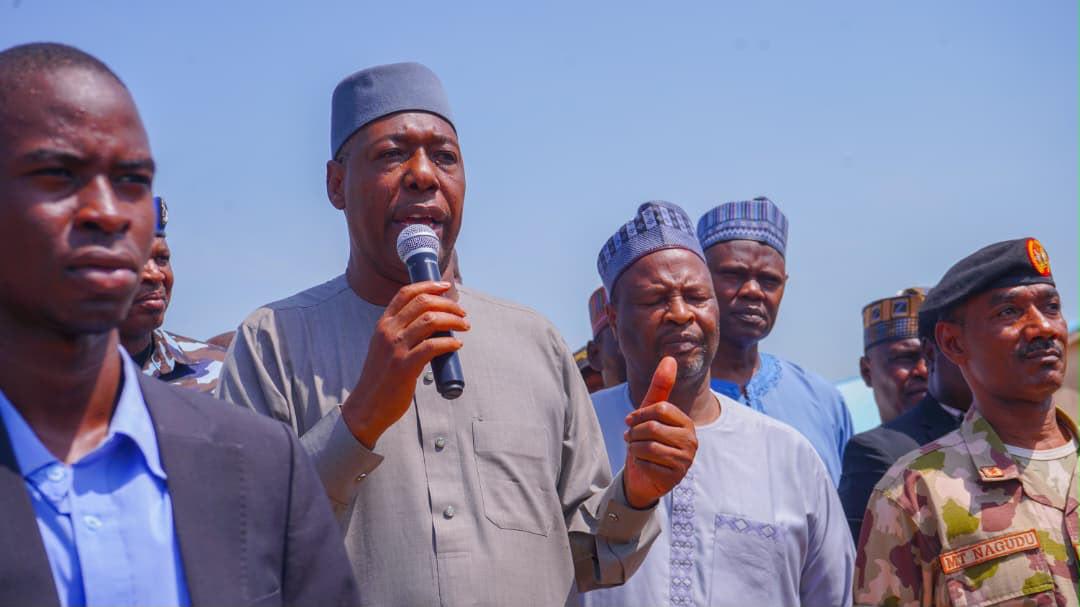
Zulum Announces Closure of Konduga IDP Camp as Borno Accelerates Resettlement Drive
…Inspects ongoing housing projects in Amarwa, Maiwa
By: Michael Mike
Borno State Governor, Professor Babagana Zulum, has announced plans to close the Internally Displaced Persons (IDP) camp in Konduga Local Government Area as part of efforts to accelerate the state’s ongoing resettlement programme.
The move comes shortly after the successful closure of the Bama IDP camp, which was the largest displacement camp outside Maiduguri, as well as preparations for the shutdown of the Gwoza IDP camp.
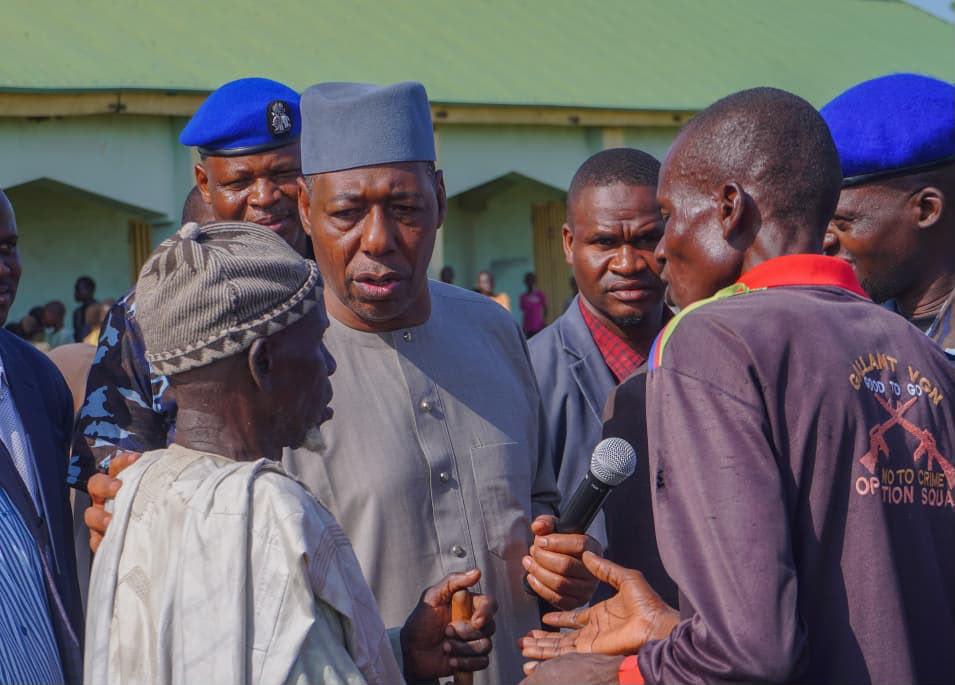
Governor Zulum, who disclosed the plan during a visit to Konduga, said the resettlement of displaced persons would be carried out in a dignified and voluntary manner, stressing that no resident would be forced to return to any location against their will.
The governor said the government would engage with the displaced communities before the process begins, noting that the return of IDPs must be based on their readiness and willingness.
“We are not carrying out the resettlement process immediately; we are here to discuss with the IDPs so that in the next four months they will be resettled in a dignified manner. I believe you heard from the IDPs that they are willing to return home. Return shall be voluntary, not by force,” Zulum said.
During the visit, the governor inspected ongoing construction work at the Amarwa resettlement city, where housing units are being developed for displaced families. The project, which was earlier inaugurated by the governor, is designed to provide a permanent settlement option for residents currently living in camps.
Governor Zulum also visited Maiwa in Mafa Local Government Area, where the state government is constructing additional housing units under its resettlement initiative.
The housing projects include essential social infrastructure such as primary healthcare centres, water facilities and other basic amenities aimed at ensuring sustainable living conditions for returnees.
The Borno State Government has continued to prioritise the rebuilding of communities affected by years of insurgency, with the closure of IDP camps forming part of a broader strategy to restore normalcy, rebuild livelihoods and support the safe return of displaced residents.
Governor Zulum was accompanied on the inspection tour by the member representing Bama/Ngala/Kala-Balge Federal Constituency in the House of Representatives, Engr. Bukar Talba; the Konduga State House of Assembly member, Hon. Bukar Modu; Commissioner for Local Government and Emirate Affairs, Sugun Mai Mele; and other senior government officials.
Zulum Announces Closure of Konduga IDP Camp as Borno Accelerates Resettlement Drive

Troops Arrest Two Suspected Terrorist Informants, Cattle Rustlers in Yobe Market
By Zagazola Makama
Troops of Operation HADIN KAI have arrested two suspected terrorist informants and cattle rustlers during a joint operation with local hunters at the Buni Yadi Friday Market in Gujba Local Government Area of Yobe State.
Military sources told Zagazola Makama that the operation was carried out at about 2:00 p.m. on July 24 by troops of 27 Task Force Brigade in conjunction with members of a hunters’ group acting on intelligence.
The suspects were identified as Muhammadu Sani, 32, from Mainahari in Biu Local Government Area of Borno State, and Buba Umaru, 40, from Garin Jauro in Fune Local Government Area of Yobe State.
According to the sources, the operation turned violent when one of the suspects attacked a member of the hunters’ group with a cutlass while resisting arrest.
The hunter sustained severe head injuries during the attack and was immediately attended to, while the troops overpowered and apprehended the suspects.
Preliminary investigations revealed that Muhammadu Sani confessed to serving as a logistics supplier and informant for Boko Haram terrorists for nearly seven years.
He also admitted to leading terrorists to the residences of two local residents, where the insurgents successfully rustled cattle during separate attacks.
Military sources said the confession is expected to assist ongoing intelligence efforts aimed at dismantling terrorist support networks operating within communities across the North-East.
The two suspects are currently in the custody of 27 Task Force Brigade and are undergoing further investigation to determine the extent of their involvement in terrorist logistics, intelligence gathering and cattle rustling activities.
Security officials said the arrest underscores the critical role played by local intelligence and collaboration between troops and community-based security groups in identifying individuals who provide logistical support and operational information to terrorist elements.
They added that troops of Operation HADIN KAI will continue to target terrorist collaborators, informants and logistics networks as part of ongoing efforts to deny insurgents the local support structures that sustain their operations across the North-East.
Troops Arrest Two Suspected Terrorist Informants, Cattle Rustlers in Yobe Market
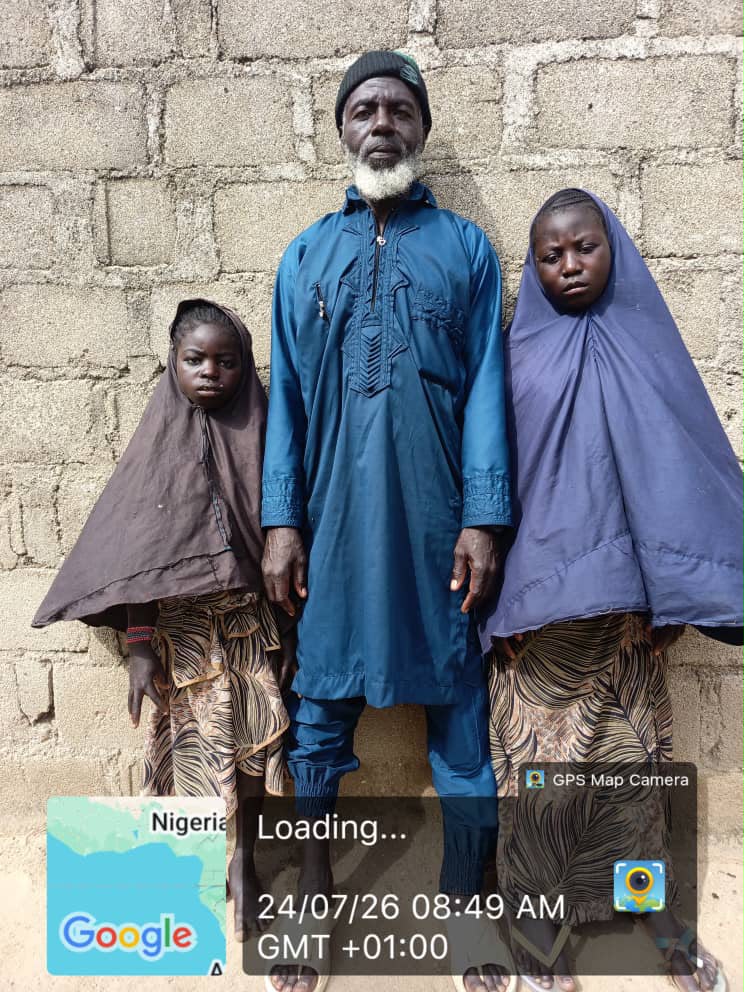
Six Terrorists’ Family Members Surrender to Troops in Gwoza
By Zagazola Makama
Six family members of Boko Haram terrorists have surrendered to troops of Operation HADIN KAI in Gwoza Local Government Area of Borno State after escaping from the terrorists’ enclave in the Mandara Mountains.
Military sources told Zagazola Makama that the surrender occurred in two separate incidents on July 24, with all the individuals voluntarily presenting themselves to troops of C Company, 192 Battalion (Mechanised) deployed in Gwoza.
According to the sources, the first group, comprising Samaila Vuringwa, 55; Falmata Samaila, 13; and Walida Samaila, 10, surrendered at about 7:45 a.m.
Preliminary investigations revealed that they escaped from the Wa’a terrorist enclave located in the Mandara Mountains before making their way to the military location.
Items recovered from the family included primary and secondary school certificates as well as the sum of ₦460,000.
In a related development, another three family members identified as Amina Nahadiye, 64; Zainabu Zaza, 62; and Amina Mugula, 61, surrendered to the same troops at about 1:35 p.m. on the same day.
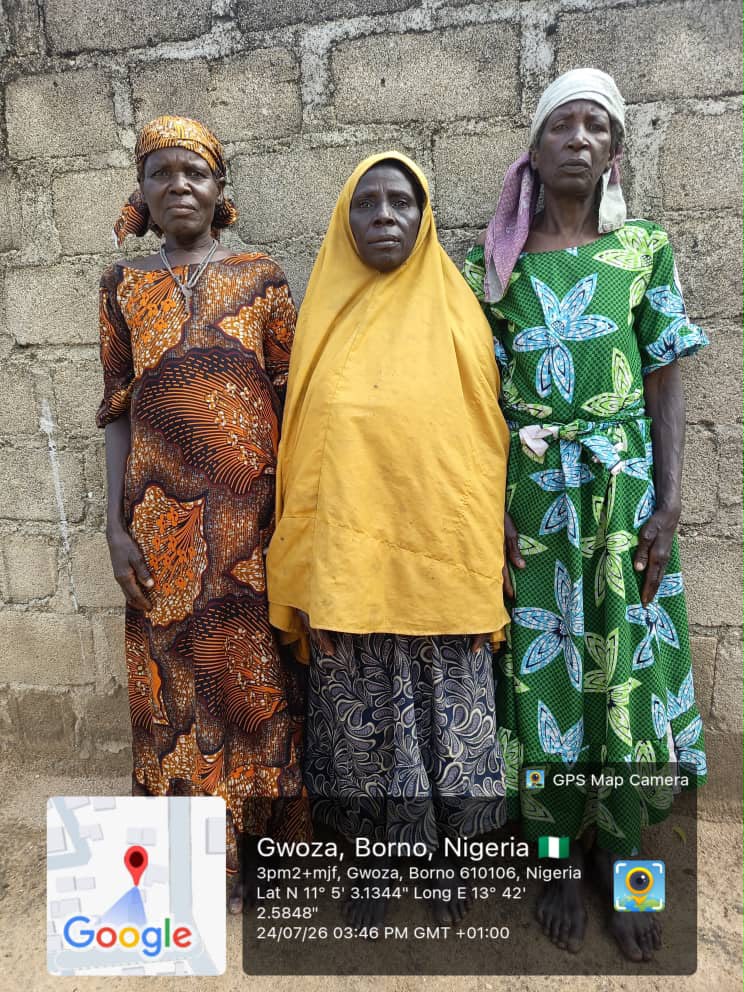
Military sources said preliminary screening also established that the second group escaped from the Wa’a enclave in the Mandara Mountains.
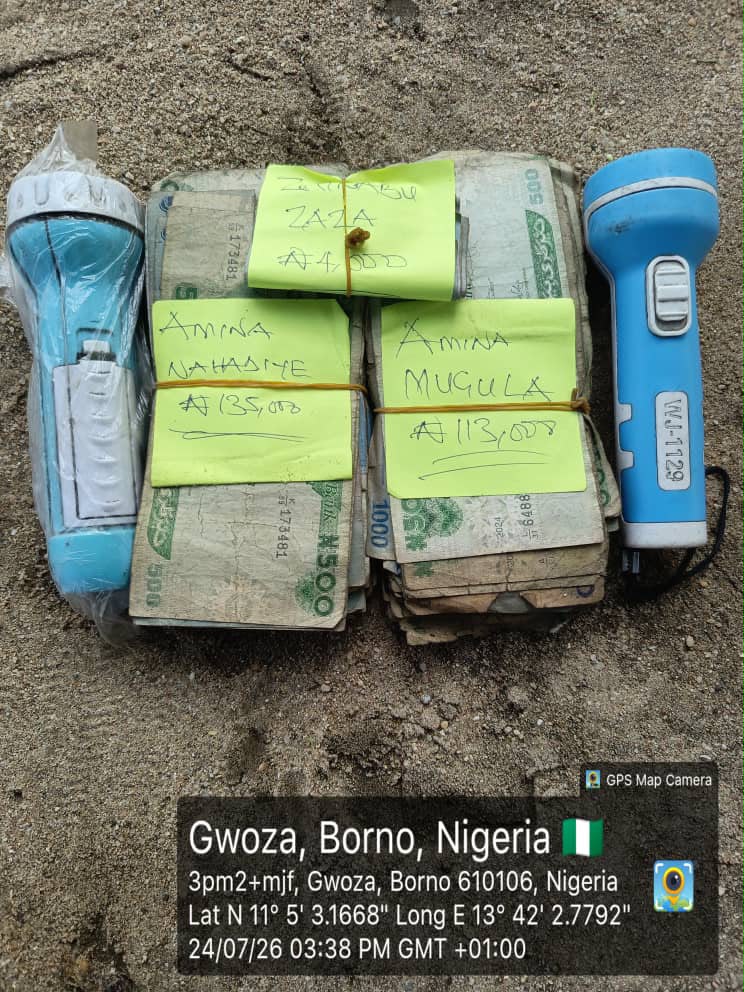
Items recovered from them included two torchlights and the sum of ₦252,000.
The six individuals have since undergone preliminary profiling, documentation and security screening and are currently in the custody of 192 Battalion for further investigation and processing in line with established operational procedures.
Security sources said the latest surrender underscores the sustained pressure being mounted by troops of Operation HADIN KAI against terrorist strongholds in the Mandara Mountains, compelling more insurgents and their family members to abandon the enclaves.
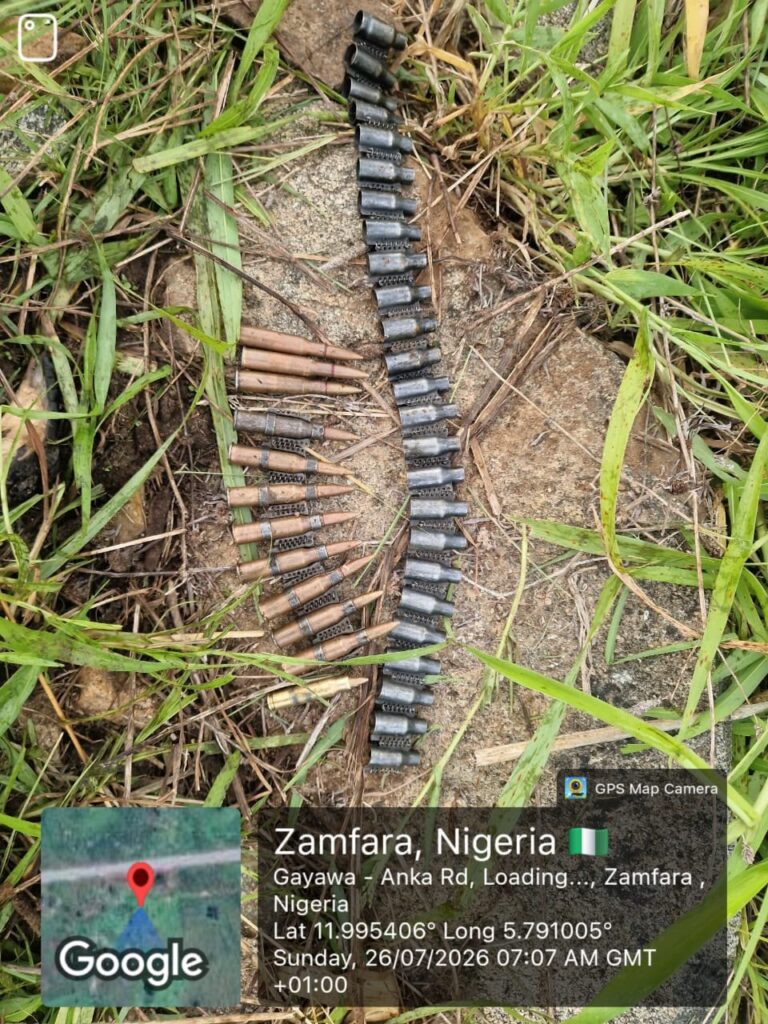
Military authorities added that operations across the North-East theatre remain generally calm but unpredictable, with troops maintaining aggressive clearance operations and sustained dominance of key operational areas.
Six Terrorists’ Family Members Surrender to Troops in Gwoza

Zulum Announces Closure of Konduga IDP Camp as Borno Accelerates Resettlement Drive

Troops Arrest Two Suspected Terrorist Informants, Cattle Rustlers in Yobe Market

Six Terrorists’ Family Members Surrender to Troops in Gwoza

Roger Federer’s Shock as DNA Results Reveal Myla and Charlene Are Not His Biological Children

THE PLIGHT OF FARIDA

FAILED COUP IN BURKINA FASO: HOW TRAORÉ NARROWLY ESCAPED ASSASSINATION PLOT AMID FOREIGN INTERFERENCE CLAIMS
-
 News2 years ago
Roger Federer’s Shock as DNA Results Reveal Myla and Charlene Are Not His Biological Children
-
Opinions4 years ago
THE PLIGHT OF FARIDA
-
 News1 year ago
FAILED COUP IN BURKINA FASO: HOW TRAORÉ NARROWLY ESCAPED ASSASSINATION PLOT AMID FOREIGN INTERFERENCE CLAIMS
-

 News2 years ago
EYN: Rev. Billi, Distortion of History, and The Living Tamarind Tree
-
 Opinions5 years ago
POLICE CHARGE ROOMS, A MINTING PRESS
-

 ACADEMICS2 years ago
A History of Biu” (2015) and The Lingering Bura-Pabir Question (1)
-

 Columns2 years ago
Army University Biu: There is certain interest, but certainly not from Borno.
-

 Politics1 year ago
2027: Why Hon. Midala Balami Must Go, as Youths in Hawul and Asikira/Uba Federal Constituency Reject ₦500,000 as Sallah Gift
