
News
Cuba Wants Bilateral Relations Strengthened With Nigeria

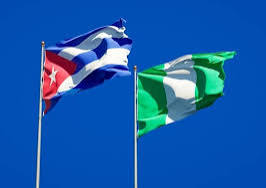
Cuba Wants Bilateral Relations Strengthened With Nigeria
By: Michael Mike
The government of Cuba has expressed interest to strengthen bilateral relations with Nigeria.
Cuban Ambassador to Nigeria, Miriam Morales Palmero expressed the interest of her country at the weekend in Abuja during the celebration of the 50th Anniversary of Bilateral Relations between Cuba and Nigeria and the Day of Cuban Culture.
Palmero who also revealed that no fewer than 400 Nigerian students are currently in different Cuban universities studying mainly medical sciences, said Cuba is not only seeking to maintain but also enhance and develop the ties created 50 years ago.
The envoy also revealed that both countries have signed series of Memorandum of Understanding across some key sectors.
She said: “During these 50 years, we have worked in our bilateral relations not only to maintain but also enhance and develop the ties created. At the economic and commercial level, there has been an increase in the level of exchanges during the last two years, expanding the possibilities and opportunities for business and investments. The signing of agreements, Memoranda, and letters of intent in sectors such as health, education, Science and Technology, Agriculture, Sports, Culture and Energy, and the exchange of pharmaceutical and biotechnology products deserve special mention.
“The exchange between the private sectors is expanding and new opportunities and possibilities of cooperation are being opened.
“I would like to reiterate to the government and people of Nigeria, Cuba’s interest in continuing to strengthen our bilateral economic and commercial relations.
“I would like to reiterate to the government and people of Nigeria, Cuba’s interest in continuing to strengthen our bilateral economic and commercial relations.”
On exchanges, the envoy said “Special mention should be made of the training of more than 400 Nigerian students in different Cuban universities, mainly in medical sciences, which reinforces the fact that our ties are based on mutual solidarity.
She added that: “We have made progress in the exchange of experiences in working with political parties, youth organizations and the civil society.”
She also said “at the the international arena, both countries have maintained a fluid relationship of mutual cooperation, based on respect between nations.”
The envoy appreciated Nigeria’s “vote in favor of the elimination of the economic, commercial and financial blockade unjustly imposed by the United States against our country.”
She equally commended former President Olusegun Obasanjo for his recent letter to President Biden requesting that Cuba be removed from the spurious list of countries that sponsor terrorism.
She also applauded Nobel Laureate,
Prof. Wole Soyinka “for his permanent support and also for being among the many friends who signed the letter from writer Ignacio Ramonet, also addressed to the American President with the same objective, to denounce the inclusion of Cuba on that list which seeks to economically suffocate 11 million Cubans and create through these pressure mechanisms the false criterion of a situation supposedly created by the management of our revolutionary government.
She said: “We thank the solidarity movement with Cuba in Nigeria, the trade union organizations NLC and TUC for their permanent support and accompaniment in all the campaigns and struggles in defense of the rights of Cuba.
“We thank Nigerians who have always supported us so that the legacy of our ancestors is not lost.”
On her part, Director of Regions, Ambassador Janet Olisa, representing the Minister of Foreign Affairs, Ambassador Yusuf Tuggar, said the relationship between both countries is based on shared values.
Olisa also commended the Cuban government for its support, stating that: “The spirit of cooperation and friendship definitely is what defines our national bilateral relations over the years. We reflect on our shared values, the journey we have made so far, the huge progress that has been we have gained throughout the years, and we must thank the Cuban Government and people for the warm welcome for our students over the years.
“We have such a very strong alumni that have studied especially in the field of medicine over the years and language, like my husband will say he speaks Spanish today because of the Cuban government, free education for diplomats who serve in Havana.
“This is part of the warm reception we as Nigerians have always received in Cuba, and because of that, our relationship, the resilience and the determination that we have in order to pursue this around the world justice, ensuring that human rights is a fundamental right for everyone to be able to benefit from democratic practices and for what is good for each Country, economic growth is not left out.
“We are hoping that in the next 50 years, our business community will thrive. We’ll have more interaction in that aspect.”
Cuba Wants Bilateral Relations Strengthened With Nigeria


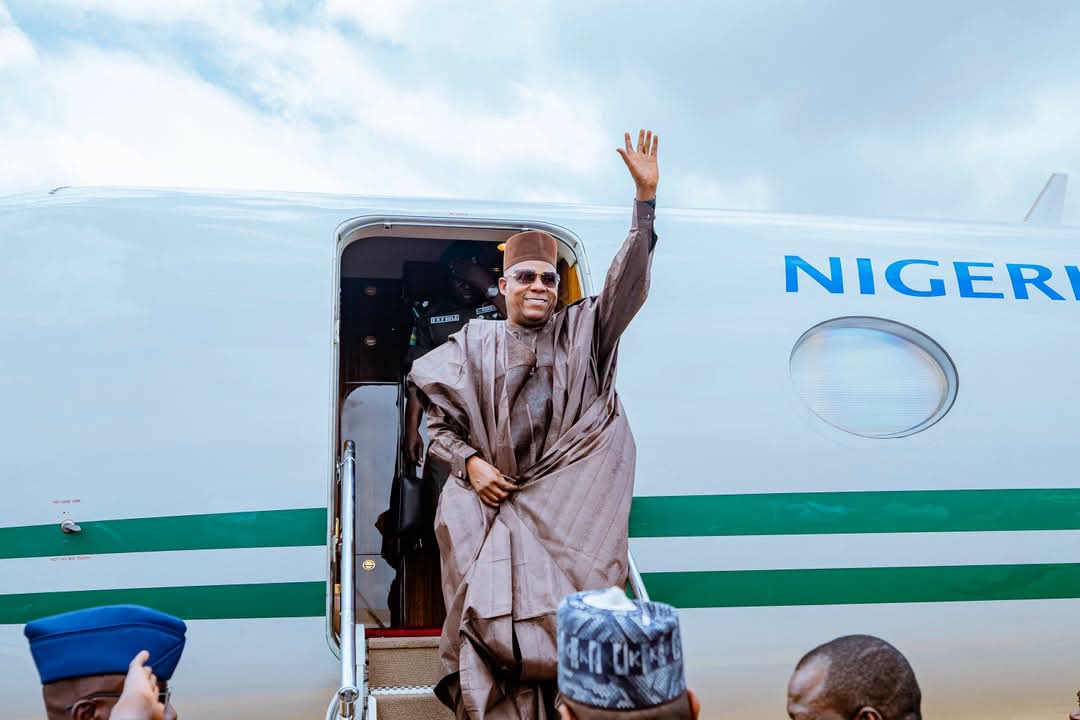
VP Shettima Commissions 4,000 Job-capacity Garment Factory, Revenue Service House In Kwara
Hails AbdulRazaq’s legacy of continuity at governor’s turbaning as Sardauna Of Ilorin
By: Our Reporter
The Vice President, Senator Kashim Shettima, Wednesday, in Ilorin, the Kwara State capital, commissioned the state Garment Factory, a signature project of the administration of Governor AbdulRahman AbdulRazaq designed to employ at least 4,000 people at full capacity, and the 11-storey Kwara Revenue Service (KWRS) House.
The commissioning of the projects was part of activities marking the turbaning of Governor AbdulRahman AbdulRazaq as the Sardauna of Ilorin (the Defence Minister of Ilorin Emirate), by the Emir of Ilorin, HRH Alhaji (Dr.) Ibrahim Kolapo Sulu-Gambari, making the governor the first person to hold the title.

Speaking during the turbaning ceremony at the Emir’s Palace in Ilorin, Senator Shettima applauded the legacy of continuity sustained by Kwara State Governor AbdulRazaq following his turbaning as the first Sardauna of Ilorin.
He recalled that the governor’s late father, Alhaji AbdulGaniyu Folorunsho AbdulRazaq (SAN), carried an Ilorin name into history as the first lawyer of Northern Nigeria and the first Mutawalle of Ilorin—a title he said remains in the family in celebration of their bond with the emirate.

The Vice President observed that a deserving service honoured is a declaration about the conduct the people wish their children to inherit, noting that the man at the centre of the turbaning ceremony is no stranger to the Ilorin Emirate.
“His father, Alhaji AbdulGaniyu Folorunsho AbdulRazaq, SAN, OFR, carried an Ilorin name into history as Northern Nigeria’s first lawyer. Every path begins with someone willing to walk without familiar footprints. Through law and diplomacy, his story became part of Nigeria’s own.
“The branch may reach towards another horizon, yet it carries within itself the memory of the root. His father was the first Mutawalle of Ilorin, a title that remains in the family in celebration of their bond with the Emirate. Today, another chapter enters the family’s relationship with this palace,” he said.
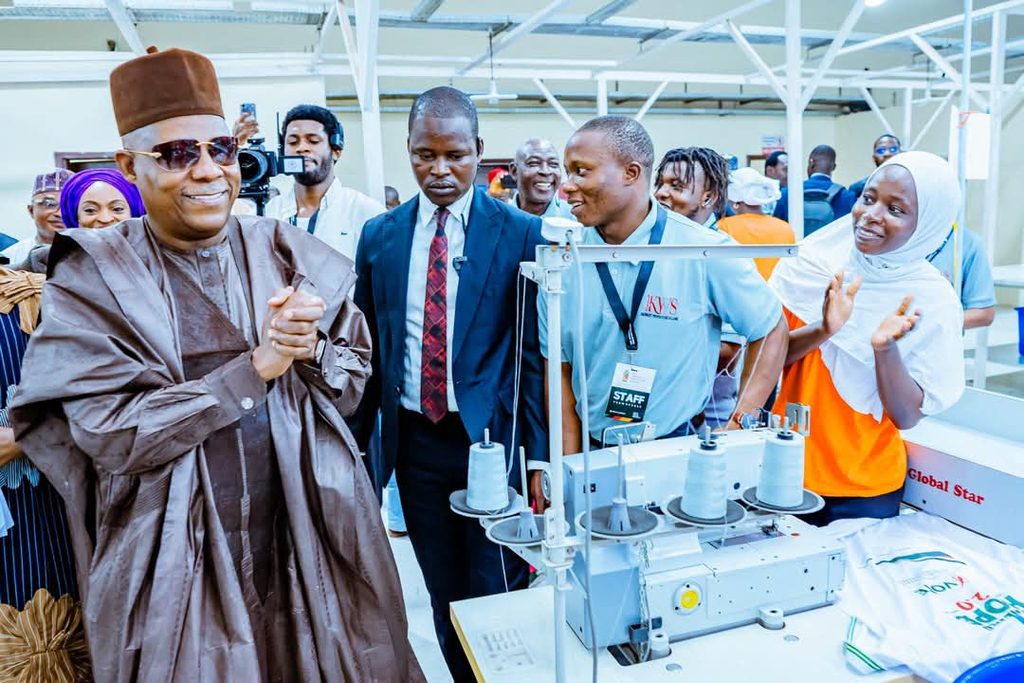
Noting that the continuity of a legacy—such as the one made by Governor AbdulRazaq—summons reflection on what a name can carry across generations, the Vice President said although a surname may be received by a child at birth, the responsibilities attached to that surname must be undertaken afresh.
“As Governor AbdulRazaq receives his turban, we remember those who preceded him, and we offer prayers for the generations who will encounter this occasion through the stories their elders preserve,” he maintained.
VP Shettima revealed the strong bond of friendship he shares with the governor, noting that they consistently discuss matters and share responsibilities beyond ceremonial occasions.
He continued: “There is something sobering about celebrating a friend while both of you remain answerable to the demands of public office. Titles will eventually pass into the record of our lives. The human bonds formed along the way should endure beyond the appointments through which other people first came to know us.
“At the National Economic Council, our responsibilities meet in discussions concerning the federation and its states. We consider how economic proposals connect with implementation, financing and the circumstances of communities. That work requires listening across different experiences and respecting the obligations each government carries.
“A federation is sustained through the patient conversation between those who share responsibility for its people. No boundary on an administrative map can divide the dignity Nigerians are entitled to expect.”
The VP said Governor AbdulRazaq participates in engagements with the federal government and development partners as Chairman of the Nigeria Governors Forum, adding that behind this institutional language lies the core responsibility of meeting the needs of farmers, households, and businesses
He lauded the governor’s governance record in Kwara, pointing out that it extends from renewed classrooms to medical coverage and roads connecting communities.
“These are chapters in the story of a state as its people encounter it: the lesson a child can attend, the treatment a household can seek, and the market a farmer can reach. Such investments must be sustained so that those who inherit them can build upon them. A legacy takes its fullest measure in the generations it continues to serve,” he added.
Dignitaries who graced the occasion include the governors of Imo, Kebbi, Plateau, Ekiti, Ogun, Niger, Bayelsa, and Kaduna.
Others are First Lady of Nigeria, Senator Oluremi Tinubu, represented by wife of the Vice President, Hajiya Nana Shettima; Minister of Trade, Industry and Investment, Jumoke Oduwole; Attorney General of the Federation and Minister of Justice, Prince Lateef Fagbemi (SAN); the Emir of Zazzau, HRH Nuhu Bamali, the Seun of Ogbomosho, Oba Ghandi Afọlábí Ọlaoye, Orumogege III, among others.
VP Shettima Commissions 4,000 Job-capacity Garment Factory, Revenue Service House In Kwara
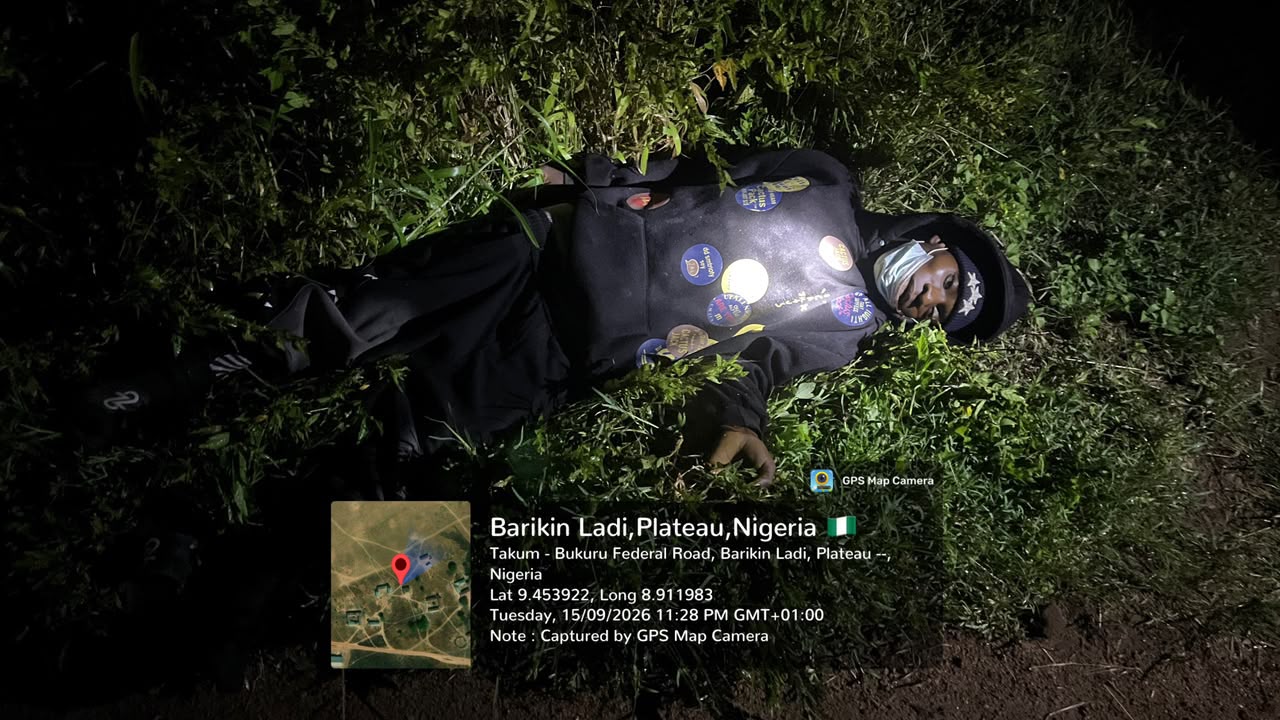
Two killed, one injured as suspected Fulani Bandits attack NTV community in Plateau
By: Zagazola Makama
Two residents were killed while another sustained gunshot wounds when suspected Fulani militias attacked the NTV axis of Barkin Ladi Local Government Area of Plateau State.
The attack occurred at about 2300 hours on Sept. 15, 2026, when troops of Sector 4, Sub-Sector 41, Operation ENDURING PEACE (OPEP), Gashish, responded to reports of sporadic shootings in the community.
According to security sources, Keystone personnel deployed in NTV engaged the suspected attackers after they launched an assault on the community, forcing the assailants to withdraw into the surrounding bush.
The troops, alongside the Keystone personnel, subsequently searched the area and discovered the bodies of two locals identified as Perit Danladi and Homefry Caleb.
Another resident, identified as Rinfaranga Williams, was found with gunshot wounds and was evacuated to a General Hospital for medical treatment.
Preliminary investigation indicated that the attack was allegedly carried out as a reprisal following the recent killing of cattle in Mangu Local Government Area.
Security forces have continued to dominate the general area and launched offensive operations and a manhunt for the fleeing attackers.
The development underscores the fragile security situation in parts of Plateau State, where attacks and reprisals between communities continue to fuel tension and insecurity.
Two killed, one injured as suspected Fulani Bandits attack NTV community in Plateau
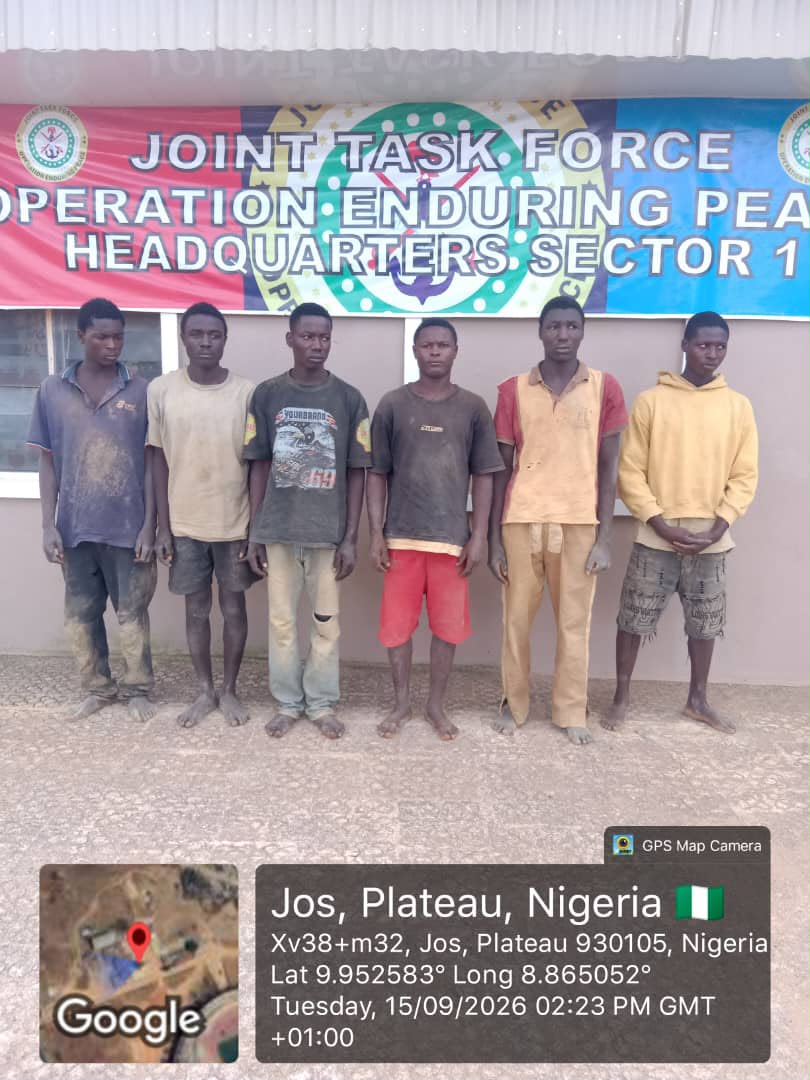
Troops arrest six suspected illegal miners in Plateau
By: Zagazola Makama
Troops of Sector 1, Operation ENDURING PEACE (OPEP), have arrested six suspected illegal miners during an operation at a mining site in Agindi Village, Bassa Local Government Area of Plateau State.
The operation was conducted at about 1450 hours on Sept. 15, 2026, as part of efforts to check illegal mining activities in the area.

According to security sources, the troops raided the mining site and arrested six suspects identified as Gabriel Sunday, 17; Shedrack Bulus, 17; Vincent Amos, 17; Victor Ishaya, 19; Micheal Adikaba, 15; and Nikus Adikaba, 19.
Items recovered during the operation included two diggers, shovels, cutlasses, one fetcher and five mobile phones.
The suspects were taken into custody and profiled for further action as security authorities continue efforts to curb illegal mining and associated criminal activities in the area.
Troops arrest six suspected illegal miners in Plateau

VP Shettima Commissions 4,000 Job-capacity Garment Factory, Revenue Service House In Kwara

Kidnapped woman escapes abductors in Plateau, receives treatment for minor injuries

Operation Enduring Peace troops arrest two suspected Mhwaghavul militia for cattle rustle in Mangu

Roger Federer’s Shock as DNA Results Reveal Myla and Charlene Are Not His Biological Children

THE PLIGHT OF FARIDA

FAILED COUP IN BURKINA FASO: HOW TRAORÉ NARROWLY ESCAPED ASSASSINATION PLOT AMID FOREIGN INTERFERENCE CLAIMS
-
 News3 years ago
Roger Federer’s Shock as DNA Results Reveal Myla and Charlene Are Not His Biological Children
-
Opinions5 years ago
THE PLIGHT OF FARIDA
-
 News1 year ago
FAILED COUP IN BURKINA FASO: HOW TRAORÉ NARROWLY ESCAPED ASSASSINATION PLOT AMID FOREIGN INTERFERENCE CLAIMS
-

 News2 years ago
EYN: Rev. Billi, Distortion of History, and The Living Tamarind Tree
-
 Opinions5 years ago
POLICE CHARGE ROOMS, A MINTING PRESS
-

 ACADEMICS3 years ago
A History of Biu” (2015) and The Lingering Bura-Pabir Question (1)
-

 Columns3 years ago
Army University Biu: There is certain interest, but certainly not from Borno.
-

 Politics1 year ago
2027: Why Hon. Midala Balami Must Go, as Youths in Hawul and Asikira/Uba Federal Constituency Reject ₦500,000 as Sallah Gift
