
News
Dangote and Otedola: Industrial Giants Against Corruption

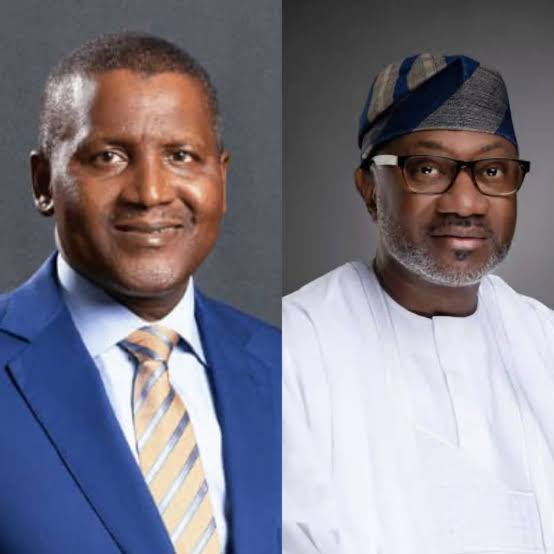
Dangote and Otedola: Industrial Giants Against Corruption
By Magnus Onyibe
Nigeria’s fight against corruption has received an unexpected boost from two of its most powerful industrialists—Aliko Dangote and Femi Otedola.
Otedola set a notable precedent when he exposed bribery involving former lawmaker Farouk Ahmed Lawal a member of the House of Representatives as he stuffed dollars under his cap while he was secretly being recorded by Otedola receiving the illicit funds.
More recently, Dangote has drawn attention to alleged corruption within Nigeria’s oil regulatory space by revealing that the Chief Executive Officer of the Nigerian Midstream and Downstream Petroleum Regulatory Authority (NMDPRA) reportedly paid about $5 million in school fees for his children in Switzerland—an expense Dangote himself said would be difficult to afford, even as Africa’s richest man.
These revelations underscore a shared commitment by Dangote and Otedola to confronting corruption and profligacy, not only in the private sector but also within public institutions.
Beyond whistleblowing, both men have consistently criticised elite excesses. Otedola has condemned bank executives who fly private jets at shareholders’ expense, while Dangote has urged Nigeria’s wealthy to invest in productive industries rather than squander resources on luxury cars. Their stance is reinforced by extensive philanthropy, including the Dangote Foundation’s ₦100 billion education initiative, the Tony Elumelu Foundation’s $10 million annual support for African entrepreneurs, and Samad Rabiu’s financial support to his workers up to the tune of N30 billion. Mike Adenuga’s contributions to sports and the arts through his telecoms firm, Globacom are equally quite significant and noteworthy.
All over the world there are challenges of corruption in the public sector. Ranging from the United States of America, USA to the United Kingdom, UK, China, India as well and Saudi Arabia.
But corruption is not as entrenched in those climes as it is in Africa.
That is because in those advanced Western, Asian, and Middle Eastern countries, they have put in place effective checks and balances to prevent corruption and sanctions whenever it is exposed. That is not the case in Africa and indeed Nigeria where corruption has become cultural and President Bola Tinubu whom the opposition is accusing of not fighting corruption enough perhaps because he did not publicly announce that he has zero tolerance for corruption as his predecessor Muhammadu Buhari did and in reality that govt turned out to be one of the most corrupt in the annals of Nigeria.
The reality is that President Tinubu is quietly proving that his government is intolerant of corruption and is currently prosecuting both public officials from his predecessors’ administration and those found to be challenged corruption wise in his own cabinet.
Meanwhile, some media commentators have been alleging that the Economic and Financial Crimes Commission, EFCC is being biased by not arresting and detaining the NMPDRA, Chief Executive Officer immediately after the allegations were made.
While I have absolute confidence that Dangote would have solid evidence before alleging, the rule would be that the matter has to be investigated and Dangote has to tender his evidence before an arrest can be made. And that would be in the event the accused does not respond to an invitation to clear himself of the allegation. So, all those accusing the EFCC of being slack are jumping the gun as the investigative work needs to be carried out before arrest, otherwise the agency may be accused of jungle justice by the same people prodding or even stampeding into arresting the accused immediately.
The ex-Attorney General and Minister of Justice Abubakar Malami and Dr. Chris Ngige, a former Labor Minister who served in the immediate past regime are being cited as currently being under arrest for corruption, while the man accused by Dangote has not been arrested. Critics have to take note that the duo of Malami and Ngige have been out of office since 2023 which is over two and a half years ago and they were not brought to trial until a couple of weeks ago.
To be fair the EFCC and the Independent Corrupt Practices Commission, ICPC are doing their best in seeking to turn the tide of corruption in Nigeria but they are often handicapped by the bureaucracy.
However, should the private sector anti-corruption champions such as Dangote and Otedola be joined by Chief Mike Adenuga of Glo, Alh. Samad Rabiu of Bua, Tony Elumelu of Heirs Holdings, etc who deal with government officials regularly in the course of seeking licenses, access to proprietary information, assets, and other government services to fight corruption in the public sector, our country would likely record more success in its anti-graft agenda.
There are multiple cases of corruption in govt such as that of the ex-accountant general of the federation Musa Ahmed who was indicted for stealing N109 billion and the Pension Task Force czar, Abdulraman Abdrasheed who was also indicted for the embezzlement of the funds that he was supposed to have recovered on behalf of the government. But not one of them has been convicted how much more serving a long jail term as a House of Representatives member who Otedola captured red-handed receiving the bribe dollar. So, since his case was more or less a slam dunk one, there was no wiggle room.
We are all well aware of the consequences of corruption on society which can be calamitous. A bad road arising from acts of corruption between a public official who awarded the contract but was compromised by the contractor to lower quality and standards can result in the death of the innocent and unsuspecting road users. So, fighting corruption as Dangote and Otedola are doing is a good thing, they deserve accolades as the battle against graft should be emulated as it is everybody’s business.
In fact, Dangote’s clash with the NMDPRA also reflects the realities of corporate rivalry. In order to justify the continuous importation of finished petroleum products, the regulatory agency had previously questioned the capacity and quality of output from the Dangote Refinery. Those are claims that were later countered by independent assessments showing the refinery’s products meeting international standards and being exported to markets such as the United States and Saudi Arabia.
In political terms, Dangote’s disclosures resemble opposition research. But as a businessman rather than a politician, his actions can be seen as a forceful response to institutional hostility.
Ultimately, the broader lesson from the spat between Dangote and the NMDPRA boss in the context of corruption extends beyond Nigeria. The Western countries that host illicit funds from Africa often claim to support anti-corruption efforts, yet turn a blind eye government’s scandals erupt. Despite strict “Know Your Customer” rules, foreign banks, schools, and real estate markets continue to absorb questionable wealth without alerting source countries.
If foreign governments were truly committed to fighting corruption, they would proactively expose suspicious assets linked to public officials. Until then, their posture will remain one of moral posturing rather than genuine partnership.
Strikingly, Nigeria’s experience suggests that when influential industrialists join the anti-corruption battle, progress becomes more achievable. The challenge is whether global actors are willing to match that resolve.
We have certainly not heard the last of the Dangote and NMDPRA Chief Executive Officer’s face-off and my wish is that more industrialists would join in exposing corruption in the public sector and society in general and in the process free up funds hitherto being stolen by public officials.
Should the funds currently being squandered be used to provide the highly needed infrastructure that would create jobs, boost productivity, enable progress, and prosperity of the nation and society as a whole, Nigerians will be better off.
Magnus Onyibe, an entrepreneur, public policy analyst, author, democracy advocate, development strategist, and alumnus of the Fletcher School of Law and Diplomacy, Tufts University, Massachusetts, USA, is a Commonwealth Institute scholar and a former commissioner in the Delta State government. He sent this piece from Lagos.
Dangote and Otedola: Industrial Giants Against Corruption


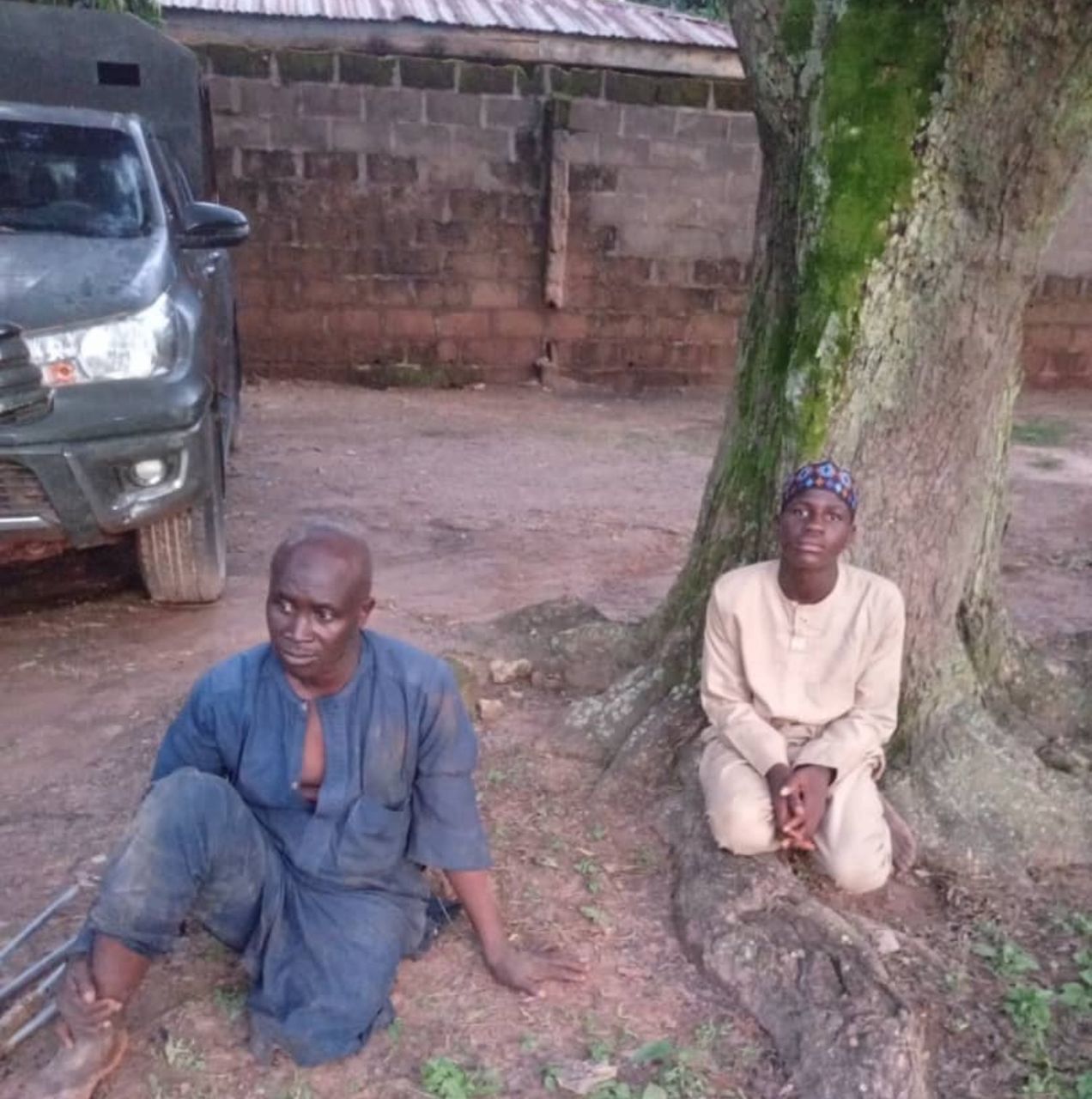
Troops rescue two abducted victims, recover terrorists’ motorcycles in Katsina
By Zagazola Makama
Troops of Sector 2, Operation FANSAN YAMMA, have rescued two abducted victims and recovered two motorcycles belonging to terrorists during a counter-terrorism operation in Sabuwa Local Government Area of Katsina State.
The troops, deployed for counter-terrorism and anti-banditry operations in the state, encountered an armed terrorist group while conducting routine security operations in the area.
The troops engaged the terrorists with superior firepower, forcing them to flee in disarray into the surrounding terrain.
During a subsequent search and clearance operation along the terrorists’ escape route, the troops rescued two male victims who had earlier been abducted along the Dandume–Damari axis.
The troops also recovered two motorcycles reportedly used by the terrorists to conduct their criminal activities.
The rescued victims are currently receiving necessary care and assessment before being reunited with their families.
Troops have maintained a heightened state of vigilance in the general area to safeguard local communities and prevent further attacks and criminal activities along critical transit corridors.
The operation forms part of the ongoing efforts by Operation FANSAN YAMMA to disrupt terrorist and bandit networks and restore lasting peace across the North-West.
Troops rescue two abducted victims, recover terrorists’ motorcycles in Katsina
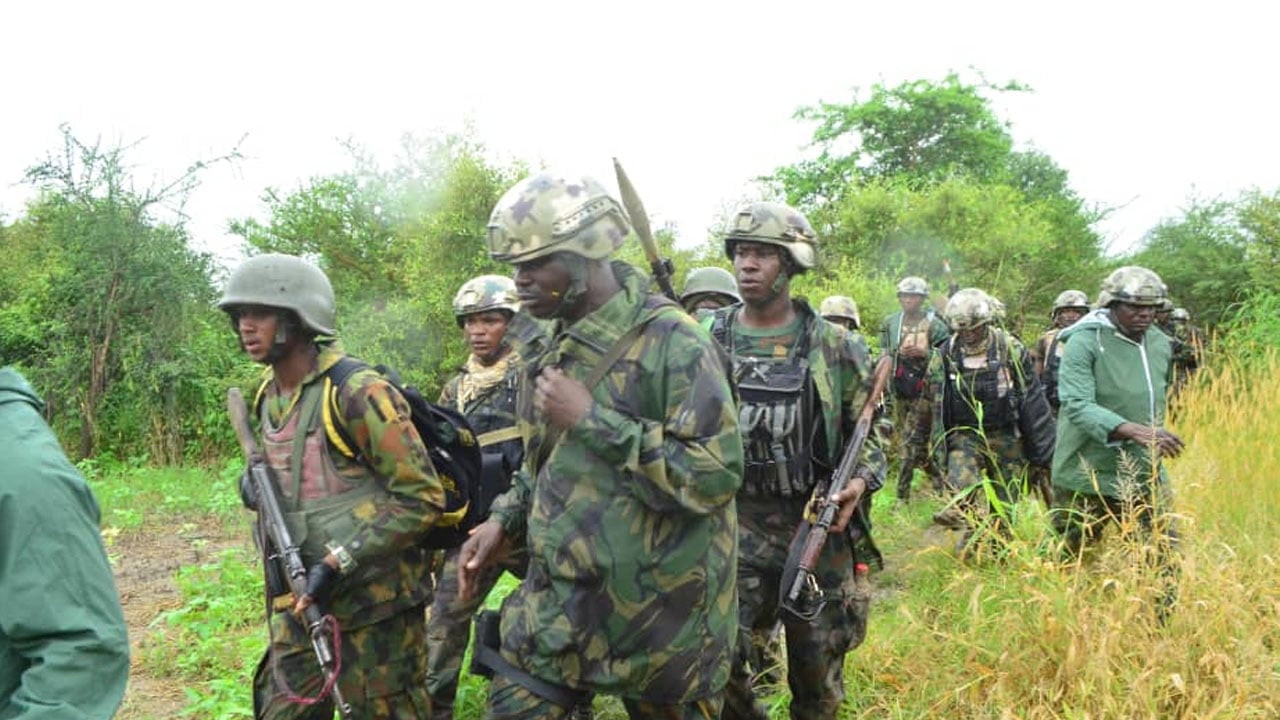
Troops rescue 23 abducted civilians, foil kidnapping attempt in Zamfara
By Zagazola Makama
Troops of Operation FANSAN YAMMA have rescued 23 abducted civilians and foiled a separate kidnapping attempt during operations in Zamfara State.
The operations were conducted as part of ongoing counter-terrorism and anti-banditry efforts to disrupt criminal groups operating across the state.
In Anka Local Government Area, troops on combat patrol around the outskirts of Wuya Town encountered a group of terrorists and successfully secured the release of 23 kidnapped civilians.
The victims comprised three adult males and 20 females. Preliminary debriefing revealed that they were abducted from Gummi Local Government Area and had been held in captivity for about three weeks.
The rescued victims are currently receiving medical attention and other necessary support before being reunited with their families.
In a separate operation in Bungudu Local Government Area, troops responded to intelligence indicating that armed bandits had infiltrated Dankurmi Town with the intention of abducting residents.
The troops swiftly mobilised to the area and engaged the attackers in a heavy firefight.
The superior firepower of the troops forced the bandits to retreat without succeeding in abducting any civilian.
According to security sources, traces of blood were subsequently discovered along the terrorists’ withdrawal route, indicating that some of the attackers may have sustained gunshot wounds during the encounter.
Troops have maintained a strong presence in the area and are continuing operations to track the fleeing terrorists.
The latest successes further demonstrate the sustained efforts of Operation FANSAN YAMMA to rescue abducted citizens, disrupt bandit networks and restore security across Zamfara State.
Troops rescue 23 abducted civilians, foil kidnapping attempt in Zamfara
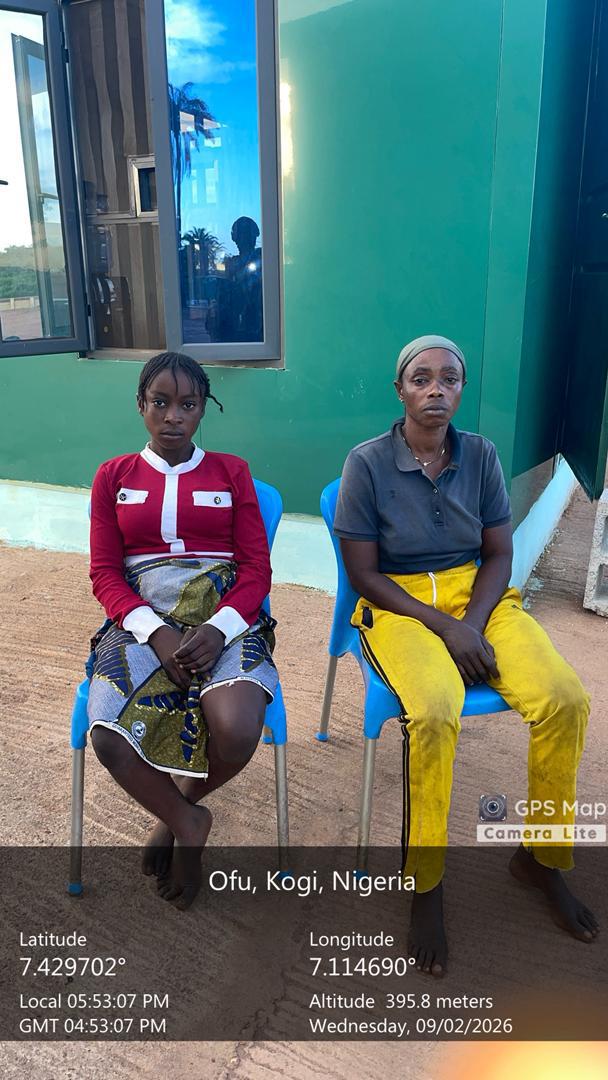
Troops rescue two female kidnap victims in Kogi
By: Zagazola Makama
Troops of the Nigerian Army have rescued two female kidnap victims after suspected bandits invaded a farmland in Ajodomodo Village, Dekina Local Government Area of Kogi State.
The incident occurred at about 10:30 a.m. on Wednesday, Sept. 2, when the suspected bandits reportedly invaded the farmland and abducted the two victims before fleeing the area.
Troops of the 21 Battalion Quick Reaction Force swiftly responded to the incident and pursued the fleeing criminals along their withdrawal route towards Agbodakodo Forest.
According to sources the pressure from the troops forced the abductors to abandon the victims in the forest.
The victims, identified as 15-year-old Miss Mohammed Rahinat and Mrs Hassanatu Mohammed, 30, were subsequently rescued unharmed.
The two women were evacuated to the 21 Battalion Medical Reception Station for medical attention and further assessment.
The military said troops have continued operations in the area to track the fleeing suspects and prevent further attacks on farming communities.
The rescue illustrates the importance of rapid military response and timely information sharing in countering kidnapping and other criminal activities in rural communities.
Troops rescue two female kidnap victims in Kogi

Troops arrest soldier, recover 69 rounds of ammunition in Plateau

Troops rescue two abducted victims, recover terrorists’ motorcycles in Katsina

Troops rescue 23 abducted civilians, foil kidnapping attempt in Zamfara

Roger Federer’s Shock as DNA Results Reveal Myla and Charlene Are Not His Biological Children

THE PLIGHT OF FARIDA

FAILED COUP IN BURKINA FASO: HOW TRAORÉ NARROWLY ESCAPED ASSASSINATION PLOT AMID FOREIGN INTERFERENCE CLAIMS
-
 News2 years ago
Roger Federer’s Shock as DNA Results Reveal Myla and Charlene Are Not His Biological Children
-
Opinions5 years ago
THE PLIGHT OF FARIDA
-
 News1 year ago
FAILED COUP IN BURKINA FASO: HOW TRAORÉ NARROWLY ESCAPED ASSASSINATION PLOT AMID FOREIGN INTERFERENCE CLAIMS
-

 News2 years ago
EYN: Rev. Billi, Distortion of History, and The Living Tamarind Tree
-
 Opinions5 years ago
POLICE CHARGE ROOMS, A MINTING PRESS
-

 ACADEMICS3 years ago
A History of Biu” (2015) and The Lingering Bura-Pabir Question (1)
-

 Columns3 years ago
Army University Biu: There is certain interest, but certainly not from Borno.
-

 Politics1 year ago
2027: Why Hon. Midala Balami Must Go, as Youths in Hawul and Asikira/Uba Federal Constituency Reject ₦500,000 as Sallah Gift
