
News
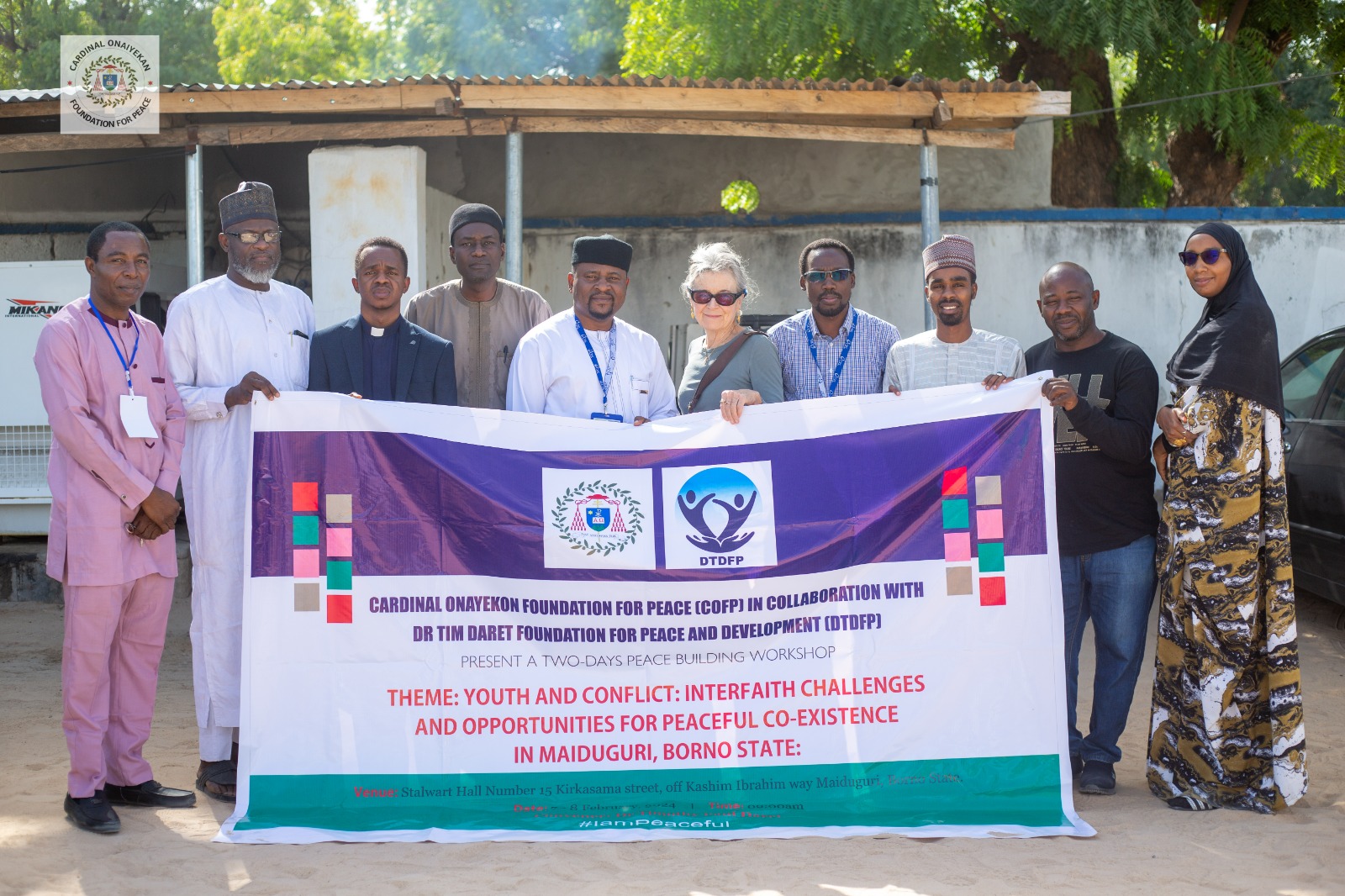
Darret foundation holds two days workshop for Christian and Muslim youths in maiduguri

Darret foundation holds two days workshop for Christian and Muslim youths in maiduguri
By: Bodunrin Kayode
The Cardinal Onaiyekan and Dr Tim Darret foundations both focused on peace and development have held a two days workshop to bridge the peace gap between Christianity and Islam in the country.
The workshop with theme “youth and conflict: interfaith challenges and opportunities for peaceful co-existence” was held in maiduguri recently mainly to open the eyes of young people in the “Muna community” on how to further strengthen the peace in the state and the region respectively.
Declaring the workshop open, Bridgid O’Connor from the Catholic Relief Service (CRS) who is also the Chief of Party for a project known as “Thrive” noted that it was a workshop to strengthen the capacity of young people of the state especially on promoting peaceful co-existence within themselves instead of living in crisis.
Speaking with newsmen during the occasion, she said that most of the young people assembled at “kirika sama” in maiduguri had training in social cohesion and trauma management which is vital to their keeping of the peace.
She revealed that the talk shop was an opportunity for adherents of both Christianity and Islam to gather together and jaw jaw about the way forward in promoting peaceful co-existence.
O’Connor stated that since peace is not something that comes within one or two days but a phenomenon that should be worked on by parties involved to get a long term solution, she expects the people to be able to rationalize the advantages and go for it at all costs.
“Nobody can eat peace. It has to be worked upon. You also have to have a form of living to be able to provide or create peace. I will not necessarily advise them on how to run their lives but I believe that as matured adults, they have their individual competencies and know what to do.
“They should trust in their own skills and competencies and take the initiatives to their own communities to reach their neighbors and see what they can do together especially by promoting and ensuring a fair share of the resources they have in their communities together. ” said O’Connor.
The convener of the peace project Dr Timothy Darret said he expected that each of the 50 participant who attended will turn out as peace ambassadors in their neighborhoods.
In his presentation, he regretted that the love of worldly things such as money, materialistic materials, was a very big challenge to both religions, as it can lead young people to do things beyond their comprehension.
“This is because a lot of youths today do go to their early graves because of their worldly desires, they engage in rituals, yahoo, kidnapping, etc.
” These desires at times makes them to even sacrifice their parents and loved ones. So, people are advised to engage in legal hustling in order to make a leaving, by doing so, we can be able to overcome this challenge.
” Illiteracy is another challenge faced by interfaith, because lack of knowledge about one’s religion, can lead to certain misinterpretations about one’s religion. So, it is advisable to always look for knowledge, although knowledge is expensive, but if you think so, try ignorance, then you will find out that it is more expensive than knowledge.” He stressed.
On lack of mentorship, he went on: ” You will observe that a lot of people give little or no attention to mentorship, as they think they know everything and don’t need any teaching or guidance from anyone. Most especially in the case of religion. There are lots of things that needs mentorship, Professional guidance and deep understanding, because without good guidance, it can lead to misinterpretation, which can trigger religious crises and misunderstanding.
“Most of the problems faced today in religious perspectives is due to bad mentorship guidance or due to misinterpretation by your own understanding. So, consulting a good mentor or leader for religious guidance is most needed in order to prevent this challenge.” he concluded.
Also speaking Dr Timta Musa said he expects that peace would be fostered and maintained in the state at all times after the two days training.
Speaking on commitment Dr Timta Musa asked what they can do for peace in their own commitment and what can they do to promote peace and understanding among people.
To him, “that’s what we should first decide and then do what’s needed to be done. At times some religious leaders do engage in hate speech, which might trigger some misunderstanding, so we should try to commit our self in any activity that can promote peace and people’s commitment.
Several papers were presented during the two days sessions which include: “Understanding interfaith dynamic in Borno” by Sheikh Talha. “Role of youth in preventing Radicalization.” by Fr Saminu Gabriel. “Interfaith Challenge the common drivers” Sheikh Talha and Peaceful co-existence by Fr Saminu Gabriel. Of course forgiveness was amply handled by Dr Tim.
Darret foundation holds two days workshop for Christian and Muslim youths in maiduguri


Military
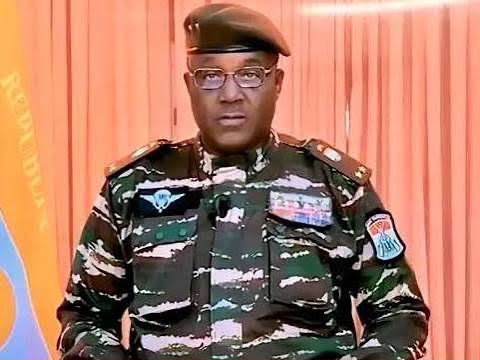
Mutiny: Presidential Guard Tightens Security Around Niger Presidency Amid Reports of Military Protest
Mutiny: Presidential Guard Tightens Security Around Niger Presidency Amid Reports of Military Protest
By Zagazola Makama
Security was significantly reinforced around Niger’s Presidential Palace in Niamey following reports of unrest involving elements of the country’s armed forces, security sources told Zagazola Makama.
According to multiple security sources, the heightened deployment of the Presidential Guard, supported by armoured vehicles around the Presidential Palace on the night of July 3 and into July 4, followed what was described as a limited protest by personnel of an armoured unit within the Niger Armed Forces (FAN).
The sources said some soldiers reportedly declined deployment to frontline positions in northern Tillabéri Region, particularly around Inatès and Chinagodrar, citing inadequate heavy equipment and insufficient operational resources to confront the growing security threats in the area.
The protest was described by one source as a “small mutiny,” although there has been no official confirmation from the Nigerien authorities.
Security sources said the development triggered concern within the country’s leadership, prompting the reinforcement of security around the Presidential Palace and temporary restrictions on movement in the surrounding area as a precautionary measure.
The Tillabéri Region remains one of Niger’s most volatile security zones, with recurrent attacks by armed extremist groups, including factions linked to the so-called Islamic State in the Greater Sahara (ISGS).
As of the time of filing this report, the Nigerien government and military authorities had not issued any official statement regarding the reported protest or the increased security presence around the Presidency.
The situation remains under close observation.
Mutiny: Presidential Guard Tightens Security Around Niger Presidency Amid Reports of Military Protest
Two suspected criminals arrested during patrol in Plateau
By: Zagazola Makama
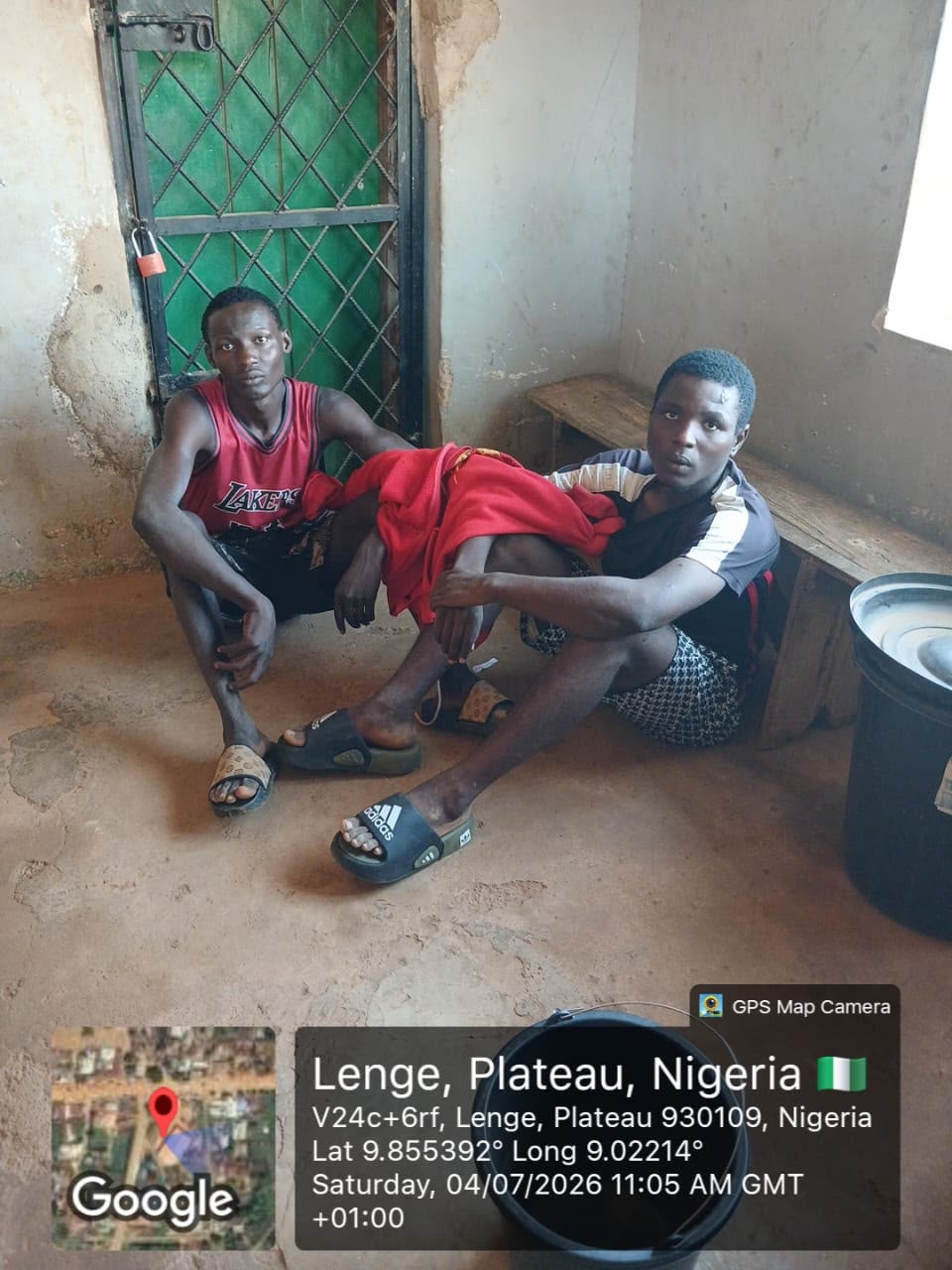
Troops of Sector 1 under Operation Enduring Peace have arrested two suspected criminals during a routine patrol in Jos East Local Government Area of Plateau.
Security sources disclosed that the suspects, identified as Azi Ezekiel, 21, and Ajiji Emmanuel, 19, were apprehended at about 10:30 a.m. on Saturday along the road leading to Forbur Village.
The sources said the suspects were intercepted by troops of Sector 1, Sub-Sector 12, while conducting a routine patrol in the area.
According to the sources, the two suspects have been handed over to the Keystone Police Station in Forbur for further investigation and possible prosecution.
The arrest forms part of ongoing security operations aimed at combating criminal activities and enhancing safety across Plateau State.
Two suspected criminals arrested during patrol in Plateau
Troops arrest suspected kidnapper in Plateau community
By: Zagazola Makama
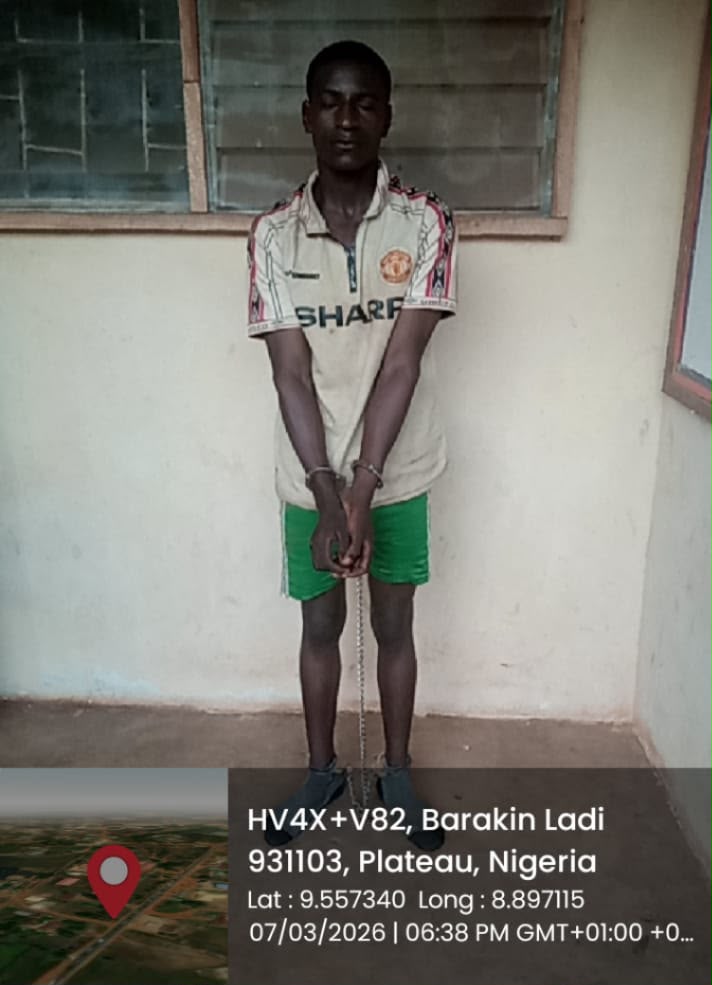
Troops of Sector 4 of Operation Enduring Peace have arrested a suspected kidnapper during a security operation in Barkin Ladi Local Government Area of Plateau.
Security sources said the suspect, identified as Mohamdu Surajo, 29, was arrested at about 6:45 p.m. on Friday at Sabon Layi Village following sustained security operations in the area.
The sources disclosed that the suspect is currently in military custody and is undergoing preliminary interrogation to aid ongoing investigations.
They added that the arrest is part of continued efforts by security forces to dismantle criminal networks and enhance security across Plateau State.
Troops arrest suspected kidnapper in Plateau community

President Tinubu Flags Off the Construction of Dikwa–Gamboru Ngala, Bama–Banki International Road Projects

Mutiny: Presidential Guard Tightens Security Around Niger Presidency Amid Reports of Military Protest

Troops Arrest Two Suspected Berom Militia Linked to NIPSS Attack as Security Sources Say Investigation Supports Earlier Leads

Roger Federer’s Shock as DNA Results Reveal Myla and Charlene Are Not His Biological Children

THE PLIGHT OF FARIDA

FAILED COUP IN BURKINA FASO: HOW TRAORÉ NARROWLY ESCAPED ASSASSINATION PLOT AMID FOREIGN INTERFERENCE CLAIMS
-
 News2 years ago
Roger Federer’s Shock as DNA Results Reveal Myla and Charlene Are Not His Biological Children
-
Opinions4 years ago
THE PLIGHT OF FARIDA
-
 News1 year ago
FAILED COUP IN BURKINA FASO: HOW TRAORÉ NARROWLY ESCAPED ASSASSINATION PLOT AMID FOREIGN INTERFERENCE CLAIMS
-

 News2 years ago
EYN: Rev. Billi, Distortion of History, and The Living Tamarind Tree
-
 Opinions5 years ago
POLICE CHARGE ROOMS, A MINTING PRESS
-

 ACADEMICS2 years ago
A History of Biu” (2015) and The Lingering Bura-Pabir Question (1)
-

 Columns2 years ago
Army University Biu: There is certain interest, but certainly not from Borno.
-

 Politics1 year ago
2027: Why Hon. Midala Balami Must Go, as Youths in Hawul and Asikira/Uba Federal Constituency Reject ₦500,000 as Sallah Gift
