News
Defence and Interior Ministries Deepen Strategic Partnership on National Security

Defence and Interior Ministries Deepen Strategic Partnership on National Security
By: Michael Mike
The Federal Government has moved to strengthen coordination between the Ministries of Defence and Interior as part of efforts to build a more unified and effective national security framework capable of responding to Nigeria’s evolving security threats.
This followed a high-level meeting in Abuja on Friday when the Minister of Defence, Gen. Christopher Musa (Rtd) paid a courtesy visit to the Minister of Interior, Hon. Olubunmi Tunji-Ojo, at his office.

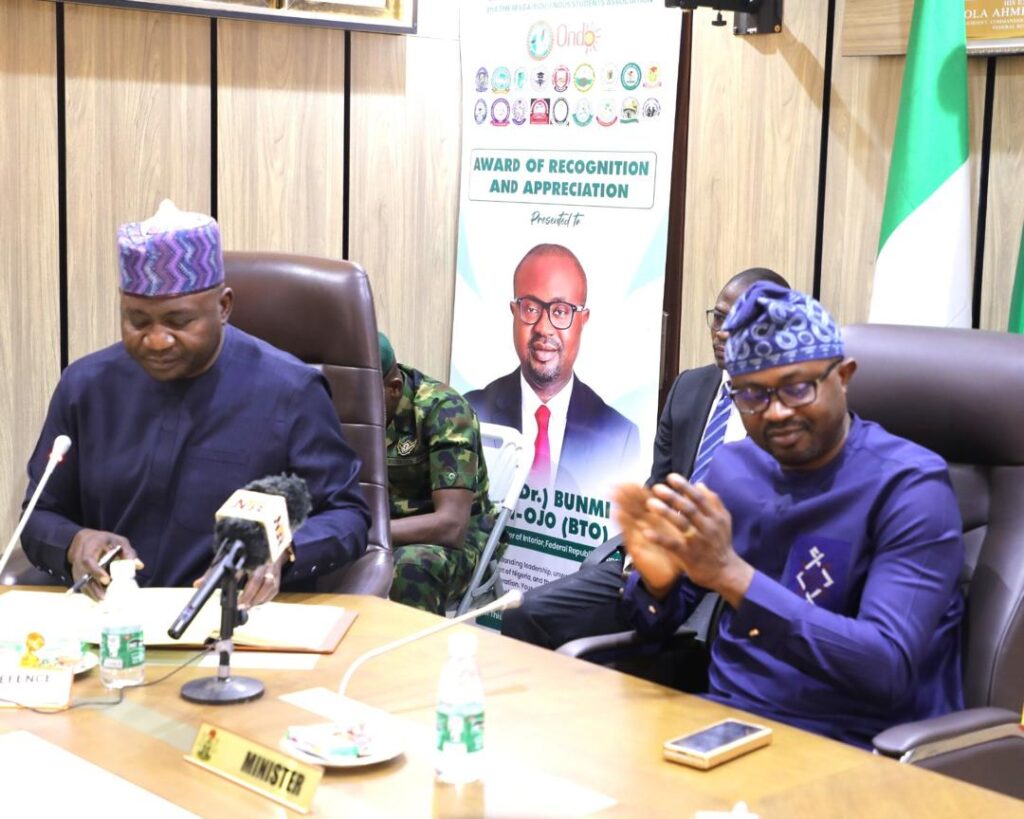
Receiving the Defence Minister, Tunji-Ojo reaffirmed the government’s commitment to a stronger, intelligence-driven security structure anchored on collaboration between internal and external security agencies.
He described national security as resting on three key pillars—intelligence, internal security, and defence—adding that weakness in any of these areas threatens the entire system.
“If one leg of this tripod is weak, the whole structure is endangered,” Tunji-Ojo said.
The Interior Minister appreciated President Bola Tinubu for his confidence in Gen. Musa and commended the Defence Minister for bringing his experience to bear on national security coordination.

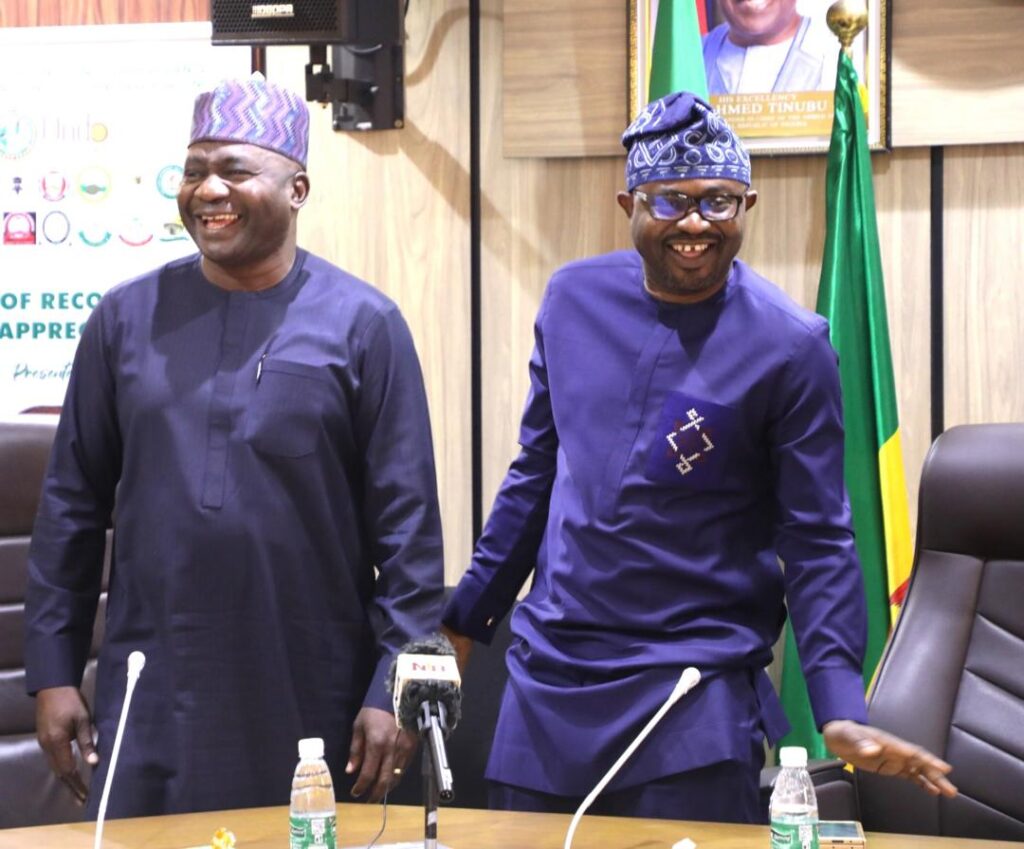
He cautioned against rivalry and territorialism among security institutions, stressing that Nigerians care more about performance and safety than ministerial boundaries.
Tunji-Ojo identified border security as a critical priority, particularly through the Nigerian Immigration Service, noting that porous borders expose the country to transnational crimes, terrorism, and illegal migration.
He said: “A safe border is a safe nation. If you cannot secure your borders, you cannot guarantee national safety.”
Speaking on the role of the Nigeria Security and Civil Defence Corps (NSCDC), Tunji-Ojo clarified that the agency was not created to duplicate police duties but to function as a specialised body tasked with protecting critical national infrastructure.

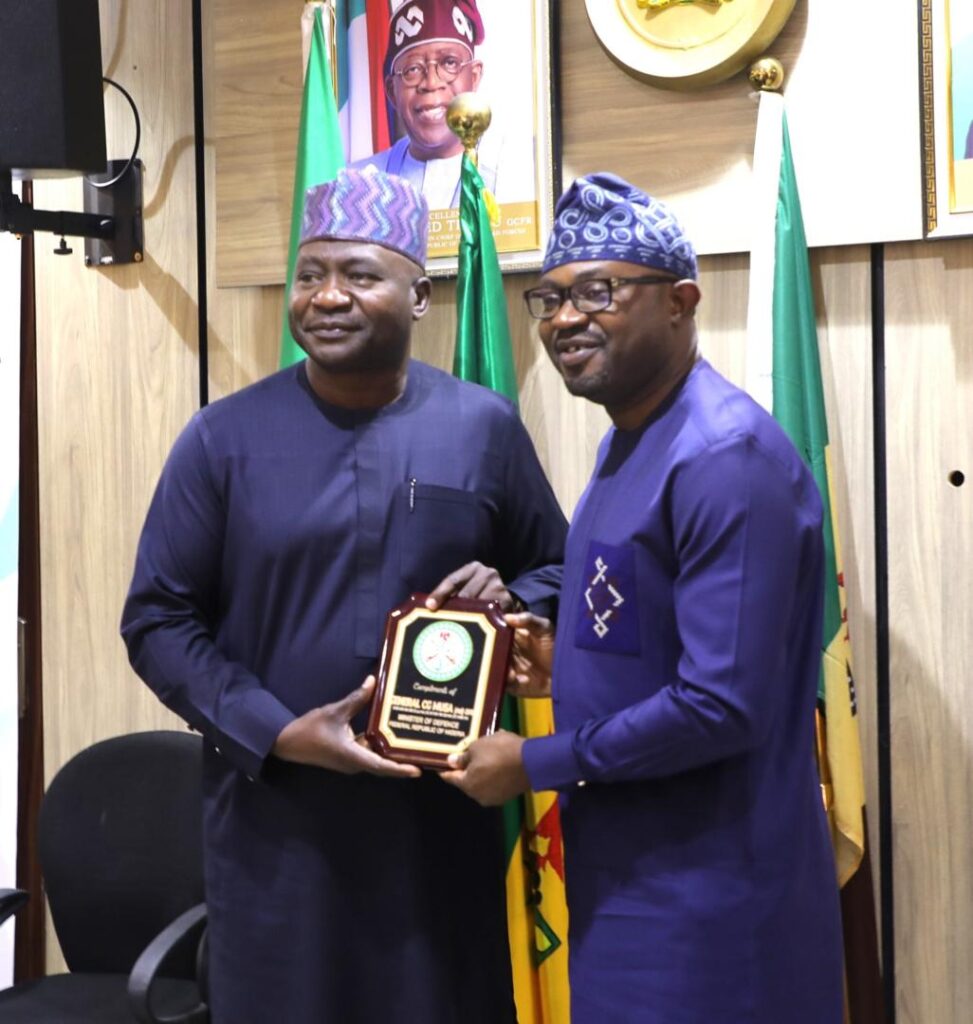
He listed schools, oil and gas facilities, telecommunications, power installations, and solid mineral sites as key assets under NSCDC protection, describing attacks on such facilities as “economic terrorism.”
He called for stronger cooperation between the NSCDC and the military, including enhanced training and intelligence sharing.
Tunji-Ojo also highlighted the need for improved data management across security agencies and proposed the establishment of an inter-ministerial technical committee to harmonise security operations between the Defence and Interior ministries.
He insisted that: @We must eliminate communication gaps, block divisions, and work as one organic security structure that delivers results for Nigerians.”
In his remarks, Gen. Musa commended the Ministry of Interior for its reforms and efforts in strengthening internal security through agencies such as the Nigerian Immigration Service, NSCDC, Nigerian Correctional Service, and the Federal Fire Service.
He described security as the foundation of national development, stressing that “without security, there is no progress.”
Musa noted that modern security threats—such as terrorism, insurgency, banditry, and cross-border crimes—have blurred the line between internal and external security, making inter-agency cooperation more critical than ever.
He however noted that: “No single agency has a monopoly on intelligence. We must work together, share information, and operate in synergy.”
The Defence Minister proposed the creation of a joint technical security committee comprising representatives from both ministries and paramilitary agencies to meet quarterly and assess security challenges.
He also advocated for secure technology platforms to enable real-time intelligence sharing between the Defence Intelligence Agency and Interior agencies, including Immigration, NSCDC, and the Nigerian Correctional Service.
Musa assured that the Ministry of Defence would continue to support capacity-building for internal security agencies through specialised training in counterterrorism, intelligence gathering, and crisis response.
He further noted that correctional facilities could serve as valuable intelligence sources in tackling crime and insecurity.
Both ministers agreed that a stronger alliance between Defence and Interior would reduce pressure on the military, improve internal security efficiency, and ultimately deliver a safer Nigeria.
“We must do things differently. Working together is the only way Nigeria can win,” Musa concluded.
Defence and Interior Ministries Deepen Strategic Partnership on National Security