
News
Delta State Police Crack Team Unit Accused Of Unlawful Arrests In Land Disputes

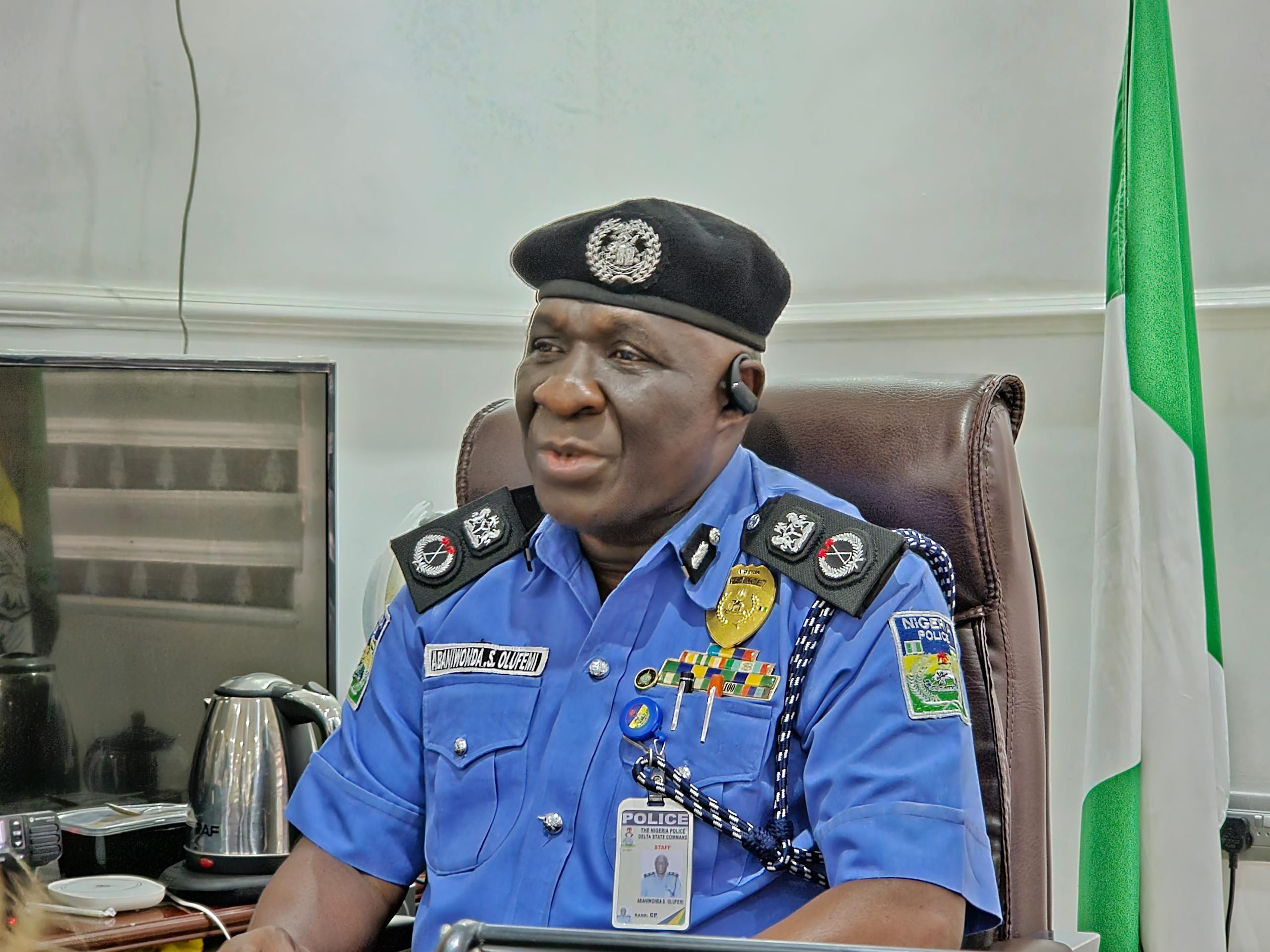
Delta State Police Crack Team Unit Accused Of Unlawful Arrests In Land Disputes
Ogwashi-Uku, Delta State – Concerns have been raised over the involvement of the Delta State Police Crack Team in land disputes, with allegations of indiscriminate arrests of innocent individuals in civil matters. A recent incident involving the wrongful detention of day labourers working on a Presbyterian Church development site in Ogwashi-Uku Kingdom has sparked public outcry and renewed criticism of police interference in land issues.
Despite the new Divisional Police Officer (DPO), Ogwashi-Uku having ruled that the dispute was a civil matter, the Local Government Chairman reportedly contacted the Delta State Commissioner of Police to intervene, leading to the transfer of the arrested innocent day labourers to Asaba. These individuals have now been detained beyond the legally permitted period, raising concerns over the violation of their fundamental human rights.
Legal experts and community leaders argue that the police have no authority to interfere in civil land disputes, which should be adjudicated by the courts. The wrongful arrests have been attributed to political interference, as local politicians allegedly pressure law enforcement to advance personal land interests. The Chairman of the Police Service Commission, DIG Hashimu Argungu (rtd.), has repeatedly warned police officers nationwide against involvement in land disputes, emphasizing that such matters fall under the jurisdiction of the judiciary.
The controversy in Ogwashi-Uku has also drawn attention to Pastor Jude Chukwunweike and his sister, Ada Anioma, who are alleged to be leveraging police power to assert land claims in the community. Allegations suggest that they are using law enforcement as a tool to obtain land titles.
Outraged by these developments, members of the Presbyterian Church and concerned citizens have vowed to petition the Officer in Charge (OC) of the Crack Squad, SP Mohammed Ibrahim Balarade, to the Police Service Commission. The petition will highlight repeated cases of police intimidation, wrongful detentions, and the apparent misuse of power in land disputes.
Further exacerbating tensions, the Delta State Police recently became involved in another land dispute in Asaba, where an eighty year old woman died from tear gas fired by trigger happy police over a dispute regarding a wheelbarrow. Instead of addressing the situation amicably and without undue force, police headquarters dispatched several tactical teams to the disputed land, where tear gas was fired at innocent community members. This excessive use of force resulted in the tragic death of an eighty-year-old woman, further fueling public anger and condemnation of police brutality.
Community members and advocacy groups are demanding an urgent review of the role of the Delta State Police and the commissioner of police in land matters and calling for accountability for officers who violate constitutional rights. The repeated interference of law enforcement in civil disputes has not only led to wrongful arrests but has now escalated into tragic consequences.
As the detained labourers remain in police custody without due process, there is mounting pressure on the Delta State Police Command to release them immediately and take corrective action against officers involved in these unlawful actions. The outcome of the petition to the Police Service Commission will be closely watched as residents continue to push for justice and an end to police interference in civil land disputes. Community residents are also concerned about the use of pllice for civil matters when the community is facing serious criminal activities. According to an spokesman if the town union, police should be focused on serious crimes rather than detaining laborers because of a land dispute.
Delta State Police Crack Team Unit Accused Of Unlawful Arrests In Land Disputes


Military
Mutiny: Presidential Guard Tightens Security Around Niger Presidency Amid Reports of Military Protest
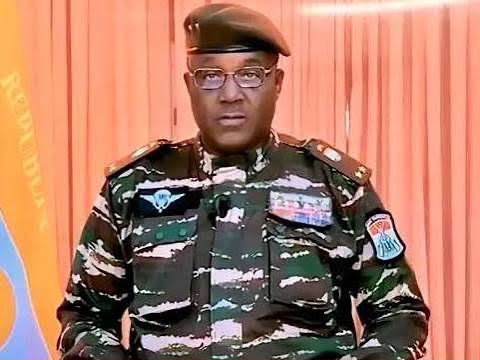
Mutiny: Presidential Guard Tightens Security Around Niger Presidency Amid Reports of Military Protest
By Zagazola Makama
Security was significantly reinforced around Niger’s Presidential Palace in Niamey following reports of unrest involving elements of the country’s armed forces, security sources told Zagazola Makama.
According to multiple security sources, the heightened deployment of the Presidential Guard, supported by armoured vehicles around the Presidential Palace on the night of July 3 and into July 4, followed what was described as a limited protest by personnel of an armoured unit within the Niger Armed Forces (FAN).
The sources said some soldiers reportedly declined deployment to frontline positions in northern Tillabéri Region, particularly around Inatès and Chinagodrar, citing inadequate heavy equipment and insufficient operational resources to confront the growing security threats in the area.
The protest was described by one source as a “small mutiny,” although there has been no official confirmation from the Nigerien authorities.
Security sources said the development triggered concern within the country’s leadership, prompting the reinforcement of security around the Presidential Palace and temporary restrictions on movement in the surrounding area as a precautionary measure.
The Tillabéri Region remains one of Niger’s most volatile security zones, with recurrent attacks by armed extremist groups, including factions linked to the so-called Islamic State in the Greater Sahara (ISGS).
As of the time of filing this report, the Nigerien government and military authorities had not issued any official statement regarding the reported protest or the increased security presence around the Presidency.
The situation remains under close observation.
Mutiny: Presidential Guard Tightens Security Around Niger Presidency Amid Reports of Military Protest
Two suspected criminals arrested during patrol in Plateau
By: Zagazola Makama
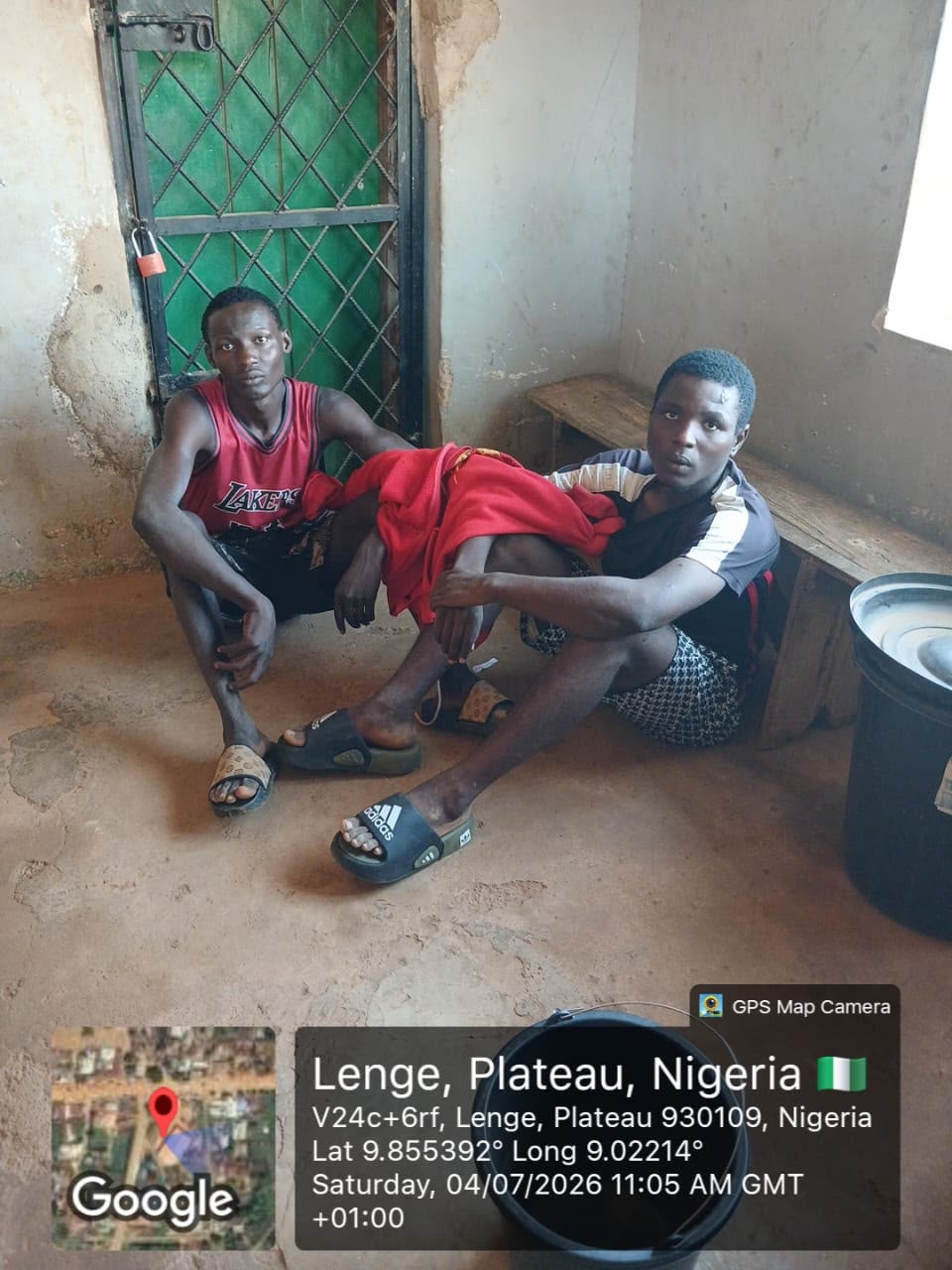
Troops of Sector 1 under Operation Enduring Peace have arrested two suspected criminals during a routine patrol in Jos East Local Government Area of Plateau.
Security sources disclosed that the suspects, identified as Azi Ezekiel, 21, and Ajiji Emmanuel, 19, were apprehended at about 10:30 a.m. on Saturday along the road leading to Forbur Village.
The sources said the suspects were intercepted by troops of Sector 1, Sub-Sector 12, while conducting a routine patrol in the area.
According to the sources, the two suspects have been handed over to the Keystone Police Station in Forbur for further investigation and possible prosecution.
The arrest forms part of ongoing security operations aimed at combating criminal activities and enhancing safety across Plateau State.
Two suspected criminals arrested during patrol in Plateau
Troops arrest suspected kidnapper in Plateau community
By: Zagazola Makama
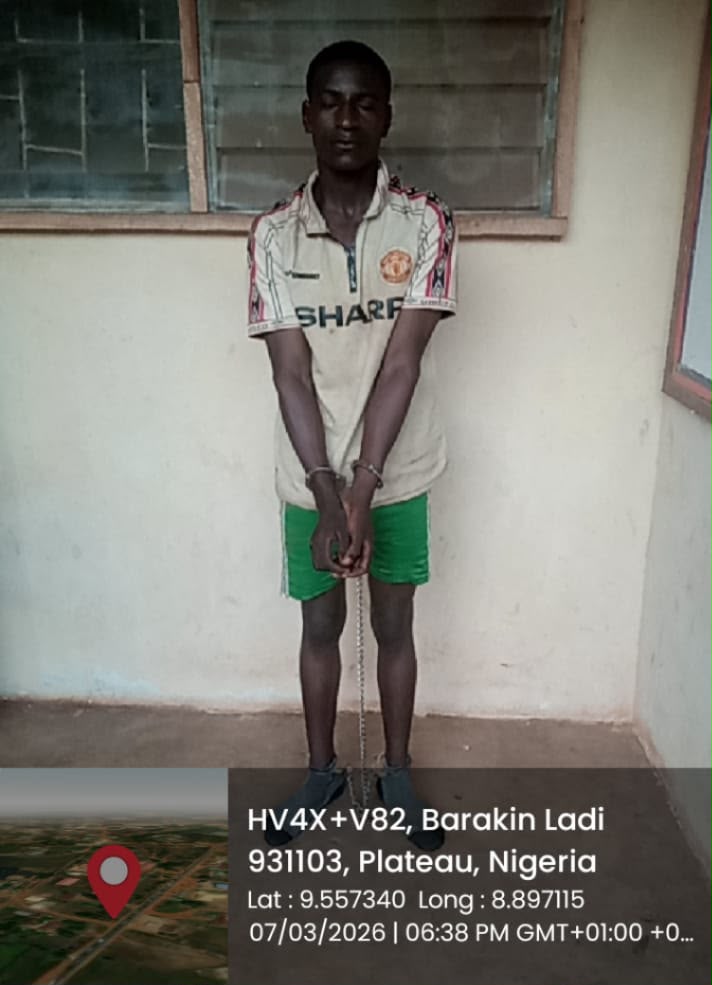
Troops of Sector 4 of Operation Enduring Peace have arrested a suspected kidnapper during a security operation in Barkin Ladi Local Government Area of Plateau.
Security sources said the suspect, identified as Mohamdu Surajo, 29, was arrested at about 6:45 p.m. on Friday at Sabon Layi Village following sustained security operations in the area.
The sources disclosed that the suspect is currently in military custody and is undergoing preliminary interrogation to aid ongoing investigations.
They added that the arrest is part of continued efforts by security forces to dismantle criminal networks and enhance security across Plateau State.
Troops arrest suspected kidnapper in Plateau community

President Tinubu Flags Off the Construction of Dikwa–Gamboru Ngala, Bama–Banki International Road Projects

Mutiny: Presidential Guard Tightens Security Around Niger Presidency Amid Reports of Military Protest

Troops Arrest Two Suspected Berom Militia Linked to NIPSS Attack as Security Sources Say Investigation Supports Earlier Leads

Roger Federer’s Shock as DNA Results Reveal Myla and Charlene Are Not His Biological Children

THE PLIGHT OF FARIDA

FAILED COUP IN BURKINA FASO: HOW TRAORÉ NARROWLY ESCAPED ASSASSINATION PLOT AMID FOREIGN INTERFERENCE CLAIMS
-
 News2 years ago
Roger Federer’s Shock as DNA Results Reveal Myla and Charlene Are Not His Biological Children
-
Opinions4 years ago
THE PLIGHT OF FARIDA
-
 News1 year ago
FAILED COUP IN BURKINA FASO: HOW TRAORÉ NARROWLY ESCAPED ASSASSINATION PLOT AMID FOREIGN INTERFERENCE CLAIMS
-

 News2 years ago
EYN: Rev. Billi, Distortion of History, and The Living Tamarind Tree
-
 Opinions5 years ago
POLICE CHARGE ROOMS, A MINTING PRESS
-

 ACADEMICS2 years ago
A History of Biu” (2015) and The Lingering Bura-Pabir Question (1)
-

 Columns2 years ago
Army University Biu: There is certain interest, but certainly not from Borno.
-

 Politics1 year ago
2027: Why Hon. Midala Balami Must Go, as Youths in Hawul and Asikira/Uba Federal Constituency Reject ₦500,000 as Sallah Gift
