
News
Democracy @26, Nigeria Still Lack Important Ingredient to Thrive- WIPF

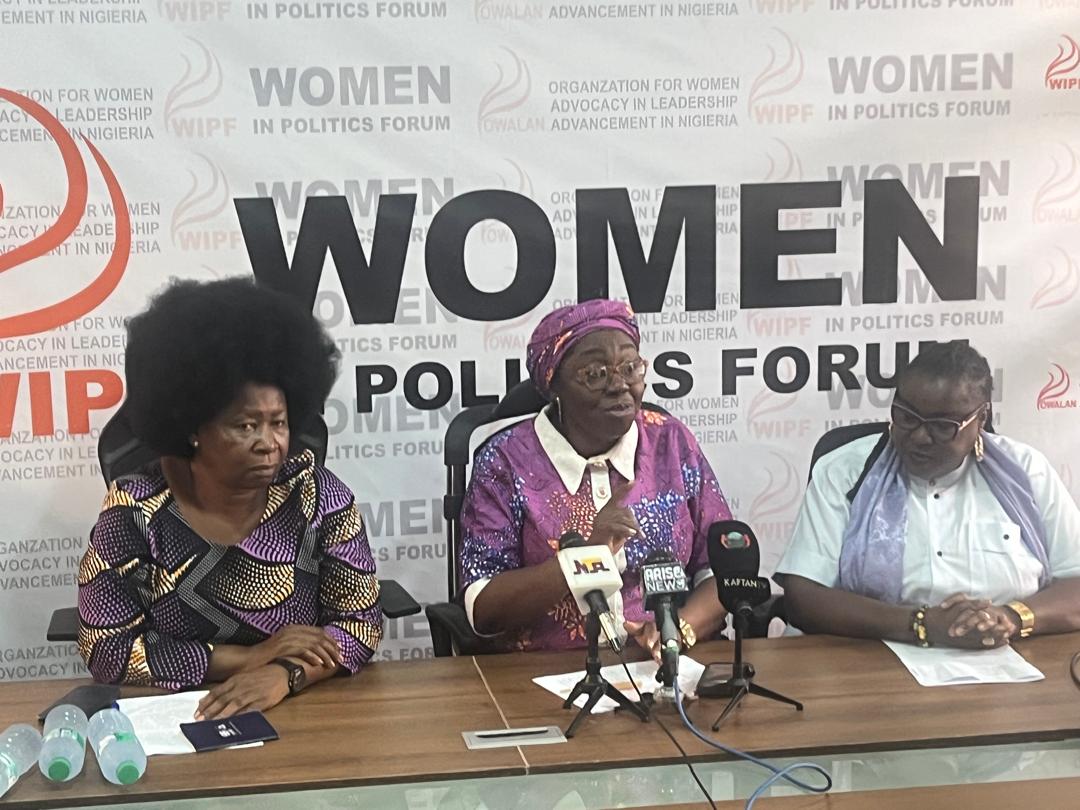
Democracy @26, Nigeria Still Lack Important Ingredient to Thrive- WIPF
By: Michael Mike
As Nigeria celebrates 26 years since returning to democracy, Women in Politics Forum (WIPF) has insisted that the important ingredient needed for the nation’s democracy to thrive was missing.
Speaking at an interaction with the media in Abuja on Tuesday, WIPF Chairperson, Barr. Ebere Ifendu said the Special Seat Bill, a groundbreaking proposal “is not merely an adjustment within our legislative framework; rather, it embodies a historic opportunity to bridge the significant gender gap in our governance system and amplify the voices of women in critical decision-making roles.”
She added that: “Today, we stand at a milestone in our shared commitment to achieving gender equality and revitalizing our democracy—a journey propelled by an unwavering belief that the full participation of women in governance is an essential pillar of a thriving democracy.”
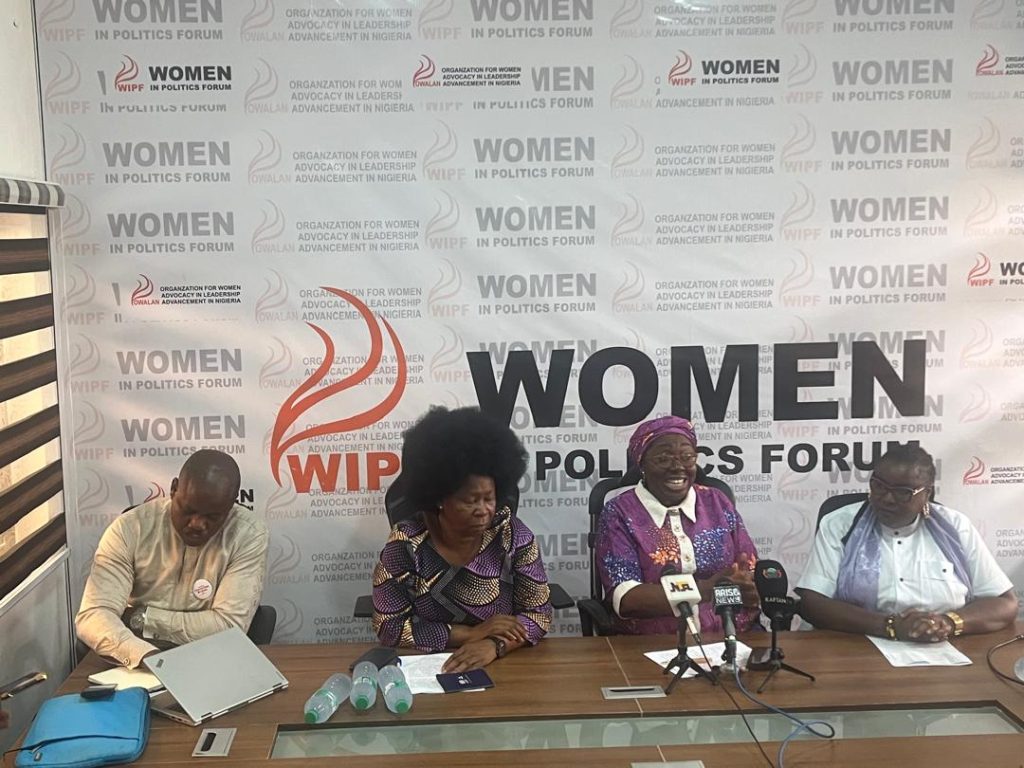
Ifendu said: “The statistics we face are not just numbers; they are a sobering reflection of the entrenched inequities that persist within our political landscape. Currently, women occupy only 19 of the total 469 seats in the National Assembly—4 in the Senate and 15 in the House of Representatives—resulting in a mere 4.05% of legislative representation in Nigeria. This stark reality places our nation significantly below the global average of 26.5%, illustrating a critical disparity that demands urgent redress.”
She lamented that: “Moreover, Nigeria ranks a disheartening 178 out of 182 countries in the Inter-Parliamentary Union’s (IPU) global standings for women in national parliaments. This ranking clearly highlights the systemic barriers that have long stifled the voices of women in governance. This alarming reality serves as a clarion call for immediate and collective action, urging us to unite in the pursuit of meaningful change.”
She explained that: “The Special Seat Bill, currently under consideration in the National Assembly, emerges as a bold and necessary response to rectify this historical inequity by reserving dedicated seats explicitly for women within our legislative chambers.
“This visionary legislation is spearheaded by Deputy Speaker of the House of Representatives, Rt. Hon. Benjamin Kalu, alongside a dedicated coalition of lawmakers who are resolute in their mission to advance gender equality in Nigeria. The Special Seat Bill seeks to create an additional 74 federal legislative seats and 108 state assembly seats specifically for women. This is not merely a numerical increase; it is a transformative step toward achieving equitable representation that aligns with the principles of democracy. Importantly, this bill includes a sunset clause that mandates a comprehensive review every 16 years, reinforcing our commitment to ensure its impact remains relevant, effective, and responsive to the dynamic needs of our ever-evolving society.”
Ifendu noted that: “The journey of the Special Seat Bill is rich with historical significance and advocacy. Initially introduced in the 9th National Assembly by the formidable Hon. Nkeiruka Onyejeocha, in collaboration with a coalition of 85 lawmakers, including the distinguished former Speaker, Rt. Hon. Femi Gbajabiamila, the bill exemplifies a collective ambition for true gender equality. Although it faced formidable obstacles and ultimately fell short in its most recent vote in March 2022, the bill stands as a testament to the relentless push for women’s rights and representation within our political framework.
“In response to concerns regarding the fiscal implications of increasing the number of legislative seats, the revised proposal has been meticulously crafted to show that enhancing representation is not a financial burden. The anticipated cost of implementing this bill would be less than 1% of our annual national budget, a figure that illustrates a responsible approach to governance that champions equity without compromising our fiscal integrity.”
She assured that: “Should this transformative bill pass, it would not merely amend our Constitution; it would signify a profound shift in our legislative landscape, ensuring that the voices of women are both recognized and integrated into the core of power structures. This initiative not only aims to elevate women but also seeks to uplift other historically marginalized groups, striving for a legislative environment that genuinely reflects the rich diversity and complexity of our nation.”
She decried that: “The current statistics paint a dismal picture: a mere 3 women serve in the Senate, 14 in the House of Representatives, and only 48 in State Houses of Assembly—a haunting reminder of the systemic barriers that impede women’s access to political influence. Nigeria’s alarmingly low ranking of 179 out of 183 countries regarding women’s representation accentuates the imperative for decisive, impactful action to ensure that women’s voices are woven into the legislative fabric where they rightfully belong.”
Democracy @26, Nigeria Still Lack Important Ingredient to Thrive- WIPF


Two ISWAP terrorists surrender to troops in Monguno, Borno
By: Zagazola Makama
Two suspected members of the Islamic State West Africa Province (ISWAP) have surrendered to troops of the Nigerian Army in Monguno Local Government Area of Borno State.
The two men, identified as Jidda Modu, 20, and Kaka Kawu, 21, surrendered at about 8:20 p.m. on Sept. 1 to troops of Headquarters Sector 3 deployed at Charlie 4, Monguno town.
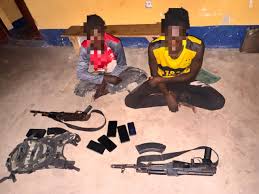
Sources told Zagazola Makama that the surrendered terrorists handed over two AK-47 rifles, eight rounds of 7.62mm special ammunition and two magazines.
Other items recovered from them included five mobile phones — Infinix, Tecno, Samsung, Redmi and a Tecno button phone — as well as one pair of earbuds, a power bank, a Zenith Bank ATM card, a memory card and a USB cable.
The troops also recovered two head warmers and one bag from the men.
Preliminary interrogation revealed that the two were among a group of about 10 ISWAP members who reportedly left a terrorist camp at Arinna Chiki with the intention of surrendering to the authorities.
The surrendered individuals and the recovered items have been taken into the custody of Headquarters Sector 3 for further action. Two ISWAP terrorists surrender to troops in Monguno, Borno
By: Zagazola Makama
Two suspected members of the Islamic State West Africa Province (ISWAP) have surrendered to troops of the Nigerian Army in Monguno Local Government Area of Borno State.
The two men, identified as Jidda Modu, 20, and Kaka Kawu, 21, surrendered at about 8:20 p.m. on Sept. 1 to troops of Headquarters Sector 3 deployed at Charlie 4, Monguno town.
Sources told Zagazola Makama that the surrendered terrorists handed over two AK-47 rifles, eight rounds of 7.62mm special ammunition and two magazines.
Other items recovered from them included five mobile phones — Infinix, Tecno, Samsung, Redmi and a Tecno button phone — as well as one pair of earbuds, a power bank, a Zenith Bank ATM card, a memory card and a USB cable.
The troops also recovered two head warmers and one bag from the men.
Preliminary interrogation revealed that the two were among a group of about 10 ISWAP members who reportedly left a terrorist camp at Arinna Chiki with the intention of surrendering to the authorities.
The surrendered individuals and the recovered items have been taken into the custody of Headquarters Sector 3 for further action.
Two ISWAP terrorists surrender to troops in Monguno, Borno
Berom Militia shoot five cows in Plateau, troops move to prevent reprisal attack
By: Zagazola Makama
Troops of Joint Task Force Operation ENDURING PEACE (OPEP) have intensified patrols around communities in Barkin Ladi Local Government Area of Plateau State following an attack on cattle by Berom Militia
The incident occurred at about 9:47 p.m. on Sept. 1 at Jong Village, Ropp District, where the troops responded to a report of an attack on cattle.

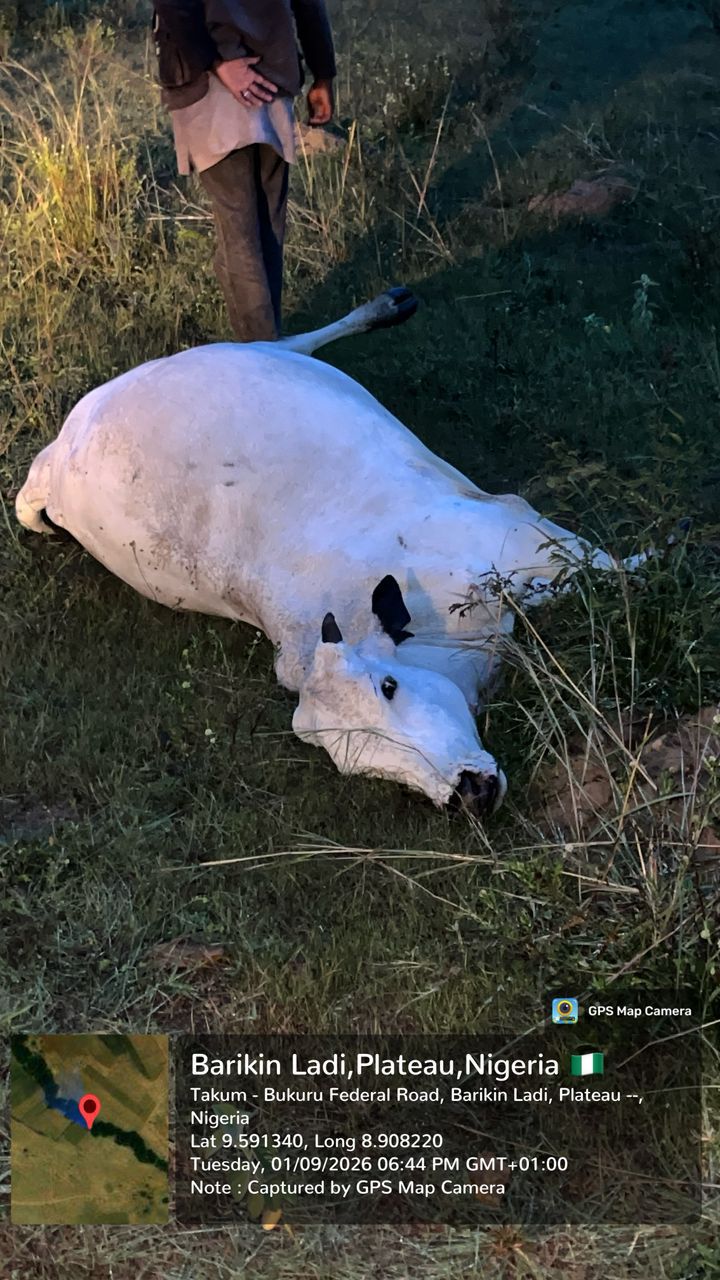
According to a 12-hourly situation report covering 6:00 p.m. on Sept. 1 to 6:00 a.m. on Sept. 2, troops arrived at the location and discovered that five cows had been shot by unidentified gunmen.
Three of the animals reportedly died at the scene.
Following the incident, troops deployed across the general areas of Jong, Nyerwai and Dorowa Babuje to prevent possible reprisals and maintain peace among communities in the area.

The deployment is aimed at containing tensions and averting any escalation that could result from the attack.
Meanwhile, routine patrols are ongoing across the Operation ENDURING PEACE Joint Operations Area to safeguard schools, communities and other critical national infrastructure.
Berom Militia shoot five cows in Plateau, troops move to prevent reprisal attack

Troops neutralise three terrorists after ambush on Miyanti-Banki route
By: Zagazola Makama
Troops of the 151 Task Force Battalion have neutralised three terrorists following an ambush on the Maiduguri-Miyanti-Banki Junction route in Borno State.
The incident occurred at about 8:30 a.m. on Sept. 1, when the troops, while conducting route-scanning operations along the major road, came under attack by terrorist elements.

According to sources, the terrorists initiated the attack with a concealed improvised explosive device (IED), followed by heavy volume of fire.
The troops fought through the ambush and subsequently launched an immediate exploitation operation against the attackers.
During the encounter, three terrorists were neutralised, while troops recovered one AK-47 rifle, one AK-47 magazine, 14 rounds of 7.62mm special ammunition and one concealed IED.
On the side of the troops, one soldier sustained injuries during the engagement and was evacuated to 21 Specialised Brigade Hospital, Maiduguri, where he is reportedly stable and receiving medical attention.

The attack also resulted in damage to the windscreen of one of the troops’ gun trucks.
The latest incident underscores the continued threat posed by terrorist elements along major routes in Borno State, particularly through the use of IEDs and ambush tactics against military patrols.
The military said the general security situation across the theatre remained calm but unpredictable, while troops’ morale and fighting efficiency remained satisfactory.
Troops continue to maintain offensive and route-clearance operations to disrupt terrorist activities and ensure the safety of civilians and motorists across the theatre.
Troops neutralise three terrorists after ambush on Miyanti-Banki route

Two ISWAP terrorists surrender to troops in Monguno, Borno

Berom Militia shoot five cows in Plateau, troops move to prevent reprisal attack

Troops neutralise three terrorists after ambush on Miyanti-Banki route

Roger Federer’s Shock as DNA Results Reveal Myla and Charlene Are Not His Biological Children

THE PLIGHT OF FARIDA

FAILED COUP IN BURKINA FASO: HOW TRAORÉ NARROWLY ESCAPED ASSASSINATION PLOT AMID FOREIGN INTERFERENCE CLAIMS
-
 News2 years ago
Roger Federer’s Shock as DNA Results Reveal Myla and Charlene Are Not His Biological Children
-
Opinions5 years ago
THE PLIGHT OF FARIDA
-
 News1 year ago
FAILED COUP IN BURKINA FASO: HOW TRAORÉ NARROWLY ESCAPED ASSASSINATION PLOT AMID FOREIGN INTERFERENCE CLAIMS
-

 News2 years ago
EYN: Rev. Billi, Distortion of History, and The Living Tamarind Tree
-
 Opinions5 years ago
POLICE CHARGE ROOMS, A MINTING PRESS
-

 ACADEMICS3 years ago
A History of Biu” (2015) and The Lingering Bura-Pabir Question (1)
-

 Columns3 years ago
Army University Biu: There is certain interest, but certainly not from Borno.
-

 Politics1 year ago
2027: Why Hon. Midala Balami Must Go, as Youths in Hawul and Asikira/Uba Federal Constituency Reject ₦500,000 as Sallah Gift
