
National News
DEMOCRACY STRONG AND ALIVE IN NIGERIA; IGNORE ALARMISTS

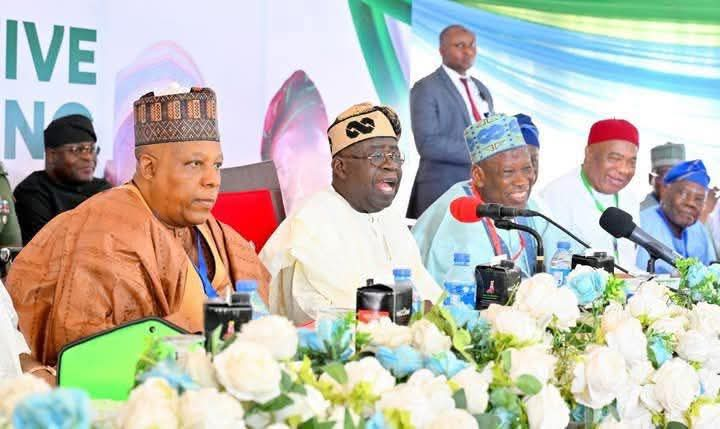
DEMOCRACY STRONG AND ALIVE IN NIGERIA; IGNORE ALARMISTS
By: Bayo Onanuga
We have read the alarming claims of disgruntled opposition figures, some partisan human rights crusaders and emergency defenders of democracy over recent defections of key members of opposition parties into the governing All Progressives Congress.
The seismic shift caused by Akwa Ibom Governor Umo Eno’s open declaration of support for President Bola Tinubu, the defection of the Delta State Governor, Sheriff Oborevwori, the former vice presidential candidate of the Peoples Democratic Party in the last election, Dr Ifeanyi Okowa, and the principal political actors in Delta and Rivers States certainly threw the opposition and their sympathisers into disarray.
While the opposition elements are understandably heartbroken over the failure of their fabled grand coalition to gain traction, we find it disturbing that they resorted to peddling false allegations of promoting a one-party State against President Bola Tinubu, who is working very hard to reverse decades of economic mismanagement in our country.
Contrary to the false claims in the propaganda materials in circulation across mainstream and social media, democracy is not under any threat in Nigeria. Accusations that the administration is moving towards authoritarianism are baseless and exaggerated.
We must add that no policy, official action, or directive from the Presidency seeks to “dismantle democracy” or “weaken opposition or create a one-party state.” Accusations of bribery, blackmail, and the weaponisation of state institutions only exist in the idle minds of politicians and their agents who have failed in their assigned role of opposition and are fishing for scapegoats.
The opposition cannot blame President Tinubu and the governing APC for their poor organisation, indiscipline, and gross incompetence in managing their affairs. It is certainly not part of President Tinubu’s job to organise or strengthen opposition parties.
We find it curious that those who celebrated the defection of the former Governor of Kaduna State, Mallam Nasir El-Rufai, to the Social Democratic Party (SDP) and the formation of a regional grand coalition with the sole aim of defeating President Tinubu in the 2027 election are the same people shedding crocodile tears over Nigeria’s so-called drift to a one-party state and authoritarianism.
While the latter-day defenders of democracy raised no anxious voice against the disgruntled politicians cobbling an anti-Tinubu, anti-APC coalition along dangerous regional lines, even before INEC blows the whistle for party politicking, they are quick to ascribe the political shifts in some states to “bribery, blackmail, and coercion” without any shred of evidence.
Without any equivocation, freedom of association, freedom of speech and freedom of choice are part of the cherished ideals of democracy. When politicians and citizens cannot freely join any association or political party of their choice or cannot openly express their views, democracy is imperilled. Those opposed to the Tinubu administration should understand that they can issue diatribes, without fear, against the government because we practice a thriving democracy.
It is hypocrisy writ large when opposition politicians and their collaborators in the ‘human rights’ movement desire that the party of the President should implode so they can gain electoral advantage and cry wolf when their wish does not materialise.
We want to state that democracy is not threatened or undermined simply because politicians exercise their rights to freedom of association. Nigerians migrating to the APC and expressing support for Tinubu are doing so out of their free will, based on the belief that the reforms being executed are in the interest of Nigerians and the unborn generation. It is a gross disservice to democracy in itself for these emergency defenders of democracy to delegitimise the political choices of some Nigerians while upholding the choices of others to form a coalition against Tinubu and APC.
Under President Tinubu, democracy is strong, and the multiparty democratic system will continue to flourish unhindered. His administration remains resolutely committed to upholding and strengthening the democratic foundations upon which our Fourth Republic has stood since 1999
Politicians changing party affiliation is not new or peculiar to Nigeria. In more advanced democracies, there are ready examples of notable politicians, statesmen and women who changed their parties.
President Tinubu and the National Working Committee of the APC, under the leadership of Dr. Abdullahi Ganduje, deserve commendation for making the ruling party viable and attractive to all Nigerians willing to participate in the democratic process.
President Tinubu is an avowed democrat and a firm believer in multiparty democracy. His political activism and democratic credentials in galvanising and strengthening opposition platforms as a force that defeated a sitting President and the then ruling party attest to his credibility as a tested defender of multiparty democracy.
We urge all Nigerians to join hands with the administration in protecting our democracy by respecting our people’s choices and giving alarmists, who draw their narratives from the pool of fiction, a wide berth.
DEMOCRACY STRONG AND ALIVE IN NIGERIA; IGNORE ALARMISTS


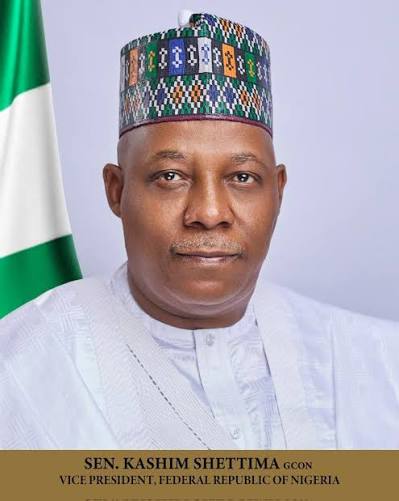
Shettima Hosts Gates Foundation Delegation as 2027 Political Calculations Begin
By: Michael Mike
Nigeria’s Vice President, Kashim Shettima, on Wednesday received a high-level delegation from the Gates Foundation at the Presidential Villa in Abuja, in a visit that observers say comes at a politically sensitive moment ahead of the 2027 presidential election.
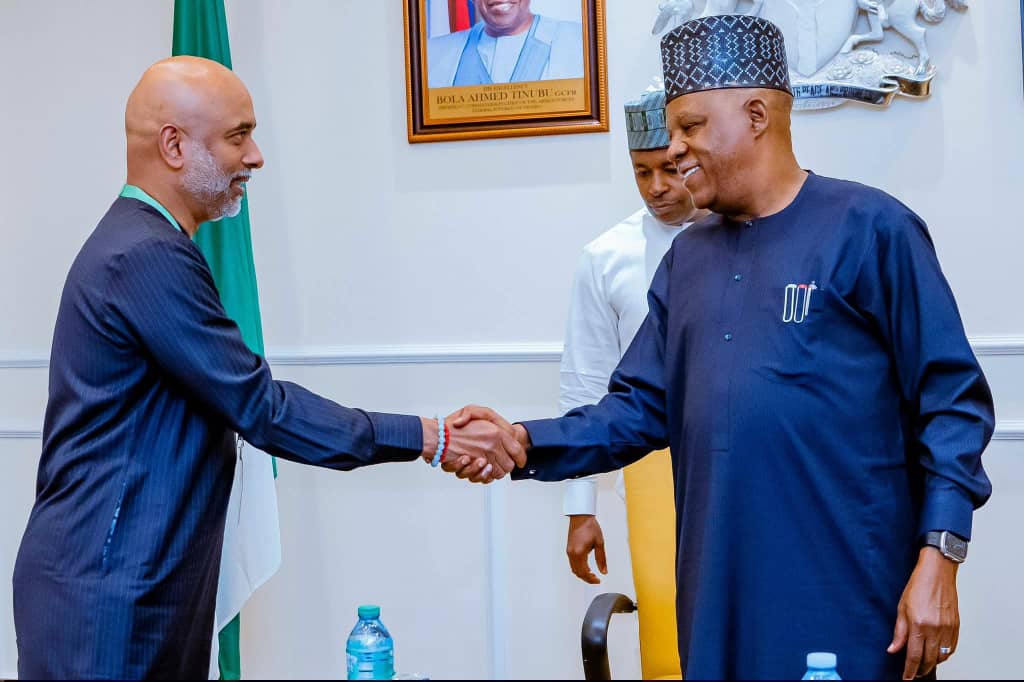
The delegation was led by the President of the foundation’s Global Growth and Opportunity division, Hari Menon, and included senior officials of the organisation’s Nigeria office. The team briefed the vice president on the foundation’s ongoing programmes and partnerships in Nigeria.
Posting on his verified Facebook page after the meeting, Shettima commended the foundation for its long-standing support to Nigeria in critical sectors such as health, agriculture and development.
“Yesterday, I received in audience a delegation of the Gates Foundation led by the President of the Foundation’s Global Growth and Opportunity (GGO) division, Mr. Hari Menon, at the Presidential Villa, Abuja,” the vice president said.
“In my interaction with the delegation, I applauded the Gates Foundation for sustaining investments and humanitarian aid in Nigeria. Indeed, the Foundation remains the nation’s strategic partner in the drive to change the Nigerian narrative.”
The visit comes amid growing political conversations about the composition of the ruling ticket ahead of the 2027 presidential election and whether President Bola Ahmed Tinubu will retain Shettima as his running mate.
Although the meeting was officially centred on development cooperation, political watchers say the timing has drawn attention within policy and political circles, especially given the influence of the foundation founded by billionaire philanthropist Bill Gates.
Sources familiar with the engagement said discussions focused largely on the foundation’s interventions in Nigeria, including programmes aimed at improving public health, expanding agricultural productivity and supporting vulnerable populations.
During his visit to Nigeria, Menon also held diplomatic engagements, including a visit to the Indian High Commission where he met with the ambassador, Abhishek Singh.
The Gates Foundation has operated in Nigeria since 2000 and has been a key partner in several national initiatives, particularly in immunisation campaigns, disease control, nutrition and agricultural development. The organisation marked 25 years of its presence in the country in 2025.
Despite its extensive development footprint, some of the foundation’s programmes have occasionally attracted debate in Nigeria, particularly around issues such as genetically modified crops, vaccination initiatives and population policies.
Analysts say that as political alignments gradually begin ahead of 2027, high-profile international engagements by key government figures may increasingly attract attention beyond their immediate development objectives.
Shettima Hosts Gates Foundation Delegation as 2027 Political Calculations Begin
2027: Bill Gates Joins Campaign, Supports Shettima
By:Michael Mike
Nigeria’s Vice President, Kashim Shettima has received a highly anticipated support to continue as President Bola Tinubu’s running mate in the 2027 presidential election from chairman of the Gates Foundation, Bill Gates.
The unusual support according to sources knowledgeable about the matter is a lifeline for the embattled vice president.
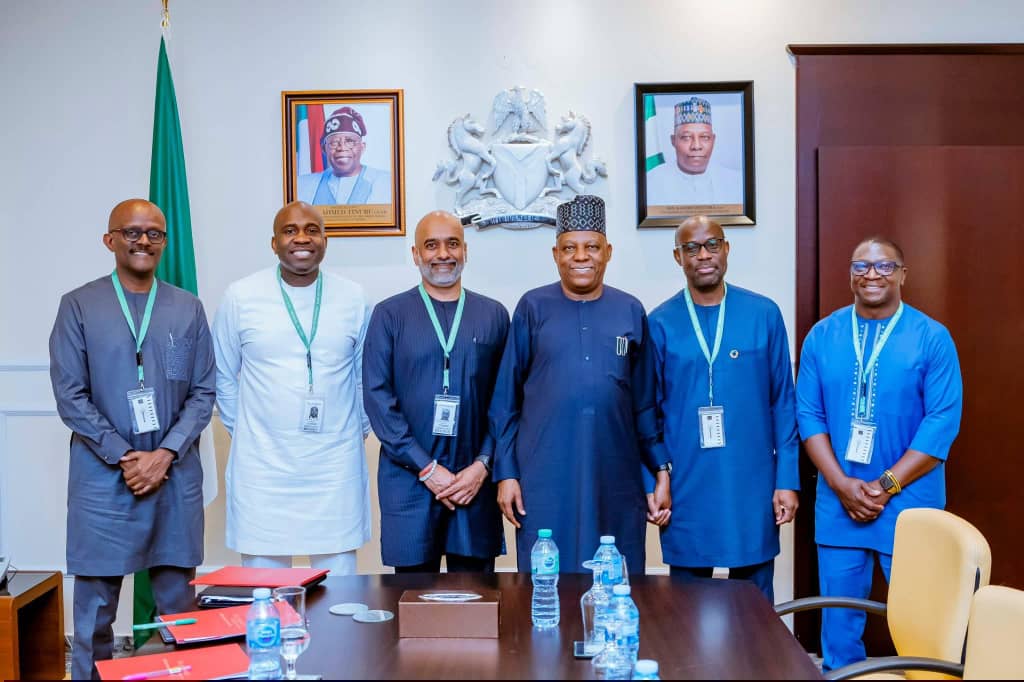
Shettima, whose fate as Tinubu’s running mate has been dangling in the balance received the boost after a delegation from Gates Foundation led by the president, Global Growth and Opportunity (GGO), Hari Menon visited Shettima at the Villa on Wednesday.
According to a post on the vice president’s verified Facebook page, the delegation which also included members of the foundation in Nigeria briefed the VP on its activities in Nigeria .
” Yesterday, I received in audience a delegation of the Gates Foundation, led by the President of the Foundation’s Global Growth and Opportunity (GGO) division, Mr. Hari Menon, at the Presidential Villa, Abuja.
” In my interaction with the delegation, I applauded the Gates Foundation for sustaining investments and humanitarian aid in Nigeria. Indeed, the Foundation remains the nation’s strategic partner in the drive to change the Nigerian narrative, ” Shettima said.
However, the meeting between the vice president and Bill Gates team had another purpose, to pass a vote of confidence on the VP in order to convince President Tinubu to retain him s running mate.
” There have been calls for the president to drop Shettima because of his political baggage and alleged links to the insurgency in the Northeast. Most of the pressure is coming from the United States that currently have soldiers on the ground in nigeria, providing support for the Nigerian military.
” What better way to shore up support than to bring the biggest philanthropist to Nigeria in order to prove that he still hs some international connections, ” the source said.
In his visit to Nigeria, Menon who is of Indian heritage also visited the Indian High Commission to Nigeria, meeting with the ambassador, Abhishek Singh.
The Gates Foundation has been active in Nigeria since 2000 and it celebrated its 25th years in the country last year. Activities of the foundation has also come under scrutiny for many years especially it’s support for population control, Genetically Modified Organisms in agriculture and questionable polio immunisation.
2027: Bill Gates Joins Campaign, Supports Shettima

State Police: Group Commends Tinubu, Urges Accelerated Action
By: Michael Mike
A good governance advocacy group, the Hope Alive Initiative (HAI), has commended President Bola Tinubu for his commitment to addressing Nigeria’s security challenges and for rallying state governors toward a framework for the establishment of state police.
In a press statement issued Wednesday in Abuja by its Director of Press and Communications, Ernest Omoarelojie, the group said lasting peace and stability in the country require a multi-layered approach that empowers communities while strengthening national coordination.
According to HAI, the establishment of state police would enhance citizens’ participation in security matters and align with Nigeria’s federal system.
The group noted that many states already operate regional security outfits and vigilante groups, stressing that legislative backing is necessary to ensure such initiatives function efficiently and complement the federal government’s security architecture.
HAI said localised policing would allow officers to better understand the terrain, culture, and unique security challenges within their communities, thereby improving rapid response and strengthening public trust in efforts to combat crime and insurgency.
The organisation also commended the Nigeria Governors Forum (NGF) for submitting a proposed state police framework to the Office of the National Security Adviser. It, however, urged governors to intensify support for the existing security architecture to address ongoing threats.
The group further welcomed recent security cooperation agreements between Nigeria and partners including the United States, United Kingdom, and France. According to HAI, the partnerships are expected to strengthen advanced training, intelligence sharing, and technological support in the fight against terrorism, banditry, and organised crime.
HAI emphasised that security remains the foundation of national development, noting that combining grassroots policing with global alliances would help create a safer environment, attract investment, and restore public confidence.
The group also praised the Nigerian military for sustaining operations against terrorists and bandits across the country and urged troops not to relent in protecting communities from criminal elements that target civilians to spread fear and panic.
It expressed confidence that the federal government would continue to provide the armed forces with the necessary equipment and welfare support needed to sustain operations and secure victory against threats to national security.
The organisation further highlighted the significance of President Tinubu’s recent state visit to the United Kingdom, where he was hosted by King Charles III. According to HAI, the visit underscores Nigeria’s growing influence in global affairs.
It added that the President’s engagement with Nigerian community leaders in the UK demonstrated the important role of the diaspora in national development and could encourage greater investment and knowledge transfer to the country.
HAI urged government institutions, civil society organisations, and citizens to support ongoing reforms aimed at strengthening security and building a more prosperous Nigeria.
State Police: Group Commends Tinubu, Urges Accelerated Action

Shettima Hosts Gates Foundation Delegation as 2027 Political Calculations Begin

2027: Bill Gates Joins Campaign, Supports Shettima

Troops repel terrorist attack in Zamfara, recover bodies of two villagers

Roger Federer’s Shock as DNA Results Reveal Myla and Charlene Are Not His Biological Children

THE PLIGHT OF FARIDA

FAILED COUP IN BURKINA FASO: HOW TRAORÉ NARROWLY ESCAPED ASSASSINATION PLOT AMID FOREIGN INTERFERENCE CLAIMS
-
 News2 years ago
Roger Federer’s Shock as DNA Results Reveal Myla and Charlene Are Not His Biological Children
-
Opinions4 years ago
THE PLIGHT OF FARIDA
-
 News11 months ago
FAILED COUP IN BURKINA FASO: HOW TRAORÉ NARROWLY ESCAPED ASSASSINATION PLOT AMID FOREIGN INTERFERENCE CLAIMS
-

 News2 years ago
EYN: Rev. Billi, Distortion of History, and The Living Tamarind Tree
-
 Opinions4 years ago
POLICE CHARGE ROOMS, A MINTING PRESS
-

 ACADEMICS2 years ago
A History of Biu” (2015) and The Lingering Bura-Pabir Question (1)
-

 Columns2 years ago
Army University Biu: There is certain interest, but certainly not from Borno.
-

 Opinions2 years ago
Tinubu,Shettima: The epidemic of economic, insecurity in Nigeria
