
News
VP Shettima: Traditional institutions Remain Irreplaceable, Will Be Preserved Under President Tinubu

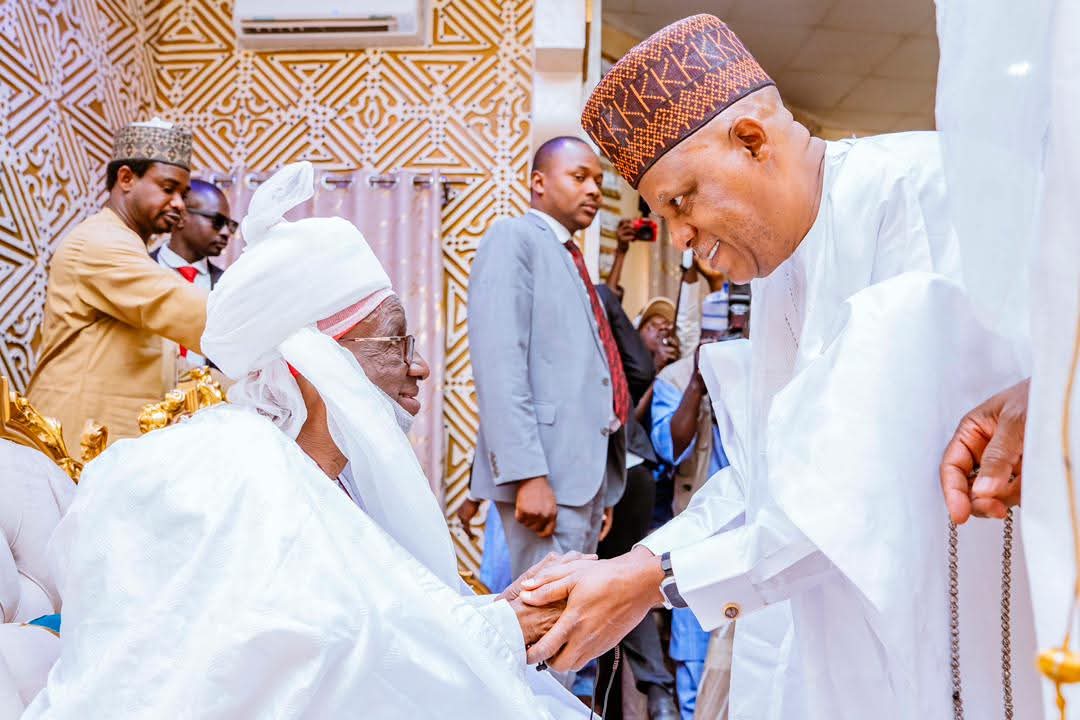
VP Shettima: Traditional institutions Remain Irreplaceable, Will Be Preserved Under President Tinubu
By: Our Reporter
Vice President Senator Kashim Shettima has reiterated the commitment of the administration of President Bola Ahmed Tinubu to the preservation and protection of traditional institutions in Nigeria.
According to him, traditional rulers are the closest to the grassroots are the leaders and fathers of the society, and their institutions outlive every administration.
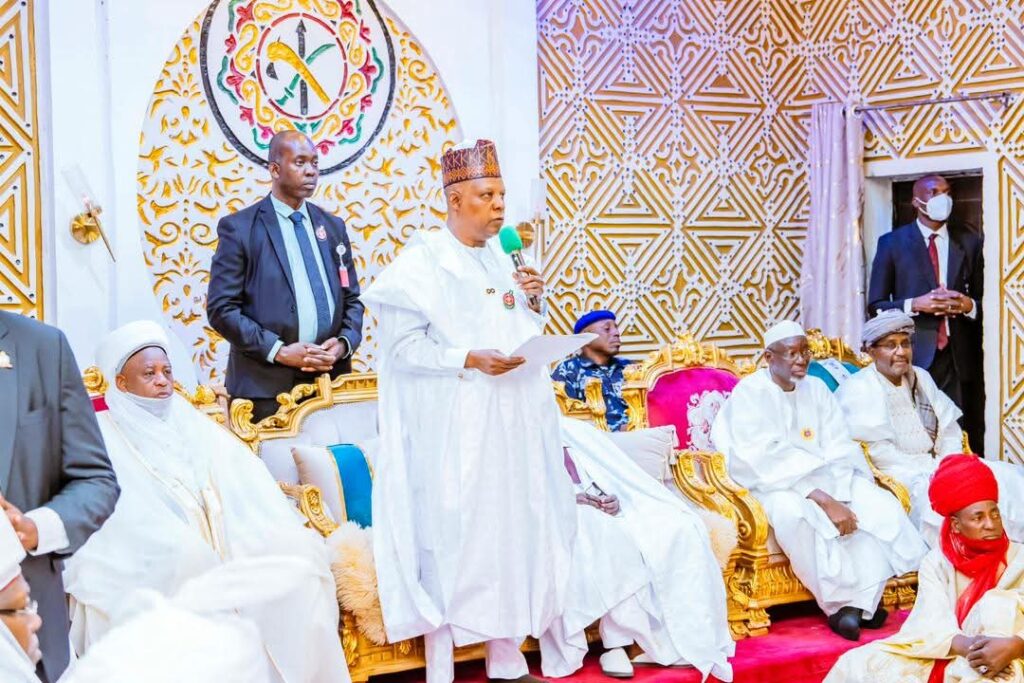
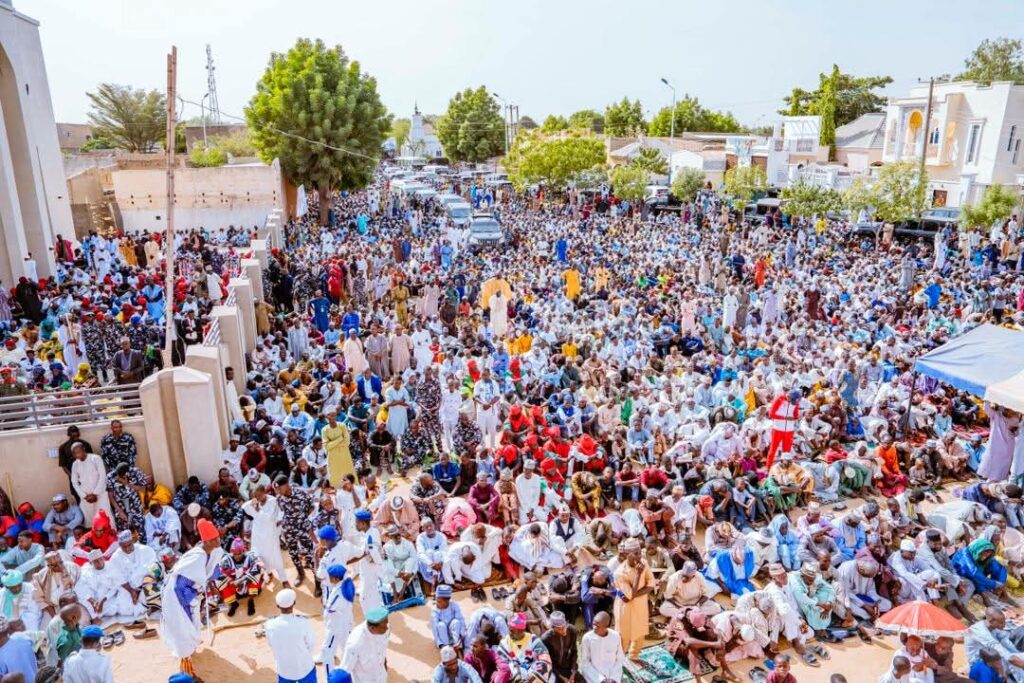
Senator Shettima gave the assurance on Friday during the the 45th Anniversary of the Emir of Gumel, HRH, Alhaji Ahmed Mohammed Sani II, and the Commissioning of Gumel Central Mosque in Gumel local government area of Jigawa State.
The Vice President stated that the tenure of every elective political office holder ends after eight years but the traditional institutions remains.
“Therefore, we must respect them, we must take care of them, and we must preserve as well as protect the institution,” he added.
The Vice President, who congratulated the Emir of Gumel for celebrating his 45th anniversary in good health, prayed Almighty God to spare the life of the traditional ruler to witness his Golden Jubilee and centenary celebrations.

“I am quite glad to be back home. Gumel is home. Founded in 1750 by Danjuma, this Emirate has a rich history. When Danjuma died in 1754, he was succeeded by his son, and our royal father who is celebrating his 45th anniversary as the Emir of Gumel is the 13th Emir of Gumel. He is a graduate of Political Science.
“He was a Commissioner in the cabinet of the late former governor of old Kano State, Alhaji Abubakar Rimi, before he was elevated to the throne of his ancestors. May Allah continue to bless him with good health and may his reign be long.”
VP Shettima also paid glowing tribute to His Eminence, the Sultan of Sokoto, Alhaji Muhammed Sa’ad Abubakar III, saying the Sultan “is truly a leader worthy of emulation by us all.
“He (Sultan) is a symbol of our unity. Last week, he was in Kaduna. Hardly a week passes without the Sultan criss-crossing the length and breath of this country building bridges. Your Eminence, we are very grateful to you. May Allah bless you with sound health and long life,” the Vice President said.
Senator Shettima also applauded the Governor of Jigawa state, Mallam Umar Namadi, for cultivating 10,000 hectares of wheat, which, according to him, is more than what the entire 18 northern states cultivated.
“Your Excellency, we thank you; we are mightily proud of you. May the Almighty Allah continue to strengthen our unity and understanding, ” VP Shettima said.
Earlier, Governor Namadi thanked the Vice President Shettima for honouring the invitation by the Jigawa State Government and Gumel Emirate to grace the 45th Anniversary of the reigning Emir of Gumel and the commissioning of Gumel Central Mosque.
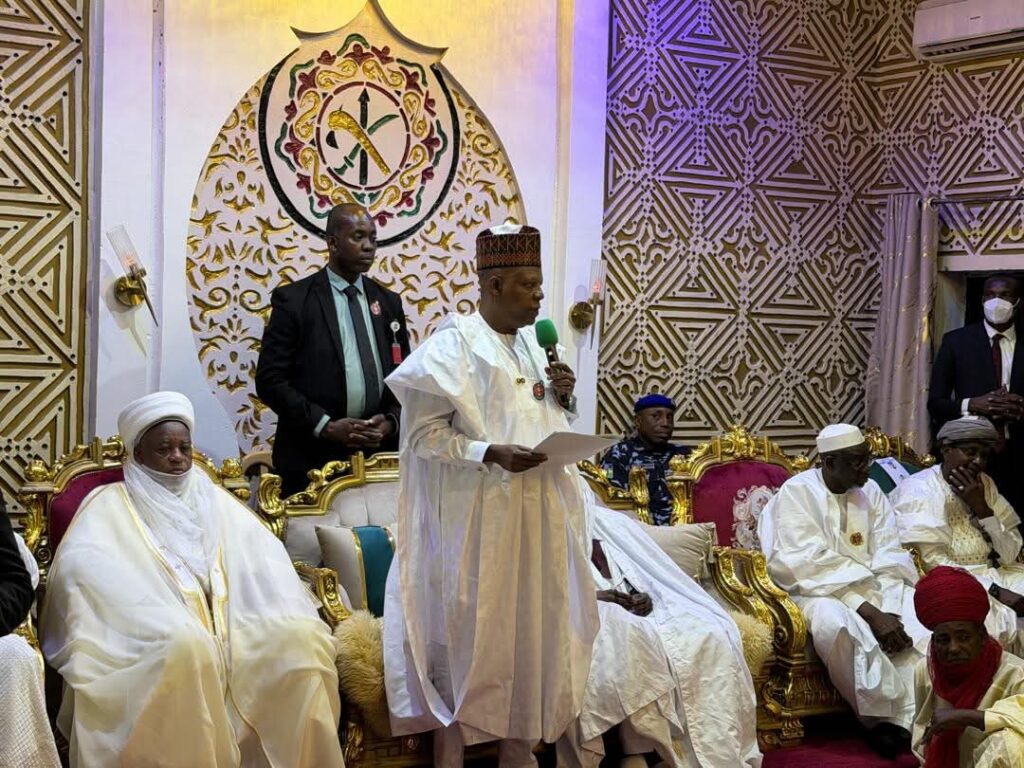
“Your Excellency, we are deeply grateful to you for honouring us with your presence at this historic ceremony. On behalf of the Government and good people of Jigawa State, especially the people of Gumel Emirate, we thank you most sincerely for your unwavering commitment to the progress and development of our dear state, ” Governor Namadi said.
Also, the Sultan of Sokoto and President General of the Nigeria Supreme Council for Islamic Affairs (NSCIA), Abubakar III, preached unity, tolerance, and mutual respect among all Nigerians irrespective of their religious and cultural diversity.
The Sultan, who congratulated the Emir of Gumel for marking his 45th anniversary celebration, commended the Vice President for his dedication and commitment to the preservation of traditional institution, peace, unity and development of the country.
Other dignitaries who graced the celebration are the Deputy Chief of Staff to the President (Office of the Vice President), Senator Ibrahim Hassan Hadeija; Minister of Agriculture and Food Security, Senator Abubakar Kyari; former member of the House of Representatives, Hon. Farouk Adamu Aliyu; Deputy Governor of Jigawa State, Alhaji Aminu Usman, and the Speaker of Jigawa State House of Assembly, Hon. Haruna Dangaji.
Others include the Emir of Machina, HRH, Alhaji Bashir Albishir Bukar Machinama; Emir of Dutse, HRH, Muhammad Hameem Nuhu Sanusi, Emir of Hadejia, HRH, Alhaji Adamu Abubakar Maje; members of the Jigawa State Executive Council, and some members of the National Assembly, among others.
VP Shettima: Traditional institutions Remain Irreplaceable, Will Be Preserved Under President Tinubu


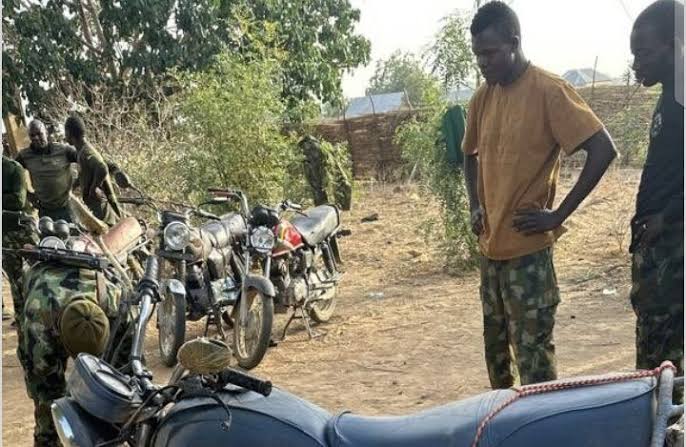
Farmer Injured in Machete Attack by Herder in Plateau
By Zagazola Makama
A farmer, Mr Charles Tuwan, has sustained machete injuries following an alleged attack by a herder during a dispute over grazing on farmland in Pankshin Local Government Area of Plateau State.
The incident occurred at about 6:53 p.m. on August 23, 2026, at Tekas Community, where troops of Sector 8, Operation ENDURING PEACE, operating under Operation HARD KNOCK, responded to a report of an assault.
Security sources said the dispute reportedly started after the farmer refused to allow the herder to graze cattle on his farmland.
On arrival at the scene, the troops found Tuwan with machete cuts sustained during the attack.
The alleged attacker, identified as Abdullahi Saleh, had reportedly fled the area with his cattle before the arrival of the troops.
The injured farmer was evacuated to Pankshin General Hospital for medical attention.
Troops are currently intensifying efforts to locate and arrest the suspect for investigation and possible prosecution.
The incident comes amid heightened tensions between farming and herding communities in parts of Plateau State, underscoring the need for early intervention in disputes over farmland and grazing to prevent isolated incidents from escalating into wider communal violence.
Farmer Injured in Machete Attack by Herder in Plateau
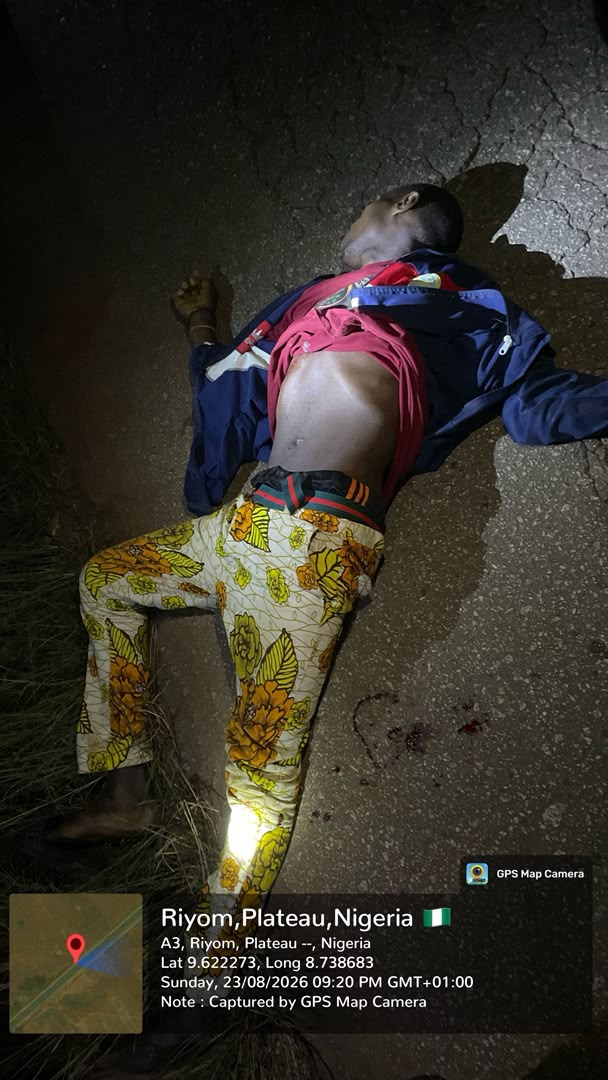
Unidentified Corpse with Gunshot Wound Found Along Road in Plateau
By Zagazola Makama
Troops of Operation ENDURING PEACE have recovered the corpse of an unidentified person bearing a gunshot wound along a roadside in Riyom Local Government Area of Plateau State.
The corpse was discovered at about 9:30 p.m. on August 23, 2026, along the Farin Lamba axis, close to the Primary Health Centre in Riyom.
Troops of Sector 6, Operation ENDURING PEACE, responded to the report and found the body with an apparent gunshot wound to the stomach.
However, security personnel observed that there were no visible traces of blood or spent ammunition casings around the scene.
The circumstances led investigators to suspect that the body may have been transported from another location and dumped at the scene.
The corpse was evacuated to the Primary Health Centre mortuary in Riyom, while the youth leader of Tahoss Community was contacted to assist in identifying the deceased.
Troops have continued to dominate the general area as investigation into the circumstances surrounding the death and possible identity of the victim continues.
Unidentified Corpse with Gunshot Wound Found Along Road in Plateau
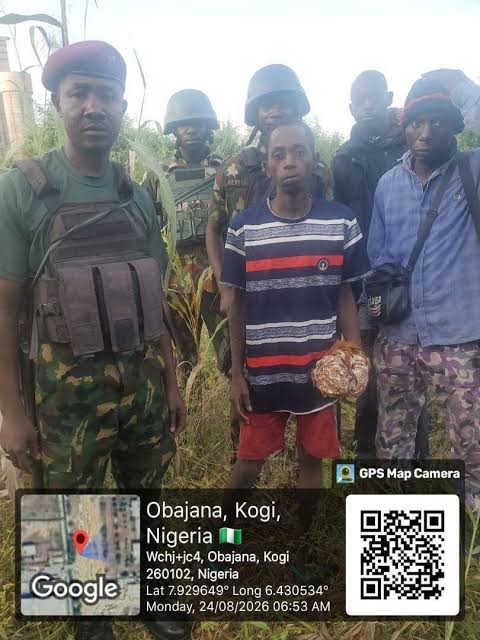
Troops Rescue Kidnap Victim, Recover AK-47 Rifle After Gun Battle in Kogi
By Zagazola Makama
Troops operating under the Joint Security operation in the 2 Division Area of Responsibility have rescued a 28-year-old kidnap victim and recovered an AK-47 rifle following a gun battle with suspected kidnappers in Kogi State.
The operation, according to security sources, took place at about 0300 hours on August 24, 2026, when troops from Patrol Base Obajana intercepted the victim, identified as Hussaini Shehu.
Preliminary questioning revealed that Shehu had allegedly been abducted from the Abaji general area of the Federal Capital Territory about five days earlier.
The rescued victim subsequently led the troops to the location where he had been held captive.
Security sources said the troops made contact with the suspected kidnappers and engaged them in a firefight, forcing the criminals to abandon an AK-47 rifle and flee into the surrounding area.
The weapon was recovered by the troops, while the victim was evacuated to the military medical centre for medical attention.
Security forces have continued operations in the area to track the fleeing kidnappers and prevent them from regrouping.
The latest operation underscores the importance of intelligence-led patrols and rapid exploitation of information obtained from rescued victims in disrupting kidnapping networks operating across the FCT-Kogi corridor.
Troops Rescue Kidnap Victim, Recover AK-47 Rifle After Gun Battle in Kogi

Farmer Injured in Machete Attack by Herder in Plateau

Unidentified Corpse with Gunshot Wound Found Along Road in Plateau

Troops Rescue Kidnap Victim, Recover AK-47 Rifle After Gun Battle in Kogi

Roger Federer’s Shock as DNA Results Reveal Myla and Charlene Are Not His Biological Children

THE PLIGHT OF FARIDA

FAILED COUP IN BURKINA FASO: HOW TRAORÉ NARROWLY ESCAPED ASSASSINATION PLOT AMID FOREIGN INTERFERENCE CLAIMS
-
 News2 years ago
Roger Federer’s Shock as DNA Results Reveal Myla and Charlene Are Not His Biological Children
-
Opinions5 years ago
THE PLIGHT OF FARIDA
-
 News1 year ago
FAILED COUP IN BURKINA FASO: HOW TRAORÉ NARROWLY ESCAPED ASSASSINATION PLOT AMID FOREIGN INTERFERENCE CLAIMS
-

 News2 years ago
EYN: Rev. Billi, Distortion of History, and The Living Tamarind Tree
-
 Opinions5 years ago
POLICE CHARGE ROOMS, A MINTING PRESS
-

 ACADEMICS2 years ago
A History of Biu” (2015) and The Lingering Bura-Pabir Question (1)
-

 Columns2 years ago
Army University Biu: There is certain interest, but certainly not from Borno.
-

 Politics1 year ago
2027: Why Hon. Midala Balami Must Go, as Youths in Hawul and Asikira/Uba Federal Constituency Reject ₦500,000 as Sallah Gift
