
Politics
Dogara Hits Tinubu Again Over Muslim-Muslim Ticket

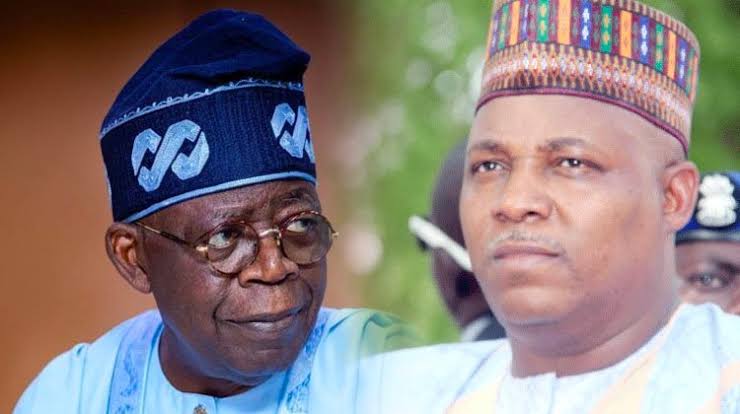
Dogara Hits Tinubu Again Over Muslim-Muslim Ticket
Former speaker of the House of Representatives, Yakubu Dogara, has again condemned the decision of the presidential candidate of the All Progressives Congress (APC), Ahmed Bola Tinubu, to settle for a Muslim-Muslim ticket.
Dogara who expressed his dissatisfaction with the move at the APC Northern Christian Leaders Summit on Friday said it is hogwash to assert that no Christian is competent to be Tinubu’s running mate.
The former speaker maintained that the ticket would create disunity in the party and the country at large.
While describing Tinubu’s decision as “fatal error of judgment,” Dogara said “I do not want to speak to the argument that there is no Christian competent enough to be vice-president because as we all know, that is hogwash.
“As long as God remains the God of justice, may we continue to resist injustice to our sinews, no matter who is for or against it because it is the requirement of the just God.
“Let us go out from this summit with the resolve to seek out our Muslim brothers and sisters who believe in unifying our people in order to usher in the much need peace and advancement for Nigeria to unleash her true potentials.
“I am sure we will jointly agree on a platform that would advance our collective search for unity, peace and development. Believe me, the only alternative is the road to Yugoslavia.
“God forbid! If we want to see Nigeria exalted, we must insist she does the right things,” he added.
The APC Northern Christian Leaders Summit was attended by Elisha Abbo, Adamawa North senator as well as Solomon Dalung, a former minister of youths and sports.
News earlier reported how the former speaker backed the Christian Association of Nigeria (CAN) on its rejection of his party’s Muslim-Muslim presidential ticket.
Speaking at CAN’s 12th General Assembly and Leadership Transition Ceremony on Wednesday in Abuja, Dogara held that political permutations which do not reflect religious balance are a threat to the country’s unity.
“I want to say emphatically that CAN’s position on Muslim/Muslim ticket in this country, at this moment of national peril, is not CAN’s only position, I believe that is God’s position,” he said.
Tinubu had said that he settled for Kashim Shettima as his running mate because he is the man to “bring the best governance to all Nigerians”, citing the former Borno governor’s competence as his reason for picking him.
Dogara Hits Tinubu Again Over Muslim-Muslim Ticket



APC Fiber Candidate Baba Malam Wali promises to build on Buni’s legacy in Yobe.
By: Yahaya Wakili
The All Progressives Congress (APC) governorship candidate for Yobe State, Alhaji Baba Malam Wali Mni, has assured that he will build on the legacies of His Excellency, the Executive Governor of Yobe State, Hon. Dr. Mai Mala Buni CON, COMN.
Baba Malam Wali disclosed this today while responding to the mommoth crowds gathered to welcome him to the ancient city of Nguru town in Yobe state.
The governorship candidate, Alhaji Baba Malam Wali, thanked the people of Nguru for the historic reception accorded to him and promised not to betray their trust.
“What I have seen today is historic; the people of Nguru have shown me the love, and I will repay you with service, loyalty, and inclusive development, and this project is our project; we would sustain it together,” Baba Malam Wali said.
The massive crowd is a testament to Wali’s acceptability, humility, and deep connection with the grassroots politician, as the political analyst in Yobe state, Dr. Abdu Umar Garba, has said.
The governorship candidate, Alhaji Baba Malam Wali Mni, was accompanied by the Deputy Governor of Yobe State, Hon. Idi Barde Gubana Wazirin Fune; the Deputy Governorship candidate, Hon. Barrister Saleh Samanja; and Yobe State APC chairman, Alhaji Mohammed Gadaka Madakin Gudi.
Others accompanied the governorship candidate include Yobe State Executive Councils, special advisers, special assistants, and other top government functionaries, as well as political heavyweights from within and outside Zone C.
APC Fiber Candidate Baba Malam Wali promises to build on Buni’s legacy in Yobe.
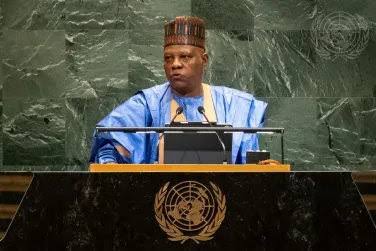
Kashim Shettima At UNGA: A STRONG VOICE FOR NIGERIA AND AFRICA
By: Inuwa Bwala
Vice President Kashim Shettima’s appearance on September 24, 2026, delivering Nigeria’s National Statement for the third consecutive year on behalf of President Bola Ahmed Tinubu, was a demonstration of consistency, confidence and statesmanship.
At the risk of sounding immodest, I dare say, that, President Bola Tinubu could not have done it better.
The Vice President’s central message was clear and powerful, to the effect that, “Nigeria believes in multilateralism, but the institutions that govern our world must become more representative, equitable, and responsive to the realities of today.”
This is a positive and mature foreign policy posture. It shows Nigeria is not isolationist, but reformist. Shettima affirmed Nigeria’s commitment to the UN system while boldly advocating for President Tinubu’s long-standing call for reform of global institutions, particularly the UN Security Council and international financial architecture, so as to give developing countries a stronger voice.
To me, it remains Nigeria’s strongest and clearest articulation of where our national interest targets.
His declaration that “Our engagements will be guided by Nigeria’s national interest” resonated well at home and abroad. It frames Nigeria not as a passive aid-recipient, but as a strategic partner negotiating firmly for trade, investment, technology transfer and climate finance. This is exactly the tone Nigerians want to hear on the world stage and the intermitent applause from the delegates was a testimony to this.
Beyond the General Assembly Hall, Shettima scored a major point at the Third High-Level Roundtable of the Africa Minerals Strategy Group. He called for an end to Africa’s dependence on raw mineral exports and advocated for processing and manufacturing industries within Africa.
His argument that Africa’s mineral wealth must translate into jobs, industrial growth and improved living standards is a forward-looking, pan-African economic vision. It positions Nigeria as a leader in the new scramble for critical minerals, demanding value-addition, not exploitation.
The Vice President’s sideline engagement with Nigerians in Diaspora in New York, calling on them to support the economic transformation agenda, shows a holistic approach — using UNGA not just for speeches, but for investment mobilization.
To me, and of vourse many Nigerians, including critics of the Bola Tinu u administration, the verall Verdict, is that, Shettima’s performance at UNGA 81 was presidential, articulate and strategically aligned with the Renewed Hope Agenda.
He projected Nigeria as stable, confident, reform-minded, and ready to lead Africa’s demand for a fairer world order, under the UNGA 81 theme of “Restoring trust, managing transformation.”
It was a positive outing that strengthened Nigeria’s image as the voice of Africa and the Global South.
Kashim Shettima At UNGA: A STRONG VOICE FOR NIGERIA AND AFRICA
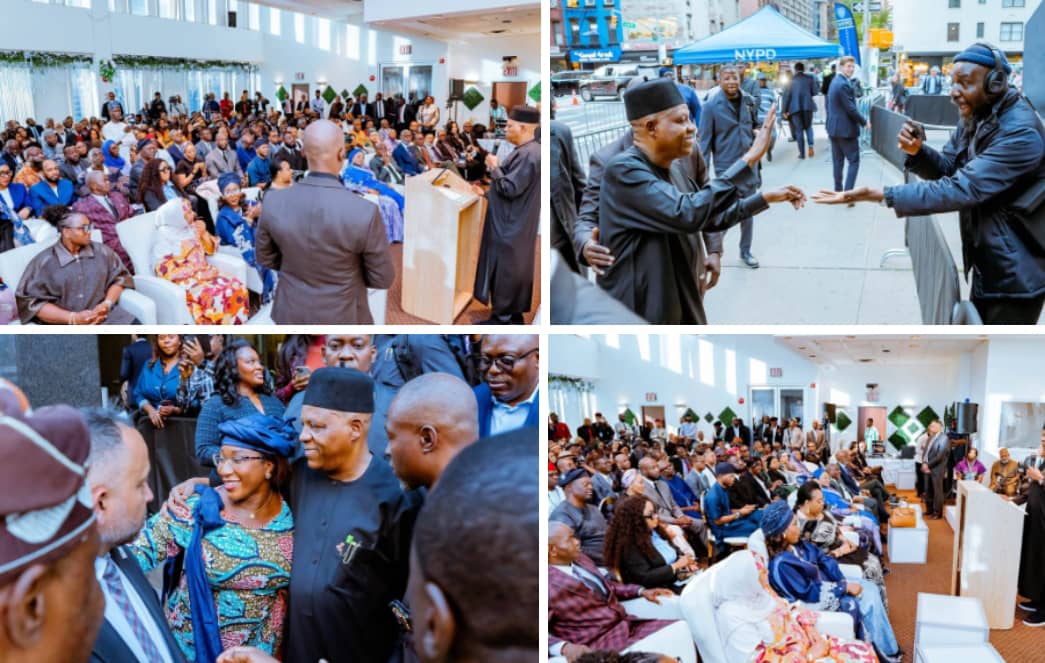
Kashim Shettima: The Echoes on the Streets of New York
By: Dr James Bwala
Sharp partisan divisions often shape public opinion about Nigeria’s political leadership. At home, critics of the administration of President Bola Ahmed Tinubu and Vice President Kashim Shettima frequently present the government as disconnected from the realities of ordinary Nigerians. They point to inflation, insecurity, unemployment and the rising cost of living as evidence that the administration’s policies have brought more hardship than relief. In this atmosphere, it is easy to assume that Nigerians living abroad share the same negative assessment.
However, the interaction between Vice President Kashim Shettima and Nigerians in the United States during the 2026 United Nations General Assembly presents a different narrative. The response of the Nigerian diaspora, particularly in New York, suggests that many Nigerians abroad are not merely critics observing from a distance. They are stakeholders who recognise the difficulty of reform, appreciate the direction of the government and remain willing to contribute their skills, resources and ideas to national development. The echoes from New York therefore carry an important message: despite legitimate concerns, the Tinubu-Shettima administration is beginning to inspire confidence among Nigerians who understand both Nigeria’s challenges and its enormous potential.
When Vice President Shettima called on Nigerians in the diaspora to support the administration’s efforts to transform the national economy, his appeal was met with a response that went beyond political slogans. It was an appeal for partnership. Nigerians living in the United States occupy important positions in medicine, technology, education, finance, engineering, business and public administration. Many have acquired knowledge and experience in countries with strong institutions and advanced economies. Shettima described the diaspora community as “the greatest resource of the future,” emphasising that their contribution to Nigeria extends beyond financial remittances. Their expertise, professional networks and understanding of global best practices are equally valuable.
Shettima described the diaspora community as “the greatest resource of the future”. This statement reflects a reality that Nigeria can no longer ignore. The country has millions of citizens living abroad, many of whom maintain strong emotional and economic ties with their homeland. They send money to their families, establish businesses, support hospitals and schools, invest in real estate and provide assistance during emergencies. More importantly, they possess intellectual capital that can support the transformation of Nigeria’s education, health, science, technology and agricultural sectors.
The Vice President’s message in New York was therefore persuasive because it recognised Nigerians abroad not as outsiders, but as partners in nation-building. Rather than treating the diaspora as a source of remittances alone, the government is seeking to engage them as participants in the country’s development. This approach is essential because national transformation requires more than government action. It requires cooperation among public institutions, private investors, professionals, civil society organisations and citizens at home and abroad.
One of the central arguments presented by Vice President Shettima was that the Tinubu administration inherited a difficult economic situation but chose to confront it through bold reforms. Since assuming office, President Tinubu has defended major decisions aimed at restructuring the Nigerian economy. These decisions, including the removal of fuel subsidies and changes in the foreign exchange system, have been controversial because of their immediate impact on households and businesses. Yet, supporters of the reforms argue that the previous system was financially unsustainable and incapable of delivering long-term prosperity.
A government should not be judged only by the discomfort created by reform but also by the problems the reform is designed to solve. Nigeria’s economy had suffered from weak public finances, distorted incentives, declining investor confidence and pressure on foreign exchange. Continuing with the old approach might have produced temporary political comfort, but it would not have addressed the underlying weaknesses. The courage to make difficult decisions is not enough by itself, but it is an essential first step towards economic recovery.
President Tinubu’s willingness to act without spending his early years blaming his predecessor is significant. In many developing democracies, governments often dedicate valuable time to explaining why previous administrations failed. While accountability is important, it must not become an excuse for inaction. The Tinubu and Shettima administration, choosing to take responsibility for the country’s situation, has placed the burden of performance on itself. The public is entitled to demand results, but it should also acknowledge the importance of leadership that accepts responsibility and attempts to correct structural problems.
According to the vice president, the reforms are already producing measurable improvements. He cited the increase in foreign reserves from approximately 3.9 billion dollars to more than 55 billion dollars, as well as economic growth of 4.45 per cent in the most recent quarter. These figures, if sustained and properly managed, can strengthen Nigeria’s capacity to meet its international obligations, stabilise the currency and attract investment. They may also improve the security of remittances sent by Nigerians abroad and protect the value of investments made by members of the diaspora.
Nevertheless, economic statistics must be interpreted responsibly. Growth in gross domestic product does not automatically mean that every household is better off. Foreign reserves can rise while citizens continue to struggle with high food prices. A stronger macroeconomic position must eventually translate into lower inflation, more employment, improved public services and greater purchasing power. The credibility of the administration will depend on whether the gains celebrated in official statements are felt in markets, homes, schools, hospitals and workplaces.
This is why the vice president’s engagement with the diaspora is important. Nigerians abroad can serve as an informed bridge between government claims and international standards. They understand the need for economic discipline, but they also know that reform must be accompanied by social protection, transparency and measurable improvements in living conditions. Their support should not be interpreted as unconditional approval. Rather, it should be considered a willingness to encourage what is working while demanding better performance where necessary.
The Dangote Refinery represents one of the developments frequently associated with Nigeria’s economic transformation. For many years, Nigeria exported crude oil while importing refined petroleum products. This contradiction placed pressure on foreign exchange and exposed citizens to supply disruptions and volatile prices. The successful operation of a large domestic refinery offers the possibility of reducing dependence on imports, strengthening local industry and creating jobs. It also demonstrates the importance of private-sector investment in areas that were previously dominated by government institutions.
The refinery alone will not solve all of Nigeria’s economic difficulties. Its benefits will depend on sound regulation, fair competition, reliable infrastructure and responsible pricing. However, it is an encouraging example of what can happen when Nigerian capital and entrepreneurial ambition are directed towards national production. Such projects can change the way the international community views Nigeria—from a country associated primarily with problems to one capable of undertaking complex industrial ventures.
The Vice President also highlighted the Nigeria Education Loan Fund, through which more than 1.29 million students in tertiary institutions have reportedly accessed approximately 125 billion naira since the programme began. Education is among the most important investments any government can make. A young and rapidly growing population needs access to quality education and practical skills if it is to become an asset rather than a burden. Without affordable higher education, many talented Nigerians will be excluded from opportunities simply because of their family income.
An effective student-loan system can expand access to tertiary education, but it must be managed with transparency and compassion. Students should not be trapped by unrealistic repayment conditions, while institutions must be held accountable for the quality of education they provide. The programme should also be accompanied by investments in vocational training, digital skills, research and innovation. Nigeria requires graduates who can create jobs, solve problems and compete in the global economy, not merely individuals holding certificates.
Security was another major issue addressed by the vice president. Nigeria continues to face terrorism, banditry, kidnapping, communal conflict and other forms of criminality. These challenges have damaged communities, discouraged investment and weakened public confidence. Shettima acknowledged that insecurity is not peculiar to Nigeria, but the fact that other countries face similar difficulties does not reduce the responsibility of the government to protect its citizens.
The administration must therefore combine military action with intelligence gathering, community engagement, judicial reform, border management and economic opportunities for vulnerable populations. He said security cannot be sustained by force alone. Citizens must trust security agencies, local communities must cooperate with authorities, and perpetrators must face justice. Young people who have no legitimate economic prospects are more vulnerable to recruitment by criminal groups. Consequently, security policy must be connected to education, employment and social development.
Perhaps the most important message from New York was the vice president’s call for national unity. Nigeria’s diversity is often portrayed as a permanent obstacle to progress, but diversity can also be a source of strength. The country’s many ethnic, religious and cultural communities possess different experiences and talents that can contribute to national development. The challenge is not diversity itself; the challenge is the use of identity for political manipulation and social division.
Shettima’s assertion that “whatever binds us together supersedes whatever divides us as a people” should be treated as a national principle. Nigerians may disagree about policies, parties and leaders, but they share a common interest in peace, prosperity and national stability. Constructive criticism is necessary in a democracy, but criticism should not become an excuse for undermining every national achievement. At the same time, appeals for unity should not be used to silence legitimate concerns. True unity is built through fairness, accountability and equal opportunity.
The applause and goodwill reported in New York should therefore be understood as a vote of encouragement, not a final verdict on the administration. Nigerians in the diaspora are capable of recognising progress while remaining aware of the hardships confronting families at home. Their response demonstrates that the government’s message can resonate beyond Nigeria when it is supported by credible reforms and sincere engagement.
The administration must now convert the goodwill of the diaspora into practical partnerships. It should create transparent channels for diaspora investment, simplify business registration, protect property rights, improve consular services and develop programmes that connect professionals abroad with institutions at home. Nigerians in the diaspora, for their part, should move beyond commentary and participate actively through investment, mentorship, research collaboration and advocacy.
The echoes on the streets of New York are significant because they challenge the assumption back home and on the minarets of the opposition-led positions.
*James Bwala, PhD, writes from Abuja.
Kashim Shettima: The Echoes on the Streets of New York

Beyond farmer-herder clashes: how armed groups, criminality and misinformation are tearing Mangu apart

VP Shettima: Security Council Exclusion Of Africa Subverts Global Governance Legitimacy

The British Massacres and Lugard’s Punitive Expeditions in Nigerian History

Roger Federer’s Shock as DNA Results Reveal Myla and Charlene Are Not His Biological Children

THE PLIGHT OF FARIDA

FAILED COUP IN BURKINA FASO: HOW TRAORÉ NARROWLY ESCAPED ASSASSINATION PLOT AMID FOREIGN INTERFERENCE CLAIMS
-
 News3 years ago
Roger Federer’s Shock as DNA Results Reveal Myla and Charlene Are Not His Biological Children
-
Opinions5 years ago
THE PLIGHT OF FARIDA
-
 News1 year ago
FAILED COUP IN BURKINA FASO: HOW TRAORÉ NARROWLY ESCAPED ASSASSINATION PLOT AMID FOREIGN INTERFERENCE CLAIMS
-

 News3 years ago
EYN: Rev. Billi, Distortion of History, and The Living Tamarind Tree
-
 Opinions5 years ago
POLICE CHARGE ROOMS, A MINTING PRESS
-

 ACADEMICS3 years ago
A History of Biu” (2015) and The Lingering Bura-Pabir Question (1)
-

 Columns3 years ago
Army University Biu: There is certain interest, but certainly not from Borno.
-

 Politics1 year ago
2027: Why Hon. Midala Balami Must Go, as Youths in Hawul and Asikira/Uba Federal Constituency Reject ₦500,000 as Sallah Gift
