
Uncategorized
Drug Abuse, Mental Illness Feed Each Other, Marwa Warns


Drug Abuse, Mental Illness Feed Each Other, Marwa Warns
…NDLEA boss seeks increased mental health funding, urges priority for women, children
By: Michael Mike
The Chairman and Chief Executive Officer of the National Drug Law Enforcement Agency (NDLEA), Brig. Gen. Buba Marwa (rtd), has warned that Nigeria’s fight against drug abuse will remain incomplete without adequate investment in mental healthcare, stressing that untreated psychological distress is driving substance abuse among vulnerable Nigerians.
Marwa said the relationship between drug use and mental illness was mutually reinforcing, warning that a response focused solely on arrests and enforcement would fail to address the underlying causes of addiction.
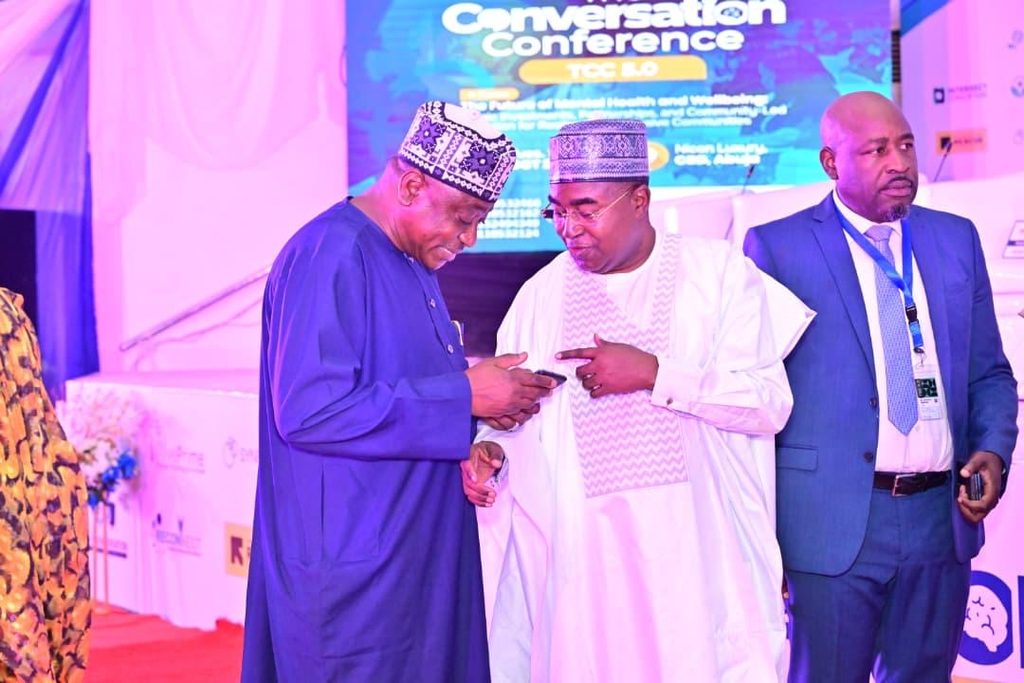
“If we only arrest the symptoms, we will keep missing the cause,” he said on Tuesday in Abuja, calling for increased mental health financing, accessible treatment and stronger collaboration among government institutions and community organisations.
Marwa spoke while chairing the fifth edition of The Conversation Conference (TCC 5.0), organised by the Intersect Consortium at the Nicon Luxury Hotel, Abuja. The event, led by UK-based consultant psychiatrist, Dr Vincent Udenze, came days after the 2026 World Mental Health Day and focused on strategic investments, partnerships and community-led action.
Drawing on the NDLEA’s experience in drug prevention and rehabilitation, Marwa said many people caught in substance abuse had underlying psychological distress that went unnoticed or untreated until their conditions worsened.
“For too long, we treated mental health as a private burden, hidden behind shame and silence. In my work at the NDLEA, I see the cost of that silence daily,” he said.
“Behind many cases of drug abuse is untreated pain: depression nobody noticed, trauma nobody addressed, a young person who found a substance before finding help. Drug use and mental illness feed each other. If we only arrest the symptoms, we will keep missing the cause.”
The NDLEA chairman said the situation demanded a shift from an approach centred largely on controlling illicit substances to one that combined enforcement with prevention, early intervention, mental healthcare and sustained support for people recovering from addiction.
He disclosed that more than 53,843 people had passed through the agency’s 31 rehabilitation facilities across the country in the past five years, describing the figure as evidence of the scale of the recovery effort required.
“Behind that number are fathers returned to their families and young people returned to school and work,” he said.

Marwa called for a substantial increase in funding for mental healthcare, warning that the sector could no longer remain neglected in public health budgets.
He said investment in prevention, trained personnel and accessible treatment would yield broader benefits, including improved productivity, safer communities and stronger families.
According to him, Nigeria needs more psychiatrists, psychologists, counsellors and community health workers, alongside the integration of mental health services into primary healthcare to ensure that people can access help without travelling long distances.
“No one travels hundreds of kilometres to be heard,” he said, arguing that mental health services must be available at the community level rather than concentrated in a few specialised facilities.
He also called for equitable financing, insisting that access to care should not depend on a person’s financial circumstances.
“Care that only the well-off can afford is not a system, it is a privilege,” he said.
Beyond healthcare financing, Marwa identified poverty, hopelessness and limited economic opportunities as factors that could increase vulnerability to harmful substance use.
He cited the NDLEA’s intervention in three pilot communities in Ondo State, where residents who previously depended on illicit cultivation were supported to establish legitimate livelihoods.
He said the initiative demonstrated the importance of involving communities in designing interventions rather than imposing solutions on them.
“Mental wellbeing cannot thrive where hopelessness and poverty drive people into harm,” he said, adding that families with sustainable incomes and a stake in their future were better positioned to build resilience.
The agency, he disclosed, intends to expand the model nationwide and is seeking partnerships to support its implementation.
Marwa also highlighted the NDLEA’s War Against Drug Abuse (WADA) campaign, which targets young people through sensitisation programmes in schools, tertiary institutions and communities.
He said the agency’s 24-hour toll-free helpline provided an avenue for people struggling with substance use and their families to seek assistance, particularly when they had nowhere else to turn.
“A frightened teenager, a worried mother or a person on the edge can be heard in the dead of night, at no cost,” he said.
The NDLEA boss further urged policymakers and service providers to prioritise women, children and other vulnerable groups in the delivery of mental health services.
He identified survivors of violence, displaced mothers, girls without adequate support, persons living with disabilities and families uprooted by conflict as groups whose needs were often overlooked.
According to him, the agency’s rehabilitation experience shows that recovery is more sustainable when support extends beyond the individual to include the mother, the child and the wider household.
He called for stronger coordination among the health, education, security, justice and social welfare sectors, saying no single institution could effectively address the complex relationship between mental illness, substance abuse and social vulnerability.
Marwa, who also chaired the conference’s first edition in 2022 and its third edition, commended the organisers for sustaining the platform and expanding conversations around mental health in Nigeria.
He also thanked Vice-President Kashim Shettima, who was represented at the event by Senator Ibrahim Hassan Hadejia, for supporting the conference, saying such participation signalled the importance of mental health to national development.
He urged participants to translate discussions into measurable commitments, particularly in funding effective interventions, expanding community-based programmes and protecting vulnerable populations.
“Let us build a Nigeria where seeking help is an act of courage, where recovery is possible, and where no one suffers alone,” he said.
Nigeria’s response to substance abuse has increasingly involved prevention campaigns, treatment and rehabilitation alongside drug interdiction and arrests. Marwa’s remarks underscore the need to strengthen the mental healthcare component of that response, particularly as stigma, inadequate access to treatment and socioeconomic pressures can prevent people from seeking help.
The challenge, he suggested, is not simply to stop drug use but also to ensure that people experiencing psychological distress can obtain timely support before substance use deepens their difficulties.
Drug Abuse, Mental Illness Feed Each Other, Marwa Warns


Uncategorized
Plateau local militiamen Kill another 18-Year-Old Herder, Rustle Cattle in Plateau Community
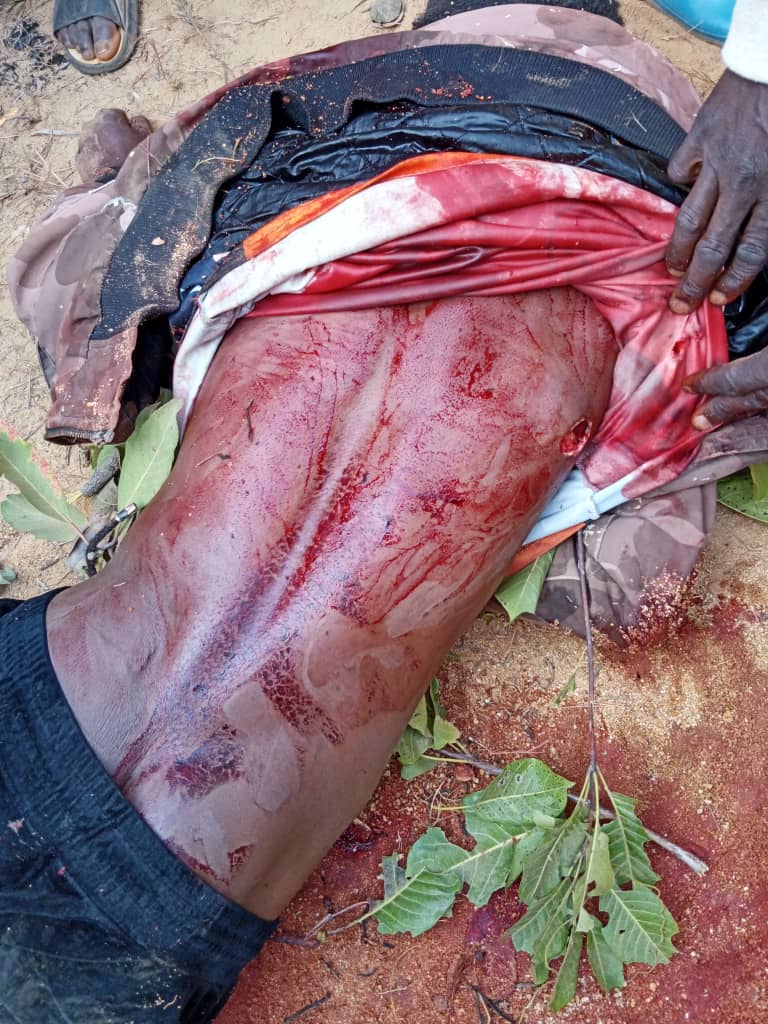
Plateau local militiamen Kill another 18-Year-Old Herder, Rustle Cattle in Plateau Community
By: Zagazola Makama
Gunmen suspected to be armed local militia elements have killed an 18-year-old herder, identified as Musa Bappa, and rustled an unspecified number of cattle in Fulani Ruga, Fusa Fursum District of Jos East Local Government Area of Plateau State.
Security sources said the incident occurred at about 1:30 a.m. on November 23, 2026, when troops of Sector 1, Sub-Sector 12, Operation Enduring Peace (OPEP), responded to a report of an attack on the community.
On arrival at the scene, the troops discovered that the assailants had killed the herder and escaped with an unconfirmed number of cattle.
Following the incident, troops, in collaboration with local hunters and the Vigilante Group of Nigeria (VGN), launched search-and-rescue operations in nearby bushes around Kio and Ribung villages in Barkin Ladi Local Government Area.
Plateau local militiamen Kill another 18-Year-Old Herder, Rustle Cattle in Plateau Community
Hunters Repel Bandits’ Attack on Zamfara Community, Two Gunmen Killed, Personnel Dies
By: Zagazola Makama
Personnel of the Hunters Group have repelled an attack by armed bandits on Dansadau community in Maru Local Government Area of Zamfara State, killing two of the attackers.
The incident occurred at about 10:30 a.m. on November 22, 2026, when a large group of armed bandits launched an attack on the community.
Hunters Group personnel stationed in Dansadau engaged the attackers in a gun battle and successfully repelled the assault.

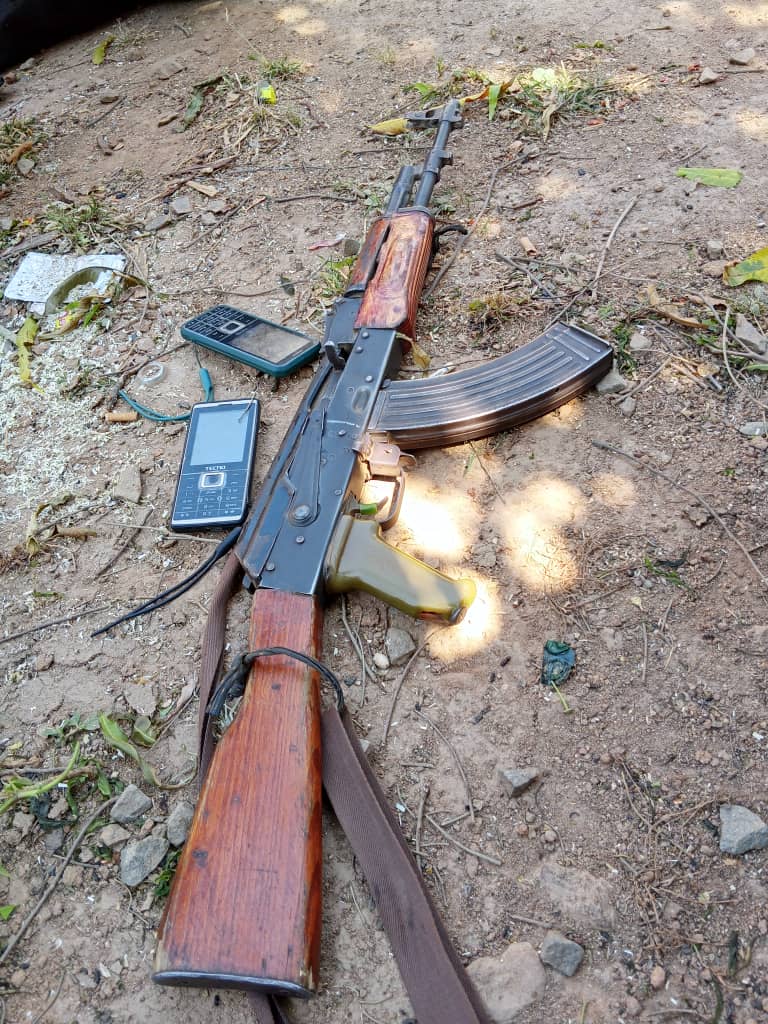
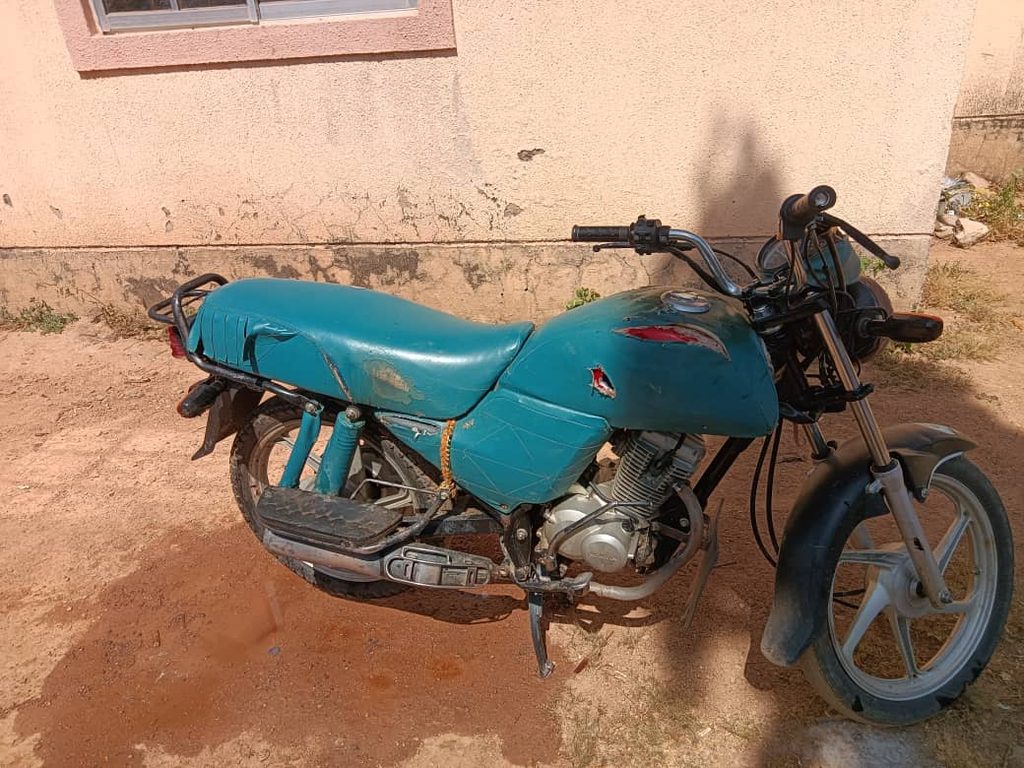
Two bandits were reportedly neutralised during the encounter, while the personnel recovered one AK-47 rifle, a motorcycle and a mobile phone.
However, the encounter claimed the life of one Hunters Group personnel, who was killed in action.
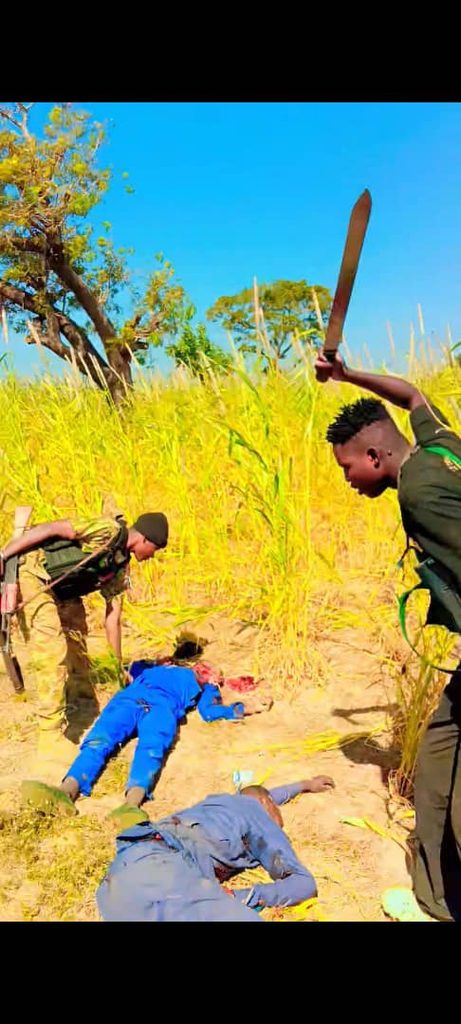
The successful defence of the community prevented the attackers from overrunning the area, while security personnel continued efforts to maintain security in the general area.
Hunters Repel Bandits’ Attack on Zamfara Community, Two Gunmen Killed, Personnel Dies
Uncategorized
SOJA Demands Release of Journalist Daniel Ojukwu, Seeks Review of Cybercrimes Act, Criminal Defamation Laws
SOJA Demands Release of Journalist Daniel Ojukwu, Seeks Review of Cybercrimes Act, Criminal Defamation Laws
By: Michael Mike
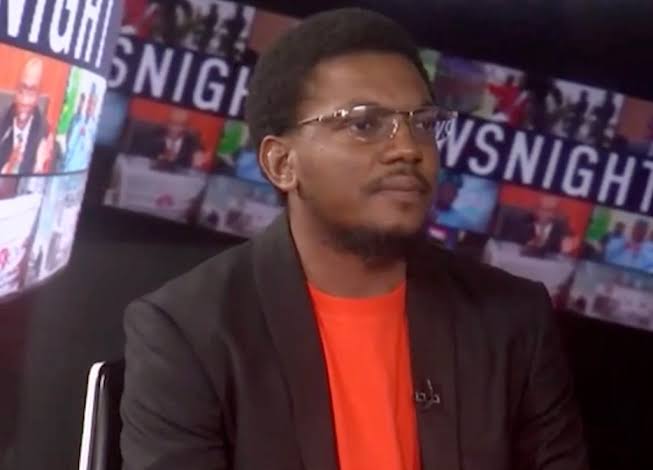
Speak Out for Justice Advocacy Ltd/Gte (SOJA) has demanded the immediate and unconditional release of investigative journalist Daniel Ojukwu, urging the Federal Government to review the Cybercrimes Act and other criminal laws allegedly being used to suppress freedom of expression and public-interest journalism.
Ojukwu, a journalist with the Foundation for Investigative Journalism (FIJ), was remanded at the Kuje Correctional Centre, Abuja, following his arraignment on November 10, 2026, over allegations of cyberstalking and criminal defamation arising from his journalistic work.
In a press statement on Thursday, SOJA’s Founder and Executive Director, Hameed Ajibola Jimoh, described Ojukwu’s detention as a troubling development for press freedom and called for the discontinuation of criminal proceedings arising from legitimate investigative journalism.
The organisation aligned itself with Avocats Sans Frontières France (ASF France) and other press-freedom groups advocating Ojukwu’s unconditional release, warning against the use of criminal laws to intimidate journalists investigating public expenditure, government activities and alleged wrongdoing.
“A journalist’s investigation into public resources is not, without more, a criminal enterprise. It is an essential component of democratic accountability,” SOJA said.
While acknowledging the judiciary’s independence, the presumption of innocence and the legitimate responsibility of government to protect reputation, privacy and security, the organisation argued that such interests should not be used to justify indiscriminate criminal prosecution of journalists for publications that question public officials or expose alleged misconduct.
SOJA said Nigeria’s constitutional guarantees of freedom of expression under Section 39 and the responsibility of the media to hold government accountable under Section 22 of the 1999 Constitution were reinforced by international human-rights instruments, including the International Covenant on Civil and Political Rights (ICCPR), the African Charter on Human and Peoples’ Rights and the Universal Declaration of Human Rights.
It maintained that restrictions on freedom of expression must satisfy the established three-part test of legality, legitimate purpose, and necessity and proportionality in a democratic society.
The group further outlined a five-step framework for assessing restrictions, requiring that they be clearly prescribed by law, pursue a legitimate objective, respond to a pressing social need, constitute the least restrictive measure available and be reasonably suited to achieving the intended purpose.
According to SOJA, criminal provisions that are vague, overly broad or disproportionately enforced against investigative journalism risk undermining constitutional freedoms and creating a chilling effect on journalists and citizens seeking to expose wrongdoing.
Citing the United Nations Human Rights Committee’s General Comment No. 34, the organisation said international standards encouraged the decriminalisation of defamation and rejected imprisonment as an appropriate punishment for defamation.
It also referenced the African Commission on Human and Peoples’ Rights’ 2019 Declaration of Principles on Freedom of Expression and Access to Information in Africa, which requires restrictions on expression to be clear, precise, accessible and foreseeable, with safeguards against abuse.
On the Cybercrimes Act, SOJA recalled the 2022 judgment of the ECOWAS Court of Justice in Registered Trustees of SERAP v. Federal Republic of Nigeria, which found the former Section 24 inconsistent with human-rights protections and directed Nigeria to amend the provision.
Although Section 24 was subsequently amended in 2024, the organisation said concerns over its interpretation and enforcement remained, warning that the amended provision could still be abused to target public-interest journalism, criticism and civic participation.
SOJA also called for a broader review of criminal defamation provisions under the Criminal and Penal Codes, as well as other laws relating to false publication, sedition, insult, public mischief and disclosure of official information, which it said could be deployed to intimidate journalists and suppress legitimate expression.
It cited the experiences of several journalists, including Agba Jalingo, Gidado Yushau, Alfred Olufemi, Luke Binniyat, Mienpamo Onitsha, Chinonso Uba, Haruna Mohammed Salisu, Ahmed Isah Sakpe and Blessing Edet, as well as journalists of The Informant247, as examples underscoring the need for a comprehensive review of Nigeria’s legal framework on freedom of expression.
The organisation also expressed concern over the proceedings involving Ojukwu and FIJ founder, Fisayo Soyombo, insisting that the cases reflected broader challenges facing investigative journalism and digital rights in the country.
SOJA urged the Federal Government, National Assembly, Nigeria Police Force, Office of the Attorney-General of the Federation and other relevant institutions to ensure Ojukwu’s release, discontinue criminal proceedings linked to legitimate journalism and protect journalists from intimidation, arbitrary arrest and detention.
It also demanded a comprehensive and participatory review of the Cybercrimes Act, particularly Section 24, alongside the decriminalisation of defamation and the adoption of civil remedies for reputational disputes.
The group called for safeguards against the misuse of police powers to settle private disputes or silence criticism, as well as continuous training for judges, prosecutors and law-enforcement officers on freedom of expression, digital rights and the protection of journalists.
SOJA said freedom of expression was not a privilege granted by government but a fundamental right, warning that the protection of reputation and public order should not become justification for suppressing legitimate criticism.
“The Cybercrimes Act must combat cybercrime, not criminalise journalism. Criminal laws must protect citizens, not silence them,” it said, adding that the public’s right to know must not be sacrificed to intolerance of scrutiny.
SOJA Demands Release of Journalist Daniel Ojukwu, Seeks Review of Cybercrimes Act, Criminal Defamation Laws

Gara-Gombe alleges threat to life, family, petitions IGP

Campaign Train: Zulum Storms Mafa, Dikwa, Gamboru Ngala to Rousing Reception

Troops Destroy Suspected Terrorist Hideout, Recover Motorcycle in Zamfara

Roger Federer’s Shock as DNA Results Reveal Myla and Charlene Are Not His Biological Children

THE PLIGHT OF FARIDA

FAILED COUP IN BURKINA FASO: HOW TRAORÉ NARROWLY ESCAPED ASSASSINATION PLOT AMID FOREIGN INTERFERENCE CLAIMS
-
 News3 years ago
Roger Federer’s Shock as DNA Results Reveal Myla and Charlene Are Not His Biological Children
-
Opinions5 years ago
THE PLIGHT OF FARIDA
-
 News2 years ago
FAILED COUP IN BURKINA FASO: HOW TRAORÉ NARROWLY ESCAPED ASSASSINATION PLOT AMID FOREIGN INTERFERENCE CLAIMS
-
 Opinions5 years ago
POLICE CHARGE ROOMS, A MINTING PRESS
-

 News3 years ago
EYN: Rev. Billi, Distortion of History, and The Living Tamarind Tree
-

 ACADEMICS3 years ago
A History of Biu” (2015) and The Lingering Bura-Pabir Question (1)
-

 Columns3 years ago
Army University Biu: There is certain interest, but certainly not from Borno.
-

 Politics1 year ago
2027: Why Hon. Midala Balami Must Go, as Youths in Hawul and Asikira/Uba Federal Constituency Reject ₦500,000 as Sallah Gift
