
News
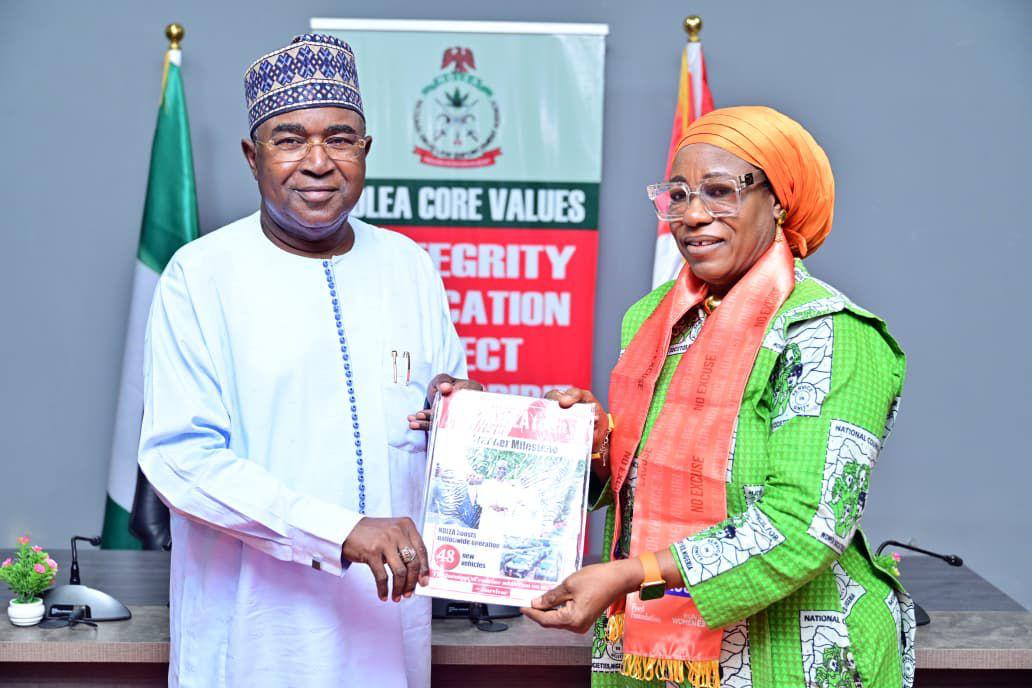
Drug war: NCWS commends President Tinubu, Marwa, seeks collaboration with NDLEA

Drug war: NCWS commends President Tinubu, Marwa, seeks collaboration with NDLEA
By: Michael Mike
The National Council of Women Societies (NCWS) has commended President Bola Ahmed Tinubu over the reappointment of Brig. Gen. Buba Marwa (rtd) as Chairman/Chief Executive Officer of the National Drug Law Enforcement Agency for another term of five years.
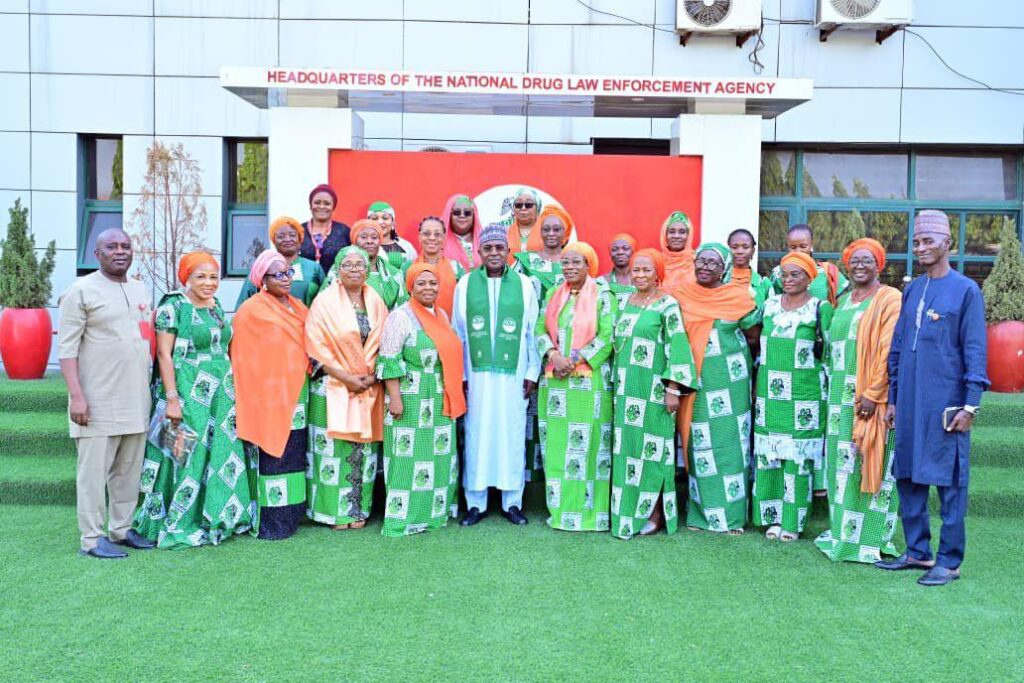
National President of the NCWS, Princess Edna Azura who gave the commendation when she led other leaders of the Council on a courtesy visit to Marwa at the Agency’s national headquarters in Abuja on Wednesday, said the decision will further strengthen and consolidate the ongoing war against substance abuse and illicit drug trafficking.
She called for more collaboration between the women’s group and NDLEA in the area of joint sensitization programmes in schools, markets, and communities as well as training of women leaders in drug use prevention, treatment and care.
“We want to appreciate President Bola Ahmed Tinubu for this wonderful opportunity that he has given you extra five years. We are very, very grateful. This renewal is a clear national endorsement of your monumental contributions to national security, public health, women and youth protection. We are confident that your continued leadership will further fortify the nation’s fight against drug trafficking and promote sustainable peace and stability”, she noted.
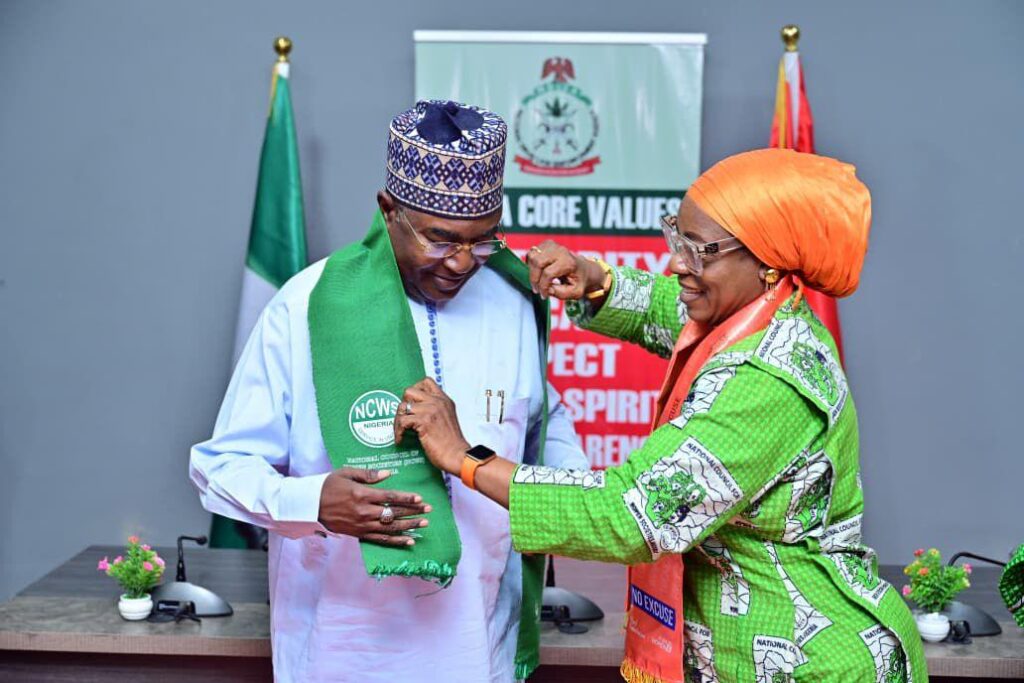
She described Marwa’s leadership at NDLEA as transformative and inspiring. “Over the years, you have demonstrated what strong ethical and visionary public service truly means. Under your leadership, the Agency has recorded unprecedented achievements from dismantling sophisticated drug trafficking networks to intercepting record level quantities of illicit substances, improving intelligence driven operations, expanding community based preventive education and strengthening rehabilitation pathways for victims of substance abuse. We are very grateful for that. These achievements are not just institutional milestones, they represent hope for millions of families, especially women and children, who often suffer the silent painful consequences of drug related crime, domestic challenges and societal instability.”
While seeking further partnership with NDLEA in the fight against the drug scourge, Princess Azura said “at NCWS, we have also been actively mobilising women, mothers, teachers and community groups to participate in the fight against substance abuse. Our ongoing school outreach programmes, advocacy forums and community sensitisation campaigns across the states have proven that when women are fully engaged, prevention becomes more effective.”
She said the NCWS is eager to explore strategic areas of cooperation with NDLEA, including training of the Council’s national officers and state leaders as community anti-drug ambassadors; joint advocacy campaigns targeting mothers and caregivers; rehabilitation and reintegration especially for women and youths affected by substance abuse, among others.
In his response, Marwa expressed appreciation to the NCWS leaders for the visit and their kind remarks about him and President Tinubu. He said as the umbrella body for all women societies across the country, it is imperative for NDLEA to partner with the NCWS. He said the Agency considers the drug menace as Nigeria’s number one problem today because it affects everyone and every community directly or indirectly, adding that with a population of about 15million drug users, there’s the need for a whole of society response.
“So, this is a big challenge and government cannot handle it alone, we have to have the whole of society to work with us. So NCWS, we don’t have any bigger partners than you because you are the mothers handling families all over the country, and it is very, very critical that you stand up. You have to stand up and be part of this struggle to redeem the souls of our young boys and girls, including the women who are afflicted”, he stated.
The NDLEA boss assured the women leaders that the NDLEA will not only partner with them but will equally organise Drug Use Prevention, Treatment and Care (DPTC) training to equip them for the task ahead in 2026. “We will hold a DPTC training for you, we usually to do that for governors’ spouses and I think we will tailor it to exactly what you will need, so that you can also take it down to the states, and down to the grassroots.”
He urged them to also buy in and take ownership of the current push for drug integrity test for intending couples as part of efforts to discourage substance abuse and encourage early detection and treatment, especially among the youth.
Drug war: NCWS commends President Tinubu, Marwa, seeks collaboration with NDLEA


Gov. Buni swore in 2 commissioners and 7 local government chairmen in Yobe
By: Yahaya Wakili
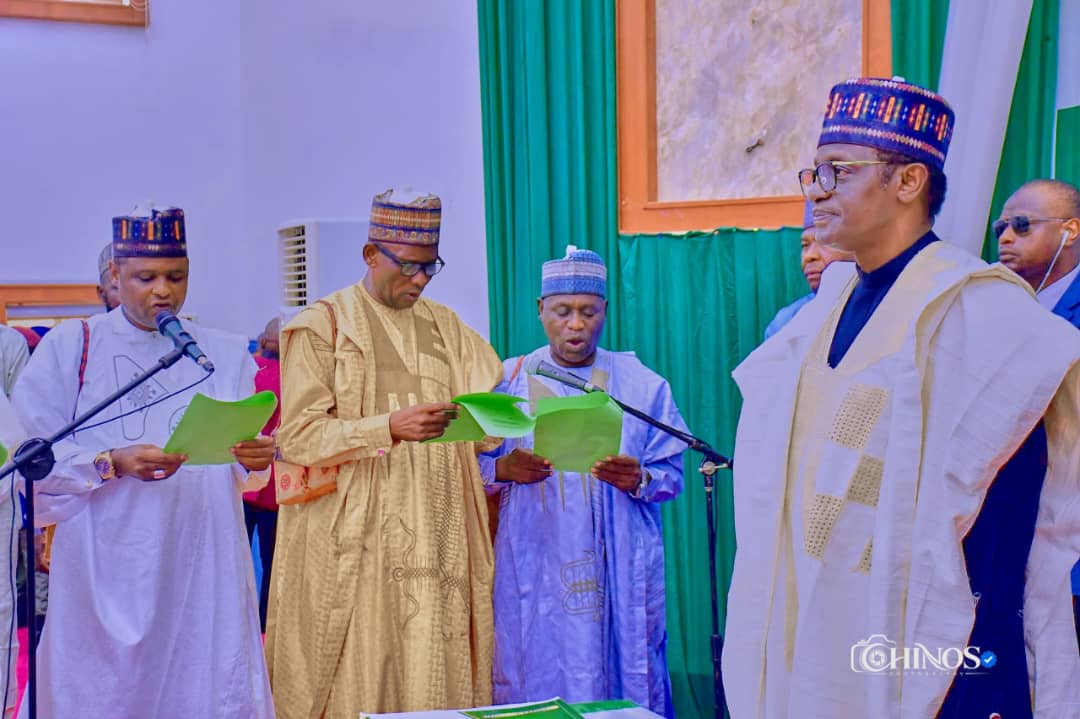
Yobe state governor, Hon. Mai Mala Buni CON, COMN, has today sworn in two commissioners, the permanent secretary, and the 17 newly elected local government chairmen at the Banquet Hall, Government House, Damaturu.
Governor Buni said their appointment was based on merit, expertise, and individual commitment to serve and noted that, as the administration approaches its ends, there was still an opportunity for the new appointees to make a difference in their offices, assuring them of government support to discharge their duties efficiently and effectively.
According to Buni, the oath of office had provided the appointees with the legal framework to execute their duties fully, honestly, and diligently and filled the vacuum in the state executive council just as the election of council chairmen and councillors had delivered democracy to the grassroots.
He further said his administration had remained consistent in conducting local government elections to give grassroots people a sense of belonging and participation in governance through duly elected representatives.
“Yobe State was ranked second best performance” with a score of 64.3 percent, behind Oyo State’s 70 percent, in the latest assessment of the 36 states by the Kimpact Development Initiative.
Governor Mai Mala Buni tasked the chairmen of the local government to deliver their local government areas to the party in the forthcoming general elections.
“Those whose victory must be ensured to include President Bola Ahmed Tinubu GCFR for a second term in office, the state governorship candidate, Alhaji Baba Malam Wali mni, the three senatorial candidates, including Mai Mala Buni CON, six House of Representatives candidates, and the 24 state House of Assembly,” Buni listed.
Buni appealed to all political stakeholders and their supporters across all political parties to conduct their political activities peacefully and according to the rules of the game during and after the electioneering period.
“We remain a family, and Yobe State is a politically peaceful state; therefore, we must avoid and resist all activities capable of breaching peace in the state,” Governor Buni added.
Gov. Buni swore in 2 commissioners and 7 local government chairmen in Yobe

Kuje Prison Inmates Debate Education, Vocational Skills as Command Promises Jobs After Release
By: Michael Mike
The Nigerian Correctional Service (NCoS), Federal Capital Territory Command, has pledged to facilitate employment opportunities for inmates upon their release, as the Medium Security Custodial Centre, Kuje, held its maiden debate competition to promote rehabilitation and prepare inmates for reintegration into society.
The Controller of Corrections, FCT Command, Christopher Peter Jen, disclosed this on Thursday during the competition, which saw two teams of inmates argue the merits of formal education and vocational skills acquisition, with the vocational skills team emerging victorious.

Jen said the command was partnering with relevant stakeholders and support organisations to secure employment opportunities for discharged inmates, in a move aimed at improving their prospects of rebuilding their lives outside the custodial facility.
He expressed optimism that inmates could rise to positions of leadership and responsibility if given the necessary support, education and opportunities to reform.
“An inmate today can be a governor or any high-ranking individual in society tomorrow, if properly reformed,” he said.
The Controller also commended the Controller-General of Corrections, Sylvester Ndidi Nwakuche, for the opportunity to serve, saying it had strengthened his commitment to improving inmate rehabilitation and reformation across the FCT Command.
The Officer-in-Charge of the Kuje custodial centre, Assistant Controller of Corrections Adekunmi Sunday, said the debate was part of efforts to transform the facility into a centre for learning and reformation rather than one focused solely on confinement.
“Custody without training is punishment; custody with training is correction,” Sunday said.
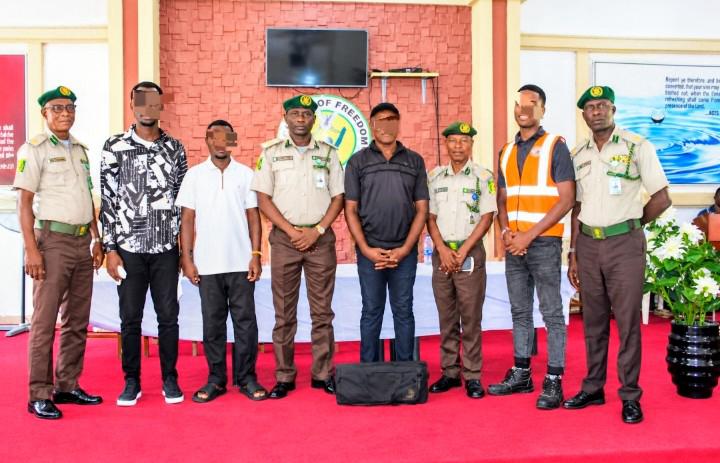
He stressed that education and vocational training were critical to preparing inmates for life after incarceration, adding that he expected every inmate under his supervision to acquire at least one of the two.
The maiden competition featured two teams of five speakers each. Team A argued in favour of education, while Team B defended vocational skills acquisition. Following the contest, the panel of judges declared Team B the winner.
The debate was organised to develop inmates’ intellectual abilities, improve their confidence and encourage constructive interaction, while providing a platform for them to express and defend their ideas.
Representatives of partner organisations and support groups also delivered goodwill messages, commending the service for its commitment to inmate education and rehabilitation.
In a vote of thanks delivered on behalf of the officer-in-charge by Superintendent of Corrections Yusuf Muye, the centre appreciated the FCT Controller, partners, staff and inmates for their contributions to the event’s success.
The centre said the debate would become a regular feature of its reformation calendar.
The employment pledge comes amid broader efforts by correctional institutions to equip inmates with practical skills and improve their chances of reintegration after serving their sentences. However, the command did not disclose the number of inmates expected to benefit from the proposed employment initiative or identify the organisations involved in the partnership.
Kuje Prison Inmates Debate Education, Vocational Skills as Command Promises Jobs After Release
Cuba Accuses US of Pressuring Nations Ahead of UN Vote on Blockade
By: Michael Mike
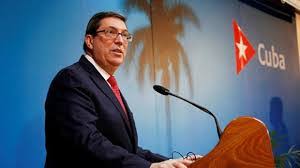
Cuba has accused the United States of mounting a campaign of diplomatic pressure against countries supporting calls for an end to its decades-long economic blockade, alleging that Washington is seeking to influence the outcome of an impending United Nations General Assembly vote.
Cuba’s Permanent Representative to the United Nations, Ernesto Soberón Guzmán, made the allegation on Friday while condemning a US-organised event scheduled for October 19 at the UN headquarters in New York, which he described as an attempt to divert international attention from the debate on the blockade.
The Cuban diplomat alleged that the event, titled “Cuba Libre”, was part of a broader effort to weaken support for a Cuban-sponsored resolution calling for an end to the economic, commercial and financial restrictions imposed by Washington. The resolution is scheduled for consideration by the General Assembly on October 27 and 28.
Speaking to UN-accredited journalists, Soberón accused the US of using political and diplomatic pressure to influence the positions of member states ahead of the vote, including alleged direct appeals by Secretary of State Marco Rubio to heads of state and government.
He described the reported contacts as an attempt to interfere with the sovereign decisions of UN member states, insisting that countries should be allowed to determine their voting positions without intimidation.
The diplomat also questioned the format of the October 19 event, citing restrictions on press access, the non-disclosure of panellists’ identities and a prohibition on attendees expressing their views.
He argued that the arrangements suggested an attempt to control the narrative rather than facilitate an open exchange of perspectives on Cuba.
Soberón said the Cuban delegation had obtained copies of the invitation and concept note despite not being invited to the event.
He further questioned the use of UN premises for an activity he alleged was designed to advance Washington’s political objectives against another member state, citing administrative instruction ST/AI/2019/4 on the use of UN premises and the need for activities to comply with the principles of the UN Charter.
The Cuban representative also accused Washington of applying a double standard by organising the event while having outstanding contributions to the UN’s regular budget.
Beyond the diplomatic dispute, Soberón drew attention to the economic consequences of US sanctions, particularly measures affecting Cuba’s fuel supplies and international trade.
He recalled that US President Donald Trump signed an executive order on January 29, 2026, introducing measures targeting countries supplying oil to Cuba, which he blamed for a sharp decline in fuel shipments to the island.
According to figures he presented, Cuba had received only one oil tanker from Russia in the preceding 10 months, describing the shipment as humanitarian assistance.
He also claimed that approximately 7,000 containers destined for Cuba remained at international ports because shipping companies were reluctant to transport them over fears of possible US sanctions.
Soberón linked the difficulties to further measures announced by Washington on May 1, 2026, which he said expanded the threat of sanctions against companies and countries maintaining commercial relations with Cuba.
He criticised the US-organised event for failing to address the reported impact of the restrictions on the Cuban economy and the living conditions of its population.
The Cuban government has consistently opposed the US embargo, which has remained a major point of contention between the two countries and has repeatedly featured in General Assembly debates.
Soberón maintained that the October 19 event should not distract the international community from the substantive question before the General Assembly: whether the United States should end its economic, commercial and financial blockade of Cuba.
He urged UN member states to uphold the principles of the UN Charter, resist political coercion and exercise their voting rights independently.
The United States has historically defended its Cuba policy on grounds including concerns over the island’s political system and human rights record, while Havana argues that the sanctions violate its sovereignty and impose severe economic hardship on its people.
The forthcoming General Assembly debate is expected to renew international scrutiny of the longstanding dispute.
Reaffirming Havana’s position, Soberón said Cuba would not change its stance because of external pressure, adding: “Cuba is not a threat. The blockade is.”
Cuba Accuses US of Pressuring Nations Ahead of UN Vote on Blockade

Gov. Buni swore in 2 commissioners and 7 local government chairmen in Yobe

SHOSA: Celebrating Excellence as Old Students Prepares to Rekindle Memories

Troops Rescue 27 Kidnap Victims, Including Six-Month-Old Baby, in Katsina

Roger Federer’s Shock as DNA Results Reveal Myla and Charlene Are Not His Biological Children

THE PLIGHT OF FARIDA

FAILED COUP IN BURKINA FASO: HOW TRAORÉ NARROWLY ESCAPED ASSASSINATION PLOT AMID FOREIGN INTERFERENCE CLAIMS
-
 News3 years ago
Roger Federer’s Shock as DNA Results Reveal Myla and Charlene Are Not His Biological Children
-
Opinions5 years ago
THE PLIGHT OF FARIDA
-
 News1 year ago
FAILED COUP IN BURKINA FASO: HOW TRAORÉ NARROWLY ESCAPED ASSASSINATION PLOT AMID FOREIGN INTERFERENCE CLAIMS
-
 Opinions5 years ago
POLICE CHARGE ROOMS, A MINTING PRESS
-

 News3 years ago
EYN: Rev. Billi, Distortion of History, and The Living Tamarind Tree
-

 ACADEMICS3 years ago
A History of Biu” (2015) and The Lingering Bura-Pabir Question (1)
-

 Columns3 years ago
Army University Biu: There is certain interest, but certainly not from Borno.
-

 Politics1 year ago
2027: Why Hon. Midala Balami Must Go, as Youths in Hawul and Asikira/Uba Federal Constituency Reject ₦500,000 as Sallah Gift
