
News
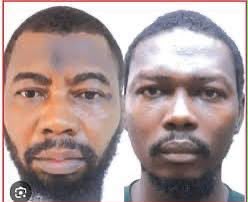
DSS Set To Appeal Life Sentence On Ansaru Terror Commanders

DSS Set To Appeal Life Sentence On Ansaru Terror Commanders
*Seeks Maximum Penalty On Behalf of Murdered Oriire Teachers
By: Michael Mike
The Department of State Services (DSS) is set to appeal Monday’s life sentence handed two top commanders of the Ansaru Terror organization by a Federal High Court, Abuja.
Justice Emeka Nwite had, shortly after Mahmud Usman, a.k.a Abu Bara’a/Abbas/Mukhtar, the self-styled Emir of Ansaru; and Abubakar Abba, a.k.a Mahmud al-Nigeri/Malam Mamuda, pleaded guilty to all the 32-count charges against them, sentence both men to life imprisonment.
However, a top official of the Service, said they considered the life sentence as too light a punishment for the crimes allegedly committed by the Ansaru commanders.
The official said the Service found it curious that, both convicts were on the verge of pleading guilty to the charges, but changed their minds shortly after some persons believed to be members of the same Ansaru organization kidnapped pupils and teachers in Oriire, Oyo State.
“For the nearly 60 days the kidnappers held on to the pupils and teachers of Oriire, the Ansaru commanders in our custody changed. One of the top conditions the abductors gave was the unconditional release of these same Ansaru commanders in exchange for the Oriire kidnap victims,” he said.
“From ‘not guilty plea,’ the two men at the penultimate court session, said they were undecided on what plea to take. Justice Nwite even had to hand them an ultimatum to make up their minds on or before Monday’s sitting. After the Oriire rescue, they came to court to plead guilty to all the charges,” he added.
According to the top official, allowing the two terror commanders walk away with life sentences would not serve the cause of justice for the two Oriire teachers beheaded by their abductors.
“The reason the terrorists beheaded the two Oriire teachers was to put pressure on government to release these two Ansaru commanders. It, therefore, wouldn’t be fair to see two men beheaded and their families are made to live with the losses without adequately bringing the culpits to book,” he declared.
DSS Set To Appeal Life Sentence On Ansaru Terror Commanders



Troops arrest terrorist kingpin, ammunition courier, logistics supplier in Kaduna
By Zagazola Makama
Troops of the Joint Task Force North West, Operation FANSAN YAMMA (OPFY), have arrested a suspected terrorist kingpin, intercepted an ammunition courier and apprehended a suspected terrorist logistics supplier in separate intelligence-led operations across Kaduna State.
The operations, conducted on Wednesday, Sept. 9, 2026, targeted terrorist hideouts, supply routes and support networks in Kubau, Igabi and Birnin Gwari Local Government Areas of the state.

In the early hours of the day, troops of Sector 1 conducted a clearance operation at Dabar Dabo, identified as a known terrorist hideout in Kubau LGA.
During the operation, the troops arrested a suspected terrorist kingpin and two other members of his syndicate at the hideout.
The three suspects were taken into military custody for further investigation and intelligence exploitation.
In a separate operation on the same day, troops of Sector 1, acting on credible intelligence concerning the movement of ammunition, arrested a 50-year-old woman suspected of serving as an ammunition courier in Igabi LGA.
The suspect was allegedly found in possession of 300 rounds of ammunition concealed inside a bag.
Preliminary investigation revealed that the suspect had travelled from Zamfara State to Lafia, where she allegedly received the ammunition for onward delivery to terrorist elements operating around Birnin Gwari in Kaduna State.

The suspect and recovered ammunition have been secured in military custody as investigations continue to establish her network and intended recipients.
Later the same day, troops of Sector 1, working with a community vigilante group, apprehended another suspected terrorist logistics supplier in Birnin Gwari LGA.
During preliminary interrogation and a search of the suspect, troops recovered four communication devices suspected to have been used in connection with terrorist activities.
The suspect and recovered devices were also taken into military custody for further investigation.
The series of operations highlights the growing focus of Operation FANSAN YAMMA on dismantling the support structures that sustain terrorist groups, including their command networks, ammunition couriers, communication channels and logistics suppliers.
The successful interception of the ammunition consignment also represents a significant disruption to the movement of military-grade supplies into terrorist operating areas in Kaduna State.
Operation FANSAN YAMMA has continued to intensify intelligence-led operations across the North-West to disrupt terrorist networks, deny criminal elements freedom of action and prevent the movement of arms, ammunition and other logistics across the Joint Operations Area.
The Joint Task Force has also acknowledged the support of members of the public and urged residents to remain vigilant and promptly report suspicious movements and activities to the nearest security agency.
Troops arrest terrorist kingpin, ammunition courier, logistics supplier in Kaduna

U.S. Air Force C-17 delivers military equipment to Nigerian Air Force under FMS agreement
By Zagazola Makama
A United States Air Force C-17 Globemaster III aircraft has delivered military equipment to the Nigerian Air Force as part of an ongoing foreign military sales agreement between the two countries.
The development was announced on Thursday by the official X handle of the U.S. Africa Command (AFRICOM), which described the delivery as a demonstration of the growing security partnership between the United States and Nigeria.
AFRICOM said the equipment was delivered over the weekend and would support Nigeria’s efforts to counter terrorism and other security threats in the region.
“Partnership in action,” AFRICOM said, noting that the equipment formed part of a foreign military sales agreement designed to further the U.S.-Nigeria defence partnership.
The command said the delivery would aid Nigeria’s counter-terrorism efforts, particularly as the country continues to confront persistent threats from terrorist and insurgent groups.
The latest delivery comes amid increasing security cooperation between Nigeria and the United States, with both countries strengthening collaboration in intelligence, training, equipment and other areas aimed at improving Nigeria’s capacity to tackle terrorism.
The use of a U.S. Air Force C-17 for the delivery also underscores the logistical component of the bilateral defence relationship, enabling the movement of military equipment directly in support of Nigeria’s operational requirements.
Nigeria has continued to seek enhanced international partnerships as its armed forces sustain operations against terrorist and criminal networks across the North-East, North-West and other conflict-affected parts of the country.
AFRICOM’s announcement signals continued U.S. support for Nigeria’s efforts to strengthen its military capabilities and confront terrorism, while reinforcing Washington’s broader security partnership with Abuja.
U.S. Air Force C-17 delivers military equipment to Nigerian Air Force under FMS agreement
Troops engage suspected local militias, soldier wounded during clearance operation in Plateau
By: Zagazola Makama
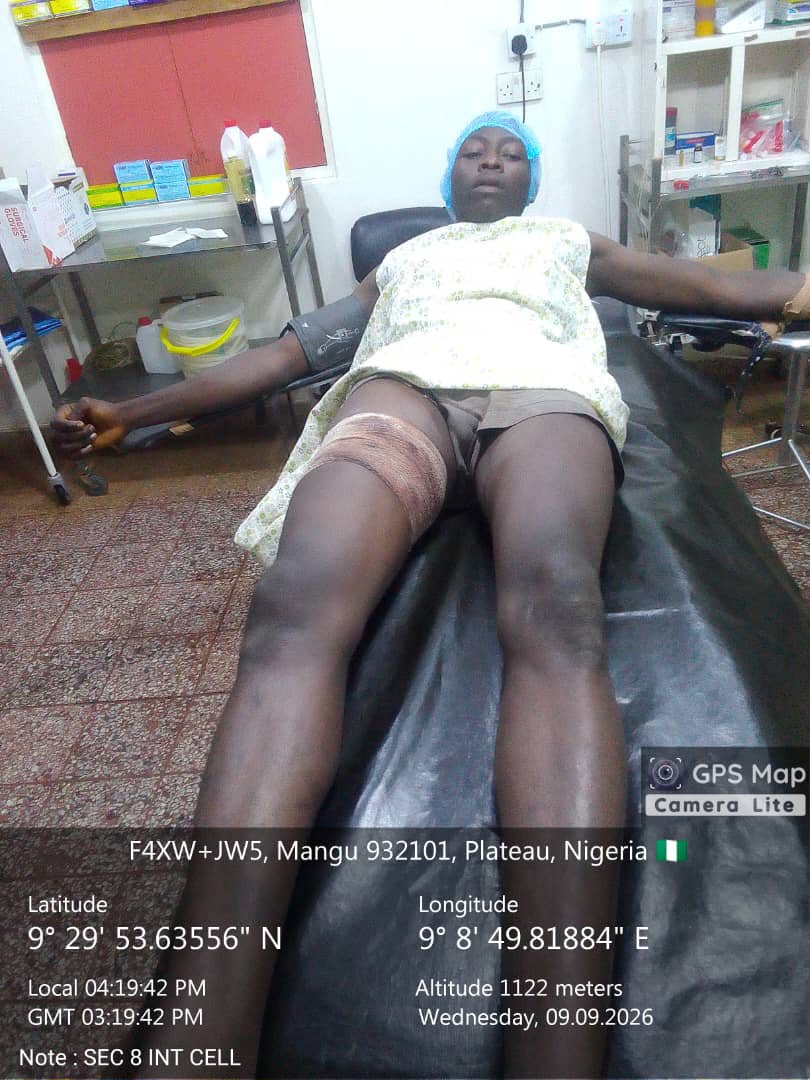
Troops of Sector 8, Operation ENDURING PEACE (OPEP), have engaged suspected local militia elements in a fierce firefight during a clearance operation at Kogul Village in Muko District, Mangu Local Government Area of Plateau State.
The operation, conducted between Sept. 8 and 9, followed reports of arson, destruction of farmlands and the expulsion of residents from the community.
During the operation, the troops established contact with the suspected militias and engaged them in a fierce firefight, forcing the criminals to withdraw into the forest.
A soldier, Pte. Husseini Ibrahim, sustained a gunshot wound to his right leg during the encounter and was evacuated to General Hospital, Mangu, for medical attention.
Troops subsequently exploited the general area in an effort to locate and arrest the fleeing criminals and recover their weapons.
However, no further contact was established before the troops returned to base, while operations to track the fleeing suspects remain ongoing.
Troops engage suspected local militias, soldier wounded during clearance operation in Plateau

Troops arrest terrorist kingpin, ammunition courier, logistics supplier in Kaduna

U.S. Air Force C-17 delivers military equipment to Nigerian Air Force under FMS agreement

Troops repel terrorist infiltration attempt on Pulka base, kill one

Roger Federer’s Shock as DNA Results Reveal Myla and Charlene Are Not His Biological Children

THE PLIGHT OF FARIDA

FAILED COUP IN BURKINA FASO: HOW TRAORÉ NARROWLY ESCAPED ASSASSINATION PLOT AMID FOREIGN INTERFERENCE CLAIMS
-
 News2 years ago
Roger Federer’s Shock as DNA Results Reveal Myla and Charlene Are Not His Biological Children
-
Opinions5 years ago
THE PLIGHT OF FARIDA
-
 News1 year ago
FAILED COUP IN BURKINA FASO: HOW TRAORÉ NARROWLY ESCAPED ASSASSINATION PLOT AMID FOREIGN INTERFERENCE CLAIMS
-

 News2 years ago
EYN: Rev. Billi, Distortion of History, and The Living Tamarind Tree
-
 Opinions5 years ago
POLICE CHARGE ROOMS, A MINTING PRESS
-

 ACADEMICS3 years ago
A History of Biu” (2015) and The Lingering Bura-Pabir Question (1)
-

 Columns3 years ago
Army University Biu: There is certain interest, but certainly not from Borno.
-

 Politics1 year ago
2027: Why Hon. Midala Balami Must Go, as Youths in Hawul and Asikira/Uba Federal Constituency Reject ₦500,000 as Sallah Gift
