
News
€108m EU-EIB Fund Unlocks €400m for African Businesses, Jobs

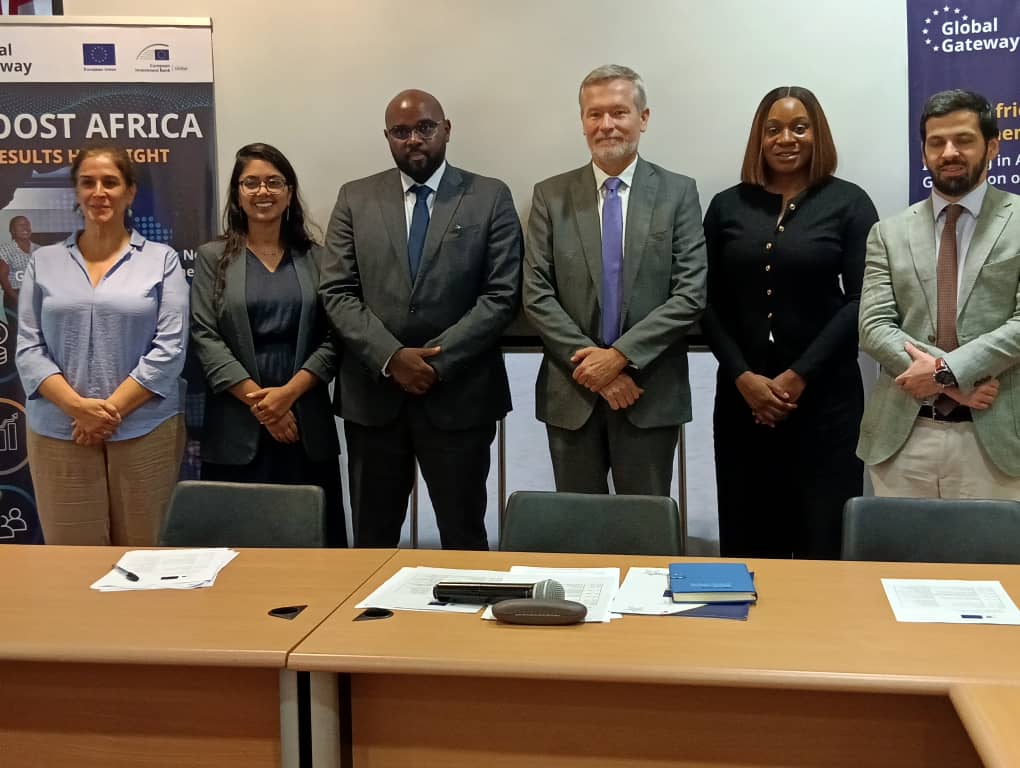
€108m EU-EIB Fund Unlocks €400m for African Businesses, Jobs
By: Michael Mike
A €108 million investment by the European Union (EU) and European Investment Bank (EIB) in Africa’s emerging businesses has succeeded in attracting an additional €400 million in capital, underscoring the growing push to use entrepreneurship as a major engine of job creation and economic transformation on the continent.
The investment, deployed through the Boost Africa initiative, has supported early-stage businesses and venture capital funds while helping to build an ecosystem capable of taking promising African companies from startup to regional expansion.
The development was disclosed in Abuja on Wednesday by EU Ambassador to Nigeria and ECOWAS, Gautier Mignot, during a media briefing ahead of the Boost Africa Impact Forum, themed, “Investing in Africa’s Next Generation of Entrepreneurs: From Investment to Impact.”
Mignot said the significance of the programme lay not simply in the money committed but in its ability to unlock much larger pools of capital and translate investment into businesses, employment and opportunities for Africa’s rapidly growing young population.
The initiative, he said, demonstrated how development finance could be used to reduce the risks associated with investing in young African businesses and encourage private investors to back entrepreneurs operating in markets where conventional financing remains difficult to obtain.
“For every single euro that was invested through Boost Africa, we were able to attract additional three euros through different investors,” EIB Country Relationship Manager for Nigeria, Moussa Nakoulima, said.
The leverage effect means that the €108 million deployed through the initiative has helped mobilise approximately €400 million in additional investment, significantly expanding the financial resources available to African entrepreneurs.
Beyond financing, the programme has been credited with supporting job creation, strengthening venture capital markets and helping African companies develop the capacity to expand beyond their domestic markets.
Nakoulima said Africa possessed a large pool of talented entrepreneurs capable of developing solutions to some of the continent’s most pressing problems, but warned that many promising businesses failed to reach scale because they could not secure capital at the earliest and riskiest stages of development.
He said the funding gap was particularly acute in sectors such as financial services, healthcare, digital technology and renewable energy, where innovative companies often required substantial investment before becoming commercially attractive to traditional lenders.
Boost Africa was established in 2016 by the EIB and African Development Bank, with backing from the EU and the Organisation of African, Caribbean and Pacific States (OACPS), specifically to address that challenge.
Rather than functioning as a conventional bank providing direct loans to individual businesses, the initiative channels investment through venture capital funds and financial intermediaries that identify and support high-potential startups and small businesses.
Nakoulima said the model was designed to make development finance catalytic rather than substitutive — using public and institutional capital to absorb some of the risks that private investors might otherwise avoid.
He said the programme combined three critical components: investment capital, technical assistance and ecosystem development.
The technical assistance component provides support in areas including accounting, legal structuring, market analysis, governance and business strategy, while ecosystem development connects entrepreneurs with incubators, accelerators, investors and other players capable of helping them scale.
The impact is already being seen in businesses operating across several African markets.
Investment Director at Cathay AfricInvest Innovation Fund, Lavanya Anand, said the €110 million fund had invested in 15 Series A technology companies across Africa, with the EIB serving as one of its anchor investors.
She said companies supported through the ecosystem were operating across healthcare, financial services, logistics, e-commerce and education technology.
The fund’s portfolio, she disclosed, had created 7,600 direct jobs and 272,000 indirect jobs, while reaching more than 46 million people with improved financial services and training more than 13,000 students.
One of the companies cited was Turaco, a technology-driven insurance company that has provided coverage to more than two million previously uninsured people across Kenya, Uganda, Nigeria, Ghana and Zambia.
Another beneficiary, OZE, received assistance in developing its banking partnership strategy, helping it establish relationships with financial institutions including Ecobank.
In Nigeria, the impact has also extended into the power sector.
Chief Strategy Officer of Beacon Power Services, Christine Adejorooluwa, said investment and technical assistance enabled the energy technology company to expand from serving one utility to 12 utilities across seven African countries.
She said the company’s technology helps electricity distribution companies improve visibility of their networks, reduce outages and limit energy losses and revenue leakages.
According to her, an independent study commissioned through Boost Africa found that BPS’s intervention at one utility prevented approximately 78,000 megawatt-hours of lost load.
At another utility, she said, the intervention contributed to a $191 million increase in revenue through measures including identifying new customers and reducing outage hours.
Adejorooluwa said the intervention demonstrated that the real value of development finance could be measured by what happens after the investment — stronger businesses, more reliable infrastructure, increased revenues and improved livelihoods.
“For me, that is what investment to impact really looks like,” she said.
For Nigeria, Mignot said the opportunity was particularly significant because of the country’s large youthful population and vibrant entrepreneurial ecosystem.
“Nigeria is one of Africa’s most dynamic entrepreneurial ecosystems, and we believe that supporting innovation and enterprise is essential for sustainable economic growth and job creation,” he said.
He said the EU’s approach under its Global Gateway strategy was to work with member states, development banks and private-sector partners as “Team Europe” to create investment partnerships capable of producing sustainable economic opportunities.
The initiative also seeks to produce businesses capable of crossing national borders and developing into African companies with regional and continental reach.
Nkoulima said the ultimate goal was to see entrepreneurs transform successful local ideas into businesses operating across multiple African markets.
“When an entrepreneur in Lagos develops a solution that can be subsequently operating in Ghana, in Côte d’Ivoire, in South Africa, in Kenya, we are beginning to see the real creation, value creation, creation of genuine Pan-African champions,” he said.
With Africa facing a persistent youth employment challenge and a large financing gap for small and emerging businesses, the EU-EIB-backed model highlights the potential of targeted development capital to attract private investment while helping African entrepreneurs turn innovation into scalable businesses and jobs.
€108m EU-EIB Fund Unlocks €400m for African Businesses, Jobs




Farmer Injured in Machete Attack Allegedly by Herdsmen in Plateau
By Zagazola Makama
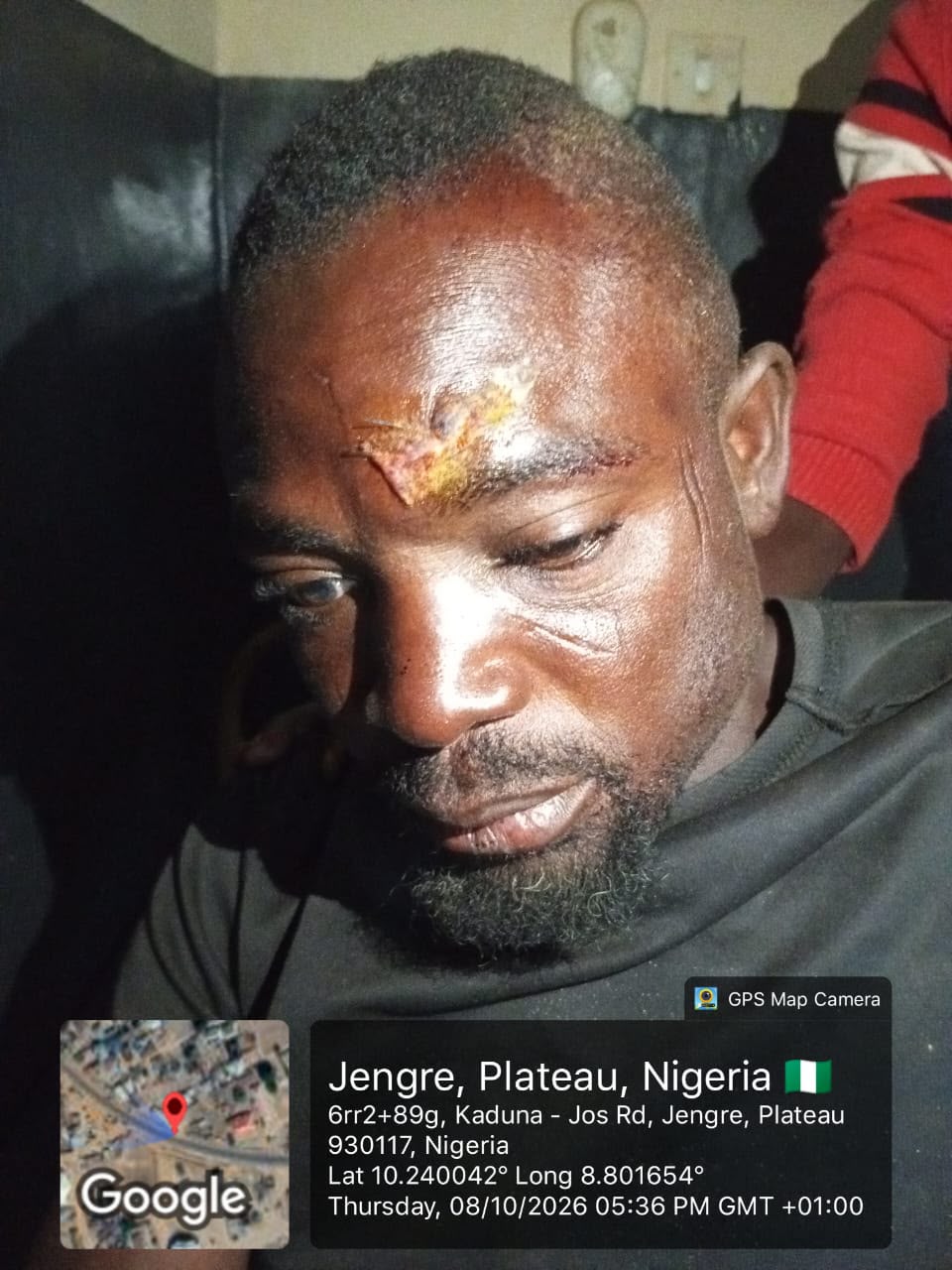
A farmer, identified as Babangida Atah, has been injured in a machete attack allegedly carried out by Fulani herders at Rafi Katako village in Bassa Local Government Area of Plateau State.
Security sources said the incident occurred at about 1 p.m. on Thursday, Oct. 8, when troops of Sector 1, Operation Enduring Peace (OPEP), deployed in Jengre, responded to a report of an assault on the farmer at his farm.
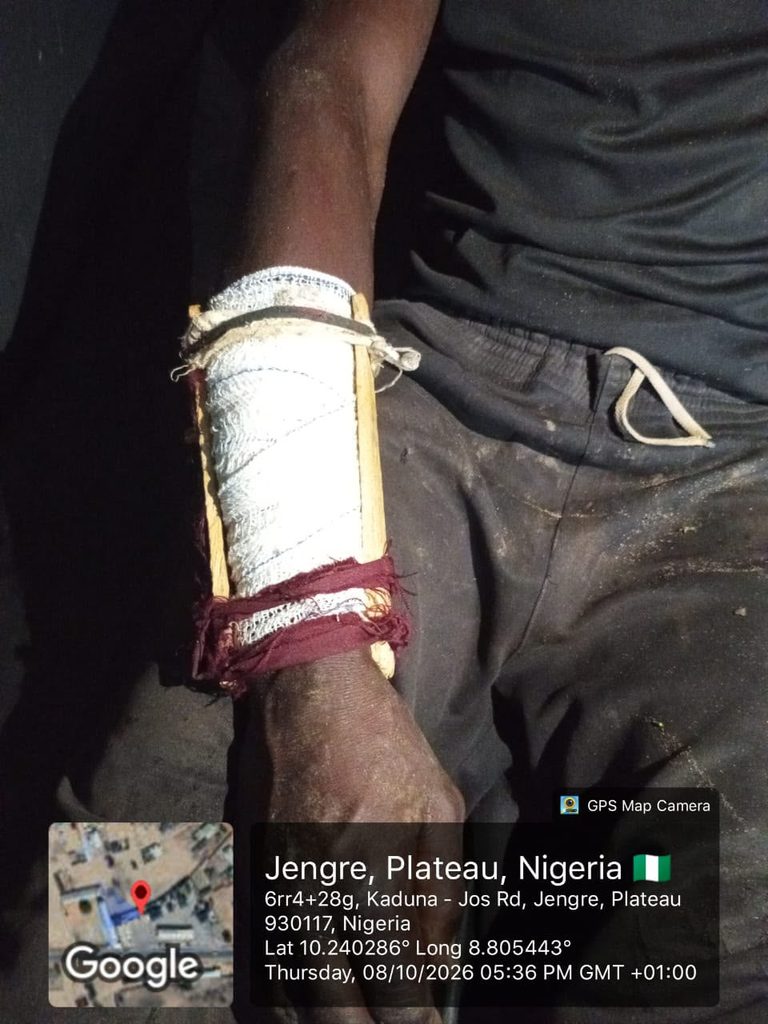
The sources said the troops, upon arrival at the scene, found Atah with machete wounds, while the suspected attackers had fled before their arrival.
The victim was evacuated to a nearby hospital for medical attention.
Security personnel have commenced efforts to track down and apprehend the fleeing suspects for further investigation and necessary legal action.
Further details are expected as efforts to identify and arrest those responsible continue.
Farmer Injured in Machete Attack Allegedly by Herdsmen in Plateau

Suspected Fulani bandits Kill Man, Block Road in Plateau Community
By Zagazola Makama
Suspected Fulani bandits members have reportedly killed a man identified as Zubairu Danirai after blocking the Manja–Mpili road in Mangu Local Government Area of Plateau State.
Security sources said the incident occurred at about 4:30 p.m. on Thursday, Oct. 8, when troops of Sector 8, Operation Enduring Peace (OPEP), deployed at Manja, responded to a report of the roadblock and killing of a native returning from the market.
The sources said the troops, upon arriving at the scene, made contact with the suspected assailants, who fled into the surrounding mountains following an exchange of fire.
The troops subsequently searched the area and discovered the victim’s body.
A manhunt has been launched to track down the fleeing suspects, while security personnel continue efforts to prevent further attacks and restore safety along the affected route.
The incident adds to security concerns in parts of Mangu Local Government Area, where attacks on residents and road users have heightened fears over the safety of local communities.
Further details are expected as investigations continue.
Suspected Fulani bandits Kill Man, Block Road in Plateau Community
NHRC seeks death penalty moratorium as 3,000 inmates languish on death row
…Commission urges governors to commute sentences, calls for review of mandatory capital punishment laws
By: Michael Mike
The National Human Rights Commission (NHRC) has called on the Federal Government to declare an official moratorium on executions and state governors to commute eligible death sentences to life imprisonment, amid concerns that more than 3,000 inmates remain on death row across Nigeria.
The commission said Nigeria was approaching 10 consecutive years without a state execution, a development it described as meeting the international standard for a de facto moratorium, despite the continued imposition of death sentences and the prolonged detention of condemned inmates.
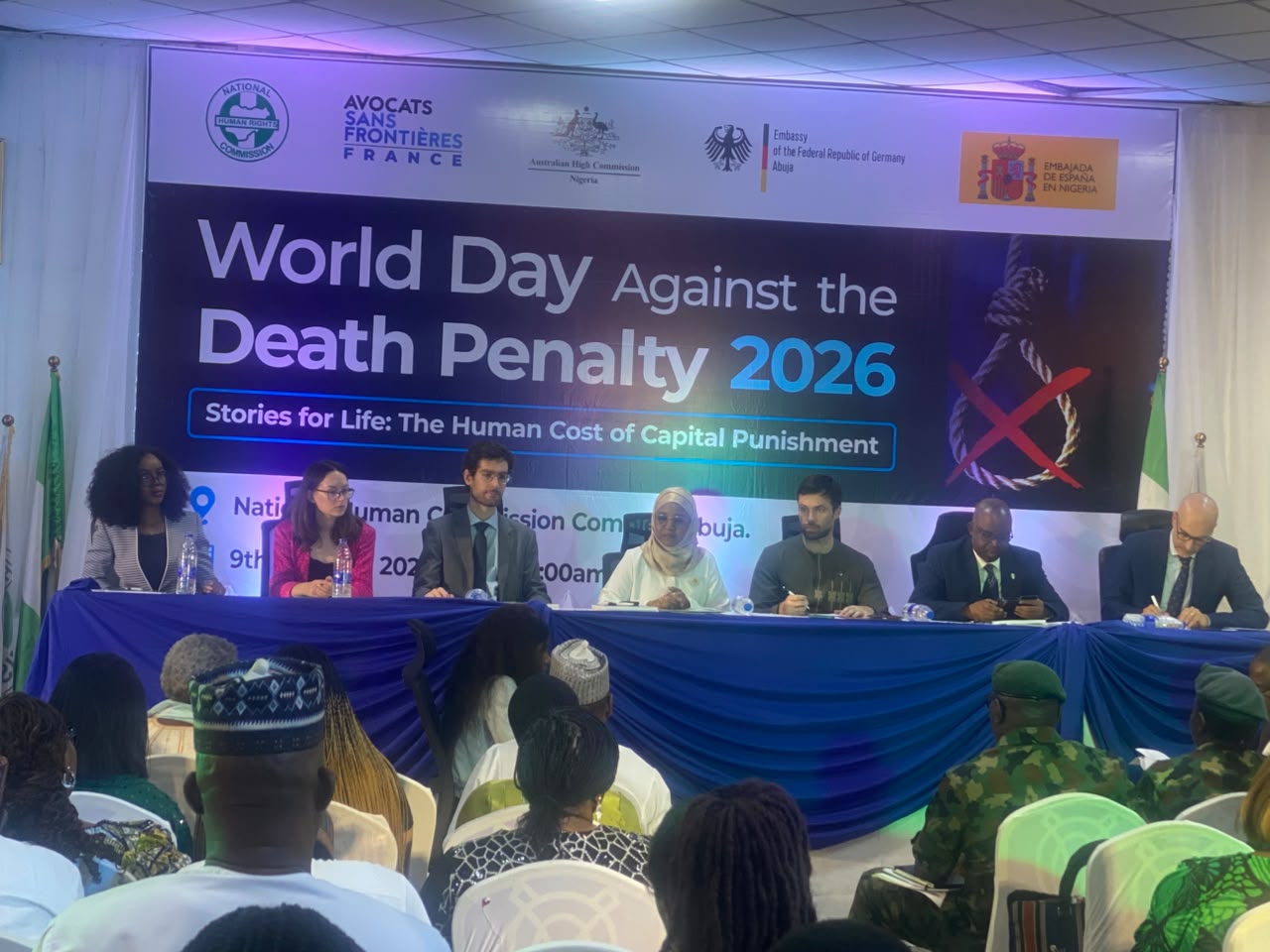
The Executive Secretary of the NHRC, Chief Tony Ojukwu, made the call on Friday in Abuja during the commemoration of the 2026 World Day Against the Death Penalty at the commission’s headquarters.
Ojukwu urged the Federal Government to formalise the suspension of executions, while calling on state governors to exercise their constitutional prerogative of mercy to commute death sentences, particularly in cases where inmates had exhausted their appeals but remained on death row.
He also advocated a review of laws prescribing mandatory death sentences, arguing that judges should have the discretion to consider mitigating circumstances and systemic vulnerabilities before determining appropriate punishment.
Although capital punishment remains constitutionally valid in Nigeria, the NHRC chief stressed that its administration must be consistent with the country’s human rights obligations and the fundamental principles of fair trial and due process.
He expressed concern that inadequate access to pro bono legal representation, forced confessions and delays in bringing suspects to trial continued to undermine procedural justice, raising questions about the fairness of proceedings in capital cases.
According to him, the protection of human rights requires more than the existence of legal provisions, insisting that the justice system must guarantee fair hearings and ensure that the death penalty is restricted to the most serious crimes in line with applicable international standards.
The commission outlined three immediate policy measures: an official moratorium on executions, the commutation of eligible death sentences to life imprisonment, and a comprehensive review of laws prescribing mandatory capital punishment.
Ojukwu’s appeal places renewed focus on the position of condemned inmates who have exhausted their legal options but remain in custody, as well as the wider implications of prolonged confinement on the administration of criminal justice.
A formal moratorium, the commission argued, would provide an immediate policy framework for suspending executions while the country considers broader reforms to its capital punishment regime.
The proposed review of mandatory death penalty provisions would also allow courts to take individual circumstances into account when sentencing offenders, rather than being compelled by law to impose the same punishment regardless of relevant mitigating factors.
The commemoration was organised by the NHRC in partnership with Avocats Sans Frontières (ASF) France, the Australian High Commission and the Embassy of Germany, with support from the Royal Norwegian Embassy.
Ojukwu expressed hope that deliberations at the event would produce a joint call-to-action communiqué to advance sustainable reforms in Nigeria’s justice sector.
The commission’s position comes amid continuing debates over capital punishment, the protection of the rights of accused persons and the need to strengthen safeguards against miscarriages of justice.
NHRC seeks death penalty moratorium as 3,000 inmates languish on death row

Farmer Injured in Machete Attack Allegedly by Herdsmen in Plateau

Suspected Fulani bandits Kill Man, Block Road in Plateau Community

NHRC seeks death penalty moratorium as 3,000 inmates languish on death row

Roger Federer’s Shock as DNA Results Reveal Myla and Charlene Are Not His Biological Children

THE PLIGHT OF FARIDA

FAILED COUP IN BURKINA FASO: HOW TRAORÉ NARROWLY ESCAPED ASSASSINATION PLOT AMID FOREIGN INTERFERENCE CLAIMS
-
 News3 years ago
Roger Federer’s Shock as DNA Results Reveal Myla and Charlene Are Not His Biological Children
-
Opinions5 years ago
THE PLIGHT OF FARIDA
-
 News1 year ago
FAILED COUP IN BURKINA FASO: HOW TRAORÉ NARROWLY ESCAPED ASSASSINATION PLOT AMID FOREIGN INTERFERENCE CLAIMS
-

 News3 years ago
EYN: Rev. Billi, Distortion of History, and The Living Tamarind Tree
-
 Opinions5 years ago
POLICE CHARGE ROOMS, A MINTING PRESS
-

 ACADEMICS3 years ago
A History of Biu” (2015) and The Lingering Bura-Pabir Question (1)
-

 Columns3 years ago
Army University Biu: There is certain interest, but certainly not from Borno.
-

 Politics1 year ago
2027: Why Hon. Midala Balami Must Go, as Youths in Hawul and Asikira/Uba Federal Constituency Reject ₦500,000 as Sallah Gift
