
News
ECOWAS Advocates Stronger Protection of Child Rights

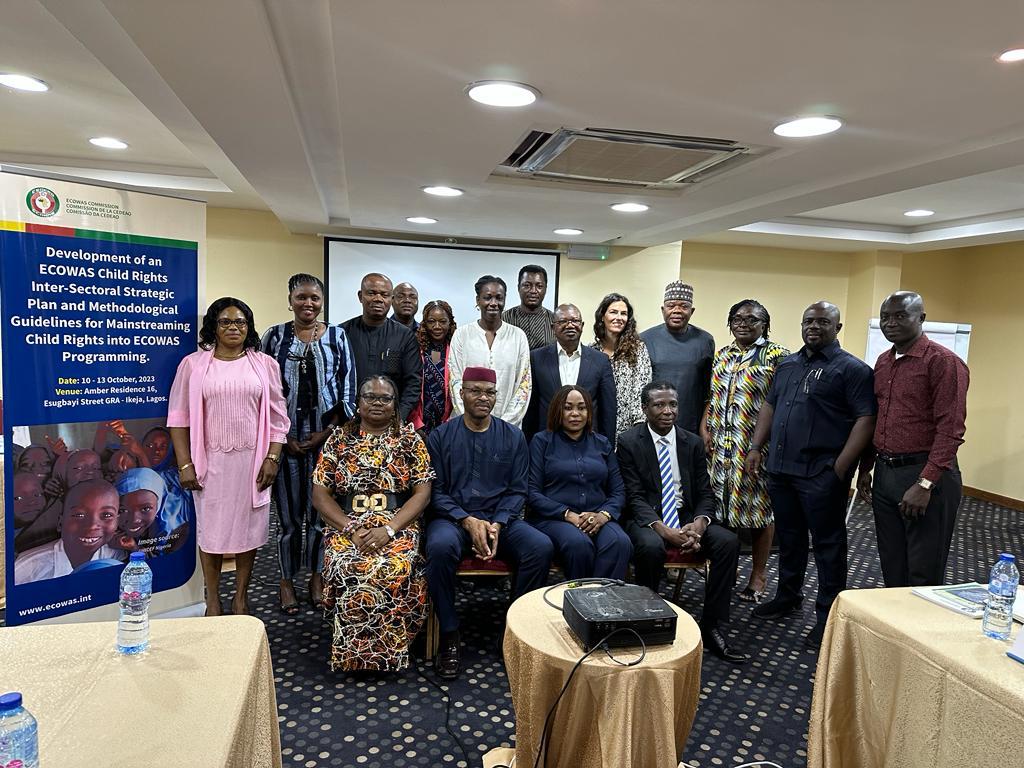
ECOWAS Advocates Stronger Protection of Child Rights
By: Michael Mike
The Commission of the Economic Community of West African States (ECOWAS) has advocated for stronger protection of child rights in Nigeria and across the West Africa subregion.
This was the advocacy at a stakeholder interaction initiative to drive effort on strengthening delivery on child rights across the entire ECOWAS institution and the sub-region held in Lagos between 10-13 October, 2023.
The Lagos Retreat major thrust aimed at the Development and Validation of an ECOWAS Child Rights Inter-sectoral Strategic Plan and Methodological Guidelines for Mainstreaming Child Rights into ECOWAS Programming.
ECOWAS described the inter-sectoral strategic plan critical for the promotion and protection of Child Rights, including in relation to the rights of the child in a time of conflict, fragility and violence as an important move for different dimensions of Child Rights protection.

These dimensions include situations of emergency, children affected by armed conflict, child safeguarding, generally. Survival and development of the child also involves issues related to nutrition, education, human capital development, etcetera.
Programme Officer, Trafficking in Persons within the Directorate of Humanitarian and Social Affairs, ECOWAS Commission, Olatunde Olayemi, said it doesn’t have to be a non-international conflict such as a civil war but also in situations of fragility for example in a time of elections.
He said: “Elections, sometimes if mis-handled, breed violence which could also affect children. We have disasters such as mudslides, landslides, economic downturns and others issues such as COVID-19, Ebola.
“Also inclusive is the early warning system with regional and national level centers in member states to ensure they anticipate challenges challenges to the rights of children and respond in a timely and effective manner.”
The SDGs comprise 17 Goals and 169 targets to be delivered by 2030 of which 48 targets are directly relevant to children, while 47 are somewhat relevant. Goals One, Two, Three, Four, Five and Six are of direct consequence to children, while Goals Eight, Ten, Eleven, Twelve, Thirteen and Sixteen have targets directly or closely linked to the realisation of child rights’.
It may be recalled that the ECOWAS Commission has reviewed and adopted a new ECOWAS Child Policy and Plan of Action (2019-2030) covering not only child protection but survival, development and participation. This sets a new tone for programming for the entire Commission and will require better coordination between various Departments and Directorates of the Commission.
Despite the foregoing, ECOWAS identified clear weaknesses in the the integrated implementation of Child Rights instruments in the ECOWAS.
These gaps have been glaring within the context of issue and events including: (1) Weak integration of child rights in pandemic preparedness and response i.e. Ebola Virus Disease and COVID 19 pandemic etc.; as borne out in the reports by UNICEF and Save the Children (2.) Weak integration of child rights in Security Sector initiatives i.e. ECOWAS Counter Terrorism Plan of Action etc.; in relation to Children affected by Armed Conflicts, Preventing Violent Extremism and Countering Violent Extremism and well as Deradicalization etc. Also, a clear need to mainstream child protection into Peace and Security frameworks overall.
Drawing from the ECOWAS Human Rights List of Indicators, required from Member States, certain actions must be integrated into ECOWAS Programming on: Measures/legislations for preventing violence against women and girls; Security forces and gender policy versus traditional and native practices; availability of special laws against child trafficking child labour and prostitution.
To this effect, the Olayemi’s Division that leads on the Rights of the Child, under the Directorate of Humanitarian and Social Affairs, headed by Dr. Sintikiti Tarfa Ugbe, which is a part of the Department of Human Development and Social Affairs, headed by the Commissioner, Professor Fatou Sow Sarr, said the ECOWAS Child Rights Inter-sectoral Strategic Plan follows through with the broad mandate of its dedicated programme area.
ECOWAS Advocates Stronger Protection of Child Rights


Troops Intervene in Farm Destruction Incident in Plateau, Move for Peaceful Resolution
By Zagazola Makama
Troops of Operation Safe Haven have intervened in a reported farm destruction incident in Lamingo village, Jos East Local Government Area of Plateau State.
Security sources said the incident occurred at about 5:10 a.m. on May 3 when troops of Sector 1 (Sub-Sector 12), Lamingo, responded to a distress report of cattle grazing within the compound of one Mrs. Shittu Yakubu.
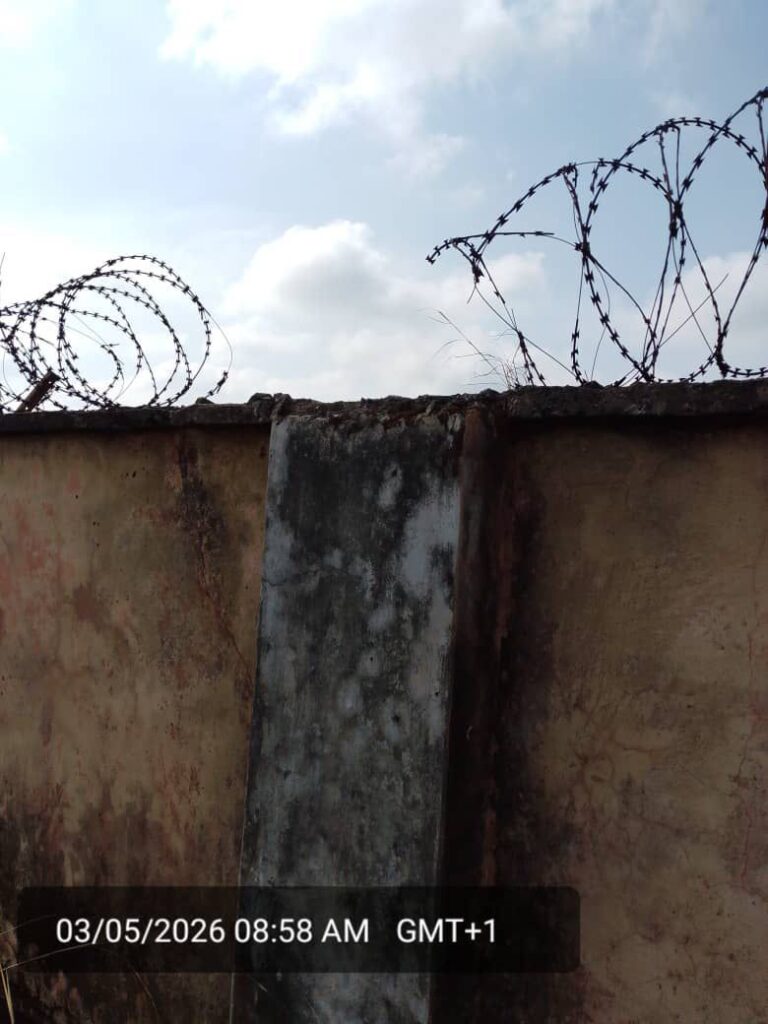
The sources disclosed that upon arrival, the troops intercepted the cattle, while the herder fled the scene on sighting security personnel.
According to the sources, the owner of the cattle, identified as Alhaji Mamuda Ibrahim, has since been contacted to facilitate an amicable resolution of the incident.
They added that the situation was brought under control without further escalation.
The sources noted that efforts are ongoing to strengthen community engagement and prevent recurrence of similar incidents in the area.
Troops Intervene in Farm Destruction Incident in Plateau, Move for Peaceful Resolution
Troops Rescue Five Kidnap Victims in Kogi After Pursuit of Abductors
By Zagazola Makama
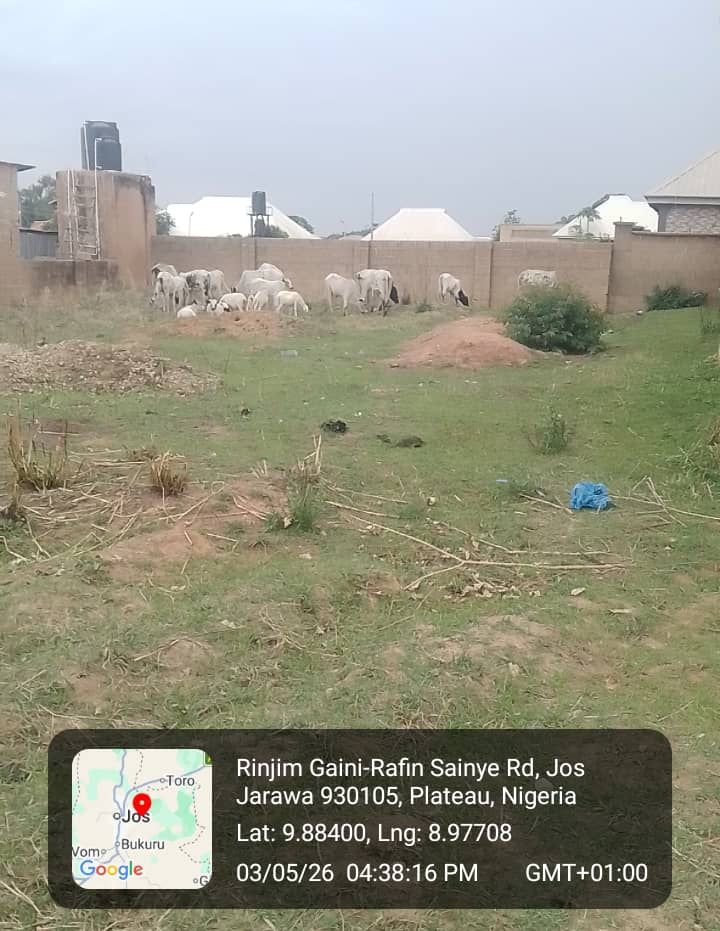
Troops of the Nigerian Army have rescued five kidnapped victims following a swift response to a kidnap incident along the Okpella–Okene Road in Okene Local Government Area of Kogi State.
Security sources said the operation was carried out at about 12:43 a.m. on May 3 by troops of 195 Battalion (Reinforced) deployed at Forward Operating Base Okpella.
The sources disclosed that the troops, while on night patrol, responded to a distress call indicating that a vehicle had been attacked and its occupants abducted.
According to the sources, the troops immediately pursued the kidnappers, forcing them to abandon the victims and flee into the surrounding bush.
They added that five victims were successfully rescued during the operation, while two of them sustained injuries.
The injured victims were evacuated to the ENAW Dialysis Centre for medical attention, while others were stabilised.
The sources noted that follow-up operations are ongoing to track down the fleeing suspects and prevent further criminal activities along the axis.
Troops Rescue Five Kidnap Victims in Kogi After Pursuit of Abductors

Where Justice Mark Chidiebere Crossed the Line
By Zagazola Makama
The recent arrest and handover of Justice Mark Chidiebere, popularly known as Justice Crack, to the Department of Security Services has sparked predictable debates about free speech, accountability, and the limits of online activism. But beneath the noise lies a more serious issue one that goes beyond blogging and into the sensitive terrain of national security.
From available details, the turning point was not mere criticism of the military. Democracies tolerate, and even benefit from, scrutiny of their institutions. The red line appears to have been crossed when private conversations between the blogger and serving soldiers suggested alignment around “change of government.” In any country, that phrase, especially when involving active-duty personnel is not taken lightly. No professional military, whether in Nigeria or elsewhere, would ignore such signals once credible evidence emerges.
The Nigerian Army’s response, therefore, should be viewed through that lens. This is an institution that has, in recent months, remained alert to internal and external threats, including failed attempts by rogue elements to destabilise the system. When a civilian is perceived rightly or wrongly to be encouraging disaffection or coercing soldiers within the ranks, it triggers an entirely different category of concern. At that point, it is no longer about opinion, it becomes a question of discipline, cohesion, and national stability.
This is where many content creators must draw a hard lesson. The digital space is not a vacuum. Conversations especially with uniformed personnel carry consequences. Amplifying unverified allegations, engaging soldiers in sensitive political discussions, or projecting narratives that could be interpreted as incitement can quickly move from advocacy into dangerous territory. The line is not always visible, but it is very real.
There is also the broader issue of responsibility. Too often, fragments of internal grievances are pushed into the public domain without context or verification, feeding a cycle where the military is portrayed only through its shortcomings. While criticism is legitimate, a pattern of reckless amplification erodes public confidence and, more importantly, can embolden hostile actors who thrive on internal discord.
If indeed the conversations attributed to Justice Mark Chidiebere reflect attempts to influence serving soldiers toward political ends, then the response by authorities was not just expected; it was inevitable.
What we must all know is that freedom of expression does not extend to actions that could undermine the stability of the state. In an era where a single message can travel faster than any bullet, knowing where the line is and choosing not to cross it has never been more important.
Where Justice Mark Chidiebere Crossed the Line

Troops Intervene in Farm Destruction Incident in Plateau, Move for Peaceful Resolution

Troops Rescue Five Kidnap Victims in Kogi After Pursuit of Abductors

Where Justice Mark Chidiebere Crossed the Line

Roger Federer’s Shock as DNA Results Reveal Myla and Charlene Are Not His Biological Children

THE PLIGHT OF FARIDA

FAILED COUP IN BURKINA FASO: HOW TRAORÉ NARROWLY ESCAPED ASSASSINATION PLOT AMID FOREIGN INTERFERENCE CLAIMS
-
 News2 years ago
Roger Federer’s Shock as DNA Results Reveal Myla and Charlene Are Not His Biological Children
-
Opinions4 years ago
THE PLIGHT OF FARIDA
-
 News1 year ago
FAILED COUP IN BURKINA FASO: HOW TRAORÉ NARROWLY ESCAPED ASSASSINATION PLOT AMID FOREIGN INTERFERENCE CLAIMS
-

 News2 years ago
EYN: Rev. Billi, Distortion of History, and The Living Tamarind Tree
-
 Opinions4 years ago
POLICE CHARGE ROOMS, A MINTING PRESS
-

 ACADEMICS2 years ago
A History of Biu” (2015) and The Lingering Bura-Pabir Question (1)
-

 Columns2 years ago
Army University Biu: There is certain interest, but certainly not from Borno.
-

 Opinions2 years ago
Tinubu,Shettima: The epidemic of economic, insecurity in Nigeria
