
News
ECOWAS Commends Nigeria’s Commitment to Climate Change Issues

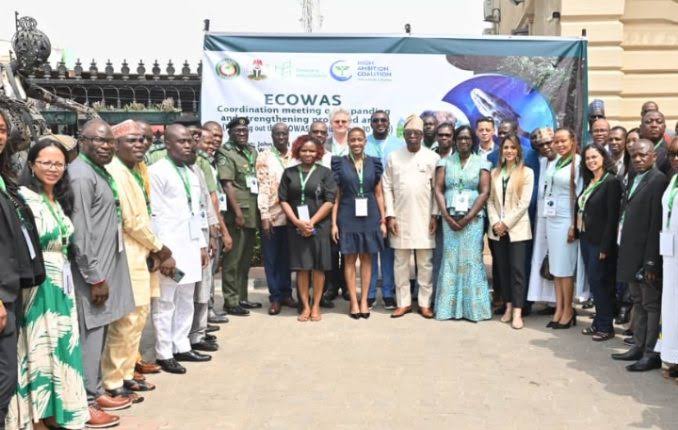
ECOWAS Commends Nigeria’s Commitment to Climate Change Issues
By: Michael Mike
The Economic Community of West African States (ECOWAS) has commended Nigeria for taking the issues of climate change seriously, noting that among the 15 member countries of the regional economic bloc, Nigeria alongside Benin and The Gambia are the three counties to have submitted their Strategy to the Secretariat of the United Nations Framework Convention on Climate Change (UNFCCC).
Speaking at the National Workshop on Socialization of Nigeria’s Long-Term Low Carbon Emission Development Strategy (LT-LEDS).in Abuja, the ECOWAS Commissioner for Economic Affairs and Agriculture, Mrs. Massandjé Toure-Litse said: “As part of the Paris Agreement, ECOWAS Member States have all submitted their revised Nationally Determined Contributions (NDCs), the implementation of which calls for the mobilisation of all national actors in each country and the support of regional and international partners.
“Alongside these NDCs, countries are called upon to develop their long-term low- carbon emission development Strategy. To date, out of the 15 ECOWAS Member States, only three (3) countries (Benin, The Gambia, and Nigeria) have submitted their Strategy to the Secretariat of the United Nations Framework Convention on Climate Change. I would like to commend the Federal Republic of Nigeria for submitting this important document to fulfill its obligations under the Paris Agreement.”
Toure-Litse, who was represented by one of the Commission’s Director, Kofi Bernard noted that: “This achievement is in line with the declaration of the ECOWAS Head of States and Government adopted on Climate Change in December 2021, which also calls on Member States to develop their Long-term low-carbon emission development Strategy.”
She said: “The Commission is delighted to support the socialization of the Federal Republic of Nigeria’s long-term low emission development strategy for the socialization with a view to ensuring better ownership and effective contribution of all national stakeholders in its implementation.”
On his part, the Director General of the
National Council on Climate Change (NCCC), Dr. Salisu Dahiru said: “The LT LEDS is comprehensive and serves as a vehicle for transitioning Nigeria to its Net-zero Pathway by 2060. In particular, it identifies actionable programmes and policies that aim to accelerate the uptake of measures and technologies in and around a climate-resilient development pathway while working towards long-term quantifiable GHG emission reductions across Nigeria’s priority sectors.”
He said: “In November 2021, Nigeria passed the Climate Change Act that seeks to achieve low greenhouse gas emissions, green and sustainable growth by providing the framework to set a target to reach net zero between 2050 and 2070. With this regulatory framework, the Act established the National Council on Climate Change with the sole responsibility for the coordination and harmonization of national climate actions among several roles.
“The journey to net-zero emissions has thus begun, and it is already clear that the road will be rough. Nigeria’s position is balancing its socioeconomics with climate change initiatives. It is to be noted also that in order to mobilize adequate climate finance into the country, there is need for adequate regulatory frameworks and its implementation.”
He noted that: “Today, we have come together to socialize and present this decisive strategy, and so we have the opportunity to engage in meaningful dialogues, share insights, and build partnerships that will drive the successful implementation of the LT-LEDS. This workshop will serve as a catalyst for change, a space for learning, and a forum for collective action, as we strive to shape a future where Nigeria thrives as a global leader in low-emission development and climate resilience.”
He said: “The demonstrated leadership of President Bola Ahmed Tinubu in ensuring the reduction of Nigeria’s carbon footprint can be seen in the launch of several initiatives such as the Electric Buses Rollout Programme, the Carbon Market Activation Programme etc.. The present administration is providing all the necessary support to implement robust, enabling policies and frameworks.”
End


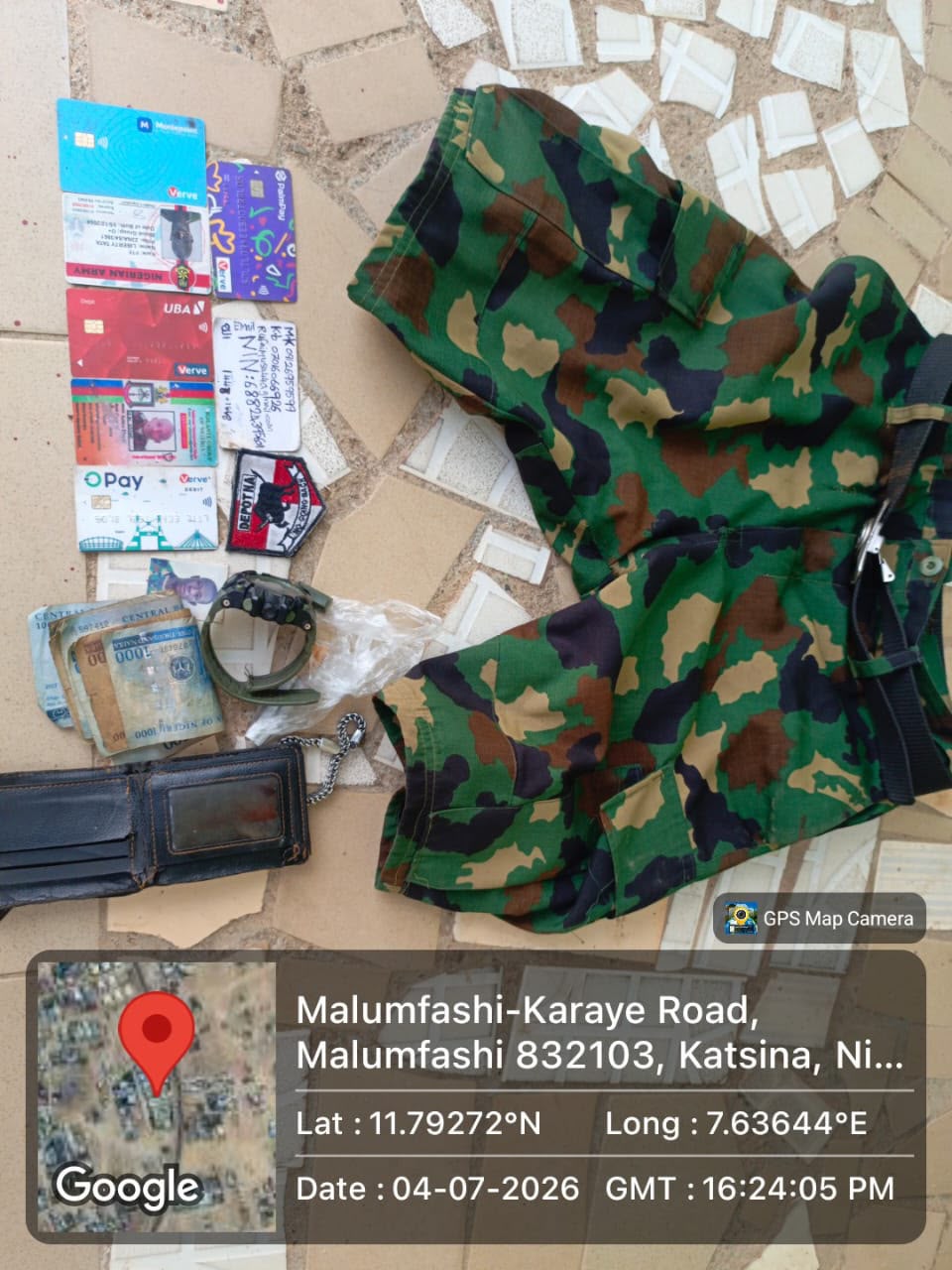
Troops Arrest Suspected Military Impostor in Katsina
By Zagazola Makama
Troops of 17 Brigade have arrested a suspected military impostor during a fighting patrol in Malumfashi Local Government Area.
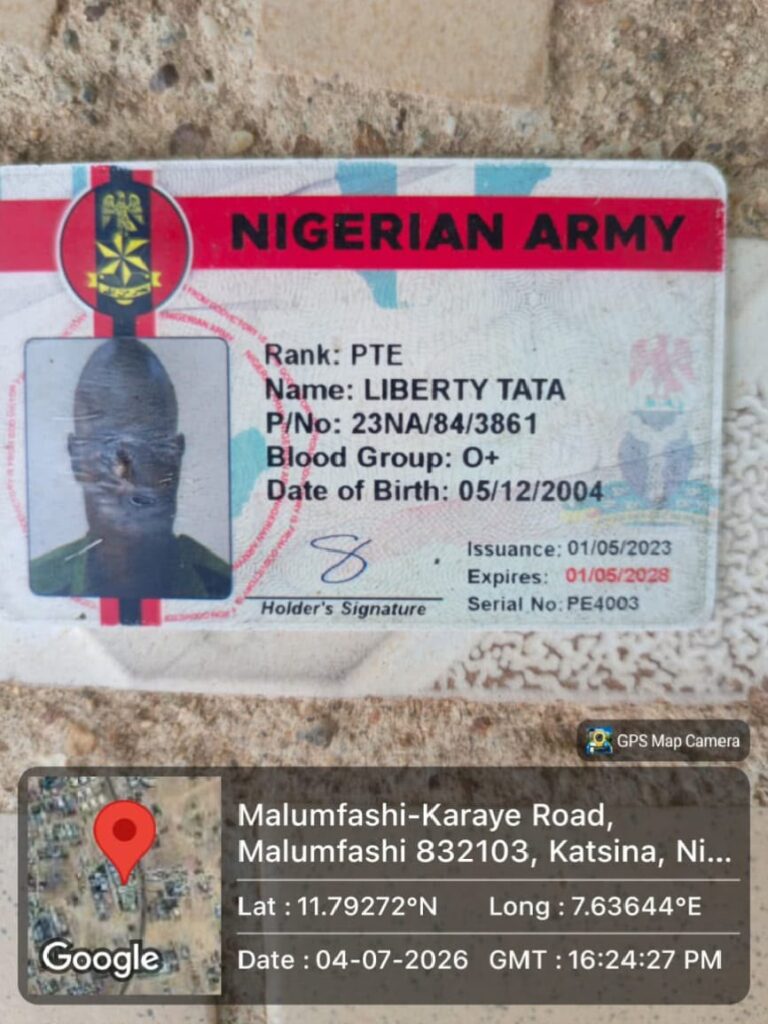
Security sources told Zagazola Makama that the suspect was apprehended at about 1:30 p.m. on July 4 by troops deployed at the Forward Operating Base (FOB) Malumfashi while conducting routine patrols within Malumfashi town.
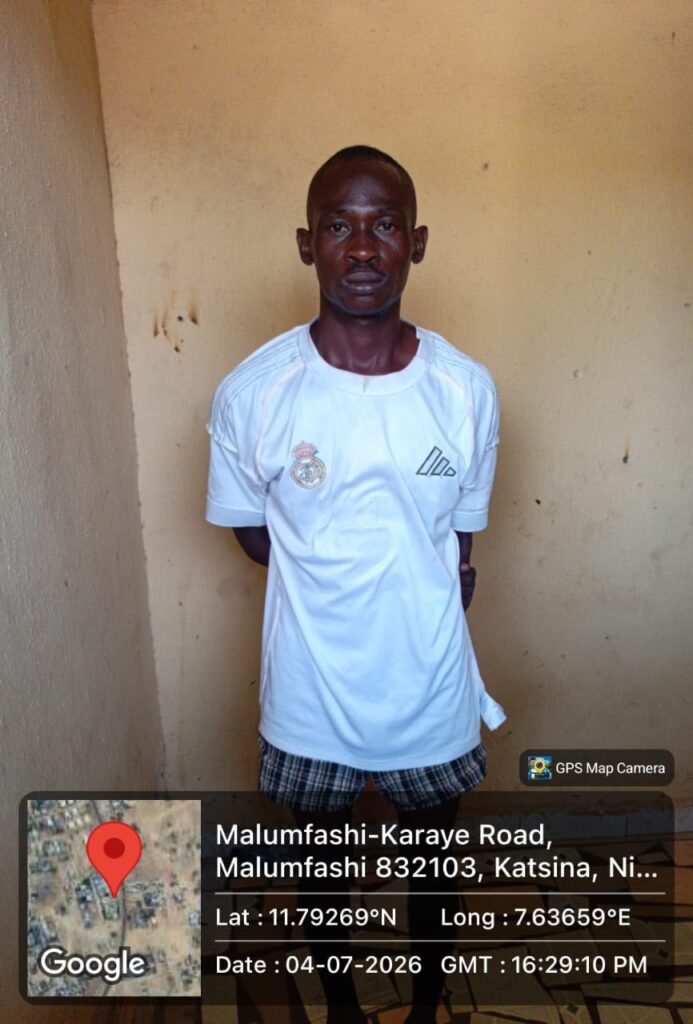
According to the sources, the suspect was intercepted while wearing a woodland camouflage three-quarter short, raising suspicion among the troops.
A search conducted on the suspect led to the recovery of a fake Nigerian Army identity card, four Automated Teller Machine (ATM) cards, one woodland camouflage three-quarter short, a wristwatch and the sum of ₦17,000.
The suspect and the recovered exhibits are currently in military custody pending further investigation.
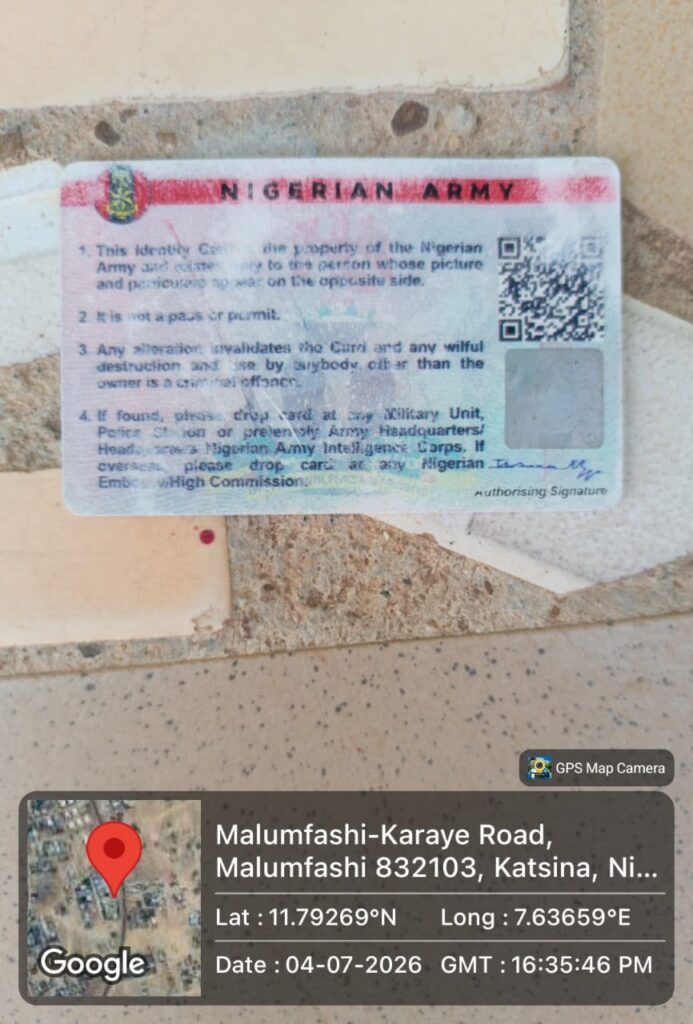
Military sources said the arrest forms part of ongoing efforts to curb impersonation of security personnel and other criminal activities within the area.
Troops Arrest Suspected Military Impostor in Katsina
Troops Recover 50 Rustled Cattle, Repel Suspected Rustlers in Kaduna
By Zagazola Makama
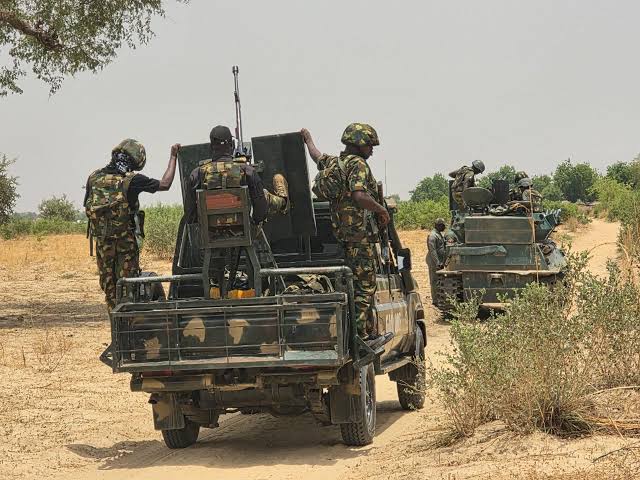
Troops deployed at the Forward Operating Base (FOB) Kankomi have recovered 50 rustled cattle after repelling suspected cattle rustlers during an ambush operation in Chikun Local Government Area.
Security sources told Zagazola Makama that the troops responded to a distress call at about 9:55 a.m. on July 4 over the activities of suspected rustlers at Ungwan Gontu community.
According to the sources, the troops swiftly laid an ambush and made contact with the fleeing suspects, forcing them to abandon the stolen livestock and escape into the surrounding area.
During the operation, the troops recovered 50 rustled cattle, which were subsequently identified and handed over to their rightful owner.
Military sources said efforts are ongoing to track down the fleeing suspects as security operations continue to combat cattle rustling and other criminal activities across Kaduna State.
Troops Recover 50 Rustled Cattle, Repel Suspected Rustlers in Kaduna
Troops Arrest Suspected Terrorist in Kogi, Suspect Confesses to Group Membership
By Zagazola Makama
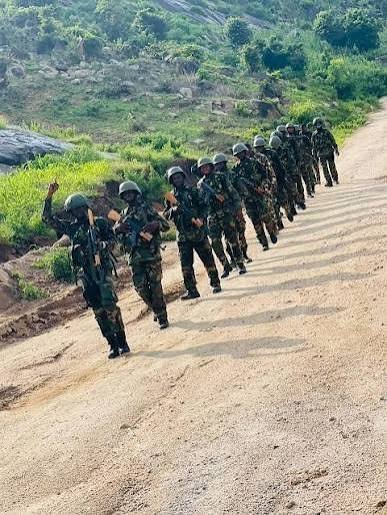
Troops of 12 Brigade, in collaboration with Office of the National Security Adviser (ONSA) Hybrid Forces, have arrested a suspected terrorist during an operation in Lokoja Local Government Area.
Security sources told Zagazola Makama that the troops responded at about 1:00 p.m. on July 4 to reports of a confrontation between local residents and a suspected terrorist at a Ruga settlement behind Obajana community.
According to the sources, the troops swiftly intervened and arrested one suspect at the scene.
During preliminary interrogation, the suspect reportedly confessed to being a member of a terrorist group led by an individual identified as Haruna, which allegedly operates within the Okene general area.
The suspect is currently in military custody and is undergoing further investigation to establish the extent of his involvement and identify other members of the group.
Military sources said the arrest forms part of ongoing security operations aimed at dismantling terrorist and criminal networks across Kogi State.
Troops Arrest Suspected Terrorist in Kogi, Suspect Confesses to Group Membership

Troops Arrest Suspected Military Impostor in Katsina

Troops Recover 50 Rustled Cattle, Repel Suspected Rustlers in Kaduna

Troops Arrest Suspected Terrorist in Kogi, Suspect Confesses to Group Membership

Roger Federer’s Shock as DNA Results Reveal Myla and Charlene Are Not His Biological Children

THE PLIGHT OF FARIDA

FAILED COUP IN BURKINA FASO: HOW TRAORÉ NARROWLY ESCAPED ASSASSINATION PLOT AMID FOREIGN INTERFERENCE CLAIMS
-
 News2 years ago
Roger Federer’s Shock as DNA Results Reveal Myla and Charlene Are Not His Biological Children
-
Opinions4 years ago
THE PLIGHT OF FARIDA
-
 News1 year ago
FAILED COUP IN BURKINA FASO: HOW TRAORÉ NARROWLY ESCAPED ASSASSINATION PLOT AMID FOREIGN INTERFERENCE CLAIMS
-

 News2 years ago
EYN: Rev. Billi, Distortion of History, and The Living Tamarind Tree
-
 Opinions5 years ago
POLICE CHARGE ROOMS, A MINTING PRESS
-

 ACADEMICS2 years ago
A History of Biu” (2015) and The Lingering Bura-Pabir Question (1)
-

 Columns2 years ago
Army University Biu: There is certain interest, but certainly not from Borno.
-

 Politics1 year ago
2027: Why Hon. Midala Balami Must Go, as Youths in Hawul and Asikira/Uba Federal Constituency Reject ₦500,000 as Sallah Gift
