National News
ECOWAS Court President Calls for Stronger Institutional Collaboration, Efficiency, and Accountability at 2025 Judicial Retreat

By: Michael Mike
Abuja-Nigeria, 26 October 2025 – Honourable Justice Ricardo Cláudio Monteiro Gonçalves, President of the ECOWAS Court of Justice, has called for renewed commitment to institutional collaboration, efficiency, and accountability as foundations of service in the Court. He made the call during the opening of the 2025 Judicial Retreat holding from 26 to 31 October 2025 at Zuma Resort in Niger State, Nigeria.
In his opening speech, Justice Ricardo Gonçalves welcomed participants and underscored the relevance of the annual retreat as a forum for reflection, accountability and institutional reinforcement. He commended the judges and staff for a productive judicial year and acknowledged the successful organisation of the 2025/2026 Legal Year Opening Ceremony, which reaffirmed the central role of the judiciary in the ECOWAS integration framework.
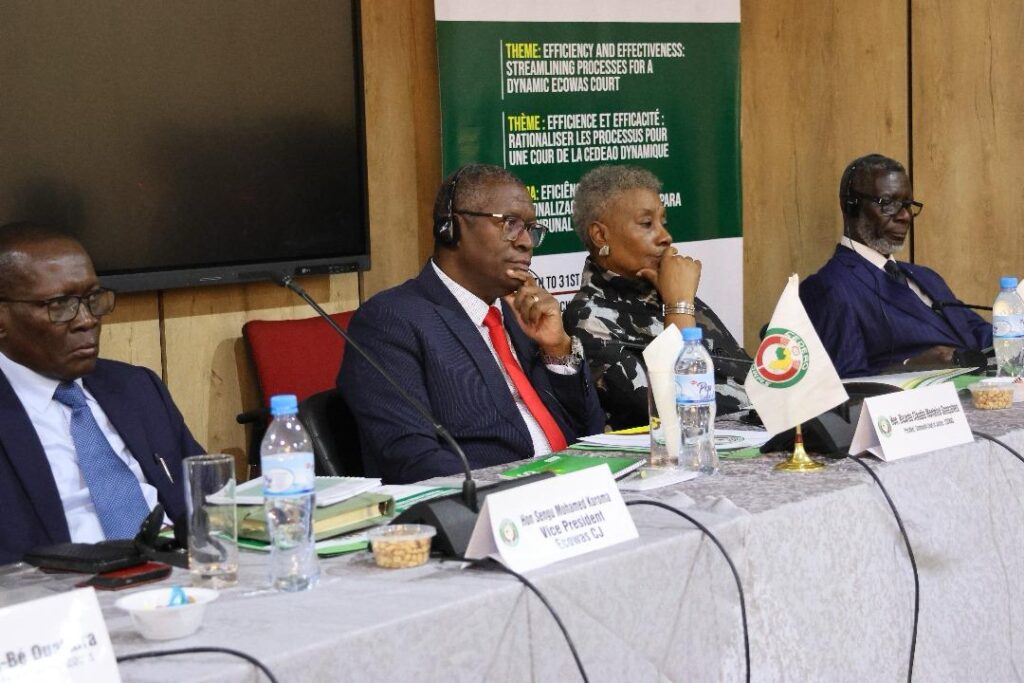
Justice Gonçalves also emphasised the importance of internal cohesion and institutional discipline to effective delivery of justice, stressing that the Court’s ability to deliver timely and impactful justice depends on the quality of its internal systems.
“The credibility of this Court is not written merely in our statutes. It is built daily through our conduct, our diligence and our unity of purpose. I therefore hope that this retreat will be not only a moment of reflection, but also a renewal of commitment, discipline and integrity in the service of justice,” he said.
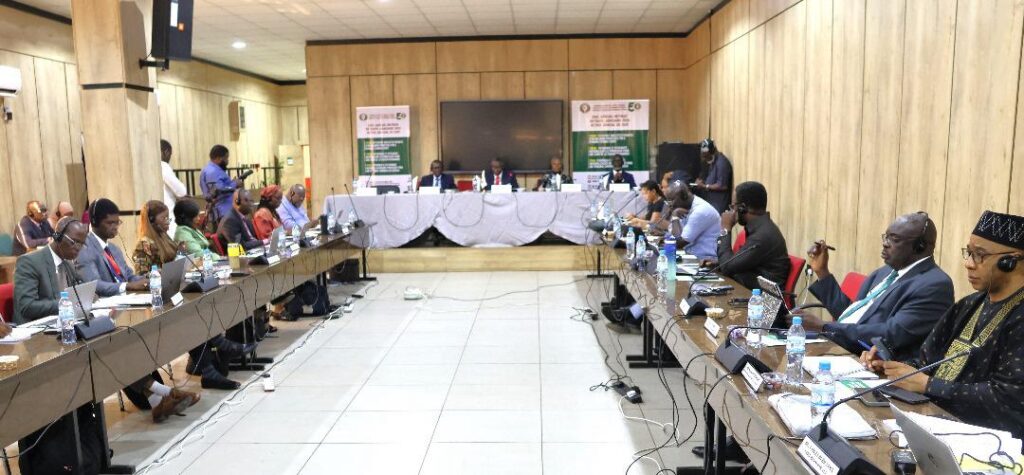
He outlined five priority areas that would guide the operations of the Court in the coming year. They include: strengthening collaboration between the judges’ chambers and all departments; institutionalising the implementation of retreat recommendations; upholding discipline and ethics as non-negotiable foundations of service in the Court; enhancing efficiency, transparency, and accessibility of judicial processes; and promoting unity and institutional loyalty within the Court.
In his remarks, Dr Yaouza Ouro-Sama, Chief Registrar of the Court presented the objectives and expected outcomes of the retreat. He said that the ‘retreat aims to reinforce the capacity of staff to effectively support the Honourable Judges in their judicial work. It addresses the critical need for improved efficiency, productivity and synergy in the execution of official duties.’ He added that the retreat will result in enhanced understanding of comparative practices of international courts and clear understanding of applicable procedural laws of the Court in the administration of justice.
The 2025 Judicial Retreat will feature detailed assessments of departmental performance based on the Court’s annual performance report, a review of the implementation status of previous retreat recommendations, and discussions on comparative judicial practices in areas such as summary hearings, interim measures, accelerated procedure and judicial reforms.
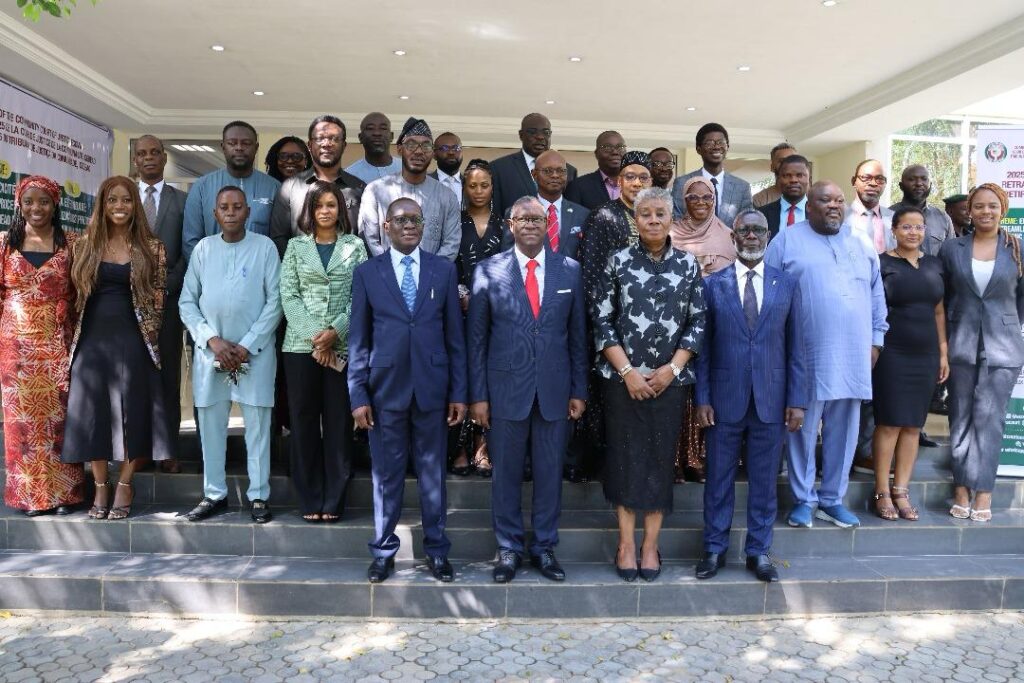
The Retreat which is being held under the theme ‘Efficiency and Effectiveness: Streamlining Processes for a Dynamic ECOWAS Court’ brings together the college of judges, registry staff, and legal officers to reflect, review institutional performance, and define strategic priorities for the coming year. Expected resolutions of the Retreat include the adoption of the Annual Performance Report of the Court for October 2024–October 2025 and a Manual of Disciplinary Procedure for Staff of the Court.
ECOWAS Court President Calls for Stronger Institutional Collaboration, Efficiency, and Accountability at 2025 Judicial Retreat
National News
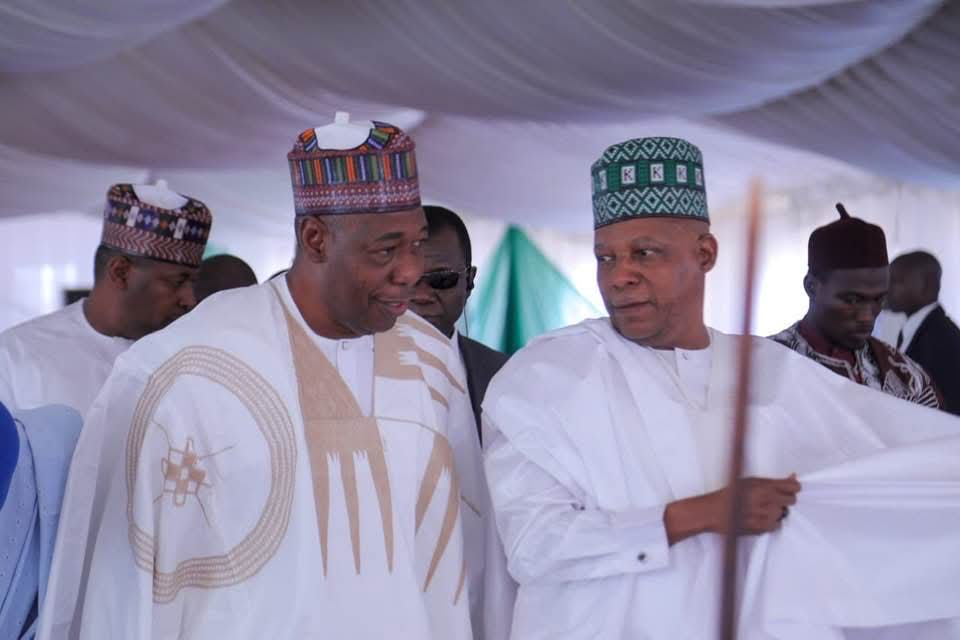
VP SHETTIMA AT NEC CONFERENCE: Inclusive Growth, Economic Progress Must Filter Down To Everyday Lives Of Nigerians
Urges Council members to remain engine room for consensus-building, coordinated action between FG, states
Says confab demonstrates harmonious relationship President Tinubu has shared with NEC
By: Our Reporter
Following the address of President Bola Ahmed Tinubu, GCFR, at the second edition of the National Economic Council (NEC) conference, Vice President Kashim Shettima has implored governors of the 36 states of the federation, ministers and other public officials to work towards achieving the kind of inclusive growth and economic progress that trickle down to the everyday lives of Nigerians.
According to him, the prevailing wisdom among developed economies has moved beyond growth for its own sake to sustainable growth that accommodates all citizens.

The Vice President, who stated this on Monday in Abuja while delivering his keynote address during the National Economic Council (NEC) Conference, described the two-day confab as a continuation of government’s covenant with the Nigerian people.
“The inclusive growth on our radar is not an exercise in sloganeering. We have confronted the macroeconomic obstacles before us. What remains is to ensure that progress filters down to the everyday lives of our people. This is precisely why the National Economic Council remains the most suitable vehicle for delivering the promise of inclusive growth.
“Our mission is incomplete if a child born in Lafia does not have the same chance to thrive as one born in Lagos; if the farmer in Makurdi, the entrepreneur in Aba, and the student in Sokoto cannot all find dignity, opportunity, and hope within the Nigerian dream,” he declared.
Senator Shettima pointed out that while the NEC conference is a moment to take stock of the tasks ahead, the event also demonstrates the harmonious relationship President Bola Ahmed Tinubu has shared with NEC through the “memorable years of inevitable and transformative reforms aimed at resetting the foundations” of the nation’s economy.
He applauded President Tinubu for improving Nigeria’s economic fortunes, noting that it would be difficult for anyone to deny the sincerity with which the President “has honoured his promise to insulate the Nigerian economy in a world increasingly shaped by geopolitical tensions and rising economic protectionism.”

On what the conference intends to achieve, VP Shettima explained that it “presents a unique opportunity to onboard new Governors” and deepen the shared understanding of NEC’s role in shaping Nigeria’s economic destiny.
Among others, he said the two-day retreat seeks to “align federal and state strategies with the National Development Plan (2021–2025) and the Nigeria Agenda 2050, especially in poverty reduction, job creation, and social protection.”
Senator Shettima outlined the objectives of the confab to include strengthening collaboration across regions through practical frameworks for inter-regional trade, investment, and infrastructure, harnessing the comparative advantages of each geopolitical zone.
He said the conference will also explore “pathways for fiscal sustainability at both federal and subnational levels, reforming tax systems and enhancing internally generated revenue without overburdening our people; and to ensure that NEC’s resolutions translate into legislative and executive action that delivers tangible outcomes at federal, state, and community levels.”
The Vice President urged participants at the conference “to be bold in thought, courageous in questioning the status quo, and resolute in crafting an implementable roadmap that speaks not just to growth, but to growth that is inclusive, sustainable, and transformative.
“History will not judge us by what we discuss, but by the clarity of the actions and the impact inspired by such decisions. May this conference mark another step towards a nation that works for all its people,” he added.
In his welcome remarks, Minister of Budget and Economic Planning, Senator Atiku Bagudu, lauded the efforts and contributions of NEC to gains recorded in the economy, just as he commended the Vice President for his leadership and state Governors for their commitment to the ideals of the Renewed Hope Agenda.
Senator Bagudu expressed hope that the NEC conference will provide the forum with an opportunity to generate the consensus needed to support the creation of the trillion dollar economy.

For his part, Chairman of the Nigerian Governors’ Forum, Governor AbdulRahman AbdulRazaq of Kwara State, represented by Governor Dapo Abiodun of Ogun State, said the conference was holding at a time where the country is undertaking a deliberate reset targeted at repositioning the economy for sustainable development.
He pledged the support of the states in delivering inclusive growth and sustainable national development as enshrined in the Renewed Hope National Development Plan.
VP SHETTIMA AT NEC CONFERENCE: Inclusive Growth, Economic Progress Must Filter Down To Everyday Lives Of Nigerians
National News
55 Years of Win-Win: Nigeria and China’s Growing Partnership
By Raphael Oni
February 10, 2026, marks a significant milestone in Nigeria-China relations, as the two countries celebrate 55 years of diplomatic ties. Over the years, their partnership has blossomed into a comprehensive strategic cooperation, with China emerging as one of Nigeria’s largest trading partners and investors.
“China and Nigeria are entering a new phase in their bilateral relationship — one that aims to move beyond the traditional, trade-heavy dynamic towards a mutually beneficial development model,” said President Xi Jinping.
The relationship between Nigeria and China is built on mutual respect, trust, and cooperation. The Forum on China-Africa Cooperation (FOCAC) has played a pivotal role in strengthening ties between China and Africa, including Nigeria. Established in 2000, FOCAC has provided a platform for China and African countries to discuss issues of mutual interest, promote economic cooperation, and enhance cultural exchanges.
“Over the years, China and Nigeria have built a strategic partnership anchored on mutual respect, shared aspirations and practical cooperation,” said Hon. Yakubu.
One of the key areas of cooperation between Nigeria and China is infrastructure development. China’s Belt and Road Initiative (BRI) has been instrumental in transforming Nigeria’s infrastructure landscape. The BRI has facilitated the construction of critical infrastructure projects, including the Abuja-Kaduna, Lagos-Ibadan, and Ibadan-Kano rail lines, as well as the expansion and modernization of Nigeria’s international airports.
“The synergy between Nigeria’s resource-rich economy and China’s technological prowess presents vast opportunities for cooperation in areas such as infrastructure development, trade, and security,” noted Ambassador Amedu Ode while speaking on the partnership between the two countries.
The Lekki Deep Seaport, a flagship BRI project, has become a game-changer for Nigeria’s economy, enhancing the country’s trade capacity and positioning it as a major logistics hub in West Africa. China’s investments in Nigeria’s infrastructure have not only improved transportation networks but also created jobs and stimulated economic growth.
The Ministry of Foreign Affairs has reaffirmed Nigeria’s commitment to strengthening bilateral relations with the People’s Republic of China following a courtesy visit by the Chargé d’Affaires of the Chinese Embassy, Zhou Hongyou, to the Spokesperson of the Ministry, Kimiebi Ebienfa, in his office recently. The Spokesperson in a chat with media said, “Nigeria have very cordial relations with the People’s Republic of China. It is a relationship based on mutual respect and cooperation in various areas that spans across economic, cultural, technological transfer etc to mention but few.” He noted that the relationship has direct impact on Nigeria economy, creating jobs, building capacity, technology transfer and many more.
Ebienfa said both sides reaffirmed at the meeting the shared commitment of Nigeria and China toward deepening diplomatic engagement, enhancing institutional cooperation and expanding people-to-people exchanges for mutual benefit. The discussions also focused on the importance of reciprocal visits, study tours and exposure programmes for diplomats to enhance mutual understanding, including short-term and specialized training programmes in governance, administration, strategic communication and public diplomacy. Reference was made to training initiatives coordinated by Chinese academic institutions, particularly Peking University, aimed at promoting experience-sharing among developing countries. “China is prepared to be a partner of Nigeria to stand up to challenges,” said Zhou Hongyou.
Nigeria and China have also strengthened their cooperation in the areas of trade, investment, and technology. China is Nigeria’s largest trading partner, with bilateral trade reaching $21.89 billion in 2024. Nigeria exports crude oil, liquefied natural gas, and other commodities to China, while China exports machinery, electronics, and textiles to Nigeria.
In 2018, Nigeria and China signed a $2.4 billion currency swap deal, which has helped to boost trade and investment between the two countries. China has also established a number of industrial parks and special economic zones in Nigeria, providing a platform for Chinese companies to invest and operate in the country.
“The relationship between Nigeria and China has yielded tangible benefits for both countries, from infrastructure to technology, trade, education and cultural exchanges,” said Joseph Tegbe, Director-General of Nigeria-China Strategic Partnership.
In addition to economic cooperation, Nigeria and China have also strengthened their cultural and educational ties. China has established Confucius Institutes in several Nigerian universities, promoting Chinese language and culture. Nigeria and China have also signed agreements on cooperation in education, science, and technology. “Nigeria has consistently upheld the One-China principle as the basis of its relations with the People’s Republic of China,” stated the Nigeria-China Strategic Partnership.
Nigeria and China have strengthened their bilateral ties, elevating their relationship to a Comprehensive Strategic Partnership in September 2024. This partnership aims to enhance cooperation in infrastructure, technology, education, and cultural exchanges.
Key Areas of Cooperation: China’s involvement in Nigeria spans multiple sectors, driving development across the country. While China maintains a policy of non-interference in Nigeria’s internal politics, its footprint is evident in various key areas. Let us examine the following:
Infrastructure Development: China has contributed significantly to Nigeria’s infrastructure growth, including the construction of roads, bridges, railways (e.g., Abuja-Kaduna and Lagos-Ibadan rail projects), and ports.
Economic Ties: Nigeria is China’s largest engineering contract recipient in Africa and its second-largest export market. Bilateral trade reached $21.89 billion in 2024, with China’s imports from Nigeria totaling $2.99 billion.
Energy and Power: China has invested in Nigeria’s energy sector, supporting projects like the Mambilla Hydroelectric Power Plant and providing solar energy solutions.
Belt and Road Initiative (BRI): Nigeria is a key partner in China’s BRI, with projects like the Lekki Deep Seaport enhancing Nigeria’s trade capacity and positioning it as a major logistics hub in West Africa.
Telecommunications: Chinese companies like Huawei and ZTE have played a major role in expanding Nigeria’s telecom infrastructure, including 4G networks and fibre-optic cables.
Manufacturing and Industrialization: China has established manufacturing hubs in Nigeria, focusing on industries like textiles, cement, and steel production.
Agriculture: China has supported Nigeria’s agricultural development through initiatives like the China-Nigeria Agricultural Technology Demonstration Centre.
Healthcare: China has contributed to Nigeria’s healthcare sector through medical infrastructure development, equipment supply, and training programs.
Education and Capacity Building: China offers scholarships and training programs for Nigerian professionals, promoting knowledge transfer and capacity development.
People-to-People Exchanges: The China-Nigeria Friendship Hospital in Abuja provides medical services to Nigerians, with 200,000 patient visits annually and training for over 1,000 medical professionals.
Strategic Partnership: The Comprehensive Strategic Partnership establishes cooperation in technology, education, and cultural exchanges, promoting mutual growth and global stability.
The diplomatic relations between Nigeria and China, established on February 10, 1971, have been marked by a series of high-level visits that underscore the deepening ties between the two nations. Over the years, these exchanges have fostered cooperation, mutual understanding, and robust partnerships.
“The Comprehensive Strategic Partnership between Nigeria and China is expected to drive economic growth, improve infrastructure, and enhance Nigeria’s global standing,” said Yu Dunhai, Chinese Ambassador to Nigeria.
The comprehensive strategic partnership between Nigeria and China has yielded significant benefits for both countries. Nigeria has gained access to much-needed infrastructure financing and technical expertise, while China has secured a reliable source of energy and a growing market for its goods and services. As Nigeria and China look to the future, there are opportunities for further cooperation in areas such as agriculture, healthcare, and renewable energy. The two countries can also work together to promote regional integration and stability in Africa.
The diplomatic relations between Nigeria and China, established on February 10, 1971, have been marked by a series of high-level visits that underscore the deepening ties between the two nations. Over the years, these exchanges have fostered cooperation, mutual understanding, and robust partnerships.
Chinese leaders have played a significant role in shaping the relationship. Vice Premier Geng Biao’s visit in October 1978 laid the groundwork for strengthened bilateral relations. This was followed by Vice Premier Huang Hua’s visit in November 1981, which further solidified ties. Vice Premier Tian Jiyun’s visit in November 1984 marked a significant milestone in economic cooperation. President Hu Jintao’s visits in 2004 and 2006 underscored China’s commitment to Nigeria’s development. Most recently, Wang Yi, Member of the Political Bureau of the CPC Central Committee and Foreign Minister, visited Nigeria in January 2025, highlighting the growing strategic partnership.
Nigerian leaders have also made significant contributions to the relationship. Head of State, Gen. Yakubu Gowon’s visit in September 1974 was a pioneering step in Nigeria-China relations. President Olusegun Obasanjo’s visits in April 1999 and August 2001 strengthened economic ties. President Goodluck Jonathan’s state visit in July 2013 marked a significant milestone in bilateral cooperation. President Muhammadu Buhari’s visit in April 2018 further deepened ties. Vice President Kashim Shettima’s participation in the Third Belt and Road Forum in October 2023 highlighted Nigeria’s engagement with China’s global initiatives. President Bola Tinubu’s visit in September 2024, attending the Beijing Summit of the Forum on China-Africa Cooperation, reinforced Nigeria’s commitment to the partnership.
These high-level visits have woven a tapestry of cooperation, driving progress in trade, investment, infrastructure, and cultural exchange. As Nigeria and China continue to navigate the complexities of a rapidly changing world, their partnership remains a beacon of mutual respect and shared aspirations. These visits have strengthened bilateral ties, with agreements signed on trade, investment, infrastructure development, and cultural exchange.
President Goodluck Jonathan’s 2013 visit led to agreements on a $1.1 billion loan for infrastructure projects, defense cooperation, economic and technical cooperation, and visa exemptions for diplomatic and official passport holders.
In January 2017, Wang Yi’s Visit to Nigeria, Nigeria signed the One China Principle, acknowledging Taiwan as part of China. Nigeria obtained a $40 billion investment pledge from China.
In April 2018, President Muhammadu Buhari‘s Visit to China and Signed agreements worth over $6 billion, including: $1 billion for the Ogun-Guangdong Free Trade Zone, $200 million for gas facilities, $478 million for a 300MW solar power project, $55 million for a granite mining plant, Agreed on a $2.4 billion currency swap deal.
In September 2024, Presidents Xi Jinping and Bola Tinubu announced the elevation of China-Nigeria relations to a comprehensive strategic partnership. Agreements signed during the visits includes; Belt and Road Initiative cooperation, Nuclear energy cooperation, Human resource development, Media exchange and cooperation. His Excellency Wang Yi’s Visit to Nigeria in January 2025 witnessed discussion on cooperation in clean energy, defense, and finance, Nigeria and China agreed to expand the $2 billion currency swap agreement. “China’s commitment to Africa, including Nigeria, is guided by the principle of sincerity, real results, amity and good faith” said Ms. Yan Yuqing, Consul General in Nigeria.
Following President Tinubu’s visit to Beijing in September 2024, Nigeria established a Comprehensive Strategic Partnership with China, with Joseph Tegbe serving as Director General. Tegbe’s extensive international experience has been a significant asset in strengthening China-Nigeria relations. He has led several strategic visits to China and hosted high-level Chinese delegations in Nigeria, contributing to the growth of the partnership between these fraternal nation.
One of the visit hosted by the Nigeria-China Strategic Partnership (NCSP) included a high-powered delegation from the Central Party School of the Communist Party of China (CPC) in Abuja, marking a significant milestone in bilateral institutional cooperation. The visit focused on governance, public service reform, investment, and strategic development planning.
The Chinese delegation, led by Vice President of the Central Party School, Professor Gong Weibin, during the dicussion with the Director General of NCSP reaffirmed Nigeria’s commitment to the One China Policy. Tegbe emphasized Nigeria’s desire to build a forward-looking development partnership founded on mutual respect, strategic coordination, and shared prosperity.
The Director-General of the Nigeria-China Strategic Partnership (NCSP), Mr. Joseph Tegbe in one of his high-level working visit to China, secured key partnerships aimed at driving Nigeria’s development. During his visit, Mr. Tegbe engaged with prominent Chinese companies, exploring opportunities for industrial cooperation and strategic development projects.
These strategic engagements are part of NCSP’s broader mission to build transformative partnerships that leverage China’s technological expertise while addressing Nigeria’s development priorities. The partnerships are expected to drive economic growth, improve infrastructure, and enhance the quality of life for Nigerians.
The NCSP DG’s visit to China demonstrates the organization’s commitment to fostering mutually beneficial relationships between Nigeria and China. The partnerships secured during the visit are expected to have a significant impact on Nigeria’s development, particularly in the areas of infrastructure, healthcare, and environmental sustainability.
These high-level visits have woven a tapestry of cooperation, driving progress in trade, investment, infrastructure, and cultural exchange. As Nigeria and China continue to navigate the complexities of a rapidly changing world, their partnership remains a beacon of mutual respect and shared aspirations.
In conclusion, the multifaceted engagements between Nigeria and China, spanning governmental collaborations and people-to-people connections, underscore a robust foundation for bilateral relations. As a student of international relations, it’s evident that the strategic partnership between these two nations is poised for significant growth, driven by mutual interests and shared developmental goals.
The synergy between Nigeria’s resource-rich economy and China’s technological prowess presents vast opportunities for cooperation in areas such as infrastructure development, trade, and security. Moreover, the cultural exchanges and people-to-people diplomacy initiatives have fostered a sense of camaraderie and shared destiny between the two nations.
As Nigeria and China continue to navigate the complexities of global geopolitics, their partnership is likely to play a pivotal role in shaping regional and international dynamics. With a strong foundation in place, a brighter shared future for China-Nigeria relations seems not only plausible but inevitable, promising benefits for both nations and the broader global community.
Raphael Oni, a renowned Nigerian journalist, diplomatic correspondent, and media consultant with over two decades of experience covering national and international news, focusing on diplomacy, politics, and global affairs. He’s been dubbed the “Dean of Diplomatic Reporters” due to his extensive expertise in diplomatic reporting.
NigeriaChinaPartnership
ChinaNigeriaRelations
Balancing the Narratives
ComprehensiveStrategicPartnership
BeltAndRoadInitiative
FOCAC
AfricaChinaCooperation
NigeriaChinaTies
GlobalSouthCooperation
End
National News
Nigeria Taps Into $7.7trn Global Halal Market As FG Launches National Economy Strategy
Says it’ll unlock $12bn economic value for Nigeria, position the nation as halal-friendly tourism destination
Minister of Industry, Trade and Investment to Chair Strategy Committee
By: Our Reporter
President Bola Ahmed Tinubu, GCFR, represented by Vice President, Senator Kashim Shettima, has launched Nigeria’s National Halal Economy Strategy aimed at positioning the country to tap into the $7.7 trillion global halal market and diversify its economy.
He described the unveiling of the strategy as a signal of Nigeria’s readiness to join the world in grabbing a huge chunk of the global halal economy already embraced by leading nations, as well as to clearly define the nation’s direction within the market expected to add an estimated $1.5 billion to the nation’s GDP by 2027.

Speaking on Thursday when he unveiled the Nigeria National Halal Economy Strategy at Presidential Villa, Abuja, Senator Shettima called for disciplined, inclusive, and measurable action for the strategy to deliver jobs, and shared prosperity across the country.
“It is with this sense of responsibility that I formally unveil the Nigeria National Halal Economy Strategy. This document is a declaration of our promise to meet global standards with Nigerian capacity and to convert opportunity into lasting economic value.
“What follows must be action that is disciplined, inclusive, and measurable, so that this Strategy delivers jobs, exports, and shared prosperity across our nation,” he stated.
“It is going to be chaired by the supremely competent Minister of Industry, Trade and Investment,” the Vice President added.
The Vice President outlined what he described as clear and measurable ambitions set by the Strategy, including”expanding halal-compliant food exports, developing pharmaceutical and cosmetic value chains, positioning Nigeria as a halal-friendly tourism destination, and mobilising ethical finance at scale,” by 2030.
The cumulative efforts, according to him, “are projected to unlock over twelve billion dollars in economic value, while strengthening food security, deepening industrial capacity, and creating opportunities for small-and-medium-sized enterprises across our states.”
Allaying concerns by those linking the halal with religious affiliation, VP Shettima pointed out that the global halal economy has since outgrown parochial interpretations.

He said, “It is no longer defined solely by faith, but by trust, through systems that emphasise quality, traceability, safety, and ethical production. These principles resonate far beyond any single community.
“They speak to consumers, investors, and trading partners who increasingly demand certainty in how goods are produced, financed, and delivered. It is within this broader understanding that Nigeria now positions itself.”
Many advanced Western economies, the Vice President noted, have since “recognised the commercial and ethical appeal of the halal economy and have integrated it into their export and quality-assurance systems.”
He listed developed countries, including the United Kingdom, France, Germany, the Netherlands, the United States, Canada, Australia, and New Zealand, saying they are currently among “leading producers, certifiers, and exporters of halal food, pharmaceuticals, cosmetics, and financial products.”
The VP noted that what these developed nations have experienced is a confirmation of a simple truth, that “the halal economy is a global market framework rooted in standards, safety, and consumer trust, not geography or belief.”
He explained that while the Nigeria National Halal Economy Strategy is the result of careful study and sober reflection, it was inspired by the commitment of the administration of President Bola Ahmed Tinubu “to diversify exports, attract foreign direct investment, and create sustainable jobs across the federation.
“It is also the product of deliberate partnership, developed with the Halal Products Development Company, a subsidiary of the Saudi Public Investment Fund, alongside Dar Al Halal Group Nigeria, with technical backing from institutions such as the Islamic Development Bank and the Arab Bank for Economic Development in Africa,” he added.
Recall that President Tinubu’s recent state visit to the Republic of Türkiye further reinforces Nigeria’s commitment to developing a globally competitive halal ecosystem.
A major outcome of that visit was the signing of an Agreement in the Field of Halal Quality Infrastructure between Nigeria and Türkiye, aimed at strengthening standards, accreditation, certification, and quality assurance systems to enhanc mome international acceptance of Nigerian halal products and services.
Commenting on the unveiling, Chairperson of the National Halal Strategy Committee and Minister of Industry, Trade and Investment, Dr. Jumoke Oduwole, said the launch of the Nigeria National Halal Strategy by the Vice President is a public-private collaboration that has involved extensive interaction with stakeholders.
She noted that the private sector led the charge in ensuring that it is a whole-of-government and whole-of-country intervention, with the Office of the Vice President coordinating all ministries, departments, and agencies, while the Federal Ministry of Industry, Trade and Investment played a pivotal role.
The minister stressed that what the Halal Strategy has done for Nigeria “is to position us among countries that export Halal-certified goods across the world.
“We are going to leverage the African Continental Free Trade Area (AfCFTA) to ensure we export our Halal-friendly goods to the rest of Africa and beyond to any willing markets; participation is voluntary,” she added, assuring that as chairperson, her ministry would deliver on the objectives of the strategy for the prosperity of the nation.
Earlier, the Chairman and CEO of Dar Al-Halal Group Nigeria Limited, Alhaji Muhammadu Dikko Ladan, expressed satisfaction that the Halal Product Development Company collaborated with the group in developing the National Halal Economy Strategy.
He added that, in addition to the strategy, an export programme is underway involving the Ministry of Trade and Investment, through which Nigerian companies can be onboarded into the Saudi Arabian market and beyond.
Ladan described the Strategy as a landmark opportunity for Nigeria as it creates market access and attracts foreign direct investment.
The French Ambassador to Nigeria, Marc Fonbaustier, represented by Carole Lebreton, Financial Counsellor at the French Embassy in Nigeria, said the Halal Strategy is also key to Nigeria–France relations, as the French government explores more ways to build socio-economic bridges with Nigeria.
She said the French government stands ready to support Nigeria’s export drive, especially in the areas of food, cosmetics, and pharmaceuticals.
The Nigerian delegation at the unveiling included the CEO of the Nigeria Export Promotion Council, Mrs Nonye Ayeni; Managing Director of the Bank of Industry, Mr Olasupo Olusi, and Special Adviser to the President on Job Creation and MSMEs, Temitola Adekunle Johnson, among others.
Developed by the Halal Products Development Company (HPDC) of the Kingdom of Saudi Arabia — a wholly owned subsidiary of the Saudi Public Investment Fund — the Strategy is an outcome of the bilateral cooperation agreement signed between Nigeria and HPDC in February 2025 at the Makkah Halal Forum.
The collaboration seeks to deepen Nigeria–Saudi Arabia economic relations while leveraging HPDC’s global reach to attract investment, improve market access, and integrate Nigeria into international halal value chains.
Nigeria Taps Into $7.7trn Global Halal Market As FG Launches National Economy Strategy
-
News2 years agoRoger Federer’s Shock as DNA Results Reveal Myla and Charlene Are Not His Biological Children

-
Opinions4 years agoTHE PLIGHT OF FARIDA
-
News10 months agoFAILED COUP IN BURKINA FASO: HOW TRAORÉ NARROWLY ESCAPED ASSASSINATION PLOT AMID FOREIGN INTERFERENCE CLAIMS
-

News2 years agoEYN: Rev. Billi, Distortion of History, and The Living Tamarind Tree
-

Opinions4 years agoPOLICE CHARGE ROOMS, A MINTING PRESS
-

ACADEMICS2 years agoA History of Biu” (2015) and The Lingering Bura-Pabir Question (1)
-

Columns2 years agoArmy University Biu: There is certain interest, but certainly not from Borno.
-

Opinions2 years agoTinubu,Shettima: The epidemic of economic, insecurity in Nigeria