
Uncategorized
ECOWAS, Energy China Explore Partnership to Strengthen West Africa’s Power Infrastructure

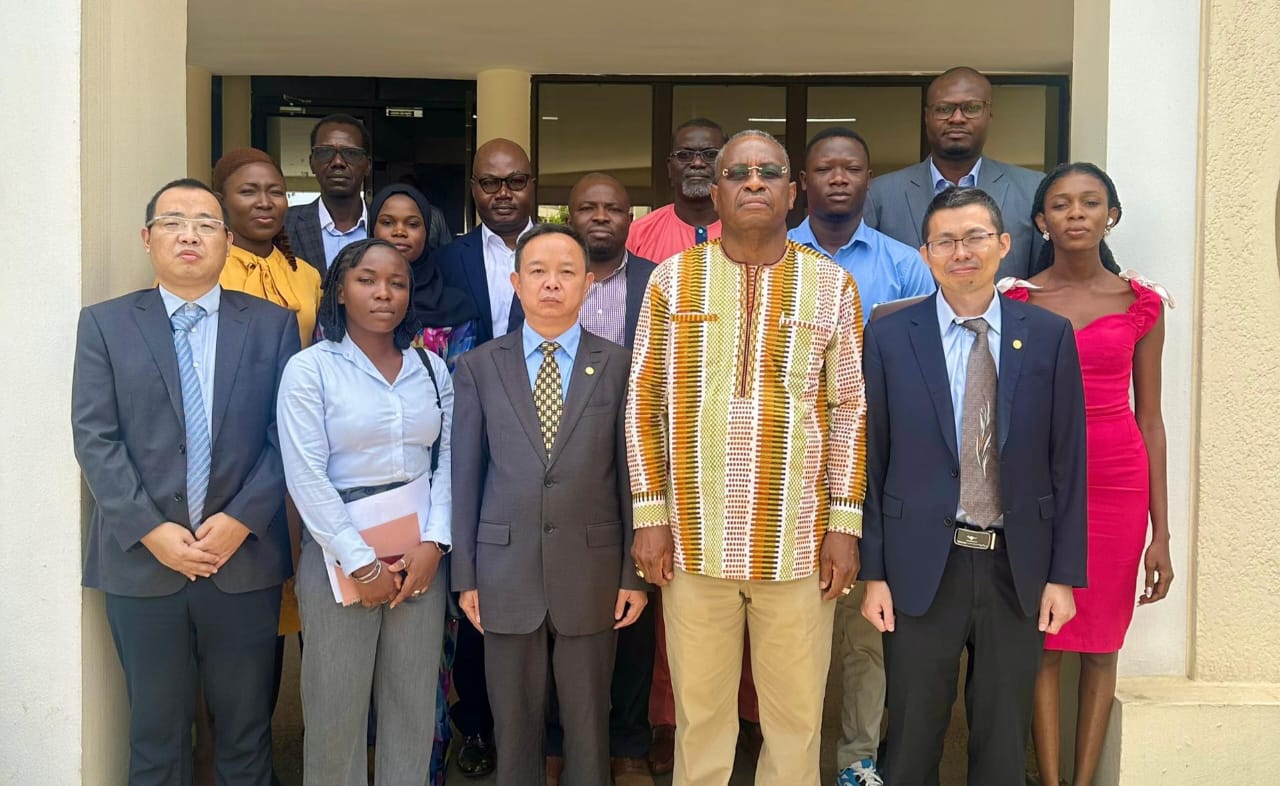
ECOWAS, Energy China Explore Partnership to Strengthen West Africa’s Power Infrastructure
By: Michael Mike
The Economic Community of West African States (ECOWAS) has begun discussions with Energy China International (CEEC) to deepen cooperation on the development of regional energy infrastructure aimed at expanding electricity access and strengthening power systems across West Africa.
The engagement took place during a meeting in Abuja, Nigeria, where officials from the ECOWAS Energy and Mines Directorate met with CEEC representatives to advance dialogue on priority regional energy projects.
The session also included participants from the West African Power Pool (WAPP), the regional body responsible for coordinating electricity generation and transmission among West African countries.
During the meeting, participants reviewed project portfolios, technical capabilities and potential financing channels designed to accelerate growth in the region’s power sector and support broader infrastructure development.
Discussions focused on exploring partnership opportunities and funding options for ECOWAS priority initiatives covering power generation, electricity transmission and distribution infrastructure.
Acting Director of Energy and Mines at ECOWAS, William Baidoe, provided an overview of the Directorate’s mandate and ongoing programmes aimed at improving energy access across the region. These include projects to expand electricity distribution networks as well as initiatives to develop energy storage systems that can enhance the stability and reliability of power supply.
Also speaking at the meeting, Director of Planning, Investment Programming and Environmental Safeguards at WAPP, Kodjo Afidegnon, outlined the status of several priority projects under the ECOWAS Master Plan for the Development of Power Generation and Transmission Infrastructure (2019–2033).
Among the flagship initiatives highlighted were the CLSG interconnection project linking Côte d’Ivoire, Liberia, Sierra Leone and Guinea; the North Core project connecting Nigeria, Niger, Burkina Faso and Benin; the OMVG interconnection linking Senegal, The Gambia and Guinea-Bissau; and the Medium Backbone project connecting Nigeria, Benin, Togo, Ghana and Côte d’Ivoire.
Afidegnon noted that the projects present significant financing and investment opportunities for development partners and international energy companies.
On behalf of CEEC, General Manager Huang Aijun highlighted the company’s expertise in conventional and renewable energy, grid expansion, power planning and electricity transmission infrastructure. He reaffirmed the company’s interest in supporting ECOWAS priority projects through technical support and access to diverse funding sources.
Both parties agreed to maintain close engagement on the identified projects in order to assess their development status and explore concrete areas of collaboration.
ECOWAS said the discussions reflect its continued efforts to build strategic partnerships and mobilise investments to improve electricity access, strengthen grid reliability and promote sustainable infrastructure development across West Africa.
ECOWAS, Energy China Explore Partnership to Strengthen West Africa’s Power Infrastructure


Uncategorized
NSCDC, TETFund Partner to Strengthen Security in Nigerian Tertiary InstitutionsMichael Olugbode in Abuja

NSCDC, TETFund Partner to Strengthen Security in Nigerian Tertiary Institutions
Michael Olugbode in Abuja
By: Michael Mike
The Nigeria Security and Civil Defence Corps (NSCDC) has partnered with the Tertiary Education Trust Fund (TETFund) and the International Academy for Gender and Peace (IAGP) to strengthen security management across tertiary institutions in the country.
The partnership was unveiled in Abuja on Tuesday as NSCDC Commandant General, Prof. Ahmed Audi, opened a four-day specialised workshop on Campus Security Management (CSM) for 600 Chief Security Officers (CSOs) drawn from tertiary institutions across the 36 states and the Federal Capital Territory (FCT).
Audi said the initiative had become necessary amid growing security threats confronting campuses, including cultism, violent extremism, kidnapping, gender-based violence, cybercrime, drug abuse and campus unrest.
He warned that the security challenges affecting the wider society were increasingly finding their way into academic environments, stressing that some individuals who later became involved in serious crimes such as banditry and kidnapping had begun their criminal activities while on campuses.
The NSCDC boss therefore charged the participating CSOs to adopt proactive approaches to campus security and continuously update their knowledge to meet emerging threats.
He urged them to remain vigilant and committed to protecting lives and property while respecting the fundamental human rights of students and staff.
The Course Director and President of IAGP, Prof. Frederick Tyoor, said the workshop was designed to re-tool campus security personnel with modern skills for identifying and addressing vulnerabilities before they develop into major security incidents.
Tyoor emphasised the importance of intelligence gathering and effective utilisation of security information, saying proactive intelligence could help neutralise threats before they materialise.
Representing TETFund Executive Secretary, Arc. Sunny Echono, Dr. Yusuf Gamawa reaffirmed the fund’s commitment to initiatives aimed at creating safe and conducive learning environments in tertiary institutions.
A goodwill message was also delivered by Prof. Bilyaminu Muhammed, Professor of Demography and Industrial Sociology at Nasarawa State University, Keffi.
The four-day workshop brings together experts from academia and security agencies to train participants on contemporary approaches to campus security management.
The initiative is expected to strengthen the capacity of Chief Security Officers to anticipate, prevent and respond effectively to security threats across Nigeria’s tertiary institutions.
NSCDC, TETFund Partner to Strengthen Security in Nigerian Tertiary Institutions
Michael Olugbode in Abuja
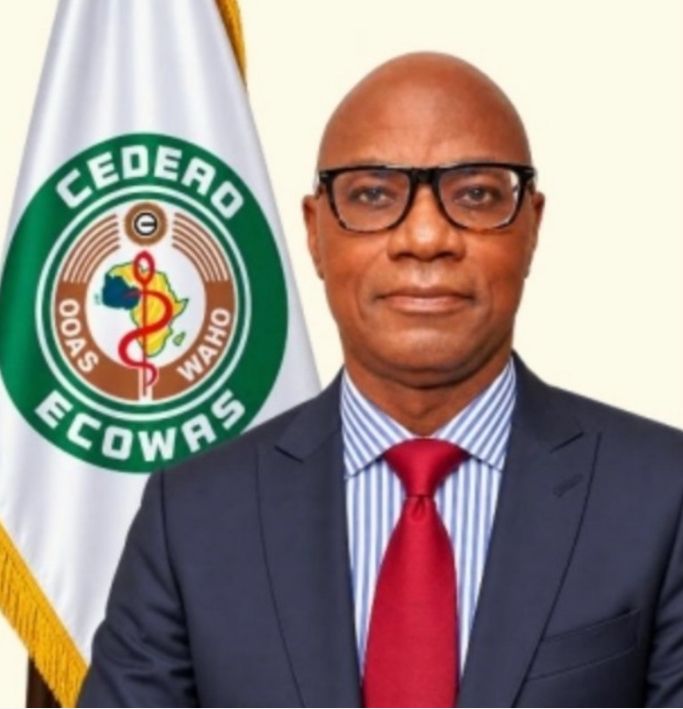
Togolese Public Health Expert Takes Charge of West Africa’s Health Agency
By: Michael Mike
The West African Health Organisation (WAHO), the specialised health institution of the Economic Community of West African States (ECOWAS), has entered a new leadership era with the assumption of office of Togolese public health expert, Professor Palokinam Pitché, as its Director-General.
Professor Pitché formally took over the leadership of the regional health body on Tuesday, September 1, 2026, with a mandate to strengthen health cooperation and support efforts to improve the wellbeing of populations across the ECOWAS region.
His emergence places a seasoned physician, public health specialist, academic and health-programme administrator at the helm of an institution responsible for promoting regional cooperation on health matters.
The ECOWAS Authority of Heads of State and Government had approved Pitché’s appointment for the 2026–2030 mandate at its 69th Ordinary Session in Lungi, Sierra Leone, in July. The final communiqué of the summit specifically listed Dr Palokinam Pitche of Togo as the new Director-General of WAHO.
Pitché comes to the regional position with more than 25 years of experience spanning public health administration, health-programme management, health-system strengthening and professional training.
Before his appointment, he served as National Coordinator of Togo’s National AIDS Control Programme between 2007 and 2012. In 2012, he became head of the Permanent Secretariat of Togo’s National Council for the Fight against AIDS and Sexually Transmitted Infections, a multisectoral structure attached to the Togolese Presidency.
His experience extends beyond Togo. Since 1996, he has undertaken consultancy assignments for major international health and development institutions, including the World Health Organisation (WHO), UNAIDS, USAID, WAHO, UNDP and UNFPA.
His assignments have included the development of health policies and strategic plans, resource mobilisation and efforts to harmonise HIV treatment protocols and postgraduate training curricula across ECOWAS countries.
The new WAHO chief is also a career academic.
A Professor of Dermatology and Venereology under CAMES since 2007, Pitché obtained his Doctor of Medicine degree from the University of Lomé and became an Associate Professor of Medicine in 2002.
His specialised training has covered dermatology and venereology, epidemiology, HIV, parasitology and tropical medicine, as well as immunology, vaccinology and biotechnology applied to infectious diseases. His training and professional development included institutions such as Université Paris-Sud, Johns Hopkins/CDC and the WHO in Geneva.
He has taught at the Faculty of Health Sciences of the University of Lomé since 1997 and has also served as head of the Dermatology and Venereology Department at CHU Sylvanus Olympio in Lomé since 2015.
His academic record is equally substantial. He is credited with more than 250 scientific publications and four books, particularly in the fields of dermatology, sexually transmitted infections, HIV/AIDS and sexual health.
Pitché assumes the WAHO leadership at a time when health security remains a major regional concern, with West African countries continuing to face infectious diseases, public-health emergencies and the need for stronger and more coordinated health systems.
His extensive experience working across governments, international organisations, development partners and community institutions could therefore prove significant as WAHO seeks to deepen regional health cooperation.
His appointment is also part of a broader renewal of ECOWAS institutions for the 2026–2030 cycle. Alongside Pitché’s appointment, the regional bloc approved new leadership for several key institutions, including the Inter-Governmental Action Group against Money Laundering in West Africa (GIABA).
For WAHO, however, the immediate challenge is translating Pitché’s extensive technical and managerial experience into stronger regional coordination and measurable improvements in health outcomes.
With a career that combines clinical medicine, public health administration, academia, international consultancy and scientific research, the Togolese professor takes charge of WAHO with a profile closely aligned with the complex demands of West Africa’s health landscape.
His four-year tenure is expected to place renewed emphasis on strengthening regional health systems and advancing cooperation among ECOWAS member states in pursuit of better health outcomes for their populations.
Togolese Public Health Expert Takes Charge of West Africa’s Health Agency

Massive Passport Intervention Launched for Nigerians in UK
By: Michael Mike
In a major effort to alleviate long-standing delays and streamline consular services for citizens living abroad, the Federal Government of Nigeria has deployed a special Passport Intervention Team to four major regions across the United Kingdom.
The initiative, directed by the Minister of Interior, Dr. Olubunmi Tunji-Ojo, followed strategic consultations between the Nigeria Immigration Service, the High Commission of Nigeria, and local UK diaspora representatives.
The mobile team aims to make passport acquisition and renewal significantly easier for thousands of resident Nigerians, bringing official processing operations directly to regional hubs.
Under the scheduled arrangement, operations will kick off simultaneously in London and Manchester, running from September 7 to September 19. London applicants will be served at Layali Lounge along Bramley Road, while those in Manchester can access services at Nigerian House on Platt Lane.
The intervention will then shift to Scotland and Wales from September 21 to September 26, with venues established at the Hilton Convention Centre on Smithfield Road in Aberdeen and Sophia Gardens in Cardiff.
Officials emphasized that while the physical venues will handle biometric capture and application resolutions, all prospective applicants must first complete their registrations and financial transactions online through the official portal at passport.immigration.gov.ng.
The service confirmed that no physical cash payments or unregistered walk-ins will be permitted at any of the intervention centres.
This UK outreach comes as part of a broader reform strategy by the Ministry of Interior aimed at modernizing passport issuance, reducing processing backlogs, and ending the frustration often faced by Nigerians in the diaspora when attempting to renew critical travel documents.
Massive Passport Intervention Launched for Nigerians in UK

Army troops rescue retired general’s wife, arrest two kidnappers in Abuja

Conflict Trauma: 8 in 10 Displaced Nigerian Children Suffer PTSD — FG

DSS Under Ajayi: Institutional Restraint That Should Earn Applause, By Sufuyan Ojeifo

Roger Federer’s Shock as DNA Results Reveal Myla and Charlene Are Not His Biological Children

THE PLIGHT OF FARIDA

FAILED COUP IN BURKINA FASO: HOW TRAORÉ NARROWLY ESCAPED ASSASSINATION PLOT AMID FOREIGN INTERFERENCE CLAIMS
-
 News2 years ago
Roger Federer’s Shock as DNA Results Reveal Myla and Charlene Are Not His Biological Children
-
Opinions5 years ago
THE PLIGHT OF FARIDA
-
 News1 year ago
FAILED COUP IN BURKINA FASO: HOW TRAORÉ NARROWLY ESCAPED ASSASSINATION PLOT AMID FOREIGN INTERFERENCE CLAIMS
-

 News2 years ago
EYN: Rev. Billi, Distortion of History, and The Living Tamarind Tree
-
 Opinions5 years ago
POLICE CHARGE ROOMS, A MINTING PRESS
-

 ACADEMICS3 years ago
A History of Biu” (2015) and The Lingering Bura-Pabir Question (1)
-

 Columns3 years ago
Army University Biu: There is certain interest, but certainly not from Borno.
-

 Politics1 year ago
2027: Why Hon. Midala Balami Must Go, as Youths in Hawul and Asikira/Uba Federal Constituency Reject ₦500,000 as Sallah Gift
