
Uncategorized
Three Killed, Two Injured in Attack by Fulani Bandits Near Illegal Mining Site in Plateau

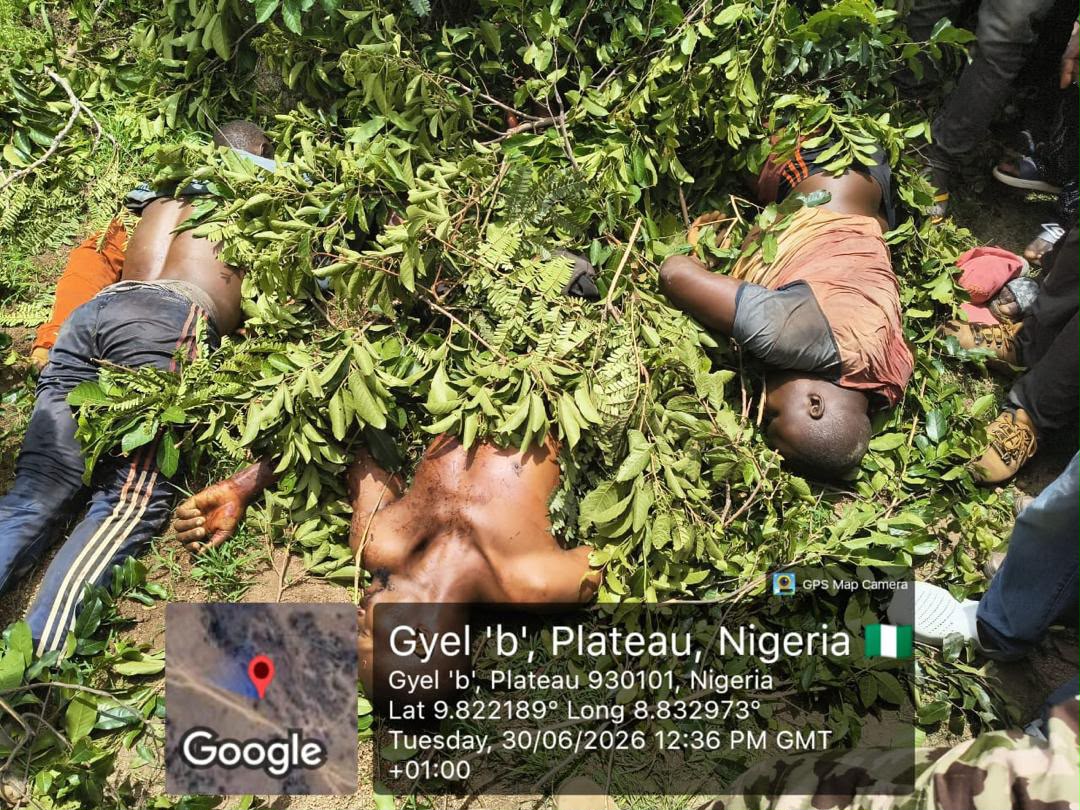
Three Killed, Two Injured in Attack by Fulani Bandits Near Illegal Mining Site in Plateau
By: Zagazola Makama
Three persons have been killed and two others injured following an attack by suspected armed Fulani bandits near an illegal mining site in Jos South Local Government Area of Plateau State.
Security sources said the incident occurred at about 10:00 a.m. on June 30 around the border communities of Tsoho Gero and Nyango, where armed assailants ambushed local residents before fleeing the scene.
The sources said troops of Sector 6, Operation Enduring Peace (OPEP), under Operation Safe Haven (OPSH), responded to a distress call and, in conjunction with members of the Vigilante Group of Nigeria (VGN), moved to the area.
On arrival, the troops made contact with the fleeing attackers, who escaped towards the Dutse Kura axis in neighbouring Bassa Local Government Area.
However, security personnel confirmed that the attackers had already killed three local residents and injured two others before the troops arrived.
The deceased were identified as Mr. Chung Davou, Gyang Gwaha and Pam Chung.
Following the incident, troops carried out exploitation and clearance operations from Tsoho Gero to the Gero High Grounds in search of the fleeing assailants.
During the operation, Fulani community leaders alleged that four Fulani men had also been killed in the violence. However, security personnel said no bodies were found to substantiate the claim.
Tension later escalated at Gyel, where a group of aggrieved women blocked the troops’ route and threw stones at security personnel, accusing them of failing to prevent the attack.
The troops fired warning shots into the air to disperse the crowd and restore access before continuing the operation.
Security sources said clearance operations were ongoing in the area to track down the perpetrators and prevent further attacks.
Three Killed, Two Injured in Attack by Fulani Bandits Near Illegal Mining Site in Plateau


Uncategorized
Operation Enduring Peace intervenes in farmland grazing dispute, parties reach amicable settlement in Plateau
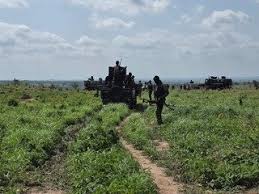
Operation Enduring Peace intervenes in farmland grazing dispute, parties reach amicable settlement in Plateau
By Zagazola Makama
Troops of Sector 1, Operation Enduring , have intervened in a farmland grazing incident in Jos East Local Government Area of Plateau State, leading to an amicable resolution between the affected farmer and the livestock owner.
Security sources told Zagazola Makama that the incident occurred at about 7:50 p.m. on July 15 when troops on a night patrol intercepted 11 cows grazing on a farm belonging to Meshak Abdul along the Gora Village road.
According to the sources, the troops immediately moved the livestock to a safe location to prevent further damage and forestall any breakdown of law and order.
The owner of the cattle, identified as Muhogi Idris, was subsequently contacted by the troops, after which both parties engaged in dialogue.
Military sources said the dispute was resolved amicably through the intervention of the security personnel, with both the farmer and the cattle owner reaching a peaceful settlement.
The intervention forms part of Operation Enduring Peace ongoing efforts to promptly address farmer-herder disputes and prevent isolated incidents from escalating into communal violence in Plateau State.
Operation Enduring Peace intervenes in farmland grazing dispute, parties reach amicable settlement in Plateau
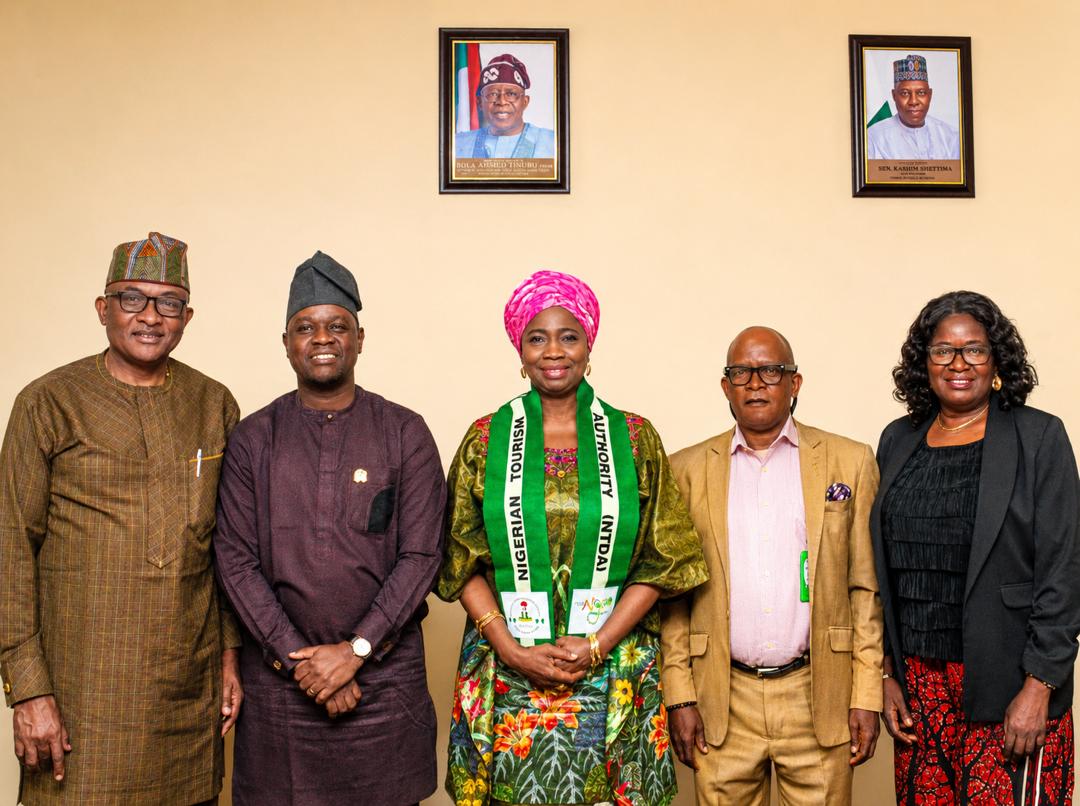
Tourism: FG Turns to Diaspora to Rebrand Nigeria, Attract Investment
…NiDCOM, NTDA forge strategic alliance to transform tourism assets, project Nigeria’s positive image globally
By: Michael Mike
Nigeria has begun a fresh push to harness its vast tourism potential and the resources of its global diaspora as part of a broader strategy to reshape the country’s international image, attract investment and create jobs.
The initiative emerged from a strategic partnership between the Nigerians in Diaspora Commission (NiDCOM) and the Nigerian Tourism Development Authority (NTDA), with both agencies agreeing to work together to rebrand the nation’s tourism assets and position the sector as a major instrument of economic development and cultural diplomacy.
The partnership was unveiled in Abuja on Wednesday during a strategic meeting between the Chairman/Chief Executive Officer of NiDCOM, Hon. Abike Dabiri-Erewa, and the Director-General of the NTDA, Dr. Olayiwola Awakan.
The meeting came against the backdrop of growing concerns over Nigeria’s failure to fully convert its vast cultural, historical and natural attractions into sustainable economic opportunities, despite the country’s enormous tourism potential.
Dabiri-Erewa said the country could no longer afford to allow its tourism assets and national story to be defined largely by outsiders or negative international narratives.
She said Nigeria must take ownership of its story, rebrand its tourism destinations and deliberately project the country’s positive identity to the world.
According to her, the collaboration between NiDCOM and the NTDA would strengthen the link between Nigeria’s tourism industry and the millions of Nigerians and people of Nigerian descent living across the world.
She said the diaspora represented not only a source of remittances but also a vast reservoir of investment capital, professional expertise, global networks and cultural influence that could be deployed to transform the nation’s tourism sector.
Dabiri-Erewa emphasised the need to develop and promote tourism assets across the 36 states and the Federal Capital Territory, arguing that a coordinated approach would encourage domestic tourism while creating opportunities for international visitors.
She drew particular attention to the historic Badagry Door of Return Festival, which reconnects members of the African diaspora with the homeland of their ancestors and the painful history of the transatlantic slave trade.
The NiDCOM chief described the experience as one that carries deep spiritual, emotional, psychological, economic and historical significance.
“It is a spiritual, emotional, psychological, economic and historical experience. It cuts deep into their psyche as many shed tears as they pass through the slave routes,” she said.
For her, the emotional power of such historical sites represents an enormous opportunity for Nigeria to use tourism not only to generate revenue but also to promote healing, cultural reconnection and a deeper relationship with the global African community.
She urged the NTDA to sustain strategic partnerships with relevant government institutions, private-sector operators and diaspora communities, stressing that Nigerians must become the principal narrators of the Nigerian story.
“We must take ownership of our national narrative,” she said in substance, insisting that the country’s international image could not be transformed without a deliberate effort by Nigerians themselves to tell their own stories.
The NTDA Director-General, Awakan, said the agency was committed to repositioning Nigeria’s tourism assets and making them competitive with destinations around the world.
He said Nigeria possessed abundant cultural, historical and natural attractions but needed a comprehensive strategy to upgrade the assets, improve visitor experience and create an efficient tourism ecosystem.
Among the priorities, he identified the development of a professional tour guide system, improved standards for tour guides, the upgrading and beautification of tourism assets, tourism expos, increased private-sector participation, professionally designed tour packages and the development of tourism bureaus.
Awakan said the success of the sector would depend on stronger collaboration among government agencies, the private sector, local communities and Nigerians in the diaspora.
He also linked the development of tourism to wider national challenges, saying a vibrant tourism industry could create jobs, stimulate local economies, attract investment and help reduce social tensions by expanding economic opportunities.
The NTDA chief said Nigeria’s cultural strength was already evident in the numerous festivals, entertainment events and traditional celebrations held across the country.
However, he lamented that the country’s international image was often overshadowed by negative narratives, making it necessary for Nigeria to develop a more deliberate strategy for projecting its achievements, culture and identity.
He described Nigerians in the diaspora as key ambassadors of the country and said their strategic involvement could significantly influence how Nigeria is perceived globally.
As part of the new vision, Awakan disclosed plans for the proposed NAIJA FEST, a national festival expected to showcase the culture, cuisine, music, arts, traditions and heritage of all 36 states and the Federal Capital Territory.
The proposed festival is expected to create a single national platform for Nigeria’s cultural diversity while providing opportunities for tourism promotion, investment, entertainment and international exposure.
Awakan also disclosed plans for a proposed Diaspora Internship Initiative in the United Kingdom, under which Nigerians in the diaspora would be offered opportunities to undertake nine-month internships in Nigeria before returning to their countries of residence.
The initiative, he said, would expose participants to Nigeria’s professional, cultural and economic environment while strengthening their connection to the country.
The emerging NiDCOM-NTDA partnership represents a renewed effort to move Nigeria’s tourism sector beyond occasional festivals and isolated attractions towards a coordinated national strategy anchored on investment, cultural diplomacy and diaspora engagement.
With Nigeria facing the urgent need to diversify its economy, create jobs for its youthful population and improve its international image, the two agencies believe tourism can become a major pillar of national development if the country’s assets are properly developed, packaged and marketed.
The Abuja meeting ended with both agencies reaffirming their commitment to a closer collaboration aimed at transforming Nigeria’s tourism assets, attracting domestic and international investment and leveraging the Nigerian diaspora as a strategic partner in the country’s economic and cultural renaissance.
Tourism: FG Turns to Diaspora to Rebrand Nigeria, Attract Investment
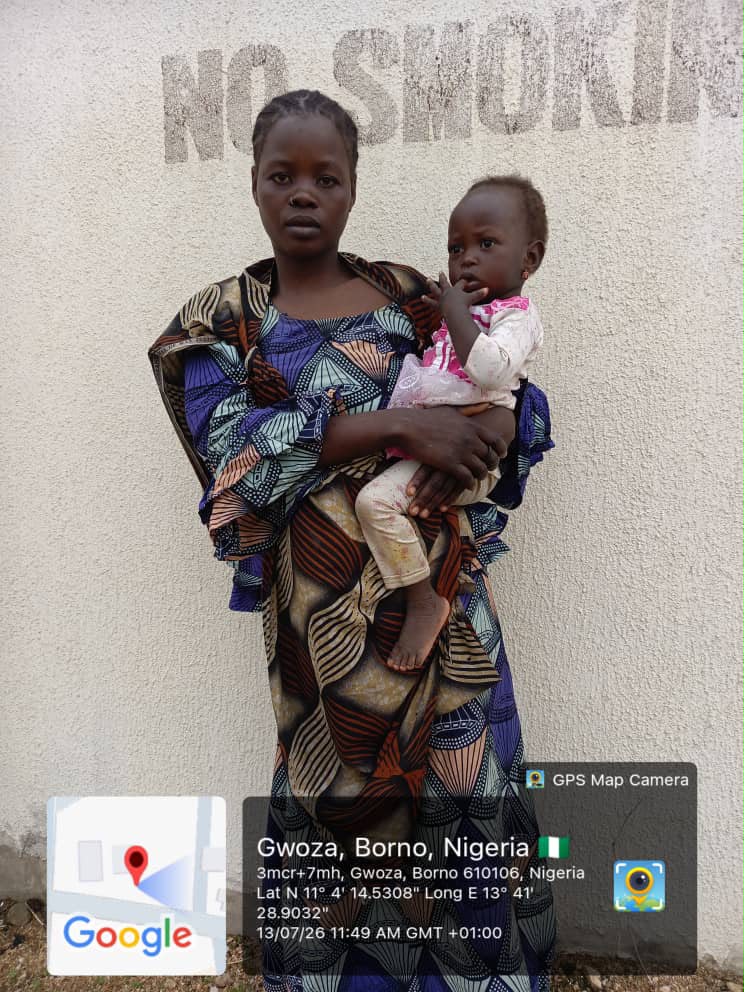
Mother, Child Escape Boko Haram Enclave, Surrender to Troops in Borno
By Zagazola Makama
Two family members of suspected Boko Haram (Jama’atu Ahlis Sunna Lidda’awati wal-Jihad – JAS) terrorists have surrendered to troops of Operation HADIN KAI after escaping from a terrorist enclave in the Mandara Mountains of Borno State.
Security sources told Zagazola Makama that the woman, Nafisat Ali, 20, and her one-year-old daughter, Aisha Umar, surrendered at about 9:40 a.m. on July 13 to troops of the 192 Battalion (Motorised) deployed on picketing duty along the Gwoza–Limankara Road.
During preliminary interrogation, Nafisat disclosed that she fled the Kwolika terrorist enclave in the Mandara Mountains of Gwoza Local Government Area due to severe hardship and the lack of basic necessities in the camp.
The sources said the mother and child were immediately screened and documented in line with established procedures and are currently in military custody pending further profiling and necessary administrative action.
Military authorities said the surrender reflects the increasing pressure being mounted on terrorist enclaves through sustained offensive operations under Operation HADIN KAI, which continue to degrade the operational capabilities and support structures of insurgent groups in the North-East.
The sources added that the general security situation across the theatre remains calm but unpredictable, while troops continue to maintain a high level of operational readiness.
Mother, Child Escape Boko Haram Enclave, Surrender to Troops in Borno

Borno: Zulum Deepens UMTH Partnership, Targets Medical Equipment for 20 Borno Hospitals

Gombe govt, UNICEF launch project to tackle malnutrition

Ex-CDS Petinrin Lauds DSS On Oriire Rescue

Roger Federer’s Shock as DNA Results Reveal Myla and Charlene Are Not His Biological Children

THE PLIGHT OF FARIDA

FAILED COUP IN BURKINA FASO: HOW TRAORÉ NARROWLY ESCAPED ASSASSINATION PLOT AMID FOREIGN INTERFERENCE CLAIMS
-
 News2 years ago
Roger Federer’s Shock as DNA Results Reveal Myla and Charlene Are Not His Biological Children
-
Opinions4 years ago
THE PLIGHT OF FARIDA
-
 News1 year ago
FAILED COUP IN BURKINA FASO: HOW TRAORÉ NARROWLY ESCAPED ASSASSINATION PLOT AMID FOREIGN INTERFERENCE CLAIMS
-

 News2 years ago
EYN: Rev. Billi, Distortion of History, and The Living Tamarind Tree
-
 Opinions5 years ago
POLICE CHARGE ROOMS, A MINTING PRESS
-

 ACADEMICS2 years ago
A History of Biu” (2015) and The Lingering Bura-Pabir Question (1)
-

 Columns2 years ago
Army University Biu: There is certain interest, but certainly not from Borno.
-

 Politics1 year ago
2027: Why Hon. Midala Balami Must Go, as Youths in Hawul and Asikira/Uba Federal Constituency Reject ₦500,000 as Sallah Gift
