
News
ECOWAS Launches Collaboration with Media to Combat Disinformation about Socioeconomic Development of West Africa

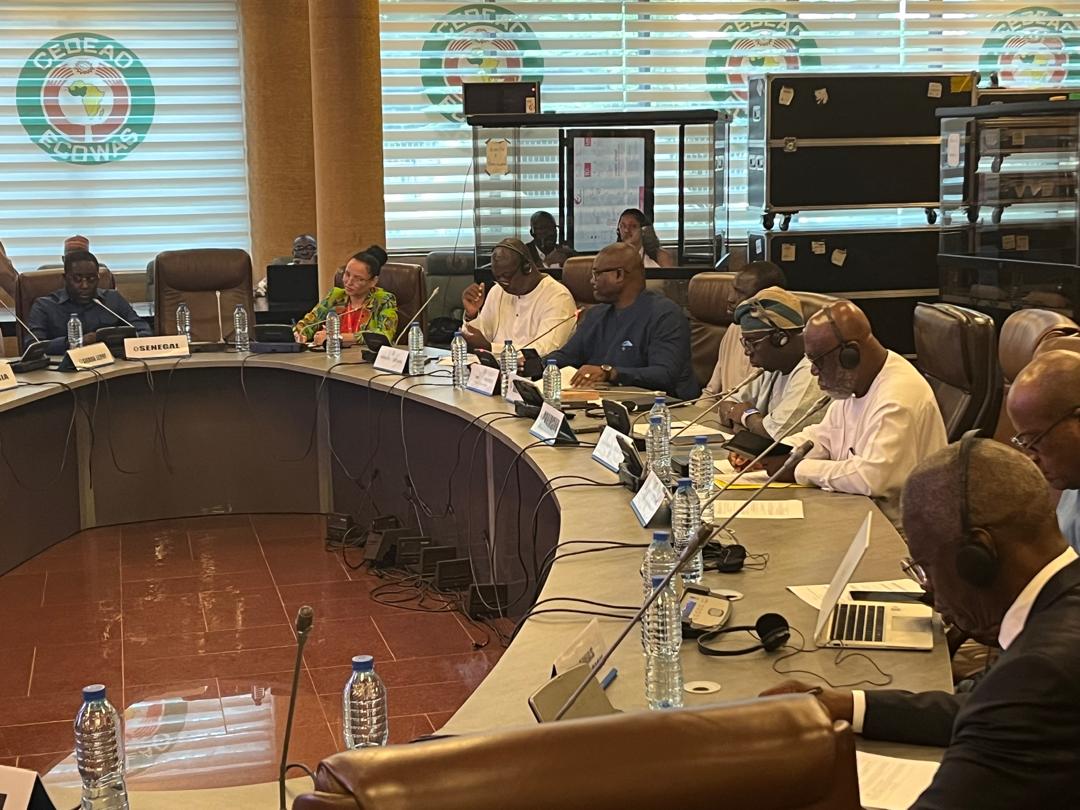
ECOWAS Launches Collaboration with Media to Combat Disinformation about Socioeconomic Development of West Africa
By: Michael Mike
The Economic Community of West African States (ECOWAS) in order to enhance its image and showcase its contributions to the socioeconomic development of West Africa on Thursday launched a collaboration with media across the region.
Speaking at the inaugural session which brought government-owned media outfits across the region together in Abuja, the capital of Nigeria,the Chief of Staff in the Office of the President of ECOWAS Commission, Hon. Abdou Kolley, said the initiative was created in order to promote an accurate reporting of ECOWAS activities and tackling the growing issue of disinformation.
Kolley said the event, themed ‘Strategic Engagement with Public Media Actors in Our Member States to Strengthen Collaboration and Positive Coverage of ECOWAS Programmes and to Combat Disinformation in West Africa,’ is also timed to prepare ground for the forthcoming ECOWAS’s 50th-anniversary celebrations and to bring information to the people of the region on the contributions of the bloc to the socioeconomic wellbeing and humanitarian interventions in the last half century.
Kolley while addressing media leaders from across West Africa at the inaugural high-level consultative meeting in Abuja, noted that the programme was organised in partnership with the Media Foundation for West Africa (MFWA), noting that the two-day event is part of a broader push to ensure media outlets serve as key partners in promoting ECOWAS’s mission of regional integration, peace, and development.
During the address, delivered on behalf of ECOWAS President, Dr. Omar Touray, Kolley stressed the critical role that media plays in shaping public opinion and influencing the socio-political landscape.
He noted that misinformation, particularly on social media, remains a significant challenge for the organisation, making accurate media coverage essential.
He said: “The ECOWAS Commission recognises the media as one of our indispensable and critical stakeholders.
“As gatekeepers and purveyors of information, we are fully aware of the important role of the media in creating and maintaining goodwill and mutual understanding between the Commission and its people.
“This explains why the Commission has convened this important stakeholders’ meeting with the Heads of government-owned broadcast stations as part of our ongoing efforts to proactively broaden our engagement and strengthen our collaboration with the media towards achieving our common and shared vision as encapsulated by our vision 2050, this on the eve of the celebration of 50 years of existence of our institution.”
Kolley noted that the media’s role in countering false narratives and raising awareness about ECOWAS’s achievements is crucial for fostering regional unity and public trust.
He said the meeting is coming up at a time when West Africa is facing multiple challenges, including political instability, economic pressures, and a surge in misinformation across digital platforms.
He revealed that the partnership between ECOWAS and the MFWA, formalised in December 2023, aims to build media capacity in tackling these challenges.
He said the collaboration will focus on promoting democratic values, countering disinformation, and fostering peace in the region.
Kolley also shared highlights from the 2024 Interim Report on the state of ECOWAS institutions, pointing out progress made in economic integration, peacebuilding efforts, and humanitarian responses.
He however noted that misinformation often overshadow these achievements, which is why ECOWAS is keen to deepen its media partnerships.
He said: “The summary presentation of the results recorded during the first half of 2024 shows that ECOWAS is making a definite effort to support its Member States.
“Unfortunately, however, our populations are not very well informed about these efforts. Instead, they are inundated with false information deliberately disseminated by certain vile individuals via the social media with the aim of destroying our common institution.
“Indeed, as is often said, the absence of credible information is a breeding ground for disinformation,” the Chief of Staff lamented.
Kolley called on media partners to continue working closely with ECOWAS to inform and engage the public, ensuring that the organisation’s work is well understood and appreciated across West Africa.
He said: “I, therefore hope that at the end of this two-day interactive meeting, the Commission will be in a better position to: Coordinate with national media partners to raise awareness of ECOWAS and its activities in the Member States among the citizens of the Community by increasing media programmes on ECOWAS as part of the celebration of the 50th anniversary of our institution.
“Strengthen the capacity of the media in Member States to contribute to the reinforcement of democratic values and peace through media initiatives focusing on combating narratives of violent extremism and radicalisation; and combating misinformation.”
ECOWAS Launches Collaboration with Media to Combat Disinformation about Socioeconomic Development of West Africa


Suspected cultists kill 12 in attack on Jos community, Plateau govt imposes curfew
By: Zagazola Makama
Suspected cultists on Sunday night attacked Angwan Rukuba community in Jos North Local Government Area of Plateau State, leaving 12 persons dead, in a fresh outbreak of violence that has prompted authorities to impose a 48-hour curfew in the area.
Security sources said the incident occurred at about 8:00 p.m. when residents of the community came under sporadic gunfire from unidentified armed men, suspected to be cultists, who stormed the area and shot indiscriminately.
Troops of Sector 1, Operation Enduring Peace (OPEP), were immediately mobilised to the scene following a distress call and moved to restore order and prevent further escalation.
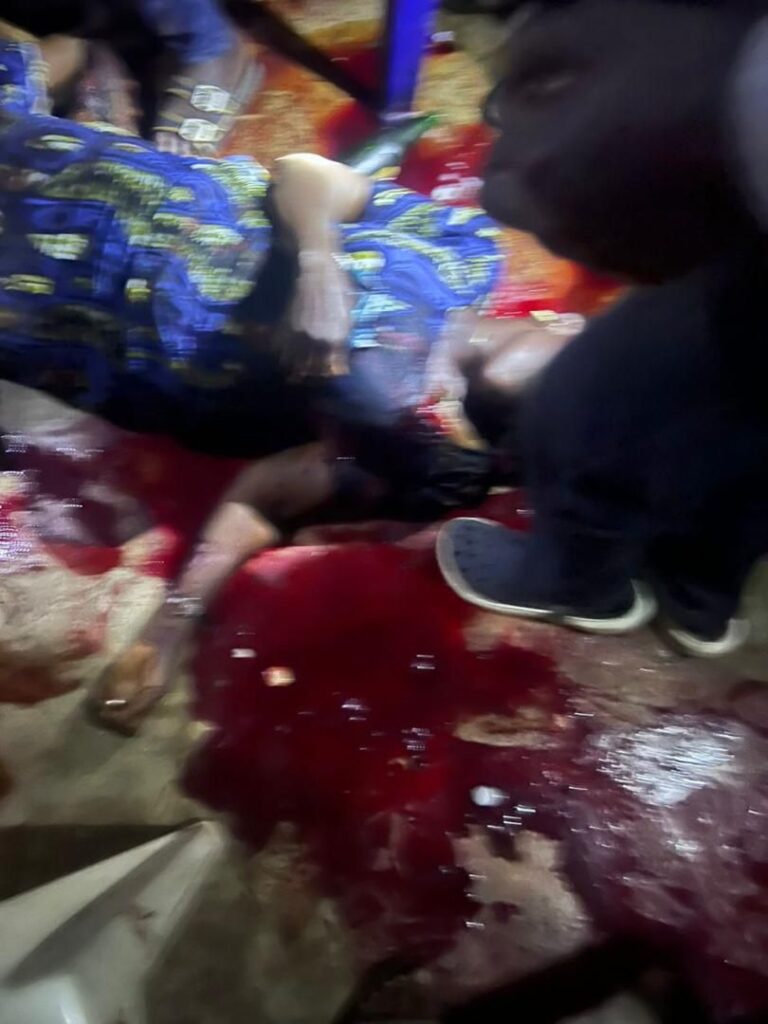
A security report indicated that 12 persons were confirmed dead, while several others sustained varying degrees of injuries. The injured victims were said to have been evacuated to nearby medical facilities for treatment.
The troops subsequently cordoned off major access routes to the community and ordered residents to remain indoors while a coordinated search operation was launched to track down the attackers.
Military sources added that clearance operations were ongoing to apprehend the perpetrators and prevent further breakdown of law and order in the area.
In response to the attack, the Plateau State Government, in collaboration with security agencies, announced the imposition of a 48-hour curfew on Jos North Local Government Area with immediate effect.
The curfew, which took effect from midnight of March 29 to April 1, 2026, was aimed at restoring calm and enabling security agencies to carry out intensified operations.
In a statement issued by the Commissioner for Information and Communication, Rt. Hon. Joyce Lohya Ramnap, the government condemned the attack, describing it as “barbaric and unprovoked.”
The statement assured residents that security agencies had been directed to ensure the arrest and prosecution of those responsible, while urging the public to remain calm and cooperate with ongoing investigations.
Security patrols were still ongoing across affected communities as authorities moved to forestall possible reprisal attacks and restore normalcy.
Suspected cultists kill 12 in attack on Jos community, Plateau govt imposes curfew
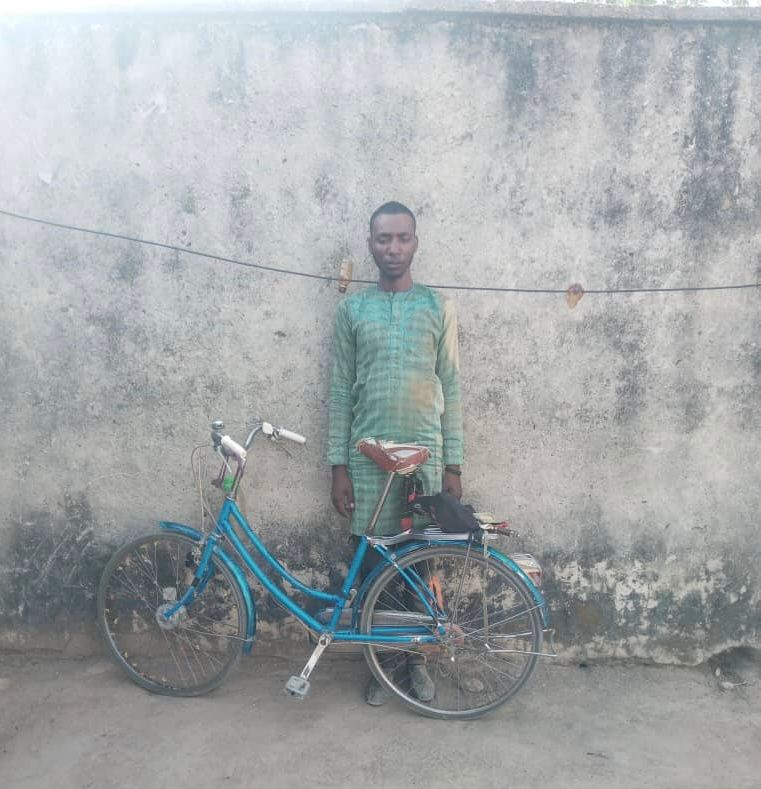
Troops arrest suspected kidnapper in Damboa LGA of Borno
By: Zagazola Makama
Troops of Operation Hadin Kai have arrested a suspected kidnapper in Azir community, Damboa Local Government Area of Borno State.
Sources told Zagazola Malama that the suspect was apprehended at about 5:00 p.m. on March 28 by troops of 25 Brigade and 19 Battalion (Mechanised) deployed at a Forward Operating Base in Azir.
The source disclosed that the suspect was alleged to have been involved in kidnapping activities within the Damboa and Azir general areas.
“During preliminary investigation, the suspect claimed to be a cattle courier operating within Damboa and its environs,” the source said.
He added that one bicycle was recovered from the suspect at the point of arrest.
The suspect and the recovered item are currently in troops’ custody for further investigation and necessary action.
Troops arrest suspected kidnapper in Damboa LGA of Borno
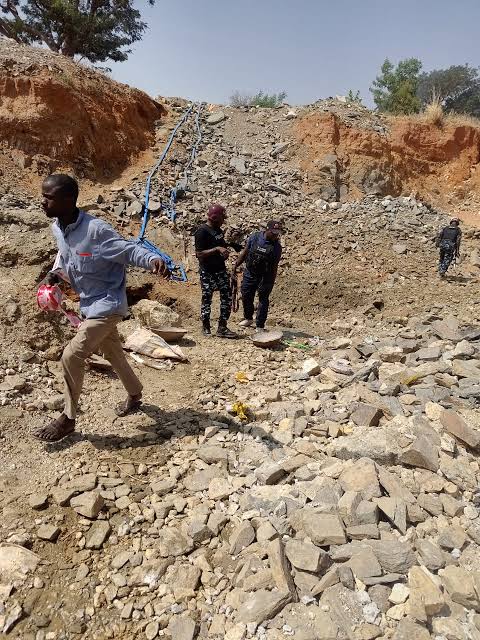
Troops arrest 58 illegal miners in Edo state
By: Zagazola Makama
Troops of Operation MESA have arrested 58 suspected illegal miners at an illegal gold mining site in Ososo general area, Akoko-Edo Local Government Area of Edo State.
A security source disclosed that the suspects were apprehended at about 1:00 p.m. on March 28 during a fighting patrol conducted by troops of 195 Battalion (Rear).
According to the source, the troops stormed the mining site and arrested the suspects without resistance.
“The suspects are currently in troops’ custody for further action,” the source said.
He noted that the operation forms part of ongoing efforts to curb illegal mining activities and other criminal enterprises within Edo State and its environs.
Troops arrest 58 illegal miners in Edo state

Suspected cultists kill 12 in attack on Jos community, Plateau govt imposes curfew

Troops arrest suspected kidnapper in Damboa LGA of Borno

Troops arrest 58 illegal miners in Edo state

Roger Federer’s Shock as DNA Results Reveal Myla and Charlene Are Not His Biological Children

THE PLIGHT OF FARIDA

FAILED COUP IN BURKINA FASO: HOW TRAORÉ NARROWLY ESCAPED ASSASSINATION PLOT AMID FOREIGN INTERFERENCE CLAIMS
-
 News2 years ago
Roger Federer’s Shock as DNA Results Reveal Myla and Charlene Are Not His Biological Children
-
Opinions4 years ago
THE PLIGHT OF FARIDA
-
 News11 months ago
FAILED COUP IN BURKINA FASO: HOW TRAORÉ NARROWLY ESCAPED ASSASSINATION PLOT AMID FOREIGN INTERFERENCE CLAIMS
-

 News2 years ago
EYN: Rev. Billi, Distortion of History, and The Living Tamarind Tree
-
 Opinions4 years ago
POLICE CHARGE ROOMS, A MINTING PRESS
-

 ACADEMICS2 years ago
A History of Biu” (2015) and The Lingering Bura-Pabir Question (1)
-

 Columns2 years ago
Army University Biu: There is certain interest, but certainly not from Borno.
-

 Opinions2 years ago
Tinubu,Shettima: The epidemic of economic, insecurity in Nigeria
