
News
ECOWAS Moves to Combat Drug Abuse in West Africa, Develops Comprehensive Digital Platform to Generate Data

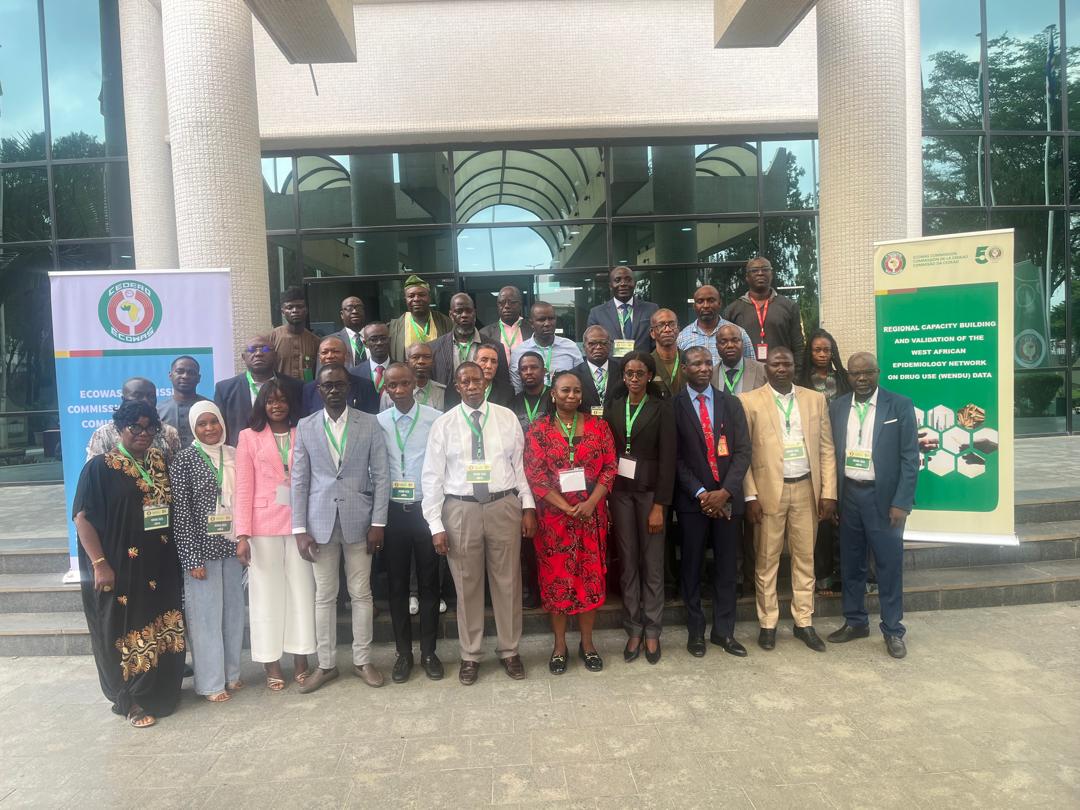
ECOWAS Moves to Combat Drug Abuse in West Africa, Develops Comprehensive Digital Platform to Generate Data
By: Michael Mike
Economic Community of West African States (ECOWAS) Commission has moved to combat drug abuse in the West Africa subregion with the development of a comprehensive digital platform to serve as a centralized system for data input by national focal points, as well as enhance the West African Epidemiology Network on Drug Use (WENDU) project.
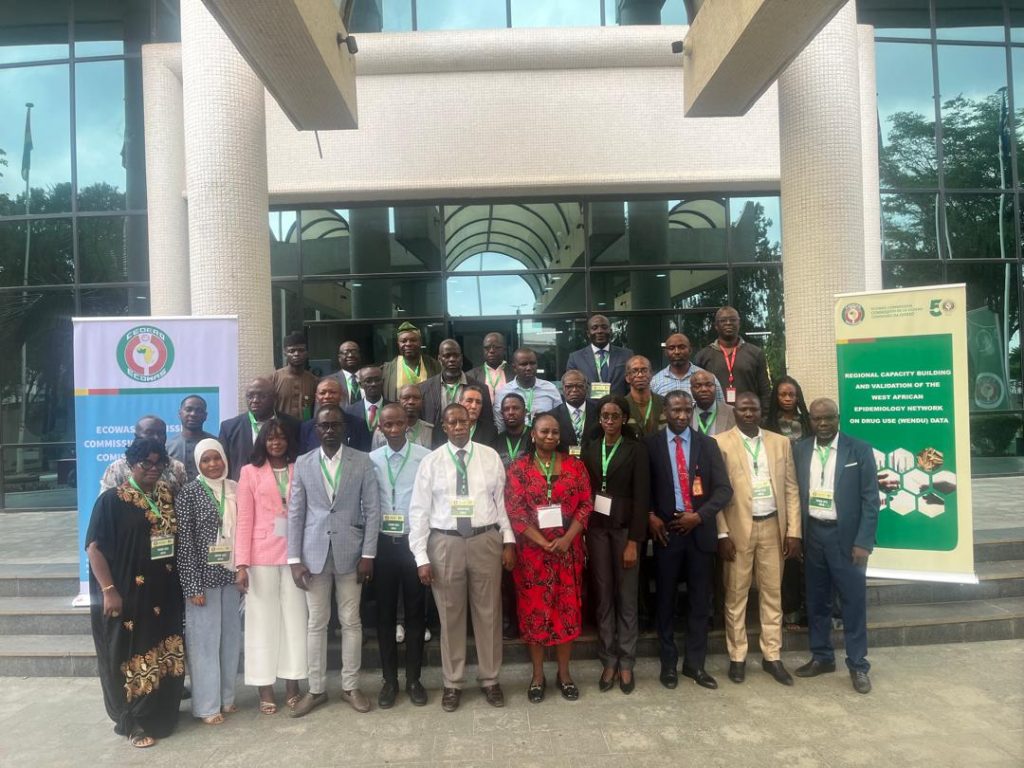
The Commissioner, Human Development and Social Affairs, ECOWAS Commission, Professor Fatou Sow Sarr, disclosed the commencement of the process at the Validation Workshop of the 2024 Report of the West African Epidemiology Network on Drug Use (WENDU), in Abuja.
Declaring the workshop open, the Commissioner, Human Development and Social Affairs, represented by the Head of Drug Prevention and Control at ECOWAS Commission, Dr. Daniel Amankwaah, said the ECOWAS Commission takes priority in improving and sustaining the WENDU.
He said: “The development of this platform underscores ECOWAS’s commitment to strengthening regional cooperation in combating drug abuse and its associated consequences, contributing to improved public health and security across West Africa.”
He noted that: “The platform is envisioned to be a robust, secure, and user-friendly system that caters for the diverse needs of its users, facilitating a more coordinated and effective regional response to drug-related issues.”
He added that: “We begin the validation of the 2024 drug data which will be published soon in a yet to be determined Member State. The data has been compiled by the resource persons and we look forward to your review of the data to make sure they represent what was transmitted. A credible WENDU report is crucial to improving evidence-based drug prevention and control activities both at the national and regional levels.
“In this regard, the ECOWAS Commission puts a high importance on the collection, collation and validation of the WENDU data before it is published. This 3 days’ workshop will also be used to improve the capacity of the WENDU focal points in the collection, collation, analysis and dissemination of drug-related data through the training on new data collection tools.
“I assure you that ECOWAS Commission is very committed and will continue to do its best with all Member States and Partners to effectively fulfil its role in making sure that the drug menace is effectively controlled. All of us working together we shall succeed. On this note, I wish you a very successful training and validation of the 2024 WENDU data.”
On her part, the Director, Narcotics and Drug Abuse at Nigeria’s Federal Ministry of Health, Mrs Henrietta Bakura-Onyeneke said. “We gather at a critical juncture—one that demands renewed resolve and collective action in confronting the evolving landscape of drug use and trafficking across our region. The impact of substance use disorders—intertwined with poverty, crime, public health burdens, and social exclusion—continues to pose significant challenges to development and stability in West Africa.”
She added that: “This workshop underscores the core of what WENDU stands for: strengthening our regional capacity to generate accurate, timely, and actionable data—data that not only reflects the magnitude and patterns of drug use, but also enables us to design informed, effective, and sustainable responses. Our ability to build strong, coordinated national mechanisms for surveillance and reporting is key to shaping the future of drug prevention and control in ECOWAS Member States.
“Over the next three days, we will engage in the validation of the 2024 WENDU regional report, ensuring that the data transmitted by our dedicated National Focal Points truly captures the realities on the ground—drug seizures, arrests, treatment admissions, and emerging trends. We will also invest in capacity building, equipping our focal points with new tools and methodologies to improve data collection, analysis, and dissemination.”
She said: “This is not just a technical exercise; it is a call to action—a regional imperative to protect the health, security, and well-being of our communities. Let us seize this opportunity to collaborate, learn, and strengthen our collective resolve in addressing substance use and illicit drug trafficking across ECOWAS.”
ECOWAS Moves to Combat Drug Abuse in West Africa, Develops Comprehensive Digital Platform to Generate Data


Military
Mutiny: Presidential Guard Tightens Security Around Niger Presidency Amid Reports of Military Protest
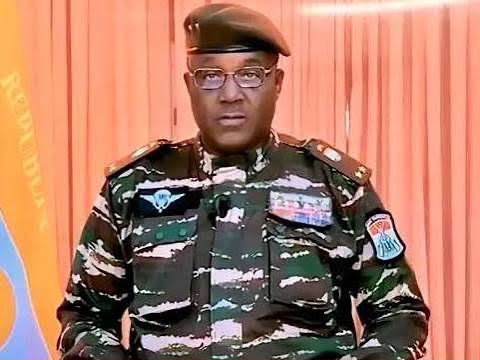
Mutiny: Presidential Guard Tightens Security Around Niger Presidency Amid Reports of Military Protest
By Zagazola Makama
Security was significantly reinforced around Niger’s Presidential Palace in Niamey following reports of unrest involving elements of the country’s armed forces, security sources told Zagazola Makama.
According to multiple security sources, the heightened deployment of the Presidential Guard, supported by armoured vehicles around the Presidential Palace on the night of July 3 and into July 4, followed what was described as a limited protest by personnel of an armoured unit within the Niger Armed Forces (FAN).
The sources said some soldiers reportedly declined deployment to frontline positions in northern Tillabéri Region, particularly around Inatès and Chinagodrar, citing inadequate heavy equipment and insufficient operational resources to confront the growing security threats in the area.
The protest was described by one source as a “small mutiny,” although there has been no official confirmation from the Nigerien authorities.
Security sources said the development triggered concern within the country’s leadership, prompting the reinforcement of security around the Presidential Palace and temporary restrictions on movement in the surrounding area as a precautionary measure.
The Tillabéri Region remains one of Niger’s most volatile security zones, with recurrent attacks by armed extremist groups, including factions linked to the so-called Islamic State in the Greater Sahara (ISGS).
As of the time of filing this report, the Nigerien government and military authorities had not issued any official statement regarding the reported protest or the increased security presence around the Presidency.
The situation remains under close observation.
Mutiny: Presidential Guard Tightens Security Around Niger Presidency Amid Reports of Military Protest
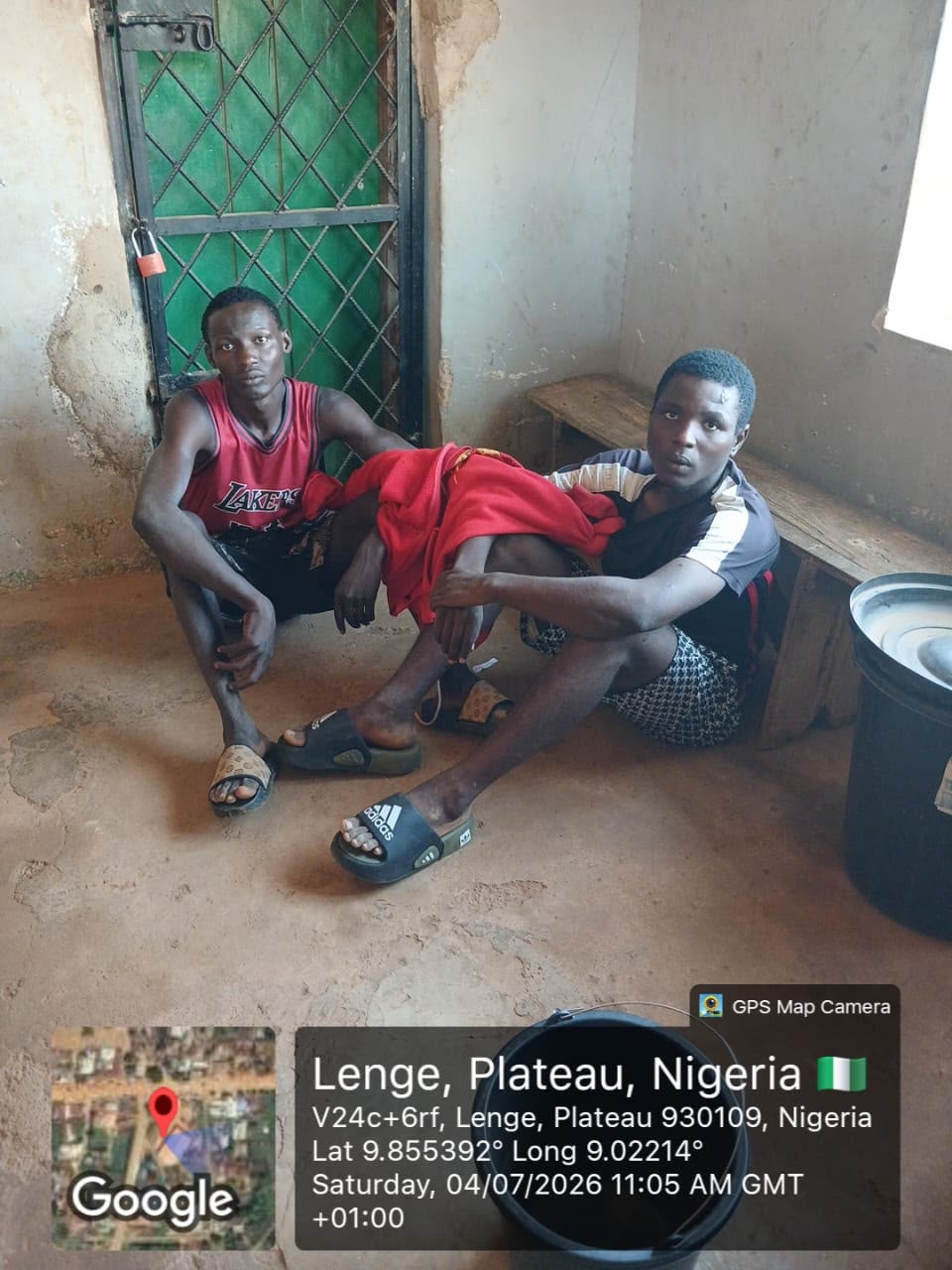
Two suspected criminals arrested during patrol in Plateau
By: Zagazola Makama
Troops of Sector 1 under Operation Enduring Peace have arrested two suspected criminals during a routine patrol in Jos East Local Government Area of Plateau.
Security sources disclosed that the suspects, identified as Azi Ezekiel, 21, and Ajiji Emmanuel, 19, were apprehended at about 10:30 a.m. on Saturday along the road leading to Forbur Village.
The sources said the suspects were intercepted by troops of Sector 1, Sub-Sector 12, while conducting a routine patrol in the area.
According to the sources, the two suspects have been handed over to the Keystone Police Station in Forbur for further investigation and possible prosecution.
The arrest forms part of ongoing security operations aimed at combating criminal activities and enhancing safety across Plateau State.
Two suspected criminals arrested during patrol in Plateau
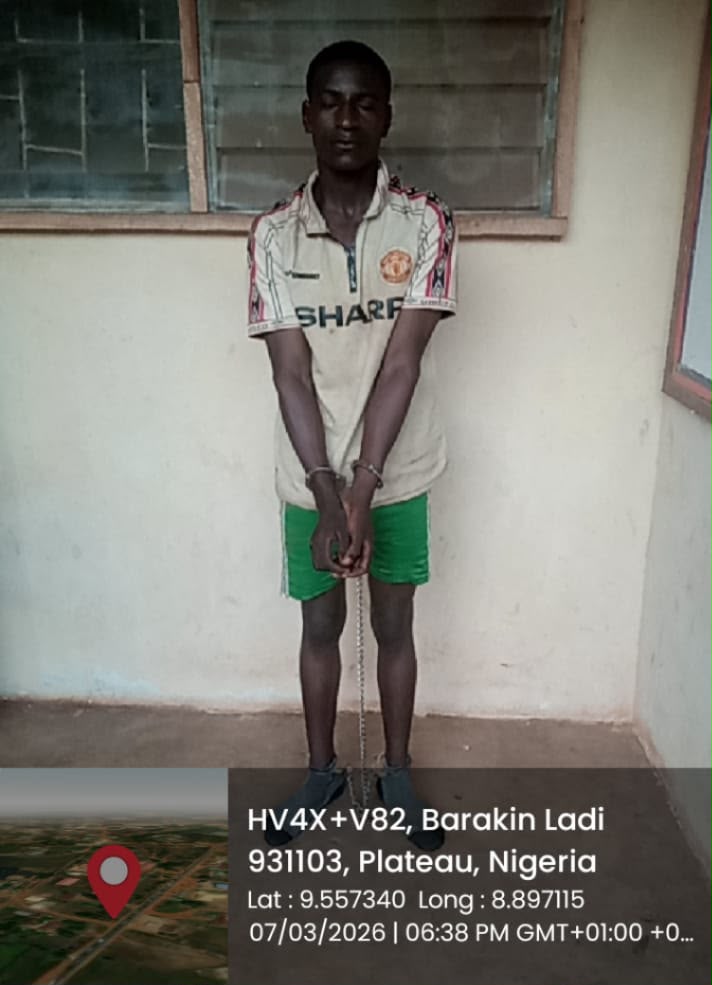
Troops arrest suspected kidnapper in Plateau community
By: Zagazola Makama
Troops of Sector 4 of Operation Enduring Peace have arrested a suspected kidnapper during a security operation in Barkin Ladi Local Government Area of Plateau.
Security sources said the suspect, identified as Mohamdu Surajo, 29, was arrested at about 6:45 p.m. on Friday at Sabon Layi Village following sustained security operations in the area.
The sources disclosed that the suspect is currently in military custody and is undergoing preliminary interrogation to aid ongoing investigations.
They added that the arrest is part of continued efforts by security forces to dismantle criminal networks and enhance security across Plateau State.
Troops arrest suspected kidnapper in Plateau community

President Tinubu Flags Off the Construction of Dikwa–Gamboru Ngala, Bama–Banki International Road Projects

Mutiny: Presidential Guard Tightens Security Around Niger Presidency Amid Reports of Military Protest

Troops Arrest Two Suspected Berom Militia Linked to NIPSS Attack as Security Sources Say Investigation Supports Earlier Leads

Roger Federer’s Shock as DNA Results Reveal Myla and Charlene Are Not His Biological Children

THE PLIGHT OF FARIDA

FAILED COUP IN BURKINA FASO: HOW TRAORÉ NARROWLY ESCAPED ASSASSINATION PLOT AMID FOREIGN INTERFERENCE CLAIMS
-
 News2 years ago
Roger Federer’s Shock as DNA Results Reveal Myla and Charlene Are Not His Biological Children
-
Opinions4 years ago
THE PLIGHT OF FARIDA
-
 News1 year ago
FAILED COUP IN BURKINA FASO: HOW TRAORÉ NARROWLY ESCAPED ASSASSINATION PLOT AMID FOREIGN INTERFERENCE CLAIMS
-

 News2 years ago
EYN: Rev. Billi, Distortion of History, and The Living Tamarind Tree
-
 Opinions5 years ago
POLICE CHARGE ROOMS, A MINTING PRESS
-

 ACADEMICS2 years ago
A History of Biu” (2015) and The Lingering Bura-Pabir Question (1)
-

 Columns2 years ago
Army University Biu: There is certain interest, but certainly not from Borno.
-

 Politics1 year ago
2027: Why Hon. Midala Balami Must Go, as Youths in Hawul and Asikira/Uba Federal Constituency Reject ₦500,000 as Sallah Gift
