
News
ECOWAS Parliament to have Code of Ethics, Good Conduct Emplaced- Speaker

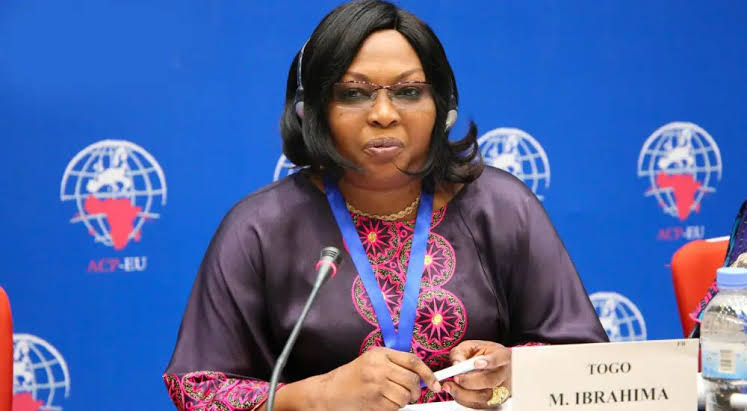
ECOWAS Parliament to have Code of Ethics, Good Conduct Emplaced- Speaker
By: Michael Mike
The newly elected Speaker of Economic Community of West African States (ECOWAS) Parliament, Memounatou Ibrahima has promised to make the Community Parliament a respected and admired institution.
Ibrahima made the promise in her speech after she was sworn in as the speaker of the regional Parliament at the 2024 2nd Extraordinary Session of the 6th Legislature of the ECOWAS Parliament in Kano.
She said that for the parliament to get the respect it deserves a code of ethics and conduct needed to be emplaced.
According to her, “The first challenge is to continue to improve the image and functioning of our Parliament in order to make it a respected and admired institution. Indeed, we must succeed in inspiring respect, consideration and admiration through our individual and collective dedication, and through the quality and relevance of our work and resolutions. With this in mind, we will be considering the possibility of putting together and implementing a code of ethics and good conduct within the Parliament, because our people want to be proud of their parliament, whose members must demonstrate diligence, efficiency, objectivity and accountability.”
Ibrahima, who is the first female speaker of ECOWAS Parliament, also expressed her commitment to strengthen relationships with national parliaments, with a view to consolidating the basis for collaboration and fostering synergy in initiatives, actions and programmes.
She said: “To achieve this, we intend organising rotational activities, bringing together Members of the ECOWAS Parliament and those of national parliaments.”
Ibrahima said the regional parliament under her leadership will aim at concrete results and giving priority to sessions dedicated to oral and written questions on major concerns of the populations.
She hinted that: “We will also place special emphasis on the effective fulfilment of our twofold parliamentary mission, namely our right to propose amendments and to oversee the actions of Community institutions and agencies. In the same vein, the Sixth Legislature will strive, in accordance with the provisions of our Rule of Procedure, to be highly creative and will aim for concrete results by giving priority to sessions dedicated to oral and written questions on the major concerns of our populations.”
The speaker said the Parliament will initiative programmes to enhance the skills of women and the youth, help combat the radicalisation of young people, reduce the number of victims of illegal immigration, and make Parliament more visible and appreciated by the local population.
At international level, Ibrahima said the Parliament’s activities will be pursued and intensified to enhance its reputation, accelerate regional integration and contribute to peace on the continent and in the world.
She said: “I am delighted that significant progress has already been made in the area of inter-parliamentary cooperation. The participation of several heads of regional and international institutions and diplomatic representations at our sessions is evidence of this. This confirms our strong partnership and effective solidarity in the face of the many challenges facing the region and the world.
Ibrahima, a Togolese lawmaker, was elected the speaker of the ECOWAS Parliament, in accordance with the provision of the alphabetical rotational speakership of the regional legislative body as stipulated by the Supplementary Act on Enhancement of Powers of the Community Parliament.
Her predecessor was Sidie Mohamed Tunis from Sierra Leone.
ECOWAS Parliament to have Code of Ethics, Good Conduct Emplaced- Speaker


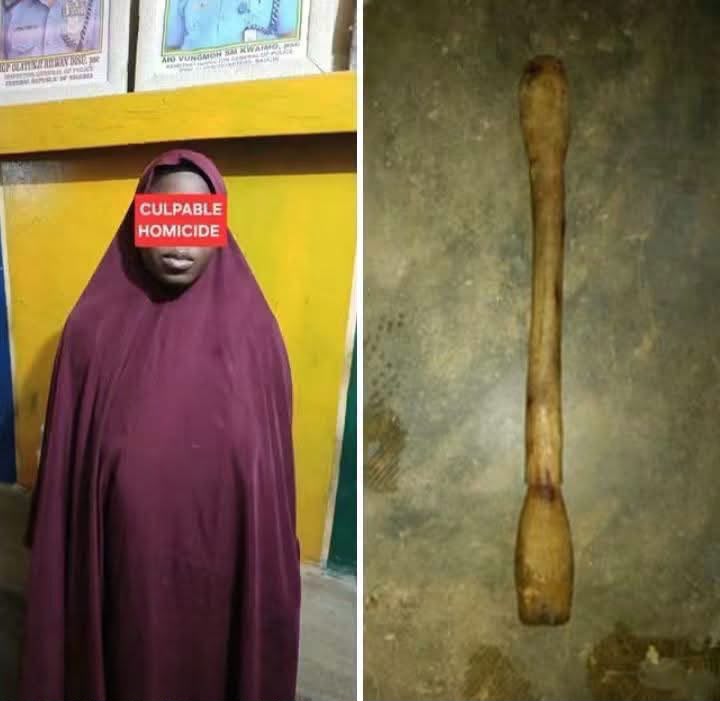
35-year-old woman allegedly k!lls her co-wife with pestle in Bauchi
By: Our Reporter
The Bauchi State Police Command has arrested a 35-year-old woman, Hauwa’u Haruna for the alleged m8rder of her co-wife, Jamila Adamu.
The spokesperson for the command, SP Nafiu Habib, who disclosed this in a statement on Monday, September 28, 2026 said the incident occurred during a domestic dispute at Tafawa Balewa Housing Estate on Sunday.
According to the PPRO, Hauwa’u, allegedly acting under hallucinations, armed herself with a pestle and struck Jamila on the forehead.
Upon receiving information about the domestic incident, detectives attached to the C-Division immediately mobilised to the scene.
The victim was rushed to the Specialist Hospital, Bauchi, where she was certified d3ad by a medical doctor.
Police arrested the suspect and recovered the pestle used in the commission of the offence.
35-year-old woman allegedly k!lls her co-wife with pestle in Bauchi
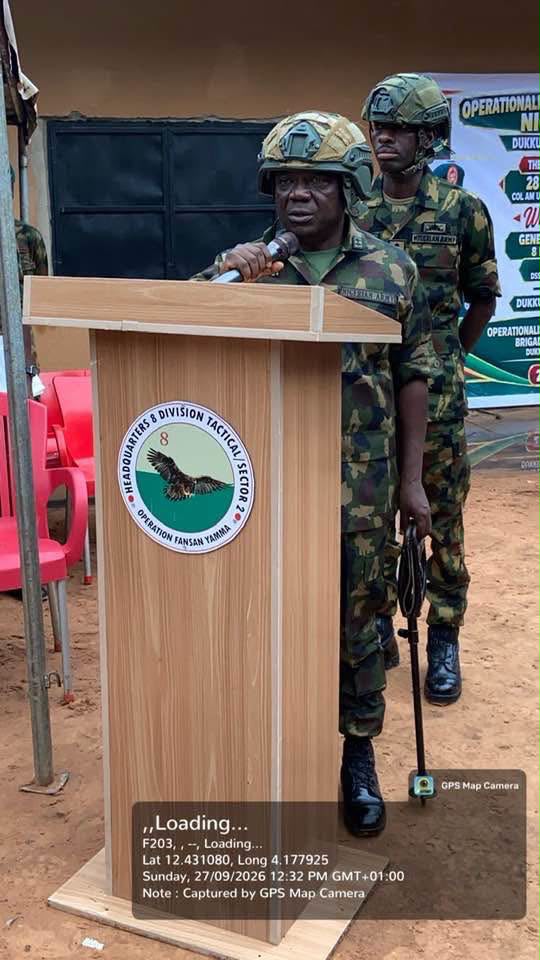
Army operationalises 28 Armoured Brigade in Kebbi, strengthens security presence in North-West
By: Zagazola Makama
The Chief of Army Staff (COAS), Lt. Gen. Waidi Shaibu, has formally operationalised 28 Armoured Brigade and Garrison in Birnin Kebbi, alongside 281 Tank Battalion in Yauri and 381 Artillery Regiment in Kaoje, as part of efforts to strengthen military presence and security operations in Kebbi State.
The COAS, represented by the General Officer Commanding (GOC), 8 Division Nigerian Army and Commander, Sector 2, Joint Task Force (North-West), Operation FANSAN YAMMA, Maj. Gen. Bemgba Paul Koughna, said the new formations were established to enhance the Army’s operational capacity and improve response to emerging security threats across the North-West.

Maj. Gen. Koughna said the establishment of the brigade was in line with the Nigerian Army’s ongoing efforts to optimise its force structure, expand operational footprints, strengthen command and control and reduce response time to security incidents within the Division’s area of responsibility.
He charged the Acting Commander of 28 Brigade, Col. Abdullahi Umar, to ensure that the formation effectively provides the required fire-support capabilities to enhance ongoing operations across the Division.

The GOC said the deployment was particularly important in strengthening security operations in Kebbi State and addressing threats posed by armed criminal elements and other emerging security challenges.
He stressed that achieving lasting peace required discipline, tactical focus and effective cooperation among the military, other security agencies, traditional institutions and local communities.
Koughna also charged the troops to maintain high standards of professionalism and strictly adhere to the Rules of Engagement while carrying out their constitutional responsibilities.
He reminded the troops of the need to protect law-abiding citizens and ensure that their operations were conducted with due regard for civilian lives and property.
During the visit, the GOC also commiserated with residents of Jandutse community following the recent death of a resident in a bandit attack.
He assured the community that the Nigerian Army would increase its presence in the area as part of measures to improve the safety of residents and prevent further attacks.

The residents expressed appreciation to the GOC for the military’s continued efforts to improve security in Jandutse and other communities across Kebbi State.
The operationalisation of the new formations is expected to further strengthen the Nigerian Army’s footprint in Kebbi and enhance its capacity to conduct sustained operations against bandits and other criminal elements operating across the state.
Army operationalises 28 Armoured Brigade in Kebbi, strengthens security presence in North-West
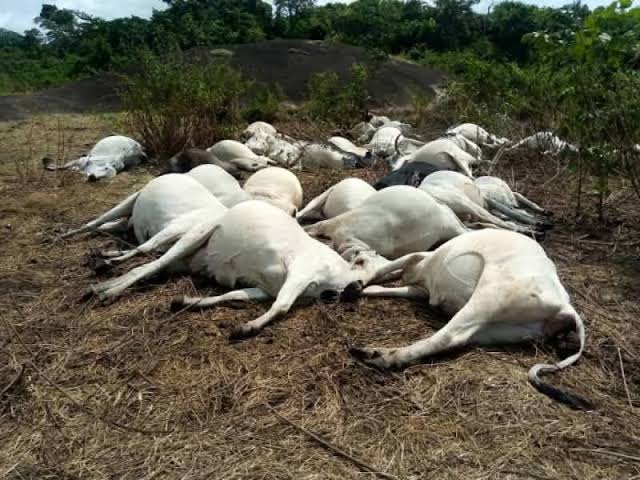
8 cows killed, 74 stolen as suspected Mwaghavul militia attack herders in Mangu, says victims
By: Zagazola Makama
At least eight cows were reportedly killed, 17 others and two sheep injured, while 74 cattle were allegedly stolen during an attack by suspected armed Mwaghavul militia and their accomplices at Lamor, Lawet, in Pushit District of Mangu Local Government Area of Plateau State, according to victims
The incident reportedly occurred at about 8 p.m. on Sept. 27, 2026, according to information provided to Zagazola Makama.
Victims of the attack said the attackers, who were reportedly heavily armed, targeted livestock belonging to herders in the area before fleeing with the stolen cattle.
The incident has raised fresh concerns among residents and livestock owners in the area, particularly because it reportedly occurred about two weeks after another attack in which three herders were allegedly killed and about 50 cattle stolen.
The latest incident, if confirmed, would represent another serious escalation in attacks involving livestock and rural communities in Mangu, where recurring violence has continued to deepen mistrust between communities.
The Federal Government, Plateau State Government, Mangu Local Government Council and security agencies are urged to urgently investigate the reported attack, establish those responsible and take appropriate action in accordance with the law.
Security agencies should also strengthen surveillance and patrols around vulnerable settlements and livestock routes in the affected areas to prevent further attacks, cattle rustling and possible retaliatory violence.
The priority, however, should remain the protection of civilians, recovery of stolen livestock and prevention of another cycle of reprisal attacks that could further endanger both communities.
Residents and community leaders are equally urged to provide credible information to security agencies and avoid actions capable of escalating the situation.
8 cows killed, 74 stolen as suspected Mwaghavul militia attack herders in Mangu, says victims

LG elections are very important—Yobe works commissioner.

35-year-old woman allegedly k!lls her co-wife with pestle in Bauchi

Army operationalises 28 Armoured Brigade in Kebbi, strengthens security presence in North-West

Roger Federer’s Shock as DNA Results Reveal Myla and Charlene Are Not His Biological Children

THE PLIGHT OF FARIDA

FAILED COUP IN BURKINA FASO: HOW TRAORÉ NARROWLY ESCAPED ASSASSINATION PLOT AMID FOREIGN INTERFERENCE CLAIMS
-
 News3 years ago
Roger Federer’s Shock as DNA Results Reveal Myla and Charlene Are Not His Biological Children
-
Opinions5 years ago
THE PLIGHT OF FARIDA
-
 News1 year ago
FAILED COUP IN BURKINA FASO: HOW TRAORÉ NARROWLY ESCAPED ASSASSINATION PLOT AMID FOREIGN INTERFERENCE CLAIMS
-

 News3 years ago
EYN: Rev. Billi, Distortion of History, and The Living Tamarind Tree
-
 Opinions5 years ago
POLICE CHARGE ROOMS, A MINTING PRESS
-

 ACADEMICS3 years ago
A History of Biu” (2015) and The Lingering Bura-Pabir Question (1)
-

 Columns3 years ago
Army University Biu: There is certain interest, but certainly not from Borno.
-

 Politics1 year ago
2027: Why Hon. Midala Balami Must Go, as Youths in Hawul and Asikira/Uba Federal Constituency Reject ₦500,000 as Sallah Gift
