
News
ECOWAS pushes jobs agenda to curb irregular migration

ECOWAS pushes jobs agenda to curb irregular migration
…Urges member states to expand youth employment, tighten anti-trafficking laws
By: Michael Mike
The ECOWAS Parliament has called on governments across West Africa to make the creation of decent and sustainable jobs for young people a top priority, warning that unemployment and shrinking economic opportunities continue to fuel irregular migration and human trafficking across the region.
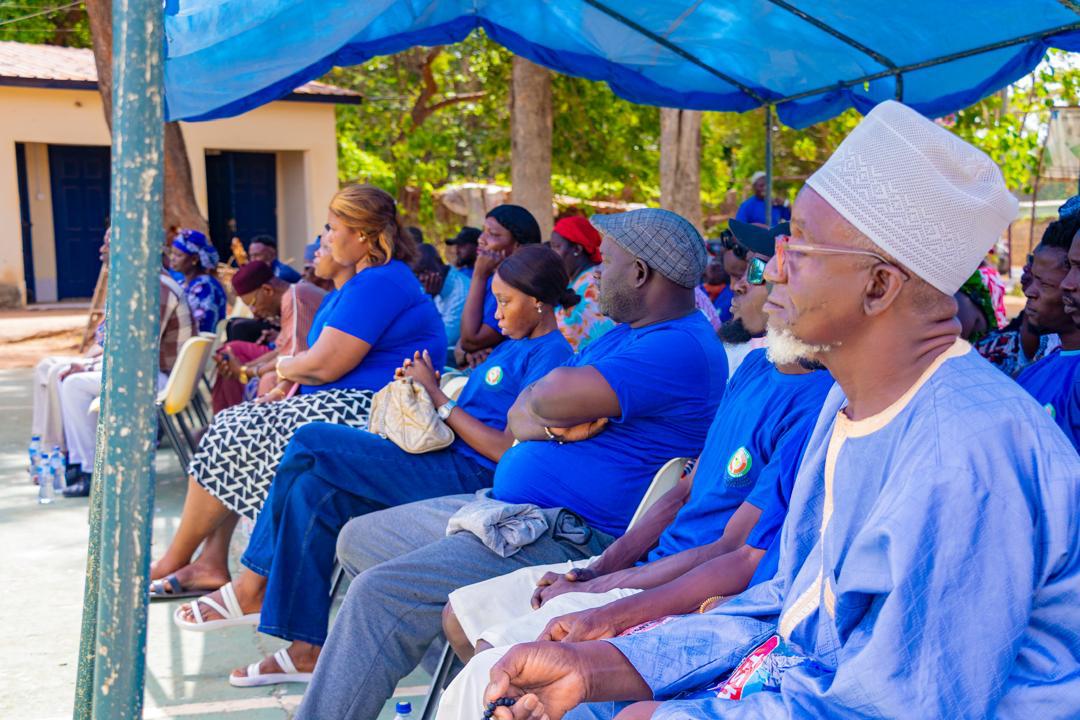
The regional legislature made the call after a week-long citizen engagement in The Gambia, where parliamentarians interacted with young people, returnees, community leaders and other stakeholders to identify the root causes of irregular migration and recommend solutions.
Presenting the report of the engagement, head of the delegation, Hon. Billay Tunkara, said participants overwhelmingly identified unemployment, underemployment, low incomes, inadequate access to education and vocational training, and limited economic opportunities as the primary factors pushing young people to undertake dangerous migration journeys.
According to the report, many young people believe that the opportunities available in their home countries do not offer a realistic path to prosperity, reinforcing the perception that migrating abroad—often through irregular routes—is the only viable option for a better future.
The Parliament also found that family expectations, peer influence and social media have become powerful drivers of migration, with success stories of migrants overseas encouraging more young people to embark on risky journeys despite widespread knowledge of the dangers involved.
Testimonies from returnees and survivors painted a grim picture of irregular migration, detailing experiences of deception, forced labour, exploitation, abuse, detention, family separation and severe psychological trauma. However, the Parliament noted that these survivors could play a vital role in discouraging others by sharing their experiences with vulnerable communities.
Beyond awareness campaigns, the lawmakers stressed that governments must invest in vocational education, entrepreneurship, agriculture and access to finance if they hope to reduce migration pressures. They also called for stronger reintegration programmes for returnees, including psychosocial support, skills acquisition, livelihood assistance and community acceptance.
Among its recommendations, the ECOWAS Parliament urged member states to expand investments in technology and vocational training centres, strengthen cross-border cooperation against migrant smuggling and human trafficking, improve intelligence sharing, and deploy modern surveillance equipment to enhance border security. It also advocated greater access to affordable financing for young entrepreneurs.
For The Gambia, the Parliament specifically called for the speedy passage and implementation of the country’s immigration bill and increased investment in communities most affected by irregular migration through job creation and development initiatives.
The regional legislature further appealed to traditional rulers, religious leaders, civil society organisations, families and the media to intensify public awareness campaigns, discourage the financing of irregular migration and promptly report suspected cases of migrant smuggling and human trafficking to relevant authorities.
The report also recommended that the ECOWAS Parliament institutionalise citizen and student engagement across member states to strengthen parliamentary oversight and ensure that recommendations from such consultations shape future policies on migration governance, regional integration and human security. The report is expected to be debated during the Parliament’s ordinary session before being transmitted to relevant ECOWAS institutions for implementation if adopted.
ECOWAS pushes jobs agenda to curb irregular migration



2027: ActionAid challenges INEC over voter register errors, result transparency
…Demands state-by-state disclosure of complaints, access to signed collation sheets
By: Michael Mike
ActionAid Nigeria has challenged the Independent National Electoral Commission (INEC) to account for errors in the voters’ register ahead of the 2027 general elections, demanding a state-by-state breakdown of complaints, corrections made and unresolved cases, as well as greater transparency in the collation and publication of election results.
The organisation said Nigerians deserved clear answers on how errors in the voters’ register would be addressed and how results recorded at polling units would be tracked through ward, local government and state collation stages to ensure that votes were not altered or lost in the process.
In a statement issued on Monday in Abuja, ActionAid Nigeria said INEC must explain how voters could inspect results at each stage of collation and identify discrepancies between polling-unit figures and results subsequently announced at higher levels.
The demand comes amid concerns over the commission’s readiness to make collated results publicly accessible through its Result Viewing Portal (IReV). INEC’s Director of Information and Communication Technology, Lawrence Bayode, reportedly said the commission had yet to build and test the system required to upload collated results to the portal, which currently displays polling-unit result sheets.
ActionAid said INEC must disclose where signed result sheets from subsequent collation stages would be published, how quickly they would be made available after announcement and what mechanisms citizens would have to report discrepancies.
“Nigerians should never have to beg to see how their votes were counted. They are entitled to an account of what happened to every vote,” the Country Director, Andrew Mamedu, said.
He said the availability of polling-unit results on IReV should be matched by public access to signed ward results to enable citizens verify whether figures from their polling units were accurately transferred during collation.
ActionAid also questioned INEC’s handling of discrepancies in the voters’ register, particularly following the commission’s acknowledgement of multiple registrations and reported removal of more than 1.6 million records.
With a comprehensive review of the register deferred until after the elections, the organisation demanded explanations on what INEC could still address within the statutory timelines, urging it to publish the number of complaints received, verified, corrected and outstanding in each state and the Federal Capital Territory.
It also called for a timeline for the next public update, warning that unresolved complaints could deepen public distrust in the electoral process before voting begins.
ActionAid said the presence of a deceased relative’s name on the register should be sufficient grounds for a family to request an investigation, but stressed that allegations of voting in the name of deceased persons required separate evidence.
It warned that duplicate and outdated records could distort registration figures and create misleading impressions about voter turnout, adding that failure to respond to complaints could fuel suspicion ahead of the polls.
The organisation further questioned the circumstances surrounding INEC’s decision to postpone a comprehensive review of the voters’ register until after the 2027 elections, asking what changed between its earlier commitment to clean up the register and the decision to defer the exercise.
ActionAid urged the commission to explain when the decision was taken and why it considered the review unnecessary before Nigerians cast their ballots.
Citing Section 19 of the Electoral Act 2026, the organisation said INEC should strengthen public awareness of the procedures for inspecting the register, filing claims and objections, reporting deceased relatives and seeking reinstatement where eligible voters were wrongly omitted.
It called for the use of local radio and community organisations to communicate the procedures in local languages, particularly to voters who may face difficulties accessing INEC offices.
Mamedu said voters displaced by conflict, persons with disabilities and those living far from commission offices should not lose their place on the register because they could not respond to complaints at short notice.
He urged INEC to guarantee affected voters access to their status, a fair hearing where their eligibility was challenged and decisions they could follow up on.
ActionAid Nigeria called on the commission to publish a clear timetable for reporting voter register complaints and establish a transparent framework for public access to signed collation sheets, insisting that Nigerians must know before election day where to obtain the records and which INEC office would be responsible for addressing discrepancies.
2027: ActionAid challenges INEC over voter register errors, result transparency
Troops Arrest Suspected Terrorist Collaborator in Monguno, Recover Phone, Cash
By: Zagazola Makama
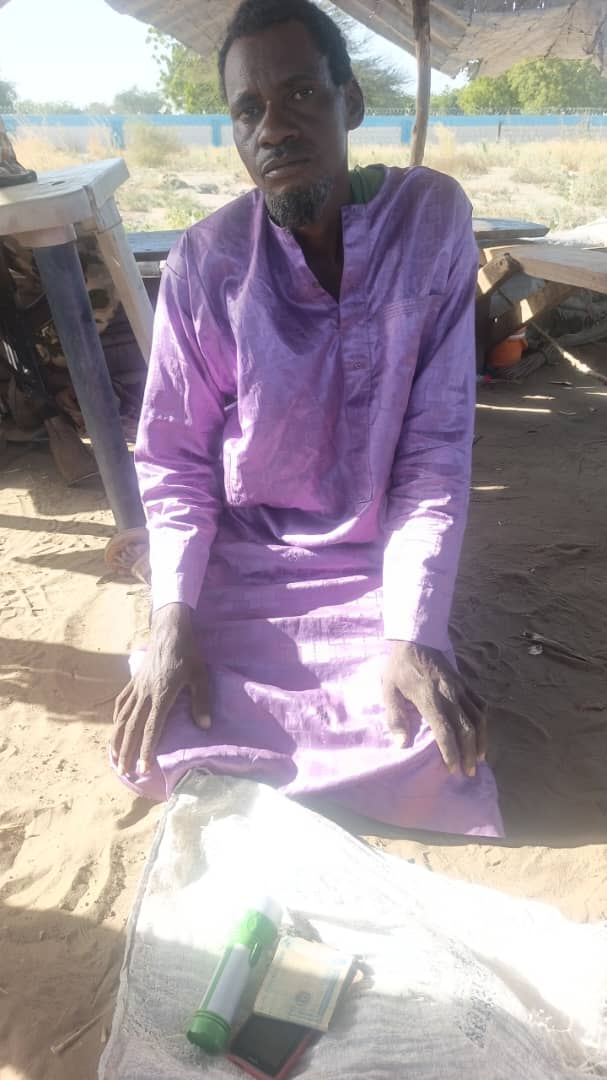
Troops of Sector 3, in collaboration with members of the Civilian Joint Task Force (CJTF), have arrested a suspected terrorist collaborator accused of facilitating the movement of recruits to terrorist elements in Borno State.
The suspect, identified as Abdulmuminu Adamu, 45, was arrested at about 3:00 p.m. on November 20 at Cross Motor Park in Monguno town, Monguno Local Government Area.
Security sources said the arrest followed intelligence received by troops at about 1:43 p.m. concerning alleged negotiations between Adamu and a suspected terrorist member, identified as Afo Asso.
The duo were reportedly planning to transport two individuals, comprising a female and a suspected new terrorist recruit, from Kekeno and Minatti communities in Monguno LGA to a designated location.
During interrogation, Adamu allegedly confessed that he had been tasked with conveying the two individuals to Karfe village in Kukawa LGA, where terrorist elements were expected to receive them.
Items recovered from the suspect included one mobile phone, a torchlight, a turban, a mirror and ₦7,400 in cash.
Troops Arrest Suspected Terrorist Collaborator in Monguno, Recover Phone, Cash
Troops Clear Suspected Militia Camp in Borno, Arrest Two Suspects, Recover Arrows, Ammunition
By: Zagazola Makama
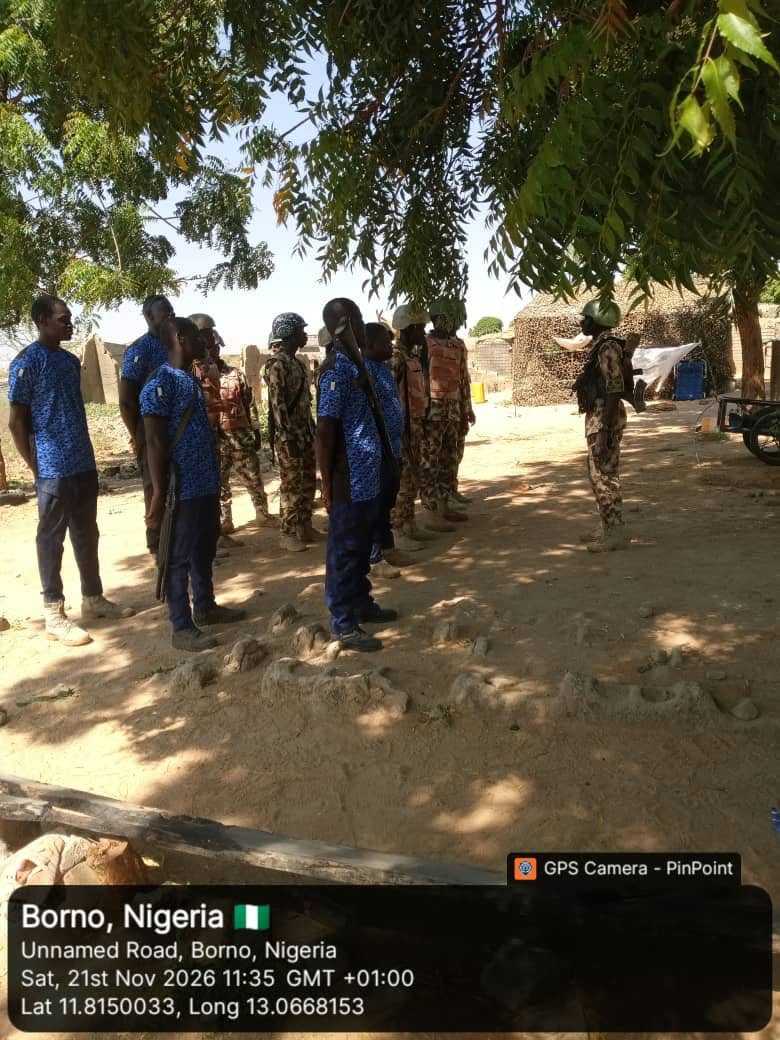
Troops of the 333 Artillery Regiment, in collaboration with members of the Civilian Joint Task Force (CJTF), have cleared a suspected militia camp at Katapilar village in Borno State and arrested two suspects during a clearance patrol.
The operation was conducted on November 21, following a patrol to Katapilar village, where troops cleared a suspected Fulani militia camp.
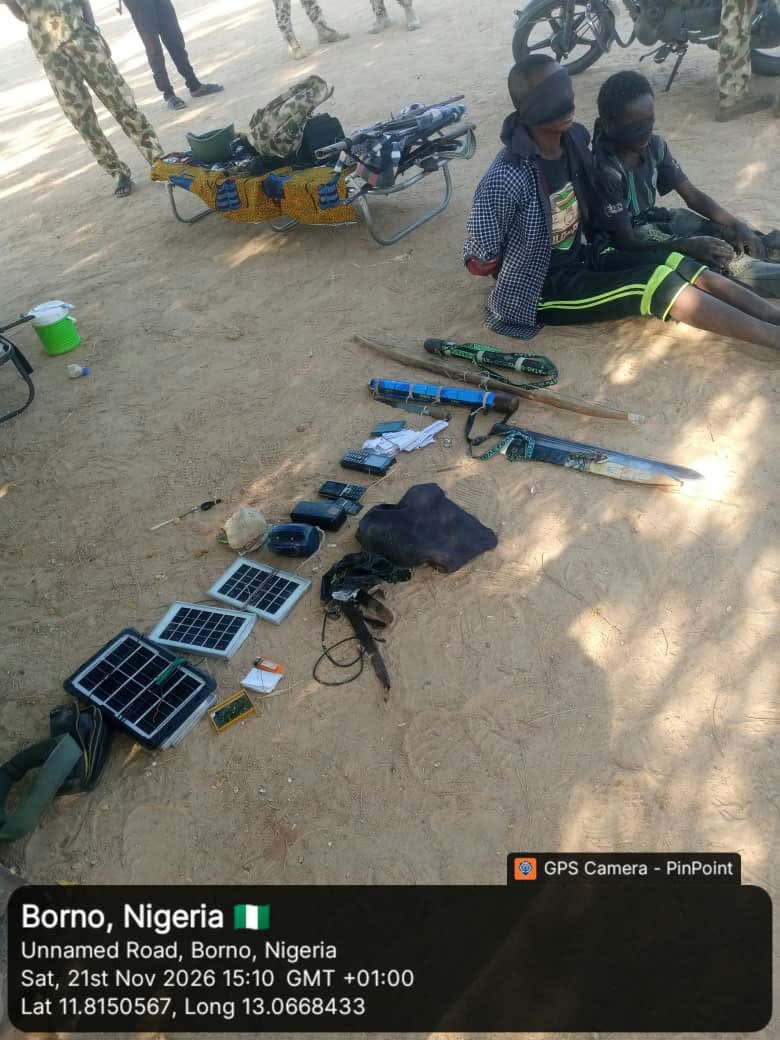
Items recovered from the location included one bow, 14 arrows, three rounds of 7.62mm special ammunition, two mobile phones, one cutlass and two mini solar panels.
The troops subsequently extended the operation to Duwairi village, where they arrested two suspects identified as Umaru Shehu, 32, from Gubio, and Ali Yahaya, 16, from Konduga.
Items recovered from the suspects included 16 arrows, one knife, an MP3 player, one power bank, four mini solar panels and ₦37,170 in cash.
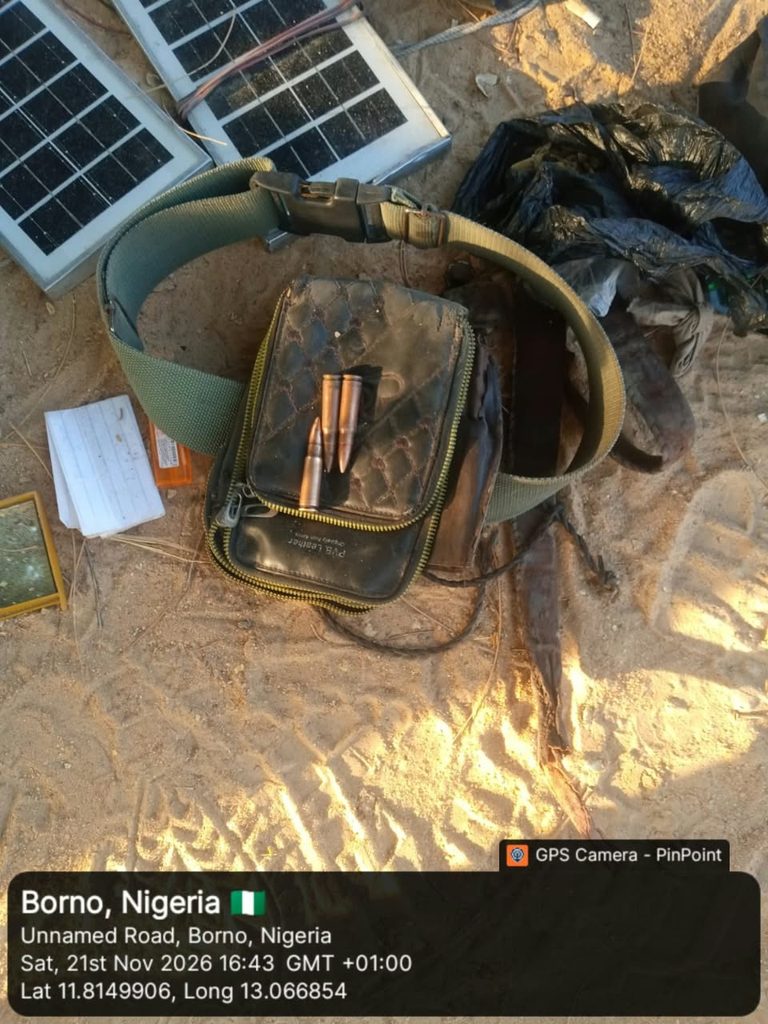
The patrol team returned to base at about 4:35 p.m. on the same day.
The two suspects and recovered items are currently in the custody of 7 Division Garrison for further investigation and necessary action.
Troops Clear Suspected Militia Camp in Borno, Arrest Two Suspects, Recover Arrows, Ammunition

2027: ActionAid challenges INEC over voter register errors, result transparency

Troops Discover 4,858 Litres of Stolen Crude Oil, Illegal Refining Sites in Rivers

Troops Arrest Suspected Terrorist Collaborator in Monguno, Recover Phone, Cash

Roger Federer’s Shock as DNA Results Reveal Myla and Charlene Are Not His Biological Children

THE PLIGHT OF FARIDA

FAILED COUP IN BURKINA FASO: HOW TRAORÉ NARROWLY ESCAPED ASSASSINATION PLOT AMID FOREIGN INTERFERENCE CLAIMS
-
 News3 years ago
Roger Federer’s Shock as DNA Results Reveal Myla and Charlene Are Not His Biological Children
-
Opinions5 years ago
THE PLIGHT OF FARIDA
-
 News2 years ago
FAILED COUP IN BURKINA FASO: HOW TRAORÉ NARROWLY ESCAPED ASSASSINATION PLOT AMID FOREIGN INTERFERENCE CLAIMS
-
 Opinions5 years ago
POLICE CHARGE ROOMS, A MINTING PRESS
-

 News3 years ago
EYN: Rev. Billi, Distortion of History, and The Living Tamarind Tree
-

 ACADEMICS3 years ago
A History of Biu” (2015) and The Lingering Bura-Pabir Question (1)
-

 Columns3 years ago
Army University Biu: There is certain interest, but certainly not from Borno.
-

 Politics1 year ago
2027: Why Hon. Midala Balami Must Go, as Youths in Hawul and Asikira/Uba Federal Constituency Reject ₦500,000 as Sallah Gift
