
News
Engr. Ramat and the Future of NERC: Separating Fact from Fiction


Engr. Ramat and the Future of NERC: Separating Fact from Fiction
by Ibrahim Sani Shawai
In recent days, several comments have circulated about the Nigerian Electricity Regulatory Commission (NERC) and the nomination of Engr. Abdullahi Ramat Garba as its incoming Chairman. Some statements paint an unnecessarily gloomy picture of the sector and an oddly shallow understanding of his qualifications. Both deserve clarification.
One of the recurring claims is that Engr. Ramat is simply a former local government chairman. That description is often thrown around as if it covers his entire professional identity. It does not. Long before his public service journey, he was a trained and certified engineer with years of hands-on technical and administrative experience. His profile blends engineering discipline, institutional management and a solid grasp of public accountability. Reducing all of this to one political role is inaccurate.
Some critics argue that NERC has endured two decades of weak leadership. Anyone who has seriously followed the sector knows this is not accurate. NERC guided Nigeria from a government-controlled electricity system to a privatized market. It established tariff structures, licensing frameworks, customer protection rules and compliance mechanisms still in use today. These reforms required competence, not weakness.
Modern electricity regulation relies heavily on technology, automation, real-time data, digital complaint systems and market intelligence tools. This is where Engr. Ramat has a clear advantage.
One of the most overlooked aspects of his profile is his strong proficiency in Information Technology. This directly supports the type of leadership required in today’s electricity market. His IT-driven approach includes real-time digital monitoring of grid operations, automated regulatory workflows, improved customer service platforms, cybersecurity protections, smart metering reforms and predictive tools for early intervention. These are the same tools used by leading global regulators.
Some insist that the next Chairman must come from within the Commission. But internal experience alone does not guarantee innovation. Many countries deliberately bring in external leadership to encourage new thinking.
His recent interview on TVC also highlighted his temperament. He calmly distanced himself from protests at the National Assembly and stressed the need for the Senate to carry out its responsibilities without interference. His conduct reflects maturity and respect for institutions.
The current leadership’s tenure expires on 1 December 2025. The Electricity Act does not provide room for an acting Chairman afterward. Nigeria cannot afford a vacuum at the top of its regulatory framework. Timely confirmation and effective transition planning are essential.
Rather than fixating on negative narratives, Nigeria should focus on strengthening NERC through better funding, technical training, transparent decision making and data-driven regulatory tools. Our electricity challenges built up over decades and cannot be solved instantly, but steady progress is possible with the right leadership.
His nomination offers a chance to modernize NERC, rebuild investor confidence and strengthen consumer protections. It reflects an effort to inject new ideas and technological depth into one of Nigeria’s most important institutions.
Engr. Abdullahi Ramat Garba brings a rare combination of engineering competence and digital vision. He deserves the opportunity to demonstrate it.
Shawai is a public affairs analyst and can be contacted via shawai2000@yahoo.com
Engr. Ramat and the Future of NERC: Separating Fact from Fiction



Security checks find no confirmation of alleged terror build-up around Heipang axis
By: Zagazola Makama
Available security checks and field verifications do not support the claim circulating in the alert attributed to Barr. Dalyop Solomon Mwantiri alleging imminent coordinated attacks around Heipang Airport and surrounding communities in Plateau.
Multiple security sources indicate that: There is no confirmed intelligence of mass movement or staging of armed groups in the Heipang, Kwi, Kuru, Bisichi, or Wereng axis as described.
Routine patrols and surveillance by security forced in Barkin Ladi, Jos South, and Riyom LGAs have not reported unusual or mobilisation consistent with a planned large-scale attack.
The claim of a “narrow escape” has not been corroborated by any official report from security agencies or local command structures.
Sources said that such messages often emerge during periods of heightened tension and can trigger panic, reprisals, or misinformation cycles, especially in volatile communities.
However, authorities emphasise that the absence of confirmation does not eliminate the need for vigilance.
Residents should rely on verified channels and promptly report any suspicious activity to security agencies. Spreading unverified alerts can undermine coordinated security responses and create unnecessary fear.
A senior security source described the message as “unverified and likely exaggerated”, urging the public to remain calm while security forces continue routine dominance patrols across the affected LGAs.
The general security situation in the area remains under observation but stable, with no immediate indication of an impending coordinated attack as claimed.
Security checks find no confirmation of alleged terror build-up around Heipang axis
News
Eight killed in fresh Plateau attack by Fulani Bandits as troops intensify clearance operations
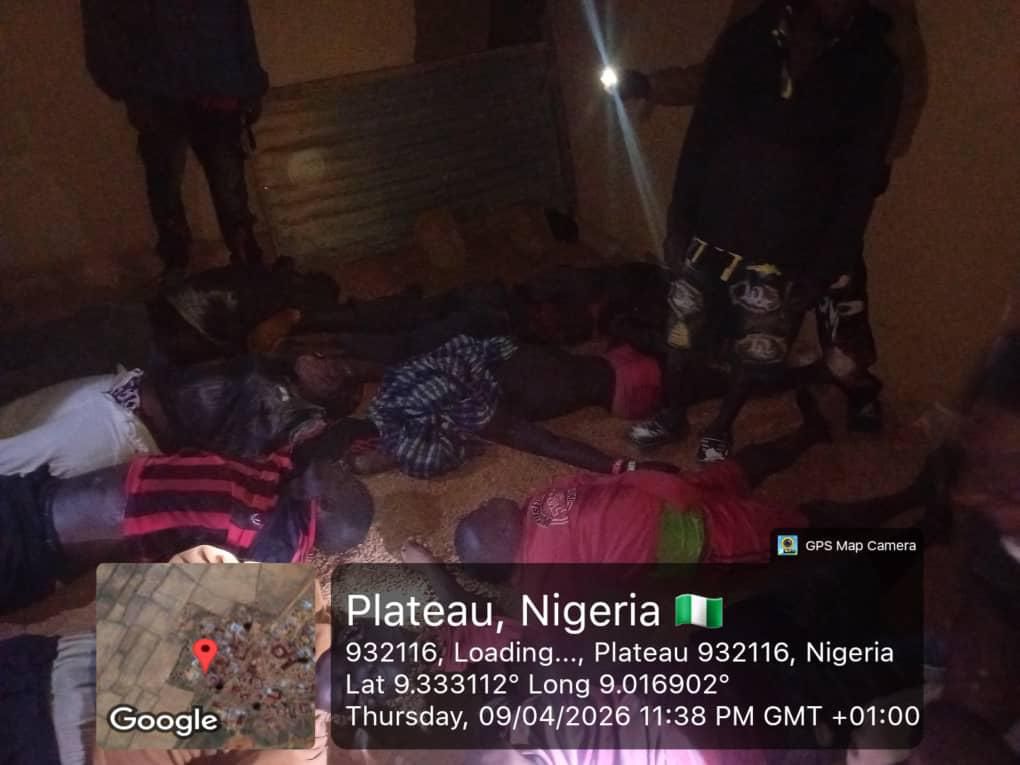
Eight killed in fresh Plateau attack by Fulani Bandits as troops intensify clearance operations
By: Zagazola Makama
Suspected Fulani Bandits have killed eight residents in Mbwelle Village, Kwatas District of Bokkos Local Government Area of Plateau, in the latest wave of tit for tat attacks in the state.
The incident occurred at about 10:30 p.m. on April 9, according to security sources.
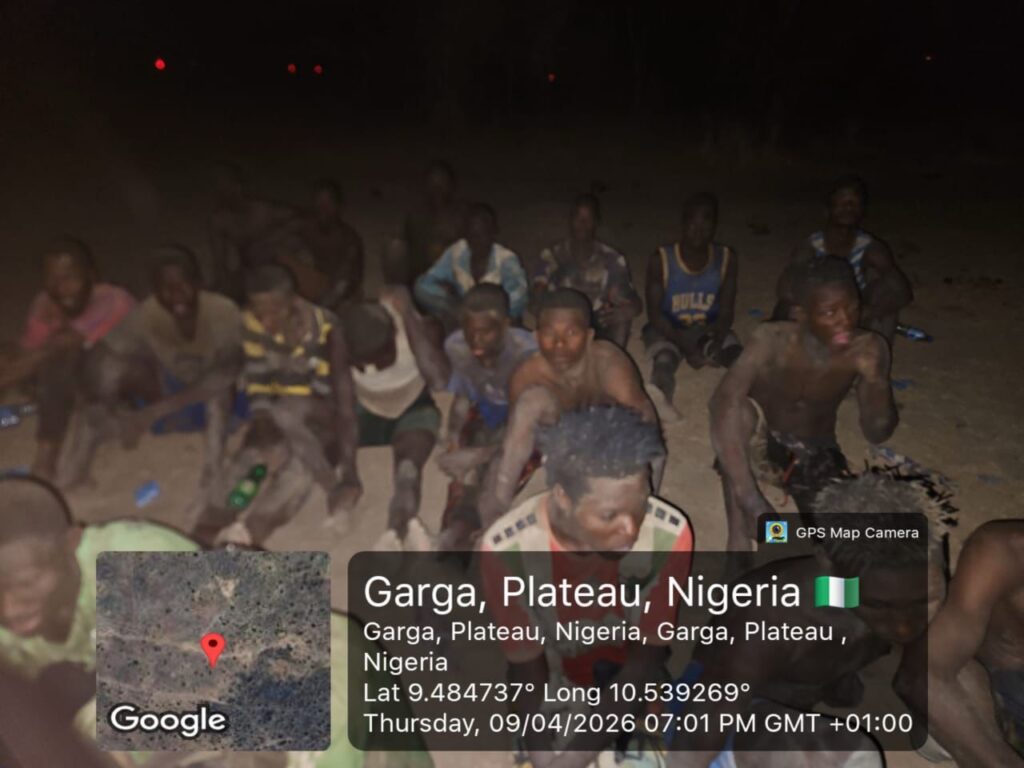
The victims were identified as Habila Istifanus (38), Hassan Istifanus (31), Iliya Mangut (70), Sunday Gideon (31), Innocent Banabas (20), Lucky Titus (38), Wisdom Lucky (15), and Bwehsun Hassan (25).
Joint security forces responded to the distress call but did not establish contact with the attackers, who fled before their arrival.
A security source attributed the delayed response to the distance of about 15 kilometres between the troops’ base and the community, as well as difficult terrain.
All casualties, including the injured, were evacuated to Bokkos Cottage Hospital, while troops have launched pursuit operations to apprehend the fleeing militia.
Earlier on April 9, troops under Operation Wutan Daji recorded a major operational success in Wase and Kanam LGAs, neutralising 13 suspected terrorists during an offensive along identified corridors in Daba and Seri villages.
The troops had established blocking positions between Dutsen Zaki and Odare Forest, where they intercepted armed elements moving on motorcycles.
Recovered items included two motorcycles, five 25-litre jerrycans of Premium Motor Spirit (PMS), one AK-47 rifle, and a magazine loaded with three rounds of 7.62mm special ammunition.
Military sources said several fleeing terrorists escaped with gunshot wounds, while clearance operations remain ongoing.
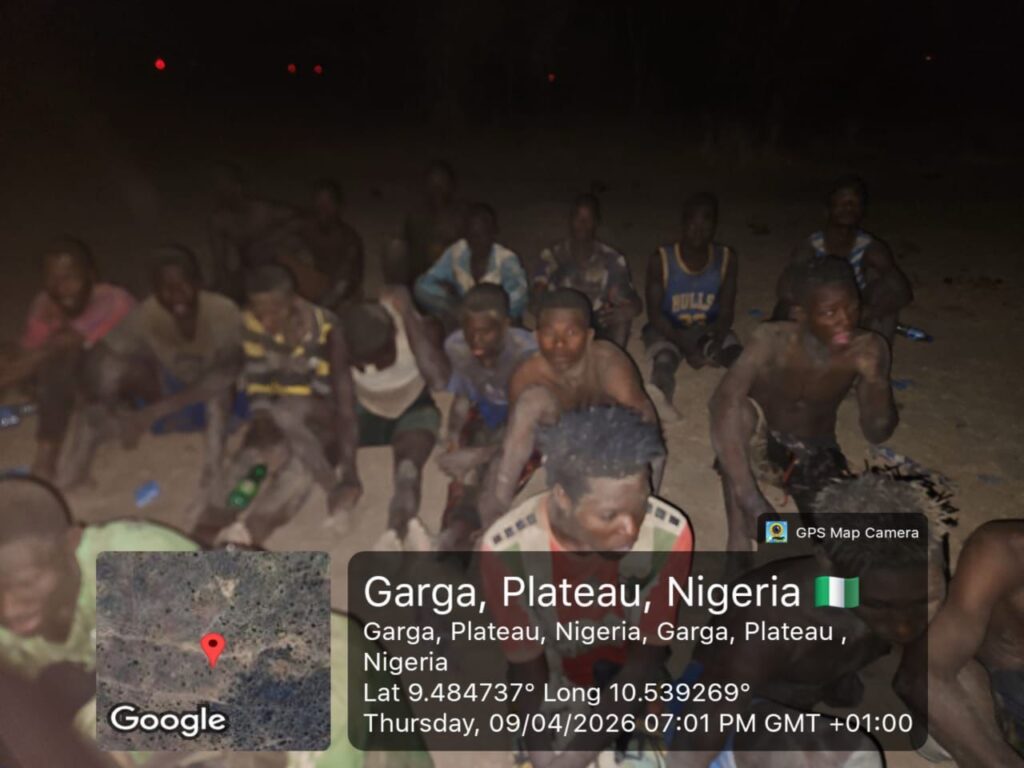
In a separate operation on the same day, troops of 33 Artillery Brigade, in collaboration with the Office of the National Security Adviser (ONSA), conducted clearance operations in Daji Madam Forest, targeting camps at Dogo Ruwa and Bogwas.
The operation, supported by troops of a Combat Support Infantry Battalion and Civilian Joint Task Force (CJTF), led to the rescue of 21 kidnapped victims and the destruction of multiple bandits’ enclaves, including one linked to a notorious leader identified as Auta Kachalla.
Items recovered included one G3 rifle, four magazines, three generating sets, and a solar panel.
Despite these gains, security incidents have persisted across Barkin Ladi, Riyom, Jos South, and surrounding areas.
On April 8, troops of Operation Enduring Peace (OPEP) foiled an attack on commuters along the Razat–Kafi Abu road in Barkin Ladi LGA, where one civilian was killed and two others injured.
Later the same day, troops repelled a militia attack along the same axis and conducted a cordon-and-search operation in Suma Suga Takwok, recovering two AK-47 rifles, two magazines, and five rounds of 7.62mm ammunition.
In Riyom LGA, one civilian was killed in an ambush along the Dagbam bridge axis on the GOL–HOSS–Bwei road, while two others escaped unhurt. Troops also foiled an attack on Jol community on April 7, forcing the assailants to retreat without casualties.
Similarly, troops rescued one victim and recovered ammunition following an earlier attack in Dum village, Bachi District, where another victim was found dead.
Security operatives also intercepted 16 stray cattle grazing on farmland in Tahoss community, an incident linked to recurring disputes between farmers and herders.
The pattern of violence reflects a sustained cycle of reprisals between farming communities and pastoral groups.
On April 5, a Fulani herder, identified as Abubakar Hababe (40), was found dead in Riyom LGA in what sources described as a reprisal attack. The killing by suspected Berom Militia was reportedly linked to earlier incidents, including the attack on an illegal mining site in Gyel village where three miners were killed.
Other incidents include the discovery of the body of a 30-year-old herder, Shafiyu, in Jos South LGA, and the killing of a Fulani boy, Abdullahi Mohammed, in Mangu LGA.
Tensions were escalated since March 28, after the assassination of a Fulani leader, Alhaji Bilyaminu Julde, the Ardo of Gindiri in Barkin Ladi LGA.
Security reports also identified repeated destruction of farmlands and cattle rustling, further aggravating hostilities between communities.
Authorities said troops and other security agencies have intensified patrols, surveillance, and community engagements across affected LGAs to prevent further escalation.
“Operations are ongoing to dominate the general areas, dismantle criminal networks, and restore normalcy,” a security source said.
The developments illustrate the complexity of the security situation in Plateau, where counter-terrorism operations intersect with long-standing communal tensions, making sustained peace efforts increasingly challenging.
Security agencies have urged residents to remain calm, avoid reprisals, and provide credible information to support ongoing operations aimed at restoring lasting peace in the state.
Eight killed in fresh Plateau attack by Fulani Bandits as troops intensify clearance operations
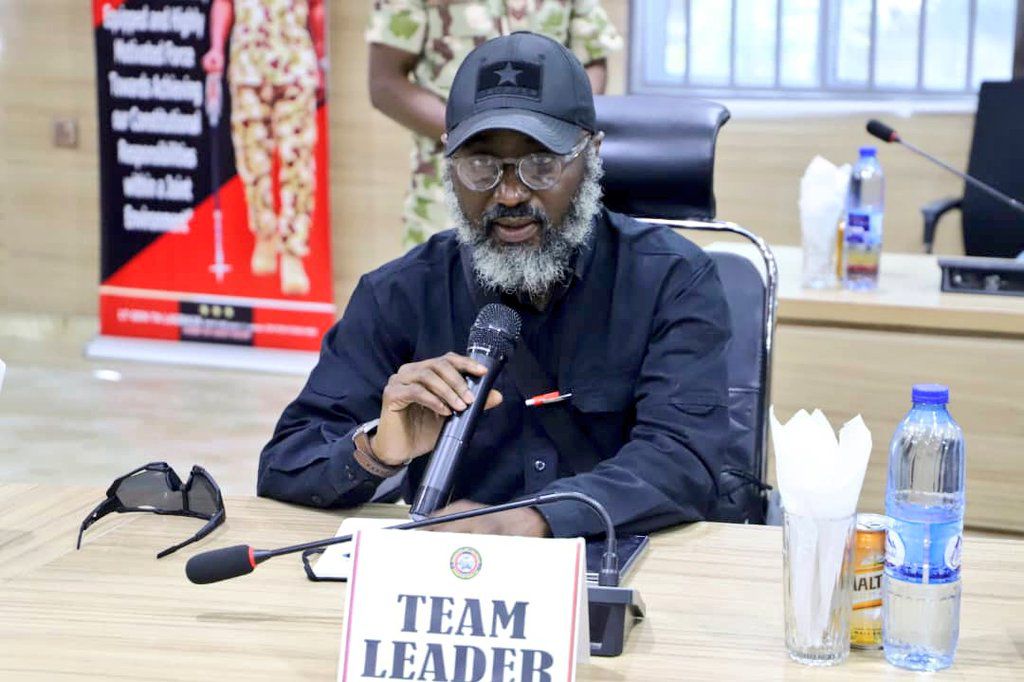
Zagazola defends Gebi, urges Nigeria not to discard “one of its best minds” over allegations
By: Zagazola Makama
Counter-insurgency expert and security analyst, Zagazola Makama, has called for a fair and balanced assessment of the career and contributions of former lawmaker and security governance expert, Mr Aliyu Ibrahim Gebi, amid ongoing allegations of providing false intelligence to foreign embassies.
Makama appealed to Nigerian government not to dismiss Mr Gebi, over ongoing allegations, urging Nigeria to carefully weigh his long record of service in national security and diplomacy.
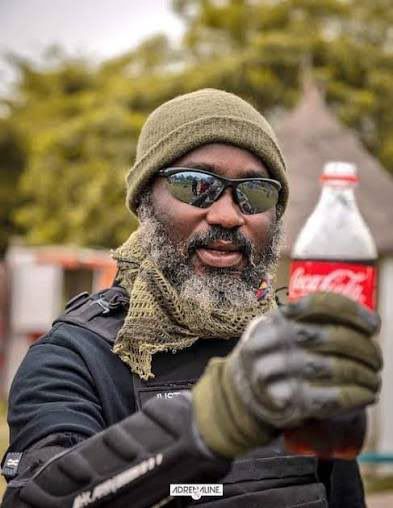
Makama, who spoke in reaction to the controversy surrounding alleged intelligence-related activities linked to Gebi, stressed that Nigeria must evaluate his long-standing record of service in both kinetic and non-kinetic aspects of national security rather than isolate him based on allegations.
He said Gebi remained one of the country’s finest notable figures in security governance, regional diplomacy, and conflict resolution architecture, noting that his contributions over the years cut across legislative oversight, governance, counter-terrorism engagement, and high-level diplomatic mediation.
According to him, Gebi’s past involvement in sensitive national assignments, including inter-agency coordination efforts and regional stabilization initiatives, places him among a small pool of Nigerian actors with practical exposure to both domestic and transnational security dynamics.
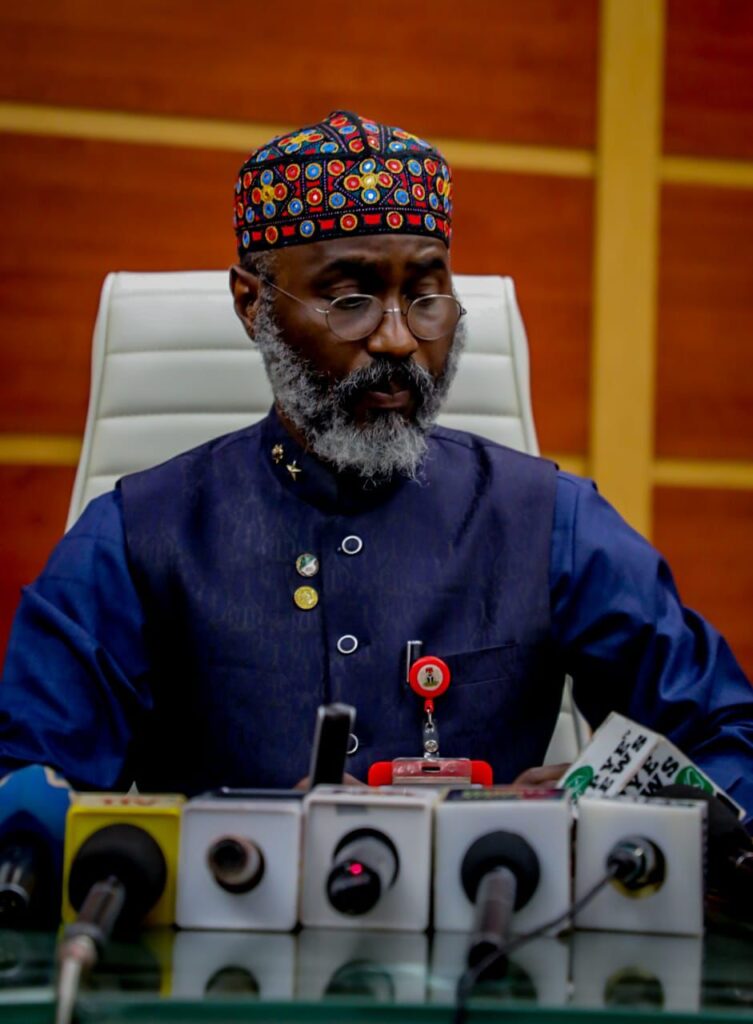
Makama recalled that Gebi played roles in legislative security oversight during his tenure in the House of Representatives, where he chaired security-related committees and participated in discussions shaping internal security responses at a time of growing insurgency threats in the country.
He further noted his participation in regional engagements under ECOWAS frameworks, where he contributed to discussions on border security, free movement protocols, and counter-terrorism cooperation among West African states.
The analyst also highlighted Gebi’s involvement in non-kinetic interventions, particularly diplomatic engagements aimed at de-escalating tensions between Nigeria and neighbouring countries, including efforts to restore communication channels during periods of strained bilateral relations.
Makama added that Gebi’s role in broader regional security dialogues involving Nigeria, Niger Republic, Mali, and Burkina Faso demonstrated his exposure to multinational coordination mechanisms and alternative conflict resolution approaches outside conventional military operations.
He stressed that individuals with such background often operate within sensitive intelligence and diplomatic environments where misinterpretations can easily arise, noting that such complexity should not be ignored in public judgment.
“Nigeria must not to discard one of its best hands in the non-kinetic and strategic communication space based on allegations that are still under investigation. “Nigeria cannot afford to lose experienced actors in its security ecosystem without full and fair consideration of their track records,”Makama said.
He added that Nigeria’s security challenges required experienced bridge-builders capable of working across intelligence, diplomacy, and civil-military coordination, rather than a narrowing of the country’s human capacity pool through premature exclusion.
He said that the former lawmaker had, over the years, participated in several high-level policy engagements, advocacy programmes, and security governance platforms, where he consistently advocated for stronger intelligence sharing, regional cooperation, and a whole-of-government approach to insecurity in West Africa.
“Whether in formal government assignments or informal diplomatic engagements, Gebi has consistently positioned himself on the side of Nigeria’s national interest,” Makama stated.
The security analyst also highlighted Gebi’s public communication role, noting that he had frequently used social media platforms, particularly Twitter, to mobilise youth engagement around national unity, counter-extremism narratives, and civic responsibility, describing it as part of modern strategic communication in security governance.
According to him, such engagements formed part of modern strategic communication efforts that complement kinetic military operations with information-driven stabilization strategies.
Makama cautioned that isolating individuals who have contributed significantly to national security discourse based solely on allegations could discourage future participation by experts in sensitive intelligence and diplomatic engagements.
The nation must judge fairly, investigate thoroughly, but also remember those who have consistently worked to keep it stable. Gebi is one of them.
Zagazola defends Gebi, urges Nigeria not to discard “one of its best minds” over allegations

NHRC Raises Alarm Over Rising Human Rights Violations, Records 659,617 Complaints in Q1 2026

Security checks find no confirmation of alleged terror build-up around Heipang axis

Eight killed in fresh Plateau attack by Fulani Bandits as troops intensify clearance operations

Roger Federer’s Shock as DNA Results Reveal Myla and Charlene Are Not His Biological Children

THE PLIGHT OF FARIDA

FAILED COUP IN BURKINA FASO: HOW TRAORÉ NARROWLY ESCAPED ASSASSINATION PLOT AMID FOREIGN INTERFERENCE CLAIMS
-
 News2 years ago
Roger Federer’s Shock as DNA Results Reveal Myla and Charlene Are Not His Biological Children
-
Opinions4 years ago
THE PLIGHT OF FARIDA
-
 News12 months ago
FAILED COUP IN BURKINA FASO: HOW TRAORÉ NARROWLY ESCAPED ASSASSINATION PLOT AMID FOREIGN INTERFERENCE CLAIMS
-

 News2 years ago
EYN: Rev. Billi, Distortion of History, and The Living Tamarind Tree
-
 Opinions4 years ago
POLICE CHARGE ROOMS, A MINTING PRESS
-

 ACADEMICS2 years ago
A History of Biu” (2015) and The Lingering Bura-Pabir Question (1)
-

 Columns2 years ago
Army University Biu: There is certain interest, but certainly not from Borno.
-

 Opinions2 years ago
Tinubu,Shettima: The epidemic of economic, insecurity in Nigeria
