
News
Engr. Ramat and the Future of NERC: Separating Fact from Fiction

Engr. Ramat and the Future of NERC: Separating Fact from Fiction
by Ibrahim Sani Shawai
In recent days, several comments have circulated about the Nigerian Electricity Regulatory Commission (NERC) and the nomination of Engr. Abdullahi Ramat Garba as its incoming Chairman. Some statements paint an unnecessarily gloomy picture of the sector and an oddly shallow understanding of his qualifications. Both deserve clarification.
One of the recurring claims is that Engr. Ramat is simply a former local government chairman. That description is often thrown around as if it covers his entire professional identity. It does not. Long before his public service journey, he was a trained and certified engineer with years of hands-on technical and administrative experience. His profile blends engineering discipline, institutional management and a solid grasp of public accountability. Reducing all of this to one political role is inaccurate.
Some critics argue that NERC has endured two decades of weak leadership. Anyone who has seriously followed the sector knows this is not accurate. NERC guided Nigeria from a government-controlled electricity system to a privatized market. It established tariff structures, licensing frameworks, customer protection rules and compliance mechanisms still in use today. These reforms required competence, not weakness.
Modern electricity regulation relies heavily on technology, automation, real-time data, digital complaint systems and market intelligence tools. This is where Engr. Ramat has a clear advantage.
One of the most overlooked aspects of his profile is his strong proficiency in Information Technology. This directly supports the type of leadership required in today’s electricity market. His IT-driven approach includes real-time digital monitoring of grid operations, automated regulatory workflows, improved customer service platforms, cybersecurity protections, smart metering reforms and predictive tools for early intervention. These are the same tools used by leading global regulators.
Some insist that the next Chairman must come from within the Commission. But internal experience alone does not guarantee innovation. Many countries deliberately bring in external leadership to encourage new thinking.
His recent interview on TVC also highlighted his temperament. He calmly distanced himself from protests at the National Assembly and stressed the need for the Senate to carry out its responsibilities without interference. His conduct reflects maturity and respect for institutions.
The current leadership’s tenure expires on 1 December 2025. The Electricity Act does not provide room for an acting Chairman afterward. Nigeria cannot afford a vacuum at the top of its regulatory framework. Timely confirmation and effective transition planning are essential.
Rather than fixating on negative narratives, Nigeria should focus on strengthening NERC through better funding, technical training, transparent decision making and data-driven regulatory tools. Our electricity challenges built up over decades and cannot be solved instantly, but steady progress is possible with the right leadership.
His nomination offers a chance to modernize NERC, rebuild investor confidence and strengthen consumer protections. It reflects an effort to inject new ideas and technological depth into one of Nigeria’s most important institutions.
Engr. Abdullahi Ramat Garba brings a rare combination of engineering competence and digital vision. He deserves the opportunity to demonstrate it.
Shawai is a public affairs analyst and can be contacted via shawai2000@yahoo.com
Engr. Ramat and the Future of NERC: Separating Fact from Fiction



DSS Trails, Nabs Man Impersonating Personnel in Abuja
By: Zagazola Makama
*Arrested in tactical uniform, with fake pistol, allegedly extorting motorists
The Department of State Services (DSS) late on Wednesday in Abuja arrested a man identified as Moferewa Maiye, discovered to be impersonating a personnel of the Service.
Maiye, who claimed to hail from Agbajojun Village, Mopamuro Local Government Area of Kogi State, was trailed and arrested by DSS officers in his hideout around the NITEL Junction, along Adetokunbo Ademola Way, Wuse II, Abuja.
At the time of his arrest, Maiye was in DSS tactical uniform and armed with a fake pistol.
According to a security source, the Secret police acted on credible intelligence that Maiye was using the uniform and the fake weapon to intimidate commuters and motorists, extorting money from them.
During interrogation, added the source, the suspect reportedly claimed that his brother was a DSS personnel who died years ago.
He identified the brother as Monday Maiye, stressing that the DSS kit in his possession was his late brother’s.
The suspect is currently being interrogated as security operatives, the source stated, adding that the Service was investigating how he came about the DSS uniform and kit.
“Investigators are also trying to establish how long the suspect has been involved in similar acts of impersonation and extortion.
“The arrest underscores growing concerns by the Service over the activities of individuals who impersonate security personnel to intimidate members of the public and commit criminality,” the source declared.
DSS Trails, Nabs Man Impersonating Personnel in Abuja
Yobe: Wali visits Emir of Damaturu
By: Yahaya Wakili
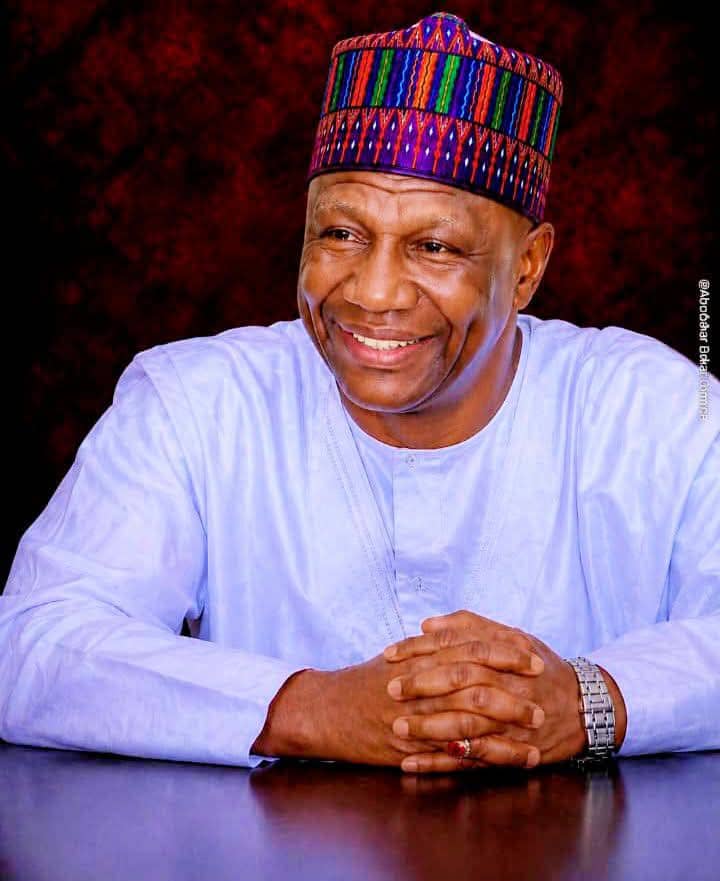
Yobe State All Progressives Congress (APC), 2027 gubernatorial candidate Alhaji Baba Malam Wali MNI, FCAN, has paid a courtesy visit to His Royal Highness, the Emir of Damaturu, Alhaji Shehu Hashimi II Ibn Umar Al-Amin El-Kanemi, at his palace in Damaturu.
During the visit, the APC governorship candidate, Alhaji Baba Malam Wali MNI, said they were at the emir’s palace to solicit the prayers and blessings of the emir.
According to Baba Wali, “We are in the race; therefore, the visit was very significant. We need the prayers of the royal fathers and leaders because they were very vital and important at this crucial time.
Responding, His Royal Highness, the emir of Damaturu, Alhaji Shehu Hashimi II Ibn Al-Amin El-Kanemi, thanked the governorship candidate for the visit and prayed Almighty Allah (SWT) would guide and protect him throughout his struggle in his life.
Those accompanying the incoming governor, Inshallah, in 2027 during the visit are his deputy, Barrister Saleh Samanja; APC State chairman, Alhaji Mohammed Gadaka; and Madakin Gudi.
Others are Alhaji Aji Yarima Bularafa, Hon. Commissioner of the Ministry of Wealth Creation, Empowerment, and Employment Generation; Hon. Nasiru Hassan Yusuf, candidate for the Federal House of Representatives, representing Damaturu, Gujba, Gulani, and Tarmuwa local government areas; and others.
The emir conferred the traditional title of Mukaddam of the Damaturu emirate council on Alhaji Baba Malam Wali, mni, and fcan, respectively.
Yobe: Wali visits Emir of Damaturu
Fire Razes Building Material Shops in Satellite Town, Lagos
By Zagazola Makama
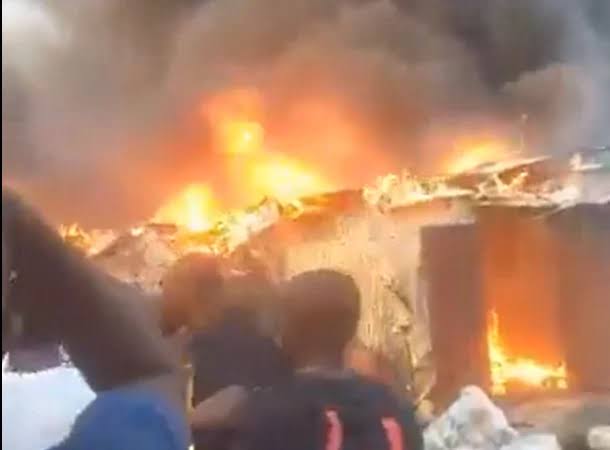
LAGOS — A fire outbreak has destroyed several building material shops along Fin-Niger, Satellite Town, Lagos State.
The incident occurred at about 6:10 a.m. on Aug. 18, when a distress call was received reporting a fire outbreak in the area.
Following the alert, a team of policemen and firefighters was swiftly mobilised to the scene.
The fire affected building material shops located at 58/196 Old Ojo Road, along Fin-Niger, Satellite Town.
The emergency responders successfully contained and extinguished the fire, preventing it from spreading further.
No casualty or loss of life was recorded in the incident.
The cause of the fire and the estimated value of property destroyed have not yet been established.
The police said investigation into the incident is ongoing to determine the circumstances surrounding the outbreak.
Fire Razes Building Material Shops in Satellite Town, Lagos

When Official Directives Become More Powerful Than the Law

DSS Trails, Nabs Man Impersonating Personnel in Abuja

Ogwashi-Uku Palace: Izediunor Faction Has Lost At Every Court Level, Including Supreme Court

Roger Federer’s Shock as DNA Results Reveal Myla and Charlene Are Not His Biological Children

THE PLIGHT OF FARIDA

FAILED COUP IN BURKINA FASO: HOW TRAORÉ NARROWLY ESCAPED ASSASSINATION PLOT AMID FOREIGN INTERFERENCE CLAIMS
-
 News2 years ago
Roger Federer’s Shock as DNA Results Reveal Myla and Charlene Are Not His Biological Children
-
Opinions5 years ago
THE PLIGHT OF FARIDA
-
 News1 year ago
FAILED COUP IN BURKINA FASO: HOW TRAORÉ NARROWLY ESCAPED ASSASSINATION PLOT AMID FOREIGN INTERFERENCE CLAIMS
-

 News2 years ago
EYN: Rev. Billi, Distortion of History, and The Living Tamarind Tree
-
 Opinions5 years ago
POLICE CHARGE ROOMS, A MINTING PRESS
-

 ACADEMICS2 years ago
A History of Biu” (2015) and The Lingering Bura-Pabir Question (1)
-

 Columns2 years ago
Army University Biu: There is certain interest, but certainly not from Borno.
-

 Politics1 year ago
2027: Why Hon. Midala Balami Must Go, as Youths in Hawul and Asikira/Uba Federal Constituency Reject ₦500,000 as Sallah Gift
