
News
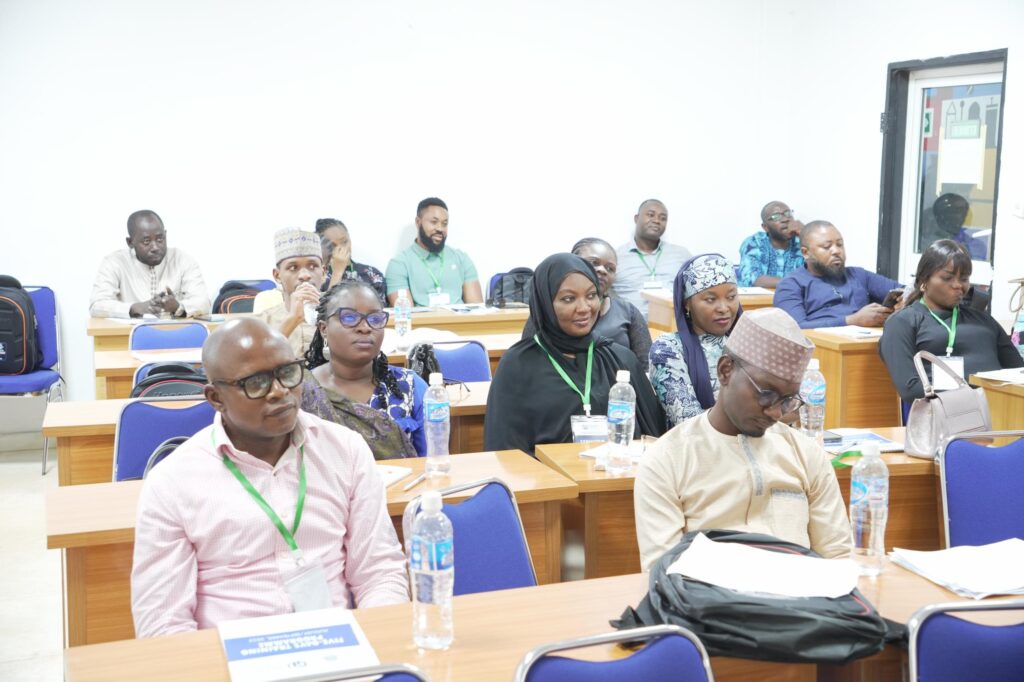
Entire Staff of NIMC Undergo Capacity Building

Entire Staff of NIMC Undergo Capacity Building
By: Michael Mike
All 3,780 staff members of the National Identity Management Commission (NIMC) have embarked on capacity building aimed at top service delivery.
According to a statement by the spokesman of the Commission, Dr. Kayode Adegoke, the
training, which is across all departments and units of the Commission, in line with the directive of President Bola Tinubu, on staff capacity building across Ministries, Departments, and Agencies (MDAs).
Adegoke said it is on record that since the inception of NIMC, staff training and capacity building have been at their lowest ebb. However, the arrival of Engr. (Dr.) Abisoye Coker-Odusote, as the DG/CEO of NIMC, has changed the trajectory of events.
He added that across the country, in states and local government areas, all NIMC staff, irrespective of cadre, have undergone or are still undergoing capacity building to deliver on the Renewed Hope Agenda of President Tinubu’s administration. Adegoke said staff nationwide, elated at this new era of enhanced capacity building, could not hide their joy as they sincerely appreciated Engr. (Dr.) Abisoye Coker-Odusote for her sterling, transformational, and visionary leadership.
He said since assuming office, Engr. Coker-Odusote has not only transformed NIMC but has also initiated several welfare initiatives that have boosted staff morale. These include the distribution of over 2,500 enrollment devices to aid data capturing, securing Federal Government approval and implementation for a 25%–35% salary increment for staff of the Commission, payment of extra transport allowance and providing free buses to cushion transport challenges for staff in the Headquarters, among many other staff welfare-oriented initiatives.
He noted that staff from the States and local government offices deeply appreciated Engr. (Dr.) Abisoye Coker-Odusote, for driving inclusive staff capacity building, promoting staff welfare, providing work tools and resources, providing modern furniture, boosting staff morale with unprecedented welfare packages, and building a workforce that delivers on the Renewed Hope Agenda of President Bola Tinubu
Entire Staff of NIMC Undergo Capacity Building


News
Diaspora experts urge AI adoption, mentorship, healthy living to unlock Nigeria’s youth potential

Diaspora experts urge AI adoption, mentorship, healthy living to unlock Nigeria’s youth potential
By: Michael Mike
Nigeria’s leading professionals from the diaspora and across key sectors have called for a stronger national commitment to mentorship, artificial intelligence (AI) skills development and healthy living as essential tools for empowering young people and driving sustainable national development.
The call came at the 2026 National Diaspora Day Youth Empowerment Summit organised by the Nigerians in Diaspora Commission (NiDCOM) in Abuja, where speakers argued that Nigeria’s youthful population can only realise its full potential through deliberate investment in knowledge, innovation and human capital.
Held under the theme, “Harnessing Global Diaspora Medical Expertise to Strengthen Local Health Systems for National Development,” the summit featured a high-level panel that brought together experts in healthcare, technology, education, law enforcement, media, philanthropy and sports to examine practical strategies for preparing Nigerian youth for an increasingly competitive global economy.
Moderated by youth development expert Hon. Bobby-Diggi Olisa of the Canvas Institute, New York, the discussion featured Prof. Bisi Ademuyiwa of Washington University School of Medicine in St. Louis and Founder of Rooted in Naija; Assistant Commander General of Narcotics at the National Drug Law Enforcement Agency (NDLEA), Nnoruka Kenechi; clinical pharmacist and Ribbon Rouge Foundation founder, Morenike Eniola Olasebikan; Nigerian-American basketball player and Carriage Foundation founder, Ejimofor Anosike; U-VOL Foundation founder and Chief Executive Officer, Dr. Faith Adole; veteran broadcaster Kierian Umeayo; ARCO Group’s Head of Branding and Communications, Christopher Okoigun; and Chief Executive Officer of Cecy Intelligence, Dr. Emiri Odogwu.
A recurring message from the panel was that mentorship remains one of the most effective pathways for nurturing future leaders. Speakers urged Nigerians in the diaspora to deepen their engagement with young people through mentorship, sponsorship, career guidance and professional networking.
They also encouraged young Nigerians to remain open to learning, cultivate discipline and leverage digital platforms responsibly to build careers and meaningful professional relationships.
Artificial intelligence emerged as another major focus of the conversation, with speakers warning that technological disruption will increasingly shape employment opportunities worldwide.
Dr. Faith Adole advised young Nigerians to see AI as an opportunity rather than a threat, urging them to acquire relevant digital skills that complement their existing expertise and improve their competitiveness in the evolving global workforce.
Beyond technology, the panel stressed that personal well-being is inseparable from productivity and leadership. Participants were encouraged to adopt healthier lifestyles through balanced nutrition, regular physical activity, adequate rest and greater attention to mental health.
The experts also challenged young people to identify problems within their communities and develop innovative solutions while continuously upgrading their skills to remain relevant in a rapidly changing world.
The panel concluded that long-term national development depends on sustained investment in education, volunteerism, entrepreneurship and inclusive opportunities that allow young Nigerians to thrive.
The session ended with a renewed commitment by the panelists to continue supporting initiatives that connect Nigerian youth with global opportunities, strengthen diaspora collaboration and equip the next generation with the confidence, networks and capabilities needed to contribute to Nigeria’s development while competing successfully on the international stage.
Diaspora experts urge AI adoption, mentorship, healthy living to unlock Nigeria’s youth potential

UN Urges Africa to Prioritise People, Partnerships to Rescue SDGs
By: Michael Mike
The United Nations has called on African governments, development institutions and the private sector to dramatically scale up investments in people and strengthen strategic partnerships to reverse the continent’s slow progress towards achieving the Sustainable Development Goals (SDGs) before the 2030 deadline.
The appeal was made on Saturday at the Africa Social Impact Summit 2026 in Lagos, where the UN warned that Africa faces an increasingly difficult development landscape marked by economic headwinds, shrinking international aid, climate shocks and persistent conflicts.
Speaking on behalf of the United Nations Resident and Humanitarian Coordinator a.i. in Nigeria, Ms. Wafaa Saeed, the United Nations Population Fund (UNFPA) Representative in Nigeria, Ms. Muriel Mafico, said the continent must urgently shift its focus towards investing in its people if it hopes to unlock sustainable economic growth.

“The wealth of a nation is not measured by what it extracts from the ground. It is measured by what it unlocks in its people,” Mafico declared, stressing that development financing should ultimately be about creating opportunities for citizens rather than merely balancing budgets.
Addressing government officials, development partners, civil society organisations and business leaders, she argued that every child deserves quality education, every young person should have access to decent employment, every woman should be empowered to fulfil her potential, and communities must be equipped to withstand future economic and climate-related shocks.
She painted a sobering picture of global development, noting that only 36 per cent of the SDG targets are currently on track or making moderate progress. According to her, declining official development assistance, mounting debt burdens and a widening financing gap for developing countries are threatening efforts to meet the 2030 Agenda.
Despite the setbacks, Mafico maintained that Africa possesses the human and economic potential to change its development trajectory.
With less than five years remaining to meet the SDGs, she urged African countries to embrace greater urgency, ambition and collective action, insisting that sustainable development cannot be imported.
“No country can outsource its development. No nation can import resilience,” she said, calling on governments to strengthen domestic leadership, promote innovation and build partnerships that reinforce national priorities.
Turning to Nigeria, Mafico described the country’s youthful population as one of its greatest strategic assets, saying deliberate investment in education, innovation, entrepreneurship and skills development could transform the country into a global centre for inclusive growth.
She warned that neglecting investments in young people and women would deepen inequality and limit the country’s future economic prospects.
The UN official also advocated a new model of development financing anchored on stronger domestic resource mobilisation, increased private sector investment, technological innovation and expanded support for entrepreneurs.
She emphasised that partnerships should be driven by measurable impact rather than rhetoric, with people remaining at the centre of every development initiative.
Highlighting the UN’s ongoing collaboration with Nigerian authorities and other stakeholders, Mafico said the organisation is supporting reforms in institutional capacity, social protection, renewable energy, digital innovation, food systems, education and programmes aimed at expanding opportunities for women and young people.
She urged participants at the summit to ensure that the gathering delivers tangible outcomes through stronger partnerships, increased investments and coordinated action capable of accelerating sustainable development across Africa.
UN Urges Africa to Prioritise People, Partnerships to Rescue SDGs

Marwa Warns Traditional Rulers After Discovery of Drug Cartels’ Meth Labs in Southwest Forests
By: Michael Mike
Chairman/Chief Executive Officer of the National Drug Law Enforcement Agency (NDLEA), Brig.-Gen. Buba Marwa (retd.), has called on traditional rulers, parents and community leaders to take ownership of Nigeria’s war against drug abuse and illicit trafficking, warning that criminal drug syndicates are increasingly exploiting rural communities and forests for illegal operations.
Marwa’s appeal comes amid growing concerns over the recent discovery of industrial-scale clandestine methamphetamine laboratories allegedly operated by Nigerian-Mexican drug cartels in the forests of Ogun and Oyo states.

Speaking on Saturday at the 10th Akinale Day celebration and the first coronation anniversary of the Towulade of Owu Akinale, Oba Oluseyi Ayodeji Adewole Adediran (Otileta I), in Ogun State, the NDLEA chairman urged royal fathers across the country to become active partners in efforts to prevent drug traffickers from infiltrating their communities.
He specifically charged traditional rulers and community leaders to monitor activities in forests and rural settlements and to thoroughly scrutinise individuals seeking to acquire farmlands, warning that criminal organisations are increasingly using isolated locations to establish illicit drug production facilities.
Marwa said the recent discovery of methamphetamine laboratories in the South-West underscored the need for vigilance at the grassroots level.
He stressed that the fight against drug abuse could not be won by law enforcement agencies alone, insisting that traditional institutions remained critical because of their close relationship with local communities and their understanding of youth dynamics.
According to him, royal councils should establish community-based advocacy networks that would not only make their domains hostile to drug traffickers but also provide support and rehabilitation pathways for persons battling substance dependence.
Marwa also appealed to parents to return to the core values of responsible parenting by paying closer attention to their children’s behaviour and identifying early warning signs of substance abuse before addiction takes root.
Addressing young people, he warned that illicit drugs offer only a false sense of escape, arguing that substance abuse compounds life’s challenges instead of solving them.
“Drug abuse does not discriminate,” he said, noting that the menace affects people regardless of their social status, age or location.
The NDLEA boss described his visit to Akinale as “a pilgrimage of friendship, respect and deep-seated admiration,” recalling that his relationship with the monarch dated back nearly two decades to the period when Oba Adediran served as leader of the Lisabi Youths.
He commended the monarch’s leadership qualities, saying the dedication and commitment he displayed as a youth leader had continued to define his reign since ascending the throne of Owu Akinale a year ago.
Marwa Warns Traditional Rulers After Discovery of Drug Cartels’ Meth Labs in Southwest Forests

Diaspora experts urge AI adoption, mentorship, healthy living to unlock Nigeria’s youth potential

UN Urges Africa to Prioritise People, Partnerships to Rescue SDGs

Marwa Warns Traditional Rulers After Discovery of Drug Cartels’ Meth Labs in Southwest Forests

Roger Federer’s Shock as DNA Results Reveal Myla and Charlene Are Not His Biological Children

THE PLIGHT OF FARIDA

FAILED COUP IN BURKINA FASO: HOW TRAORÉ NARROWLY ESCAPED ASSASSINATION PLOT AMID FOREIGN INTERFERENCE CLAIMS
-
 News2 years ago
Roger Federer’s Shock as DNA Results Reveal Myla and Charlene Are Not His Biological Children
-
Opinions4 years ago
THE PLIGHT OF FARIDA
-
 News1 year ago
FAILED COUP IN BURKINA FASO: HOW TRAORÉ NARROWLY ESCAPED ASSASSINATION PLOT AMID FOREIGN INTERFERENCE CLAIMS
-

 News2 years ago
EYN: Rev. Billi, Distortion of History, and The Living Tamarind Tree
-
 Opinions5 years ago
POLICE CHARGE ROOMS, A MINTING PRESS
-

 ACADEMICS2 years ago
A History of Biu” (2015) and The Lingering Bura-Pabir Question (1)
-

 Columns2 years ago
Army University Biu: There is certain interest, but certainly not from Borno.
-

 Politics1 year ago
2027: Why Hon. Midala Balami Must Go, as Youths in Hawul and Asikira/Uba Federal Constituency Reject ₦500,000 as Sallah Gift
