
National News
EU Declares Nigeria Matters to Us

EU Declares Nigeria Matters to Us
… Reiterates Commitment to Strengthen Long Standing Partnership
By: Michael Mike
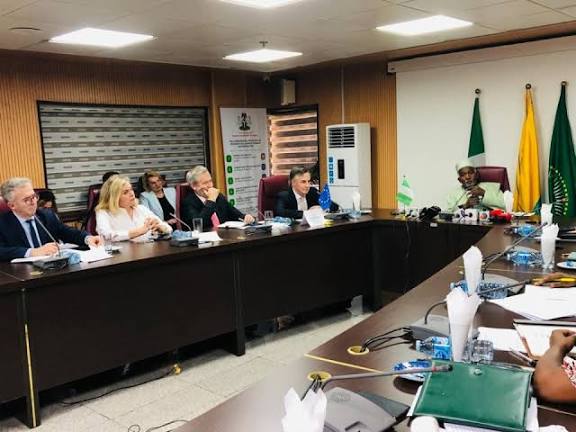
The Chairman of the European Parliament’s Committee on Foreign Affairs, David MacAllister on Monday declared the importance of Nigeria to the bloc, stating that Nigeria “matters” to us.
He also reiterated the bloc’s commitment to strengthening its long-standing partnership with Africa’s largest democracy, Nigeria.
MacAllister, who led a six-member European Parliament delegation on an official visit to Nigeria on Monday, after a meeting with the Nigeria’s Minister of Foreign Affairs, Ambassador Yusuf Tuggar disclosed that their mission to Nigeria was designed to deepen mutual understanding, explore new areas of collaboration, and reinforce political and economic ties between both sides.
He said: “We are a delegation of the European Parliament’s Foreign Affairs Committee, We are six members in total from five different countries, from three different political groups in the European Parliament. And this shows a cross-party interest in further deepening and strengthening the relations between the European Union and Nigeria.”
MacAllister while describing Nigeria as a strategic partner whose influence on the continent and beyond makes it an indispensable ally in shaping Africa–EU relations, said: “Nigeria is considered as a strategic partner for the European Union. “We have a long-lasting, good and close relationship based on shared values and also on joint interests.”
He noted that the visit was part of the Parliament’s tradition of engaging directly with partner nations to better understand their challenges and opportunities.
He said: “The European Parliament’s Foreign Affairs Committee travels with smaller delegations a few times a year to other parts of the world,” adding that: “We mainly travel to get to know better the countries, to understand better the challenges these countries are facing, and also the opportunities these countries have. And we are also there to very carefully listen.”
MacAllister while expressing appreciation to Nigeria’s Minister of Foreign Affairs for hosting the delegation, noted that their discussion was insightful and covered a broad range of regional and global issues.
He said: “It was a great honour for us to be received by the Honourable Minister. His Excellency took more than one and a half hours of his precious time to really go into detail with many, many questions we had as regards the further development of the African Union, the further development of ECOWAS, and the developments in all neighbouring countries of Nigeria.”
He said the dialogue also reflected a shared interest in understanding the trajectories of both regions, stating that: “The Minister was also very interested in finding out how the further developments of the European Union will look like.”
He said: “Because just like Nigeria, just like ECOWAS, we in the European Union, of course, are also facing enormous challenges.”
He reaffirmed that Nigeria remains a vital partner in Europe’s engagement with Africa, stating that: “To sum up in one sentence — Nigeria matters. Nigeria matters for us in the European Union, and we in the European
Parliament are very keen to deepen the strategic partnership with Nigeria. And this will be our message when we go back home to Brussels.”
Responding, Nigeria’s Minister of Foreign Affairs, Ambassador Yusuf Tuggar, welcomed the lawmakers to the Ministry of Foreign Affairs, describing the European Union as a critical partner in trade, security, and development.
He said: “Any visit from the European Union has to be considered very important because Europe still remains our largest trading partner,” adding that: “Figures may vary, but it is not less than 31.8 billion euros.”
He described Europe and Africa as “natural neighbours,” emphasizing that geography should unite rather than separate the two continents.
He said: “For those who understand a bit of Latin, ‘Mediterranean’ means ‘water in the middle of land. So where Europe is concerned in its relations to Africa, what we have is water in the middle of land—we are closer than we imagine.”
He noted that Nigeria’s partnership with the EU extends beyond trade, touching on regional stability, food security, and job creation.
Tuggar said: “President Bola Ahmed Tinubu emphasizes food security as his number one priority because we are a nation of 230 million people, expected to become 400 million by 2050. We are in a race against time to create jobs, feed our people, and ensure our population is healthy.”
He added that Nigeria’s recent inclusion as the 77th shareholder of the European Bank for Reconstruction and Development reflects its commitment to global economic cooperation.
He saud: “We have a lot of lessons to learn from the European Union, which itself is still integrating. It gives us hope and serves as a model that we seek to emulate. We will continue to strengthen our collaboration with the EU in all areas.”
Other members of the European Parliament delegation included Christophe Thomas (France), Jaliana Lefebvre (Croatia), Marta Emigo (Portugal), and Tim Kenan (Finland).
EU Declares Nigeria Matters to Us


National News
ECOWAS Commissions Landmark Abuja Headquarters, Nigeria and China Renew Commitment to Regional Integration
ECOWAS Commissions Landmark Abuja Headquarters, Nigeria and China Renew Commitment to Regional Integration
By: Michael Mike
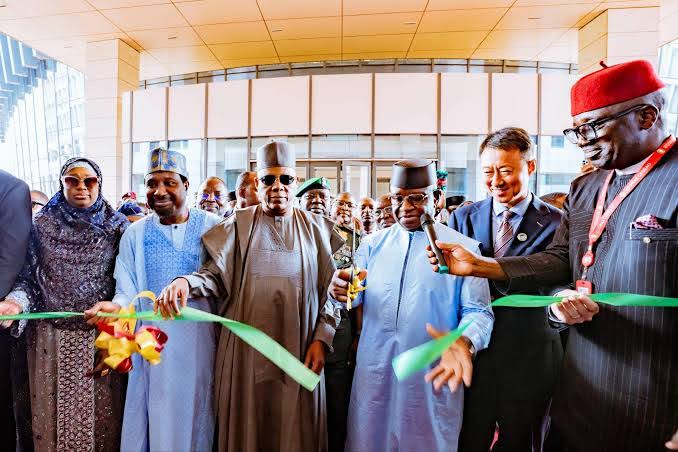
The Economic Community of West African States (ECOWAS) on Thursday inaugurated its new permanent headquarters in Abuja, with leaders describing the imposing complex as a powerful symbol of regional unity, institutional renewal and the deepening strategic partnership between West Africa and China.
The commissioning ceremony brought together senior government officials, diplomats and regional leaders, with Nigeria’s Vice President, Kashim Shettima, representing President Bola Ahmed Tinubu, while the President of the ECOWAS Commission, Dr. Omar Alieu Touray, and China’s Ambassador to Nigeria and ECOWAS, Yu Dunhai, outlined a shared vision for stronger regional integration, economic transformation and closer Africa-China cooperation.
The modern headquarters, financed by the People’s Republic of China, was described by speakers as more than an office complex. It was presented as a lasting symbol of cooperation, resilience and a renewed determination to build a peaceful, prosperous and integrated West Africa.
Touray described the inauguration as “a truly historic milestone” in the life of ECOWAS, noting that the headquarters represents the fulfilment of a vision conceived during the groundbreaking ceremony in December 2022.
He thanked Xi Jinping for China’s support, saying Beijing had once again demonstrated its commitment to West Africa by providing the regional body with a world-class headquarters.
According to him, China’s contributions to ECOWAS have gone beyond infrastructure, recalling the country’s earlier support for regional peacekeeping through the provision of strategic military equipment and vehicles for ECOWAS security operations, alongside numerous development interventions across member states.
Touray said the completion of the headquarters within about two years reflected the strength of the partnership between China and ECOWAS.
He also praised Nigeria for its unwavering support as host nation, citing the country’s role in providing land, policy support and institutional backing that made the project possible.
For decades, the ECOWAS Commission operated from offices spread across different locations in Abuja, creating operational and logistical challenges.
Touray said the new integrated complex would significantly improve coordination, efficiency and productivity by bringing Commission staff together under one roof.
He disclosed that the facility consists of a central nine-storey tower flanked by two seven-storey wings and is equipped with modern conference rooms featuring interpretation facilities, archives, kitchenettes, banking halls, restaurants, a clinic, gymnasium, shops and even a daycare centre for nursing mothers.
Despite celebrating the physical accomplishment, the ECOWAS Commission President stressed that infrastructure alone could not guarantee progress.
“Buildings do not deliver transformation; people and institutions do,” he said, urging member states to ensure that the headquarters becomes a centre of excellence that drives innovation, strengthens collaboration and delivers tangible benefits to citizens across the sub-region.
Representing President Xi Jinping, Ambassador Yu described the building as the “Eye of West Africa” and a flagship achievement under the Forum on China-Africa Cooperation.
He said the headquarters reflects China’s enduring support for African integration and demonstrates the strength of China-Africa relations.
The ambassador noted that China continues to pursue cooperation with Africa based on sincerity, mutual respect, friendship and shared development.
He recalled that during the Beijing Summit of FOCAC, China and African leaders adopted an ambitious framework for building an all-weather China-Africa community with a shared future through six major pillars and ten partnership actions.
According to Yu, China will continue to support ECOWAS in promoting regional peace, economic development and improved living standards.
He pledged that Beijing would deepen cooperation in infrastructure development, digital economy, agriculture, food security, trade and investment, while fully implementing China’s zero-tariff policy for eligible African exports to strengthen Africa’s productive capacity.
The ambassador also called for stronger cultural, educational, youth and sporting exchanges, noting that this year marks the 70th anniversary of diplomatic relations between China and Africa and has been designated the Year of China-Africa People-to-People and Cultural Exchanges.
“China remains forever a trustworthy, sincere friend and a reliable partner to ECOWAS and all West African nations,” Yu declared.
Delivering President Bola Tinubu’s message, Vice President Shettima described the commissioning as both the inauguration of a landmark building and the renewal of ECOWAS’ founding covenant of solidarity, integration and shared prosperity.
He said nations and regional communities endure because their people refuse to abandon the ties that bind them together, insisting that the new headquarters stands as a reminder of the vision of ECOWAS’ founding fathers more than five decades ago.
The Vice President commended the ECOWAS Commission for delivering the ambitious project and expressed appreciation to China for financing the complex, describing Beijing as a dependable development partner whose own economic transformation offers valuable lessons for Africa.
While acknowledging ECOWAS’ achievements in peacebuilding, democratic governance, economic cooperation and the free movement of people and goods, Shettima warned that the region still faces daunting challenges, including terrorism, violent extremism, food insecurity, climate change, economic vulnerability, public health threats and rising unemployment among young people.
He argued that regional integration must now move beyond facilitating trade to building productive economies capable of creating jobs and sustaining growth.
“The hour has come to transform our regional market into a regional production base,” he said.
“We must deepen industrialisation, strengthen regional value chains, expand intra-regional trade and unlock innovation, manufacturing and investment opportunities for our young people.”
According to him, West Africa cannot continue to depend on imported goods if it hopes to achieve genuine economic independence.
“Our integration must increasingly be driven by what we produce rather than by what we consume because a community that consumes what it does not make will forever remain at the mercy of the goodwill of others,” he said.
Shettima also urged member states to strengthen political cooperation and collective security while keeping the door open to countries that have withdrawn from ECOWAS, stressing that regional integration has become indispensable to peace, stability and sustainable development.
He expressed confidence that the headquarters would become a centre for visionary leadership, innovation and collective decision-making capable of advancing the welfare of West Africans.
Together, the three speeches reflected a common theme: that while the new headquarters is an important physical achievement, its true significance will depend on the decisions taken within its walls.
For ECOWAS, the building represents not only a new administrative home but also a renewed commitment to regional integration at a time when West Africa is confronting complex political, economic and security challenges.
For China, it reinforces an expanding strategic partnership with West Africa built around infrastructure, trade and development cooperation.
And for Nigeria, as host nation, the commissioning underscores its continued central role in the affairs of ECOWAS and its determination to support the bloc’s pursuit of peace, stability and economic prosperity across the region.
ECOWAS Commissions Landmark Abuja Headquarters, Nigeria and China Renew Commitment to Regional Integration
Interior Minister Seeks Stronger Federal-State Partnership on Security, Governance
By: Michael Mike
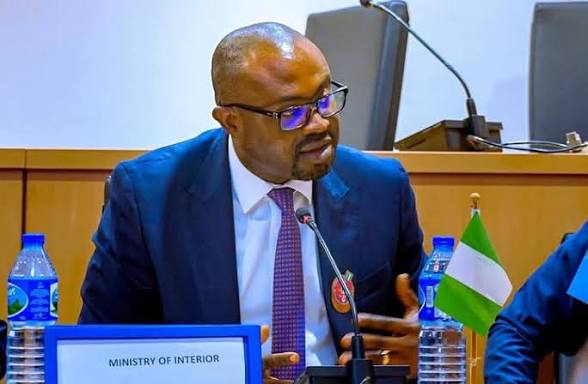
The Minister of Interior, Olubunmi Tunji-Ojo, has reaffirmed the Federal Government’s commitment to strengthening collaboration with state legislatures to drive reforms in internal security, governance and public service delivery across the country.
Tunji-Ojo gave the assurance on Thursday while receiving members of the Conference of Speakers of State Legislatures of Nigeria, led by its Chairman and Speaker of the Delta State House of Assembly, Emomotimi Guwor, during a courtesy visit to the Ministry of Interior headquarters in Abuja.
The minister commended the Conference for seeking closer institutional cooperation, describing state legislatures as indispensable partners in the country’s governance architecture. He said stronger collaboration between federal and sub-national institutions was essential to achieving lasting reforms in internal security and civic administration.
According to him, the ministry remains committed to building productive relationships with state legislatures and will give due consideration to proposals presented by the Conference within the framework of existing government policies and national priorities.
Tunji-Ojo stressed that the Ministry of Interior would continue to implement people-focused reforms aimed at improving national security, enhancing border management and strengthening the integrity of Nigeria’s internal governance systems.
Earlier, Guwor congratulated the minister on what he described as his reform-driven leadership, saying the initiatives introduced under his stewardship reflected the confidence reposed in him by President Bola Ahmed Tinubu.
He noted that the Conference of Speakers, as representatives of state legislatures closest to the grassroots, occupies a strategic position in supporting policies and reforms that directly affect citizens.
Guwor called for deeper collaboration between the Conference and the Ministry of Interior in areas that would promote national unity, reinforce Nigeria’s security architecture and improve the delivery of public services.
He also pledged the readiness of State Houses of Assembly across the country to provide the legislative backing required to advance the Federal Government’s Renewed Hope Agenda.
Both parties reaffirmed their commitment to sustained engagement and strategic cooperation, expressing confidence that stronger federal-state partnerships would contribute to improved governance, enhanced internal security and better service delivery for Nigerians.
Interior Minister Seeks Stronger Federal-State Partnership on Security, Governance
VP Shettima Commisions Nigeria’s Largest Lithium Processing Plant InU Nasarawa
Says Solid Minerals Sector Strategic To Nation’s Economic Agenda
By: Our Reporter
The Vice President, Senator Kashim Shettima, has affirmed Nigeria’s readiness to create jobs, build skills, and expand its productive base through active participation in the global minerals economy.
He underscored the importance of solid minerals in a tech-driven era, saying they are the enduring backbone of every economy since no technology rises without them.
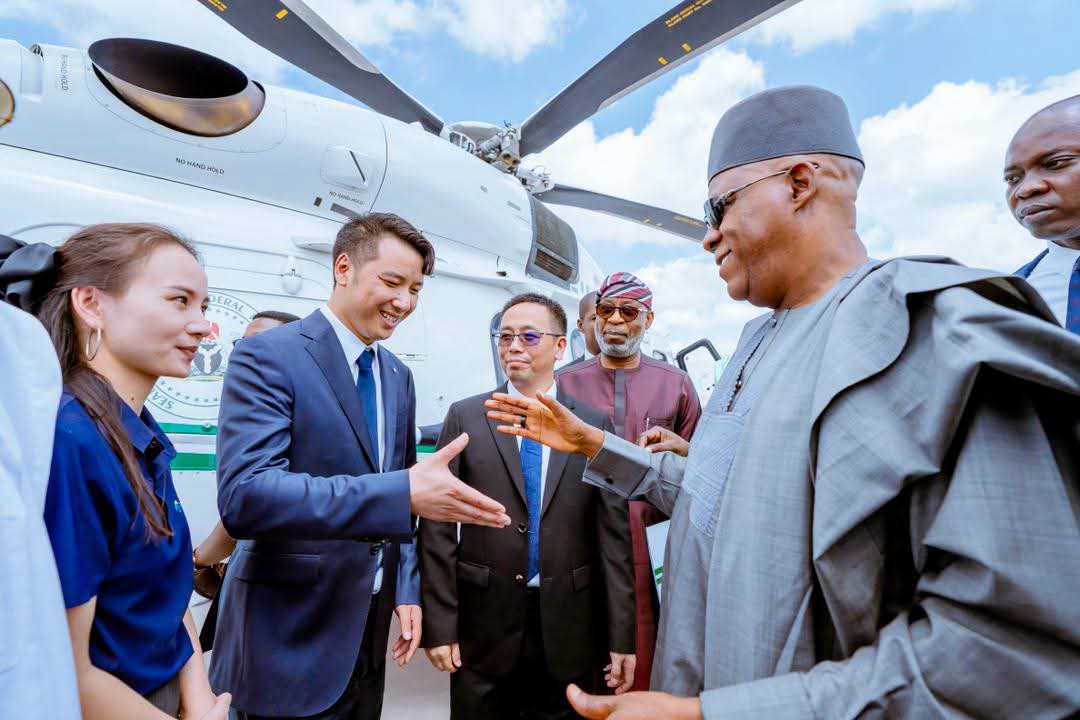
Senator Shettima stated this on Thursday whiile commissioning Diamond New Energy Projects, one of Africa’s lithium processig plant and mining company in Nasarawa State, on behalf of President Asiwaju Bola Ahmed Tinubu.
He identified what he described as the stark choices confronting Nigeria, noting that the nation must either maximise its industrial advantage and turn its endowments into engines of prosperity, or spend years manufacturing excuses for the nation’s lack of innovation.
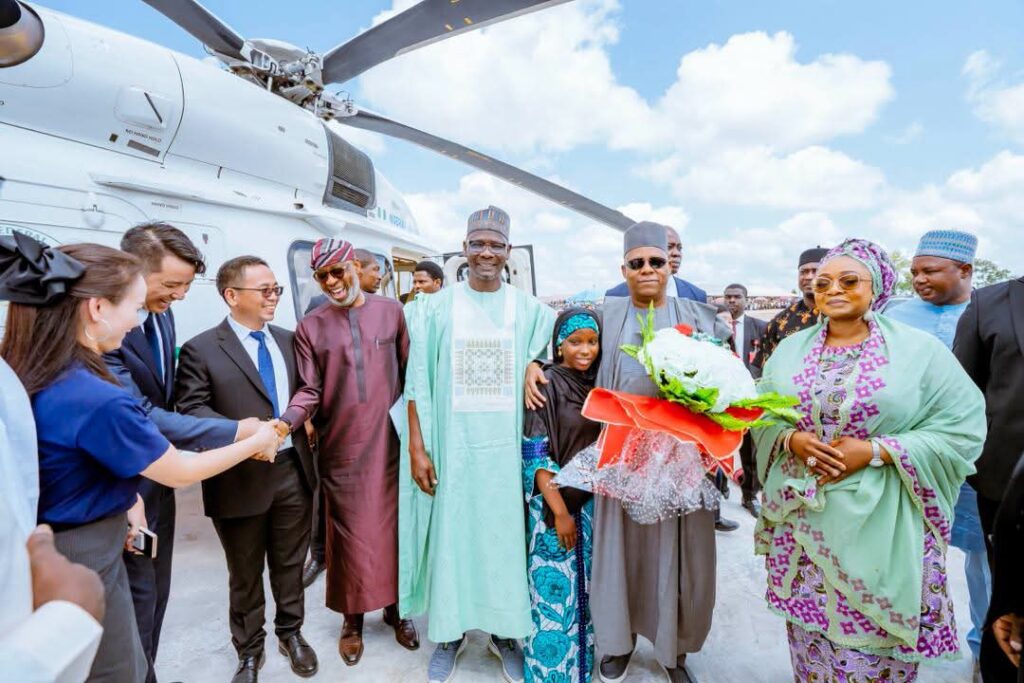
VP Shettima observed that while the soil does not apologise for the failures of its occupants or congratulate them for their potential, it instead waits for a people serious enough to redeem it.
“That is why this occasion matters. The commissioning of Diamond New Energy Projects here in Nasarawa State represents confidence in Nigeria, in Nasarawa State, and in the revolutionary reforms set in place by this administration.
“It represents confidence that Nigeria is ready to participate in the global minerals economy on terms that create jobs, build skills, strengthen local enterprises and expand our productive base,” he declared.
Acknowledging that the national conversation in Nigeria had been “dominated by what lies beneath our soil,” including gold, lithium, tin, iron ore, bitumen, coal and other rare earth elements, Senator Shettima said discussing them with justifiable pride without deploying them to transform the lives of young Nigerians is futile.
“What changes a nation is the deliberate movement from extraction to processing, from potential to production, from raw materials to value-added goods, and from isolated investments to integrated industrial ecosystems,” he added.
The Vice President maintained that no nation can correct deep economic distortions without courage, just as “no economy has moved from dependency to productivity without building lasting ground for investment, productivity and growth, so that serious investors can plan for the long term, local entrepreneurs can compete, young people can find work, and the wealth of the nation begins to serve the people of the nation.
“This is why the solid minerals sector occupies a strategic place in our economic agenda,” the VP noted, pointing out that evolving technology is not only disrupting the world “but has restated the inevitability of solid minerals development.”
He attributed the success of building the mining firm to the resolve and vision of Governor Abdullahi Sule “to make Nasarawa a template for the promise of extractive industry development.”
VP Shettima commended the management of Diamond New Energy, describing the mining investment as timely, strategic and important “at the very moment Nigeria is repositioning itself.”
Earlier, the Governor of Nasarawa State, Engr. Sule, commended investors for choosing the state as the destination for one of Africa’s largest lithiumu processing plants.
He urged both local and foreign investors to take advantage of the state’s abundant solid mineral deposits and strategic proximity to the Federal Capital Territory.
Governor Sule said the state remains one of Nigeria’s most resource-rich investment destinations, with vast untapped mineral resources capable of driving industrialisation and economic growth.
On his part, the Minister of Solid Minerals Development, Dr. Dele Alake, said Nigeria has successfully redirected global investment attention to its solid minerals sector through deliberate reforms initiated by the Federal Government.
He described the establishment of the lithium processing plant as a product of the Nasarawa State Government’s commitment to improving the welfare of its people through industrial development and value addition.
He expressed optimism that the mining sector would soon emerge as one of the key drivers of Nigeria’s economic transformation and poverty reduction efforts.
For his part, the Senator representing Nasarawa West Senatorial District, Senator Ahmed Wadada, commended the Federal Government, the Nasarawa State Government and all stakeholders for their roles in attracting the investment.
He specifically praised Diamond New Energy Company for establishing the processing plant and urged the management to take the next step by manufacturing lithium batteries in Nigeria to ensure greater value addition, increased employment and maximum benefits for the host community and the nation.
For his part, the Chairman of Nasarawa Local Government Area, Alhaji Mohammed Ahmed, described the commissioning of the processing plant as the fulfilment of a long-held aspiration for the host community.
He said the facility will create employment opportunities for residents, boost internally generated revenue and stimulate economic activities in the area, assuring investors of the community’s commitment to maintaining peace and protecting the investment.
The Nasarawa State Commissioner for Environment and Natural Resources, Princess Margaret Elayo, described the project as a testament to the visionary leadership of President Bola Ahmed Tinubu and Governor Abdullahi Sule.
Also, the Ambassador of Jiuling and Canmax, Mr. Yu Chongqiang, said the companies selected Nasarawa State because of the investment-friendly policies of the state government.
He noted that the current investment marked only the beginning of the companies’ long-term commitment to Nigeria, revealing plans to further expand operations to meet the growing global demand for lithium products.
On behalf of the Nasarawa State Council of Chiefs, the Emir of Keffi, Shehu Chindo Yamusa III, congratulated the Federal Government for attracting the landmark investment to Nigeria.
He said the processing plant would reposition the country in mineral exploration, processing and value addition, while assuring the investors of the continued support and peaceful coexistence of the host communities
VP Shettima Commisions Nigeria’s Largest Lithium Processing Plant InU Nasarawa

The Blood We Have Normalised

ECOWAS Commissions Landmark Abuja Headquarters, Nigeria and China Renew Commitment to Regional Integration

FG Evacuates 593 Nigerians from South Africa, Denies Extortion Claims

Roger Federer’s Shock as DNA Results Reveal Myla and Charlene Are Not His Biological Children

THE PLIGHT OF FARIDA

FAILED COUP IN BURKINA FASO: HOW TRAORÉ NARROWLY ESCAPED ASSASSINATION PLOT AMID FOREIGN INTERFERENCE CLAIMS
-
 News2 years ago
Roger Federer’s Shock as DNA Results Reveal Myla and Charlene Are Not His Biological Children
-
Opinions4 years ago
THE PLIGHT OF FARIDA
-
 News1 year ago
FAILED COUP IN BURKINA FASO: HOW TRAORÉ NARROWLY ESCAPED ASSASSINATION PLOT AMID FOREIGN INTERFERENCE CLAIMS
-

 News2 years ago
EYN: Rev. Billi, Distortion of History, and The Living Tamarind Tree
-
 Opinions5 years ago
POLICE CHARGE ROOMS, A MINTING PRESS
-

 ACADEMICS2 years ago
A History of Biu” (2015) and The Lingering Bura-Pabir Question (1)
-

 Columns2 years ago
Army University Biu: There is certain interest, but certainly not from Borno.
-

 Politics1 year ago
2027: Why Hon. Midala Balami Must Go, as Youths in Hawul and Asikira/Uba Federal Constituency Reject ₦500,000 as Sallah Gift
