
News
EU, Stakeholders Meet on Cocoa, Others Compliance with Deforestation Regulation


EU, Stakeholders Meet on Cocoa, Others Compliance with Deforestation Regulation
By: Michael Mike
Stakeholders have received the report of an EU-funded study analysing the preparedness of cocoa and other value chains to comply with the European Union Deforestation Regulation (EUDR).
The EUDR, introduced on 29 June 2023, aims to limit the EU market’s impact on global deforestation, forest degradation, and biodiversity loss, promote deforestation-free supply chains, reduce the EU’s contribution to greenhouse gas emissions, and protect human rights and the rights of indigenous peoples.
Products covered under the EUDR include cocoa as well as palm oil, cattle, soy, coffee, timber, rubber, and their derivatives (beef, furniture, and chocolate are also listed). As the EU attracts 67 percent of cocoa exports from Nigeria, preparedness in this sector is particularly critical.
Speaking at the event in Abuja, Massimo De Luca, Head of Cooperation, EU Delegation to Nigeria and ECOWAS, stated that the EU aims to develop a strategy that both protects the environment and mitigates the effects of climate change.
He said: “In cocoa farming, a lot of virgin land is cleared, and farmers utilise such forested lands to farm. This is why the EUDR is important to discourage deforestation, but also why the EU is here to support the local farmers with improved agro-ecological techniques and improvements in productivity.”
The workshop also presented the EU Corporate Sustainability Due Diligence Directive (CS3D), a new legislative instruments applying to all value chains and requiring that, while conducting economic activities, companies should minimise negative environmental and social impacts.
Explaining the significance of the CS3D, Massimo De Luca added, “From water, to child labour, companies need to assess risks associated with their activities and measures to remedy, including compliance with national and international standards.”
Minister of Agriculture and Food Security, Senator Abubakar Kyari, represented by the Deputy Director, Cocoa/Member, National Cocoa Management Committee, Federal Ministry of Agriculture and Food Security, Ajayi Olutobaba, welcomed the EU’s partnership with the Federal Ministry of Agriculture and Food Security and the introduction of the EUDR.
He said: “The EU’s partnership with the Ministry on the critical issue of the EUDR, and the need for due diligence assessments to be conducted in relevant value chains, is a welcome development.”
He added that: “Given the importance of the EUDR and the need to ensure due diligence assessments in Nigeria’s cocoa sector to guarantee deforestation-free supply chains for cocoa and other agricultural products, I recently inaugurated the National Taskforce on EUDR, comprising all relevant stakeholders in the affected value chains.”
He said: “The National Taskforce, chaired by me, aims to develop a unified national approach to meet the EU’s deadlines. We have already begun operations and hope to achieve our objectives as soon as possible.”
In his presentation, the key expert commissioned by the European Commission
Javier Sánchez, noted that while the EUDR presents short-term challenges for producing countries, it offers significant opportunities in the medium term.
“The EUDR should not be seen as a disadvantage for Nigeria. This is an opportunity to enhance environmental sustainability, create sustainable value chains, and strengthen compliance with national regulations across the value chain,” he said.
Sánchez emphasised that compliance with the EUDR strengthens the role of small producers in international value chains by promoting transparency, allowing consumers to know the origins of cocoa, coffee, and other products.
“The private sector, particularly EU-based importers, is the key player responsible for EUDR implementation. They will face significant sanctions for non-compliance. Due to the structure of the value chain, they will then also look to the upstream actors, especially cooperatives and middlemen, who have information about the origin of the products, to ensure EUDR is complied with.”
“While the government cannot replace the private sector’s role, it can facilitate compliance by developing tools and ensuring awareness of the regulations that private sector actors must follow,” he added.
EU, Stakeholders Meet on Cocoa, Others Compliance with Deforestation Regulation



Troops intercept 11 youths with donkeys during patrol in Borno
By: Zagazola Makama
Troops of 68 Battalion have intercepted 11 youths during a routine patrol in Mallam Fatori area of Abadam Local Government Area of Borno State.
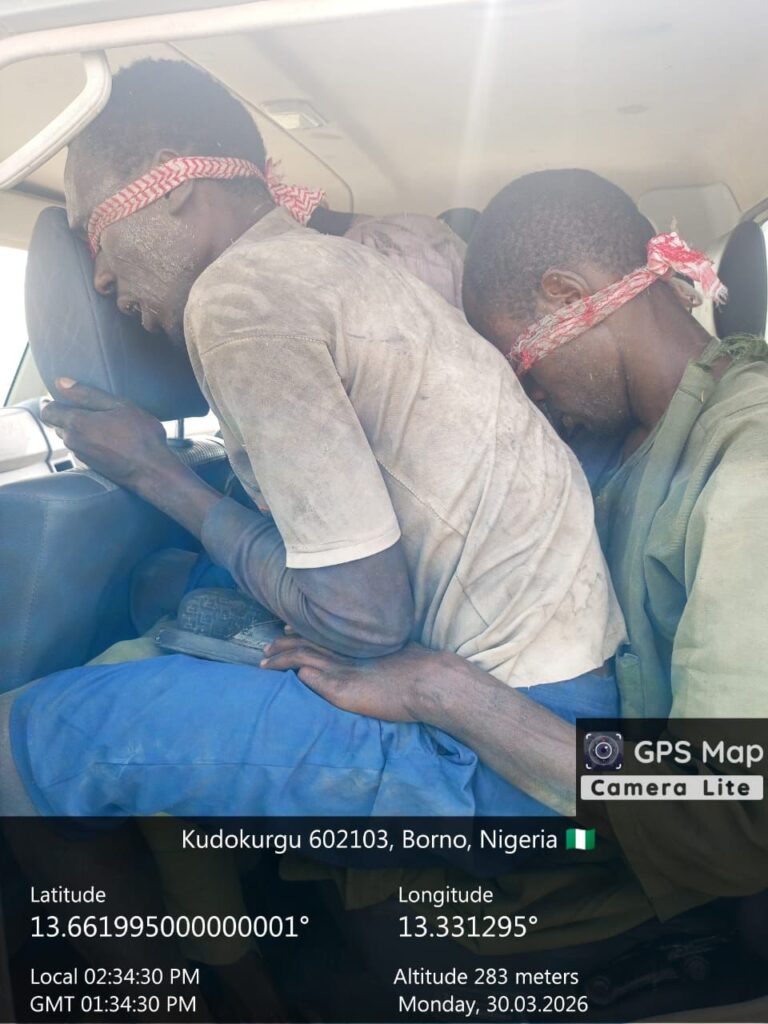
Security sources said the interception occurred along the Bulagana–Cheisa axis on April 2 during ongoing clearance operations in the area.
According to the sources, the individuals were found moving in the area with 12 donkeys when they were stopped and briefly interrogated by troops.
The sources added that the youths were later handed over, alongside the animals, to relevant authorities in a neighbouring country for further necessary action.
The military said the patrol was part of sustained efforts to maintain security dominance and prevent exploitation of border communities by criminal elements.
Troops intercept 11 youths with donkeys during patrol in Borno

Troops recover ammunition, logistics items in Kwara patrol operation
By: Zagazola Makama
Troops of the Nigerian Army under the 22 Brigade have recovered ammunition and other logistics items during a fighting patrol in Ifelodun Local Government Area of Kwara State.
A security source disclosed that the operation was conducted at about 4:00 p.m. on April 2 at Daban Lema, where troops of the brigade, operating from the Patrol Base, encountered signs of suspected terrorist activities in a deserted location.
According to the source, the troops immediately carried out exploitation of the area, leading to the recovery of four rounds of 7.62mm special ammunition and one empty PKT ammunition belt link.
Other items recovered include four mobile phones, two head warmers, two small solar panels, and assorted repair tools believed to have been used by the suspected terrorists.
The source added that the recovery indicates the presence and movement of suspected criminal elements within the area, noting that troops have intensified surveillance and patrols to deny them freedom of action.
Troops recover ammunition, logistics items in Kwara patrol operation
Troops foil attack by Criminal Youths, rescue victims, arrest suspects in plateau
By: Zagazola Makama
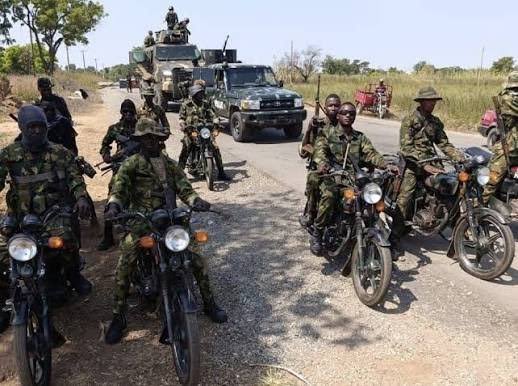
Troops of Sector 1, Operation Enduring Peace (OPEP), have foiled an attack on residents at Dutse Uku in Jos North Local Government Area of Plateau State.
A security source said the troops responded swiftly to a report of sporadic gunshots in the area at about 11:50 p.m. on April 2.
According to the source, upon arrival at the scene, the suspected criminals fled, abandoning their operation due to the prompt intervention of the troops.
He said the troops rescued two victims who sustained gunshot wounds during the incident and immediately evacuated them to a hospital for medical attention.
The source further disclosed that two suspects, dressed in black attire, were arrested at the scene.
Items recovered from the suspects include a cutlass and a knife.
He added that the suspects are currently in military custody and undergoing preliminary investigation, while efforts are ongoing to track down other fleeing members of the group.
Zagazola report that despite heightened security, there has been report of pocket of attacks in some communities.
The source reassured residents of the military’s commitment to protecting lives and property and urged the public to continue providing timely information to security agencies.
Troops foil attack by Criminal Youths, rescue victims, arrest suspects in plateau

Troops intercept suspected Boko Haram logistics convoy conveying 13 persons in Borno

Troops intercept 11 youths with donkeys during patrol in Borno

Troops, CJTF arrest three suspected Boko Haram logistics suppliers in Borno

Roger Federer’s Shock as DNA Results Reveal Myla and Charlene Are Not His Biological Children

THE PLIGHT OF FARIDA

FAILED COUP IN BURKINA FASO: HOW TRAORÉ NARROWLY ESCAPED ASSASSINATION PLOT AMID FOREIGN INTERFERENCE CLAIMS
-
 News2 years ago
Roger Federer’s Shock as DNA Results Reveal Myla and Charlene Are Not His Biological Children
-
Opinions4 years ago
THE PLIGHT OF FARIDA
-
 News12 months ago
FAILED COUP IN BURKINA FASO: HOW TRAORÉ NARROWLY ESCAPED ASSASSINATION PLOT AMID FOREIGN INTERFERENCE CLAIMS
-

 News2 years ago
EYN: Rev. Billi, Distortion of History, and The Living Tamarind Tree
-
 Opinions4 years ago
POLICE CHARGE ROOMS, A MINTING PRESS
-

 ACADEMICS2 years ago
A History of Biu” (2015) and The Lingering Bura-Pabir Question (1)
-

 Columns2 years ago
Army University Biu: There is certain interest, but certainly not from Borno.
-

 Opinions2 years ago
Tinubu,Shettima: The epidemic of economic, insecurity in Nigeria
